
Our readers keep the lights on and my morning glass full of iced black tea. As an Amazon Associate, I earn from qualifying purchases.
Specs are compiled from manufacturer listings and verified buyer reviews and can change over time — please confirm the key details on the product page before buying.
That #3 line item on your grocery list — the one that makes you spend ten minutes wrestling with the exact right size bin liner — is a lie. Skip plastic bags entirely and choose a certified compostable liner instead. You want a bin liner that holds runny coffee grounds on day four without bursting, then disappears when you toss it in the compost. A good compostable liner must hold wet scraps for days, then break down fully in the compost pile.
I’m Min — the founder and writer behind Gadgets Feed. This guide is built by comparing the manufacturers’ published specifications and the patterns across verified customer reviews, so you get each pick’s real strengths and trade-offs instead of marketing spin.
You need a bag compost that fits your bin and your local composting rules, so start by matching the bag’s thickness and capacity to where you’ll use it—whether that’s a countertop caddy, a 6-gallon under-sink bin, or a school lunchbox.
Our Picks at a Glance
How To Choose The Best Bag Compost
The right bag keeps your bin clean and keeps plastic out of landfills. Start with what kind of waste you produce, then match the bag to your bin’s real dimensions, not just its name.
Capacity Must Match Your Bin’s Mouth
A bag rated for 2.6 gallons but stretched over a wider bin rim can slip off, making waste miss the bag entirely. Conversely, a 3-gallon bag crammed into a 2-gallon caddy bunches up and tears at the perforations. The real spec is often a height and width in inches. The folks who complain of leaks usually have a mismatch here, not a defective product.
Thickness and Wetness: The Gentle Balance
Thicker bags (0.71 mil or higher) handle wet coffee grounds and melon rinds without tearing, but they’re not magic. Wet waste is heavy, and leaving it in a countertop bag for a week is asking for trouble. A 0.87 mil bag is suggested for longevity, but even the thickest liners will start to break down after a few days of contact with moisture from food, as they are designed to do in a compost pile. If you empty your bin every few days, a moderate thickness works; if you forget often, you need the thickest option you can find.
Certifications are Not All Equal
Look for “BPI Certified” or “ASTM D6400” — that means the bag is designed for industrial composting facilities. The term “Home Compostable” is different; it means the bag should break down in your own backyard pile’s temperature, which runs much cooler. If your city’s program only accepts certified bags, an industrial-only label might get your load rejected. If you’re composting at home, you need a bag that holds up long enough to cart your scraps outside before it falls apart.
Quick Comparison
| Model | Best For | Capacity | Thickness | Count | Amazon |
|---|---|---|---|---|---|
| Compostic Sandwich Bags★ Best Overall | Everyday Food Storage | XL Sandwich | — | 100 | Amazon |
| UNNI 2.6 GallonAlso Great | The Proven Workhorse | 2.6 gal | 0.71 mil | 200 | Amazon |
| AYOTEE 4 GallonRoomy Value | Slightly Oversized Bins | 4 gal | — | 100 | Amazon |
| bioMat 2.6 Gallon | Certification Coverage | 2.6 gal | 0.70 mil | 125 | Amazon |
| BEIDOU-PAC 3 Gallon | Household Scraps | 3 gal | 0.67 mil | 100 | Amazon |
| BioBag 3 Gallon | Uncluttered Composting | 3 gal | — | 75 | Amazon |
| EcoSafe 2.5 Gallon | Snug-Fit Bins | 2.5 gal | — | 90 | Amazon |
| Matter Mix Pack | Snack Bags to Freezer | Various | — | 230 | Amazon |
| Primode 6 Gallon | Bigger Kitchen Cans | 6 gal | 0.87 mil | 100 | Amazon |
In‑Depth Reviews
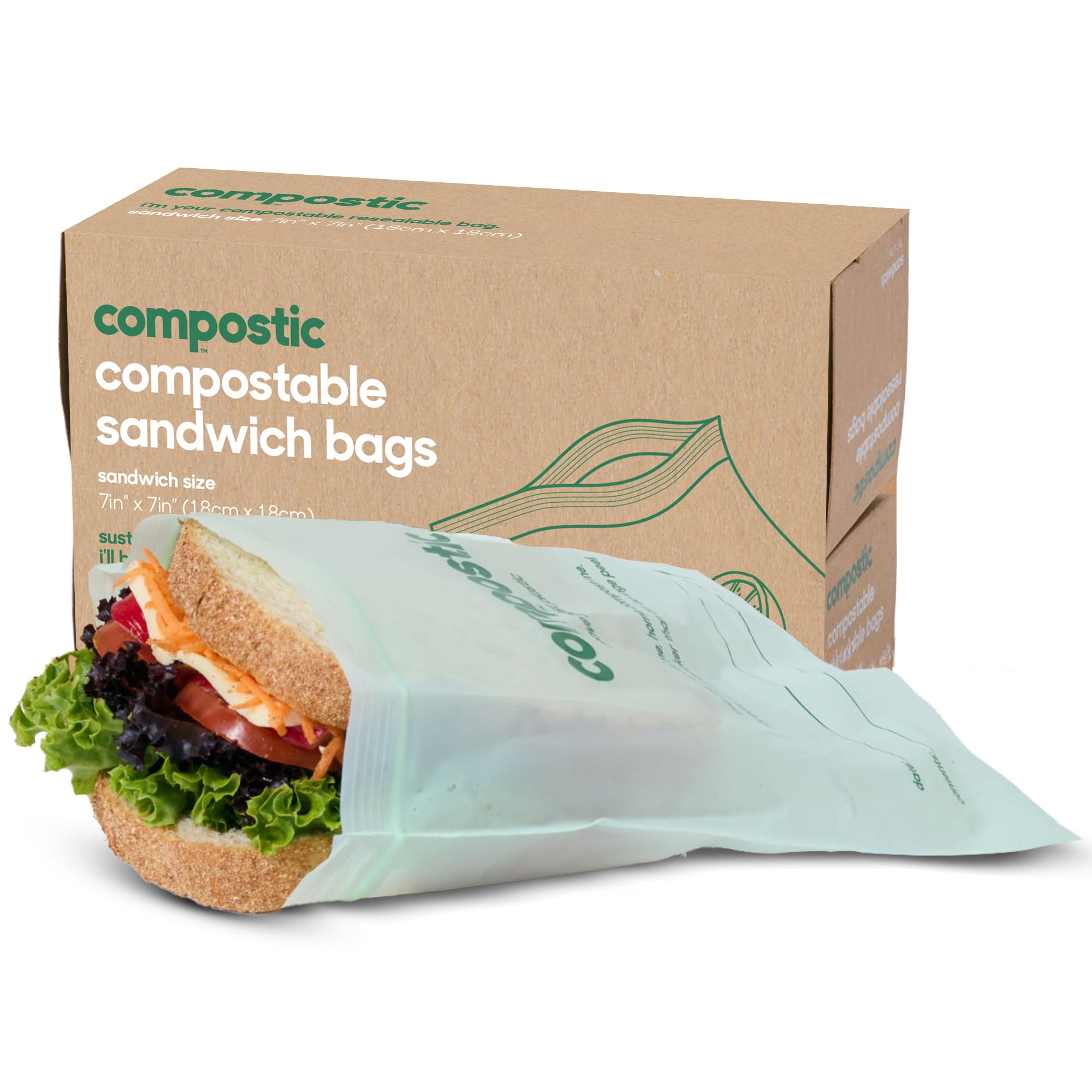
1. Compostic Compostable XL Sandwich Bags
Our pick — over 4.5★ from 850+ verified ratings; the strongest balance of quality and price.
A plant-based zipper bag that keeps lunch produce crisp and then vanishes into your compost pile.
These bags hold up through repeated use, making them a practical daily storage option. Buyers report storing half a green pepper in one and pulling it out three days later still fresh enough for a salad. The zip seal locks tight and the film blocks air, keeping produce fresh for days.
Durability is what owners praise most here; these bags are soft and surprisingly tough, holding up through repeated openings and closings. One great trait emerges from the reviews: they don’t start to decompose after long use like some rival bags do when they sit in the pantry. They’re reusable until you’re ready to toss them, so you get the practical benefit of storage plus the eco-friendly endpoint.
Because they’re made from plant-based biopolymers with zero conventional plastic, they’re engineered to break down completely in 12 to 24 weeks in a home compost bin, leaving no microplastics. The one caveat is the value: a few owners felt the cost per bag runs high compared to regular plastic sandwich bags, but the compostable payoff is the point.
Better than a regular baggie: certified BPA-free, GMO-free, and tested for food contact by Intertek to SGS standards, so they’re freezer and microwave safe, too.
Who benefits most: families packing school lunches, meal-preppers who portion produce, and anyone who wants zero plastic touching their food.
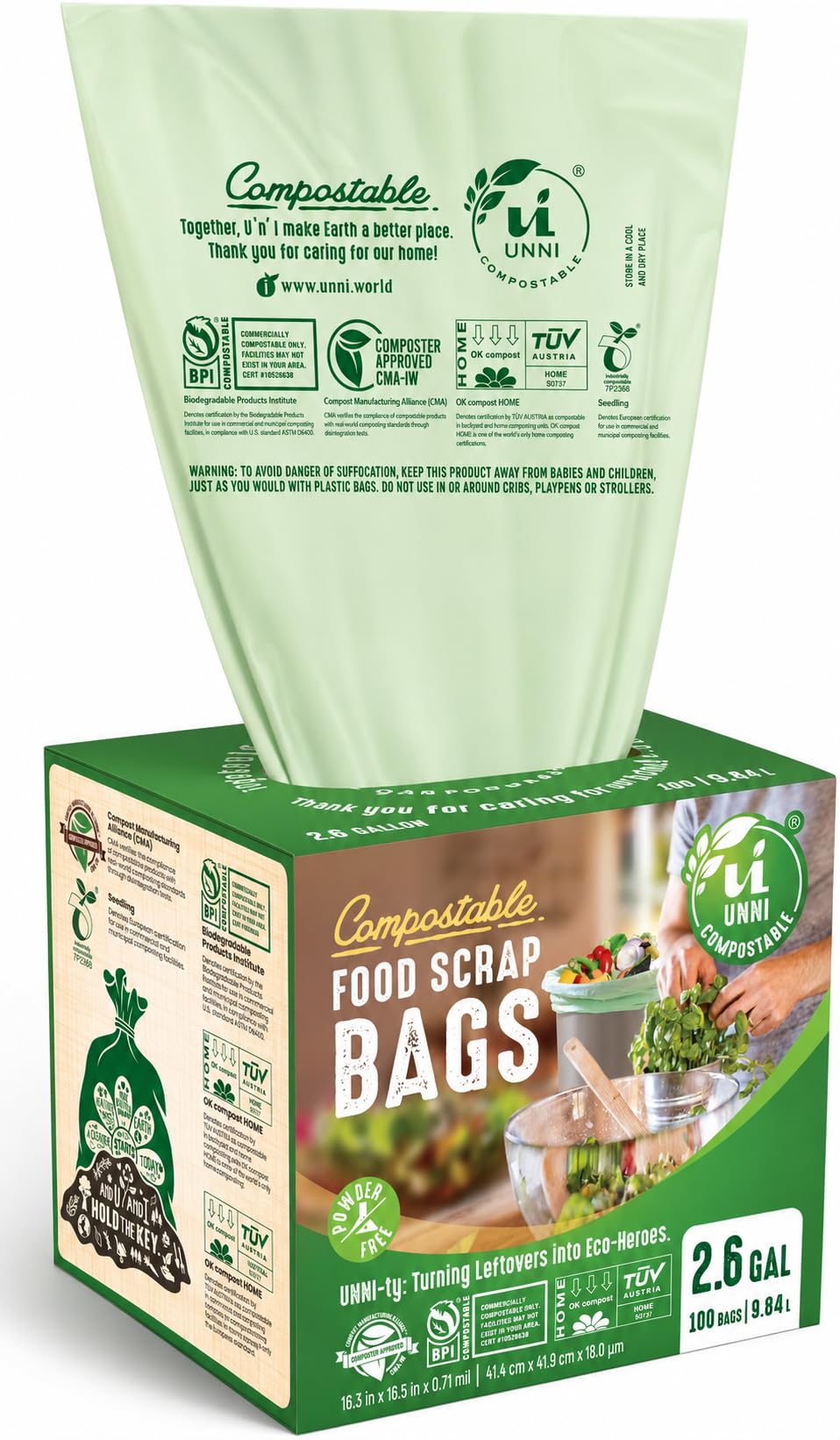
2. UNNI 2.6 Gallon Compostable Bags, 200 Count
The crowd-pleasing 200-count box that pairs a 2.6-gallon fit with a 0.71-mil thickness that doesn’t quit.
Most countertop bins sit in the 2-to-3-gallon zone, and this bag is the default best match for them. The 0.71 mil thickness is what owners notice first — it’s strong enough to move full loads of breakfast scraps without the bag giving way. The consensus among owners is that it reliably fits their kitchen bins and holds up through daily use, making it the best overall pick for the widest range of households.
Its 30,000-plus ratings align with consistently high quality. Over 30,000 owners have rated it, and the review data points to quality and compostability as the twin reasons people stay loyal. The review volume confirms it’s a daily staple, not a one-off buy. For a -ish spend, you get one box that might literally last a season or more of daily scrap runs.
The trade-off you hear about is the universal one for compostable film: leave wet waste in it for close to a week and it will begin to break down, because that is literally its job. A few owners found the 2.6-gallon size slips on wider trash can rims, causing waste to miss the bag if you overload it. Don’t overfill and they hold fine.
What wins owners over
- Extra-thick 0.71 mil walls feel sturdy and tolerate daily use without tearing, which is the #1 reason people praise it.
- A full 200-count box means you’re not reordering every other week.
- Certified to ASTM D6400 and OK’d by BPI, CMA, and Europe for industrial compost facilities.
The honest fit notes
- Not simple to use against a week of wet waste; it starts biodegrading and can leak, which is expected for compostable film.
- If your bin mouth is wide, the 2.6-gallon size might not hug the rim tightly.
the balance for: you, if you have a standard countertop caddy and want a thick, leak-resistant liner from a brand you already trust.
Reach for the thicker 6-gallon Primode if: your bin is larger or you routinely let scraps sit for days before hauling them out.
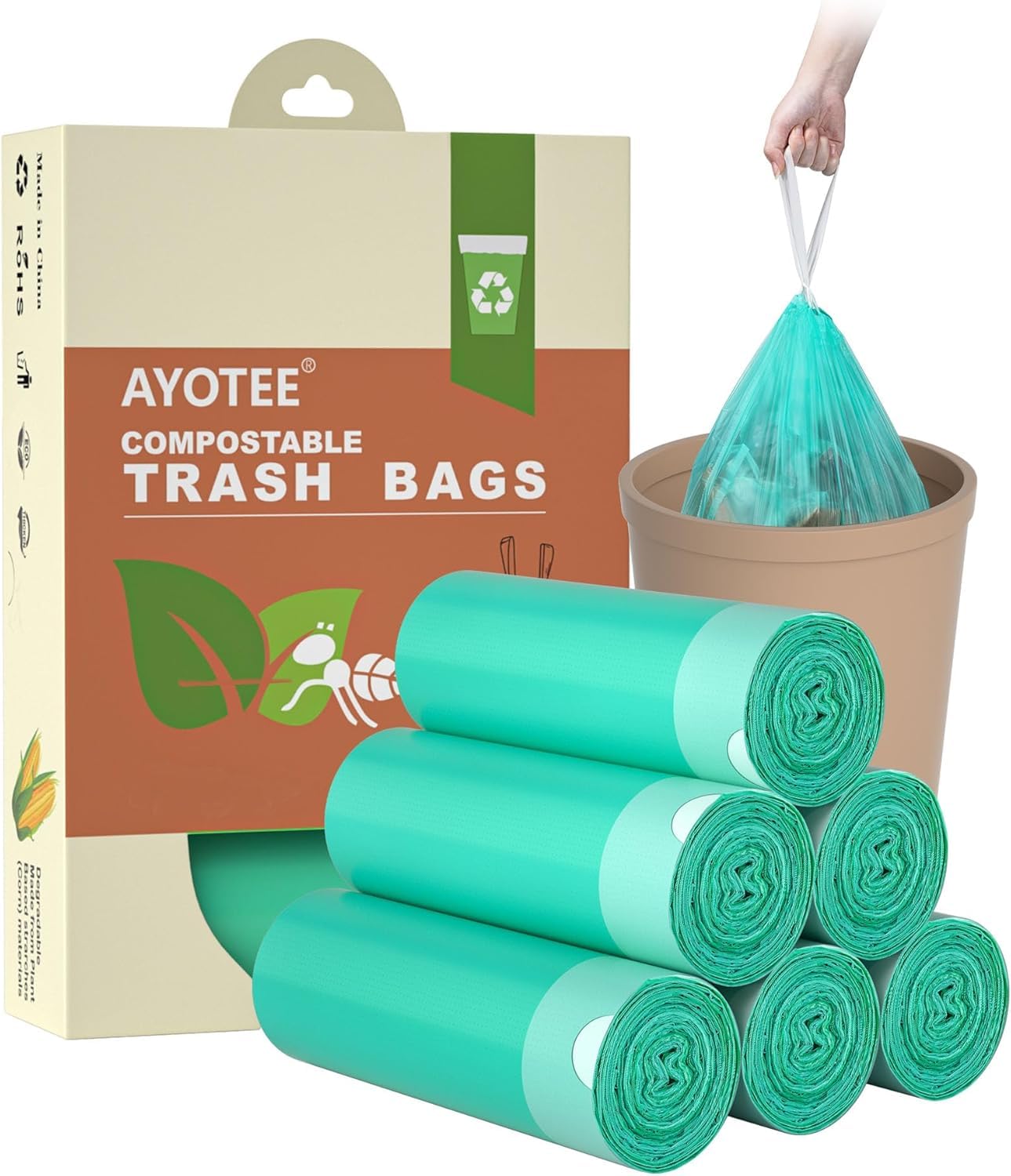
3. AYOTEE 4 Gallon Drawstring Trash Bags
The bigger countertop liner with a drawstring seal that hides away wet, smelly waste.
At 4 gallons, this bag is a step up from the standard 2.6-gallon caddy liner, and that extra room translates to fewer bin changes. The drawstring closure is the key feature: it lets you cinch the bag shut without touching the trash, sealing in odors until you haul it out. Owners mention the bags don’t leak or burst even when filled right to the top, which is exactly the confidence you want on day five.
The quality is the most-praised aspect among owners, and the slightly oversized build — 19.6″ x 17.7″ — means it fits most small trash cans and shapes without stretching paper-thin. The tissue-box-style dispenser is a thoughtful touch; it stops the annoying game of digging bags out of the bottom of a tangled roll.
The honest catch seems to be the handles. A number of owners found some bags lacked handle holes despite the design featuring them, forcing a rip in the material that risks a tear. And durability itself gets mixed marks — they’re reliable for everyday trash but you shouldn’t push them with heavy, sharp-edged loads.
Who it serves best: households that want one liner for bathroom, litter, and small kitchen trash cans and prefer the convenience of a drawstring over a tie.
The fine print: designed for industrial composting facilities (ASTM standard), so check your local program before assuming it belongs in your backyard pile.
4. bioMat 2.6 Gallon Compostable Food Scrap Bags
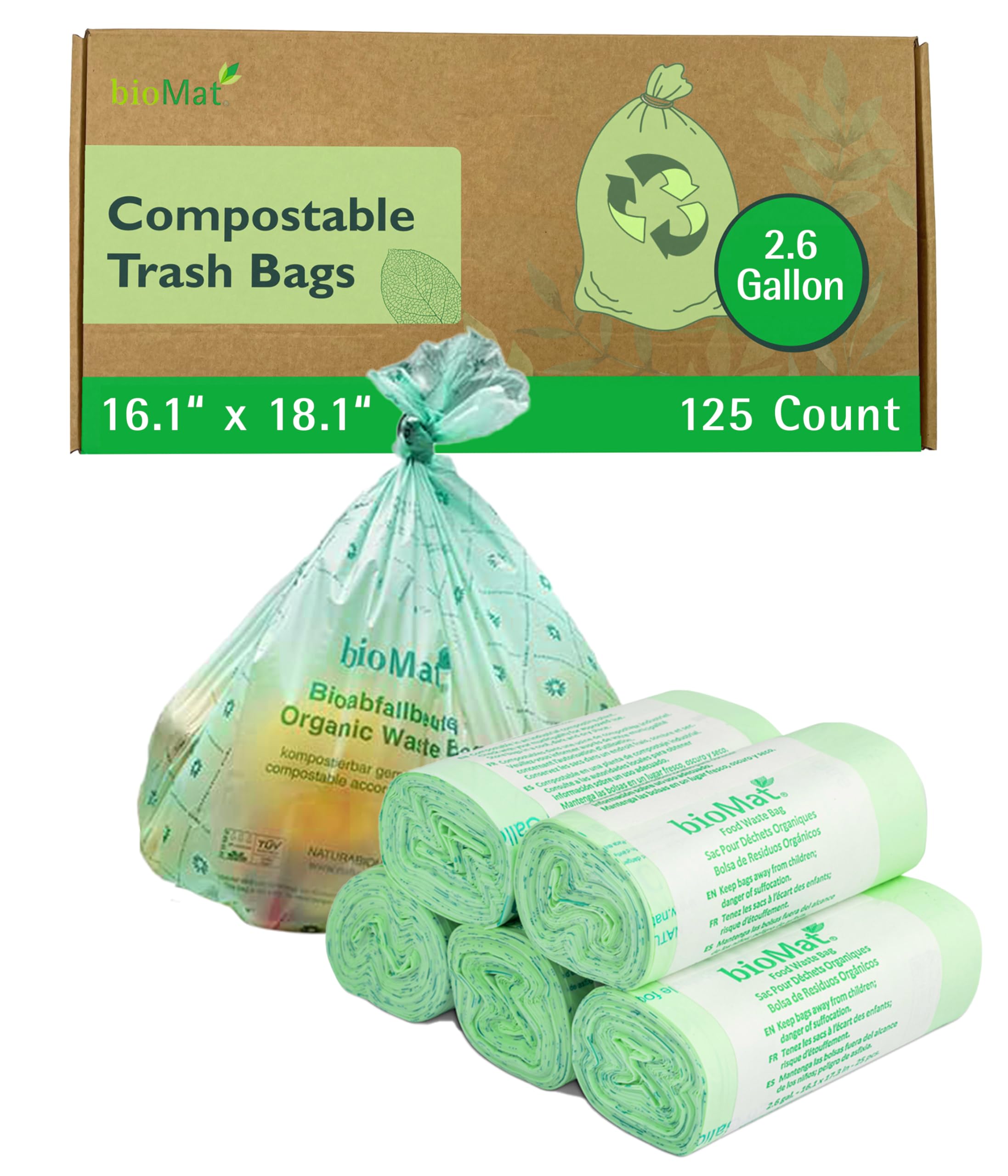
The 125-count pick that checks every certification box: BPI, CMA, and TÜV OK Compost HOME.
For the buyer who wants zero doubt their bag will actually break down where it’s supposed to, this is the pick. bioMat claims the trifecta of certifications — ASTM D6400 for industrial facilities plus TÜV OK Compost HOME for backyard piles — so you’re covered whether your city uses an industrial digester or you manage your own heap. That third-party validation matters more than any marketing claim.
Owners say the bags separate and open easily, hold well when dampened by organics, and don’t feel flimsy. The functionality gets the most praise, and the strong-but-compostable balance shows up repeatedly in reviews. The multi-layer breathable film construction helps prevent leaks while letting air circulate, so your pile doesn’t turn into an anaerobic sludge pit.
There’s a time caveat baked in: the bags should be used within one year of purchase and stored in a cool, dark place. Durability gets mixed marks — some find them durable, others report they tear with overly sharp or heavy loads. Let hot food cool and drain scraps before tossing them in.
The peace-of-mind angle: free from PFAS and BPA, made from plant-based materials, and produced using renewable energy and water-based inks.
What to keep in mind: the 125-count works out to a great per-bag value, but rotate your stock so you don’t push past that one-year freshness window.
5. BEIDOU-PAC 3 Gallon Compostable Trash Bags
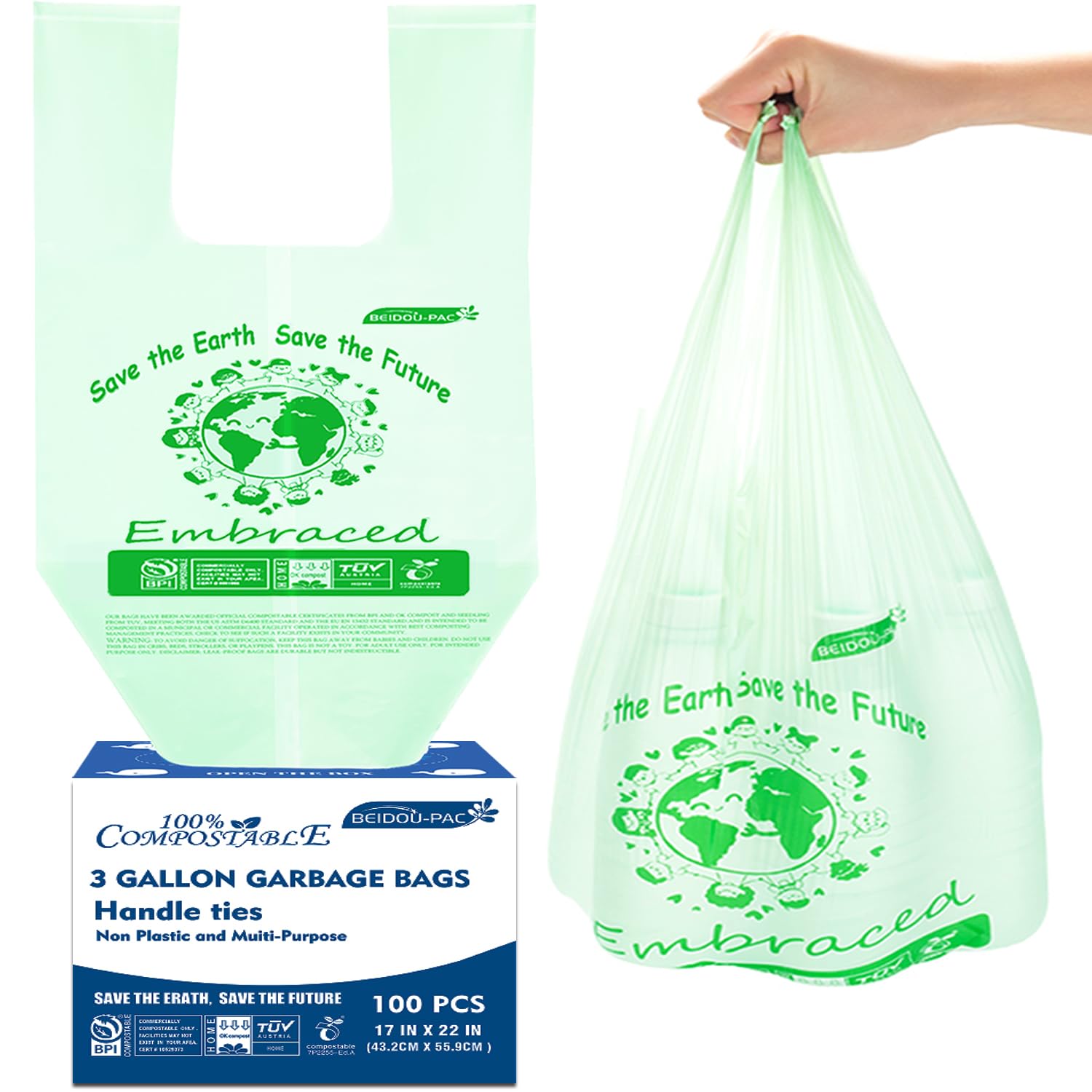
The under-sink pick at 3 gallons with integrated handles that make tying the top a one-handed job.
This bag is built for the 3-gallon bins that live under the kitchen sink. The handle-top design is what owners rave about — you just gather the handles and tie, no wrestling with slippery film. It’s a small ergonomic win that becomes a daily habit. The bags are also roomy for their rated size, holding a surprising amount of scraps for a countertop liner.
Durability leads the praise here; the star-sealed bottom delivers strong load-bearing performance and the bags hold up despite feeling and looking thin. One owner who switched after their city changed garbage-sorting rules called it very durable, even though it looks and feels thin. The plant-based formula — PBAT, PLA, and corn starch — leaves no plastic residue.
Leak resistance gets mixed reviews. It’s sturdy, but not always leakproof; an occasional bag can tear when pulled off the roll, so a few owners double-bag out of caution. The manufacturer’s guidance is to dispose within 7 days when holding wet waste — a real number to plan around, not a suggestion.
The everyday convenience
- Handles make closing and carrying quick without touching waste.
- Pre-perforated lines separate cleanly, and the roll fits under typical sinks.
- Certified BPI to ASTM D6400 and OK Compost Home to European EN 13432.
Notes from the kitchen
- Customers note the occasional bag tears at the perforation; plan for the rare double-bag.
- Wet waste should be moved out within about a week to avoid breakdown.
Snag this when: your bin is a true 3-gallon under-sink can and you hate fumbling with twist-ties.
Pass if: your priority is hauling wet kitchen waste for a week-plus — you’d do better with the thicker Primode 6-gallon below.
6. BioBag Food Waste Certified Compostable, 3 Gallon
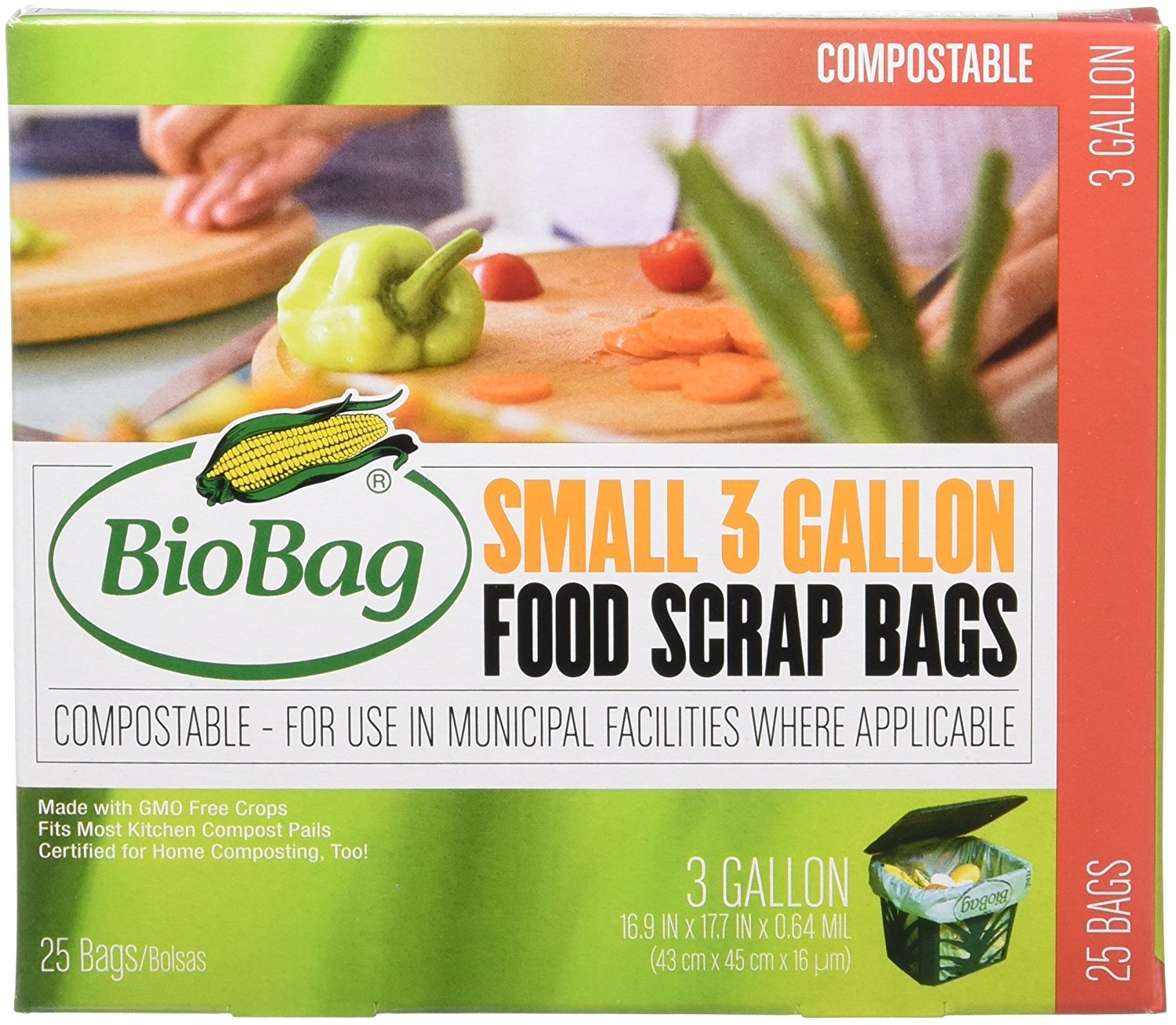
A familiar name in the composting world, delivering certified film at a 3-gallon size with a 25-count 3-pack feel.
The BioBag name carries weight among longtime composters, and this pack delivers 75 total bags (three rolls of 25) in the popular 3-gallon size. Quality is what owners call out most — a full 169 positive mentions versus just over a hundred mixed durability notes. People who tried other brands first say this one holds up noticeably better, with fewer issues of premature breakdown in the countertop bin.
Owners testing these found the bags could hold food scraps for a full six days without developing tears or drips, matching the performance of pricier conventional liners like Glad. The film is made from GMO-free crops and is certified compostable, ticking the environmental boxes without sacrificing daily strength. They fit small kitchen containers and comply with local compost regulations.
The recurring observation is to watch the wet stuff. With heavy moisture, the bags can break down fast and develop holes by day three if you’re not diligent. Owners advise emptying frequently with wet scraps, letting things drain, and checking size against your bin before buying. Thickness also gets flagged by some as a negative, so treat them gently.
The straight read: high build quality in a trusted brand, best suited to someone who empties their countertop bin every couple of days.
Buyer beware: these are thin-film compostables — they want fresh, mostly-dry scraps, not a week-old soup of coffee grounds.
7. EcoSafe-6400 Certified Compostable Bag

The size-specific liner engineered for a 2.5-gallon bin, so it holds its fit when the waste gets heavy.
Rather than a generic “fits most,” EcoSafe designed this one specifically for the 2.5-gallon food waste bin with a loose bottom but snug fit over the top. That intentional sizing detail is why owners say it contains the mess without sliding off the rim mid-week. The 16 x 17-inch dimensions are the spec to match against your bin before ordering.
The quality and resistance to tearing is what people praise; these bags are made with durable resin and finished with extra-strong star seal bottoms, and the stated goal is no double bagging. Owners who tried other brands found this one decomposed less quickly and held up better under regular use. One long-standing subscriber notes the compost pickup works fine weekly, just don’t overfill.
Reviewers point out the bags can still puncture if you overload them with sharp items, even though the design resists leaks. A few shoppers say the bags run too small for larger bins—a fit mismatch, not a flaw. So keep heavy or sharp waste in moderation and empty the bin weekly to avoid tears.
Why it’s worth it: BPI-certified and CMA-approved for food waste disposal, made in the USA from US resins, and compliant with California’s SB 1383 labeling rules.
The honest fit note: if your bin is larger than 2.5 gallons, the snug-fit magic disappears and you’ll want a bigger bag.
8. Matter Compostable Resealable Bags Variety Pack
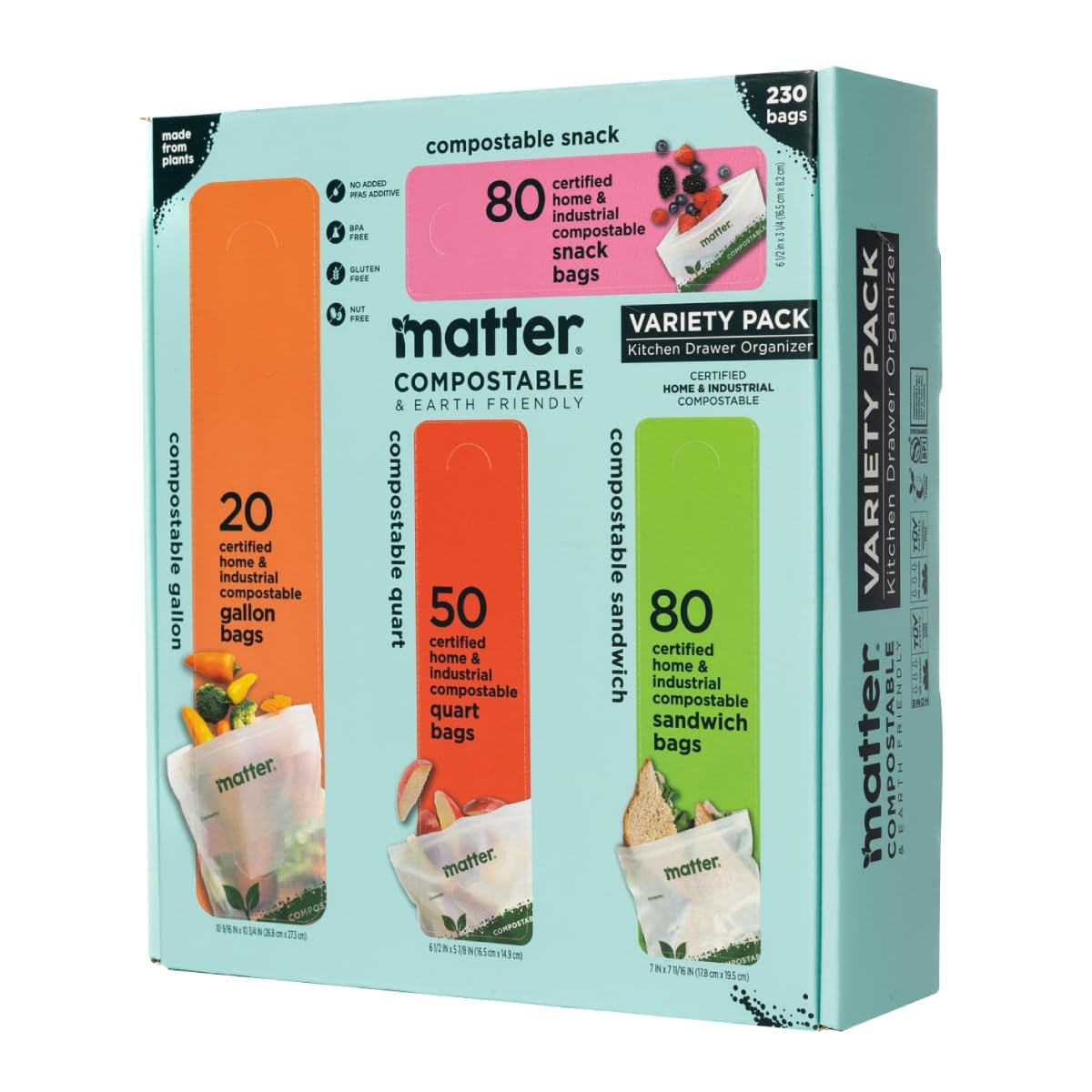
The 230-bag variety pack that replaces your entire plastic ziplock drawer with one compostable system.
This isn’t a bin liner; it’s a full ecosystem of food storage. The pack includes 80 snack-sized, 80 sandwich-sized, 50 quart-sized, and 20 gallon-sized bags, all in a compact 11″L x 10″W x 3.1″H organizer box that fits neatly in a kitchen drawer. Owners love that they can finally ditch the entire plastic bag stash for one compostable brand that covers everything from a few grapes to a freezer batch of soup.
The resealable zippers seal tight and extend food freshness, and buyers report these are thick, sturdy, leak-resistant, and freezer-safe. The bags survive washing and reusing, turning what would be single-use plastic into a multi-cycle product that only goes to the compost when it’s truly done. Quality is the most-praised aspect by far, with environmentally-friendly a strong second.
The main adjustment is that the bags are opaque, so owners suggest labeling them to remember what’s inside — a small shift from see-through plastic. The sealing gets mixed reviews, with a few people finding the bags tough to open once sealed shut. And the ratio skews small, so if you mostly need gallon sizes for freezer storage, you’ll want to supplement.
The plastic-free switch: certified BPI Industrial, TUV Home, and TUV Industrial, and made from natural renewable fibers with no added PFAS.
Ideal for: the household ready to consolidate all storage bags into one compostable solution, accepting brief labeling duty.
9. Compostable Bags 6 Gallon Food Scraps & Yard Waste Bags
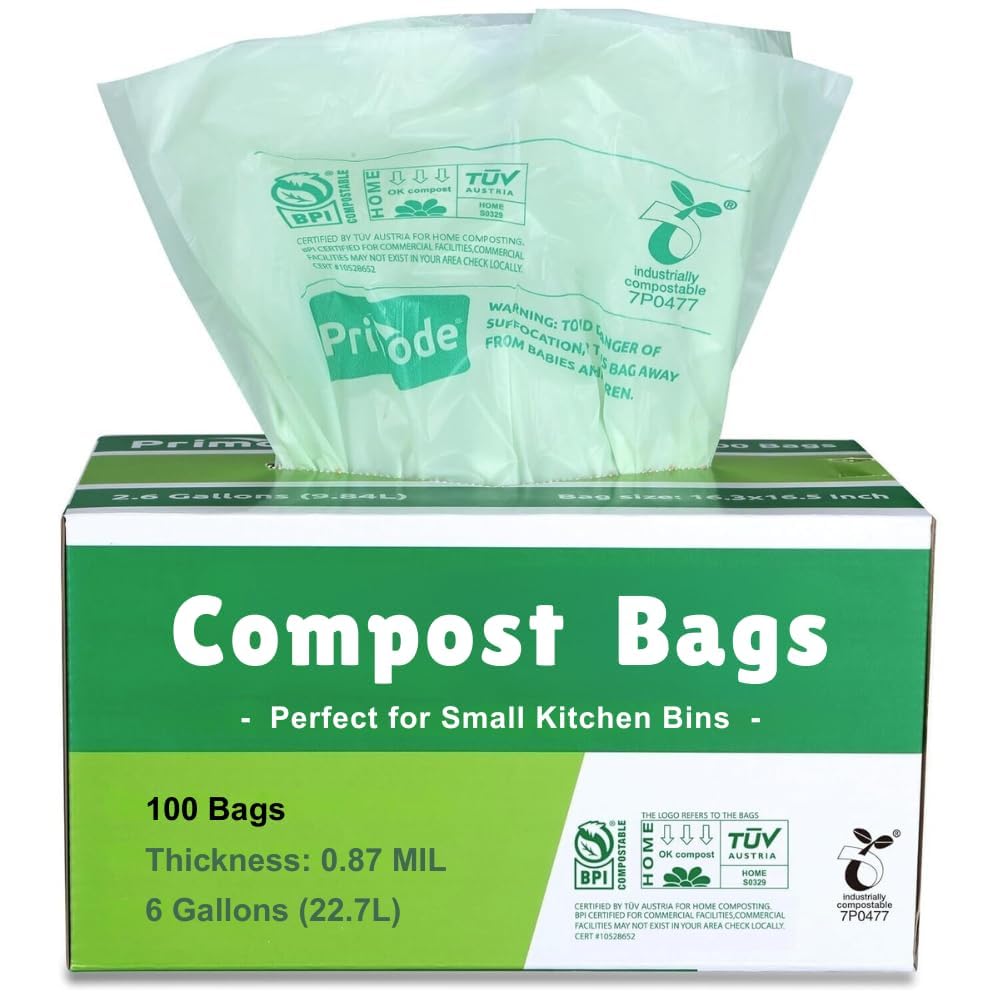
The thickest of the bunch at 0.87 mil, built to hold hot, wet, and sharp waste without blowouts.
If you’ve been burned by thinner compostable bags dissolving into a mess, this 6-gallon pickup from Primode is the answer. At a substantial 0.87 mil, it’s noticeably thicker than most of the competition, and owners who’ve compared brands directly call these the sturdiest they’ve tried. It fits 4-gallon and 5-gallon bins comfortably, handles hot or sharp items without leaking, and lasts a solid 3-4 days before needing a swap.
The dimensions (21 x 23 inches) are generous for a kitchen can or countertop pail, and the visible perforation tears cleanly. The quality is the #1 praise among owners, with the size a strong second. One household has had a subscription for about six years and still calls it high quality, noting the thick material doesn’t rip easily.
The genuine catch is cost — it’s marked as the priciest of the group, reflecting that thickness. Wet waste will still cause the bag to start biodegrading if left too long, and an occasional unit arrives from a bad box that separates poorly. But for a family that fills a larger pail regularly, the extra resilience is worth the premium.
The heavy-duty edge
- 0.87 mil film is the thickest here, standing up to wet, hot, and rough waste for days.
- Certified by BPI to ASTM D6400 and meets TÜV AUSTRIA requirements for backyard composting.
- Fits larger kitchen cans and 5-gallon buckets comfortably.
Where it’s not the best fit
- Costs more per bag than slimmer alternatives; if you burn through bags daily, the price adds up.
- Wet waste left for a week still triggers the biodegrading process — that’s the design, not a defect.
Choose this for: households hauling a 4-to-6-gallon bin, especially those who’ve had thin bags fail them before.
Look to the UNNI 2.6-gallon instead if: your bin is countertop-sized and you’d rather not pay for thickness you won’t use.
Understanding the Specs
Capacity vs. What You Haul
The milk rating tells you how much volume the bag claims to hold, and nothing more. The real test is whether it matches your bin’s mouth. A 2.6-gallon bag in a 3-gallon bin that’s wider at the rim will slip and sag underneath the weight of the scraps. Measure the mouth of your bin in inches and compare it against the bag’s stated width — a match there prevents most “leak” complaints, which are usually fit failures.
Mil Thickness and Wet Waste
Thickness, measured in mils (one mil is a thousandth of an inch), is the single best predictor of whether a compostable bag will survive a week with wet coffee grounds. Films under 0.70 mil are thinner and more likely to tear at the perforations; thicker film like 0.87 mil stands up to sharp melon rinds and hot scraps. Every compostable bag will start breaking down with sustained contact from moisture — that’s the point. The thicker films just buy you more time.
FAQ
What’s the difference between “home compostable” and “BPI certified”?
Why did my compostable bag get holes after a few days?
Will a 2.6-gallon bag fit my standard countertop compost bin?
Can I use compostable bags for cat litter or other pet waste?
What does the mil rating actually mean for the bag’s strength?
Why is my city telling me to use certified compostable bags?
Can these bags go in the freezer?
How long do compostable bags last in storage before I need to use them?
Why do my compostable bags sometimes tear when I pull them off the roll?
Are compostable bags actually better than regular plastic bags?
Final Thoughts: The Verdict
For the widest range of households, the bag compost winner is the UNNI 2.6 Gallon — it pairs a proven, extra-thick 0.71 mil build with a generous 200-count box at a price that undercuts many rivals. If you’re hauling a bigger under-sink can and want the strongest film money can buy, grab the Primode 6 Gallon; its 0.87 mil walls outlast nearly everything else here. And for families who want to retire the whole plastic baggie drawer, the Matter Variety Pack delivers four sizes in one drawer-sized box. With over 30,000 ratings and durability as the top praise, the UNNI is the proven, set-and-forget choice.
How We Picked
We do not accept paid placement. Every pick is matched to a real buyer and a real use-case; we do not hands-on test units.
Sources & Methodology
Specifications: manufacturer listings and product documentation. Review insights: verified customer reviews, as of September 2026. Pricing: not shown on this page (it changes often); check the current price via the retailer link.
As an Amazon Associate, Gadgets Feed earns from qualifying purchases. This does not affect which products we feature.