
A bathroom fan that roars to life the moment you flip the switch defeats its own purpose — you want steam and odors gone, not a distracting hum that drowns out a podcast or a child’s bath time. The real trick is finding a unit that moves enough cubic feet of air per minute to clear a mirror in under ten minutes while staying so quiet you forget it is on. That balance between airflow and acoustic discretion separates a mediocre install from one you never think about again.
I’m Min — the co-founder and writer behind Gadgets Feed. I have spent hundreds of hours cross-referencing Consumer Reports tests, Energy Star certifications, sone ratings, and real-user decibel measurements to isolate the models that actually deliver the quiet they claim on the box.
If you are remodeling or replacing an old builder-grade unit, the most efficient path is a focused list of the bathroom fans quiet enough for daily use and powerful enough to stop mildew before it starts.
How To Choose The Best Bathroom Fans Quiet
Every bathroom fan manufacturer advertises “quiet,” but the acoustic reality varies wildly once the unit is mounted inside a ceiling cavity. The two numbers that never lie are sones and CFM — ignore marketing adjectives and focus on these specs to find a fan that actually performs.
Sone Rating Is the Real Noise Benchmark
Decibels measure raw sound pressure, but sones measure perceived loudness, which is far more useful for a bathroom. A 1.0-sone fan corresponds to a quiet refrigerator hum — barely noticeable during a shower. Fans above 2.0 sones start sounding like a desktop computer on high speed, and anything above 4.0 sones will compete with conversation. Stick to 1.5 sones or lower for a genuinely discreet install.
CFM Must Match Room Size
Cubic feet per minute tells you how much air the fan moves. The Home Ventilating Institute (HVI) recommends 1 CFM per square foot of bathroom area. A 50-square-foot space needs at least 50 CFM, while a 100-square-foot master bath calls for 100 CFM. Undersizing leaves fog on the mirror; oversizing with too few sones can create wind noise inside the duct, which defeats the quiet goal.
Installation Path Dictates Fan Choice
Some fans require attic access for mounting and duct connection, while others are designed for roomside retrofit — you remove the old grille and housing from below and slide the new unit in without crawling through insulation. If your existing fan was installed from below, prioritize a roomside-compatible model to avoid drywall repair. If you have attic access, the installation options open up significantly.
Quick Comparison
On smaller screens, swipe sideways to see the full table.
| Model | Category | Best For | Key Spec | Amazon |
|---|---|---|---|---|
| KAZE APPLIANCE SNP100 | Premium | Quietest air mover | 0.8 Sone / 100 CFM | Amazon |
| Amazon Basics AB-BV100 | Premium | High CFM on a budget | 1.0 Sone / 110 CFM | Amazon |
| Broan-NuTone AE80B | Premium | Roomside retrofit install | 1.5 Sone / 80 CFM | Amazon |
| Zomagas 110 CFM Fan | Mid-Range | Larger bathrooms up to 110 sq ft | 1.0 Sone / 110 CFM | Amazon |
| Amico 80 CFM Fan | Mid-Range | Fitting shallow joist spaces | 1.0 Sone / 80 CFM | Amazon |
| Homewerks 7140-50 | Mid-Range | Tiny powder rooms | 1.0 Sone / 50 CFM | Amazon |
| Harrier Hardware 70 CFM | Mid-Range | Budget-friendly replacement | 2.0 Sone / 70 CFM | Amazon |
In‑Depth Reviews
1. KAZE APPLIANCE SNP100

At 0.8 sones, the SNP100 is the quietest fan in this comparison by a meaningful margin — it sits below the 1.0-sone threshold that most manufacturers label “very quiet.” Consumer Reports gave it a perfect 5/5 rating, and real-world decibel measurements from owners place it around 36 dB from outside the bathroom, which is barely above ambient room noise.
The 100 CFM rating handles bathrooms up to 100 square feet, and the detachable 4-inch polymeric duct with a backdraft prevention damper reduces air leakage. Installation does not require attic access, though the housing fits a standard 9 x 9-inch ceiling opening — minor adjustments needed if replacing a differently sized fan. Owners report that humidity clears in 10–15 minutes with no mirror fogging.
One tradeoff: the fan’s noise output varies with duct configuration. Short rises or sharp bends can introduce wind noise that raises the perceived sone level. A few users also noted that the powder-coated mounting holes on the blower can warp slightly if overtightened. For the price-to-quiet ratio, this is the clear winner.
Why it’s great
- Industry-leading 0.8 sone rating for near-silent operation
- Consumer Reports 5/5 score for airflow and value
- ENERGY STAR certified for low power draw
Good to know
- Wind noise can develop with very short or restricted duct runs
- Ceiling opening may need slight modification for non-standard housing sizes
2. Amazon Basics AB-BV100
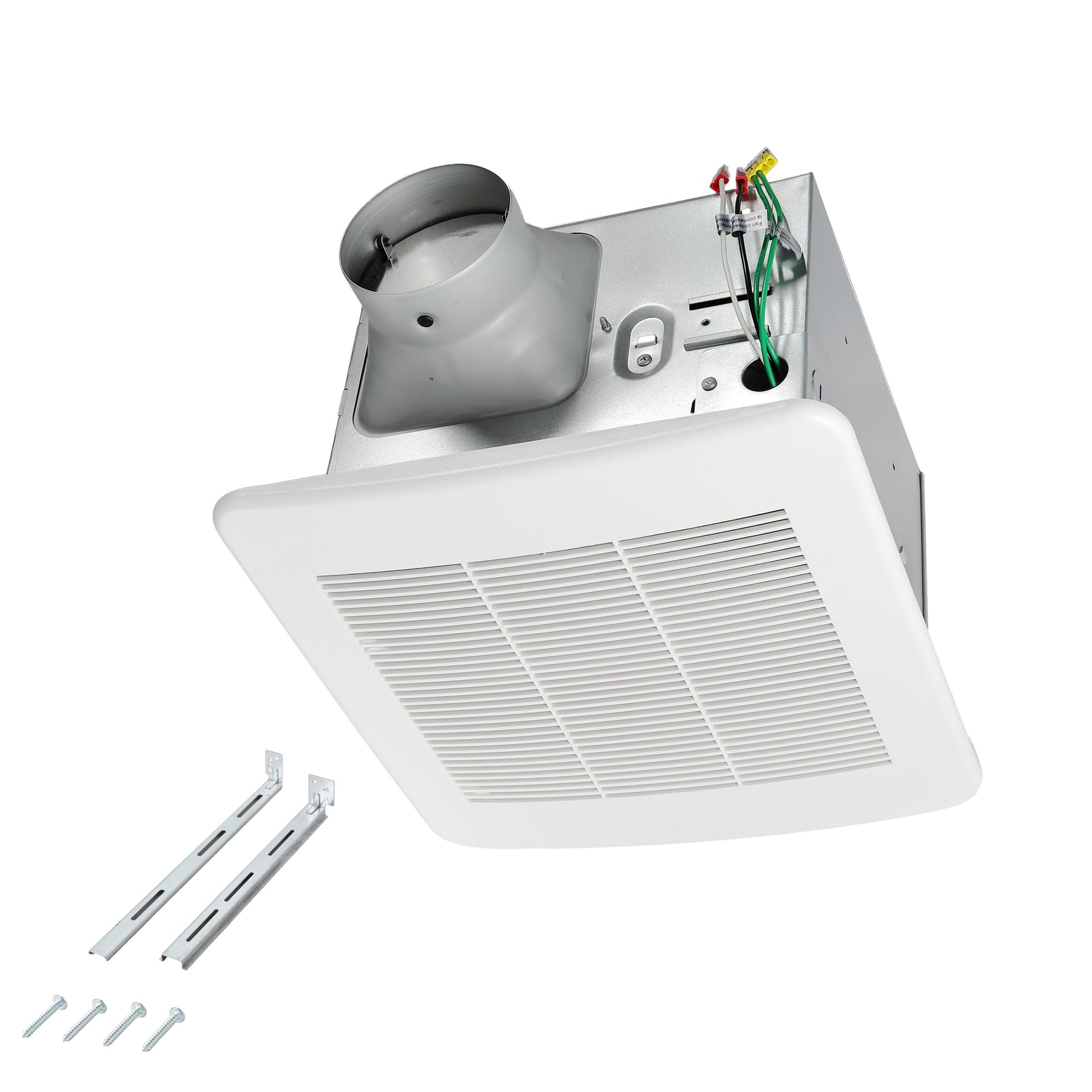
The Amazon Basics AB-BV100 delivers 110 CFM at just 1.0 sones, making it one of the highest airflow-per-noise ratios in the mid-premium tier. The galvanized steel housing and copper motor are built for longevity, and the polypropylene wind wheel reduces vibration noise compared to plastic-only impellers found on cheaper units.
This fan is ENERGY STAR certified and moves enough air for spaces up to 100 square feet. The ceiling hole requirement is 10.8 x 10.5 inches, which is larger than most competitors — measure your existing opening carefully. Installation is easier with attic access, though roomside retrofit is possible with some patience. The included pull-chain control is a simple, reliable option for basic on/off without a separate wall switch.
Owners consistently praise the quiet operation, calling it barely audible during use. The tradeoff is the larger housing footprint, which may not fit between standard 16-inch on-center joists without bracket adjustments. For large master bathrooms where 110 CFM is needed, this fan balances cost and performance exceptionally well.
Why it’s great
- High 110 CFM airflow at a competitive price point
- ENERGY STAR certified with a copper motor for durability
- Very quiet 1.0 sone operation at normal airflow speeds
Good to know
- Requires a larger ceiling cutout (10.8 x 10.5 in) than most models
- Installation is easier with attic access than roomside-only
3. Broan-NuTone AE80B
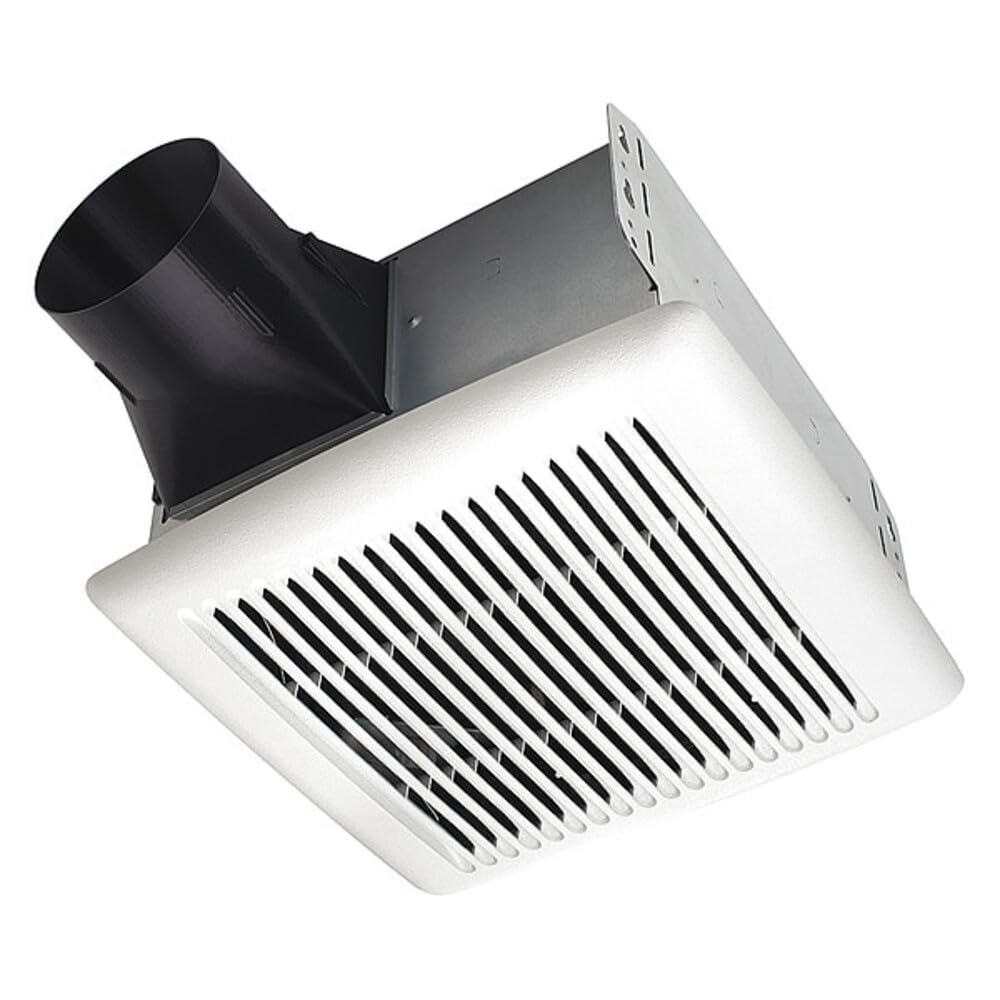
The Broan-NuTone AE80B is engineered specifically for roomside installation — you can replace an old fan entirely from below without entering the attic. The 9.25-inch square housing fits standard ceiling openings, and the TrueSeal Damper Technology reduces air leakage by up to 50% compared to competing models, which improves overall home energy performance.
At 80 CFM and 1.5 sones, this fan is noticeably quieter than the builder-grade 5-sone units it typically replaces. It is UL listed for use over tubs and showers with a GFCI circuit, so positioning it directly above the shower head is safe. Owners report that it eliminates mirror fog completely in bathrooms up to 75 square feet and that the noise level is low enough to allow normal conversation.
The included non-metallic damper and duct connector are simple to attach, though some users noted that the mounting screws included are too short for thicker ceiling drywall. The grille is held by spring fasteners for easy removal and cleaning. If attic access is impossible, this is the most reliable roomside retrofit option available.
Why it’s great
- Full roomside installation with no attic access required
- TrueSeal Damper cuts air leakage by up to 50%
- UL listed for tub and shower overhead placement
Good to know
- At 1.5 sones, it is louder than the 1.0-sone competitors on this list
- Included mounting screws may be too short for thick drywall
4. Zomagas 110 CFM Fan
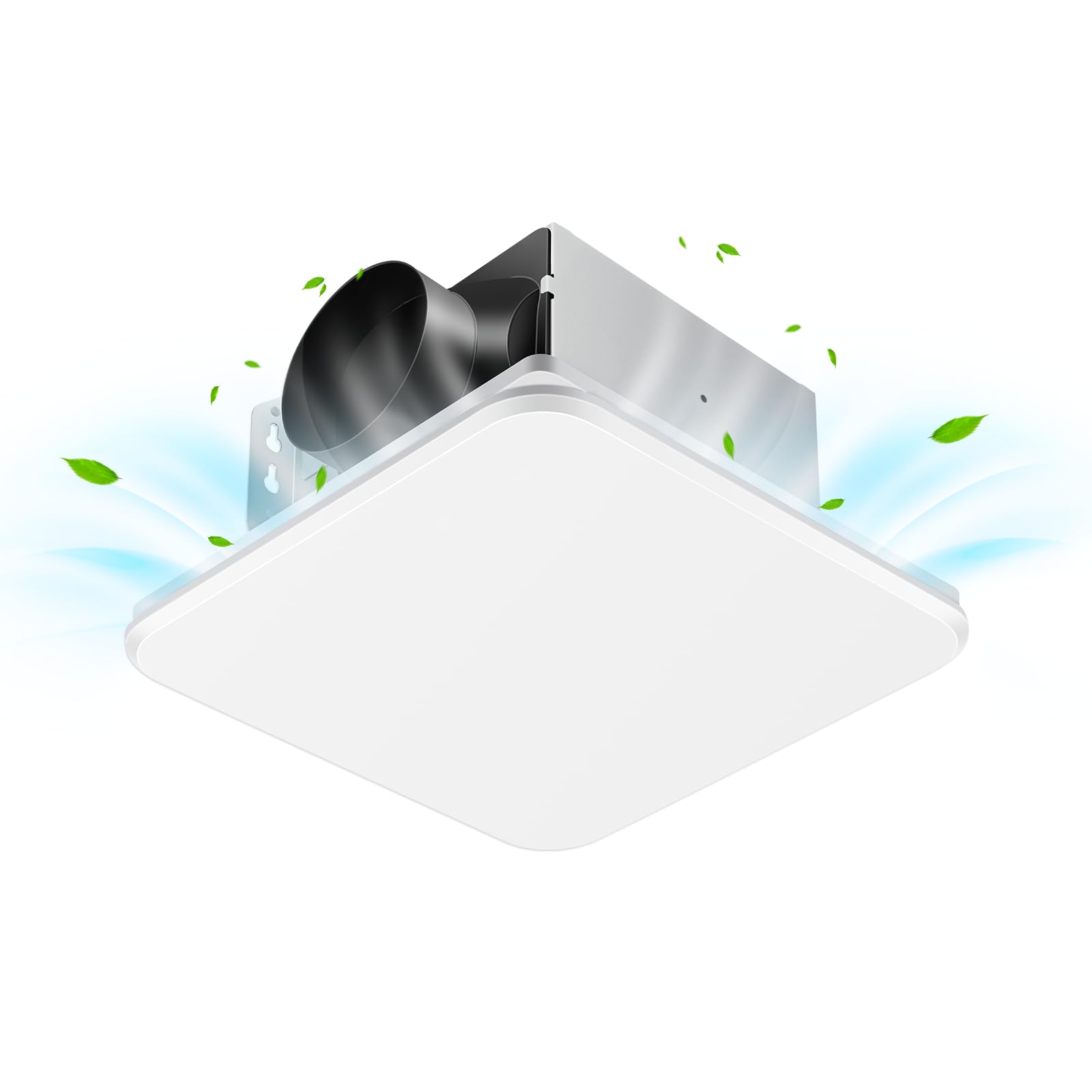
The Zomagas 110 CFM fan hits the same 1.0-sone and 110 CFM targets as the Amazon Basics model but at a lower entry price, making it a strong value proposition for large bathrooms. The multi-blade wheel design supports a 4-inch duct connection, and the housing measures 7.55 x 7.32 x 5.75 inches — a compact footprint that fits standard ceiling openings without major modifications.
The ABS plastic grille is corrosion-resistant and is held on by spring fasteners for tool-free removal during cleaning. The modern square white cover measures 11.81 inches across, which is large enough to hide old cutout gaps if you are retrofitting from a slightly larger fan. Owners report that the fan is genuinely quiet during operation and moves enough air to clear a steamy bathroom in under 10 minutes.
A minor installation quirk: the housing has two lips on the sides that can make insertion from below tricky. Some users bent these lips during install and then bent them back, while others trimmed the drywall slightly. Once mounted, the fan performs reliably and looks clean against white ceilings.
Why it’s great
- Excellent value for 110 CFM at 1.0 sones
- Large 11.8-inch grille covers old ceiling gaps
- Tool-free spring-fastener grille for easy cleaning
Good to know
- Housing lips can make ceiling insertion difficult from below
- Some trim or drywall adjustment may be needed during retrofit
5. Amico 80 CFM Fan
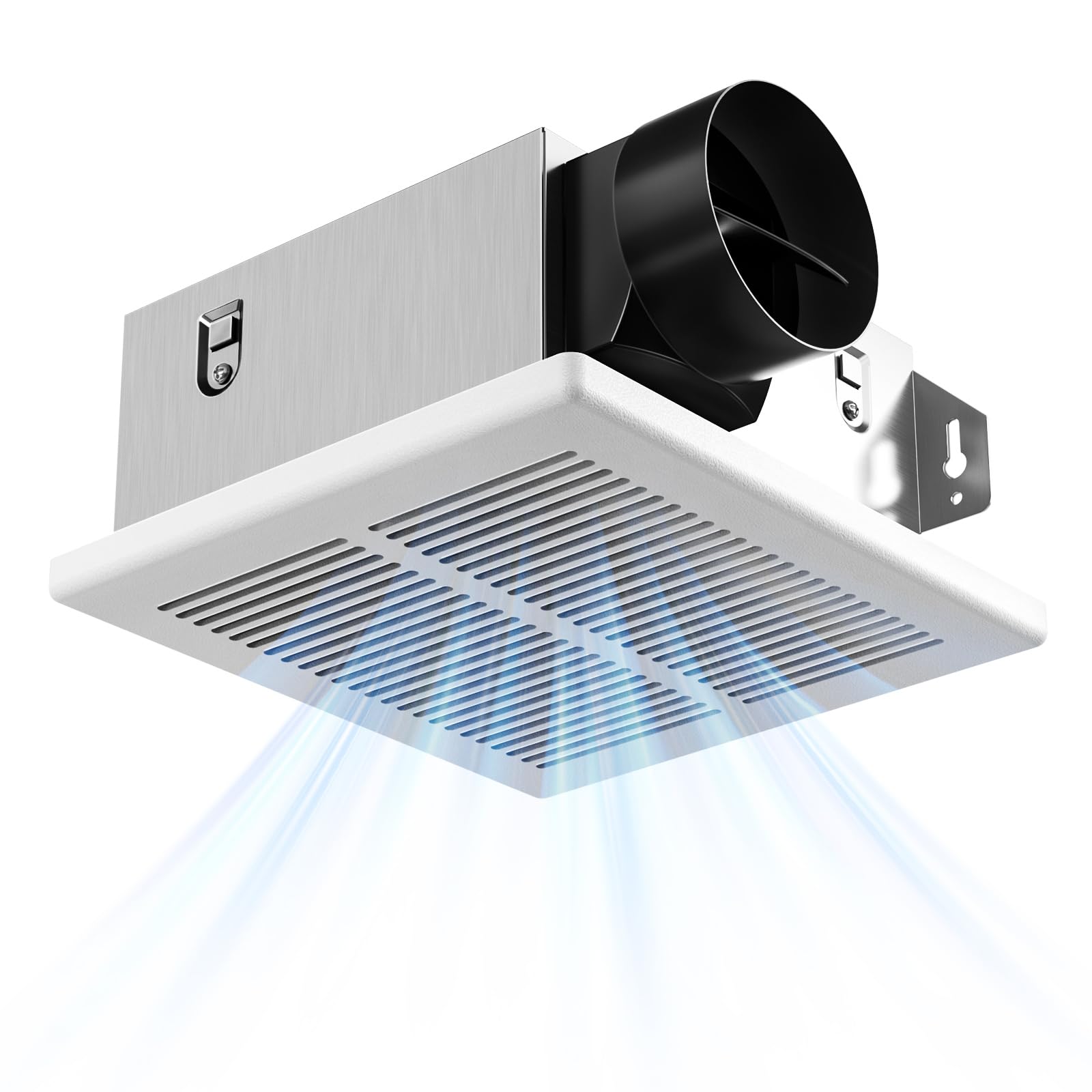
The Amico 80 CFM fan is purpose-built for tight ceiling cavities — its housing depth is only 4 inches, which fits into 2×6 framing (5.5 inches of actual depth) without any modifications. Most standard fans require 5.5 to 7 inches of depth, so this is a critical differentiator for shallow joist spaces found in many older homes and multi-story apartments.
At 1.0 sones and 80 CFM, it effectively clears steam in bathrooms up to 80 square feet. The aluminum finish on the housing resists corrosion in high-humidity environments, and the included brackets allow mounting directly to a joist or between joists with the provided hardware. The ceiling cutout required is 7.6 x 7.3 inches — a very common size that matches most existing openings.
Owner feedback is positive, with electricians specifically noting it as a professional-grade solution for shallow spaces. The noise profile is described as a soft white noise rather than a mechanical hum. One common callout: the fan uses a 4-inch duct, and if your existing ductwork is 3 inches, you will need a reducer, which can slightly increase backpressure and noise.
Why it’s great
- Only 4-inch housing depth fits 2×6 framing perfectly
- 1.0 sone operation with good 80 CFM airflow
- Corrosion-resistant aluminum housing for humid climates
Good to know
- Duct reducer needed if replacing a 3-inch duct system
- Side exhaust port can complicate alignment with existing duct runs
6. Homewerks 7140-50

The Homewerks 7140-50 is a dedicated small-space solution, delivering 50 CFM at 1.0 sones for bathrooms up to 50 square feet. The galvanized steel construction resists moisture damage, and the no-cut design means the housing fits standard 7.75 x 7.5-inch ceiling openings without trimming. The 4-inch round duct connector is standard for residential exhaust runs.
This fan is HVI and ENERGY STAR certified, and the low-profile white grille blends into the ceiling visually. Owners consistently describe it as very quiet — many note they cannot tell whether it is running without holding a hand near the grille to feel airflow. That level of acoustic discretion is exactly what you want in a powder room or half-bath where the fan runs during guest use.
The tradeoff is the 50 CFM capacity, which limits this fan to very small spaces. Attempting to use it in a 75-square-foot bathroom will leave steam lingering. Some users also reported that the side-exhaust port can be tricky to align with existing ductwork if the joist layout does not cooperate. For tight powder rooms, this is the quietest dedicated small-space fan available.
Why it’s great
- Very quiet 1.0 sone operation in small spaces
- No-cut design fits standard 7.75 x 7.5-inch openings
- ENERGY STAR and HVI certified for energy efficiency
Good to know
- Limited to bathrooms 50 sq ft or smaller
- Side exhaust can complicate alignment with existing duct runs
7. Harrier Hardware 70 CFM Fan

The Harrier Hardware 70 CFM fan is the most accessible entry point for someone replacing a broken or outdated unit on a tight budget. At 2.0 sones, it is not as whisper-quiet as the premium picks, but it is dramatically quieter than older builder-grade fans that run at 4–6 sones. For a -range fan, the noise reduction is noticeable and appreciated.
The galvanized steel housing is corrosion-resistant, which matters in humid attic spaces above showers. Quick-connect electrical connections simplify the wiring process, and the 3-inch duct outlet is standard for many older homes. The fan fits the same dimensions as most standard bathroom fans, making it a straightforward swap for DIY homeowners without attic access — just remove the old housing and slide this one in.
Owners note that the fan is relatively quiet for the price, but a few pointed out that the motor is not serviceable separately — if the motor fails, the entire unit must be replaced. The plastic blade is basic but effective for 70 CFM airflow. If your primary constraint is cost and you are upgrading from a loud fan, this delivers meaningful improvement without breaking the budget.
Why it’s great
- Very affordable upgrade from old builder-grade fans
- Galvanized steel housing resists moisture corrosion
- Quick-connect wiring simplifies DIY installation
Good to know
- 2.0 sones is louder than the 1.0-sone competitors on this list
- Motor is not separately serviceable — full unit replacement needed if it fails
FAQ
What sone level is considered quiet for a bathroom fan?
Can I install a bathroom fan without attic access?
How do I know what CFM rating I need for my bathroom?
Final Thoughts: The Verdict
For most users, the bathroom fans quiet winner is the KAZE APPLIANCE SNP100 because it combines the lowest sone rating (0.8) with strong 100 CFM performance and ENERGY STAR certification. If you need high airflow for a larger bathroom, grab the Amazon Basics AB-BV100. And for a roomside retrofit install with no attic access, nothing beats the Broan-NuTone AE80B.