
Our readers keep the lights on and my morning glass full of iced black tea. As an Amazon Associate, I earn from qualifying purchases.
Specs are compiled from manufacturer listings and verified buyer reviews and can change over time — please confirm the key details on the product page before buying.
A constipated cat is a quiet, unhappy cat — she may strain in the box, cry out, or stop producing stool altogether, and hairballs only make the backup worse. Cat laxatives come in four forms: lubricating gels, a ready-to-use enema syringe, flavored treats, and tiny odorless pills. This guide breaks down eight options cat owners keep on the shelf, matched to your cat’s temperament and condition.
I’m Min — the founder and writer behind Gadgets Feed. This guide is built by comparing the manufacturers’ published specifications and the patterns across verified customer reviews, so you get each pick’s real strengths and trade-offs instead of marketing spin.
What matters here is whether your cat will accept the remedy, how quickly it works, and what each ingredient does. Each product below is described by the specs that matter for your cat’s habits.
Our Picks at a Glance


How To Choose The Best Cat Laxative
The right cat laxative depends less on brand and more on what is actually backing up in your cat. Hairballs sitting in the stomach need a lubricant like petrolatum or soybean oil to slide hair through. Hard, dry stool that will not pass needs a stool softener — something with dioctyl sodium sulfosuccinate or psyllium husk fiber. Confusing the two is the most common mistake owners make. Below is what actually separates the picks.
Active ingredients — lubricant or softener?
A hairball gel uses oils — petrolatum, glycerin, vegetable or soybean oil — to coat ingested hair so it moves through the digestive tract and out in the stool. A stool softener works differently: it draws moisture into the stool itself, softening hard fecal matter so your cat can push it out without straining. Many products here blend both jobs, which is why a formula like the ones with psyllium husk and malt covers hairball prevention and general digestive support together.
How you give it — and whether your cat accepts it
Administration is the dealbreaker. Gels go on the nose or paw so your cat licks it off; treats are handed over like any snack; drops go into wet food; pills hide in a hollow treat or dissolve in water. A product your vet swears by is useless if your cat refuses it, so match the delivery to your cat’s personality.
Quick Comparison
| Model | Best For | Form | Flavor | Key Ingredient | Amazon |
|---|---|---|---|---|---|
| PetAg Hairball Solution Gel★ Best Overall | Daily hairball prevention | Gel | Chicken | Petrolatum, glycerin | Amazon |
| PRN Pharmacal PetEmaEmergency Pick | Fast constipation relief | Enema syringe | — | Dioctyl sodium sulfosuccinate | Amazon |
| Pugalo Cat Hairball Remedy GelGentle Daily | Gentle daily hairball support | Gel paste | Malt | Psyllium husk, slippery elm | Amazon |
| Rocco & Roxie Hairball Control Treats | Treat-based daily dosing | Chew | Chicken | Slippery elm, psyllium husk | Amazon |
| Tomlyn Laxatone | Maple-flavor hairball gel | Gel | Maple | Soybean oil, omega fatty acids | Amazon |
| SANTKOL Hairball Treatment | Picky eaters | Liquid | Cat Grass | Psyllium husk, safflower seeds | Amazon |
| Netwik Cat Constipation Relief | Fast-acting constipation relief | Liquid tincture | — | Natural ingredients | Amazon |
| BestLife4Pets Cat Laxative Pills | Multi-cat homes, routine dosing | Pills | Odorless | Plant-based homeopathic blend | Amazon |
In‑Depth Reviews
1. PetAg Hairball Solution Gel Supplement for Cats – 3.5 oz, Pack of 2
Our pick — 4.5★ from 550+ verified ratings; the strongest balance of quality and price.
The two-tube chicken-flavored gel that handles shedding season without a wrestling match.
If your cat coats the furniture in spring and you are tired of finding half-digested fur on the rug, this is the pick to start with. The gel is built on petrolatum, glycerin, and vegetable oil — three lubricants that coat swallowed hair so it slides through the digestive tract and comes out in the stool instead of coming back up. Each pack holds two 3.5-ounce tubes of chicken-flavored gel, and it is labeled for cats 6 months and older. That weight and flavor matter in practice: a 3.5-ounce tube lasts a long time at the two half-inch squeezes every few days that long-haired cats typically need, and the chicken taste is the reason many cats treat the dose like a snack.
What wins people over is how reliably the stuff works for both jobs — hairball prevention and general constipation. Owners of long-furred cats describe giving a couple of short squeezes every few days and never seeing a stuck hairball return, and the gel texture is thick enough that it holds on the nose or paw long enough for the cat to lick it clean. It also shines during heavy shedding, when the volume of ingested hair spikes and a lubricant earns its keep.
The catch is texture and cost consistency. A few cats turn their nose up at the vegetable-flavored formula and need it smeared higher on the paw, and the per-tube value splits opinion — some see a fair price, others prefer a single larger tube. Neither is a dealbreaker for a lubricant this easy to administer, and the 4.5-star standing with hundreds of ratings backs that up. This is the tube to reach for when your priority is preventing hairballs from forming in the first place.
gel supplement
- Petrolatum, glycerin, and vegetable oil lubricate hair so it passes in stool
- Chicken flavor earns a willing lick right off the nose or paw
- Suitable from 6 months of age across all breeds
- Two 3.5-ounce tubes cover months of intermittent dosing
slow results
- A minority of cats refuse the vegetable-flavored gel
- Value-for-money feedback splits across the reviews
multi-cat homes: owners of long-haired cats who want a low-effort daily or every-other-day hairball lubricant.
fast results: your cat has already stopped stooling entirely — a lubricant gel is prevention, not emergency clearance.
2. PRN Pharmacal PetEma – Disposable Single Use Enema for Cats and Kittens – 6 mL Syringe
When a cat has gone days without a bowel movement, this is the syringe that clears the block fast.
A cat that is straining, crying, or producing only small hard rocks needs more than lubrication — she needs help pushing hard stool out. Each PetEma syringe holds 6 mL of rectal gel containing 125 mg of dioctyl sodium sulfosuccinate plus glycerin and sorbic acid. That combo does two things at once: the dioctyl softens hard fecal matter, and the glycerin stimulates the intestinal lining to trigger a bowel movement. For scale, this syringe weighs just 0.352 ounces, roughly a tenth the weight of the 3.5-ounce PetAg gel above — because it is a single measured dose, not a multi-week tube of lubricant.
The relief here can be genuinely dramatic and quick. Senior cats on the brink, constipated kittens, cats whose stool has hardened into pellets — owners describe a response within ten minutes, and some after just two. Preparation is the honest part: pick a bathroom, lay down a litter box, protect surfaces, and expect some spraying and a bout of diarrhea afterward, since that is what loosening backed-up stool looks like. Warming the syringe and using a dab of petroleum jelly is the common trick for a smoother insertion.
Here is the caution that matters most. This is a short-term solution, not a daily routine. When stool sits too far up the colon, a rectal enema cannot reach it, and the product itself is labeled for use by or on the order of a licensed veterinarian. Side effects like salivation and vomiting show up in some cats, and a cat with a heart condition or kidney disease should have a vet in the loop. Treat this as your at-home bridge for an acute backup — the same product many clinics use — not a replacement for treating the underlying cause.
single-use enema: with 561 ratings behind it and effectiveness the clear top praise, this is the syringe owners reach for when their cat has not gone for days and the vet cannot be seen immediately.
vet guidance: it works on stool low in the colon — deep-seated blockages need a vet, and the messy aftermath and occasional salivation come with the territory.
severe cases: your cat is acutely constipated, straining, or in urgent discomfort and you need a fast at-home option.
mild issues: you want an ongoing daily laxative for chronic constipation — that job belongs to a gel, drop, or pill, with your vet guiding the plan.
3. Cat Hairball Remedy Gel 100ml (3.5oz) Malt Paste for Cats
A malt-flavored paste that turns hairball duty into a treat your cat asks for.
For the owner who wants a tidy, low-stress daily routine, this 100ml tube works two ways at once. Psyllium husk and malt team up to sweep ingested hair through the gut, while pumpkin powder and slippery elm bark soothe the digestive tract — so it addresses hairball prevention and general digestive comfort in a single lick. The texture is soft and easy to chew, and most cats take it straight from the tube or off a finger without a fight. As a bonus, it is loaded with vitamins and minerals aimed at coat health, which is why owners of long-haired and shedding cats tend to keep a tube on hand.
The flavor is the real headline. Malt is what most cats actually want, and this paste leans on that — the taste is the most-praised trait, with cats licking it right off the finger.
The honest caveat is fit, not quality. Not every cat will take the paste — some turn their nose up no matter whether it is offered on a spoon or mixed into food, and a cat that refuses it entirely will leave you hunting for a different delivery method. If your cat is a willing licker, though, the 4.3-star standing and a full ingredients list you can read make this an easy everyday choice.
daily use: a cat who happily licks malt paste and needs gentle, ongoing hairball and coat support across any life stage.
picky cats: your cat is a confirmed paste refuser — try a treat or drop format instead.
4. Rocco & Roxie Hairball Control Cat Treats, Chicken, 300 Ct
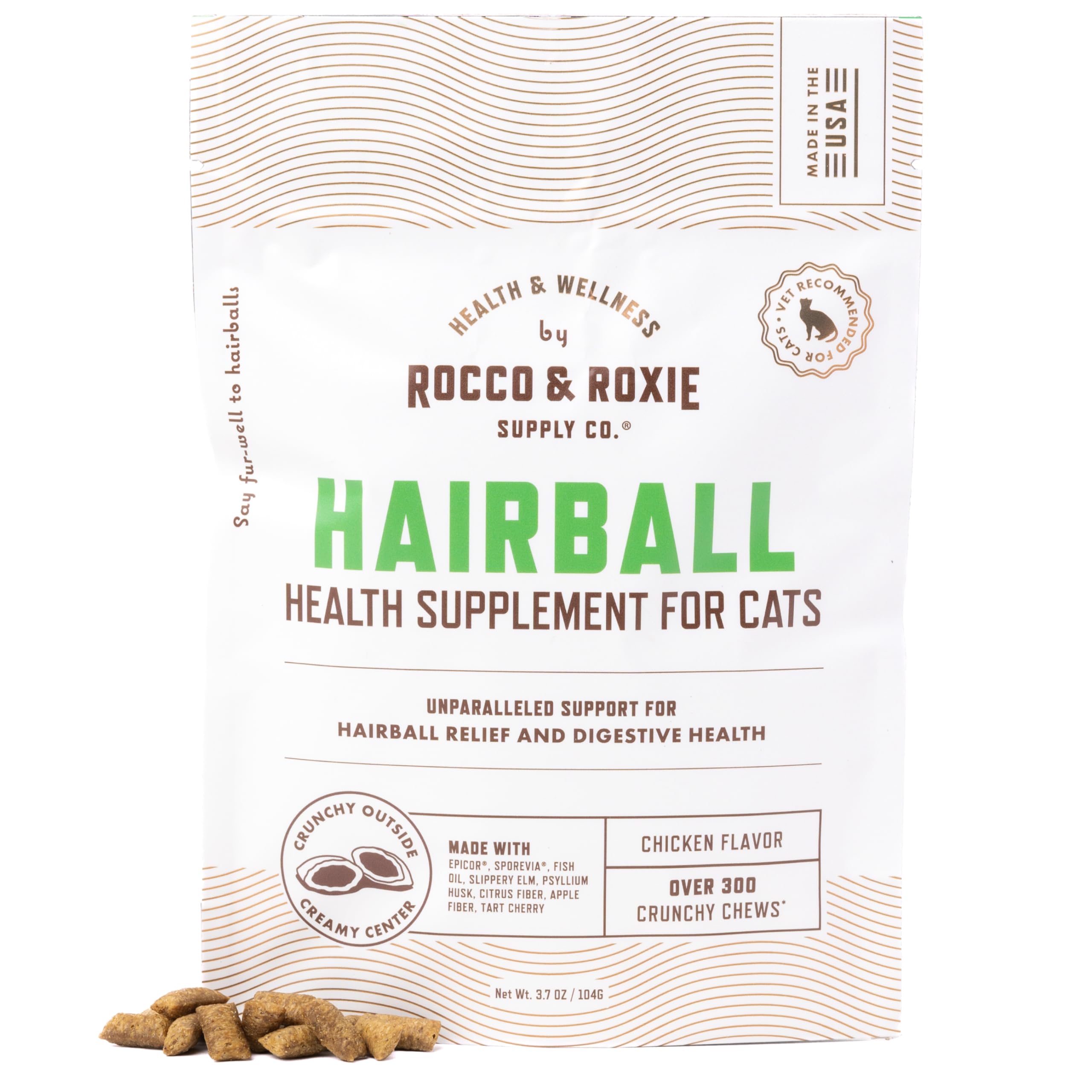
The hairball routine that hides inside a treat your cat actually waits by the bowl for.
Some cats will not tolerate a gel on the nose or a dropper in the food, and that is exactly the cat this 300-count tin of chicken chews is built for. Each treat carries a dual-textured bite — crunchy outside, soft center — made with slippery elm, psyllium husk, apple fiber, and a probiotic blend, all aimed at reducing hairball formation and settling stomach irritation. You hand them over like any snack, no smearing or syringing required, and the 300-chew count keeps a multi-cat household in supply for a long stretch.
What owners love is how little the cat fights it. Cats gobble these down and treat dinnertime like a ritual, and a kitten who used to hack up hairballs went quiet on the hacking when dosed a handful of chews a day. That convenience is the whole point: a treat format almost always gets eaten, which is more than you can say for a tube of paste or a syringe.
Two things to know before you commit. First, some cats simply will not eat them, and opinions split on value for money — a tin of 300 chews asks more up front than a single gel tube. Second, chews are a daily-management tool, not an emergency fix for a cat already blocked up. For the right cat, this is the lowest-friction way to keep hairballs in check with zero wrestling.
chicken treats: the treat delivery is the draw — 194 ratings with pet preference leading the praise tells you cats eat these without a struggle, which is half the battle won.
treat reliance: a finicky cat may ignore even a chicken chew, and the value-per-treat math splits opinion. Buy one tin to test before stocking up.
treat lovers: households that want a no-fuss daily hairball chew and have at least one cat who treats snacks as the highlight of the day.
diet restrictions: a cat with an active blockage — treats reduce hairballs over time, they do not clear a backed-up colon.
5. TOMLYN Laxatone Maple-Flavored Hairball Remedy Gel for Cats and Kittens, 4.25oz
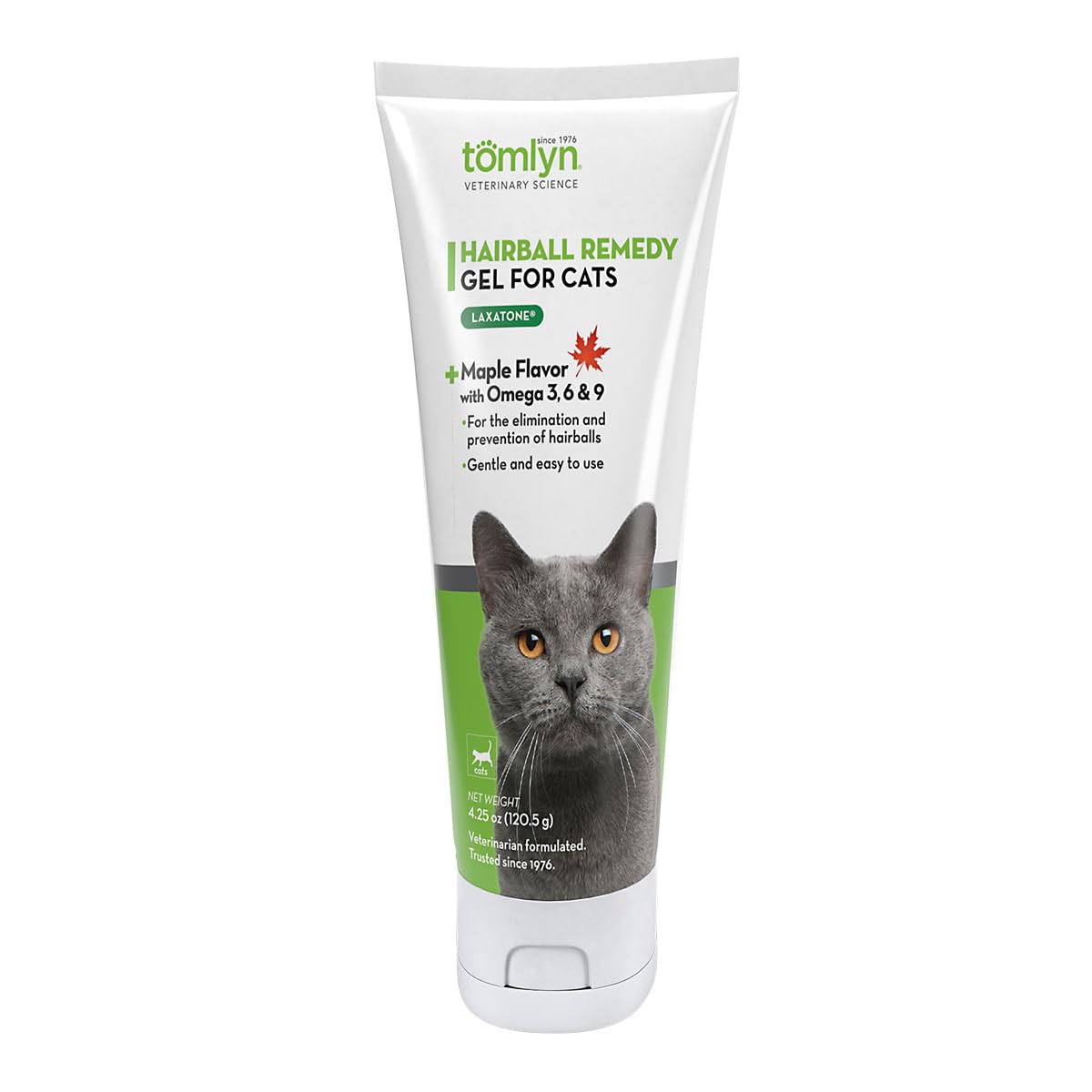
The maple-flavored gel that skips the fishy smell and lubes hairballs out quietly.
If the fish-flavored gels have you holding your nose, this one runs on soybean oil and omega-3, -6, and -9 fatty acids — a lubricant blend that coats ingested hair so it moves through the digestive tract and passes in the stool. It carries the widest review base of the bunch and holds a 4.4-star standing, which for a hairball gel means it has been keeping cats symptom-free for years, not weeks. The maple flavor is the draw for cats who dislike fish, and it goes on the nose or paw so the cat does the work of licking it off.
The standout wins are practical. Owners of Persian and other long-haired cats describe a steady every-other-day rhythm that resolves gagging, coughing, appetite loss, and constipation — and keeps them resolved even into senior years. And it does not drip off the nose the way thinner gels can, so the dose actually gets swallowed instead of flicked onto the floor.
One small aesthetic quirk: several users find the 4.25-ounce tube oozes a little between doses, leaving a bit of mess around the nozzle. It is a packaging annoyance, not a formula problem — keep the cap snug and it is a non-issue. For texture-sensitive cats who cough up hairballs chronically, this is about as reliable as a daily gel gets.
flavor acceptance: you want a maple (non-fish) gel for a long-haired or chronic-hairball cat and value the widest track record in the category.
sugar concerns: nozzle oozing between doses would annoy you more than it helps — a squeeze-tube with a cleaner cap may suit better.
6. Hairball Treatment for Cats – Cat Hairball Remedy – Natural Ingredients & Vitamins – Cat Grass Flavor

A cat-grass-flavored liquid that picky fur babies will actually lap from the bowl.
When your cat rejects everything, a flavored liquid tends to win where gels and chews fail. This 60 ml bottle doses out as drops you mix into wet food, water, or milk — no smearing, no syringing. Each serving is a measured blend: 100 mg psyllium husk, 50 mg safflower seeds, 50 mg flaxseed, cat grass, 100 mg inulin, 100 mg Bacillus Subtilis, plus Vitamin A, Vitamin D3, and 500 mg lysine. The formula is grain-free, gluten-free, and dairy-free, made in the USA, and suited to cats of any age, breed, or size.
Owners with daily hacking cats describe the difference as near-immediate: a few drops stirred into wet food and the vomiting episodes stop cold. It is easy to use, pleasant-tasting, gentle on the gut, and one of the rare liquid formulas picky cats accept without a fight. The 2-fluid-ounce bottle translates to a good run of daily doses, which softens the up-front cost.
The recurring complaint is texture. The liquid runs thick and sticky, which makes the dropper hard to control and can leave residue that gums up the bottle cap between uses. Running warm water over the bottle before and after dosing loosens the dropper and cleans the threads. If your cat drinks it from the food, thickness is a small tax to pay for a formula that stops the hairballs at their source.
natural preference: the home with a picky cat who snubs gels and chews but will take flavored drops mixed into food.
synthetic needs: the sticky texture needs a warm-water rinse on the bottle to keep the dropper usable and the cap clean.
7. Cat Constipation Relief, Cat Laxative Constipation Relief Tincture
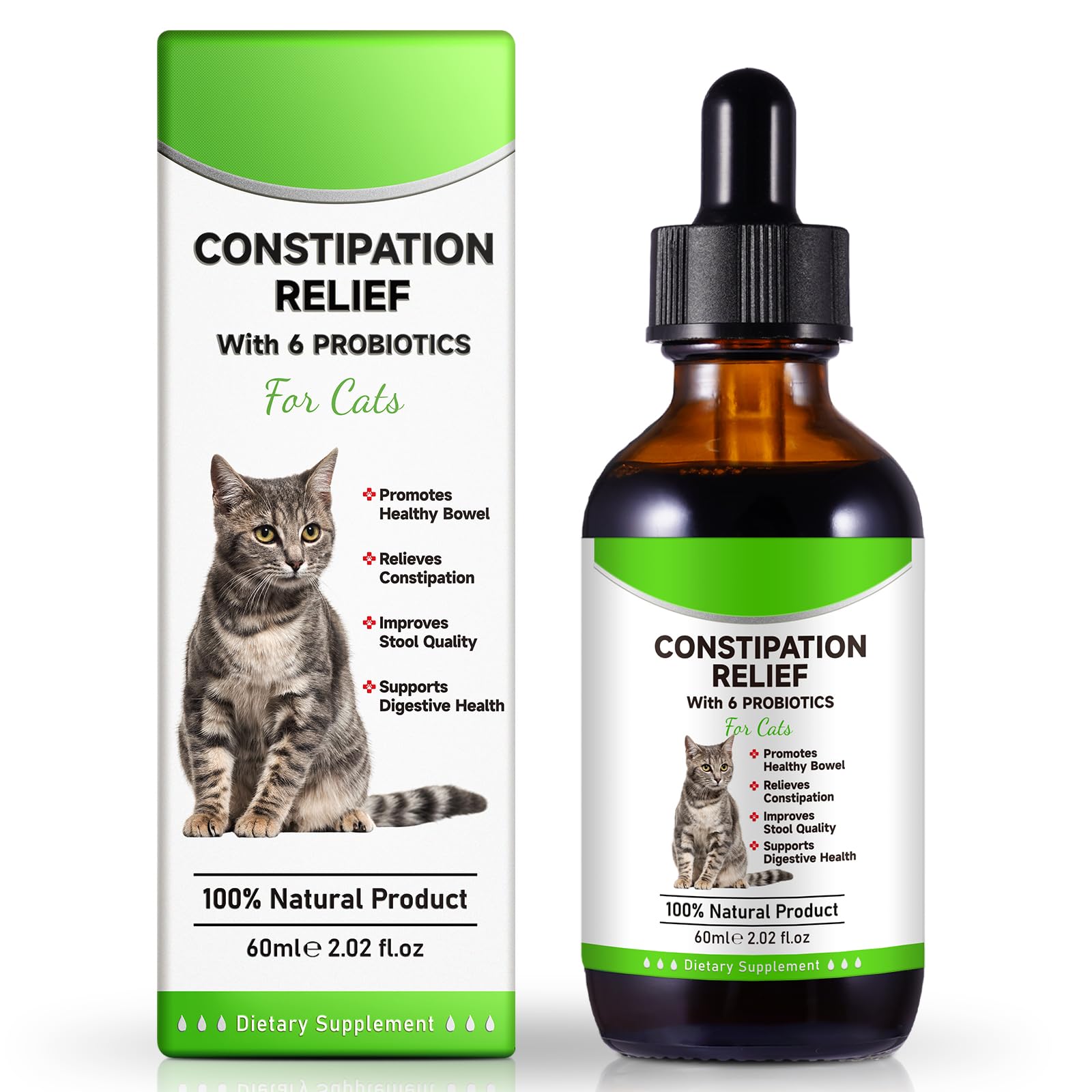
A natural dropper tincture that helps a blocked cat get regular again, gently.
When your cat has gone a full week without producing stool, this liquid tincture is built for the job. It comes as a concentrated natural formula with a dropper that lets you measure the exact dose, so you are not guessing. The draw is the gentleness: it works to ease the stool along without tipping your cat to the opposite problem of loose, runny output. That balance — enough to help without overshooting into diarrhea — is what the best-loved constipation aids share, and it is what owners of senior and post-surgery cats tend to notice first.
The relief is real and generally fast, though not instant. One cat on a bland chicken-baby-food diet who had not gone in nine days produced several bowel movements by evening once the tincture went into the food. Others find it takes a few days, especially in chronic cases where the vet piles on additional support like Miralax or extra hydration. Where this tincture shines is as the daily nudge — the thing you reach for at the first sign of straining, before it escalates.
Two things worth naming. It is not a standalone cure for a deeply blocked cat; for animals with a confirmed condition like megacolon, this is a support tool, not a replacement for a vet’s plan. And the value math splits opinion at this size — check the bottle volume against how often you dose. Handled as a gentle daily companion rather than a miracle fix, though, it earns its place with 969 ratings and effectiveness far and away the top praise.
constipation relief: this is the go-to for cat owners dealing with chronic constipation — effectiveness leads the praise by a wide margin, with 969 ratings behind it.
dosage care: use it as a managed daily companion, not a fix for an acutely blocked cat. Deep-seated blockages need a vet.
occasional use: owners dealing with recurring constipation, senior cats, and cats who need a gentle, measurable daily dose in their food.
chronic issues: your cat is in acute distress with an obvious full blockage — see a vet before you rely on a liquid alone.
8. BestLife4Pets Cat Laxative Constipation Relief Pills, 400 Count
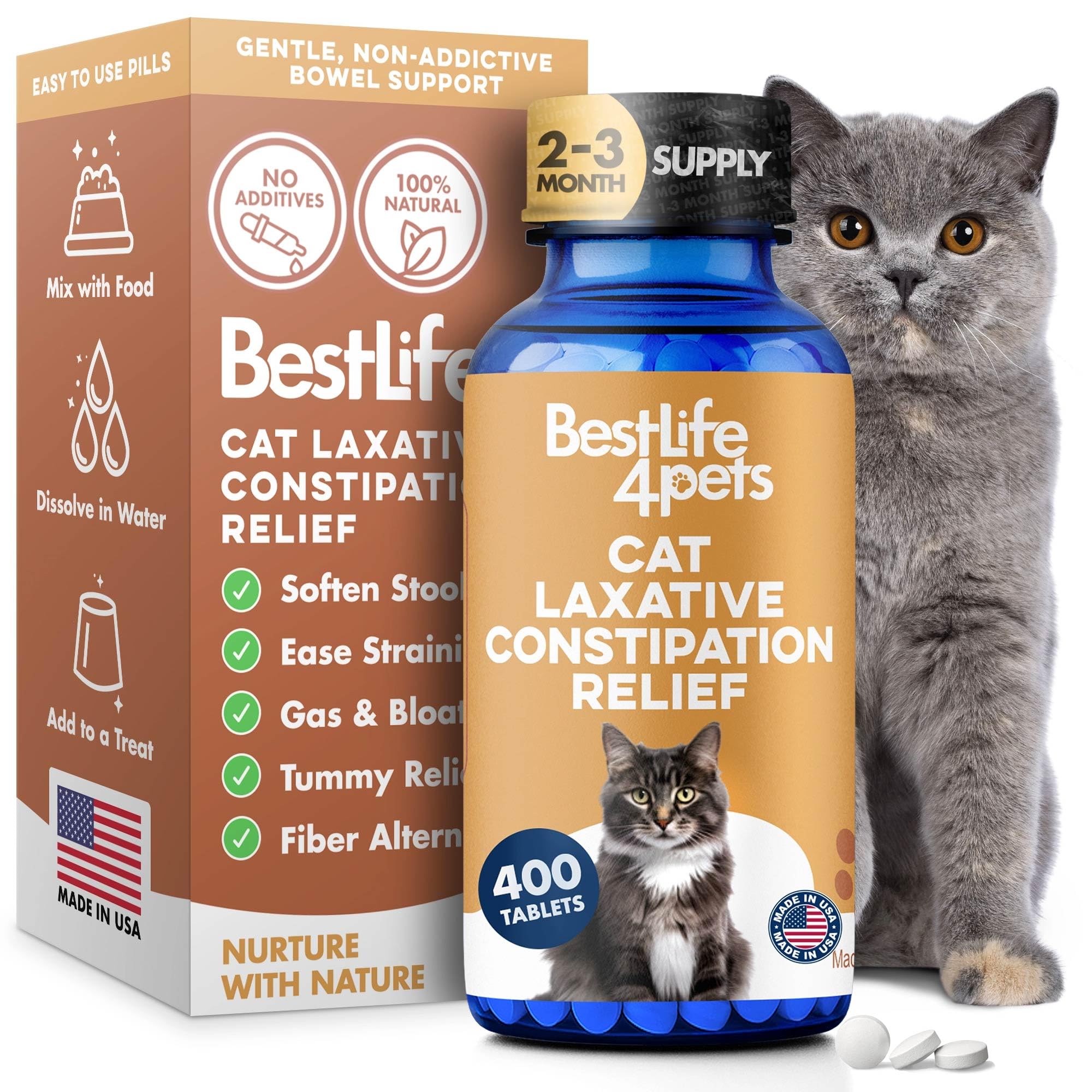
The tiny, tasteless pills for cats who turn their nose up at sticky gels and droppers.
For the owner who has tried every gel and lost, these 400 odorless pills sidestep the whole mess problem. Each pill is tiny, tasteless, and hides easily — crush it into wet food, tuck it in a hollow treat, or dissolve it in water. There is no sticky tube, no dripper to clean, and no oily residue on the cap. It is a plant-based, homeopathic-style blend formulated without chemicals, stimulants, or artificial additives, designed to encourage softer stools and daily bowel support for cats of all breeds and ages.
The dosing flexibility is where this earns its keep. A cat with kidney disease who could not be dosed with a gel took the pills hidden in a sealed treat — several in the morning, several at night — and produced a bowel movement the same evening. Others who fought every gel say the pills are the first thing their cat will accept without complaint, and the multi-cat math favors a 400-count bottle if you are managing more than one senior.
Be honest about the limits, though. This is a gentle homeopathic-style laxative, not an enema, and results vary — some chronic cases need several pills a day and still call for additional support, and a determined pill-hater will sniff it out no matter how you hide it. For a multi-cat home that wants a clean, measured, no-mess daily routine, though, it is a strong, low-stress option.
pill takers: multi-cat or gel-weary households that want a clean, measured pill format with no sticky residue and a 400-count bottle to spread across cats.
pill refusal: your cat is sharply food-shy — a finicky pill-hater may need softer delivery like drops or liquid, not tablets.
Understanding the Specs
Lubricant vs. stool softener
The single most useful spec on any cat laxative label is its active ingredient, because it tells you which problem the product solves. Lubricants like petrolatum, glycerin, and soybean oil coat swallowed hair and loose stool so they slide through the gut — the right tool for frequent hairballs. Stool softeners such as dioctyl sodium sulfosuccinate or psyllium husk pull water into the stool itself, softening hard, dry fecal matter so your cat can pass it without straining. Many formulas blend both, which is why a gel with psyllium husk plus malt covers hairball control and digestive support in one dose.
Form and delivery
The form a laxative comes in — rectal syringe, gel, liquid tincture, chew, or pill — decides whether your cat actually gets the medicine. Rectal syringes like the PRN PetEma deliver a single 6 mL dose fast for an acute backup. Gels and pastes go on the nose or paw, or lick straight off a finger. Liquids mix into wet food or water, and pills hide in a treat or dissolve. If your cat refuses one format, switch to another that fits their habits.
FAQ
How do I know if my cat needs a laxative or just has a hairball?
Can I use a cat laxative every day?
Why did my cat’s enema only give partial relief?
What is the difference between a hairball gel and a stool softener?
My cat refuses gel — what format should I try?
Are the pills safe to give alongside other medications?
How long does a hairball remedy take to work?
Should I switch my cat to wet food while using a laxative?
Will a hairball remedy help with constipation too?
How do I store a cat laxative safely?
Final Thoughts: The Verdict
For most cat owners dealing with hairballs and the odd constipation flare, the winner is the PetAg Hairball Solution Gel — petrolatum, glycerin, and vegetable oil, a chicken flavor cats want, and two 3.5-ounce tubes that cover months of dosing. If your cat has gone days without a bowel movement and needs fast, in-the-moment clearance, grab the PRN Pharmacal PetEma syringe — 6 mL with 125 mg of dioctyl sodium sulfosuccinate, the same product many clinics use, kept on hand purely for acute relief. And if your cat turns their nose up at gels entirely, the Rocco & Roxie Hairball Control Treats hide the routine inside a chicken chew your cat will actually eat. For the fluffiest, sheddingest cat in the house, a lubricating gel plus one of these backup options covers you for hairballs and the occasional backup, so nobody has to suffer in silence.
How We Picked
We do not accept paid placement. Every pick is matched to a real buyer and a real use-case; we do not hands-on test units.
Sources & Methodology
Specifications: manufacturer listings and product documentation. Review insights: verified customer reviews, as of September 2026. Pricing: not shown on this page (it changes often); check the current price via the retailer link.
As an Amazon Associate, Gadgets Feed earns from qualifying purchases. This does not affect which products we feature.