
Choosing the wrong steel tubing for a brake, fuel, or hydraulic line means leaks, kinked bends, and a failed repair that endangers the whole vehicle. The material science behind a simple quarter-inch tube determines whether that plumbing route lasts through winter salt, high-pressure pulses, or constant vibration. The wall thickness, alloy composition, and coating technology all directly impact how easily the line bends without collapsing and how many years it resists corrosion.
I’m Min — the co-founder and writer behind Gadgets Feed. Hundreds of hours of cross-referencing SAE specs, bend-test reviews, and corrosion data went into separating the tubing that handles real-world pressure from the coils that crack on first flare.
Whether you’re running a new brake circuit, replacing a rusty fuel return, or plumbing an air-ride system, this guide ranks the most reliable options for the 1/4 inch steel tubing you need for a leak-free, long-lasting install.
How To Choose The Best 1/4 Inch Steel Tubing
Every quarter-inch tubing choice starts with three fixed decisions: the operating pressure of your system, the fluid type you are moving, and the environmental exposure the line will face. Brake systems demand double-wall steel with a zinc coating for DOT compliance, while fuel return lines can tolerate aluminum or copper alloys. Wall thickness is your primary variable — thinner 0.028″ walls bend easier but resist less impact damage, while 0.035″ or 0.039″ walls offer higher burst resistance at the cost of needing a bender for tight radii.
Material Alloy and Corrosion Strategy
Galvanized steel (copper-brazed double-wall) is the standard for hydraulic brake lines because it meets SAE J527 and can be double-flared without cracking. 304 stainless steel offers the highest corrosion resistance but work-hardens quickly — you need a dedicated tool to form reliable 37-degree flares. Copper tubing (C12200) works for HVAC and refrigeration lines where softness matters, but it lacks the mechanical strength for high-pressure brake circuits. Aluminum 3003 alloy is light and corrosion-resistant for fuel or air systems, yet it cracks under repeated vibration if not properly supported.
Coating and Protective Layers
A zinc coating on galvanized tubing provides sacrificial corrosion protection — the zinc oxidizes before the steel underneath. Stainless steel needs no coating because chromium oxide forms a passive layer, but it costs significantly more per foot. Some copper-coated steel lines look like copper but are magnetic inside: the steel core rusts once the thin copper layer is scratched during bending or flaring. For salt-belt vehicles, stainless gravel-guard springs (like the Stop Shop protector) add an outer physical barrier that prevents stone impact from exposing the base metal.
Length, Packaging, and Fittings
Coiled tubing (25 or 100 feet) is economical for long uninterrupted runs but must be unrolled carefully to avoid introducing permanent kinks. Pre-cut straight lengths (16-inch sections) suit small projects like spacers or short jumpers where a coil is inconvenient. Kits that include assorted inverted flare nuts (7/16-24, 1/2-20, 9/16-18 thread sizes) save a separate trip to the hardware store — but verify the included nuts match your vehicle’s flare seat profile, especially on Asian and European imports.
Quick Comparison
On smaller screens, swipe sideways to see the full table.
| Model | Category | Best For | Key Spec | Amazon |
|---|---|---|---|---|
| MuHize Brake Line Kit | Premium Kit | Complete brake system replacement | 3000 PSI max / dual-size coil | Amazon |
| 4LIFETIMELINES Galvanized Coil | Mid-Range | DOT-approved brake line repair | 0.028″ wall / 25 ft coil | Amazon |
| BELLA BAYS Copper Tubing | Mid-Range | HVAC and refrigeration lines | C12200 / 0.028″ wall / 10 ft | Amazon |
| Podavelle Aluminum Hardline | Mid-Range | Lightweight fuel or air systems | 3003 alloy / 650 PSI / 25 ft | Amazon |
| The Stop Shop Gravel Guard | Premium Add-On | Protecting exposed brake lines | Stainless spring / 16 ft | Amazon |
| Tynulox 304 Stainless Tube | Budget | Short structural spacers or crafts | 0.039″ wall / 5 x 16″ pieces | Amazon |
| GOORY Copper Tubing | Premium Bulk | Long HVAC line set runs | C12200 / 0.028″ wall / 100 ft | Amazon |
In‑Depth Reviews
1. MuHize Brake Line Tubing Kit
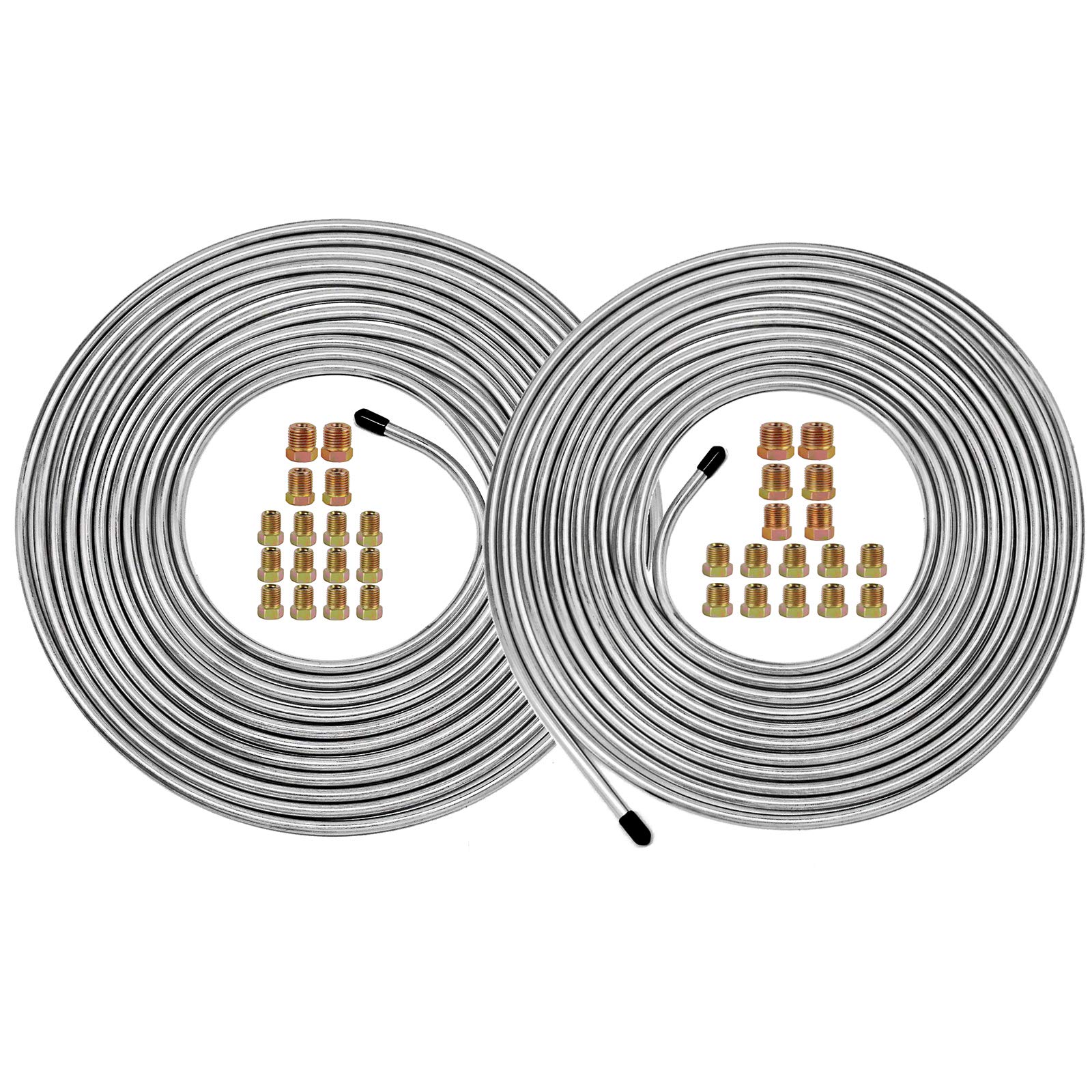
MuHize bundles both 3/16″ and 1/4″ coils (25 feet each) with 28 inverted flare nuts across four common thread sizes, making this the most complete drop-in brake line solution on the list. The zinc-coated steel bends by hand without kinking when you work gradually, and the 3000 PSI pressure rating comfortably exceeds the demands of any passenger car hydraulic system. The double-wall construction flares cleanly using a standard double-flare tool, though the included nuts feel slightly short for some Japanese OEM seats — you may need to reuse your factory fittings for a perfect seal.
Users consistently report that the copper-colored coating (a thin copper layer over a magnetic steel core) provides decent corrosion protection for 5–10 years in moderate climates, but rust-belt winters will eventually find any scratch in the plating. The kit excels as a one-order solution for a full brake system overhaul — you get enough nuts to replace every junction on a typical four-wheel disc setup plus a fuel return line. The 0.63″ nominal wall thickness cited in the listing appears to be a data error; the actual tube wall matches standard 0.028″ automotive brake line, which is easy to flare and bend.
For a DIY mechanic replacing rusted hard lines on a multi-vehicle project, the MuHize kit eliminates the annoyance of sourcing separate nut packs and measuring thread pitches. The sheer volume of fittings — including the less common 9/16-18 and 1/2-20 sizes — means you can finish the job without a second trip to the auto parts store. Professional shops will appreciate the 25-foot continuous coils that allow routing long chassis lines without splicing.
Why it’s great
- Complete kit with 28 assorted inverted flare nuts saves separate fitting purchases
- 3000 PSI max pressure covers brake and high-pressure fuel circuits
- Dual-coil design (3/16″ + 1/4″) handles most vehicle hard-line needs in one box
Good to know
- Included nuts are slightly short for some Asian import flare seats
- Copper coating scratches easily — undercoating recommended for rust-belt vehicles
2. 4LIFETIMELINES Galvanized Steel Tubing

This 25-foot galvanized steel coil from 4LIFETIMELINES hits the sweet spot between cost and compliance — it meets SAE J527 and DOT requirements for hydraulic braking systems, so you can use it with confidence on road-driven vehicles. The double-walled copper-brazed construction with a 0.028″ nominal wall thickness bends smoothly around a spring bender without collapsing the inner diameter, and the zinc coating provides reliable corrosion protection for exposed chassis runs. Users report forming tight 90-degree bends by hand with moderate effort, though a proper tube bender gives cleaner results on radiuses under two inches.
Real-world feedback highlights the coil’s versatility beyond brake lines: several owners used it as a fuel return line on classic Jeeps and as a leak-proof replacement for the split nylon hose on Chinese diesel heaters. The 25-foot length gives you enough material to route a front-to-rear brake line on a full-size truck with leftover sections for jumper lines. The galvanized surface accepts standard double flares without issue when you use a quality flaring tool with a sharp die — avoid cheap cast-iron flaring clamps that can gall the zinc coating.
At this price point, the 4LIFETIMELINES coil undercuts auto parts store bulk spools by a significant margin while matching the same SAE spec. The lifetime warranty adds peace of mind for a part that is typically buried inside a chassis rail and difficult to replace after installation. Budget-minded mechanics who need a dependable, code-compliant line for a single-vehicle brake job will find this hard to beat on value per foot.
Why it’s great
- DOT and SAE J527 compliant for road-legal brake repairs
- Zinc-galvanized surface resists corrosion better than plain steel
- 25-foot continuous coil allows one-piece chassis routing
Good to know
- Soft enough to bend by hand but kinks easily without a spring bender on tight radii
- Uncoiling requires care — allow the coil to relax fully before straightening
3. BELLA BAYS Copper Tubing
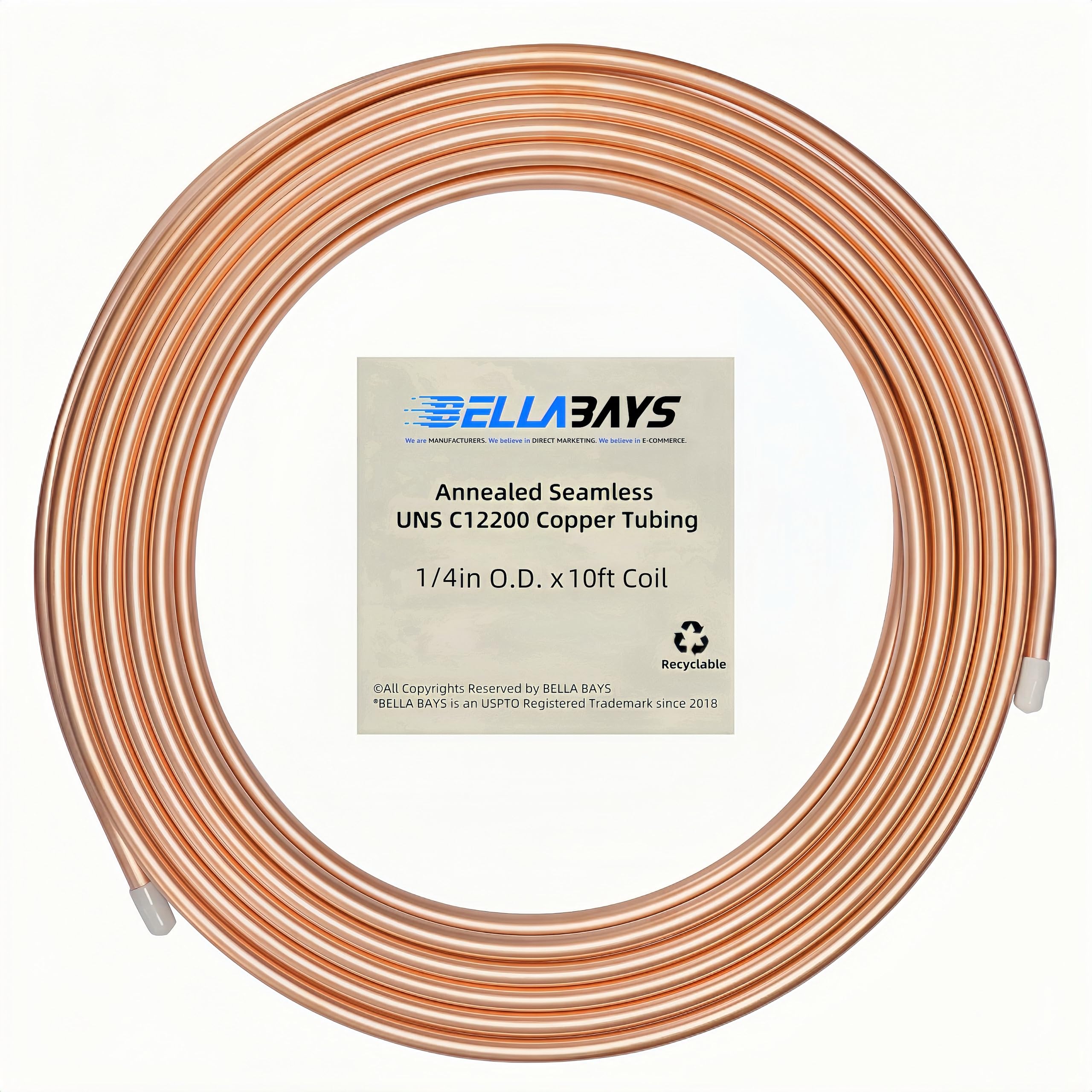
BELLA BAYS delivers 10 feet of C12200-grade pure copper (99.9%+ copper content) that conforms to ASTM B280 — the standard for refrigeration-grade ACR tubing. The 1/4″ OD with a 0.028″ wall thickness mirrors the dimensions of OEM line sets, making this a direct drop-in for mini-split extensions, refrigerator water lines, or short HVAC pipe repairs. The soft annealed temper allows hand-bending into tight serpentine shapes without spring-back, and the seamless construction eliminates weak points where split-seam tubing would leak under vibration.
The 10-foot length is the standout feature for anyone who needs a short run: buying a 50-foot coil for a 8-foot repair wastes material and creates storage hassle. Users confirm the tubing flares cleanly with a standard swaging tool and holds pressure on R410A systems when brazed with sil-phos filler rod. The nitrogen-charged packaging keeps internal oxidation at bay during storage, which matters for refrigeration work where moisture contamination kills compressor life.
This product is not suitable for brake systems — copper lacks the fatigue strength for repeated brake pressure cycles and can work-harden into brittle failure. But for HVAC professionals or DIYers repairing a refrigerator ice-maker line or extending a ductless mini-split line set, the BELLA BAYS coil offers laboratory-grade purity at a fraction of supply-house prices. The polished exterior accepts paint or insulation wraps easily for cosmetic or thermal protection.
Why it’s great
- 99.9% pure C12200 copper exceeds generic hardware-store tubing quality
- 10-foot coil ideal for short-run HVAC repairs without waste
- Soft annealed temper bends easily by hand for tight routing
Good to know
- Not rated for automotive brake or high-pressure hydraulic systems
- Uncoil slowly to avoid creating a permanent kink in the soft copper
4. Podavelle Aluminum Hardline Tubing

Podavelle’s 25-foot aluminum coil (3003 grade) weighs roughly one-third of an equivalent steel line, making it the top choice for weight-sensitive builds like race cars, air-ride suspension systems, and marine fuel plumbing. The 0.035″ wall thickness is thicker than standard steel brake line, which compensates for aluminum’s lower tensile strength while still allowing hand-bending with a simple tubing bender. The 650 PSI max working pressure covers fuel delivery, oil cooler circuits, and compressed air systems — but keep it away from brake hydraulics where pressures can spike well past 1,500 PSI under panic stops.
Users report the 3003 alloy tolerates 90-degree bends without kinking when you use a quality bender, and the material flares reliably with a 37-degree AN flaring tool for use with -4AN fittings. The natural mill finish accepts polishing for a bright aesthetic on exposed engine-bay lines.
Aluminum’s main vulnerability is work-hardening from vibration — secure this line with rubber-lined clamps every 12–18 inches to prevent stress cracks at mounting points. The 25-foot coil gives enough length for a complete fuel system replumb on most vehicles, including the supply and return runs. For custom builders who need a bendable, corrosion-proof, lightweight line that won’t rust, the Podavelle coil is the clear pick.
Why it’s great
- Lightweight 3003 aluminum reduces chassis weight for race and air-ride builds
- 37-degree AN flare compatible for leak-free fitting connections
- Will never rust — ideal for exposed under-carriage or marine environments
Good to know
- Not suitable for brake circuits — 650 PSI rating insufficient for hydraulic braking
- Vibration-prone without frequent clamping — use rubber-lined supports every 12 inches
5. The Stop Shop Stainless Brake Line Protector

The Stop Shop Gravel Guard is a stainless steel coil spring designed to wrap around a 1/4″ OD tube, creating a physical armor layer against rock strikes, debris impact, and abrasion. The 16-foot length covers the most vulnerable sections of a chassis line — typically the area between the frame rail and the flex hose bracket where road grit concentrates. Stainless construction guarantees zero rust, which matters because a rusted spring shield traps moisture against the brake line and accelerates the very corrosion it is meant to prevent.
Installation requires sliding the spring over the tube before installing the flare nuts — if both ends are already flared, the spring cannot be added without cutting the line. The spring tension stretches enough to pass over a single flared end but compresses back tightly around the tube for a snug fit that doesn’t rattle. Users praise how the polished stainless matches custom brake line aesthetics and hides minor tube imperfections from bending.
This is not a standalone tubing product — it is a protective sleeve that pairs with any 1/4″ steel, stainless, or copper-nickel brake line. For off-road vehicles, lifted trucks, or any build where exposed hard lines face gravel spray, the Gravel Guard justifies its cost by preventing a single stone nick from turning into a week-long brake failure. The 16-foot length covers both front and rear protection on a full-size SUV with some to spare.
Why it’s great
- 304 stainless steel construction will never rust or corrode
- Spring tension holds position without adhesives or clamps
- 16 feet gives enough coverage for multiple vulnerable chassis sections
Good to know
- Must be installed before flaring both ends of the brake line
- Stainless spring is tough to cut — use a rotary tool with a cutoff wheel
6. Tynulox 304 Stainless Steel Tube

Tynulox offers five 16-inch pre-cut sections of 304 stainless steel with a thick 0.039″ (1mm) wall — significantly heavier than standard automotive brake line. This thicker wall makes the tube suitable for structural applications like spacers, custom brackets, fishing rod bell holders, and craft projects where rigidity matters more than bendability. The polished surface finish gives a clean industrial look, and the 304 alloy provides excellent corrosion resistance for outdoor or marine use.
The 16-inch length is intentional for small-scale fabrication — you can cut each piece into multiple shorter sections using a standard pipe cutter, and the thick wall prevents collapse under compression loads. Users report using these as spacers along #14 wood screws for deck building, as sleeving for through-bolts, and as support rods for art installations. The stainless material is difficult to bend by hand at this wall thickness; if you need to form tight curves, use a hydraulic bender or choose a thinner-walled tube.
For automotive brake or fuel line work, the thick wall makes double-flaring extremely difficult with manual tools, and the 16-inch length is too short for any chassis-length run. This product fills a different niche: precision short-section structural tubing for non-pressure applications. Buyers looking for a bulk coil of stainless for long brake lines should look elsewhere, but if you need a handful of rigid, rust-proof 1/4″ segments for prototyping or hardware, the Tynulox five-pack delivers consistent quality.
Why it’s great
- 304 stainless offers maximum corrosion resistance for outdoor use
- Thick 0.039″ wall provides structural rigidity for spacer and bracket applications
- Pre-cut 16-inch sections eliminate measuring and cutting for small projects
Good to know
- Too thick-walled for easy hand-bending or standard double-flare forming
- 16-inch length is impractical for full-vehicle brake or fuel line runs
7. GOORY Copper Tubing 100 Ft Coil
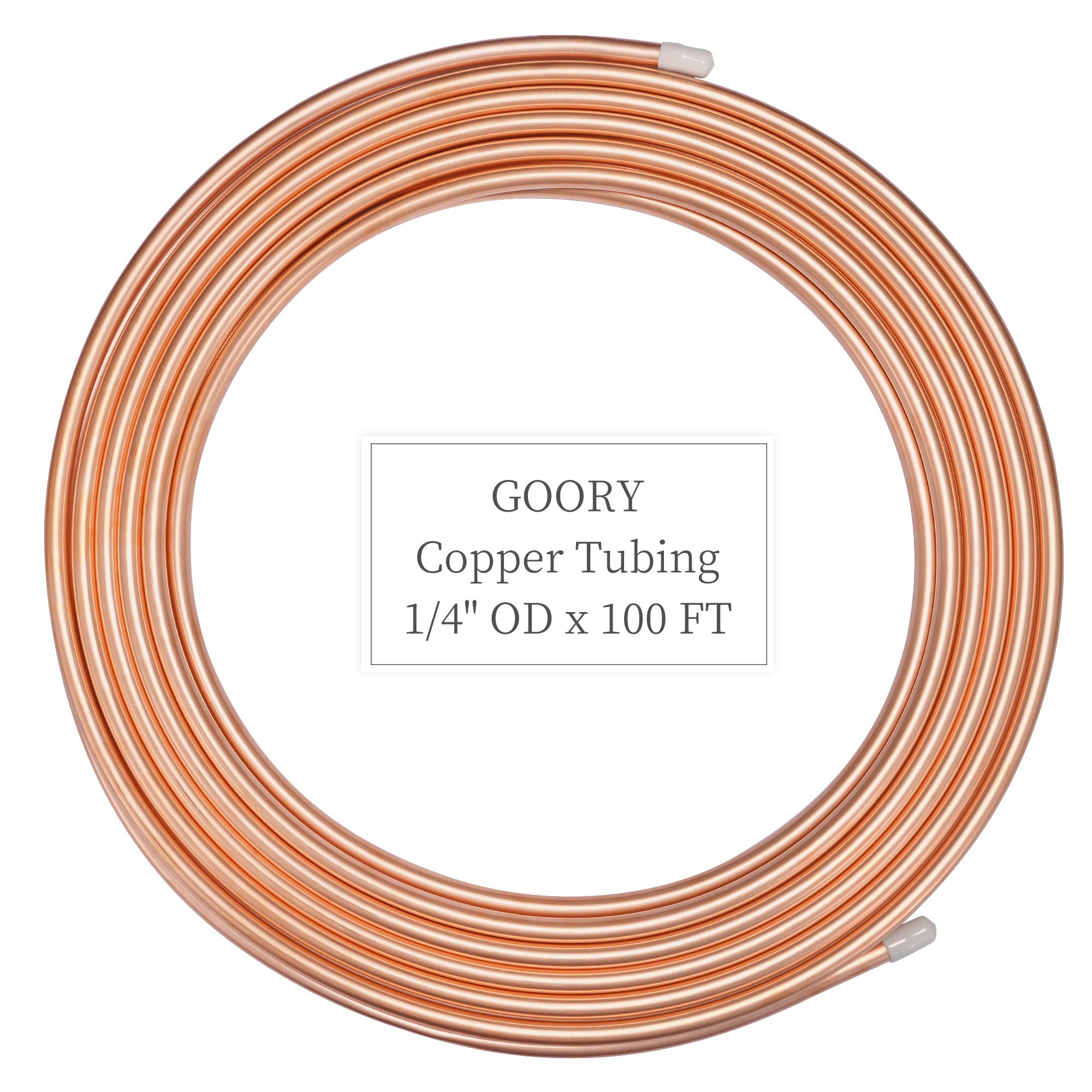
GOORY’s 100-foot coil of C12200 pure copper (99.9%+ copper, ASTM B280 certified) is the volume play for HVAC professionals who need a bulk supply for multiple line-set installations or long refrigeration runs. The 0.028″ wall thickness matches the BELLA BAYS 10-foot coil exactly, but the 100-foot length gives you enough material for three to four typical mini-split line sets or a single long-distance industrial cooler run. The soft annealed temper and seamless construction allow hand-bending into complex routing paths without kinking, and the nitrogen-charged packaging prevents internal oxidation during extended storage on the service truck.
Users confirm the tubing holds R410A and R32 refrigerant pressures when properly brazed with sil-phos and accepts flare fittings for quick-connect applications. The 7.5-pound coil weight is manageable for one-person handling, though you will want a coil straightener or a second pair of hands for long pulls to avoid introducing twists. The copper accepts insulation sleeving easily for refrigeration suction lines that require thermal wrapping.
At this length and purity grade, the GOORY coil competes directly with supply-house brands at a lower per-foot cost. The trade-off is that GOORY is a lesser-known import brand, so batch consistency can vary — examine the first few feet for surface scratches or ovality before committing to a long installation. For HVAC contractors who burn through 1/4″ copper regularly, the 100-foot coil minimizes restocking trips and per-job material cost.
Why it’s great
- 100-foot continuous length supplies multiple HVAC line sets from a single purchase
- C12200 pure copper delivers excellent thermal conductivity and corrosion resistance
- Nitrogen-charged coil prevents internal oxidation during storage
Good to know
- Import brand — inspect first few feet for surface defects before committing
- Large coil requires careful unspooling to avoid permanent bends and twists
FAQ
Can I use 1/4 inch copper tubing for automotive brake lines?
What is the difference between single-flare and double-flare on 1/4 inch tubing?
How do I prevent kinking when bending 1/4 inch steel tubing?
Final Thoughts: The Verdict
For most users, the 1/4 inch steel tubing winner is the MuHize Brake Line Kit because it bundles both 3/16″ and 1/4″ coils with a full fitting set, meeting every hard-line need in a single box. If you want a lightweight, corrosion-proof line for a fuel or air system, grab the Podavelle Aluminum Hardline. And for protecting exposed chassis runs from stone damage, nothing beats the The Stop Shop Stainless Gravel Guard.