
Our readers keep the lights on and my morning glass full of iced black tea. As an Amazon Associate, I earn from qualifying purchases.
Specs are compiled from manufacturer listings and verified buyer reviews and can change over time — please confirm the key details on the product page before buying.
Teaching a small child to ski depends on one thing: keeping them upright long enough to enjoy it. A ski harness is the tool that does it — a wearable vest with a leash an adult holds from behind. You slow them down, nudge them into a turn, and lift them off the snow after a tumble without bending over. The catch is that these harnesses vary wildly in how the leash attaches to the child’s body. That single design choice decides whether your kid learns to balance or gets hauled backward all day.
I’m Min — the founder and writer behind Gadgets Feed. This guide is built by comparing the manufacturers’ published specifications and the patterns across verified customer reviews, so you get each pick’s real strengths and trade-offs instead of marketing spin.
Before you buy anything, know that hip-attachment leashes beat back-attachment ones for teaching turns and balance. This breakdown of the ski harness market covers leash design, age fit, handle placement, and the little details that separate a season-long tool from a one-trip regret.
Our Picks at a Glance


How To Choose The Best Ski Harness
The obvious first question is where the leash connects to your child’s body. The second is whether the thing will still fit in March. Get those two right and everything else is a bonus. Here is what actually matters once you are standing at the bottom of the bunny slope.
Where the Leash Attaches Matters Most
A leash that clips to the hips lets your child stay balanced and pulls them into a turn with a gentle tug sideways. A leash that clips high on the back tends to tip a small body backward the moment you pull. That is why so many beginners get dragged instead of guided. Look for a harness with multiple webbing loops along the waist belt — those loops let you fine-tune where the pull lands. Several options in this list, including the Lucky Clover and the skiguard Speed Control model, specifically route the leash to the hips for exactly this reason.
Age Range and Adjustability
Most harnesses here target the 2-to-6 or 2-to-8 range, and a few push to age 8. Adjusted properly, a vest harness should sit snug on the torso with the waist belt low and the shoulder straps just tight enough to stop the vest riding up. Multiple webbing loops along the belt and a length extension let the same harness grow through a couple of seasons. If you have two children of different sizes, an adjustable design like the QOGIR models covers both.
The Lift Handle Is Not a Gimmick
That grab loop on the back is the single feature parents end up using most. It gets a fallen child upright in a second, and it lets you steady them getting on and off the chairlift without reaching down and straining your back. A reinforced handle, stitched securely into the vest, holds up to repeated lifts. A few budget models stitch it more lightly, which is the one failure point worth checking before you buy.
Quick Comparison
| Model | Best For | Leash Type | Age Range | Leash Attachment | Amazon |
|---|---|---|---|---|---|
| Launch Pad Toddler Ski Harness★ Best Overall | Teaching 2-4 year olds | Shock-absorbing elasticized | Ages 7 and below | Bungee from harness back | Amazon |
| QOGIR Ski and Snowboard HarnessBest Sizing Range | First-timers of any height | Shock-absorbing | Toddlers and young children | Multiple webbing loops on hips | Amazon |
| LUCKY CLOVER Ski HarnessBest for Teaching Turns | Teaching turning from day one | Elasticized, removable | 2-6 years | Clips at the hips | Amazon |
| CapsLock Ski and Snowboard Harness | Adjusting distance on the fly | Retractable with bungee | Children and toddlers | Retractable button-release | Amazon |
| MDXONE Kids Ski & Snowboard Harness | Progressing skiers and boarders | Retractable with shock bungee | Toddler | Y-fork, two connection points | Amazon |
| skiguard Ski Harness Trainer (Padded Seat) | Full-body security for small kids | Shock-absorbing | 2-8 years | Hip loops with leg straps | Amazon |
| QOGIR Full Body Ski Harness | Ages 2-6, skis or board | Shock-absorbing | 2-6 years | Multiple adjustable loops | Amazon |
| skiguard Ski Harness Trainer (Shock Leashes) | Bigger kids up to age 8 | 7 foot elasticized, removable | Ages 8 and below | Waist and hip loops | Amazon |
| Dachgo Ski and Snowboard Harness | Kids who carry their own gear | Shock-absorbing bungee | 4-8 years | Sides or back of the pack | Amazon |
In‑Depth Reviews
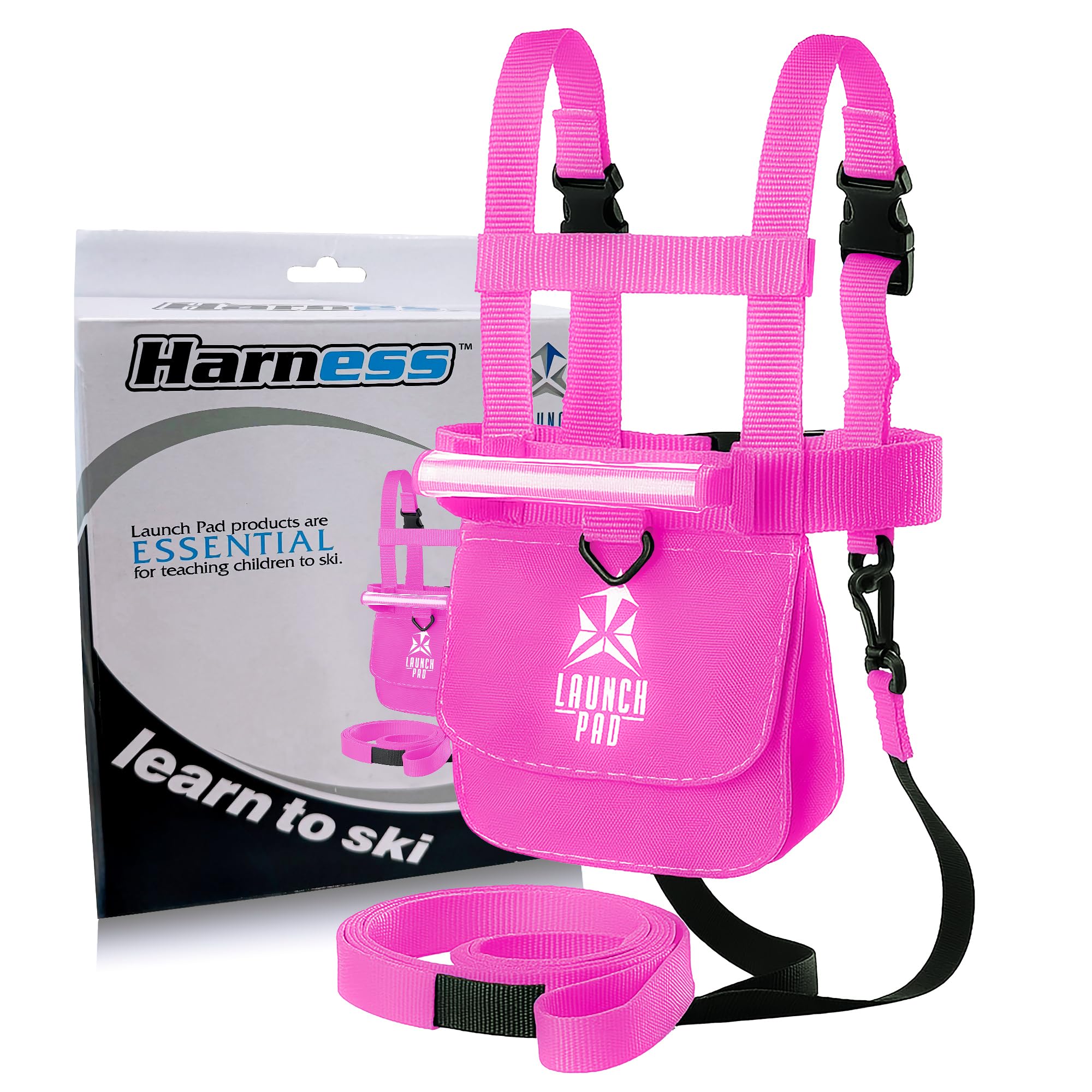
1. Launch Pad Toddler Ski Harness with Leash
Our pick — over 4.5★ from 700+ verified ratings; the strongest balance of quality and price.
The seven-foot elasticized leash that turns a wobbly toddler into a confident little skier.
If your goal is a first-day-on-skis child who stays cheerful, this is the harness the crowd points to. It carries a 4.7-star rating from well over 700 buyers, who single out the sturdy build. Parents single out the construction as feeling far sturdier than the price suggests, with the shock-absorbing bungee leash and the lift handle getting steady praise of their own. The leash is elasticized at 7 feet, so when you slow down, the bungee absorbs the tension instead of yanking your child backward — that smoothness is what keeps a beginner’s confidence intact.
The lift handle does double duty. One pull gets a fallen child off the snow, and it steadies them loading the chairlift. Reviewers running children anywhere from age 2 to 6 (one used it across a 3-year-old and a 4-year-old) describe it adjusting quickly and folding small enough to jam into a pocket once the leashes come off. It reads just like a little backpack, which matters more than you would think — kids wear it because they like it, not because they are being strapped in.
Two honest notes. The leash straps run short for very tall parents, so a taller adult is squeezed a little closer than ideal. And the fit is the one aspect buyers are split on, with a few finding it roomier than expected on a small frame — adjust the waist belt properly before the first run and this rarely bites. Designed for ages 7 and below, this covers the whole beginner window.
Toddler Sized Fit
- 7-foot elasticized bungee leash absorbs tension so you slow your child without jerking them back
- Lift handle works for chairlifts and for pulling a fallen skier upright
- Folds to pocket size when the leashes come off, so your child can ski a run solo
- Built for ages 7 and below, and backed by a limited lifetime warranty
Leash Tangle Risk
- Leash straps feel short if you are a tall adult skiing behind
- Fit runs big for some smaller toddlers without careful waist adjustment
- The straps take a little fiddling to manage on steep terrain
Tiny Beginners: you want the most-proven starting harness for a toddler or preschooler and you ski as the trailing adult.
Older Kids: you are very tall and want noticeable slack in the leash, or you need a harness rated past age 7.
2. QOGIR Ski and Snowboard Harness for Kids
One vest that fits a 3-year-old and a 6-year-old without a fight over sizing.
This is the harness you buy if two children of very different heights will share it. The QOGIR pack takes the multiple webbing loops approach — several attachment points run along the hip belt plus a length extension, so you move the leash to wherever the pull lands best on that particular child. Buyers report it fit a 3-year-old and a 6-year-old equally well on the same trip, which is the whole point of an adjustable vest. It holds a 4.6-star rating, with owners praising the construction and the training help most.
The shock-absorbing leashes are the part that earns its keep. Because the pull is elastic, you can ski behind your child and gently rein them in without jerking them sideways. The top hand grip is designed to work with gloves on, which matters at zero degrees when your fingers are stiff, and it helps on the chairlift. When your skier wants to go solo, the straps tuck away and the pack doubles as a small day bag — one family even filled it with snacks.
The honest catch is that the waist belt has a tendency to loosen under load, so you may need to rethread it doubled to stop the slipping. It is a two-minute fix, not a deal-wrecker. Note too that the hook placement is tuned primarily for skiing — the middle-and-side hook setup for snowboarding distributes weight unevenly. If you are a skiing family, that is a non-issue.
Snowboard Ready: a household skiing with kids of different sizes who want one harness to pull double duty across seasons.
Bulky Buckles: secure the waist belt against loosening before each run, and it stays put all day.
Two Sports: you need to fit more than one child from the same harness and value glove-friendly controls.
Small Toddlers: your priority is a dedicated snowboard setup — the hip loops favor skiers.
3. LUCKY CLOVER Ski Harness for Kids
The hip-clip design that steers a child into turns instead of tipping them backward.
Here is the design difference that separates this harness from most of the list: the leashes attach at your child’s hips, not their back. That single choice keeps them balanced rather than pulled off-kilter, and it lets a small sideways tug start a turn. It is built for 2-to-6-year-olds from lightweight nylon, and the material is machine washable — a real plus when a season pass comes with hot chocolate spills. It runs at a notably high average for a smaller-volume product, and buyers most often call it functional and safe in use.
The mini backpack does more than look cute. The leash straps stow inside it for the chairlift ride, which stops loose cords snagging, and there is room left for snacks, a drink, or lip balm. The leashes are elasticized and removable, so on a run where your child wants independence you simply unclip them and pocket the lot. The lift handle softens the back strain of reaching down to guide a small skier all afternoon.
One owner pointed out the obvious gap: there is no crotch strap, so the harness can ride up when you use the top handle, and that would have made it better. For helping turns with the hip leash — the way most families actually use it — it works cleanly. If you plan to hoist your child by the back handle a lot, expect to reset the waist now and then.
Travel Days: parents whose main goal is teaching a child to turn and balance on the hill.
Heavy Riders: you rely heavily on the back handle for lifting — no crotch strap means it can ride up.
4. CapsLock Ski and Snowboard Harness Trainer
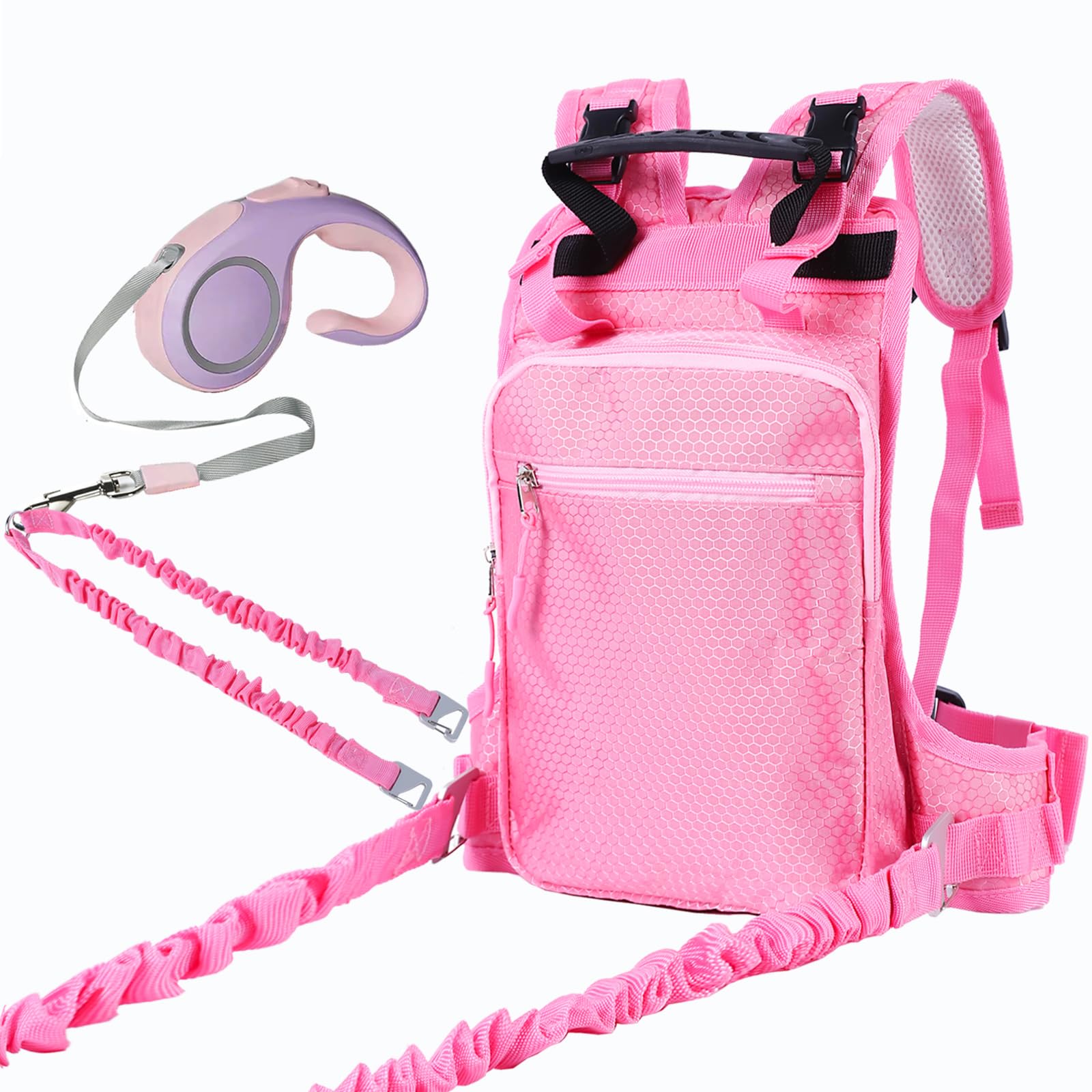
Push a button and the leash shortens — distance control without gathering slack by hand.
The signature move on this harness is the retractable leash. Where most harnesses leave you coiling slack by hand, this one lets you shorten or lengthen the gap to your child with a push of a button, paired with a shock-absorbing bungee so the ride stays smooth. That matters on a busy hill where you want to reel your kid in fast near other skiers. It is made from nylon and polyester, holds a 4.6-star average, and owners consistently call the construction the standout.
Beyond the leash, this is a nicely sorted training vest. The adjustable strap loops let you place the hip alignment precisely, and the retractable length accommodates a growing child between seasons. The built-in mini backpack swallows snacks, lip balm, a drink, or hand warmers — and stores the leashes when they are not in use. The lift handle gets a fallen child up fast and helps on the chairlift, which is the feature that saves your back. One buyer used it for their 4-year-old’s first ski trip and skied behind with the leash on regular runs and lifts without any worry about sudden stops.
The one thing to watch is the bungee clips. They are hard to pop off quickly for a lift line, and one owner felt they would be safer if they were fully removable rather than fixed to the backpack. It is a small usability wrinkle, not a safety problem, and most owners move past it after a run or two. Adjustability is the other strong suit — reviewers report it fitting both a 4-year-old and a 7-year-old comfortably.
First Lessons: on-the-fly distance control on crowded beginner slopes, even if your child’s size changes year to year.
Steep Runs: you want to fully detach the leashes quickly at the lift — the clips take a moment.
5. MDXONE Kids Ski & Snowboard Harness Trainer
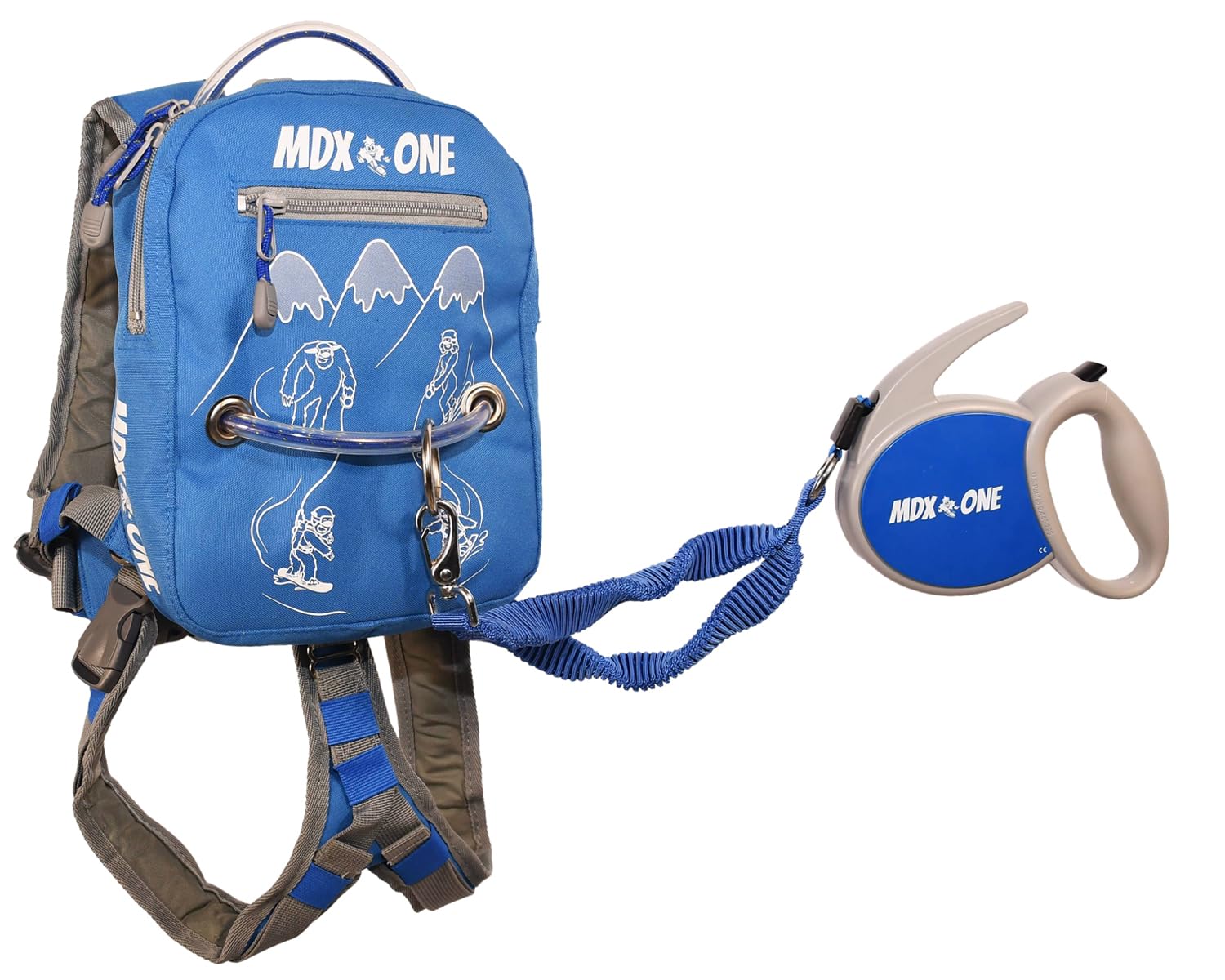
Three progression settings and a two-point Y-fork leash — the harness that grows with a rider.
If you want the most feature-dense trainer here, this is it. The MDXONE is the one harness in this group built specifically to serve both skis and snowboards, which lets you adapt it rather than replace it as your child switches disciplines. It holds a strong average rating, and owners rate the build quality highest — one calls the handles thicker and more durable than cheaper copies, sturdy enough for one-handed lifting of a 3-year-old on the snow.
Three settings carry a beginner through to more advanced riding, so the same harness can stay with your child across seasons. The retractable leash controls distance with a button push, and the shock-absorbing bungee keeps the descent smooth. The Y-fork leash is the detail worth calling out — it offers two connection points, which lets a parent steer and manage speed without throwing the rider off balance. The backpack carries two storage areas, and the two reinforced handles make lifting off the snow easy.
It is tested and certified, designed in Canada and imported from China, and made from polyester. If your child will only ever ski casually, a simpler harness lower in this guide does the job for less.
Padded Comfort: three progression settings, a two-point Y-fork leash, and dual ski-or-snowboard use make it the most adaptable harness on the list.
Higher Price: it tops the price range, so the value depends on how many seasons you will actually use it.
Long Days: families who want one certified trainer to carry a child from first snowplow to confident turns on skis or a board.
Tight Budgets: you want the cheapest possible entry harness for a couple of casual days.
6. skiguard Ski Harness Trainer with Padded Seat
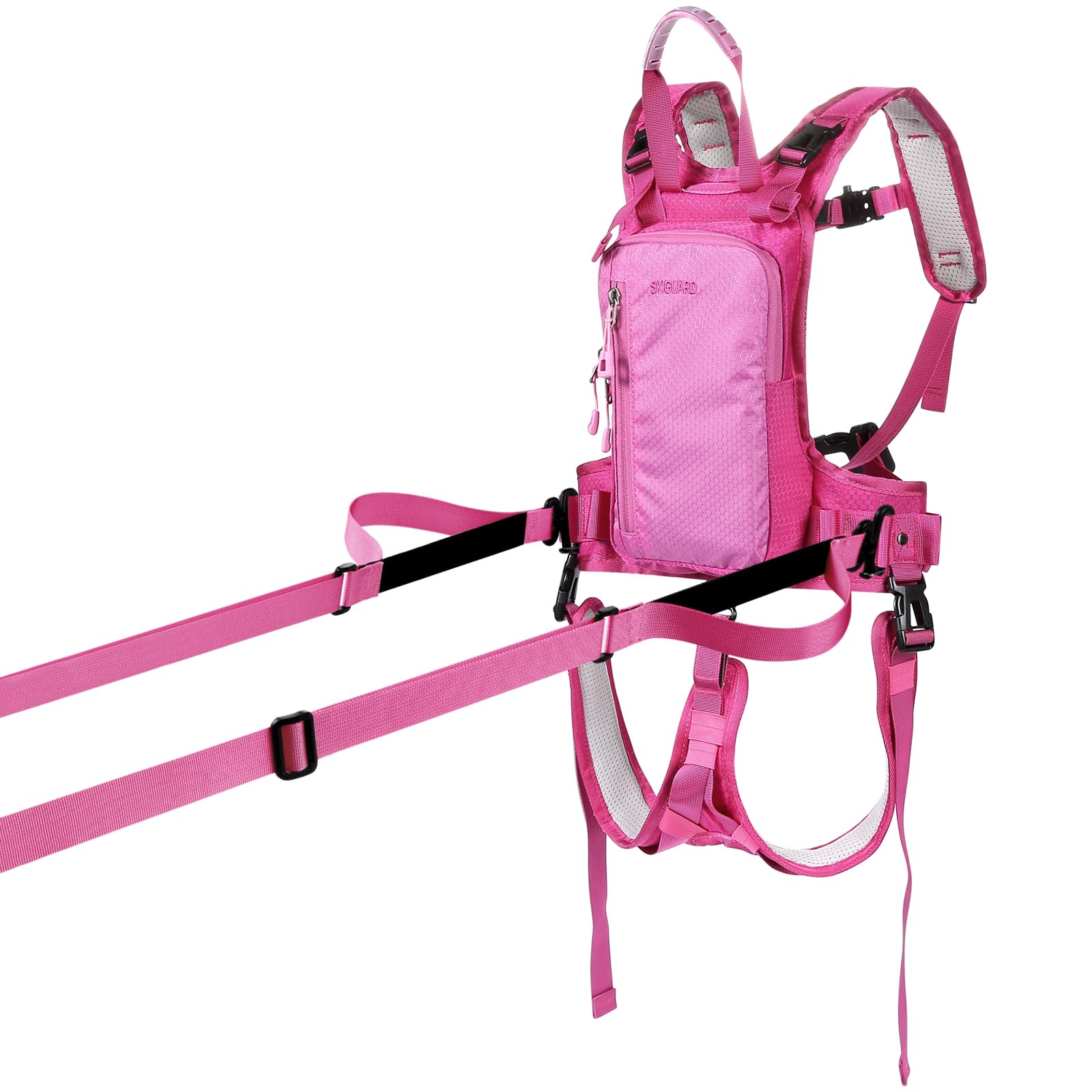
The full-body option — leg straps that stop the vest riding up on the smallest skiers.
Parents who want extra security for a tiny child often choose a full-body harness, and this skiguard model offers exactly that. Straps run between the legs, similar to a kids’ full-body climbing harness, so the vest cannot slide up when you lift by the handle. It is built from nylon for the 2-to-8 range, machine washable, and weighs just under two pounds. Owners mention quality most, describing it as well-made and durable through multiple seasons — one family has used it for two seasons running.
The usability details are well considered. It folds compactly enough to stow in a backpack when you do not need it, and the multiple webbing loops along the hip belt let you set the pull point and extend the length for a taller child. The built-in handle makes chairlift loading calmer and takes the strain off your back. One parent put it plainly — it kept their child from sliding away while skiing and folded small enough to carry with no space sacrificed.
The recurring note is on the fit’s size, since a handful of buyers found it ran a little big — including one family using it on a 1.5-year-old who found it roomy but still functional. If your child is at the small end, tighten everything down before the first run. From age 3 upward it lands right in the intended range, and the strap storage in the bag keeps things tidy on the lift.
Built In Seat: a toddler you want fully secured with leg straps and a lift handle you can trust.
Seat Sizing: sizing leans generous, so a very small child needs the straps pulled in snugly.
Rest Breaks: you want a full-body harness with a reusable footprint across several seasons of growth.
Fast Skiers: a snugger-fitting non-leg-strap harness if your child is under two.
7. QOGIR Full Body Ski Harness for Kids

A CPSIA-certified full-body harness for the 2-to-6 crowd learning either discipline.
For a family that wants a tested full-body setup, this QOGIR model earns attention on one spec alone — it has been tested in an accredited lab and carries a CPSIA certification, a safety standard for children’s products. That is a meaningful credential on a category where you are strapping a small person to a moving adult. It is designed to function for skis and snowboards alike, fits ages 2-6, and is made from nylon with a hand-wash-only care instruction. Buyers describe the quality and feature set as better than they expected, with the padded seat harness keeping a child comfortable.
On usable features, the harness gives you a spacious pocket for snacks and mittens, comfortable gripping handles on the leashes, and a built-in handle for lifting a fallen child or steadying them on the chairlift. The multiple webbing loops and length extension let you dial in the hip placement and accommodate a growing child. It is a good budget alternative to the pricier name-brand trainers, and the included 1-pack covers one child.
The real caveat is completeness. This particular model is advertised as a full-body harness, but at least one buyer received it missing the leg straps and had to request a replacement, later getting a full refund — worth checking the contents the moment it arrives. That same owner also found the arm and waist straps loosening within 15 to 30 minutes and the tether straps short for a snowboarder. Test the straps and confirm the leg straps are in the box before your first run.
Wobbly Kids: budget-minded parents who want a certified full-body harness for a 2-to-6-year-old and will verify the box contents.
Confident Skiers: you want a snowboard-ready tether length from the start without adding slack.
8. skiguard Ski Harness Trainer with Shock Absorbing Leashes

Built to carry bigger, heavier beginners — up to age 8 — on a long seven-foot leash.
Most harnesses tap out around age 6. This one is rated for ages 8 and below, and it is sized for older, heavier kids who still want a guiding hand. It carries a 7-foot leash length, elasticized and removable, so you can stand well back and still reel your child in when the hill gets busy. One family used it on an 8-year-old and found it held up to a big, tall kid — quality construction that likely carries a lot of weight. The bungee ropes absorb the tension when you slow down, which reduces the chance of a fall compared with a rigid strap.
The rest of the package is practical. The waist and hip loops let you control direction, the lift handle helps after a fall and on the chairlift, and the mini backpack pouch stores the leashes along with snacks, lip balm, or a drink. The adjustable shoulder straps let you fit a range of heights, and the leashes detach so a child can ski a section untethered. Many buyers pick this one over cheaper harnesses, citing the sturdier feel.
Two things to plan around. The underarm straps can loosen under load on some kids, and the simple fix is a small knot to lock them in place. And a few owners note a preference for a longer leash at the hips — the 7-foot length is generous, but tall parents on steep pitches may still want more slack. There is also the occasional stitched seam that lets go over a season, though that has not stopped the durability sentiment holding strong.
Shock Absorbing: extending the harness lifespan to bigger kids up to age 8 with a long 7-foot leash and removable straps.
Bungee Drag: a quick knot in the underarm straps keeps them from loosening through the day.
Rough Terrain: families with older, heavier beginners who have outgrown the toddler-sized vests.
Packed Groomers: you need a guaranteed long tether for a tall adult on steep terrain.
9. Dachgo Ski and Snowboard Harness with Training Leash

A pack that carries the helmet, the snacks, and the child — all at once.
This one is aimed at the family whose child hauls their own gear. Built from polyester for the 4-to-8 range, it is the roomiest backpack on the list — spacious enough for an extra clothing layer, snacks, and the leashes. There are built-in mesh pockets to keep a ski helmet safe and front buckles that hold skis or a snowboard, which keeps loose items off the chairlift. Handy for a kid who is learning to be responsible for their own mountain kit. Owners note the straps adjust as a child grows and the pack shifts minimally on the slopes.
The leash system is flexible. The shock-absorbing bungee leash can clip to the sides or the back of the backpack, so you can guide, steer, and control speed from either position, and the bungee prevents sudden yanks for a smoother ride. There are two grab handles — a top one for on-and-off the chairlift and a front one that pairs with the leash to lift your child after a fall. One parent described being able to almost steer their child with the handle, and another said their 5-year-old was carving confidently by the end of the day.
The honest weak point on this model is stitching. One reviewer noted the top seam failing the first time they used it to help their child, and a few smaller-volume notes flag durability. Since a handful of the reviews here also appear to be about a hiking backpack rather than this ski trainer, treat the ski-specific feedback as the one to weigh. It is built to a lighter spec than the pricier full-body harnesses, so if you plan heavy, repeated use, that is where the budget shows.
Casual Use: kids aged 4 to 8 who carry their own helmet, snacks, and water on the mountain.
Daily Lessons: the light stitching means you should use gentle lifts rather than heavy hoists.
Understanding the Specs
Leash Type and Attachment Point
The leash is the whole point of a ski harness — the strap or cord you hold to slow and steer your child. Where it connects matters as much as its length. A hip attachment lets your child keep their balance and lets a sideways tug start a turn, while a high back attachment tends to tip a small body backward. Elasticized or bungee leashes stretch as you slow down, absorbing the tension so you do not jerk your child off their feet. A retractable leash, like the one on the CapsLock or the MDXONE, lets you change the distance with a button instead of gathering slack by hand. Look for removable leashes if you want your child to ski a run untethered.
Size Range, Loops, and Weight
Age ranges on these harnesses run from about 2-6 all the way to age 8, and the fit depends on more than age — a light child in bulky snow gear can fill out a smaller size. Multiple webbing loops along the hip belt and a length extension are what let one harness adjust to a growing child, which is why adjustability shows up in so many owner comments. A full-body harness with straps that pass between the legs stays put when you lift by the handle; a simple vest relies on the waist belt staying tight. Carry weight is worth a glance too — a lighter nylon vest is easy for a small child to wear all day without fussing.
FAQ
What age is a ski harness best for?
Is it better for the leash to attach at the hips or the back?
Will a ski harness work for snowboarding too?
How do I stop the harness straps from loosening while my child skis?
Do the leashes come off so my child can ski on their own?
What does the lift handle actually do?
Is a full-body harness better than a vest for a small child?
How long does a kids ski harness last?
What is the difference between a shock-absorbing and a fixed leash?
Can I use a ski harness for hiking or walking with a young child?
Final Thoughts: The Verdict
For most families, the ski harness to start with is the Launch Pad Toddler Ski Harness — its 7-foot elasticized leash, lift handle, and pocket-sized fold have made it the go-to for teaching toddlers, and it holds the strongest mix of rating and owner volume in this group. If you need one harness to fit children of different sizes, the QOGIR Ski and Snowboard Harness covers a 3-year-old and a 6-year-old from the same vest. And for families who want a certified trainer that grows with a child across seasons on skis or a board, the MDXONE earns its premium slot. Whatever you pick, the lift handle and an adjustable hip belt are the two features that decide whether the harness stays useful all season.
How We Picked
We do not accept paid placement. Every pick is matched to a real buyer and a real use-case; we do not hands-on test units.
Sources & Methodology
Specifications: manufacturer listings and product documentation. Review insights: verified customer reviews, as of September 2026. Pricing: not shown on this page (it changes often); check the current price via the retailer link.
As an Amazon Associate, Gadgets Feed earns from qualifying purchases. This does not affect which products we feature.