
Our readers keep the lights on and my morning glass full of iced black tea. As an Amazon Associate, I earn from qualifying purchases.
Specs are compiled from manufacturer listings and verified buyer reviews and can change over time — please confirm the key details on the product page before buying.
If your van’s factory heater takes ten minutes to wake up, a 12V plug-in heater gives you warm air on the windshield long before the engine warms. That is the appeal and the risk: most of these units pull 12.5 to 16.67 amps from a cigarette-lighter socket fused for far less. This guide separates the socket-safe plug-ins from the 500W and 600W units that blow lighter fuses or barely push warm air past your knuckles.
I’m Min — the founder and writer behind Gadgets Feed. This guide is built by comparing the manufacturers’ published specifications and the patterns across verified customer reviews, so you get each pick’s real strengths and trade-offs instead of marketing spin.
You will see which units run off the dash socket, which need a direct battery hookup, and where the wattage actually lands. In a cold van or truck cab, the right 12v van heater clears a fogged windshield in the time it takes to buckle up.
Our Picks at a Glance

How To Choose The Best 12V Van Heater
The first thing to settle is where the power comes from. A heater that plugs into the cigarette lighter socket relies on that circuit’s fuse, which usually tops out well below what a high-wattage unit demands. A heater wired straight to the battery bypasses that limit but needs its own inline fuse and heavier gauge cable. Decide which route your van can take before you look at anything else.
Match the Wattage to Your Socket, Not Your Wishlist
A higher wattage number means more heat, but it also means more amps pulled through the same thin wire. The 150W and 200W units run comfortably off a standard 12V outlet, while the 500W and 600W models can overwhelm a lighter-socket circuit. If the listing tells you to run it to the battery with heavy cable, believe it — that instruction is there for a reason.
Pick the Mode You Actually Need
Some 12V heaters only warm the cabin, while others add a fan mode that moves air in summer. A 360-degree rotating outlet lets you aim warm air at the windshield to clear fog, or at your feet to warm the cabin. Decide between a pure windshield defroster and a year-round air mover before you buy.
Quick Comparison
| Model | Best For | Heat Output | Amperage | Power Source | Amazon |
|---|---|---|---|---|---|
| Blytra 12V 150W Car Heater★ Best Overall | Quick windshield defrosting | 150 watts | 12.5 A | Cigarette lighter socket | Amazon |
| Ejoyous 12V 600W DefrosterHigh-Output Pick | High-output floor heating | 600 watts | — | Direct battery wiring | Amazon |
| Blytra 12V 200W Car Heater | Balanced defrost and cabin warmth | 200 watts | 16.67 A | Cigarette lighter socket | Amazon |
| DaisyInner 500W 12v Car Heater | Multi-port directional heating | 500 watts | — | Direct battery wiring | Amazon |
| Nedittpy QH-N209 2 in 1 Heater | Year-round heating and cooling | — | — | Cigarette lighter socket | Amazon |
| CYDZSW 12V 500W 4 Holes Heater | UTV and truck cab heating | 500 watts | — | Direct battery wiring | Amazon |
| Roadpro RPSL-681 Ceramic Heater/Fan | Supplemental heat for large cabs | 300 watts | — | Direct battery wiring | Amazon |
In‑Depth Reviews
1. Blytra 12V 150W Car Heater for Car Defroster Windshield Heater
Our pick — over 4.5★ from 50+ verified ratings; the strongest balance of quality and price.
The dash-socket defroster that actually clears glass without begging for a fuse upgrade.
Here is the pick that earned its top spot, and the number behind it is simple: 12.5 amps. That is the current this Blytra pulls from a standard cigarette-lighter socket (the 12-volt outlet most vans already have on the dash). It means you plug it into the dash socket and go — no inline fuse kit, no heavy cable run to the battery. The 150W PTC element (a ceramic heating core that self-regulates its own temperature) warms the airflow fast and holds it steady, which is exactly the behaviour you want when the windshield fogs the moment you breathe.
What wins people over is how quickly it puts usable heat on the glass. Owners describe warm air arriving in seconds, and the 360-degree rotating outlet lets you swing it from the windshield to your feet without moving the unit. The self-adhesive base and heat-resistant ABS shell (a hard, heat-tolerant plastic) take the vibration of a moving van without wandering. If your main defroster is slow or your van has no rear heat, this is the crowd favourite — 4.7 stars and the standout of the group.
The 150W unit trades raw power for plug-in simplicity. It gives up output versus the 200W Blytra and the 500W and 600W floor models, but it stays within a socket’s comfort zone, so it survives a lighter. If you want zero wiring headaches, this is your pick; if you need maximum cabin heat for a big box van, keep reading, because a socket circuit tops out where this heater runs.
What Earns It First Place
- Draws 12.5 A and plugs straight into a standard 12V outlet — no rewiring needed
- Fast PTC heat clears frost and fog on the glass in seconds, per owner reports
- 360° rotating outlet aims warm air at windshield or feet
- Self-adhesive mount and heat-resistant ABS build handle bumpy driving
Where It Holds Back
- 150W is the lower output in this lineup, so it supplements your main heater rather than replacing it
- Best suited to sedans, vans, and SUVs — not a whole-cabin furnace for a large van in deep cold
Reach for this if: you want a fuss-free defroster that runs off the outlet you already have and clears glass fast.
Look elsewhere if: you need to heat an entire cold cab and can run a dedicated battery line — the higher-wattage floor units below cover that ground.
2. Ejoyous Portable Car Heater, 12V 600W Defroster Fog Removing Defogger Winter Heating Fan Warmer 3 Hole Electric Floor Heater
The 600W floor heater that brings serious warmth — if you wire it right.
This heater’s headline is power: a 600W PTC ceramic element (a self-regulating heating core) pushes heat through three air outlets at a stated 75°C. That is a real jump over the 150W and 200W dash units, so it suits buyers who need meaningful heat, not a gentle nudge. But 600W is exactly why it earns a caution: at that demand it wants a direct battery connection with a heavy fuse, not a lighter socket. Wire it right and it warms a footwell or cab floor with a fan and heat that owners say does the job; those who treat it as a plug-in toy tend to be unhappy.
The build is PVC and high-strength aluminium alloy (a light, rigid metal that resists heat), and it can sit on the workbench with self-tapping screws, tuck under the seat, or aim at the footwell. Double-gear switching lets you pick the heat level, and it stays compact and low-noise in use. The honest divide in reviews is install expectations: one owner who wired it as a fan first found it blew better as a fan than a heater, while another who left a lighter-socket fuse in place watched it pop. Read the manual’s amperage note and run proper cable, and this delivers the heat the number promises.
The Wiring Reality: a 600W draw is well past what a stock 10A or 15A lighter fuse tolerates, so plan for a fused run to the battery before it ever goes in the van.
Choose this: if you need strong supplemental heat and are willing to hardwire it with correct fusing.
Pass if: you want a pure plug-and-play dash unit — the socket simply will not feed this much draw.
3. Blytra 12V 200W Car Heater for Car Defroster Windshield Heater
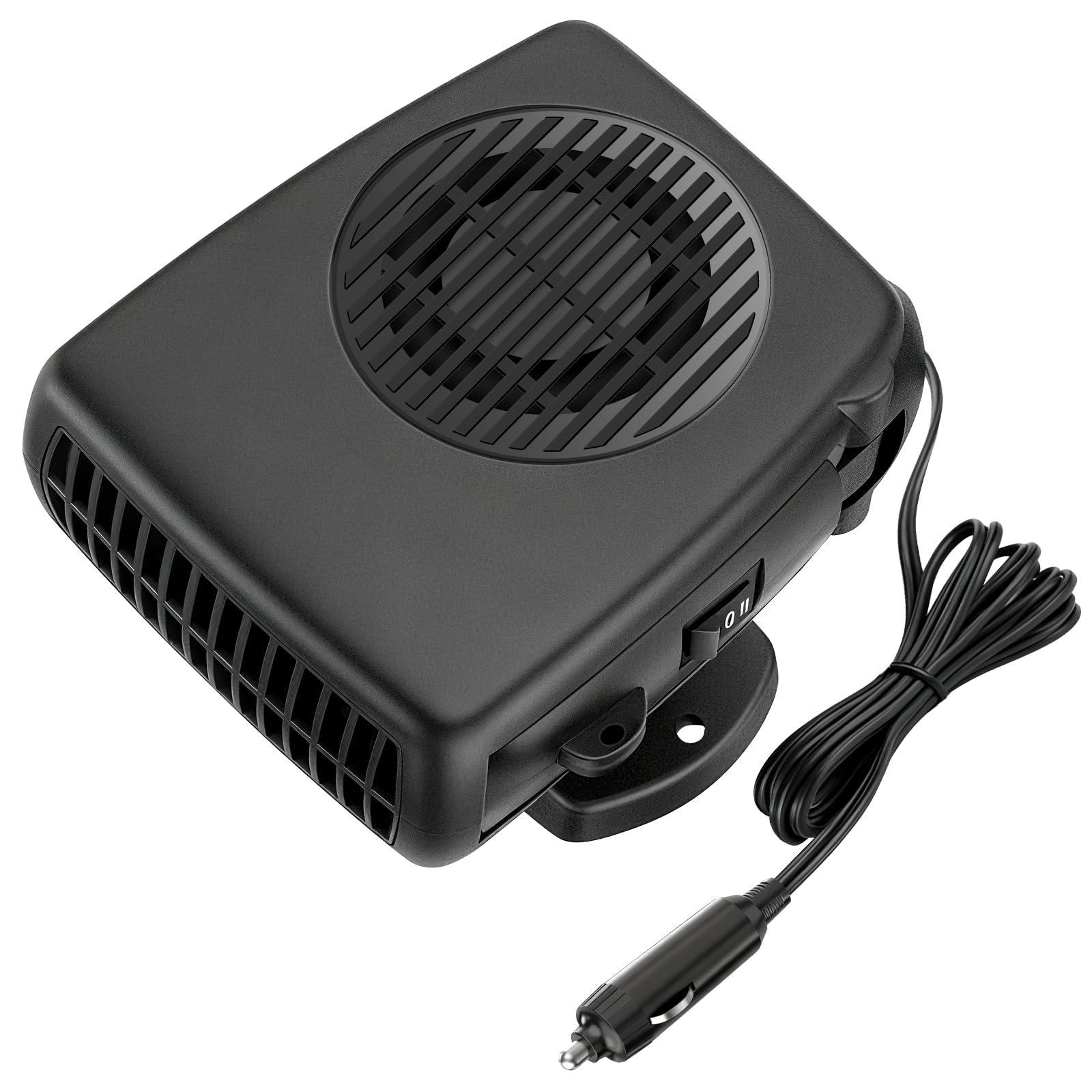
A step up in warmth over its 150W sibling, with a fuse guarding the circuit.
If the 150W Blytra left you wanting a touch more heat while staying socket-friendly, this is the answer — 200 watts at 16.67 amps against the 150W model’s 12.5 amps. That extra draw buys noticeably faster, stronger airflow on the glass, and the plug carries a built-in fuse to cut power on overheating. The PTC core sits in a heat-resistant ABS shell with pure copper wiring, so it is built to run hot without complaint. For a van owner who wants defrosting that keeps pace on a genuinely cold morning, this closes the gap between the gentle 150W unit and the heavy hardwired heaters.
Owners describe warm air arriving in roughly two minutes off the cigarette port, with the 360-degree base swinging the flow from windshield to feet. The ventilation mode is a quiet bonus — in summer it circulates cabin air instead of sitting in a drawer. The trade is straightforward and worth naming: a 200W draw is closer to what a smaller socket circuit can take, so a few buyers find it takes its time clearing thick ice versus a full hardwired floor heater. Treat it as a fast, reliable defogger and light defroster rather than a whole-cab furnace, and it lands right.
Our Read: the best middle ground in the set — more heat than the budget dash units, still a plug-in, and the on-plug fuse adds a real layer of confidence.
Worth Knowing: the 16.67A pull is fine on a strong socket but can ask a lot of an older, tired lighter circuit.
Best suited to: van and SUV drivers who want a plug-in heater with more muscle than the entry 150W option.
Think twice if: you routinely face thick, set-in ice — the hardwired 300W and 500W units clear that faster.
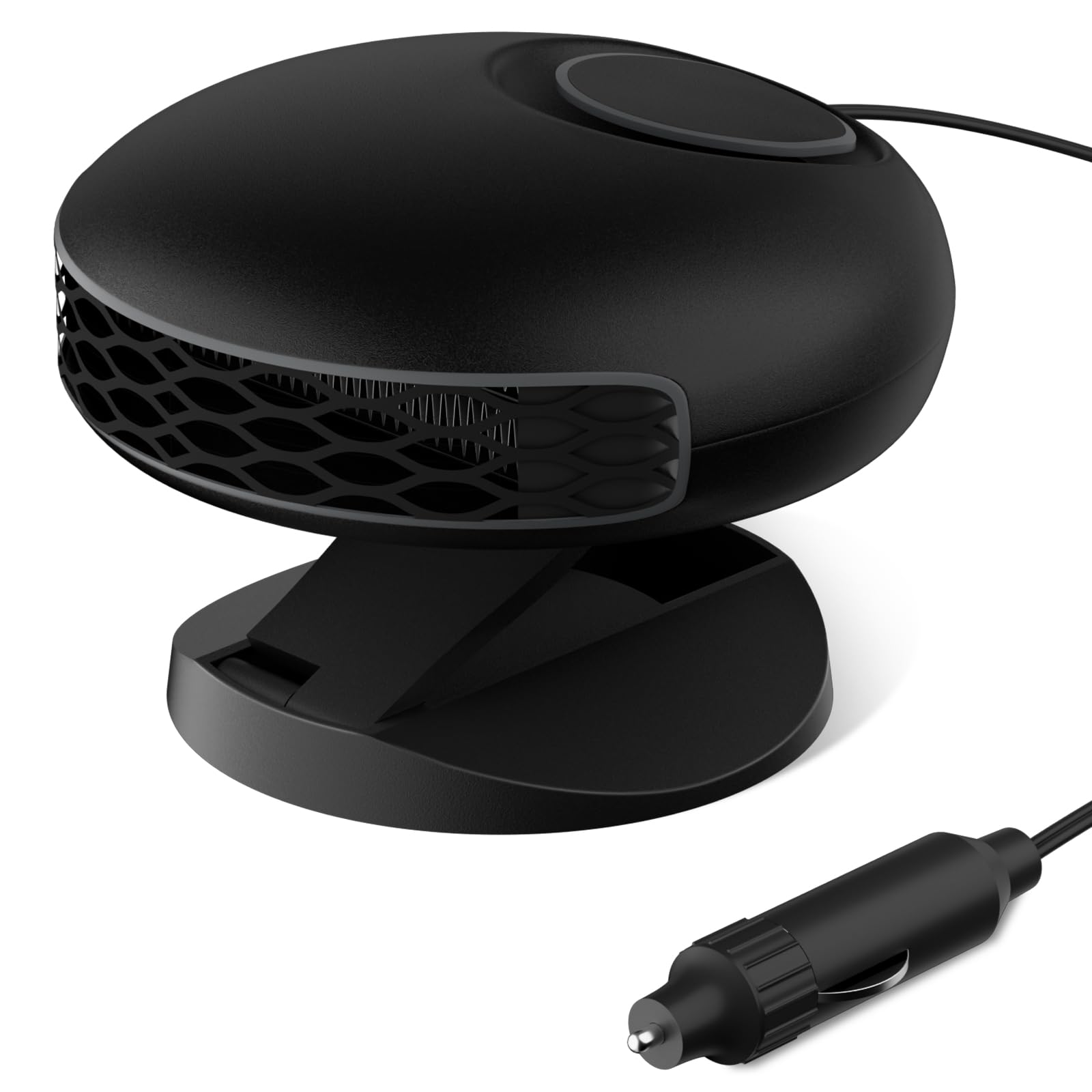
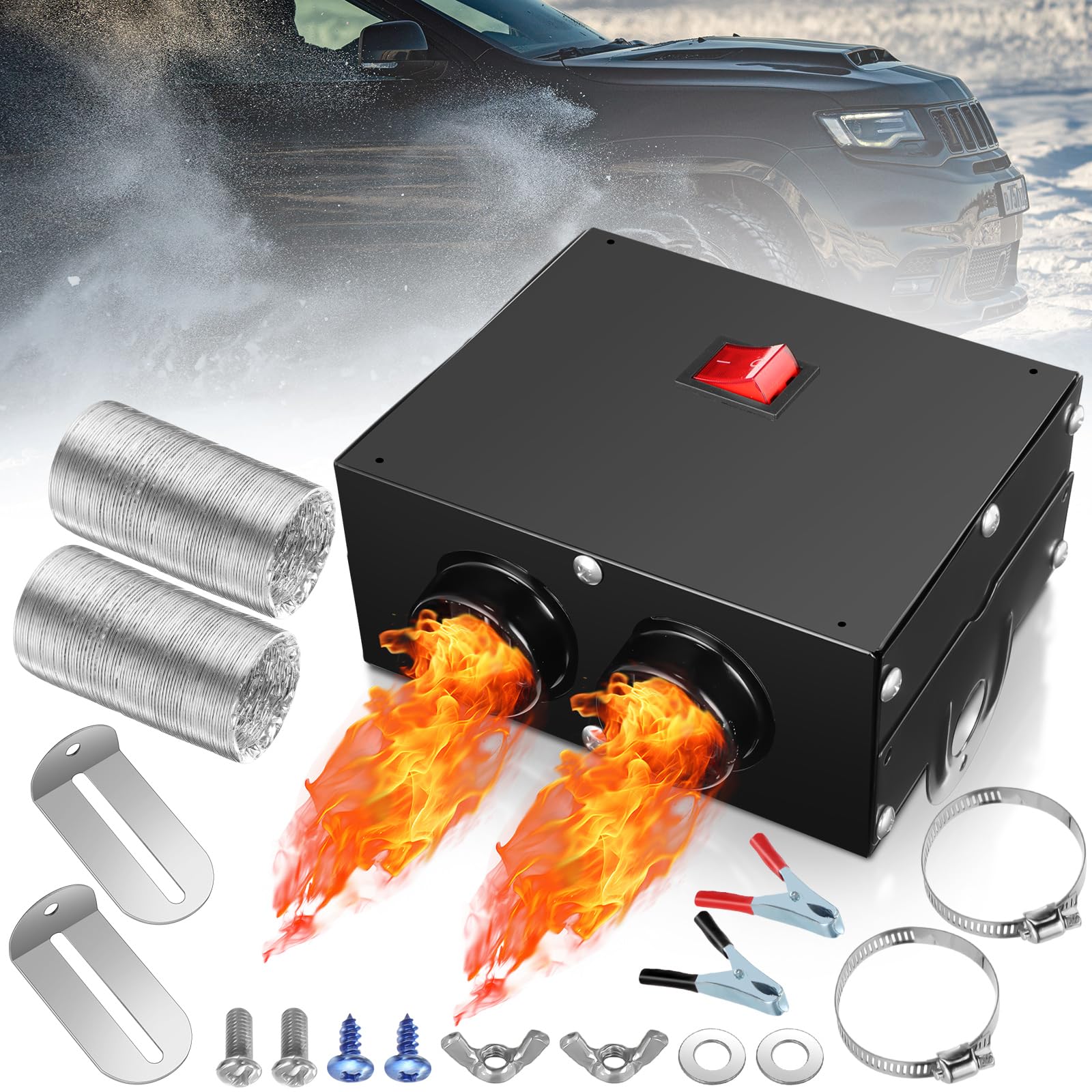
4. DaisyInner 500W 12v Car Heater, 2 Holes Windshield Defogger Defroster
A high-wattage hardwired heater that hides a bigger wiring demand than the label suggests.
Here is where you have to read past the spec sheet. The listing calls this a 500W heater, and the maker warns in the same breath that it must be matched with at least 4-square pure copper wire or the wire may burn out. That is not optional advice — it is the price of entry. Traded as a plug-in unit, it will disappointment; wired as a dedicated floor heater, it puts out a lot for the money. The 4-port design with twin switches on top lets you run one side or both, and the compact body tucks away without hogging dash space.
The catch is that buyer outcomes split sharply, and the heat side leans thin. Plenty of owners expected more warm air than it delivers, and the airflow gets called weak — it keeps you from freezing in a hard-cab UTV or a Jeep, but it will not roast you. That tracks with the mixed word-of-mouth on quality and heat output you will find across the listing. It is the pick to consider if your vehicle already has a battery-fed wiring setup and you want a low-cost supplemental floor heater, not a plug-and-go defroster.
Where It Wins
- 4-port dual-switch design lets you control heat on one or both sides
- Compact footprint fits tight vehicle interiors
- Runs quietly with low power draw once properly wired
What to Weigh
- Needs at least 4-square pure copper wiring — not a lighter-socket plug-in
- Airflow and heat split opinion, so it suits a small cab rather than a big van
- A few report the switch can activate without the driver present, so mind the circuit
Worth it for: UTV, Jeep, or small-cab owners with a battery-fed wiring setup who want a low-cost heater.
Skip if: you want a simple dash defroster with no wiring work — the 150W Blytra does that job cleanly.
5. Nedittpy Portable Car Heater, 2 in 1 Auto Heater, Fast Heating Defrost Defogger Cooling 12V Lighter Heater 60 Second Plug in Car Cig Lighter Demister (QH-N209)
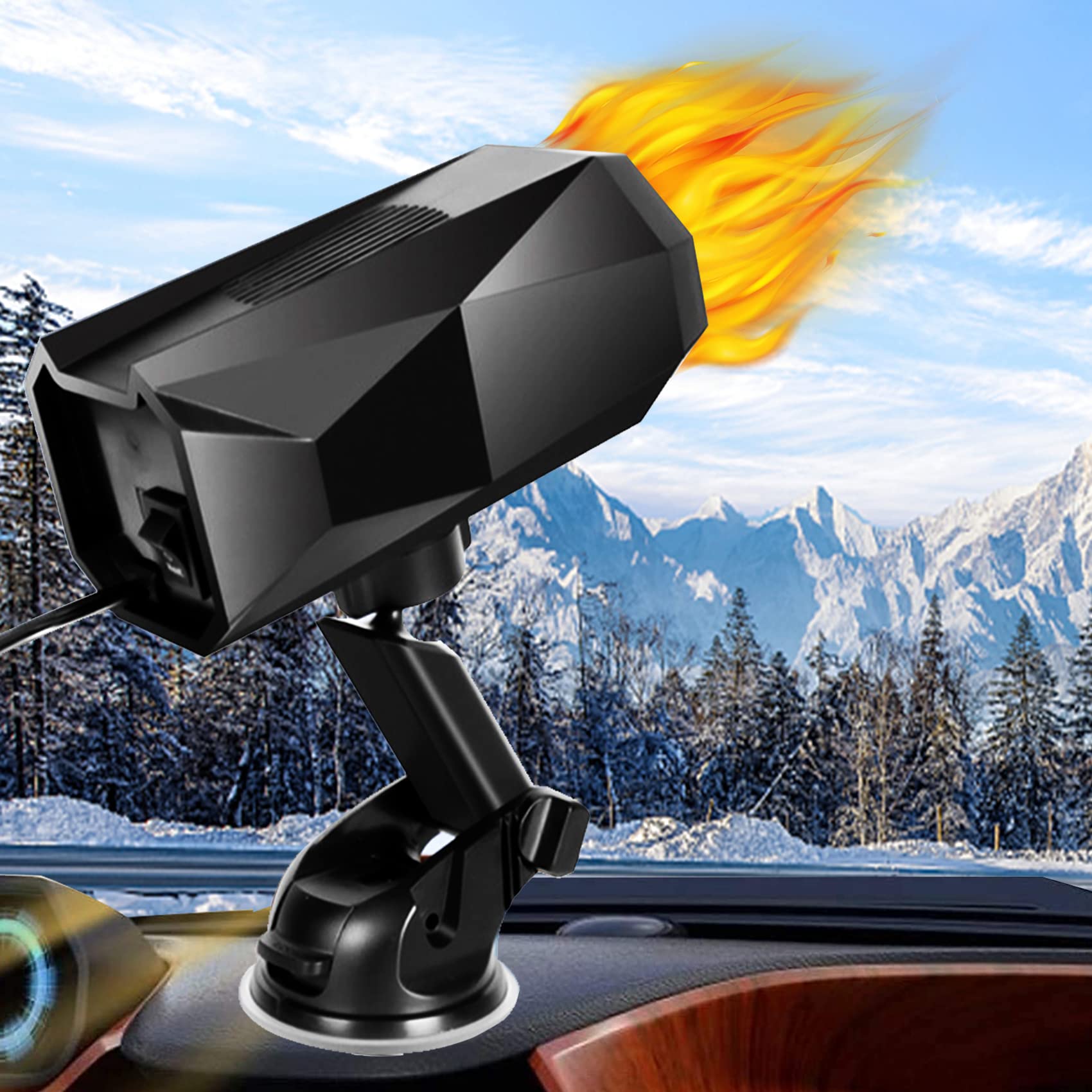
The tiny two-in-one that sells on convenience but tests owners’ patience.
On paper, the pitch is appealing: one 11.3-ounce unit that heats in winter and blows cool air in summer, plugs into the 12V socket, and mounts with a non-slip mat or double-sided tape. The heat-resistant ABS and polymer body carries a built-in fuse with automatic power-off protection, and the 180-degree rotary holder aims the flow like a vent. It is the lightest, most storable heater in this lineup — it genuinely disappears into a glove box. For a rental car or a weekend van trip, that portability is the real draw.
Where it stumbles is delivery. Many buyers report units that run for ten to twenty seconds then cut out, or that never climb past lukewarm despite the scald warning on the housing — the auto-shutoff meant to protect the battery is, for some, cutting the heat before it starts. Others had the socket blow within a couple of minutes. It still has a devoted set who find it clears frost fast in under a minute, but the inconsistency is the honest story: you are buying a convenience gadget, and a few arrive behaving like one. Buy it as a small, cheap defrost helper and keep the packaging handy until you know yours is one of the good ones.
Shop With Eyes Open: the size and dual-mode flexibility are real, but so is the spread in reliability — the overheating cutoff that guards the battery is also what some buyers see as a short runtime.
A fit for: renters and road-trippers who value a pocket-sized heater they can stash and move between vehicles.
Not for you if: you need dependable, long-running heat every single morning — a fixed dash unit or a hardwired floor heater is the safer bet.
6. CYDZSW Car Battery Powered Heater, Portable Electric 12 Volt Camping Heater for UTV and Truck Cab, 12V 500W 4 Holes

A metal-bodied 500W workhorse built for open cabs, wired straight to the battery.
This one is aimed squarely at off-road and utility rigs, and the build says so — high-quality metal that resists heat deformation and cracking, not the plastic shell you get on dash units. The spec sheet calls out a realtime heating rate with outlets that reach 86 to 100°C, routed through four aluminium foil telescopic tubes so you can aim warm air where you need it. It comes with clamps, fasteners, and brackets for a proper install, and the red-and-black leads mark the positive and negative terminals clearly. For a cold UTV, truck cab, or camping rig, the hardware is in the box to do the job right.
The split in owner experience is the thing to understand before you buy. The units that perform well give good heat and easy installation; the ones that disappoint the same way a lot of high-wattage heaters do, with low airflow that never feels strong enough. You also need to respect the draw — owners point out it pulls a lot of power and needs heavy-gauge wire, so it is a battery-direct install, not a socket toy. Wire it properly to a healthy 12V battery and you get a solid, metal-built cab heater; skimp on the cable and you get the weak, wheezy output that sours some reviewers.
What Stands Out
- Sturdy metal body resists high-temperature deformation
- 4 telescopic foil tubes direct heat where you need it
- Comes with clamps, fasteners, and brackets for a clean install
- Stated outlet temperature of 86 to 100°C for real heat conversion
The Trade-Offs
- Needs heavy-gauge wire and a battery-direct hookup
- Airflow is the most-cited weakness — warm air, but not a strong blow
- Heat output varies unit to unit in buyer reports
Made for: UTV, truck, and camper owners who want a durable metal heater and will wire it to the battery.
Not ideal if: your priority is a fierce fan — this is steady warmth over a big blast.
7. Roadpro 12v RPSL-681 12-volt Ceramic Heater/fan

A veteran ceramic heater with real cable in the box — and a habit of splitting the room.
The most useful thing Roadpro includes is not the heat; it is the wiring. The 300W ceramic unit ships with a 15-foot, 12-gauge lead (heavy cable that carries the current without overheating), plus a burn-guard material over the heating element and low/high fan speeds you flip with a switch. That long lead is why a seasoned buyer can mount it away from the dash and run it straight to the battery with a 30A inline fuse. It is the most install-ready kit in this lineup, and a 15-foot run of 12-gauge cable on its own is a meaningful part of the value.
What the veteran reputation does not guarantee is a strong breeze. The honest read across its long history is that heat output is modest — it is genuinely supplemental, sized for warming an older vehicle with a weak heater core rather than replacing one that failed. Some units arrive strong; some stall within a day or two, and it is known to drain a battery bank quickly if left running. Run it as intended — battery-direct, fused, in short bursts to take the chill off — and it earns its place as a dependable helper for a Corolla with a tired heater, not a whole-cab solution.
The Proven Value: the included 15-foot 12-gauge lead and burn-guard element make this the easiest heater here to wire to the battery and keep running season after season.
The Honest Catch: output is modest and reliability varies — this is supplemental warmth, so pair it with a working factory heater rather than expecting it to carry the load alone.
Pick this: if you want a long-cabled, fuse-ready ceramic heater for a short winter drive or an older car with a weak heater core.
Look on if: you need heavy heat — a higher-wattage hardwired unit delivers meaningfully more.
Understanding the Specs
Wattage and Heat Output
Wattage tells you how hard the heater works — a 150W unit brings gentle warmth while a 500W or 600W unit puts out real heat. Higher wattage means a stronger, faster warm-up, but it also means a heavier load on your electrical system. Match the wattage to the space you are warming and how cold it gets, not to the biggest figure on the page.
Amperage and Your Socket
Amps are the current the heater pulls from the circuit. A 150W unit draws 12.5 A and a 200W unit draws 16.67 A, both comfortable on a standard 12V outlet. Step up past that and a cigarette-lighter fuse may blow — which is why the high-wattage models tell you to run dedicated heavy cable straight to the battery instead.
FAQ
Will a 12V van heater defrost my whole windshield or just part of it?
Do all 12V car heaters plug into the cigarette lighter socket?
Will a 500W or 600W heater blow my cigarette lighter fuse?
Can a 12V heater run while the engine is off?
Is a 150W or a 200W heater enough for a van?
What is a PTC ceramic heating element and why does it matter?
How long does it take for a 12V heater to warm up?
Can I use a 12V heater in a van, truck cab, or UTV instead of a car?
Do these heaters work as a cooling fan in summer too?
Final Thoughts: The Verdict
For most van drivers, the 12v van heater winner is the Blytra 12V 150W Car Heater because it clears the windshield fast off the socket you already have, with no fuse drama and no wiring project. If you want a bit more muscle while staying a plug-in, grab the Blytra 12V 200W Car Heater with its built-in fuse. And for a cold UTV or truck cab where you can run heavy cable straight to the battery, the CYDZSW 12V 500W Heater is the one to reach for. Pick the unit that matches your socket and your wiring, not just the biggest number — that is how you stay warm without a blown fuse.
How We Picked
We do not accept paid placement. Every pick is matched to a real buyer and a real use-case; we do not hands-on test units.
Sources & Methodology
Specifications: manufacturer listings and product documentation. Review insights: verified customer reviews, as of September 2026. Pricing: not shown on this page (it changes often); check the current price via the retailer link.
As an Amazon Associate, Gadgets Feed earns from qualifying purchases. This does not affect which products we feature.