
The jump to a 2K OLED 240Hz monitor is not a minor upgrade; it is a perceptual shift. You stop seeing pixels and start seeing only the game, where every motion across the battlefield is rendered with near-zero persistence and blacks so deep the screen appears to vanish into the bezel. This is the sweet spot of PC gaming—1440p resolution that delivers crisp detail without the brute-force GPU demands of 4K, paired with OLED’s instantaneous response and a refresh rate that exceeds the visible flicker threshold of even the most trained eyes.
I’m Min — the co-founder and writer behind Gadgets Feed. For this guide, I’ve combed through hundreds of hours of spec analysis and user feedback across eleven of the most compelling 2K OLED 240Hz monitors on the market, evaluating everything from real-world brightness and panel uniformity to burn-in mitigation designs and ergonomic adjustability.
Many confuse high-refresh VA or IPS panels for this level of fluidity, but only self-emissive technology delivers the combination of per-pixel black levels and sub-millisecond response that defines a true flagship experience. My goal is to help you navigate the nuances of WOLED versus QD-OLED, refresh rate tiers, and matte versus glossy coatings so you can confidently select the best 2k oled 240hz monitor for your specific setup and budget.
How To Choose The Best 2K OLED 240Hz Monitor
Selecting the right monitor in this category goes far beyond just the resolution and refresh rate printed on the box. The underlying panel generation, coating, and cooling design determine whether you will love the monitor for years or regret the purchase after the return window closes.
WOLED vs. QD-OLED: The Panel Decision
WOLED (white OLED) panels use a white subpixel with color filters, resulting in deeper inky blacks in bright rooms and a matte finish that resists reflections. QD-OLED panels use quantum dot color conversion, delivering higher peak color volume and a wider DCI-P3 gamut, but they exhibit a slight magenta tint to blacks when ambient light hits the screen. If you game in a controlled, dim environment, QD-OLED offers the more vibrant image. If your monitor sits near a window, WOLED avoids the washed-out purplish appearance.
Real-World Brightness and HDR Performance
The VESA DisplayHDR True Black 400 certification is standard here, but peak brightness in a 10% window can differ significantly between models. WOLED panels often sustain lower full-screen brightness to protect the organic materials, while newer QD-OLED generations can hit over 1000 nits in small highlights. For mixed-use scenarios (SDR desktop work and HDR gaming), look for models with uniform brightness modes that prevent aggressive auto-dimming.
Burn-In Mitigation: Warranty and Hardware
Every OLED monitor requires some form of pixel refresh and static screen detection. Premium models from ASUS, MSI, and Sony add custom heatsinks and graphene films to dissipate heat. More importantly, check the warranty terms. Several brands now include burn-in coverage as part of their standard three-year warranty, which provides essential peace of mind for a monitor that may see thousands of hours of static UI elements.
Quick Comparison
On smaller screens, swipe sideways to see the full table.
| Model | Category | Best For | Key Spec | Amazon |
|---|---|---|---|---|
| LG 27GS93QE | WOLED | Best Overall Value | 0.03ms GtG, Anti-Glare | Amazon |
| AOC Q27G4ZD | QD-OLED | Budget QD-OLED | 147.6% sRGB, 240Hz | Amazon |
| INNOCN 2780s | QD-OLED | 280Hz Refresh | 280Hz, Built-in Speakers | Amazon |
| Samsung Odyssey G6 G61SH | QD-OLED | Glare-Free & Pantone | OLED Safeguard, HDR10 | Amazon |
| ASUS ROG Strix XG27AQDMG | Glossy WOLED | Premium Glossy Image | Custom Heatsink, 99% DCI-P3 | Amazon |
| MSI MPG 271QRX | QD-OLED | 360Hz High-FPS | 360Hz, KVM, USB-C | Amazon |
| Alienware AW2725DF | QD-OLED | Top Performer 360Hz | 360Hz, FreeSync Premium Pro | Amazon |
| MSI MAG 271QPX E2 | QD-OLED | Silent Fanless Cooling | Graphene Heatsink, HDMI 2.1 | Amazon |
| Sony INZONE M10S | WOLED | Competitive 480Hz | 480Hz, Low-Profile Stand | Amazon |
| LG 34GX90SA-W | WOLED | Ultrawide Immersion | 800R Curve, webOS, USB-C 65W | Amazon |
| Deco Gear 49″ QD-OLED | QD-OLED | Ultrawide Power User | 5120×1440, 90W USB-C, KVM | Amazon |
In‑Depth Reviews
1. LG 27GS93QE Ultragear OLED
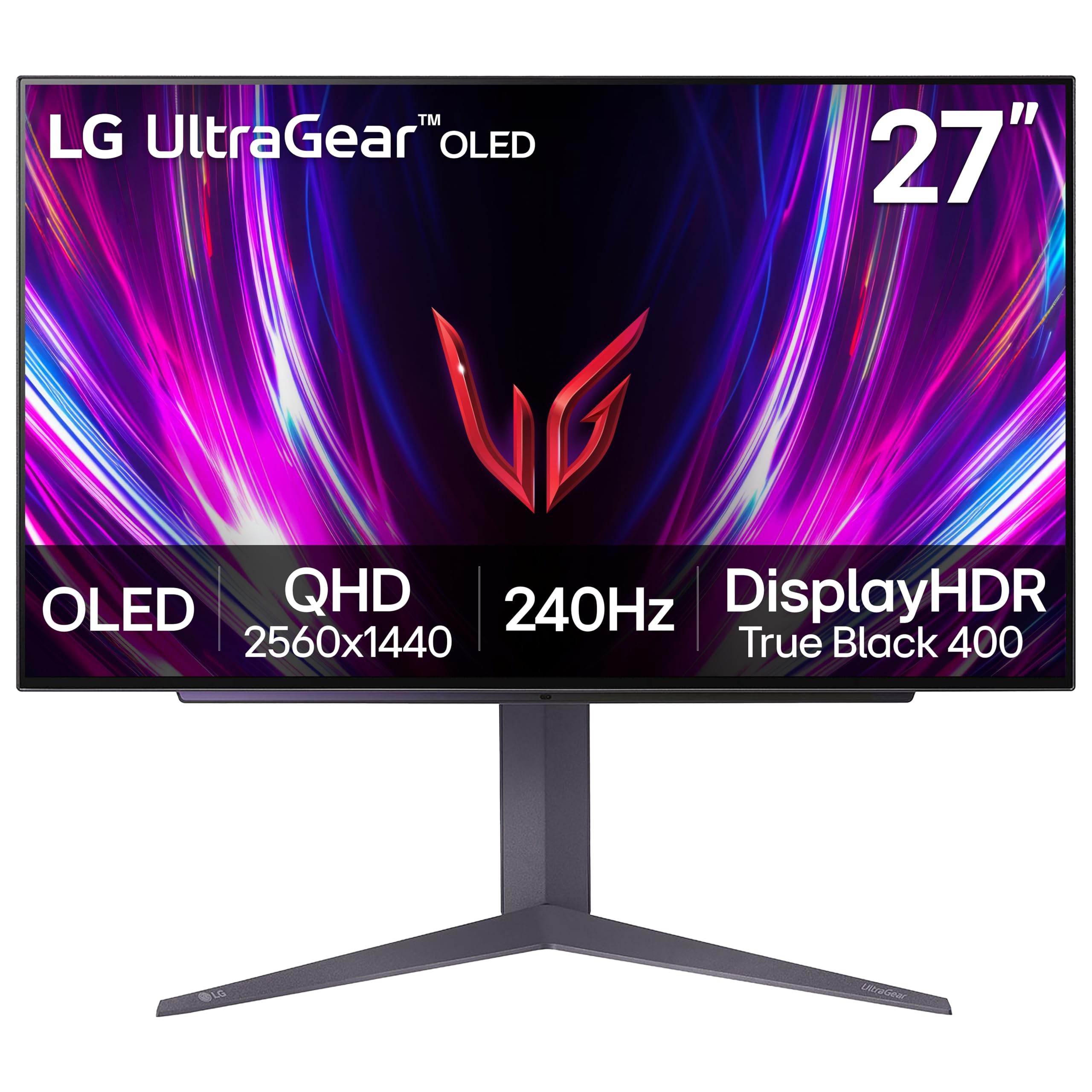
The LG 27GS93QE represents the most accessible entry point into 1440p OLED gaming without sacrificing critical performance. Its WOLED panel delivers deep inky blacks without the purple tint that QD-OLED panels exhibit under ambient light, making it a superior choice for brightly lit rooms or mixed-use home offices. At 240Hz with a 0.03ms GtG response time, the motion clarity is flawless, and the anti-glare coating is closer to a matte finish that nearly approaches glossy vibrancy without the distracting reflections.
The stand offers full height, tilt, and pivot adjustments, and the monitor supports both HDMI 2.1 and DisplayPort 1.4 for seamless 240Hz operation with modern GPUs. The VESA DisplayHDR True Black 400 certification ensures that dark scenes retain shadow detail rather than crushing into uniform black. Users report that the panel calibration is accurate out of the box, and the 2-year warranty that explicitly covers the OLED panel adds a layer of reassurance that budget alternatives often lack.
The main trade-off is the peak brightness, which is slightly lower than newer QD-OLED competitors in small highlight windows, and the lack of a built-in KVM or USB-C power delivery. For a pure gaming monitor that prioritizes color accuracy, low reflection, and build quality at a mid-range price point, this is the most balanced recommendation.
Why it’s great
- True WOLED blacks with no purple tint in bright rooms
- Anti-glare coating that approaches glossy clarity
- Full ergonomic stand and 2-year panel warranty
Good to know
- Peak HDR brightness lags behind QD-OLED rivals
- No USB-C or KVM functionality
2. AOC Q27G4ZD QD-OLED

The AOC Q27G4ZD brings QD-OLED’s extraordinary color volume and contrast into a price bracket previously reserved for WOLED panels. With 147.6% sRGB coverage and a 1.5M:1 contrast ratio, the image pops with a vibrancy that makes even SDR desktop use feel HDR-like. The 240Hz refresh rate and 0.03ms response time are identical to the class standard, and the panel supports HDR10 for rich highlight detail.
Where AOC cut costs is the stand, which lacks height adjustment and feels plasticky compared to competitors. The panel is also susceptible to scratching—users advise using a microfiber cloth immediately upon unboxing. The QD-OLED coating means you will notice a faint purple tint to blacks if the monitor is placed in direct sunlight, so it performs best in controlled lighting. AOC backs the panel with a 3-year zero-bright-dot warranty, which is generous at this price.
For buyers who prioritize panel quality over ergonomic flexibility and can manage their room lighting, this monitor delivers the most pure QD-OLED visual experience for the lowest entry fee.
Why it’s great
- Highest color volume in its price bracket
- 3-year zero-bright-dot warranty
- Excellent 240Hz HDR gaming performance
Good to know
- Stand lacks height adjustment
- QD-OLED coating shows purple tint in bright rooms
3. INNOCN 2780s QD-OLED
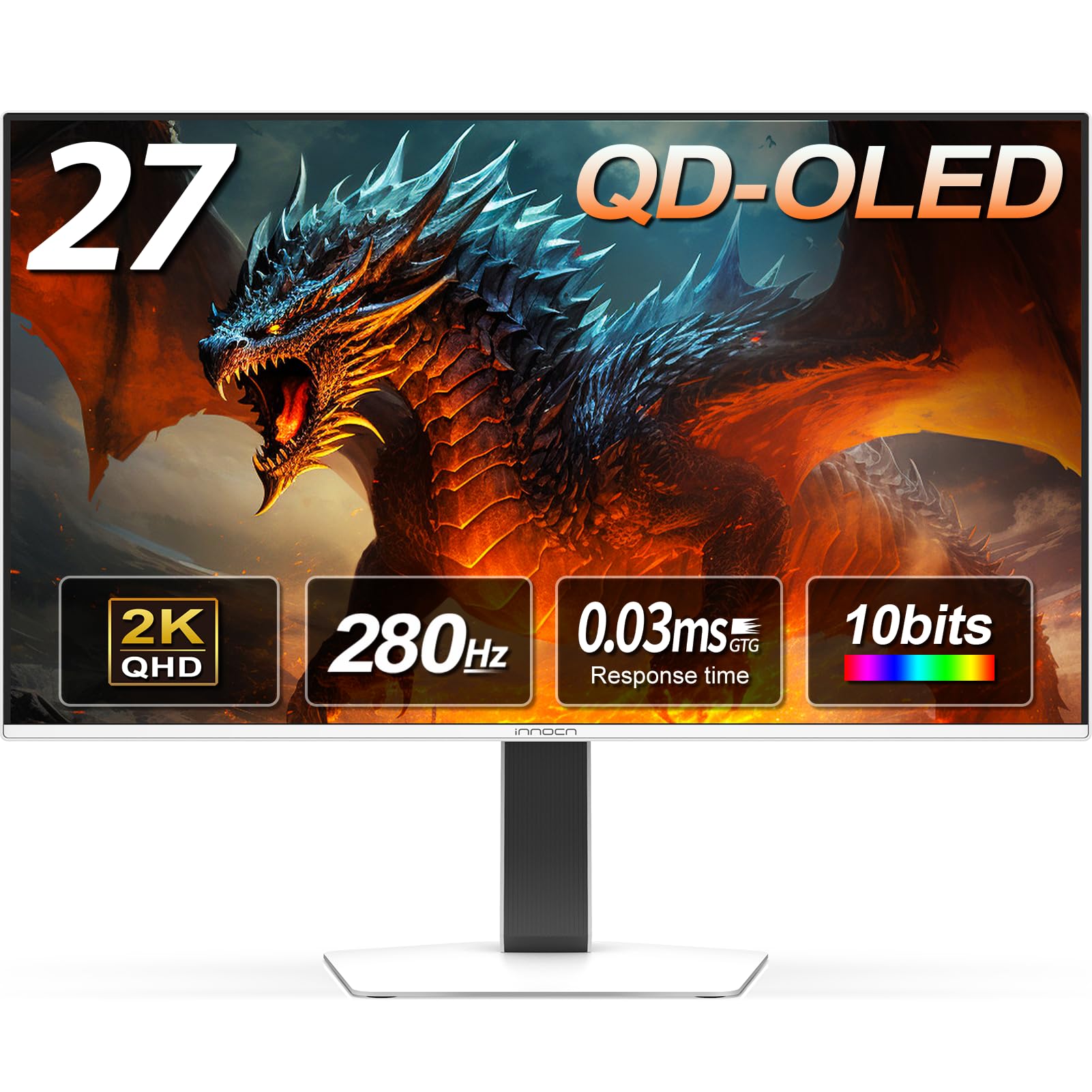
The INNOCN 2780s differentiates itself by pushing the refresh rate to 280Hz, surpassing the 240Hz baseline that dominates this segment. While the perceptual difference between 240Hz and 280Hz is subtle, competitive players chasing every frame will appreciate the headroom. The QD-OLED panel delivers identical contrast and color characteristics as the AOC model, with deep blacks and vivid highlights that make older panel technologies look washed out.
The stand includes height, tilt, and pivot adjustments, a significant upgrade over the AOC’s fixed stand, and the monitor includes built-in speakers—though they are thin and best used as emergency audio. The white chassis is a polarizing design choice; it stands out on a desk but may clash with dark-themed setups. INNOCN offers lifetime technical support and a 30-day free replacement warranty.
The primary downside is the slightly dimmer full-screen brightness and the lack of a dedicated burn-in warranty beyond the standard limited terms. For the extra 40Hz and better ergonomics at a modest premium, this is a strong choice for gamers who want every competitive edge.
Why it’s great
- 280Hz refresh rate above the 240Hz standard
- Full ergonomic stand with height and pivot
- Vibrant QD-OLED color and contrast
Good to know
- Built-in speakers are weak
- Full-screen brightness could be higher
4. Samsung Odyssey OLED G6 G61SH
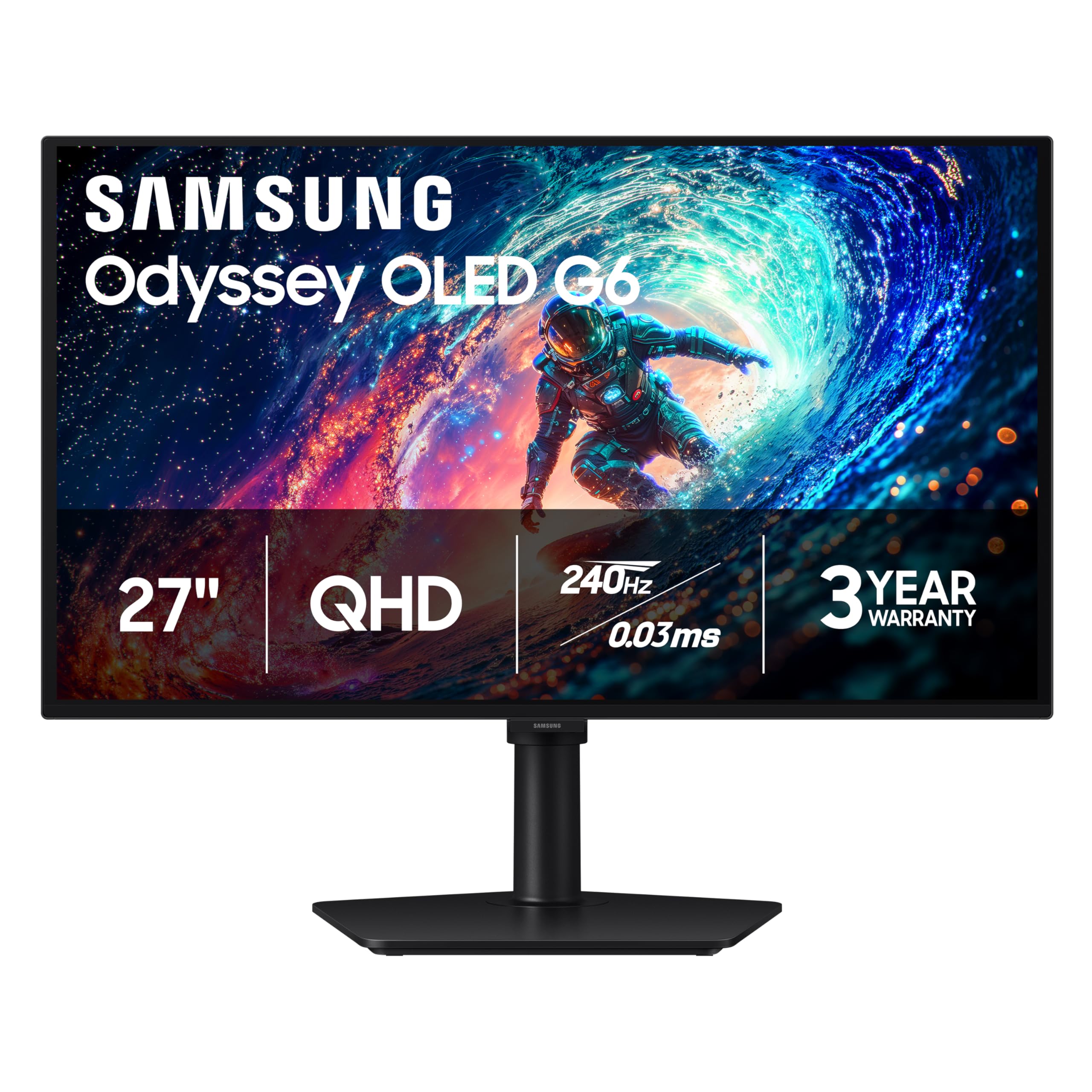
Samsung’s Glare Free technology on the Odyssey G6 G61SH diffuses ambient light across the screen without the haze of traditional matte coatings, preserving the QD-OLED’s inherent contrast and color saturation. The Pantone validation ensures accurate reproduction of over 2100 colors, making this monitor not just a gaming powerhouse but a legitimate tool for photo editing and content review. The OLED Safeguard system actively monitors temperature to prevent burn-in.
The 240Hz refresh rate and 0.03ms response time are standard, but the ergonomic stand adds swivel alongside height, tilt, and pivot. HDR10 support provides bright highlights and deep shadow detail, though the lack of VESA DisplayHDR True Black certification is a minor omission. User reviews consistently praise the jump from 144Hz IPS panels, noting the richness of colors and the immediate responsiveness in competitive titles.
The main drawback is the price, which positions it above the LG and AOC options without offering a higher refresh rate. You are paying for Samsung’s brand reliability, the Glare Free surface, and the wider three-year warranty. For buyers who want a QD-OLED that performs well in varied lighting without requiring blackout curtains, this is the clear choice.
Why it’s great
- Glare Free coating preserves QD-OLED contrast
- Pantone validated for color-accurate work
- OLED Safeguard cooling system and 3-year warranty
Good to know
- No VESA DisplayHDR True Black certification
- Premium price over comparable WOLED models
5. ASUS ROG Strix XG27AQDMG

The ASUS ROG Strix XG27AQDMG stands alone in this lineup as the only glossy WOLED monitor, and the visual impact is immediate. Glossy panels deliver higher perceived contrast and punchier colors because the glass surface does not scatter the light emitted from the OLED subpixels. Combined with a custom heatsink and advanced airflow design, this monitor runs cooler and reduces the risk of burn-in over long sessions. The 99% DCI-P3 coverage and third-generation WOLED technology provide brighter full-white windows and improved text clarity compared to earlier WOLED generations.
G-Sync Compatible certification and FreeSync Premium ensure tear-free gameplay across both NVIDIA and AMD GPUs. The anti-flicker technology specifically addresses the VRR flicker that can occur during frame rate fluctuations, a common complaint on other OLED monitors. The uniform brightness setting is a welcome feature for gamers who find auto-dimming distracting in SDR games.
The downside is the price, which sits at the top of the mid-range segment, and the monitor lacks built-in speakers. VESA mounting is also a tight fit due to the heatsink, so plan your bracket carefully. For the glossy finish, superior cooling, and ASUS’s three-year burn-in coverage, this is the premium WOLED recommendation for image purists.
Why it’s great
- Glossy WOLED panel with stunning contrast and clarity
- Custom heatsink for superior burn-in protection
- Anti-flicker technology and uniform brightness mode
Good to know
- No built-in speakers
- VESA mount bracket requires careful installation
6. MSI MPG 271QRX QD-OLED

The MSI MPG 271QRX pushes beyond the 240Hz standard to 360Hz, placing it in the elite high-refresh category for competitive FPS players who can leverage the extra frames. The QD-OLED panel delivers the same rich color volume and infinite contrast as its slower siblings, but the 360Hz refresh rate reduces motion blur to near imperceptible levels. The VESA DisplayHDR True Black 400 certification ensures HDR content looks punchy and detailed.
MSI includes a KVM switch, allowing you to control two devices with a single keyboard and mouse setup, plus a USB-C port for 65W laptop charging. The Gaming Intelligence app lets you create per-game display profiles and tweak settings without the OSD joystick. The OLED Care 2.0 suite includes pixel shift, static screen detection, and a panel refresh feature to prolong the lifespan of the organic materials.
The price is significantly higher than the standard 240Hz models, and the stand’s adjustment range is slightly limited. The QD-OLED purple tint in bright environments is present here as well. For gamers whose GPUs can consistently push 300+ FPS in their favorite titles, the 360Hz upgrade is tangible and performance-defining.
Why it’s great
- 360Hz refresh rate for elite motion clarity
- Integrated KVM and USB-C 65W PD
- OLED Care 2.0 burn-in prevention tools
Good to know
- Premium price tier
- QD-OLED purple tint in bright rooms
7. Alienware AW2725DF QD-OLED

The Alienware AW2725DF is a direct competitor to the MSI MPG 271QRX, offering the same 360Hz QD-OLED experience with a focus on build quality and thermal management. The monitor includes a graphene film heatsink that allows for fanless operation, keeping the chassis silent even during extended gaming sessions. The DCI-P3 99.3% coverage and Delta E less than 2 accuracy mean this monitor is as suitable for professional color work as it is for competitive gaming.
AMD FreeSync Premium Pro and VESA AdaptiveSync certifications ensure tear-free variable refresh rate operation, and the stand offers full height, tilt, swivel, and pivot adjustments. The 3-year warranty specifically includes burn-in coverage, which is the gold standard for OLED monitors at this price point. Users consistently describe the motion clarity as “god-like” and note that the upgrade from 144Hz IPS panels is immediately perceptible.
The QD-OLED coating remains a fingerprint magnet, and the purple tint under direct light is present. Additionally, the OSD joystick placement on the rear can be awkward to reach. For a polished package that pairs top-tier refresh rate with a comprehensive warranty, the AW2725DF is a benchmark choice.
Why it’s great
- 360Hz refresh with fanless graphene heatsink
- 3-year burn-in warranty included
- Full ergonomic stand and accurate color reproduction
Good to know
- Screen is a fingerprint magnet
- QD-OLED purple tint in bright rooms
8. MSI MAG 271QPX E2 QD-OLED

The MSI MAG 271QPX E2 is the more affordable sibling to the MPG 271QRX, dropping the refresh rate back to 240Hz while retaining the QD-OLED panel and its excellent color reproduction. The defining feature here is the fanless cooling design, which uses a graphene film and custom heatsink to dissipate heat silently. For gamers sensitive to fan noise or those who keep their monitor on for long stretches, this is a meaningful advantage.
HDMI 2.1 support is included for console gamers who want 1440p 120Hz on PS5 or Xbox Series X, and the OLED Care 2.0 suite mirrors the higher-end model’s burn-in prevention features. Text clarity is noticeably better than earlier QD-OLED panels thanks to MSI’s optimized subpixel rendering. The 3-year warranty includes burn-in coverage, bringing peace of mind to a crucial purchase.
The stand is bulky and lacks the premium feel of the Alienware or ASUS options, and the pixel shift function at default speed can be distracting on static desktop backgrounds. Changing the pixel shift to “slow” in the OSD resolves this. For a quieter, cooler-running 240Hz QD-OLED experience, this is a well-priced alternative.
Why it’s great
- Fanless design with graphene heatsink for silent operation
- HDMI 2.1 for full console compatibility
- 3-year burn-in warranty
Good to know
- Bulky stand with limited adjustment range
- Pixel shift can be distracting at default speed
9. Sony INZONE M10S

The Sony INZONE M10S is the fastest 1440p OLED monitor in this lineup, boasting a 480Hz refresh rate that pushes the boundaries of what the human visual system can perceive. Developed in partnership with the Fnatic esports team, the monitor includes a Tournament Mode that swaps to a simulated 24.5-inch display area at the click of a button, letting competitive players maintain the same field of view across different LAN events. The low-profile stand is only 4mm thin, reclaiming desk space for aggressive mouse movements.
The WOLED panel includes a custom fanless heatsink that keeps the chassis silent, and the OLED care features include pixel refresh, static image detection, and screen saver modes. The DisplayPort 2.1 (UHBR10) input ensures enough bandwidth for 1440p 480Hz without compression artifacts. G-Sync Compatible certification guarantees tear-free operation with NVIDIA GPUs.
The price is the highest per-inch of any monitor here, and the 480Hz benefit is only realized with a high-end GPU that can maintain 400+ FPS in esports titles. Some users have reported QA issues with pixelation on the left side of the panel at power-up. For the dedicated competitive player seeking the ultimate refresh rate advantage, this is the definitive choice.
Why it’s great
- 480Hz refresh rate for zero-compromise motion clarity
- Tournament Mode with virtual 24.5-inch display
- Ultra-thin 4mm stand and fanless cooling
Good to know
- Requires a high-end GPU to fully utilize 480Hz
- Some reported QA issues at launch
10. LG 34GX90SA-W Ultragear OLED
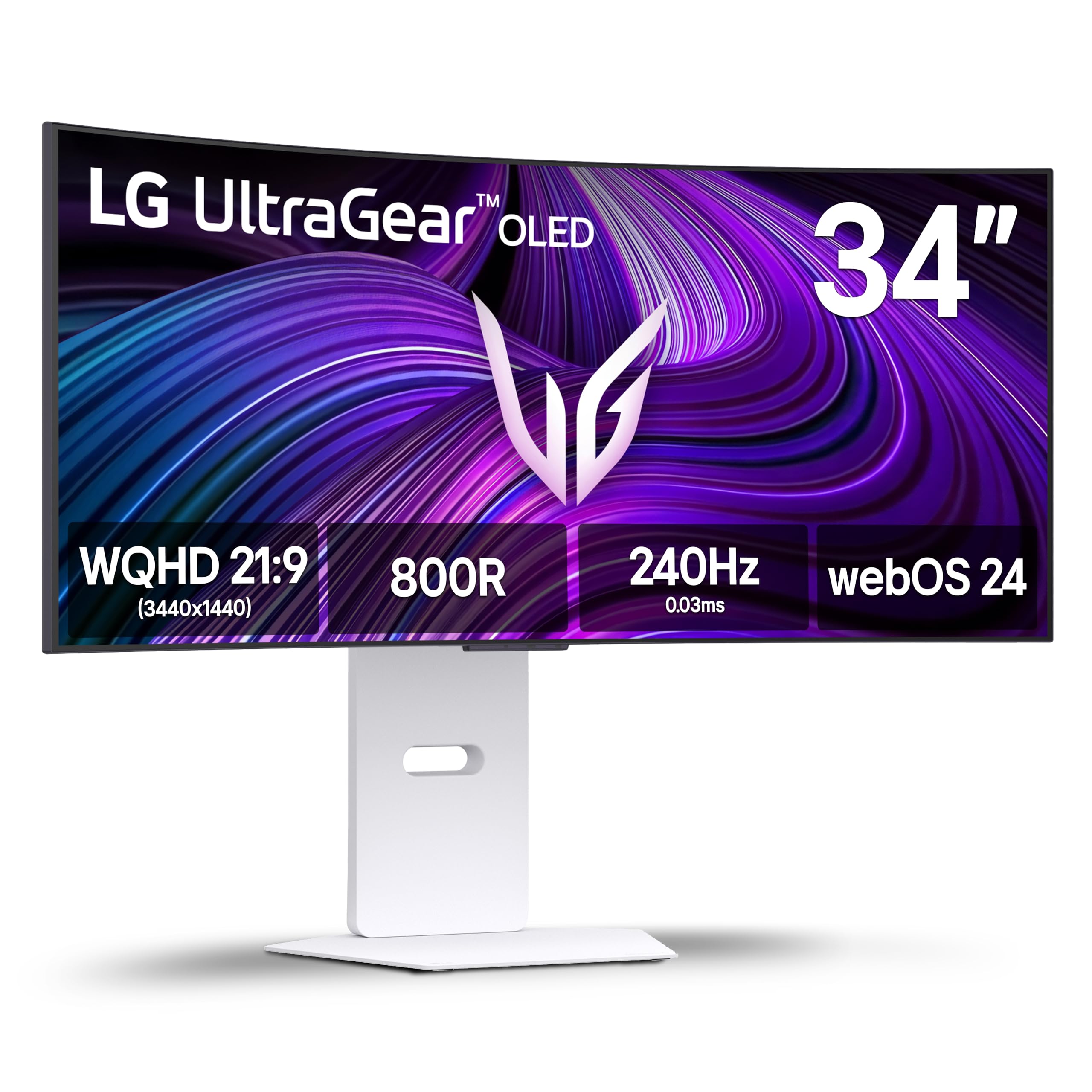
The LG 34GX90SA-W breaks from the standard 16:9 format with a 34-inch ultrawide WQHD (3440 x 1440) panel and an aggressive 800R curve that wraps around your peripheral vision. The 240Hz refresh rate pairs with a 0.03ms response time, and the WOLED panel delivers 98.5% DCI-P3 coverage with a 1.5M:1 contrast ratio. The built-in webOS platform allows streaming from Netflix, Prime Video, and cloud gaming services without needing a PC connected, which is a rare convenience in the OLED gaming monitor space.
The stand includes height, tilt, and swivel adjustments, and the connectivity suite is robust with HDMI 2.1, DisplayPort 1.4, and USB-C with 65W power delivery. The anti-glare surface reduces reflections effectively, and the OLED Care tools provide pixel cleaning and static image detection. The built-in speakers are loud enough for casual viewing, though they sound slightly muffled.
The 800R curve is very steep and may feel claustrophobic for non-gaming productivity tasks like spreadsheet work. The lack of full G-Sync module certification (only G-Sync Compatible) means VRR flicker can appear in certain scenarios. For gamers who prioritize immersive ultrawide field of view and smart TV functionality, this is a versatile OLED monitor.
Why it’s great
- 34-inch ultrawide with 800R curve for immersion
- Built-in webOS for streaming and cloud gaming
- USB-C 65W PD and full ergonomic stand
Good to know
- Very steep curve may not suit all productivity tasks
- VRR flicker can occur in some scenarios
11. Deco Gear 49″ QD-OLED Ultrawide
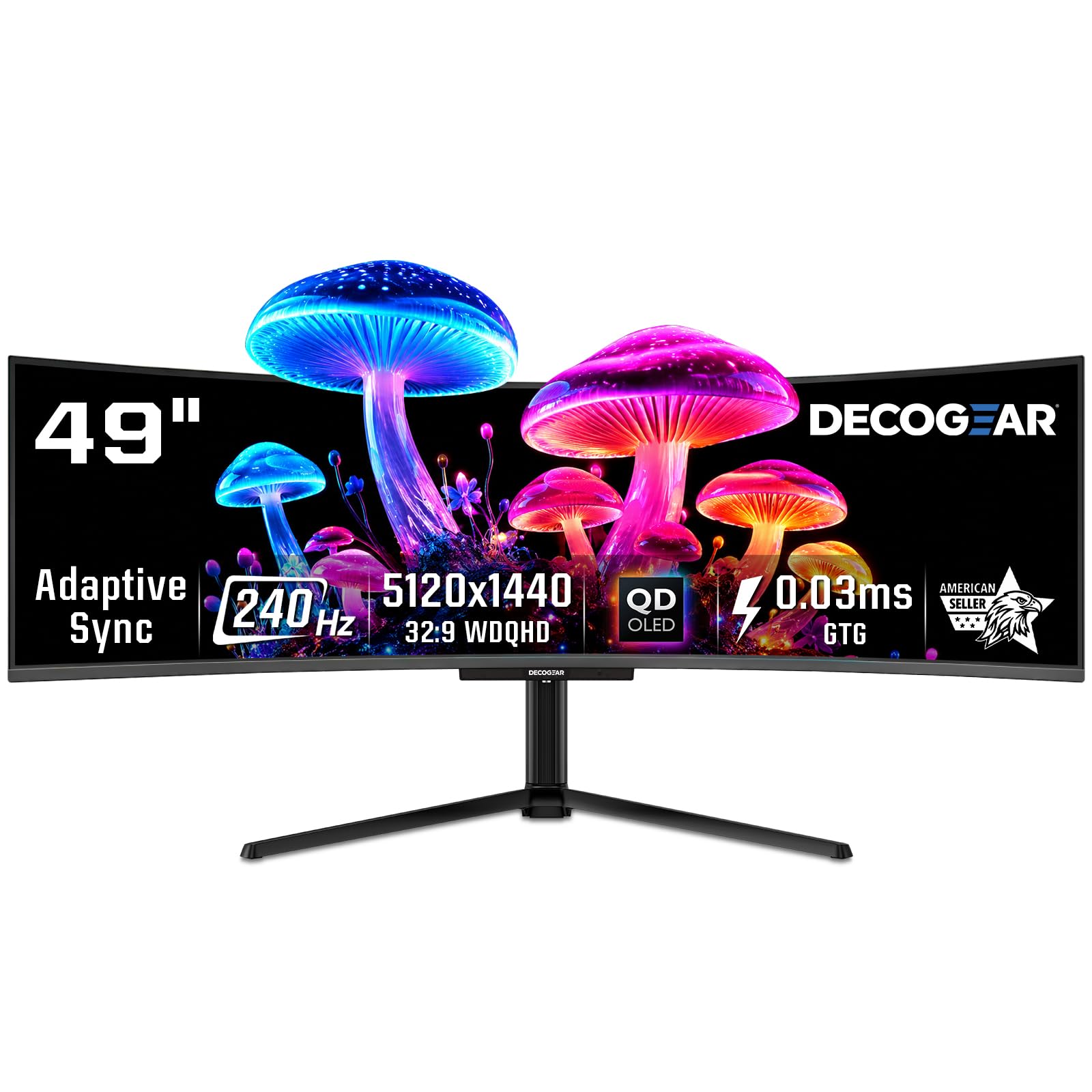
The Deco Gear 49″ QD-OLED Ultrawide is the most physically imposing monitor in this roundup, offering a 5120×1440 DQHD resolution spread across a 32:9 aspect ratio that effectively replaces two standard 27-inch QHD monitors without a bezel gap. The 240Hz refresh rate and 0.03ms response time are standard for the category, but the sheer pixel count makes this a productivity powerhouse for video editing, trading, and AI development workflows. The QD-OLED panel provides the same infinite contrast and vibrant color as other QD-OLEDs.
The USB-C port delivers 90W power delivery, sufficient to charge a high-end laptop while driving the full 240Hz resolution over a single cable. The built-in KVM switch lets you toggle between two connected computers with one keyboard and mouse. The PIP/PBP support is robust, and the RGB lighting adds desk ambiance. The monitor is essentially identical to the Innocn 49Q1R, sharing the same Samsung QD-OLED panel.
The massive width requires a deep desk—at least 30 inches—and a powerful GPU to push games at the full 5120×1440 resolution. Some users have reported power cable issues with the included accessory. For power users who need maximum screen real estate and cinematic immersion in a single panel, this is the ultimate QD-OLED investment.
Why it’s great
- 49-inch 32:9 ultrawide replaces dual QHD monitors
- 90W USB-C power delivery and built-in KVM
- Vibrant QD-OLED colors and contrast
Good to know
- Requires a large desk and a powerful GPU
- Some reports of power cable QA issues
FAQ
Is 1440p enough for a 27-inch OLED gaming monitor?
Should I worry about burn-in on a 2K OLED 240Hz monitor?
Does matte or glossy finish matter for OLED gaming?
Can I use a 2K OLED 240Hz monitor for console gaming?
Final Thoughts: The Verdict
For most users, the best 2k oled 240hz monitor winner is the LG 27GS93QE because it combines a genuine WOLED panel with anti-glare coating, full ergonomic adjustments, and a 2-year warranty at a price that undercuts its rivals. If you want the glossy look and superior cooling of a premium WOLED, grab the ASUS ROG Strix XG27AQDMG. And for the competitive player who demands 360Hz motion clarity with comprehensive burn-in coverage, nothing beats the Alienware AW2725DF.