
Our readers keep the lights on and my morning glass full of iced black tea. As an Amazon Associate, I earn from qualifying purchases.
Specs are compiled from manufacturer listings and verified buyer reviews and can change over time — please confirm the key details on the product page before buying.
A 36 inch refrigerator is not a casual purchase. It slides into a cutout that will not grow, gets wired into a circuit you cannot easily re-run, and then sits there for years making ice and noise while your groceries live or die inside it. Every model on this list is a genuine 36-inch-wide machine, so the fit question is settled before you get to capacity, ice, and energy use. What separates them is how well each one holds temperature, how much food it actually stores, and how much electricity it drinks over a year.
I’m Min — the founder and writer behind Gadgets Feed. This guide is built by comparing the manufacturers’ published specifications and the patterns across verified customer reviews, so you get each pick’s real strengths and trade-offs instead of marketing spin.
Start with width, depth with the door swung open, and annual kilowatt hours — those three decide whether a machine actually works in your kitchen. Everything else, from ice maker design to how many door bins you get, is a preference you can rank once the hard numbers clear the bar, which is how I compare every 36 inch refrigerator here.
Our Picks at a Glance

How To Choose The Best 36 Inch Refrigerator
A 36 inch opening is the single most common refrigerator cutout in American kitchens, which sounds convenient until you learn that “36 inch” means something slightly different on every spec sheet. Measure your opening first, then read the numbers below. The width gets you in the door; everything after that is about daily life with the machine.
Width First, Then Depth With The Door Open
The listed depth-with-door-open figure is the one buyers regret skipping. A machine can be a perfect 36 inches wide and still swing its door into your island, your dishwasher, or a doorway. Standard-depth bodies sit proud of the counter; counter-depth bodies sit closer to flush. Neither is better in the abstract — but a counter-depth unit changes how your kitchen feels in a way a standard-depth one never will.
Annual Energy Consumption In Kilowatt Hours
Pick one number to care about and let it be annual kWh — the electricity the fridge is expected to use in a year. A lower figure points to a more efficient compressor and better insulation. It also means less heat dumped into your kitchen, which matters in a small space that already runs warm.
Ice Makers: The Most Common Regret
Ice is where fridges earn their complaints. In-door ice makers keep the freezer cold because you are not opening the main compartment for every glass, but they eat door storage. Freezer-drawer ice makers hold more cubes but let cold air escape every time you scoop. No design is flawless — the right one depends on how much ice your household actually burns.
Layout: Which Door Opens To What
French door puts a wide fresh-food area on top with a freezer drawer below, so you open one door for daily items. Side-by-side splits the width in two, so your freezer and fridge are both reachable at once but neither side is truly wide. If you regularly store sheet pans, party platters, or a turkey, the French door layout wins on usable width, as the models farther down this list show.
Quick Comparison
| Model | Best For | Total Capacity | Annual Energy Use | Door Shelf Count | Amazon |
|---|---|---|---|---|---|
| Antarctic Star 2 French Door Refrigerator★ Best Overall | Small kitchens that still want a wide French door body | 20 cubic feet | — | 2 | Amazon |
| Kenmore 20 cu. ft. 36″ Wide Side-by-Side RefrigeratorBest Counter-Depth Fit | Counter-depth installs where a fridge cannot protrude | 20 cubic feet | 560 kilowatt hours per year | — | Amazon |
| GE Profile PVD28BYNFS 36″ 4-Door French Door Refrigerator | Big families who want a convertible middle drawer | 27.9 cubic feet | 722 kwh | 6 | Amazon |
| Forno Moena 36″ Refrigerator and Freezer | Pro-style kitchen builds that want a 5-star energy rating | 19.2 cubic feet | 238 kilowatt hours per year | — | Amazon |
| Frigidaire FRFS2823A 36 Inch Wide 27.8 Cu. Ft. French Door Refrigerator | Maximum storage with the most door bins in the group | 27.8 cubic feet | 725 kilowatt hours per year | 9 | Amazon |
In‑Depth Reviews
1. Antarctic Star 2 French Door Refrigerator Fridge, with Side Freezer & Water Dispensor, Nugget Ice Maker & Cube Ice, Adjustable Thermostat, 20 Cu Ft, Stainless Steel
Our pick — over 4★ from 50+ verified ratings; the strongest balance of quality and price.
The side-by-side French door that makes nugget ice and fits a tighter wall without going narrow
This is the pick for the kitchen where a 36-inch footprint is a hard limit but you refuse to give up a French door layout. The machine splits into a 13.5 cubic foot fresh food section and a 6.5 cubic foot freezer, side by side rather than stacked. That 20 cubic foot total makes it the smallest capacity on this list, but as the winner of the group it also wears the 4.4-star score across 50-plus ratings — the strongest owner consensus of the five. What wins people over is plain build quality, with the size split between the two compartments coming in as the second thing owners bring up on their own.
The ice story is the headline. The dispenser puts out cube ice, crushed ice, and cold water through the door, and the freezer itself runs a nugget ice maker inside. Two control boards run the fridge and freezer temperatures separately, so you can set the fresh side cold and the freezer colder without one dragging the other around. The LED display shows both figures at once, and you nudge either one with an up or down arrow. A multi-airflow cooling system moves the cold air through the cabinets, and if any door sits open past a minute, an alarm tells you about it.
The maintenance side is handled for you. The freezer runs an automatic defrost cycle on a program, so you never stand over it with a hair dryer and a towel. The door seals lift off for cleaning, which sounds like a small thing until you have scrubbed a gasket in place. Height lands at 69.68 inches, so measure your cabinet run before you commit.
What buyers get right
- Nugget ice maker plus a door dispenser that handles cube ice, crushed ice, and cold water
- Separate microcomputer control for the fridge and freezer, each on its own temperature
- Automatic defrost program and removable door seals cut out the two worst maintenance chores
- Reversible door orientation lets you hang it left or right to suit the wall
- 20 cubic foot split of 13.5 fresh food plus 6.5 freezer keeps the two zones proportioned
Where it asks a little patience
- Two door shelves is the thinnest bin count here — big condiment collections will need reorganizing
- At 20 cubic feet it holds the least of any pick, so it suits smaller households best
Reach for this if: you have a fixed 36-inch gap and a firm ceiling on how far a fridge can stick out, and you still want French doors plus real ice options.
Think twice if: you feed a large family — the 20 cubic foot total sits well under the 27.8 and 27.9 cubic foot bodies above.
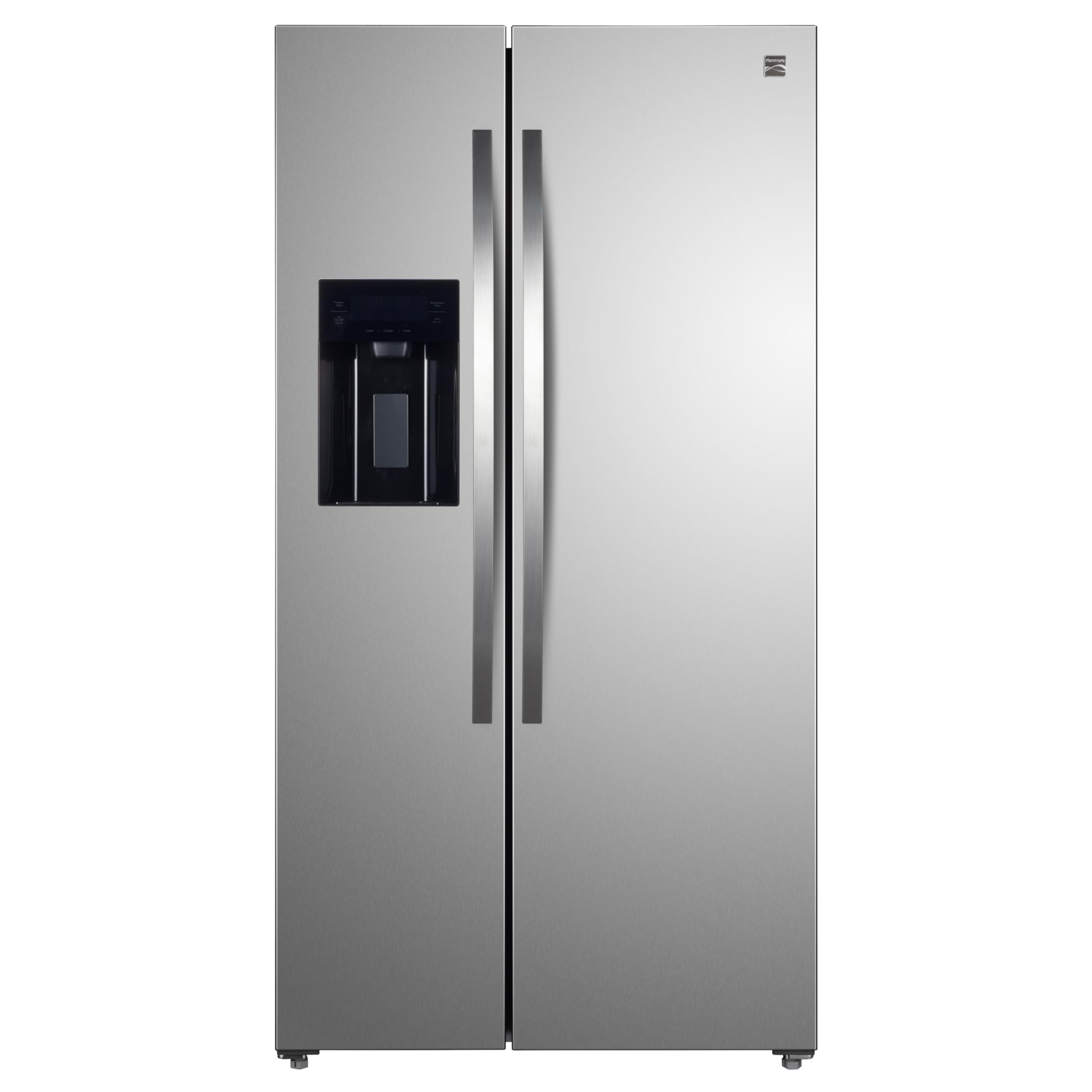
2. Kenmore 20 cu. ft. 36″ Wide Side-by-Side Refrigerator – FPR Stainless Steel
A counter-depth body that stops short of your walkway instead of bulging into it
If the thing that actually bothers you is a fridge protruding past the counter line and clipping your hip on the way to the sink, this is the one built for that. It runs 20 cubic feet in a side-by-side configuration, which splits the same width into a narrower freezer column and a narrower fridge column rather than stacking them. Over a fridge’s life, that counter-depth clearance is the difference between a walkway you can use and one you squeeze past.
The feature list leans practical. Edge-to-edge glass shelves span the full width so you can slide a platter across without a gap swallowing it. A dedicated chill setting drops the temperature fast when you come home with warm groceries, and a multi-flow air system spreads cold air across every shelf level instead of dumping it in one spot. The dispenser handles cubed or crushed ice and filtered water from a factory-installed maker, and the inverter compressor is the quieter, more efficient type. The fingerprint-resistant stainless finish keeps the front looking clean without constant wiping.
The honest note here is reliability, because that is what owners talk about most and it cuts both ways. Plenty of them report the fridge simply doing its job — but there is a real cluster of ice maker complaints, including an intermittent screech from the machine along with readings that did not match what the cabinets were actually holding. Buyer experience lands on value and looks as the strongest points, with the finish and elegance called out repeatedly. Plan on checking the water hookup yourself: the required adapter for the water line is not in the box.
Where the money goes: Counter-depth clearance, ENERGY STAR certification, a filtered water and ice dispenser, and an inverter compressor — a genuinely short feature list for the footprint it saves.
Worth checking before you buy: Width has been inconsistent between the listed spec and what shows up on the truck, so measure your opening and leave yourself margin. One more practical note from the install crowd: if you lay the unit down for transport, give it two hours upright before you plug it in.
The fit-first call: this is the pick when depth is your constraint and you would rather have a fridge that sits back than one that holds more.
Who should look up the list: if raw capacity or ice maker reliability tops your list, the GE Profile and Antarctic Star are stronger bets.
3. GE Profile PVD28BYNFS 36″ 4-Door French Door Refrigerator with 27.6 cu. ft. Total Capacity in Fingerprint Resistant Stainless Steel

Four doors, a drawer with its own thermostat, and enough room to feed a crowd
This is the pick for a household that fills a fridge and empties it again every week. The 27.9 cubic foot interior is the largest body on this list, and it earns that number with a four-door setup: French doors up top, a convertible middle drawer with its own temperature control, and a bottom freezer that slides out in compartments. Owners consistently point to performance as the thing they value most, with the sheer storage volume right behind it. Six door shelves line the inside, so the door storage that runs thin on some French door fridges is not the weak point here.
The middle drawer is what sells this machine. It holds its own temperature independently of the main cabinet, so it can ride warmer as a drinks-and-snacks zone or colder when you need it. The ice maker is built into the door rather than the freezer, which keeps warm room air from flooding the freezer every time you grab a glass of ice. Auto-fill on the water dispenser handles the pitcher without you standing there watching it. Adjustable LED lighting runs the interior, and the fingerprint-resistant stainless keeps the exterior presentable.
Two things to plan around. Door-shelf space is tighter than buyers of older French door fridges expect, and the in-door compartment on the right runs a few degrees warmer than the main interior — fine for soda and condiments, less ideal for anything delicate. The ice bin is also smaller than on some earlier designs. On energy it uses 722 kilowatt hours per year, roughly level with the Frigidaire’s 725 and noticeably above the Kenmore’s 560, which is the trade you make for the extra capacity and the convertible drawer.
What actually justifies the price: A convertible middle drawer with its own thermostat, a door-mounted ice maker that protects freezer temperature, auto-fill water, and 27.9 cubic feet — features that solve specific daily problems rather than filling a checkbox list.
What to expect on delivery day: This is a heavy machine and it arrives curbside, so line up help before the truck shows. Allow time for door leveling — it takes real patience — and check every shelf and bin bracket on arrival, since the occasional unit shows up with small dents or a missing bracket that is easy to replace directly.
For the full-fridge household: four doors, the biggest interior in this group, and a middle drawer you can set to whatever you need that week.
Only skip the middle drawer if: your cutout is shallow, because all that capacity needs depth behind the doors.
4. Forno Moena 36″ Inch W. Refrigerator and Freezer with 19.2 cu.ft Total Capacity – French Door Counter Stainless Steel Freestanding Fridge with Ice Maker, Child Safety Lock and Touch Control

The pro-style counter-depth body that sips electricity instead of gulping it
One number jumps off this spec sheet: 238 kilowatt hours per year. That is the lowest energy figure in this entire comparison and it sits under the E-star efficiency margin, so it is the pick for a buyer who cares about lifetime running cost and about how much heat the fridge radiates into a kitchen. Depth with the door fully open is 44.37 inches, the tightest swing on this list, so it works in a narrow galley layout where a wider arc would land in your path.
The storage splits into a 12.12 cubic foot fresh zone and a 7.14 cubic foot freezer for 19.2 cubic feet total, and the kitchen-facing details are genuinely pro-grade: four massive handles, spill-proof glass shelves, two gallon bins, two drawers, and freezer door baskets sized for gallon bottles. A child lock, vacation mode, and a Sabbath mode sit in the electronic side-door control. The ice maker lives inside the freezer drawer and includes a heater element, and the machine takes R 600 refrigerant. A two-year factory parts and labor warranty covers it.
Know what you are trading away for that efficiency. Ice cream softens faster than expected because of the smaller freezer. Setup is the other friction point: the instructions are unclear on the ice maker connection, and the black rubber washer that stops a leak can hide in the parts bag because the list does not call it out. Budget real time for the install and confirm the washer before you connect.
What it gets right
- 238 kilowatt hours per year is the lowest energy draw here by a wide margin
- 44.37 inch door-open depth keeps the swing tight in narrow kitchens
- Child lock, vacation mode, and Sabbath mode plus R 600 refrigerant
- Two-year factory parts and labor warranty is the longest coverage on this list
- Gallon-sized bins and door baskets store large bottles standing up
What to plan around
- 19.2 cubic feet is modest for a 36-inch machine, and the drawers are small
- The install instructions leave gaps around the ice maker hookup and the washer in the parts bag
The efficiency play: pick this when running cost and a tight door swing matter more than raw cubic feet.
Somewhere else if: you need a big freezer and drawers you can load up, because both are on the small side here.
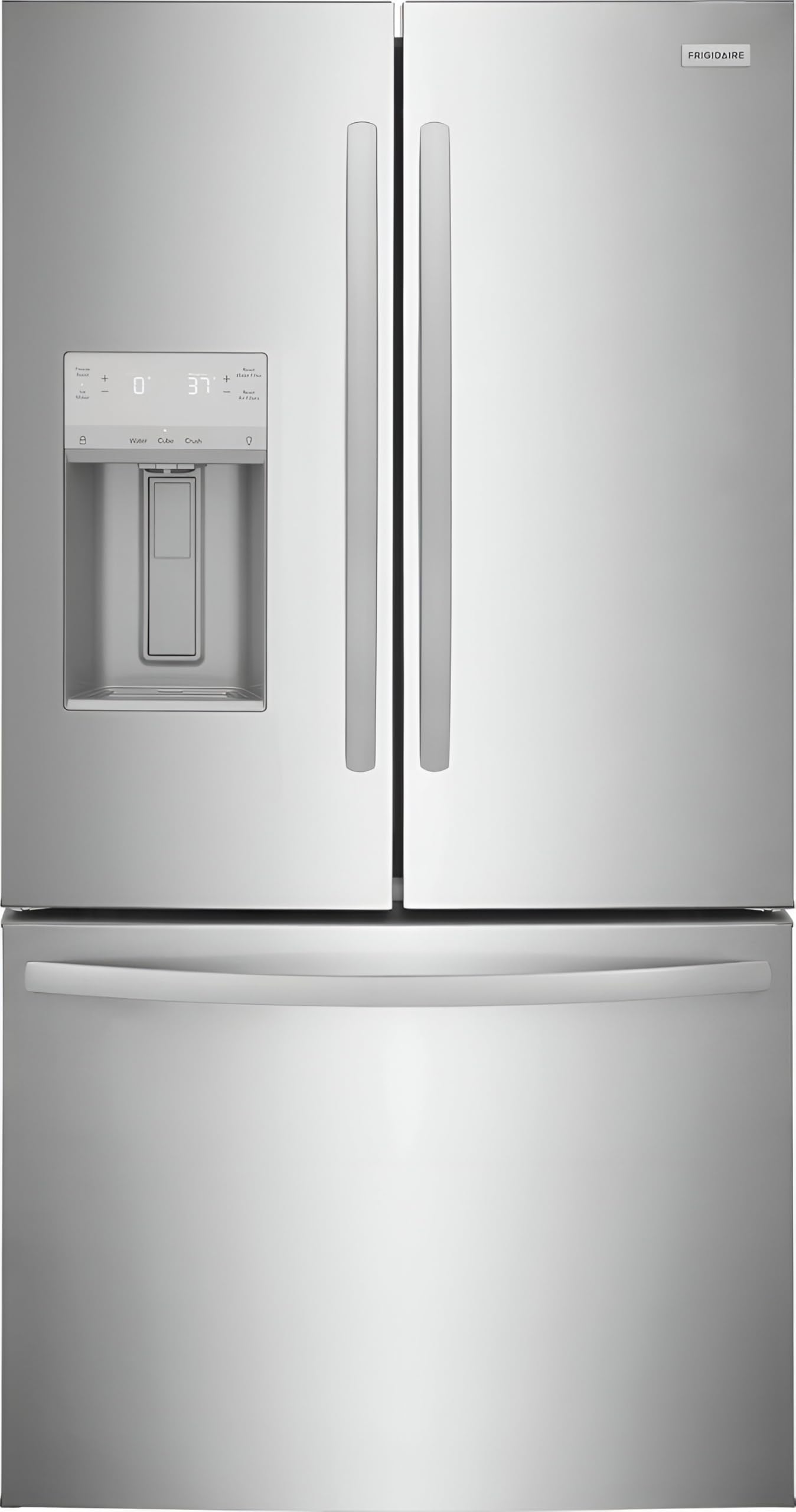
5. Frigidaire FRFS2823A 36 Inch Wide 27.8 Cu. Ft. French Door Refrigerator with External Ice and Water Dispenser – Stainless Steel
The biggest body with more door shelves than anything else on this list
For the buyer who organizes the fridge door like a pantry shelf, this is the machine. It carries 9 door shelves — a 4.5x gap over the Antarctic Star’s 2 — so bottles, jars, and sauces get their own real estate instead of getting stacked on top of each other. The 27.8 cubic foot body splits into 18.8 cubic feet of fresh food and a 9 cubic foot freezer, so it fits a family-sized grocery run with room for the crisper drawers and the adjustable shelves besides.
Frost-free and automatic defrost keep ice from building up. The exterior dispenser handles filtered water plus cubed and crushed ice. Door alarms, LED interior lighting, and a Sabbath mode round out the features, and the unit is ENERGY STAR certified. Depth with the door swung open runs to 48.5 inches, so leave clearance on the hinge side or the arc will meet your counter.
This is where an honest warning matters. Frigidaire’s ice maker is the single most repeated complaint across its owner reviews here, with broken units, constant breakage, and a repair process that leaves buyers chasing updates. The other measured disappointment is temperature stability — there are accounts of the fridge section running far warmer than the panel claims, which is a food-safety problem worth taking seriously. One buyer put it plainly: the owner reports the ice maker is broken just six months in and that the customer service is the worst part. If you buy this fridge, buy it for the capacity, the door storage, and the layout — and go in knowing the ice maker is the weakest link in the design.
Where it earns its spot: 9 door shelves, 27.8 cubic feet of space, a 48.5-inch door swing for real access, and a filtered ice and water dispenser out front — a big, well-organized box.
The honest caution: the ice maker is the model’s repeated failure point in owner accounts, and some units have run warmer than the display shows. Buy it for the space and door bins, keep an eye on the temperature, and treat service expectations realistically.
The capacity buy: pick this if a 27.8 cubic foot body and nine door shelves matter more to you than a flawless ice maker.
The alternative: for ice reliability, the GE Profile’s in-door maker and the Antarctic Star’s dual ice setup are the more confident picks.
Understanding the Specs
Total Capacity in Cubic Feet
This is the raw volume inside the box, split between the fresh-food side and the freezer. On a 36-inch machine, that total ranges widely — the Antarctic Star and Kenmore both hold 20 cubic feet, the Forno holds 19.2, and the GE Profile and Frigidaire top 27 cubic feet. Measure what you actually buy in a week. A smaller household gets by fine at 20 cubic feet; a family that cooks large meals will want the extra headroom. The split matters too, because a big freezer with a small fridge is a different machine than the reverse.
Annual Energy Consumption in Kilowatt Hours
The kilowatt hours a fridge is expected to use in a year. Lower is better, and it reflects how efficient the compressor and insulation are. The Forno’s 238 kilowatt hours per year is well below the Kenmore’s 560, which is turn sits below the GE Profile’s 722 and the Frigidaire’s 725. A higher number also means more heat pushed into the kitchen. If a fridge sits near a cooking area or in a warm room, the lower figure is worth paying attention to.
Depth With Door Open
This is how far the door reaches into your kitchen when it swings fully. The Forno opens to 44.37 inches, the GE Profile to 48.38, and the Frigidaire to 48.5 — enough to hit a nearby island or cramp a walkway. A counter-depth body keeps the front closer to flush, which is why the Kenmore and Forno command this space in a tight kitchen. Lay a tape measure from the hinge side outward before delivery day.
Door Shelf Count
The number of bins built into the inside of the doors. The Frigidaire’s 9 door shelves make it the most organized for condiments and bottles, and the GE Profile’s 6 follows. The Antarctic Star drops to 2, so its door storage is sparse. If you keep a lot of jars, sauces, and drinks on the door, open a couple of fridges in person and count the bins; it is the difference you feel every single day.
FAQ
Will a 36 inch refrigerator fit through my kitchen doorway?
What is the difference between counter-depth and standard-depth refrigerators?
Why does the door-open depth matter more than the quoted width?
How much does a 36 inch refrigerator cost to run each year?
Is a French door or side-by-side refrigerator better for a 36 inch space?
Do I need a water line for a refrigerator with an ice and water dispenser?
How much clearance do I need behind a 36 inch refrigerator?
Does a free-standing refrigerator need to be level?
How often do I need to defrost a modern refrigerator?
Final Thoughts: The Verdict
Fitting the cutout is step one; the machine should then hold temperature, make ice that keeps working, and not eat electricity for years. When you weigh those together, the 36 inch refrigerator winner is the Antarctic Star 2 French Door Refrigerator, because it fits the standard 36-inch opening with a reversible door, runs a nugget ice maker plus a cube-ice and water dispenser, and carries the strongest owner consensus of the group. If you want the largest interior with a convertible drawer, grab the GE Profile PVD28BYNFS. And if the most important thing is the lowest energy draw in the whole comparison, the Forno Moena 36″ at 238 kilowatt hours per year is the one to reach for.
How We Picked
We do not accept paid placement. Every pick is matched to a real buyer and a real use-case; we do not hands-on test units.
Sources & Methodology
Specifications: manufacturer listings and product documentation. Review insights: verified customer reviews, as of September 2026. Pricing: not shown on this page (it changes often); check the current price via the retailer link.
As an Amazon Associate, Gadgets Feed earns from qualifying purchases. This does not affect which products we feature.