
The cab of a semi-truck turns into a heat trap the moment the engine shuts off. An AC unit designed for residential windows or an underpowered 12V fan won’t cut it when you’re parked in a summer staging lot or taking a mandatory 10-hour break in the Texas panhandle. The specific challenge here is finding a unit that delivers real British Thermal Units of cooling authority against a 12-volt battery system without draining your starting power or requiring a shore-power pedestal that doesn’t exist at a truck stop.
I’m Min — the co-founder and writer behind Gadgets Feed. I’ve logged many hours analyzing market data for heavy-vehicle climate solutions, parsing real-world power draws versus published specs, and mapping installation requirements across the mid-range to premium tiers of the 12-volt AC landscape.
This guide separates the split-system sleepers from the rooftop quiet-runners so you know exactly what fits your bunk. After comparing nine distinct models, here is the definitive best ac portable for truck list built on cooling capacity, power efficiency, and real-world installer feedback.
How To Choose The Best AC Portable For Truck
Selecting an AC unit for a truck sleeper is not the same as buying one for a house or an RV with a generator. The constraints are tighter: limited battery reserve, no 120-volt shore power during a rest break, and a small enclosed space that requires fast but not excessive cooling. Knowing which specs matter most prevents a costly mismatch.
Cooling Capacity vs. Power Consumption
Look for a unit that delivers at least 10,000 BTU of cooling in a standard sleeper to handle direct sun and high ambient temps. But the real measuring stick is the sustained amp draw. A fixed-speed compressor that pulls 70 amps continuously will kill a 200Ah battery in under three hours, while an inverter-driven model that throttles to 350 watts (approximately 30 amps at 12 volts) after reaching set temperature can stretch runtime across a full eight-hour rest period.
Battery Compatibility and Low-Voltage Protection
Most 12-volt AC units require a lithium iron phosphate battery bank with at least 300Ah to run overnight. Built-in low-voltage cutoffs (typically at 11 volts or higher) protect the truck’s starter battery from being drained below cranking voltage. Units that lack this feature require an external battery management system to avoid a dead start in the morning.
Installation Profile and Cab Fit
Rooftop units that mount into a 14-by-14-inch opening are the cleanest solution for permanent installation, but not every truck has a roof vent ready. Split systems with an exterior compressor and interior fan unit offer flexibility for sleeper cabs without a standard roof cutout. Portable units with a vent hose require a window or a hatch adapter, which may compromise security and insulation.
Quick Comparison
On smaller screens, swipe sideways to see the full table.
| Model | Category | Best For | Key Spec | Amazon |
|---|---|---|---|---|
| CNCEST 11000 BTU | Split System | Parked Overnight in Heat | 11000 BTU / 400–600W Draw | Amazon |
| WISHILO 3400 BTU | Portable | Small Cab / Two-Person Tent | 3400 BTU / Low 45dB Sleep | Amazon |
| OUTOHOME 5200 BTU | Portable | Energy-Efficient Spot Cooling | 5200 BTU / 400W Max Draw | Amazon |
| OUTOHOME 5100 BTU | Portable | Truck Topper Camping | 5100 BTU / 46dB Noise | Amazon |
| Outequip 10000 BTU | Rooftop | Lightweight Rooftop Install | 10000 BTU / 40dB Quiet | Amazon |
| Gidrox RX55 10000 BTU | Rooftop Inverter | All-Night Off-Grid Runtime | 10000 BTU / 350W Nighttime Avg | Amazon |
| Countrymod 10000 BTU | Rooftop Inverter | Desert-Level Heat Days | 10000 BTU / 0.3 kWh Eco Mode | Amazon |
| Outequip w/Heater | Rooftop | 4-Season Cab Comfort | 10000 BTU / 4500 BTU Heater | Amazon |
| Cybertake S2 Pro | Portable Heat Pump | Versatile Multi-Volt Use | 5100 BTU / 48V DC Efficient | Amazon |
In‑Depth Reviews
1. CNCEST 12V DC Split Air Conditioner 11000 BTU
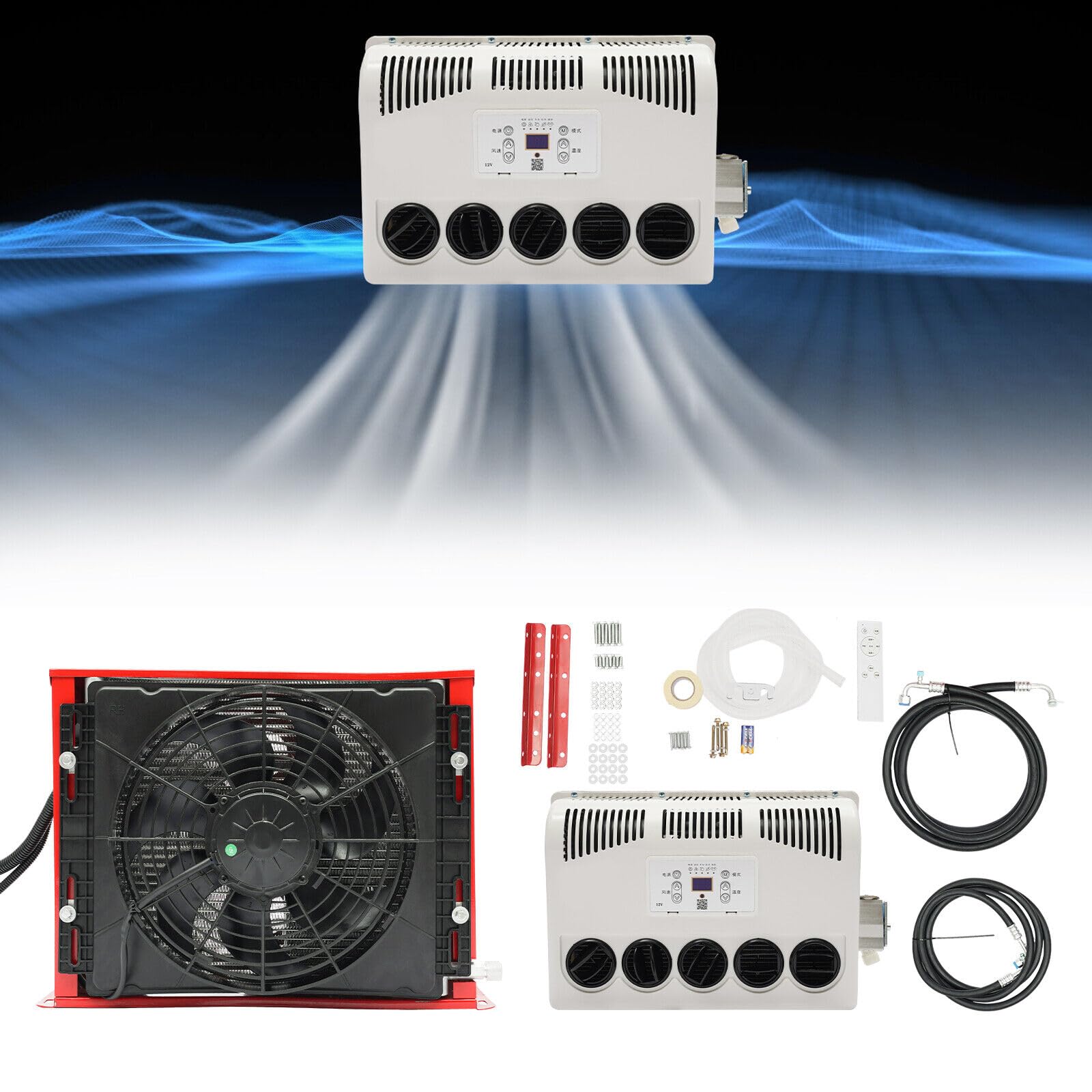
The CNCEST split system delivers an impressive 11,000 BTU of cooling from a 12-volt DC power source, drawing only 400 to 600 watts during steady-state operation. That ratio of cooling output to electrical consumption is what makes this unit stand out for truck sleeper use. The built-in under-voltage protection cuts power below 11 volts, a critical safeguard for drivers who need to be sure their starter battery retains enough charge for morning ignition. The heavy iron outer case on the condenser unit adds durability for road vibration, though it also contributes to the 62-pound total weight that requires a sturdy mounting location.
Installation is straightforward for anyone comfortable wiring a 12-volt system. The split design places the noisy compressor outside the cab while the interior unit delivers cool air through multi-directional vents with five fan speeds. The remote control allows temperature adjustment without leaving the bunk. Customer reports consistently mention that the unit provides enough cold air to freeze out a mobile home toter in southern Georgia heat, which speaks to its real-world BTU authority beyond what the spec sheet suggests.
The primary downside is that some units arrived with control panels labeled in characters that are not English, and the packaging does not include a printed installation manual. Several buyers noted that the condenser developed a refrigerant leak after roughly two months of use, though the seller’s customer service provided replacements in those cases. The 100Ah battery recommendation is minimal—for all-night runtime, pairing this unit with a larger lithium bank of 200Ah or more is advisable.
Why it’s great
- Best BTU-per-watt ratio of any 12V split unit at this price tier
- Low-voltage cutoff prevents dead starter battery scenarios
Good to know
- No included installation manual in English
- Condenser leaks reported in a minority of units after extended use
2. Gidrox RX55 10000 BTU RV Air Conditioner
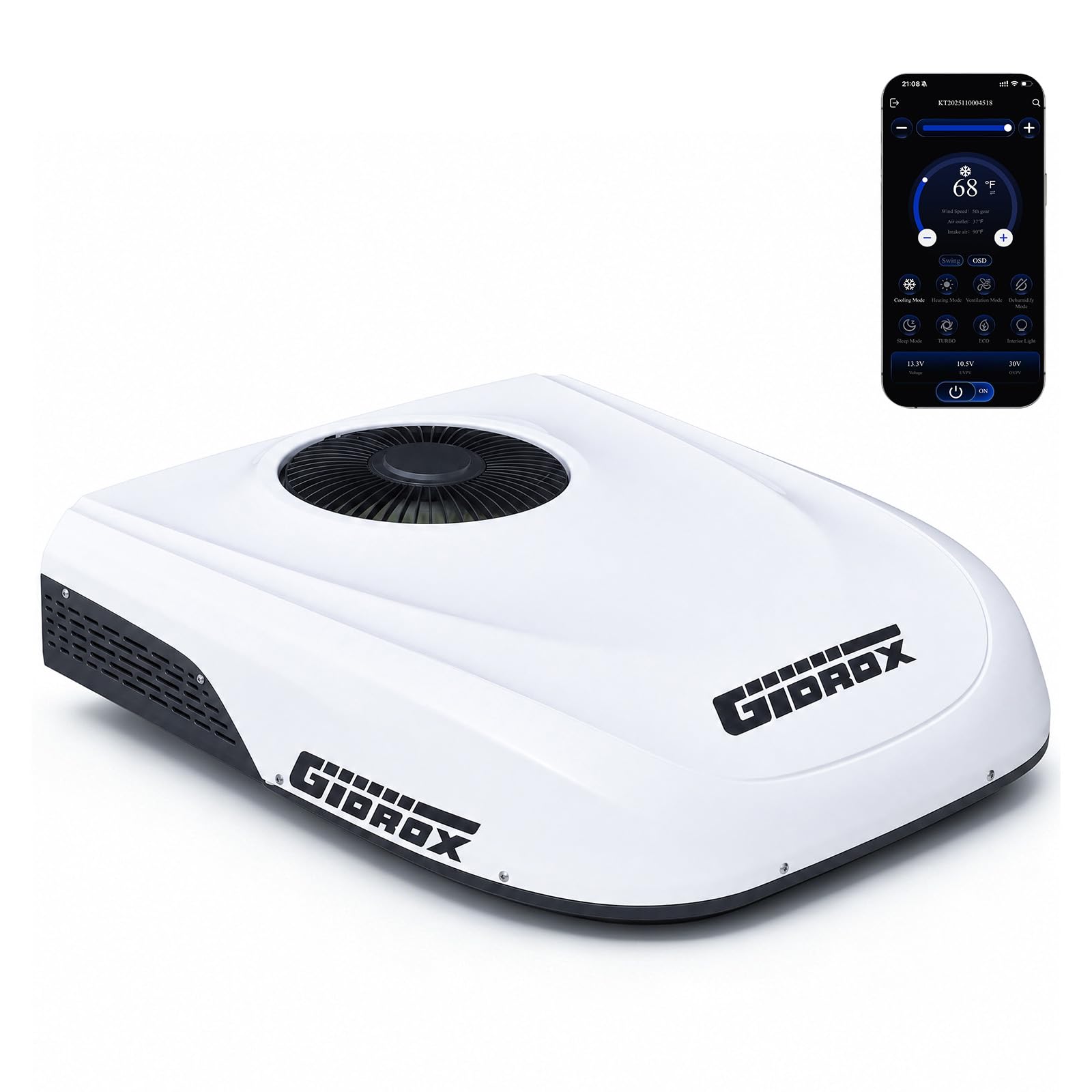
The Gidrox RX55 uses inverter compressor technology that ramps up to 650–700 watts in Turbo mode for rapid cooldown and then settles to approximately 350 watts (roughly 30 amps at 12 volts) during nighttime Eco mode in 30°C ambient conditions. This variable-speed behavior is the central reason it can run all night on a properly sized 400Ah lithium battery bank—the compressor simply does not cycle on and off at full power like a fixed-speed unit. The unit fits the standard 14-by-14-inch roof opening found on many sleeper cabs and includes a 19.7-foot power cable long enough to reach battery banks mounted in side compartments.
Noise levels in Sleep mode fall to around 40 decibels, which is quieter than a typical RV refrigerator and low enough that drivers report undisturbed rest. The Gidrox also offers three control options: physical panel buttons, an infrared remote, and a smartphone app via Bluetooth. The app allows set-point changes and mode switching without leaving the bunk, a convenience that matters during the middle of a rest period when the ambient temperature shifts. The HEPA filter adds a layer of air quality management for the enclosed sleeper space.
The 59-pound total weight is moderate for a rooftop unit, but installation requires attention to roof thickness. The manual is sparse on detail, and the high amperage draw during compressor start (inrush) means wiring must be adequately gauged to avoid voltage drop. The upfront cost is significant, and some owners report that stock availability can be intermittent. This unit is purpose-built for permanent installation in a truck with a 14-inch roof cutout and a 300Ah-plus battery bank; it is not a quick portable add-on.
Why it’s great
- Inverter compressor drops to 350W average draw for overnight runtime
- Triple control (panel, remote, app) with 40dB Sleep mode quietness
Good to know
- High upfront cost and periodic stock shortages
- Sparse documentation for the DIY installer
3. Countrymod 10000 BTU 12V DC RV Air Conditioner
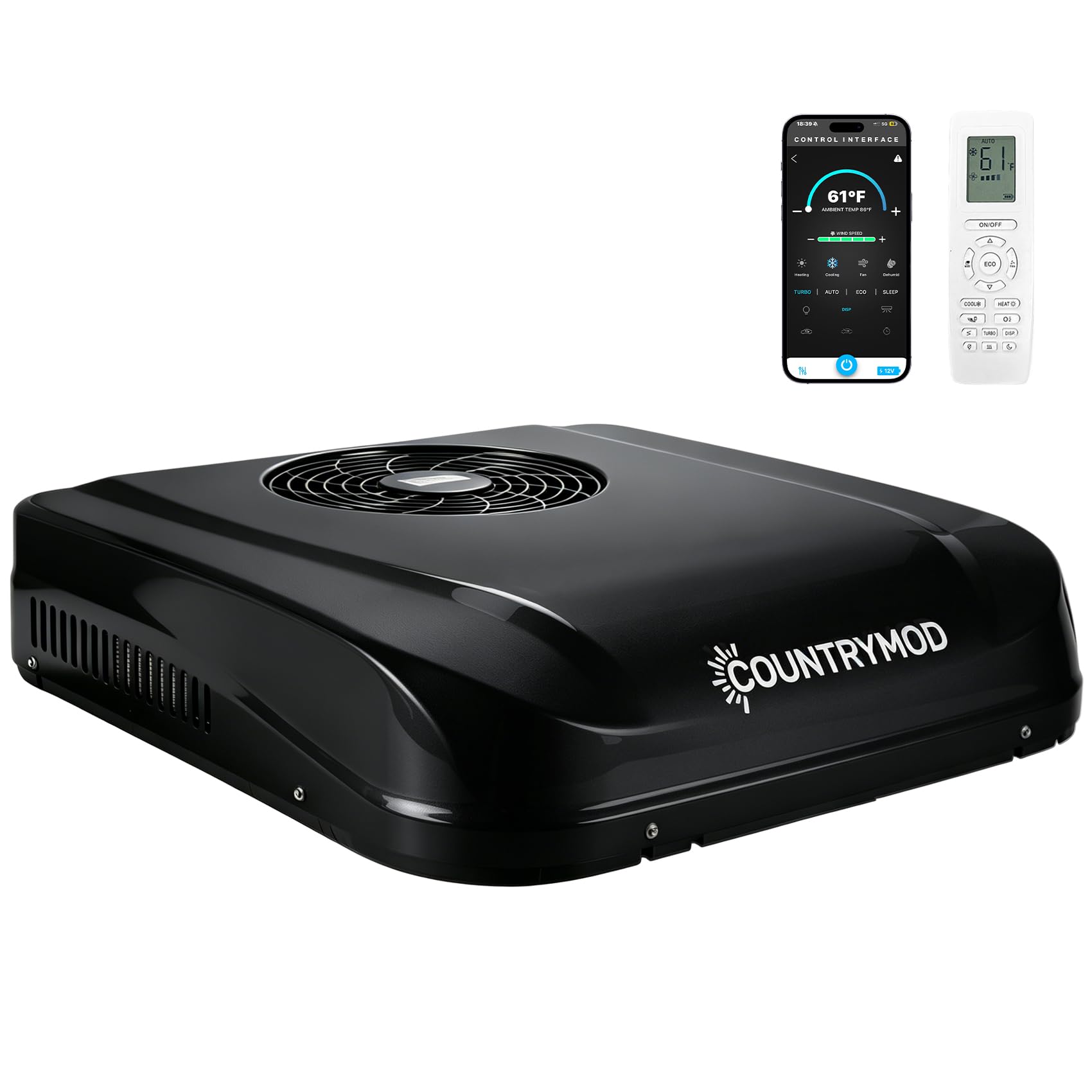
The Countrymod unit utilizes a variable-frequency inverter compressor that modulates power consumption between 260 watts in Eco mode and 590 watts in Turbo mode. In real-world desert heat exceeding 110°F, owners report that this unit maintains a comfortable 72°F interior temperature overnight on a 300Ah battery bank. The horizontal compressor design lowers the center of gravity compared to traditional vertical scroll compressors, which reduces vibration transmission through the roof structure and potentially extends the unit’s service life on rough roads.
Noise output is rated at 45 to 55 decibels, and multiple reviews highlight that the unit is nearly silent in operation, with only the soft sound of moving air rather than mechanical compressor noise. Installation fits the common 14-by-14-inch roof opening, and the ductless design means no major modification to the sleeper ceiling. The remote control makes temperature adjustments easy from the bed, and owners report that customer support is responsive, including cases where a replacement remote was shipped quickly at no cost.
The installation hardware uses metric all-thread rods that may be too short for thicker roofs exceeding 3.5 inches. Some installers needed to source longer 8-millimeter rods and use insulation tape to seal gaps in the inner ductwork. A corner bracket was reported to break at a low torque value of 4.5 foot-pounds, so careful handling during assembly is necessary. For trucks with arched or heavily insulated roofs, these modifications add complexity to what is otherwise a clean installation.
Why it’s great
- Ultra-low 260W Eco mode draw for extended battery life
- Horizontal compressor reduces vibration in the sleeper cab
Good to know
- Metric rods may be too short for thicker truck roofs
- Duct gap requires sealing with tape during install
4. Outequip 10000 BTU RV Air Conditioner (Cooling Only)
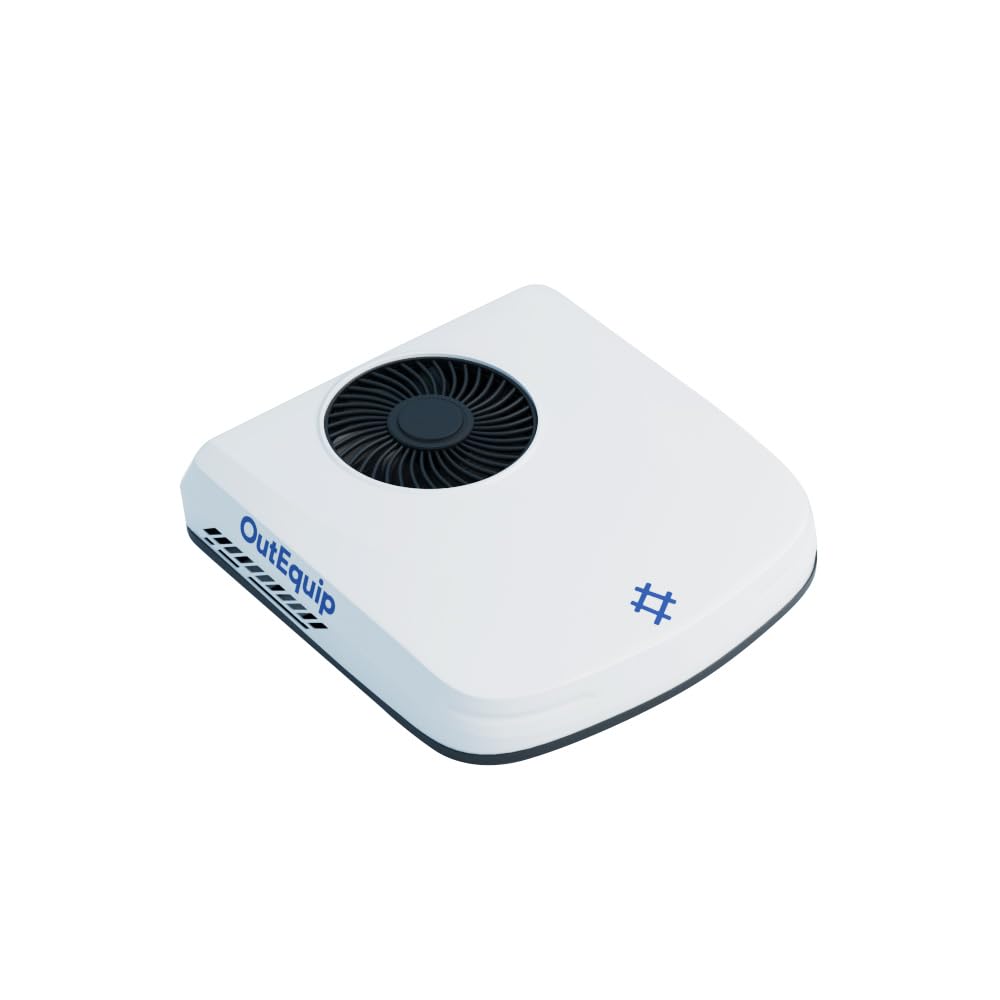
Weighing only 45 pounds, this Outequip rooftop unit is substantially lighter than competitors that often tip the scales at 60 pounds or more. The 10,000 BTU cooling capacity delivers rapid temperature drop within 15 minutes of startup according to the manufacturer, and real-world users confirm that it cools a van or truck cab effectively even in 88°F-plus conditions. The brushless copper motor fans contribute to the quiet 40-decibel operation, and the unit includes three operating modes: Turbo for fast cooldown, Eco for power conservation, and Sleep for nighttime quiet.
The 12-volt DC power system eliminates the need for an inverter, and owners report that the unit draws approximately 20 amps on Eco mode, allowing a 480Ah battery bank to sustain cooling for up to eight hours. The low-profile design sits only 6.3 inches above the roof line, which reduces wind drag and clearance concerns. The included remote control handles temperature monitoring and mode switching, and Bluetooth app control is available through a companion model variant.
Installation requires a 14-by-14-inch roof cutout, and the included gasket made from EPDM foam provides weather sealing. Some owners note that the mounting hardware could be more substantial, and the instruction manual is minimal. The 45-pound weight is light enough for a single person to lift onto the roof, but careful sealing around the base is essential to prevent water ingress during rain. This unit is cooling-only with no heat pump option.
Why it’s great
- Super-light 45-pound rooftop design for solo installation
- Low 40dB noise output across all operating modes
Good to know
- No heat pump or heating capability included
- Installation instructions are basic and brief
5. Outequip 10000 BTU RV Air Conditioner with Heater
This version of the Outequip rooftop unit adds a 4,500 BTU PTC heater that provides supplementary warmth for mild cold conditions, making it a dual-season solution for truck drivers who encounter both summer heat and cool mountain nights. The 10,000 BTU cooling side performs identically to the cooling-only model, with the same brushless fan technology and 40-decibel noise floor. The 43-pound weight makes it one of the lightest 12-volt rooftop units available with integrated heating, reducing strain on the roof structure and simplifying the lifting process during installation.
Customer reports highlight the inverter-driven variable-speed compressor as the standout feature. In Eco mode, the unit draws approximately 200 to 300 watts while maintaining set temperature, which translates to overnight runtime on a 560Ah lithium bank with solar recharge capability. The heat pump function is not a primary heating source for extreme cold—commercial drivers in northern climates should treat it as a supplement to an existing diesel heater. The unit fits both 14-by-14-inch and 14-by-9-inch roof openings, providing flexibility for different truck configurations.
Installation is manageable but not without quirks. The lid screws are difficult to access and remove during the initial setup, and the connectors are fragile enough that a few owners recommend having spares on hand before starting the job. Customer support is responsive, with one report of a free replacement after the wrong voltage unit was shipped. For drivers who need a single unit that handles both cooling and heating without installing two separate appliances, this is a compelling option despite the minor installer frustrations.
Why it’s great
- Cooling and heating in one lightweight 43-pound rooftop unit
- 200–300W Eco mode draw enables overnight off-grid use
Good to know
- Heater is supplementary only, not rated for extreme cold
- Fragile connectors require careful handling during install
6. Cybertake S2 Pro Portable Camping Air Conditioner
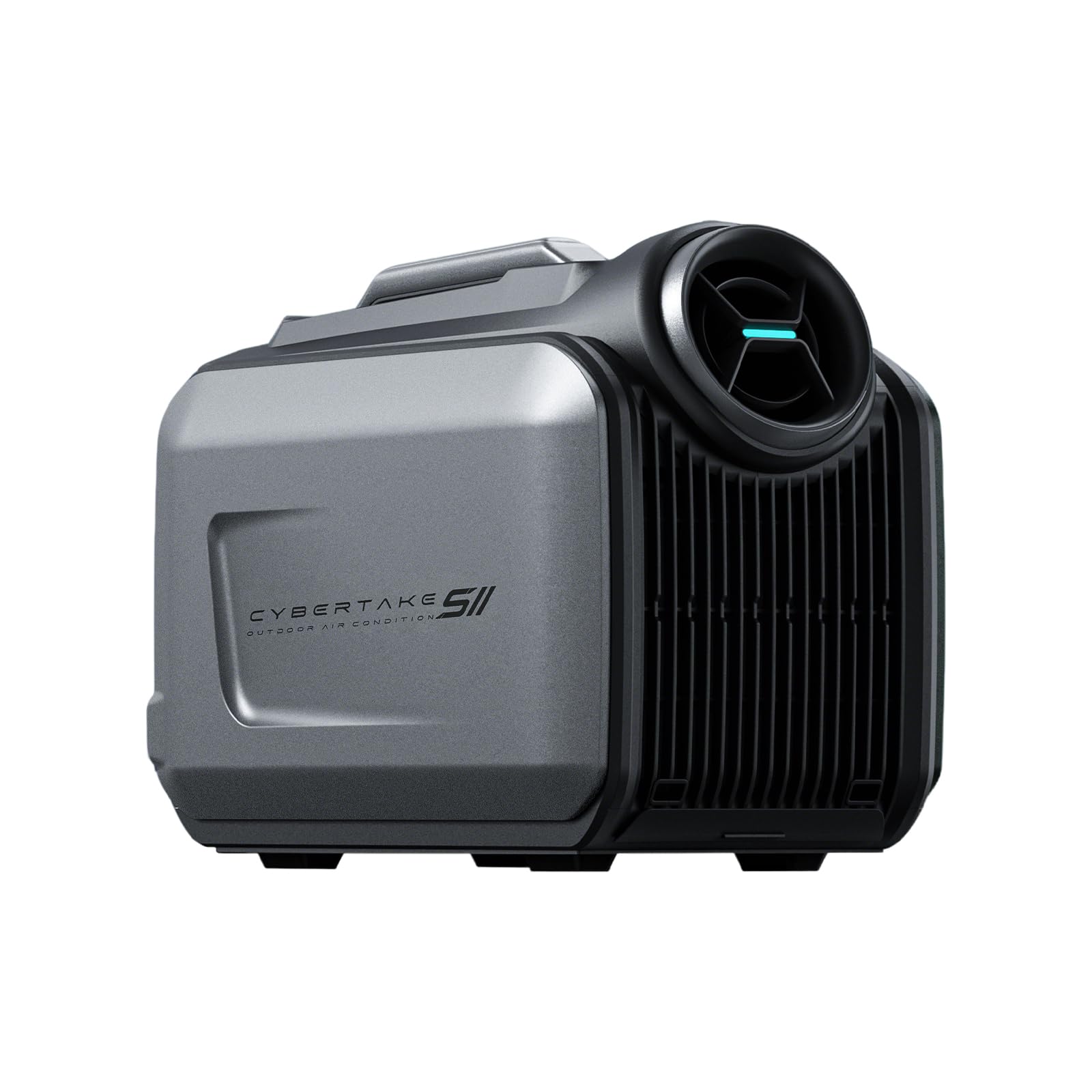
The Cybertake S2 Pro operates on a 48-volt DC architecture that delivers 5,100 BTU of cooling and 6,100 BTU of heating from a remarkably low power envelope—Eco+ mode consumes about 1 kilowatt-hour over an eight-hour period. For a truck sleeper equipped with a 48-volt battery system or a compatible portable power station, this unit offers the best energy efficiency in this comparison. The three-way power input accepts 100–240 volt AC wall outlets, 12–24 volt vehicle systems, and 48 volt DC directly from a power station, making it adaptable for drivers who want a single unit that works at home, on the road, and in the bunk.
The unit weighs only 21 pounds and measures compact enough to stow away when not in use. Setup takes approximately 30 seconds according to the manufacturer—connect the dual hoses, plug in, and cold air begins flowing. The IPX4 water-resistant shell means the unit can handle splashes and light rain if placed near an open window or hatch. The Bluetooth app control allows temperature adjustments from the sleeper without getting up, and four operating modes (Cool, Heat, Dehumidify, Eco+) cover most climate needs. At 40 decibels, the noise level is low enough for undisturbed sleep.
The 5,100 BTU capacity is sufficient for a small sleeper compartment up to roughly 130 square feet, but it will struggle in a large cab or in extreme conditions above 100°F. The unit requires a separate boost converter for 48-volt operation from a standard 12-volt truck battery system, adding an extra cost and component. One review reported an issue with the unit failing to push cold air after initial use, and the return process was described as problematic. For drivers running a fully built-out 48-volt electrical system, the efficiency is unmatched, but it may not suit a stock 12-volt truck.
Why it’s great
- Unmatched energy efficiency with 1kWh per 8 hours in Eco+ mode
- Lightweight 21-pound design with IPX4 weather resistance
Good to know
- 5,100 BTU capacity limits effectiveness in large cabs
- Needs 48V boost converter for standard 12V truck electrical systems
7. OUTOHOME 5200 BTU Portable Tent Air Conditioner
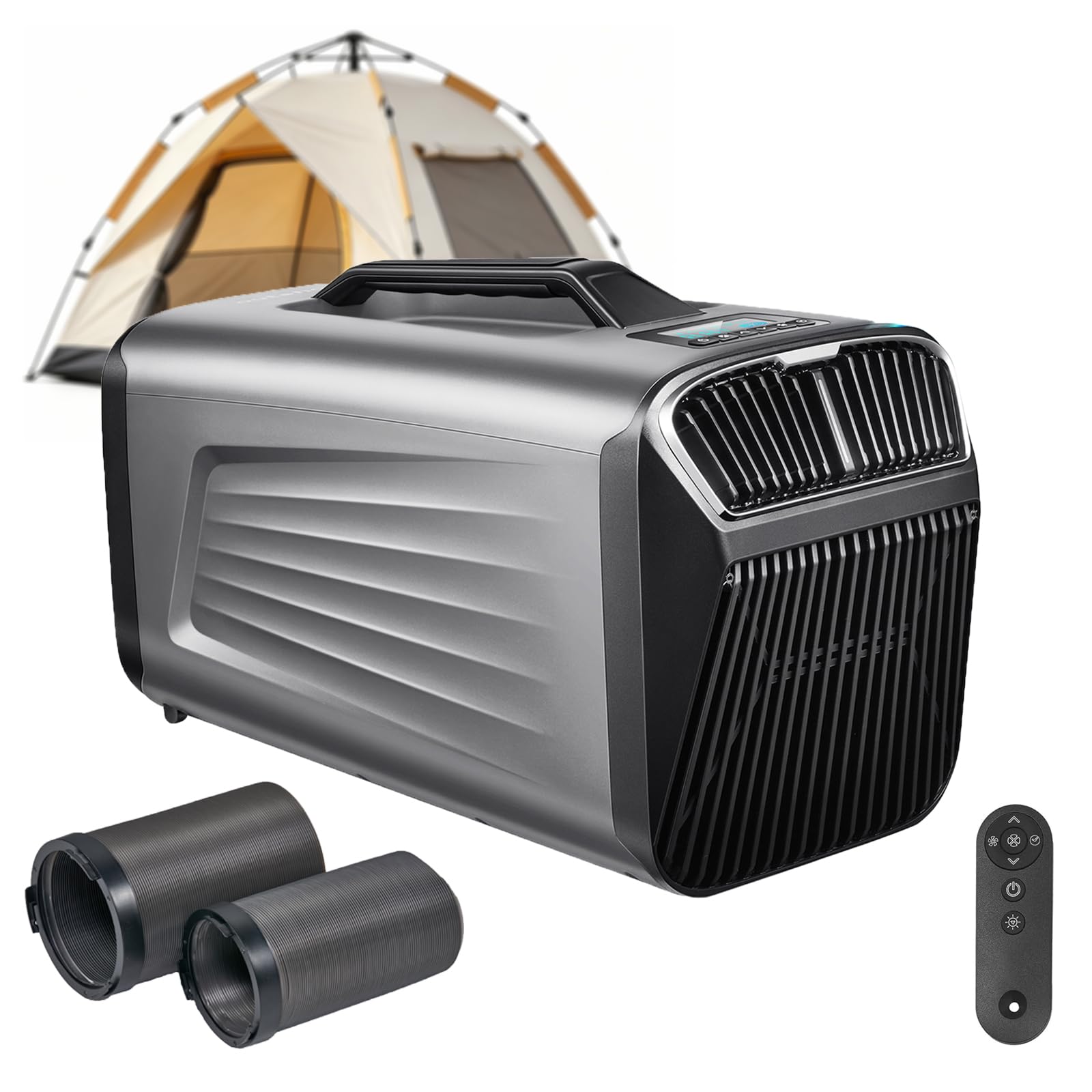
The OUTOHOME 5200 BTU unit pairs a GMCC high-end compressor with a maximum power draw of just 400 watts, making it one of the most energy-efficient portable AC options for a truck sleeper. In cooling mode, the manufacturer states the unit can drop ambient temperature by 18°F within five minutes, and owners report that it effectively cooled an uninsulated roof tent to 68°F overnight during a Florida summer. The drainless design recirculates condensate through the condenser when humidity stays below 70 percent, eliminating the need to empty a collection pan during typical camping conditions.
The unit measures 22.4 by 11.2 by 13.8 inches and weighs just under 32 pounds with an integrated carrying handle. The dark silver metallic finish hides dirt and scratches better than white plastic. Four operating modes—Cool, Dry, Sleep, and Fan—along with a 24-hour timer and remote control give the user flexibility without overcomplicating the interface. Noise levels in Sleep mode are rated at 46 to 50 decibels, which is acceptable for background noise but not library-quiet. The dual-hose design prevents the loss of conditioned air that plagues single-hose portables.
This unit is voltage-sensitive and may not start reliably on inverter generators with modified sine wave output. An uninsulated sleeper cab in direct afternoon sun will overwhelm the 5,200 BTU capacity, so this is best suited for nighttime use or for smaller compartments. At least one owner reported that the unit stopped blowing cold air after a short period and was too expensive to replace. The 400-watt draw is a real advantage, but the unit’s effectiveness depends heavily on the size of the space and the quality of the power source.
Why it’s great
- Very low 400W maximum power draw for efficient battery operation
- Drainless design eliminates condensate management in low humidity
Good to know
- Voltage-sensitive and may not start on modified sine wave inverters
- 5,200 BTU is marginal for uninsulated daytime cab cooling
8. OUTOHOME 5100 BTU Portable Tent Air Conditioner (2026)
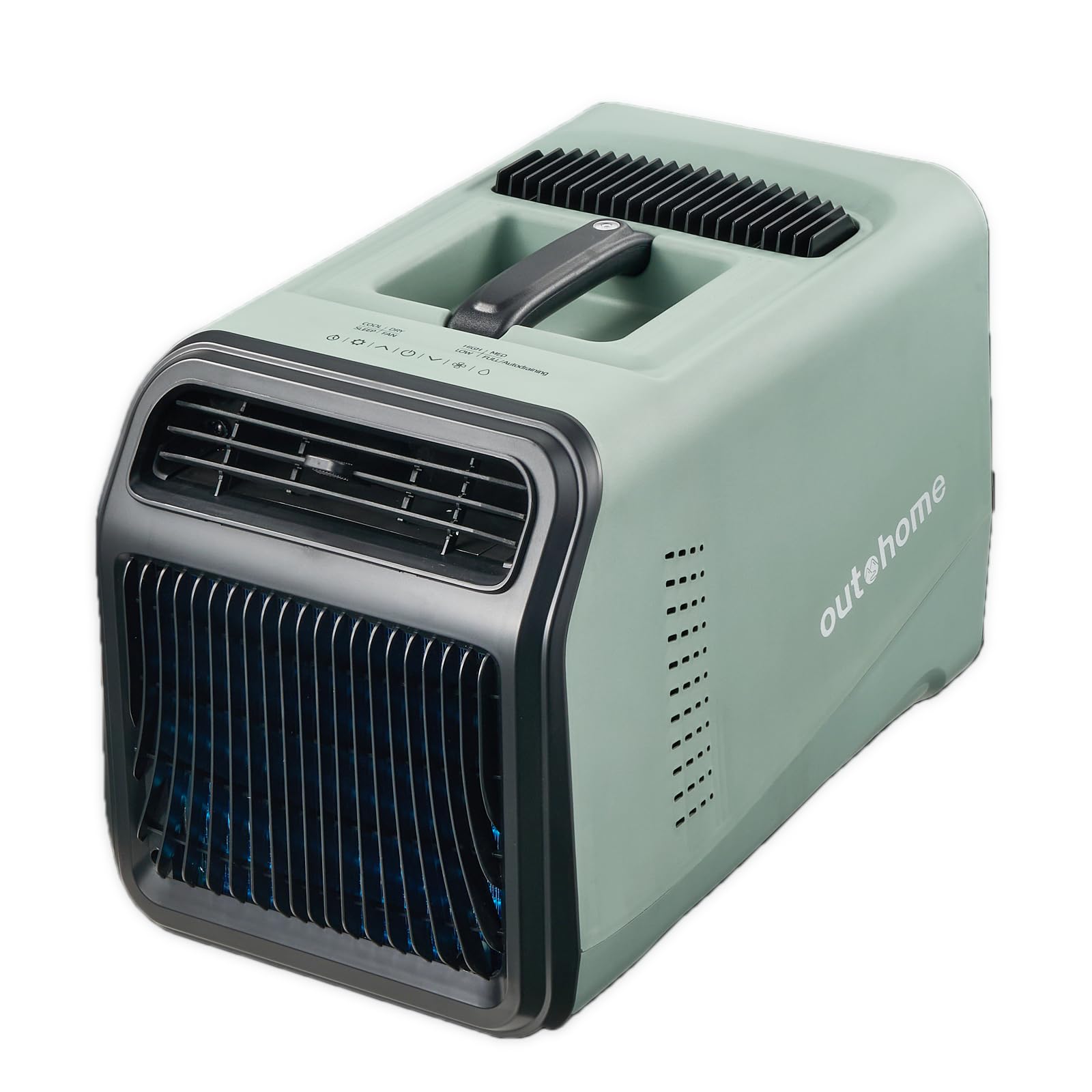
This 5,100 BTU OUTOHOME model offers a compelling balance of cooling authority and portability for truck topper campers and small sleeper cabs. The high-efficiency compressor delivers a temperature drop of up to 60°F relative to ambient in the first minute of operation, which translates to real-world performance that owners confirm—one review described cooling a truck topper from 80°F down to 65°F in under 20 minutes. The auto-evaporation system recycles condensate to maintain performance during extended runs, so the driver does not need to wake up and dump a water tray in the middle of the night.
The unit weighs 35 pounds with a built-in handle and measures 20.3 by 12.0 by 13.2 inches, fitting easily on the floor of most sleeper cabs or truck toppers. The 4-in-1 operation covers cooling, dehumidifying, fan-only, and sleep modes with a 24-hour timer for automated shutoff. At 46 decibels during sleep mode, the noise level is comparable to a quiet conversation and does not interfere with rest. The 200-square-foot coverage rating is optimistic for a 5,100 BTU unit, but for the typical 50-to-80-square-foot truck sleeper, the cooling capacity is adequate.
Build quality concerns appear in user feedback—one owner reported that the handle broke off during normal use, and the unit rattled loudly enough to require earplugs during operation. The startup power draw may exceed the capacity of smaller portable power stations; at least one owner found that neither an EcoFlow nor a 1,800-watt generator could start the compressor. The foam packaging is minimal, and the unit may arrive with cosmetic damage. For drivers with a robust power source and a small enclosed space, this unit delivers functional cooling at an accessible price point.
Why it’s great
- Proven truck topper cooling from 80°F to 65°F in 20 minutes
- Auto-evaporation system for zero-maintenance overnight operation
Good to know
- Handle durability issues reported—potential for structural failure
- High startup power may exceed small generator or power station output
9. WISHILO 3400 BTU Portable Air Conditioner
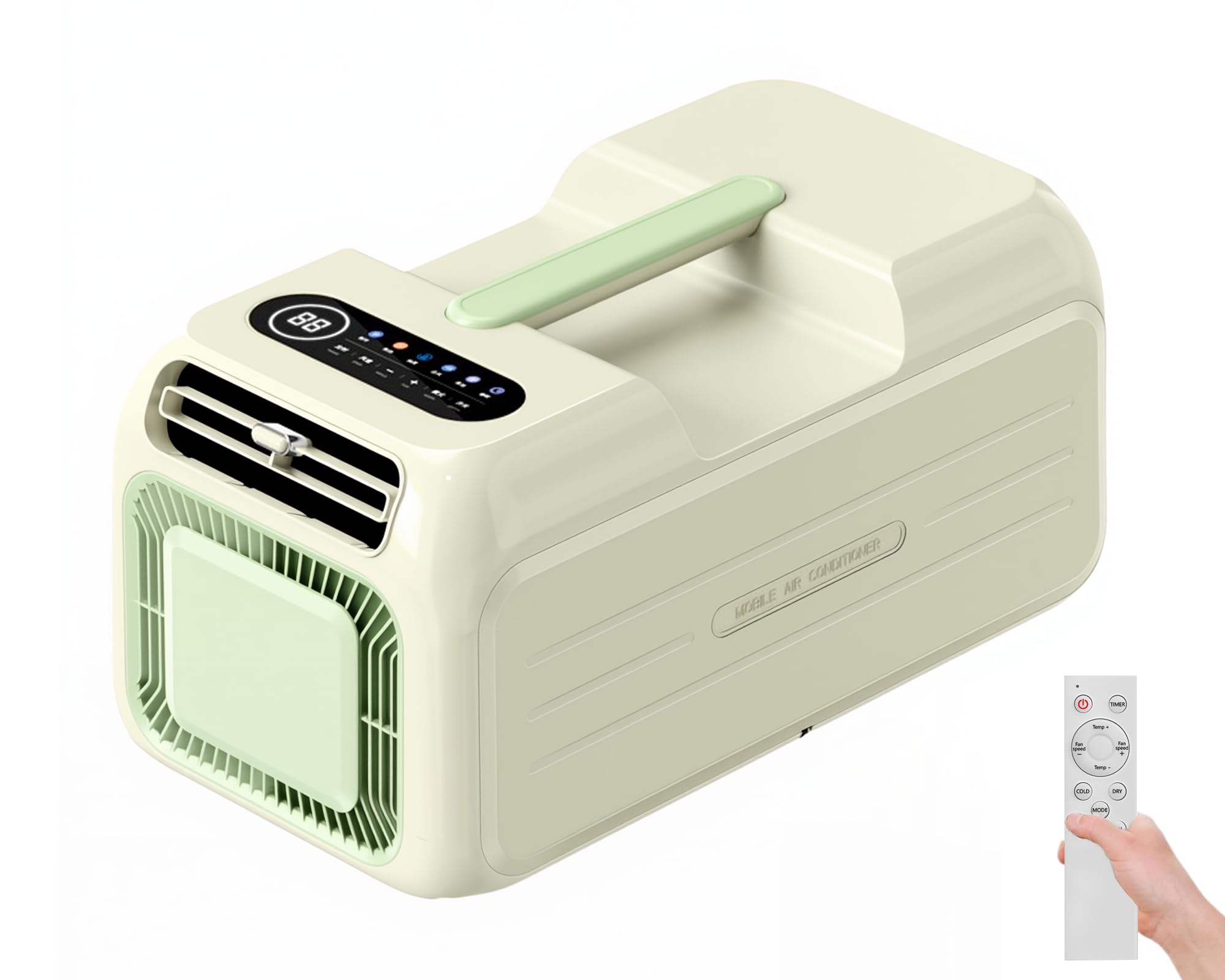
The WISHILO portable AC is the most accessible entry point for drivers who need basic cooling in a very small cab or sleeper area. Its 3,400 BTU output covers 64 to 86 square feet, which aligns with the footprint of a compact truck sleeper. The Panasonic compressor starts blowing cold air within three minutes, and Turbo mode can drop the temperature by 18°F in 15 minutes. At 33 pounds, it is easy to move between the cab and a tent or small room, and the 45-decibel Sleep mode noise level is genuinely quiet enough for light sleepers.
The drainless design recycles evaporator moisture through the condenser and expels it with the fan, so there is no water tank to empty during normal operation. The unit supports three power methods: a standard 110-volt outlet, a power station with at least 1,000 watts output, or an electric vehicle via a compatible discharger. This triple input makes it flexible for drivers who have a portable power station or a hybrid truck with a power outlet. The R290 refrigerant reduces CO₂ emissions compared to traditional refrigerants, which appeals to environmentally conscious operators.
The 3,400 BTU output is insufficient for large sleeper compartments or for daytime cooling when the cab is parked in direct sun. The air hose is rigid and short, which limits placement options and makes routing through a window adapter more difficult. One verified owner reported that after several weeks of use in a semi-truck bunk, the unit began blowing only hot air, representing a total failure. The 1,500-watt startup surge requires at least a medium-sized portable power station, not a small battery pack. For overnight use in a very small cab with adequate power, this unit works well within its limited capacity envelope.
Why it’s great
- Genuinely quiet 45dB Sleep mode for undisturbed rest
- Triple power input supports standard AC, power station, or EV outlet
Good to know
- 3,400 BTU output is marginal for anything beyond a very small cab
- Hose is rigid and short, limiting window routing options
FAQ
Can I run a 12-volt truck AC unit all night on my existing battery bank?
Will a rooftop AC unit fit my truck’s existing roof vent opening?
What is the difference between a split-system and a portable AC for a truck cab?
Final Thoughts: The Verdict
For most users, the best ac portable for truck winner is the CNCEST 11000 BTU Split System because it delivers the highest cooling capacity in its class while drawing only 400–600 watts from a 12-volt system, and the low-voltage cutoff protects your starter battery during overnight rest. If you want inverter-driven efficiency for all-night runtime on a lithium bank, grab the Gidrox RX55. And for drivers who need reliable cooling in a small sleeper at the most accessible price point, nothing beats the OUTOHOME 5200 BTU Portable.