
Our readers keep the lights on and my morning glass full of iced black tea. As an Amazon Associate, I earn from qualifying purchases.
Specs are compiled from manufacturer listings and verified buyer reviews and can change over time — please confirm the key details on the product page before buying.
If you’re shopping for a budget hockey stick, the answer is simple: match the stick to the surface you actually play on, and match the length to the player’s chin with skates on. That single fit rule decides more than any logo. A stick that’s too long drags on the driveway, a stick that’s too short forces a kid to hunch over, and the wrong material for your playing surface cracks long before the season ends.
I’m Min — the founder and writer behind Gadgets Feed. This guide is built by comparing the manufacturers’ published specifications and the patterns across verified customer reviews, so you get each pick’s real strengths and trade-offs instead of marketing spin.
Street, floor, or ice — each surface changes what a stick needs to survive. This guide breaks down the three best budget hockey stick options by fit, material, and the honest trade-offs owners run into.
Our Picks at a Glance
How To Choose The Best Budget Hockey Stick
Three things decide whether a cheap hockey stick works for you: the surface it plays on, the length relative to the player, and the material of the shaft and blade. Everything else — team colors, grip texture, blade curve — is a bonus you can enjoy once those three are locked in.
Length: the chin test
Hold the stick upright with the player standing in skates. The top of the shaft should land between the chin and the nose. Too short and the player hunches, which kills stickhandling reach. Too long and the blade lifts off the ball or puck, and the stick drags on pavement every stride. Junior extension plugs only fit certain shafts, so a stick that’s the wrong length from the start often means buying a whole new stick later. Franklin’s kids ice hockey stick runs 55 inches, while the Cosom junior floor stick runs 47 inches — an 8-inch gap that decides which kids each stick actually fits.
Shaft material and your playing surface
Wood shafts feel smooth and warm in the hands and handle driveway and roller play fine, but fused wood blades can crack if you slap-shot on rough asphalt. Polycarbonate shafts with a wooden dowel inside, like the Cosom power shaft, are built for gym floors and institutional abuse. Composite shafts are the lightest of the three and give the most shot power for their weight, which is why ice players prefer them — but they cost more, and they chip on concrete. Pick the material for the surface first, then the price.
Flex and hand orientation
Flex is how much the shaft bends when you lean into a shot. A 50 flex is on the softer end, which suits younger and lighter players who can’t load a stiff shaft. Hand orientation is simpler: a left-handed stick has the blade pointing right when the shaft is vertical, and a right-handed stick points left. Buying the wrong side is the single most common beginner mistake, and it’s not fixable — you can’t flip a blade.
Quick Comparison
| Model | Best For | Length | Material | Hand / Style | Amazon |
|---|---|---|---|---|---|
| Franklin Sports NHL Team 48″ Vinyl Street Hockey Stick★ Best Overall | Street and roller play with team flair | 48″ | Wood | Left | Amazon |
| Cosom Junior Hockey Sticks for Floor Hockey and Street Hockey for Kids | Gym class and team floor hockey | 47″ | High-impact polycarbonate | Power Shaft | Amazon |
| Franklin Sports Kids Ice Hockey Stick | Ice hockey skill-building for young players | 55″ | Polypropylene composite | Right Shot | Amazon |
In‑Depth Reviews
1. Franklin Sports NHL Team 48″ Vinyl Street Hockey Stick
Our pick — over 4★ from 150+ verified ratings; the strongest balance of quality and price.
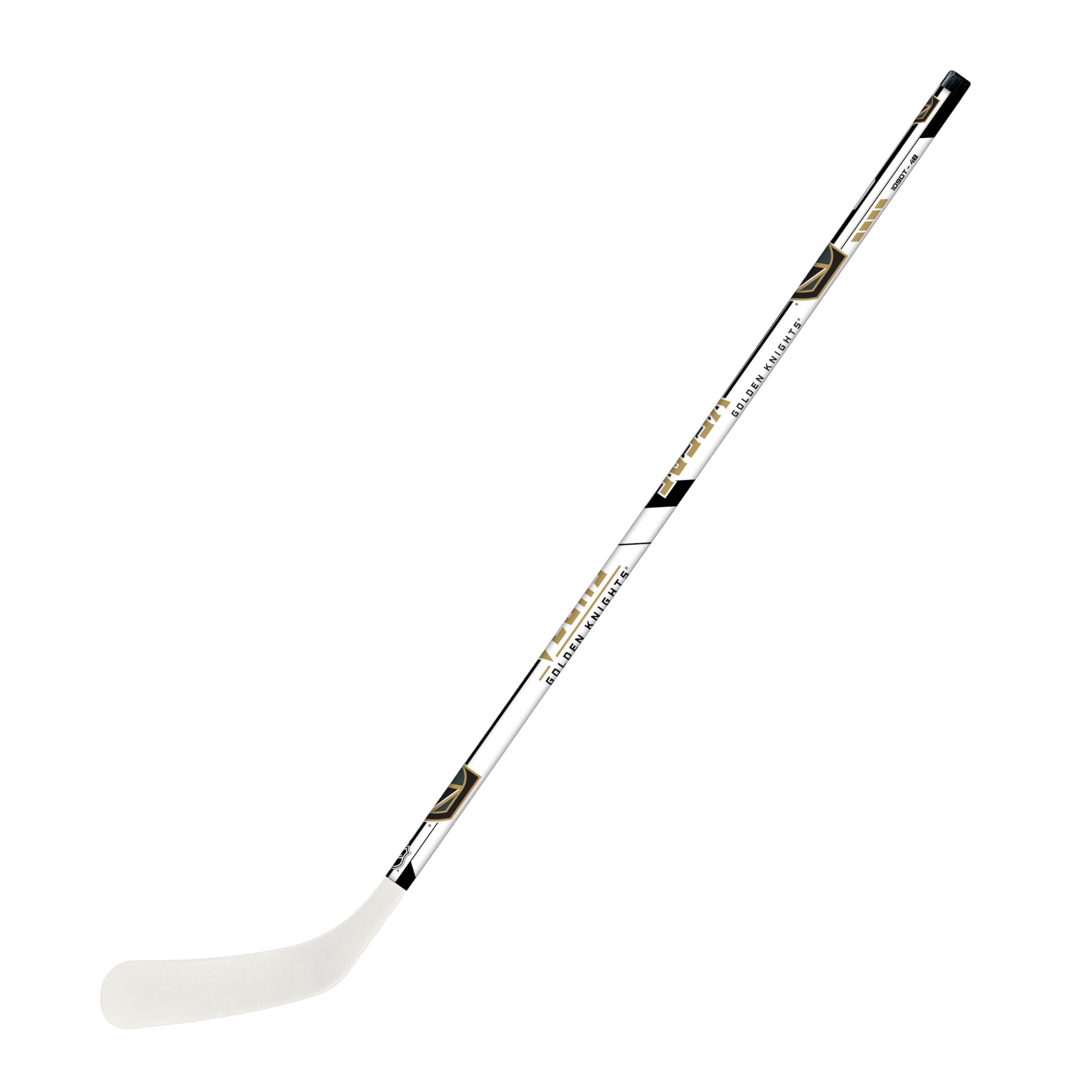
A 48-inch wooden street stick that lets a young fan play in their team’s exact colors.
For a kid who wants to play driveway hockey in a Vegas Golden Knights setup, this is the one that feels like the real thing. It’s a 48-inch junior stick in a left-hand orientation, so the blade points right when the shaft stands vertical — check that side before you buy, because you can’t flip a blade. The fused wood shaft weighs 1.3 pounds, light enough that a younger player can whip it around and build stickhandling control without arm fatigue. Franklin builds it as a junior street and roller hockey stick, which is exactly the surface it’s happiest on.
This street stick is 48 inches long, which suits a smaller or younger player but won’t fit a taller child who’s already outgrown a driveway setup. The Franklin ice model at number three runs 55 inches — 7 inches longer — so taller players should size up to that one. The Cosom floor stick is only an inch shorter at 47 inches, so what separates these two is the molded polycarbonate build, not the length. If your player is growing fast, measure to the chin in skates before committing.
What wins people over is the build quality relative to what you’d expect from a team-branded stick. Owners describe the texture as smooth and the printed design as sharp and detailed, and it even ships wrapped in plastic to protect the finish. The trade-off is durability at the blade — a small share of buyers report the decal lifting after a few weeks and, in a few cases, the blade breaking after a month or two of hard street use. On rough asphalt, treat slap shots with care and this wooden stick holds up; as owners mention, “the blade broke after only a month or two” is the failure mode to watch for.
What It Does Well
- 48-inch length fits younger youth players
- 1.3 lb fused wood shaft keeps stickhandling light
- Authentic NHL team logos and colors
- Smooth texture with a detailed printed finish
Where It Gives Ground
- Blade is the weak point after months of hard street play
- Left-handed only — wrong side players need another pick
- 7 inches shorter than the ice stick on this list
Buy it if: your young left-shot player wants an affordable wood street stick in real team colors and measures short enough for 48 inches.
Look elsewhere if: you need a right-hand stick, or your player is tall enough that a 55-inch shaft is the better fit.
2. Cosom Junior Hockey Sticks for Floor Hockey and Street Hockey for Kids

A 47-inch tank built for gym floors and school equipment rooms, sold one stick at a time.
If you coach floor hockey, run a PE class, or need a stick that survives a whole roster of kids, this is the one to look at. The power shaft uses dual “I” beam construction with a wooden dowel running through it, wrapped in high-impact polycarbonate with a high-density polyethylene blade face that’s designed not to scuff gym floors. At 47 inches it’s the shortest stick here — 8 inches under the 55-inch Franklin ice model — which suits elementary and younger middle-school players especially well.
Here’s the catch, and it’s a big one: the listing sells singles, and the product photos show something that looks like a full team set. Buyers expecting a bundle open a large box and find one stick, which is a nasty surprise especially around the holidays when there’s no time to reorder. As one buyer summed it up: “all you get is one stick.” Read the spec line carefully before you check out — the “sold as singles” note is there for a reason. It also runs short for adults: owners say it suits players under roughly 5’6″.
The people who do get the length right tend to love how it feels. The evenly distributed weight and generous blade size make it comfortable for both kids and smaller adults, and it’s rated for roller hockey as well as floor and street play. If you’re outfitting a gym program, buy six in one order so nobody’s left holding a ball with no stick.
What owners notice first: the balance. The weight sits evenly along the shaft and the blade is bigger than you’d expect at this size, which makes passing and shooting feel natural for a lightweight plastic stick.
The one thing to double-check: whether the listing photo shows a multi-stick set. It’s one stick per order, full stop — order the number of players you’re actually outfitting.
Reach for this if: you’re buying for a gym, a rec league, or a shorter player who wants a rugged polycarbonate floor stick with a wide blade.
skip it if: you need a taller shaft for an adult-sized player — the Cosom tops out well below the 55-inch Franklin ice stick.
3. Franklin Sports Kids Ice Hockey Stick

The 55-inch ice stick with a 50 flex that lets a young skater load real shot power.
Ice hockey asks something different of a stick than street play does, and this one is built for the rink. It’s a 55-inch right-shot junior stick — the longest here — with a 50 flex shaft that bends under a skater’s weight so they can put more of their body into every pass and shot. A layer of Neogrip surface texture runs down the shaft for a firmer hold during stickhandling, and the blade uses a mid curve for what Franklin describes as a dynamic, responsive feel on the puck.
The material here is the real step up: a polypropylene composite shaft (a plastic-and-fiber mix) rather than plain wood, which is lighter in the hands and more durable over a long season. If your player is moving from driveway hockey to organized ice, that difference is worth noticing — the composite build at number three is a more serious hockey stick than the wooden street model at the top of the list, and the price reflects it. It’s the most premium pick here, and the only one engineered specifically for the ice. Unlike the Cosom floor stick above, this one’s a right-hand shot, so left-shot players should look at the Franklin street model instead.
The recurring gripe is length fit. This is a 55-inch junior stick, and it’s simply too short for taller kids — customers note it runs “3-4 inches too short for a taller child,” and because junior extension plugs don’t fit this shaft, an overgrown player needs a whole new stick rather than a cheap add-on. That’s the honest trade-off: measure to the chin with skates on before you buy. Get the size right and the Neogrip (a textured grip coating) and mid-curve blade (a slight curve in the blade face) make it a genuinely capable beginner’s ice stick.
Why It’s Worth the Step Up
- 55-inch length is the longest pick here, suiting taller youth players
- 50 flex shaft lets lighter skaters load shot power
- Neogrip texture improves hold during stickhandling
- Mid-curve blade responds well to shooting and passing
The Fit Caveat
- Right-shot only — no left-hand option
- Junior extensions don’t fit if your player outgrows it
- Runs short for taller kids despite the 55-inch shaft
Worth it for: a younger right-shot skater who’s serious about ice hockey and fits a 55-inch shaft checked to the chin.
Not the pick if: your player shoots left, or you need the option of adding a junior extension later.
Understanding the Specs
Stick Length
Length is the first spec to get right, because you can’t change it later on most budget sticks. Sizes here run 47, 48, and 55 inches, and the right one depends on the player’s height. The classic test is the chin rule: standing in skates, the top of the shaft should land between the chin and nose. A stick that’s too short forces a hunched posture; too long and the blade rides up off the ball or puck. Junior extension plugs don’t fit every shaft, so measure carefully before you commit.
Shaft Material
Material decides what surface your stick survives. Fused wood handles driveway and roller play and stays light in the hands, but the blade can break after months of hard asphalt use. High-impact polycarbonate with a wooden dowel — the Cosom’s dual “I” beam design — is built for gym floors and heavy institutional play. Polypropylene composite is the lightest and most durable of the three, and it’s the choice for players moving onto the ice. Match material to where the stick will actually get used.
Flex Rating
Flex measures how much the shaft bends when you lean into a shot — lower numbers bend more easily. A 50 flex shaft suits younger and lighter skaters who can’t load a stiff one, letting them use more body weight for easier flexion on shots and passes. A shaft that’s too stiff for a small player feels dead and won’t flex at all, which is why flex matters as much as length for a growing skater.
Blade Curve and Grip
Blade curve shapes how the puck or ball releases off the stick. A mid curve sits in the middle of the range and gives a responsive, all-around feel for shooting, passing, and stickhandling. Grip surface — like the Neogrip texture on the Franklin ice stick — adds friction so the shaft doesn’t twist in your hands during fast stickhandling. For beginners, a mid curve plus a textured shaft is the friendliest combo to learn on.
FAQ
What length hockey stick should I buy for a child?
Do junior extension plugs fit every hockey stick?
Is a wooden stick good enough for street hockey?
What does a 50 flex mean on a kids hockey stick?
How do I know if I need a left-handed or right-handed stick?
Does the Cosom junior hockey stick come as a set or a single stick?
Can adults use a junior hockey stick?
What is the difference between a mid curve and other blade curves?
Is the Franklin street hockey stick durable enough for roller hockey?
What should I check before buying a team-branded hockey stick?
Final Thoughts: The Verdict
For most young players, the budget hockey stick winner is the Franklin Sports NHL Team 48″ Vinyl Street Hockey Stick — it pairs a light 1.3-pound wood shaft with real team colors at the friendliest price, which is exactly what a driveway or roller player needs to start. Just keep it off the roughest asphalt to protect the blade. If you need a stick that survives gym-class abuse and floats evenly in the hands, grab the Cosom Junior Hockey Sticks — order one per player, because it’s sold singly. And for the skater moving onto the ice, the Franklin Sports Kids Ice Hockey Stick is the one to reach for, with its 50 flex shaft (a measure of how much the stick bends) and 55-inch length. Whatever you pick, measure to the chin in skates first — fit is the one thing you can’t fix later.
How We Picked
We do not accept paid placement. Every pick is matched to a real buyer and a real use-case; we do not hands-on test units.
Sources & Methodology
Specifications: manufacturer listings and product documentation. Review insights: verified customer reviews, as of September 2026. Pricing: not shown on this page (it changes often); check the current price via the retailer link.
As an Amazon Associate, Gadgets Feed earns from qualifying purchases. This does not affect which products we feature.