
Our readers keep the lights on and my morning glass full of iced black tea. As an Amazon Associate, I earn from qualifying purchases.
Specs are compiled from manufacturer listings and verified buyer reviews and can change over time — please confirm the key details on the product page before buying.
If you own a set of 1-inch weight plates and a bench, the bar in the middle is the part that decides whether you lift safely or fight your equipment. A bar shorter than your bench uprights cannot be racked. A bar rated below your working weight bends permanently under a heavy set. This guide covers nine 1-inch standard barbells that fit those plates, from short curl bars to six-foot straight bars, and it tells you which length and which weight limit actually matches your bench, your ceiling, and your plates.
I’m Min — the founder and writer behind Gadgets Feed. This guide is built by comparing the manufacturers’ published specifications and the patterns across verified customer reviews, so you get each pick’s real strengths and trade-offs instead of marketing spin.
Standard bars are easy to shop for once you know your bench’s upright spacing, your sleeve length, and your working weight. The picks below sort by what each bar does best, so you can match one to your setup and stop second-guessing the diameter. Start here if you want the short answer to the 1 inch barbell question before the deep dive.
Our Picks at a Glance


How To Choose The Best 1 Inch Barbell
Three numbers decide everything: the diameter of the bar, the length of the bar, and the weight rating. Get any one of those wrong and the bar will not rack on your bench. Here is how each one plays out in a real home gym.
The diameter — 1 inch vs 2 inch
A 1-inch bar (that is 25 mm across) accepts standard 1-inch weight plates. An Olympic bar is 2 inches across and needs Olympic plates. If your plates are the standard kind, you are locked into the 1-inch family, and every bar on this list fits that family. Buy a 2-inch bar and your plates will not slide on without an adapter.
Length and sleeve length — the sizing trap
Length is the spec that causes the most returns. A 55-inch bar is a fine curl and upright row tool, but it lands inside the uprights of many standard benches, so you cannot rack it properly. Longer bars give you more room for your hands, but a longer bar also has more steel to flex and is harder to store in a small apartment. Measure the gap between your bench uprights and the distance between your rack hooks before you buy. Sleeve length matters too, because that is where your plates actually sit — a short sleeve means fewer plates before the collar runs out of thread.
Weight capacity and steel behavior
Capacity ratings run from 150 lbs to 500 lbs across this group. A steel bar will flex while it is loaded and spring back when you unload it — that is normal and it is what the bar is designed to do. The line you want to avoid crossing is permanent bend, which is a capacity problem, not a quality problem. Leave headroom between your working weight and the rating. A bar with a 300 lb rating carrying 200 lbs is doing its job. A bar with a 450 lb rating carrying 300 lbs should also be fine on paper, but buyer experience on these bars is not always that generous.
Collars and grip
Spin-lock collars screw onto threaded sleeves, spring clips slide on, and star-lock nuts function on a knurled or threaded section. Spin-lock style holds plates the most securely, but the threads wear and the paint under them flakes with use — expect that on any threaded bar in this class. Diamond knurling gives the non-slip grip. The depth matters: too shallow and sweaty hands slide, too sharp and it tears your palms. Medium depth, as several of these bars use, is the sane default for home use.
Quick Comparison
| Model | Best For | Length | Max Capacity | Bar Weight | Amazon |
|---|---|---|---|---|---|
| 55″ Weight Lifting Bar, 1″ Standard Straight Barbell (LAVVON)★ Best Overall | Small-space curl and upper-body work | 55 inches | 480 lbs | 12 lbs | Amazon |
| CAP Barbell 57″ Standard Threaded BarBudget Staple | Light-duty beginners squeezing into tight spaces | 57 inches | 150 lbs | 12 lbs | Amazon |
| Weight Lifting Bar 57″, 1″ Standard Straight Barbell (DILANL)Top Performer | Home lifters who want headroom on capacity | 57 inches | 480 lbs | 12 lbs | Amazon |
| Yes4All Standard Straight Barbell 60″ | Long-straight-bar buyers on a moderate budget | 60.24 inches | 200 to 480 lbs | 13.2 lbs | Amazon |
| Synergee 1″ Standard Barbell (4.7 ft) | Form-first lifters who want less bar weight | 4.7 ft (56.4 inches) | 350 lbs | 12.3 lbs | Amazon |
| Philosophy Gym 1″ Standard Weightlifting Barbell 60″ | Home rack users who want more sleeve length | 60 inches | 300 lbs | 13.4 lbs | Amazon |
| Marcy 6 ft. Two-Piece Standard Weight Bar | Apartment owners who need to break the bar down for storage | 72 inches | — | 15 lbs | Amazon |
| Amazon Basics Standard 60″ Straight Barbell Bar | Light home gyms that want a no-fuss straight bar | 60 inches | 250 lbs | 13.4 lbs | Amazon |
| Iron Crush Olympic and 1 inch Barbell Weight Bar | Home lifters who want a high rated capacity on a five-foot bar | 60 inches | 450 lbs | 13 lbs | Amazon |
In‑Depth Reviews
1. 55″ Weight Lifting Bar, 1″ Standard Straight Barbell Bars (LAVVON)
Our pick — over 4.5★ from 850+ verified ratings; the strongest balance of quality and price.
The short bar with a long capacity rating — 55 inches of nickel-plated steel that carries 480 lbs.
The 55-inch length here is a deliberate trade: shorter than a full-size straight bar, which makes it easy to store against a wall or under a bench, but short enough that a lot of standard benches will feel cramped when you rack it. If you have ever wondered why your current bar keeps hitting the uprights, this is the length to check against your bench before buying. What the 55-inch size is truly for is curl work, upright rows, and any upper-body movement where a shorter lever is a help, not a hindrance.
Buyers report the bar weighs 12 lbs on arrival, and most found it well made for the money — the recurring praise centers on the solid feel and the diamond knurling. One customer framed the sizing honestly: “The bar appears to be a quality bar. unfortunately it is way too short for my bench. make sure that you know this is a 55-in bar. instead of using it for a bench bar, it will now just be a curl and upright row bar.” That is the curl-and-upright-row lifter this 55-inch bar is built for.
The knurling here is properly medium — aggressively enough to hold through sweaty palms without tearing up your calluses. It comes with two anti-slip swivel steel clamps for 1″ plates, and buyers mention the quick clips make plate changes fast. It ships with a 2-year unconditional warranty. Compared with the DILANL 57-inch bar above, this one is two inches shorter and shares the same 480 lb rating and 12 lb bar weight — a small difference in length that can decide whether it clears your bench uprights. If you have the space, the 57-inch is the safer reach. Realistically, the honest trade-off here is that 55 inches is a specialty length, not a general-purpose one — measure your bench before committing.
Anyone upgrading from a DIY pipe or a cheap adjustable dumbbell setup will feel the difference the moment they load plates — the steel does not walk under the collar. Anyone who wants a bar for a full standard bench press with proper j-hook clearance should probably size up to a 57-inch or longer piece.
What earns its place here
- 480 lb capacity rating on a 12 lb bar — plenty of headroom for a home lifter
- Nickel plating resists rust and the diamond knurling holds through sweat
- Two swivel steel clamps included for 1-inch plates, no extra purchase needed
- 2-year unconditional warranty on a bar that costs the same as most budget picks
What you should know going in
- 55 inches is too short for many standard bench presses — check your uprights first
- A few buyers have had the star lock collars arrive as round clamps instead of the advertised star-lock style, though it does not affect the lift
- Bar weight is light at 12 lbs — fine for control work, less so if you like a bar that pushes back
Reach for this if: you train curls, upright rows, and accessory work, and you want the strongest rating-per-dollar in the group.
Size up if: your bench press is the priority — the 55-inch length was too short for a real bench for at least one owner, and the 57-inch DILANL is the direct upgrade.
2. CAP Barbell 57″ Standard Solid Threaded Bar with Star-Lock Collars
The smallest capacity on the list paired with a thirty-year-old brand name — a 150 lb ceiling that says exactly who should buy it.
The headline spec here is the 150 lb weight capacity recommendation, and that is a hard ceiling you should honor. Pair it with a modest set of 1-inch plates and a bench, and it does the job for beginners and light lifters. Push it toward 200 lbs and the bar will tell you about it. The bar is 57 inches long with threaded ends and a black powder coat finish, and it uses star-lock collars that screw down onto the plate stack.
Two buyer patterns show up again and again. The bar’s finish wears over time — the black paint flakes off at the threads where the collars rotate. That is cosmetic only, and it is the same trade-off you see with any threaded bar in this range. The other pattern is packaging: this bar has been shipped in cling wrap with labels stuck to the steel, so a few arrived scuffed or, in one unlucky case, rusted with paint chips falling out of the wrapping. If a bar arrives damaged, the return covers you — but it is worth knowing the box situation is inconsistent.
For a petite lifter or someone taller who just wants a lighter standard-size option for accessory work, owners mention the feel is right. Ownership is described as good enough for the work it is designed for, and one buyer praised the bar cleanly: “I found it to be a decent product for a decent price!” The honest picture is: this is a light-duty threaded straight bar, and it is priced and specified as one.
Who it fits: beginners buying a first bar, and petite lifters who want the smaller standard diameter for bench press work at moderate loads.
The real caveat: between the 150 lb ceiling, the threaded-end paint flake, and the occasional scuffed-in-transit delivery, this is a starter bar — if your working sets live above 150 lbs, the DILANL 57-inch bar gives you a 480 lb rating for roughly the same money and length.
Take it if: you are new, your loads stay light, and you want a threaded straight bar from a brand that has been in home gyms for decades.
Step past it if: you already bench heavy or plan to — the 150 lb ceiling is going to run out before you do.
3. Weight Lifting Bar 57″, 1″ Standard Straight Barbell (DILANL)
Two more inches of length and the same 480 lb rating as the 55-inch pick — the upgrade for anyone who found the shorter bar too tight.
If the 55-inch bar was too short for your bench, this is the natural next stop. It runs 57 inches long, weighs 12 lbs, and carries the same 480 lb capacity. Those two extra inches matter more than they sound: they can be the difference between clearing your bench uprights and landing inside them. If you are between the LAVVON and this DILANL, the honest recommendation is to measure your bench — both strips of steel are nearly identical on paper, so length is the tie-breaker.
Build quality shows the same pattern as its shorter sibling: hardened nickel plating on a heavy-duty solid steel bar, diamond knurling with a flat, non-sharp profile, and steel swivel sockets. What buyers actually notice is how it behaves under a real load. Another put it through a training-class workout with existing 1-inch plates and reported the bars held up fine with the whole group.
The knurling here is worth calling out separately from the grip feel: diamond pattern, medium depth, deliberately not sharp. It holds through a sweaty set without skinning your palms, which is the right feel for high-rep accessory work. This is the pick for a home lifter who wants one bar that does bench press, squats, rows, and curls without reading the fine print. The one thing to keep in mind is the same as every 1-inch bar in this class — if you have a rack with j-hooks set for a full-width Olympic bar, check the sleeve placement first, because a 57-inch bar can leave plates sitting past the hook.
Why this climbs above the shorter bar
- 480 lb capacity at a 12 lb bar weight — the same safe headroom as the best bar here, in a longer length
- 57 inches gives more room to clear standard bench uprights than a 55-inch bar
- Flat diamond knurling holds in sweaty hands without tearing up palms
- Hardened nickel plating resists corrosion and oxidation on a bar that stays in a home gym
What to weigh against it
- Still short enough that a wide standard rack can push the plate loading zone past the j-hooks — measure before you commit
- Nickel finish means the bar feels slick on first contact until the knurling breaks in
- No hard-limit flex behavior is documented at the very top of the 480 lb range — treat the rating as meant for lifting, not for loading on a bar on the floor overnight
Pick this if: you want one straight bar to cover bench, squat, and curl, in the longest reasonable length for a small home gym.
Consider a 60-inch bar instead if: your rack hooks place plates past the end of a 57-inch bar, or if you want the widest possible hand position for pressing movements.
4. Yes4All Standard Straight Barbell 60″ & EZ Curl Bar 47″

A taller-lifter bar at 60.24 inches — the length that fits a six-foot frame and clears a standard rack.
What stands out about this Yes4All bar is the length. 60.24 inches is longer than the LAVVON 55-inch and the DILANL 57-inch, and it weighs 13.2 lbs rather than 12 lbs. That extra inch of steel and pound of weight is the difference between a bar that fits a smaller frame and one that fits a full-size lifter. The buyer profile here is clear: this is the bar for a 6’2 lifter, and at least one shorter buyer had to hand it off entirely because it was longer and heavier than ideal for her.
Build is alloy steel with a black finish, textured diamond-knurled handles, and star-lock collars. It is compatible with a variety of weight plates and works with Olympic size weights if you use an adapter — one reviewer noted the adapter makes the fit perfect. This is the bar to consider if your existing plates are standard 1-inch but you want the flexibility to try Olympic plates later, since the bar is set up to take either with the right collar. The star-lock collars hold plates firmly through the full set, which is what that component is designed for.
The honest caveat is the weight. At 13.2 lbs, the bar itself is a load before you hang anything on it. For a strong lifter or a taller guy that is a feature — balance and stability come from bar mass. For a smaller lifter, that heft on a long lever is a reason to try a shorter bar first. The other note is packaging: this ships from a setup that has been reported to leave plates and collars shifting in transit, so inspect the threads on arrival and use the return if anything looks off. Between this pick and the Philosophy Gym 60-inch, this Yes4All is the more versatile of the two because it will take both plate sizes with the right adapter.
Best for: a taller or heavier home lifter who wants a longer 60-inch bar with a black finish and the flexibility to move between plate standards.
Watch out for: the 13.2 lb bar weight — smaller lifters have sent it back, and it is a bad fit for a petite lifter who wants to keep the bar itself light.
Choose it if: you are over six feet or you press hard, and you want 60.24 inches of bar with room for a wider hand spread than a 55-inch bar can give you.
Skip past it if: you want a light bar for high-rep accessory work — the 13.2 lb bar weight changes the whole feel of the movement.
5. Synergee 1″ Standard Barbell – 4.7 ft, Chrome Finish
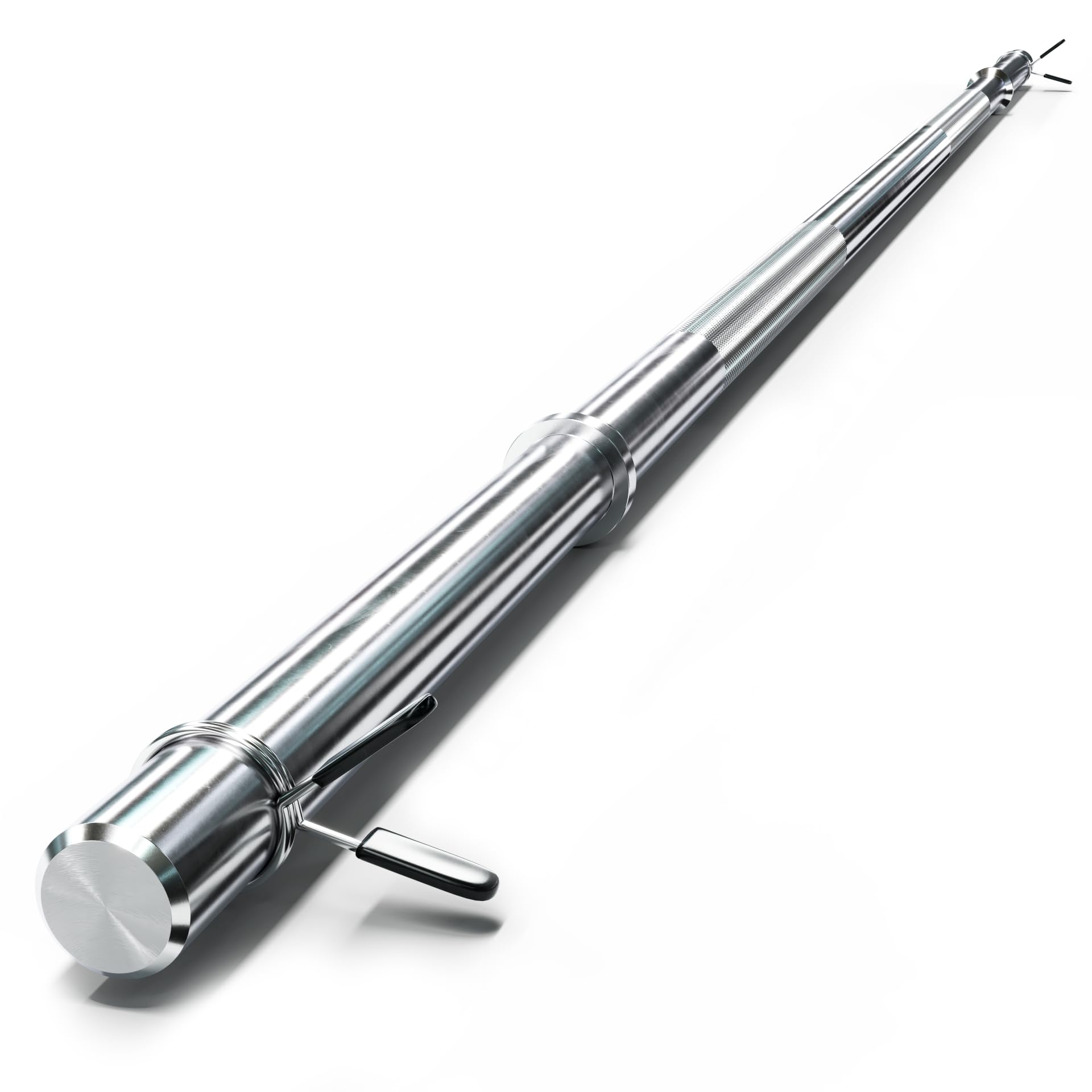
A 12.3 lb bar with a 350 lb rating — light enough to perfect your form, strong enough not to embarrass you at real weights.
The Synergee approach is different from the rest of this list. The bar weighs 5.58 kg, which is 12.3 lbs, and it measures 4.7 feet, or 56.4 inches. That makes it deliberately lighter and shorter than your average Olympic barbell. The tradeoff is intentional: a lighter bar is easier to control while you are learning the movement pattern for a bench press or a squat, and it is less punishing on your grip endurance at higher reps. The rating is 350 lbs with a 50,000 psi tensile strength rating and a 1.2 mm diamond knurl.
Buyers routinely comment on the finish. The chrome plating on this bar is described as almost perfect from the start, and the bar arrives well-packaged — much better than the cling-wrap-shipping situation you sometimes see on budget bars. The sleeve length here is 7.8 inches, which is enough for a reasonable number of 1-inch plates. The bar takes standard 1-inch plates and ships with a pair of spring collars. One buyer who had owned two Synergee bars before reported the fit and finish were the reason they kept coming back to the brand.
The honest catch: the 4.7-foot length and the lighter bar weight are both a strength and a limitation. If you train with 400 lb plus consistently, the 350 lb rating is the wrong bar for you. Buyers have reported it does not flex at 400 lbs, which is above the rating, so the steel is more capable than the number suggests — but the recommended ceiling is still 350 lbs, and staying inside that is the safe play. Another known issue: the chrome finish on the blue version wears at the rack j-hooks after a couple of weeks of regular lifting. That is cosmetic and reflects the j-hook contact, not the bar’s structural integrity. Between this and the Amazon Basics 60-inch bar, this Synergee is shorter and heavier-rated despite the lighter feel — believe the spec sheet, not the first impression.
Best fit is a form-focused lifter, a beginner building up volume, or a mid-weight lifter who values a smoother, more controlled feel over max load. If you press 300 lbs regularly, the DILANL 57-inch bar gives you a longer lever with the same 12 lb bar weight and a 480 lb rating — that is the natural next step for a growing lifter.
Where it shines
- Full-end chrome plating — good corrosion resistance and a finish buyers describe as near perfect on arrival
- 12.3 lb bar weight means less bar to manage when you are learning the movement pattern
- 350 lb capacity with a 50,000 psi tensile strength rating on a 1.2 mm diamond knurl
- Spring collars included, and 7.8-inch sleeve length takes a reasonable stack of 1-inch plates
What to accept
- Chrome finish wears at the rack j-hooks after a couple of weeks of regular lifting — cosmetic only
- 4.7-foot length is short for a lot of standard benches — check that your uprights clear before buying
- Occasional reports of missing clips in the box — Synergee sells spares, but count your parts on arrival
- 350 lb rating is the lowest reviewed capacity among the top picks here
Built for: the lifter who wants a smoother bar to grow into, with lighter bar weight and a chrome finish that holds up to garage humidity.
Not the one for: heavy benchers whose working sets sit above 300 lbs — you want more rating headroom than 350 lbs gives you.
6. Philosophy Gym 1″ Standard Weightlifting Barbell, 60″ Threaded Straight Bar

Sixty inches of chrome with the longest sleeve on the shortlist at 9.5 inches — a bar made for stacking plates.
The number to lead with on this bar is the 9.5-inch sleeve length. Sleeve length is where your plates live, and 9.5 inches means you can load more plates before the threaded collar runs out of room to clamp down on. Compare that to the 4.7-foot Synergee with its 7.8-inch sleeve or the 55-inch LAVVON with its shorter sleeves, and you can see the philosophy here: a 60-inch straight bar that is built for volume. It weighs 13.4 lbs, has a chrome finish over alloy steel, and carries a 300 lb weight capacity.
Where this bar earns its money is in home rack setups. The chrome finish and deep threads pair with the star-lock collars to keep plates from walking, and the medium-depth diamond knurling gives you a firm hand without tearing skin. Buyers use it for t-bar rows where they need the longer length for reach, for presses on a standard bench, and for squat variations. The consensus from owners is a consistent one: this is a solid, honest straight bar for a home gym, and one buyer’s quick verdict says it all — “Was looking for a long bar so that I can use it for tbar rows and came across this product.”
The catch to weigh: the 300 lb capacity is the second-lowest rating among the top picks here, behind only the 150 lb CAP bar. If your training sits comfortably under 300 lbs, this is a tool you will keep. If you are pushing toward that ceiling or beyond, the DILANL 57-inch with its 480 lb rating and the same 12 lb bar weight is the safer purchase. On quality control, one of the buyers who received a bar with shipping damage had it replaced by the seller without pushback — the customer service response is worth knowing about because it is not guaranteed on every listing in this category. If the idea of running your warmup set on a bar that ships in a proper box matters, this is one of the better-reviewed options on that front.
Real strength: the 9.5-inch sleeve plus 60-inch overall length is the roomiest combination for a 1-inch straight bar in this group.
Honest limit: the 300 lb capacity is not going to grow with you forever — treat this as the right bar for a serious but not maximal home gym.
Ideal for: t-bar rows, landmine work, and any movement where 60 inches of reach plus a 9.5-inch sleeve matter more than top-end capacity.
Not ideal for: lifters already sitting near 300 lbs on their working sets — the DILANL gives you a lot more rating for the same length trade.
7. Marcy 6 ft. Two-Piece Standard Weight Bar with Threaded Spin Lock Collars

A six-foot straight bar that comes apart in the middle — the only storage-first bar on the list.
Marcy does one thing here the other bars cannot: the bar splits into two pieces for storage. A 72-inch bar is a lot of steel to leave standing in the corner of a small apartment, and the collapsible design turns that into two roughly three-foot sections that fit behind a door or in the bottom of a closet. No other pick here breaks down for storage. It is alloy steel with a chrome finish, weighs 15 lbs, and comes with two spin-lock collars.
The trade-off is the exact place where a two-piece design shows its seams. Customers note that the joiner can wiggle when the bar is not loaded and can slowly unscrew during use. One owner reported it wiggles without plates and unscrews during lifting, and that a thread-locker compound fixes it permanently — at which point the bar is effectively one piece again. Another noted the spindle locks can loosen after a few sets and want retightening each session, and that weights lean slightly. Under moderate loads, owners describe it as sturdy enough and well finished with a comfortable grip and no metal shards.
Where it shines brightest is at-home work for a light lifter, high-rep sets, and any situation where the bar needs to disappear into a closet between sessions. One sixty-something owner uses it several times a week and reported the screw-on caps keep the weights exactly where they belong — that is precisely the audience this bar is built for. If your training routinely lives above 100 lbs, this is the wrong tool; the DILANL and Philosophy Gym bars cover that ground with a single solid shaft. If storage is the pain point and your loads are light, it does its job.
Where it stands out
- Two-piece design breaks a 72-inch bar down to roughly half-length for closet storage
- Threaded spin-lock collars and a chrome-finished steel shaft with a comfortable grip
- Reviewers point out the bar handles moderate loads sturdily with no metal shards on the texture
- Two-year limited coverage on the bar itself
Where the seams show
- Two-piece joiner can wiggle when unloaded and slowly unscrew during lifting — a thread-locker fixes this but removes the disassembly feature
- Spin-lock collars sometimes want retightening after a few sets
- Heavier loads push this bar into noticeable flex faster than a solid steel bar of similar length
- Shipping has occasionally delivered the bar in an opened box with missing collars — check the contents on arrival
Built for: an apartment lifter with light-to-moderate loads who needs a bar that packs away between workouts.
Look past it if: your sets push past 100 lbs consistently — the two-piece design and the lighter build are not built for that kind of weight.
8. Amazon Basics Standard 60″ Straight Barbell Bar, 1″ Diameter
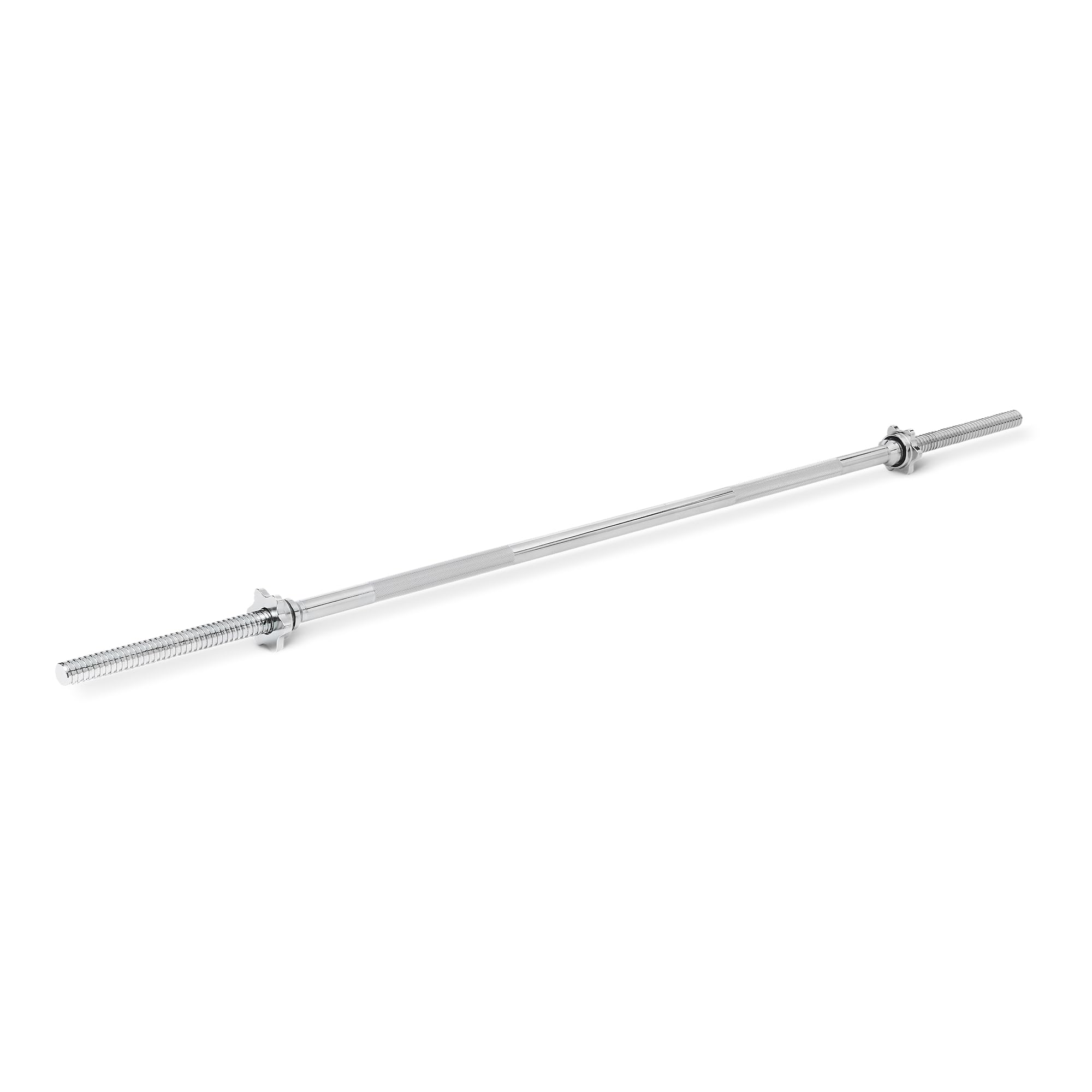
A 60-inch bar with a 250 lb ceiling and a 10.6-inch sleeve — plain, cheap, and honest about exactly what it does.
What you get here is a 60-inch straight bar with a 1-inch sleeve, a 10.6-inch sleeve length, a chrome finish over alloy steel, and a listed capacity of 250 lbs. That sleeve length is generous for a bar in this class — it means more room for plates before the star locks run out of thread. The bar weighs about 13.4 lbs and takes all standard 1-inch plates. There is nothing exotic on the spec sheet, and that is exactly the point: this is the general-purpose home gym bar for someone who just wants the bar to work.
Owner experience backs that up. The most common note is that the bar does exactly what it says — one buyer put it plainly: “It’s a barbell bar, it did exactly what I needed to do.” The spin-lock collars hold plates firmly through the set, the knurled grip zones give you a secure hold, and several owners mention that with heavier plate stacks you may want gloves for the texture. Two buyers took matters further: one cut four inches off each end of the bar to fit it in a car trunk, and another converted one into an adjustable macebell with a hacksaw. That kind of modification says something about the steel — it is machinable and not over-engineered, which is fine for a bar in this price bracket.
The catch is length. The most common honest complaint is that a 60-inch bar with 10.6-inch sleeves can still be too short for wider bench setups — one owner bought it only to find it did not clear the weight handles on their bench. Unlike the CAP 57-inch bar, this one is longer and substantially more capable, but it is still a 60-inch bar, so measure your bench before you commit. If you have a standard narrow bench, this fits without drama. If you have a wide press setup, step up to the Yes4All 60.24-inch or a bar with more sleeve length. The 250 lb capacity is the other number to respect — plenty for a general home fitness routine, not enough for a serious powerlifter.
Best fit: a beginner-to-intermediate home lifter who wants a straightforward 60-inch bar with 10.6 inches of sleeve and reputable branded backing.
Watch the length: buyers have hit the wall with wider benches — verify the bar clears your specific setup before ordering, since 60 inches is not universally long enough.
Right for: an uncomplicated home gym with a standard narrow bench and a working weight comfortably under 250 lbs.
Not for: wide-rack setups or anyone whose working sets approach the 250 lb rating — a heavier-rated bar is the safer long-term move.
9. Iron Crush Olympic and 1 inch Barbell Weight Bar, 60″

A five-foot bar rated to 450 lbs, with a 36.5-inch shaft that tells you exactly how much room your hands actually get.
The headline number here is the 450 lb capacity rating on a bar that is only 60 inches long and weighs 13 lbs. That rating is the second-highest on the list behind the 480 lb LAVVON and DILANL bars, and puts a lot of headroom in the hands of a home lifter. The shaft length is 36.5 inches, which is the length between the sleeves where your hands actually go — this is a spec worth checking against your pressing stance because it tells you how much room you have to spread your hands.
Shoppers say this bar handles serious work. Buyers report using it for bench press and squats, holding 300+ lbs deadlifts with slight flex that straightens back out, and one reported it holds 320+ lbs without any permanent bend. A satisfied short review sums up the pattern: “Perfect performance.” The knurling was called out as “perfect, not too rough” — that is a useful data point because grip comfort is a real dealbreaker at higher loads. The tough chrome finish resists scratches even after repeated sessions.
The honest complication is capacity behavior near the ceiling. One owner documented a permanent bend forming at 300 lbs despite the 450 lb rating, though it stabilized after a year and did not fail. That is a real variance worth knowing about: ratings are the manufacturer’s test result, and actual behavior on a given unit can sit lower. A second useful note from buyers is that the plate loading area extends past J hooks on standard power racks, so if your rack is set for a full-length Olympic bar, the plates will land outside the hook. If you lift near 300 lbs and up, size your expectations by treating the 450 lb rating as real but not unlimited — the DILANL 57-inch with the same 12 lb weight class and a 480 lb rating, plus a shorter overall length, may fit a secondary rack better.
What buyers latch onto
- 450 lb rated capacity on a 60-inch bar — the second-highest rating in the group
- Knurling praised as comfortable — not too rough, good grip
- Tough finish resists scratches and holds up under repeated sessions
- One-year warranty and 13 lb bar weight with a 36.5-inch shaft
What to keep in mind
- Plate loading area can extend past J hooks on a standard power rack — check your rack spacing
- At least one buyer mentioned a permanent bend forming at 300 lbs on their unit, suggesting the 450 lb rating may be optimistic
- Ships with springs rather than compression end caps —collar swap is a common upgrade
Consider it if: you want a 60-inch bar with a 450 lb rating to grow into, and you already know your rack’s j-hook spacing works with a 36.5-inch shaft.
Look elsewhere if: your rack is set for a full-length Olympic bar or your working sets climb near 300 lbs — the reported bend is a real reason to choose a lower-rated but longer-proven bar.
Understanding the Specs
Weight Capacity Ratings
Every bar here lists a weight capacity, and that number is the manufacturer’s tested limit for what the bar will carry without permanently deforming. Ratings on this list run from 150 lbs on the CAP bar up to 480 lbs on the LAVVON and DILANL bars. In real use, a steel bar flexes while loaded and springs back when unloaded — that is by design. The line to watch is permanent bend, which is what happens when you cross the rating and the steel does not fully return. Real buyer experience varies: one Iron Crush owner reported a permanent bend at 300 lbs on a 450 lb rated bar, so leave headroom below the stated number and match the rating to the heaviest set you actually plan to lift.
Bar Length and Your Bench
Length is the spec that causes more returns than any other on standard bars. A 55-inch bar fits some benches; a 57-inch bar fits more; 60 inches fits most. Longer bars give more room to spread your hands and to clear the hooks on a rack, but they flex more at the same load and are harder to store. Shorter bars are easier to handle in a small space, but a bar shorter than your bench uprights cannot be racked safely. Measure the distance between your bench’s weight handles before you buy, and check the plate loading area does not fall past your rack’s J-hooks — that has been a real issue for more than one buyer in this group.
Knurling and Grip
Knurling is the crosshatched diamond pattern on the shaft that keeps your hands from sliding. These bars use medium-depth diamond knurling by design — deep enough to hold a sweaty grip, shallow enough not to tear up your palms at high rep counts. Depth varies slightly brand to brand but the intent is the same across this list. Buyers regularly praise the Synergee and Iron Crush knurls as “not too rough,” and one CAP bar owner found the diamond pattern only grips well for slow reps — fast reps cause spin and slip, which is why they use gloves. If you plan to push heavy loads fast, gloves are a sensible add-on regardless of which bar you choose.
Collars and Sleeve Length
Sleeve length is how much bar is available for loading plates on each end. The Philosophy Gym bar has 9.5 inches, the Amazon Basics has 10.6, and the Synergee has 7.8 — the larger the number, the more plates you can stack before the collar runs out of thread. Collar systems on this list are divided into three types: spin-lock collars that screw onto threaded sleeves, star-lock collars that use a threaded nut, and spring clips that simply slide on. Threaded types hold plates the most securely but the paint under the threads flakes with use — that is a wear pattern, not a defect, and it does not affect the bar’s strength.
FAQ
Will a 1-inch barbell accept Olympic plates?
Is a 55-inch barbell long enough for bench press?
What does the weight capacity rating actually mean?
Do I need to buy collars separately?
How much does the bar itself weigh, and why does it matter?
Why does the paint peel off threaded barbell ends?
Are these bars safe for squats and deadlifts?
Can I store a barbell in a small apartment?
Does a 1-inch bar bend easier than an Olympic bar?
What do diamond knurl and medium depth knurl actually mean?
Final Thoughts: The Verdict
For most home lifters, the 1 inch barbell winner is the 55″ Weight Lifting Bar by LAVVON because it pairs a 480 lb capacity rating with a nickel finish and a two-year warranty at a budget-friendly price — the strongest rating-to-cost ratio in the whole group. If you want a longer lever with the same rating and 57 inches of steel that clears more bench setups, grab the DILANL 57″ Weight Lifting Bar. And for a light home gym where storage is the challenge, the Marcy 6 ft. Two-Piece Bar is the one to reach for, since it folds down to fit a closet between sessions. Before you buy anything, measure your bench once — that single tape measure check is the difference between a bar you keep for years and one that goes back in the return box.
How We Picked
We do not accept paid placement. Every pick is matched to a real buyer and a real use-case; we do not hands-on test units.
Sources & Methodology
Specifications: manufacturer listings and product documentation. Review insights: verified customer reviews, as of September 2026. Pricing: not shown on this page (it changes often); check the current price via the retailer link.
As an Amazon Associate, Gadgets Feed earns from qualifying purchases. This does not affect which products we feature.