
Our readers keep the lights on and my morning glass full of iced black tea. As an Amazon Associate, I earn from qualifying purchases.
Specs are compiled from manufacturer listings and verified buyer reviews and can change over time — please confirm the key details on the product page before buying.
Wet gelcoat (the smooth, glossy coating on a boat’s deck) is basically ice, and the wrong pair of sandals turns a calm afternoon on deck into a sliding contest you never signed up for. What actually matters on a boat is simple: a non-marking sole (rubber that won’t leave black scuff lines on fiberglass), real grip on a wet surface, and a strap that keeps your foot planted while you’re stepping over gunwales (the upper edges of the boat’s sides). Everything else is comfort, and comfort is where the real fights start among owners.
I’m Min — the founder and writer behind Gadgets Feed. This guide is built by comparing the manufacturers’ published specifications and the patterns across verified customer reviews, so you get each pick’s real strengths and trade-offs instead of marketing spin.
Deck work, dock launches, and barefoot beach days all stress the same shoe differently — and that is exactly why picking the right pair of boat sandals depends on sole compound (the rubber mix), strap design, and how your particular foot fits it.
Our Picks at a Glance

How To Choose The Best Boat Sandals
A boat sandal has to survive three things most sandals never meet: standing water underfoot, a fiberglass surface you’re not allowed to scratch, and a foot that slides around every time the boat rolls. Get the sole compound wrong and you’ll be scrubbing black marks off the deck for a season. Get the strap wrong and you’ll be curling your toes with every step, which is what most people mean when they say a flip flop “doesn’t feel secure.”
The Sole Is The Whole Point
The single feature that separates a boat sandal from a regular flip flop is the outsole. A non-marking sole is a rubber compound soft enough that it won’t leave scuff marks on a white or light-colored boat deck — that’s the whole reason the category exists. Look for the phrase “non-marking” in the listing, not just “rubber.” Natural rubber and rubber blends can both be non-marking, but only if the manufacturer says so. If the description is silent on it, assume it’s not.
Straps, Toe Posts, and How the Sandal Holds Your Foot
A tubular nylon strap (a smooth, round-woven tube rather than a flat band) distributes pressure across the top of the foot instead of pinching it. Some sandals use a soft nylon toe post, which is the piece that runs between your big toe and second toe — the one spot that tends to rub raw on cheaper sandals. If you’re doing real work on the water rather than lounging, look for a strap that stays put when you’re stepping over a rail, and pay attention to whether the listing describes a snug or relaxed fit. Fit is the one thing owners disagree about most on this category, and for good reason: it depends entirely on the shape of your foot, not the brand.
Footbed, Arch, and Cushioning
The footbed is what your bare foot actually sits on for eight hours at a time. A high-density EVA footbed (a firm foam that holds its shape instead of squashing flat) handles moisture better than a soft squishy one, which is why it shows up in water-friendly sandals. Molded arch support helps if you’re standing at the helm or on a dock for hours. If you’re normally barefoot or wear flat shoes, too much arch can feel odd at first — a molded arch is a ride you have to want, not a feature you should buy blind.
Quick Comparison
| Model | Best For | Footbed | Strap Type | Outsole | Amazon |
|---|---|---|---|---|---|
| OluKai Kipi★ Best Overall | Everyday beach and boat wear | ICEVA footbed | Synthetic strap with soft nylon toe post | Non-marking rubber | Amazon |
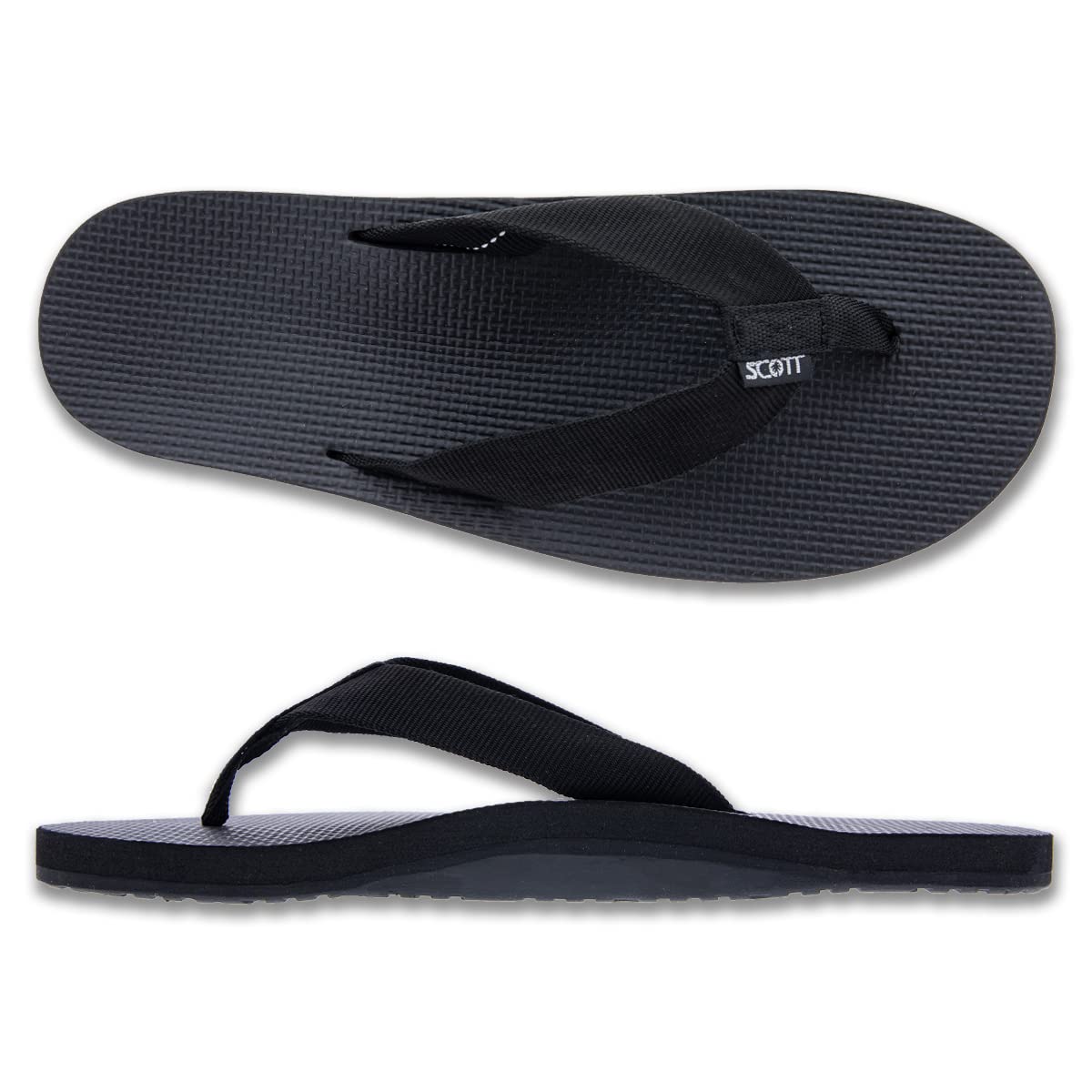
| Scott Hawaii HaleiwaBest Value | Narrow-footed all-day wear | High-density EVA footbed | Tubular woven nylon | Natural rubber | Amazon |
| Scott Hawaii Hokulea | Fishing and boating days | Foamy flexible footbed | Tubular nylon comfort strap | Non-marking rubber | Amazon |
| Grundéns Deck-Boss | Performance on a working boat | Shock absorbent underfoot | Flip flop strap | Non-marking | Amazon |
| Hari Mari Dunes | Pool deck to boat in one pair | Firm arch rubber footbed | Nylon strap | Non-marking rubber | Amazon |
| KEEN Newport Slide | Toe protection and wide feet | Cushioned contoured footbed | Quick-dry bungee lace slip-on | Non-marking sole | Amazon |
In‑Depth Reviews
1. OluKai Kipi Men’s Beach Sandals, Water Resistant Flip Flops
Our pick — over 4.5★ from 600+ verified ratings; the strongest balance of quality and price.
The pair that treats the sandal like a real shoe — water-resistant strap, non-marking rubber, and a footbed that hugs.
If your idea of a boat sandal is something you can wear from the dock to dinner without changing, the OluKai Kipi is the one to start with. The water-resistant synthetic strap upper means splashing or boarding through a puddle doesn’t soak the shoe through, and the soft nylon toe post — the piece between your big and second toe — is built to keep that spot from rubbing raw on a long day. Underfoot you get OluKai’s ICEVA footbed (a cushioned, supportive insole), and the outsole is non-marking rubber, which is the exact compound that keeps black scuff lines off a white fiberglass deck.
What wins people over is construction quality. Owners describe these as a genuine step up from the flat drugstore flip flop, with the kind of foot hug you notice the second you slide them on. A recurring line across the reviews is that once you’ve worn them, going back to the basic ones is difficult — the tread stays put and the straps don’t stretch out into a loose, sloppy shape the way cheaper pairs do. One verified buyer put it plainly: “These slippers feel like quality right out the box. I have cheaper ones and I can tell the difference with how it hugs your foot.”
The honest catch is width. Fit is the single most argued-about point on the Kipi, and the orientation of that argument is that they run narrow — some wearers find the standard width snug through the middle of the foot. If you’ve got a wide foot, size accordingly or look at the wide-foot alternative further down this list. The other thing to know: the toe post does the work of holding the sandal on, so if you’ve never worn a toe-post flip flop on a moving deck, give yourself a day to adjust.
What Owners Rave About
- Non-marking rubber outsole keeps a light boat deck scuff-free
- Water-resistant synthetic strap handles splash and spray without soaking through
- ICEVA footbed gives real underfoot cushioning on long days
- Consistently described as the top-tier flip flop among the pairs owners have tried
Read This Before You Buy
- Runs narrow — wide-footed wearers should size up or choose an alternative
- Toe post takes a day or two to get used to if you’re new to the style
Best for: anyone who wants a single pair that works barefoot at the beach and stepped-over at the gunwale, with the build quality to justify the mid-range price.
Think twice if: your feet run wide — the Kipi’s fit is the one place owners split, and a snug midfoot is the most common complaint.
2. Scott Hawaii Haleiwa Men’s Slipper
The narrow-foot favorite with a molded arch and a nylon strap built to stay put on a hiking descent to the water.
The Haleiwa is the pair you hand to a narrow-footed friend who says every flip flop slides around. The tubular woven nylon strap — a rounded, woven tube rather than a flat band — is designed to keep your foot firmly in place without slipping out, and the molded arch and multi-layered sole are built for stability rather than mush. A high-density EVA footbed (a firm foam insole) handles the moisture you’ll track in from a wet swim deck, and The natural rubber outsole has signature grooves that Scott Hawaii’s listing describes as lab-tested for slip resistance.
The build quality story is the one owners keep telling. This is a sandal people buy in pairs and keep for years, then reorder in the exact same shape. The straps don’t stretch out, the arch doesn’t mush down, and it wears in rather than wearing out. As owners put it: “I was looking for basic flip flops that would hold up over time. These are perfect. Perfect size and perfect construction. No weird curvy arch thing. No super weak mush material. I walked a couple of miles in these the first week. My normal size 10 fit spot on.”
Two honest notes. First, the fit is snug and narrow by design — if you have a wide foot, this is not your sandal, and Scott Hawaii sells other models in the same line with different shapes. Second, the cushy factor is lighter here than on a foam-heavy flip flop; expect a firmer ride that you break in over a weekend rather than sink into on day one. That trade is what buys you the longevity buyers report.
The fit trade-off: this is a narrower, more contoured sandal than the OluKai above — closer to a walking shoe than a barefoot-style flip flop, which is exactly what makes it stay put on uneven ground.
Reach for this if: you have a narrow or medium foot and want one sandal you’ll replace in five years with the exact same model.
Look elsewhere if: you want a plush, sinking-into-foam feel — this one is firm and breaks in, not soft from the first step.
3. Scott Hawaii Hokulea Men’s Fishing & Boating Slipper
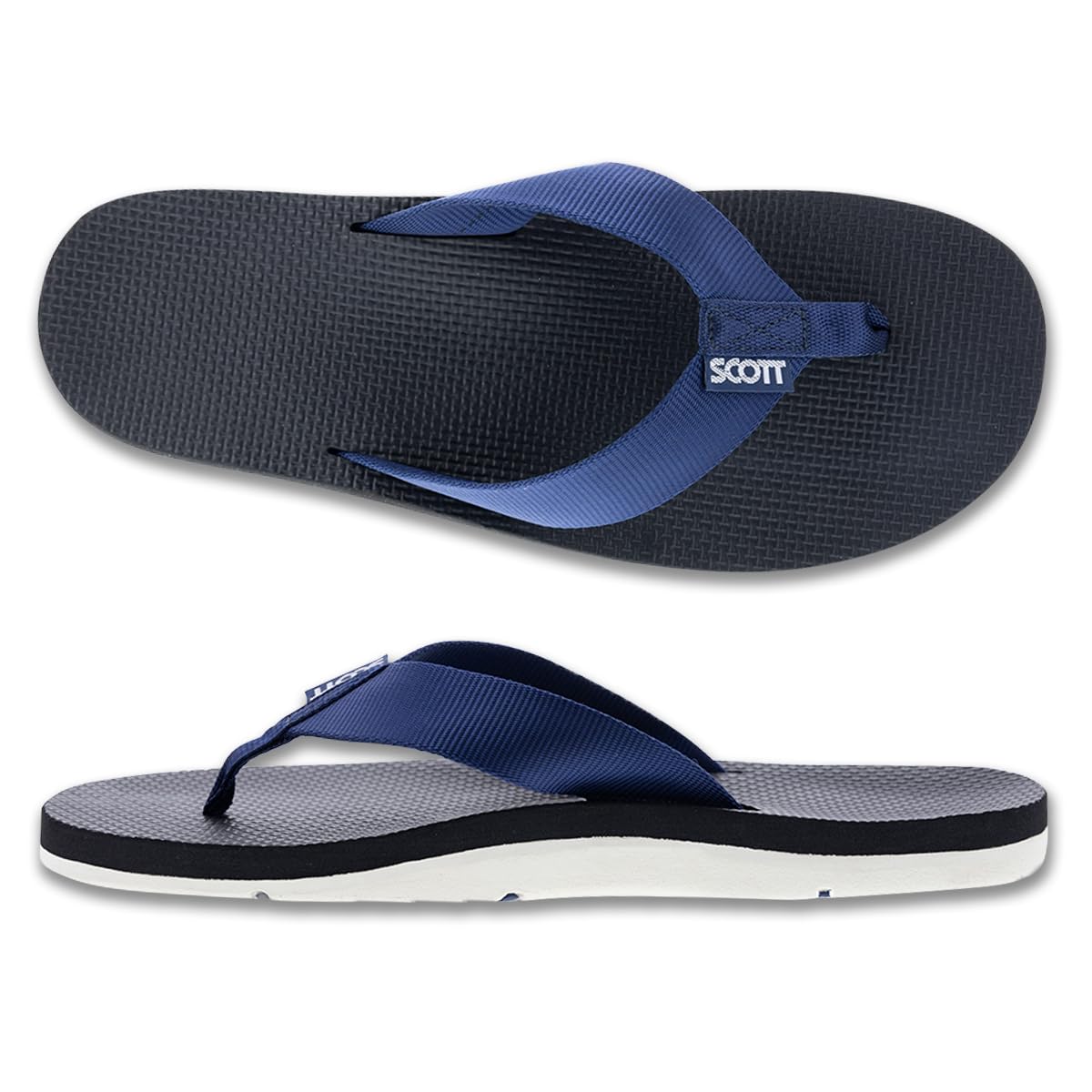
Owners mention each pair lasting a decade of daily wear.
Durability is the reason the Hokulea sits this high. It’s rated 4.6 with a substantial review base, and the aspect with the deepest pile of mentions is durability itself — more owners single it out than anything else, with comfort a close second. The construction behind that is unglamorous and effective: a tubular nylon comfort strap that keeps its shape, a foamy flexible footbed, and a non-marking rubber outsole. Traction gets its own body of praise, with owners specifically calling out the grip on wet, moving surfaces.
The longevity stories here are the kind of thing you can only get from a sandal that’s been on the market for decades. One reviewer reports six pairs across thirty-five years, including a seven-year circumnavigation, heavy-pack hiking, and paddling in Baja. Another reports wearing these exact sandals for more than thirty years, each pair lasting at least ten years of daily wear. A third wore a beach-found pair for four and a half years until the soles were gone, then couldn’t find replacements until Amazon carried them. That is not a paid review; that is a customer who will reorder the same sandal forever.
The verified buyer quote that sums up the boat fit best: “Great for on the boat with the white bottoms, and comfy everywhere else.” The honest caveat is break-in. The most consistent gripe in the current crop of reviews is that the strap comes tight from the start, with the newest pairs needing more break-in time than earlier generations did. Plan on a few days of wear before they settle. The other thing to know: the arch support is a formed-in, mold-to-your-foot style, not an orthopedic level of lift, and once the sole has shaped to your foot it stays that way.
The longevity calculation: a pair that customers note wearing for a decade is not a cheap buy in disguise — it’s the mid-range price divided by years, and the Hokulea wins that math for anyone who keeps their sandals past a season.
Pick this one if: you want a deck sandal you’ll still own when the next boat comes around.
skip it if: you want zero break-in — expect a snug first few days while the tubular nylon strap settles to your foot.
4. Grundéns Deck-Boss Sandal
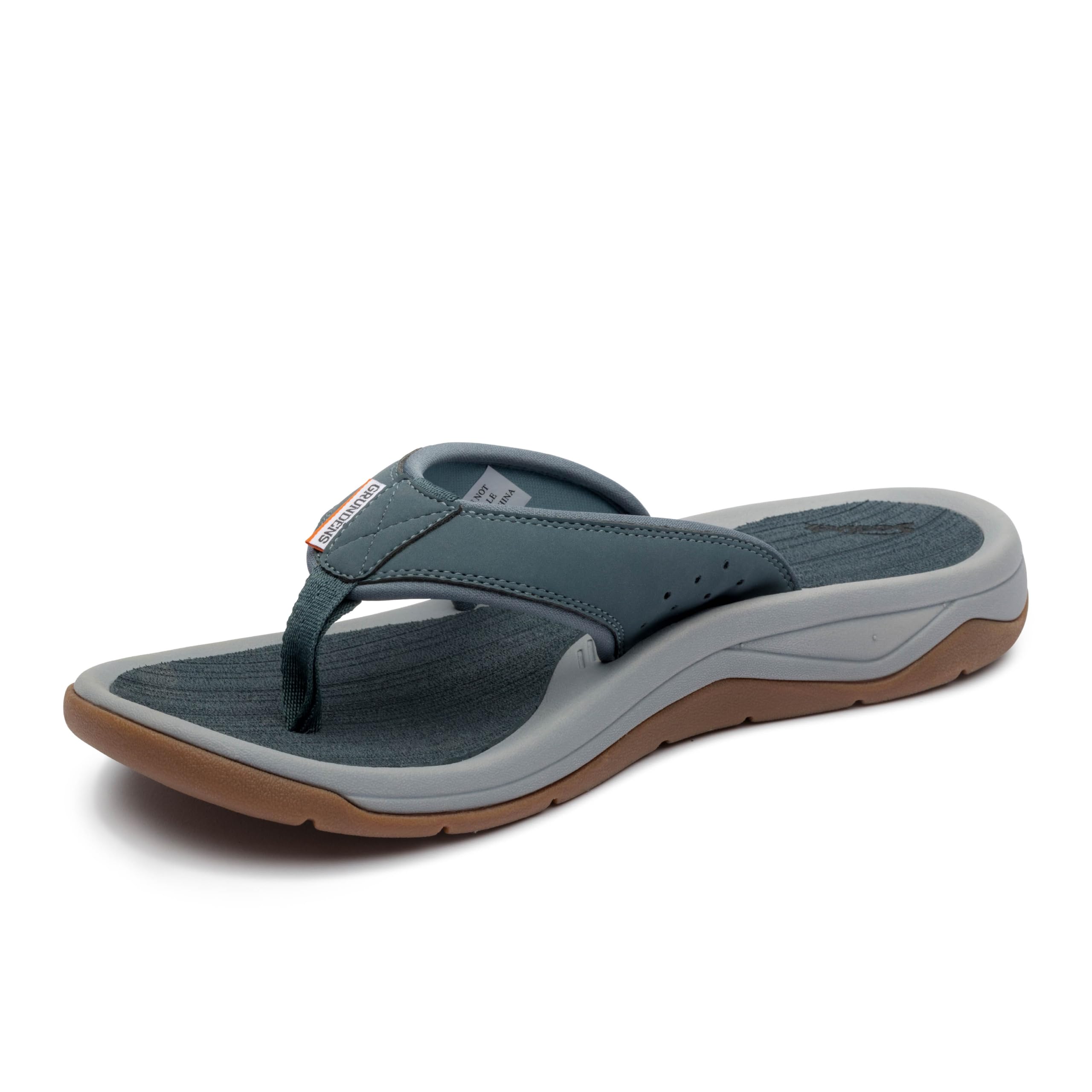
A flip flop built with a marine decking company — traction is the whole reason it exists.
The Deck-Boss is the result of a collaboration between Grundéns and SeaDek Marine Products, a name that boat owners recognize as a maker of the cushioned deck padding itself. The pitch is straightforward: shock-absorbent construction from a company that knows what a boat deck does to the thing standing on it. Traction is the standout strength here. Owners who have worn OluKai in the past specifically say the Deck-Boss grips better — you can stop watching your step on a wet, rocking deck.
Comfort and arch support come in as the second and third points owners bring up, and the picture that emerges is a sandal with more structure than a flat foam flip flop. The verified buyer line that captures it best: “They are more comfortable and have better traction” — from a wearer who specifically compares them to the OluKai name they’d owned before. Durability on the boat is the other theme: owners use these as deck sandals that survive wet weather, spray, and repeated use without the straps tearing.
Now the honest part. Value is the most contentiously debated topic in the Deck-Boss reviews — some owners call them worth the price and a few say they’re pricey for what you get. And while most owners get long life out of them, a minority report the strap tearing within the first year, with one reviewer flagging rough stitching that rubbed their foot raw. That’s a defect pattern, not the norm, but it’s worth knowing if you plan to abuse them as a daily work shoe. Traction is excellent; longevity has occasional misses.
The Selling Point
- Non-marking sole for fiberglass decks
- Better grip than the OluKai and Reef sandals reviewers have tried
- Shock-absorbent underfoot for a full day standing on a boat
What To Weigh
- Value divided — owners split on whether the build justifies the price
- An occasional pair has strap stitching that rubs the foot
Best fits: the buyer whose #1 concern is footing on a moving, wet deck and who wants the grip of a marine-specific design.
Less ideal if: you want a cushion-soft flip flop — the Deck-Boss is structured and firm underfoot.
5. Hari Mari Dunes Men’s Waterproof Boat Safe Flip Flops
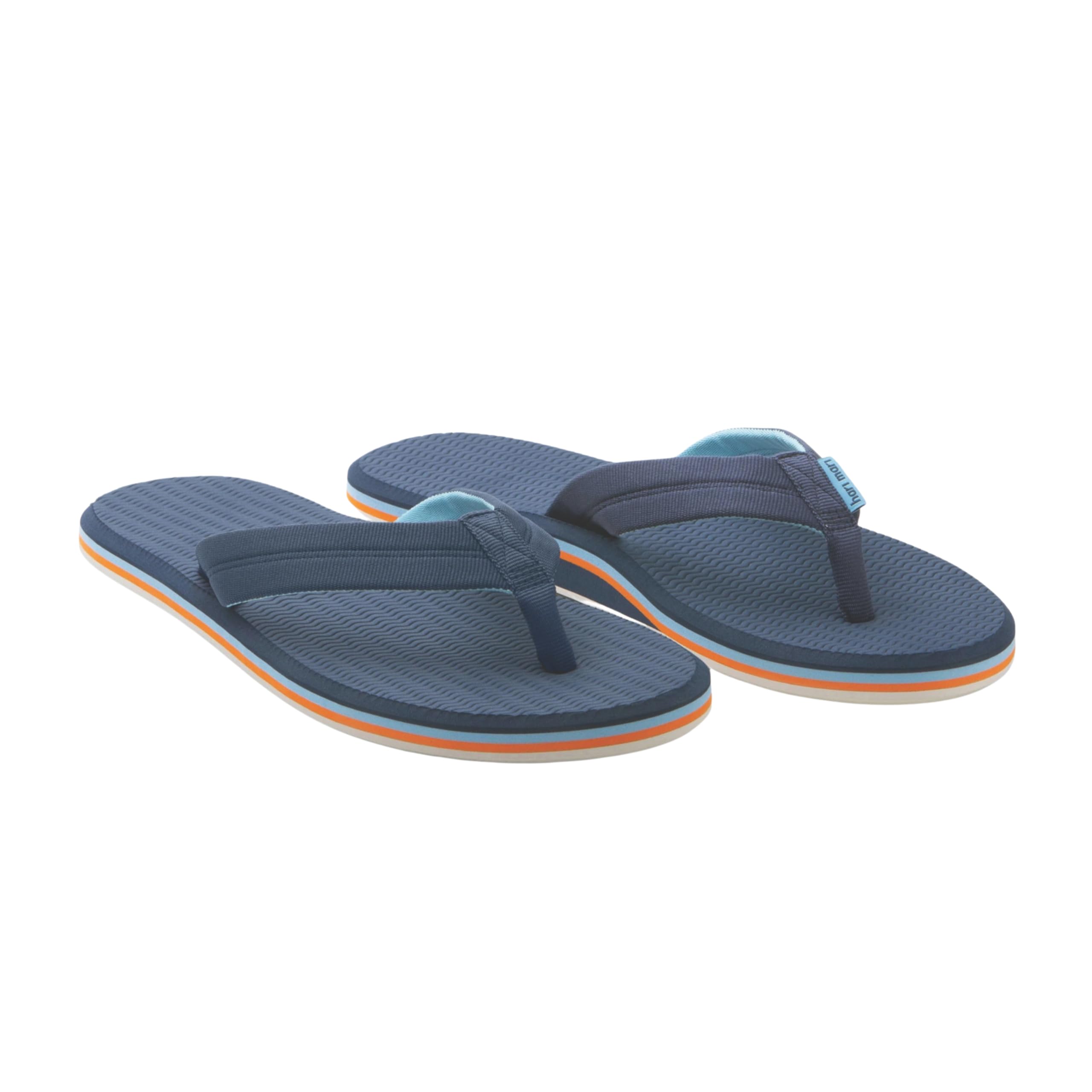
A brightly colored rubber flip flop with an antimicrobial treatment — and it floats if you drop it overboard.
Two features make the Dunes stand out in this group. First, it floats in water — drop it off the dock and you fish it back out with the boat hook instead of losing it to the deep. Second, the rubber construction carries an antimicrobial treatment for a shoe worn wet and stored wet. The nylon strap is meant to wear without a break-in period, and the firm arch support sits above the softer pool-deck flip flops.
Color and styling are the everyday draw here. These come in the kind of saturated colors that turn a plain flip flop into something that looks deliberate, and owners describe them as stylish, comfortable, and light for something with structure. Durability for the daily-wear crowd is a common positive theme: One owner reports nearly a year of daily wear from their first pair in the coral-heavy water around the Florida Keys.
The trade-off here is genuine and you should hear it before you buy. This is the most split-down-the-middle pick in the group on both durability and value — a meaningful minority have had straps tear within the first few weeks, and value gets debated with real heat. Also, the Dunes runs on the small side, so sizing up is the safer move. Buy them for the pool-to-boat lifestyle and the buoyancy, not for a decade of hard daily use.
Where they shine: a bright, floating pair that’s genuinely fun to wear on a pool deck or a calm day on the water.
Where they’re tested: durability is the split topic in these reviews — plenty of owners get a full year, but a handful see tears inside the first few weeks.
Best for: the pool-and-cabin cruiser who wants something with personality that survives a weekend on the water.
Consider differently if: you need a hard-use daily deck workhorse — the Dunes is a lifestyle sandal first.
6. KEEN Newport Slide
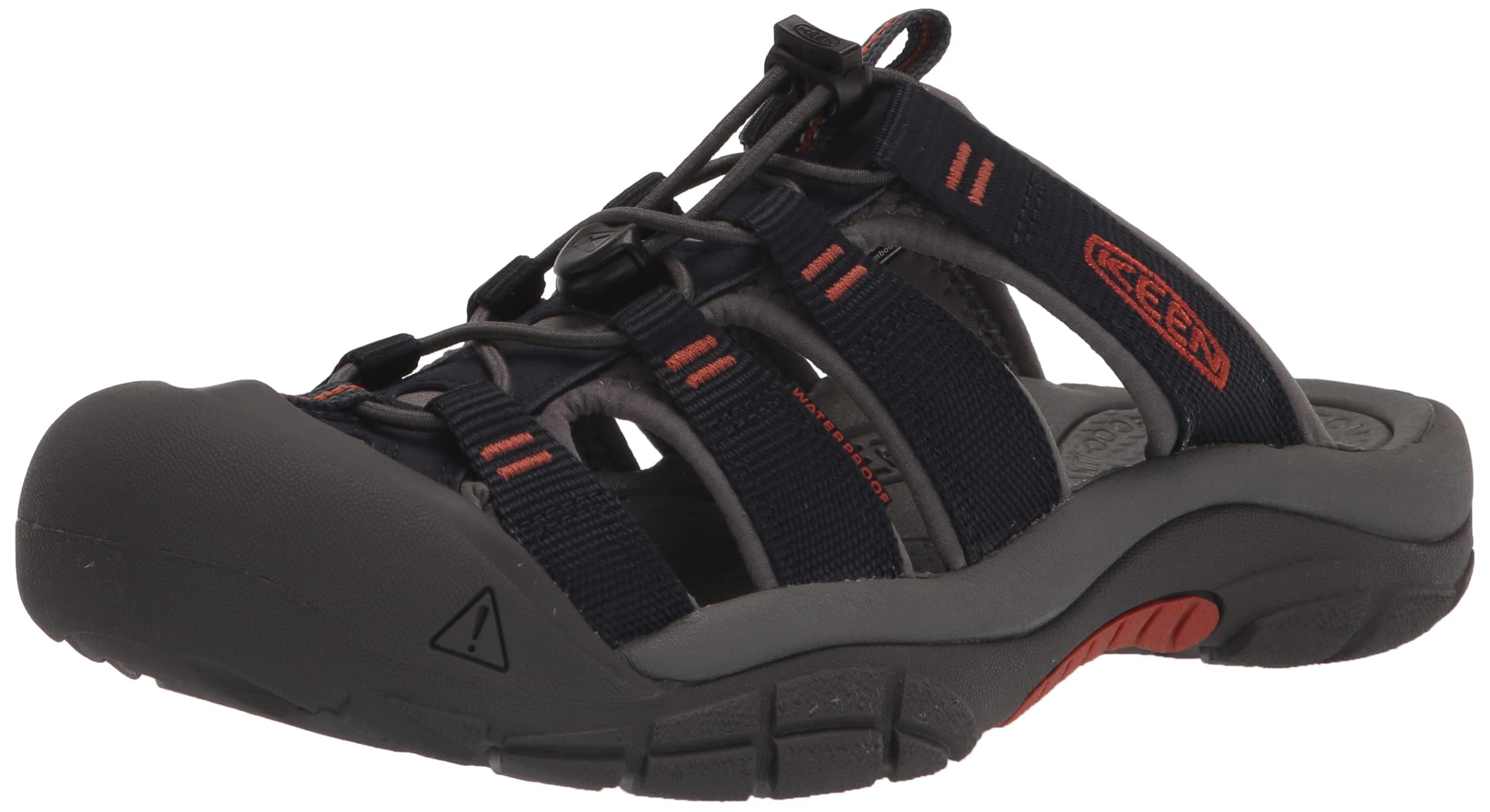
Not a flip flop at all — a closed-toe slide with toe armor and a bungee slip-on that’s built for wide feet.
The Newport Slide stretches the definition of “boat sandal” for a good reason: it covers your toes. Built on KEEN’s traditionally wider footwear form, it uses a non-marking sole KEEN describes as ultra-rugged and comfortable underfoot, with quick-dry straps on a bungee lace system that lets you slip in and tighten with one hand. If your feet run wide and everything else in this list pinches across the top, this is where that fight ends. The toe protection is real, too — you get a closed front instead of a strap between your toes, so smacking a cleat doesn’t cost you a toenail.
Traction and arch support are where this one performs on a wet deck. Owners describe firm arch support and outsole grip that holds on slick surfaces, and one verified buyer calls it the winner among five different sandals they tried before choosing it — easy to slide in, with webbing and a contoured sole that keep the shoe on while you walk. Owners also love the easy on-off around the dock or garden, and the fact that the closed upper wipes clean rather than needing a scrub.
Here’s the honest sizing warning. The fit and the slip-on feature are the two most-discussed topics in these reviews, and both are split. KEEN’s own listing calls them a wider form, but lots of reviewers point out they actually run half a size small and need sizing up. One long-term KEEN wearer notes the newest pair is less secure than older versions, with the heel slipping out when walking — so try them on a short walk before you commit. At the premium price point, buy from a source with a clean return policy.
Why Wide-Footed Buyers Choose It
- Wide-form last that fits flipper-shaped feet without pinching the midfoot
- Closed-toe design protects the front of the foot from deck hardware
- Non-marking ultra-rugged sole with firm arch support
- Quick-dry bungee lacing lets you adjust fit with one hand
What To Plan For
- Runs about half a size small — sizing up is common among wide-footed buyers
- Slip-on fit is less secure than a laced shoe for full-send on-trail use
Good fit for: wide feet, tender toes, and buyers who want slip-on convenience.
Look at a flip flop instead if: you want a true barefoot-style sandal with nothing around the toe box.
Understanding the Specs
Non-Marking Outsole
A non-marking sole is rubber soft enough that walking on a fiberglass deck won’t leave black scuff marks behind. On a boat with a white or light-colored deck, this is the difference between a clean surface and a season’s worth of gray smudge lines. The word “non-marking” has to appear in the listing — a rubber-soled sandal that doesn’t claim it might still scuff. All six picks in this guide carry the non-marking claim in their own data.
Tubular vs. Flat Straps
A tubular nylon strap is a rounded, woven tube — like a thick shoelace — that spreads pressure across the top of the foot instead of digging in along an edge. A flat strap can pinch on the outside of the foot when you’re standing on a moving surface. On a boat, a strap that stays put is worth more than a strap that feels cushioned. If the listing doesn’t say tubular or woven, assume a flat strap.
Footbed and Arch Support
The footbed is the layer your bare foot actually contacts. High-density EVA is firmer foam that holds its shape and drains better than mushy low-density foam. A molded arch supports the middle of your foot when you’re standing on a deck or a dock for hours — if your feet are used to going flat, ease in. An orthopedic-level lift isn’t the goal here; a stable, formed arch is.
Toe Post and Toe Thong
A toe post is the small piece between your big and second toe that holds the front of the sandal in place. Soft nylon toe posts get less rub than stiffer materials, but even a soft one takes a day or two to get used to. If you’d rather skip the toe post entirely, look at a slide or a slide-style water shoe instead. On a moving deck, the toe post is doing real work — it’s what stops the sandal sliding off your foot.
FAQ
Do I really need a sandal with a non-marking sole for a boat?
Will the OluKai Kipi fit wide feet?
How do tubular nylon straps compare to a wide flat strap on a wet deck?
Is a molded arch support worth it for standing on a boat all day?
Will a flip flop with a toe post stay on my foot on a moving boat?
How long should a good boat sandal last?
Do I need antimicrobial treatment in a boat sandal?
Are closed-toe sandals like the KEEN Newport Slide good on a boat?
Should I size up in boat sandals?
Can I wear boat sandals for hiking or walking long distances?
Final Thoughts: The Verdict
For most people stepping on a deck, the boat sandals winner is the OluKai Kipi — the non-marking rubber outsole keeps a light-colored fiberglass deck clean, the water-resistant synthetic strap handles spray, and it wears barefoot from the beach to the boat to dinner without complaint. If what you really want is a deck sandal you’ll still own in a decade, that’s the Scott Hawaii Hokulea, whose owners keep reordering it year after year. And for wide feet or toe protection, the KEEN Newport Slide is the pick that solves both at once. If a decade-long ownership horizon is your goal, the Hokulea quietly wins on that metric — that long-running durability reputation is the one thing that never needs a marketing spin.
How We Picked
We do not accept paid placement. Every pick is matched to a real buyer and a real use-case; we do not hands-on test units.
Sources & Methodology
Specifications: manufacturer listings and product documentation. Review insights: verified customer reviews, as of September 2026. Pricing: not shown on this page (it changes often); check the current price via the retailer link.
As an Amazon Associate, Gadgets Feed earns from qualifying purchases. This does not affect which products we feature.