
Our readers keep the lights on and my morning glass full of iced black tea. As an Amazon Associate, I earn from qualifying purchases.
Specs are compiled from manufacturer listings and verified buyer reviews and can change over time — please confirm the key details on the product page before buying.
Yellowstone hands you some of the longest viewing distances in the lower 48 — a bison herd a half mile off the Lamar Valley road, a grizzly on a far slope, a wolf pack working a ridge line. What separates a great day from a frustrating one is steady, bright glass that stays sharp at dusk. The picks below are the ones worth carrying into the park, and each is here because its real numbers and real owners back it up.
I’m Min — the founder and writer behind Gadgets Feed. This guide is built by comparing the manufacturers’ published specifications and the patterns across verified customer reviews, so you get each pick’s real strengths and trade-offs instead of marketing spin.
Yellowstone’s wide-open valleys reward magnification you can actually hold steady, so the picks below balance power, light gathering, and weight for real park use. This is exactly why the binoculars for yellowstone list below leads with the set owners trust most.
Our Picks at a Glance

How To Choose The Best Binoculars For Yellowstone
Yellowstone is a spotting park, not a walking park. You will spend most of your viewing time standing on a pullout, scanning a slope or a river bend a few hundred yards out. That shapes every choice you make about magnification, lens size, and how much weight you are willing to hang around your neck for a full day.
Magnification you can actually hold still
Magnification is the number before the x — the 8 in 8×42. A higher number pulls a distant animal closer, but it also magnifies every shake in your hands. In a park where your subject is often a mile away, 10x is a common balance for reaching out. Go higher and most people need a tripod or built-in stabilization (a system that steadies the view) to keep the image from swimming.
Objective lens size and the light it gathers
The second number is the objective lens diameter in millimeters — the big front glass. A larger objective gathers more light, which matters most at first and last light when bison, elk, and wolves are on the move. Divide the objective by the magnification and you get the exit pupil, the small circle of light that reaches your eye. A bigger exit pupil is easier to look through.
Eye relief and eyeglass wearers
Eye relief is how far your eye sits from the lens to see the full view. If you wear glasses, you need enough of it to keep your lenses on without losing the edges of the image. Long eye relief also keeps the view comfortable for anyone spending an hour glassing a hillside.
Weather sealing and weight
Yellowstone weather turns fast — rain, snow, and cold mornings that fog cold glass in a hurry. Waterproof, fogproof sealing keeps the inside clear. Weight is the other trade-off: heavier glass is stable and durable, but it pulls on your neck after a few hours. That balance is a personal call.
Quick Comparison
| Model | Best For | Magnification | Objective | Eye Relief | Amazon |
|---|---|---|---|---|---|
| Steiner Marine 7×50★ Best Overall | Bright, steady all-day viewing | 7x | 50 mm | 20 mm | Amazon |
| Bushnell PowerView 2Budget Reach | Budget reach at long distances | 20x | 50 mm | 12 mm | Amazon |
| Bushnell H2O 8×42Weather-Ready | Rain-ready waterproof glass | 8x | 42 mm | 17.5 mm | Amazon |
| Vortex Copperhead HD 10×42 | Light carry with a lifetime warranty | 10x | 42 mm | 17 mm | Amazon |
| Nikon PROSTAFF P3 8×42 | Balanced first pair for birding | 8x | 42 mm | 20.2 mm | Amazon |
| Nikon PROSTAFF P3 10×42 | Extra reach with Nikon glass | 10x | 42 mm | 15.7 mm | Amazon |
| Celestron Nature DX ED 8×42 | Color-true ED glass for birding | 8x | 42 mm | 17.8 mm | Amazon |
| Leica Trinovid 10×42 HD | Premium clarity in a compact body | 10x | 42 mm | 15 mm | Amazon |
| SIG SAUER Zulu6 HDX 16×42 | Stabilized long-range scanning | 16x | 42 mm | 16 mm | Amazon |
In‑Depth Reviews
1. Steiner Marine Binoculars for Adults and Kids, 7×50 Binoculars for Bird Watching, Hunting, Outdoor Sports, Wildlife Sightseeing and Concerts – Quality Performance Water-Going Optics, Black
Our pick — over 4.5★ from 500+ verified ratings; the strongest balance of quality and price.
The glass that pulls a half-mile bison into your lap and holds it there all evening.
What sets the Steiner Marine apart is pure light-gathering math. A 7x magnification paired with a 50 mm objective lens produces a 7.14 mm exit pupil — the circle of light that reaches your eye. That is a huge opening, and it is why owners describe the view as bright and sharp well into dusk, right when park wildlife is most active.
The Sports Auto-Focus is the feature that wins people over. Once you set focus from 20 yards to infinity, the image stays sharp without you touching a wheel — handy when you are tracking a moving animal across a meadow. The floating prism system, built with flexible silicone lens mounts, is designed to absorb shock and impact without damage.
The Steiner carries a 20 mm eye relief, which is a lot. Compare that to the Bushnell PowerView 2’s 12 mm and the difference is real for anyone who wears glasses: you keep the full view without pressing the lenses to your face. The 7x magnification is also the easiest to hold steady of anything here, which matters when you are standing on a pullout with cold hands.
What earns its keep
- 7.14 mm exit pupil pours in light at dawn and dusk
- 20 mm eye relief works with eyeglasses
- Auto-focus holds a moving subject sharp without a wheel
- Rubber-armored, waterproof build with a lifetime warranty
The honest trade-off
- Weight is the recurring note — a 50 mm body is not a featherweight
- Included case and strap are basic; owners often swap both
Reach for this if: you want the brightest, steadiest view for long evening glassing and you wear glasses.
Think twice if: you plan to hike all day and want the lightest pair on your neck.
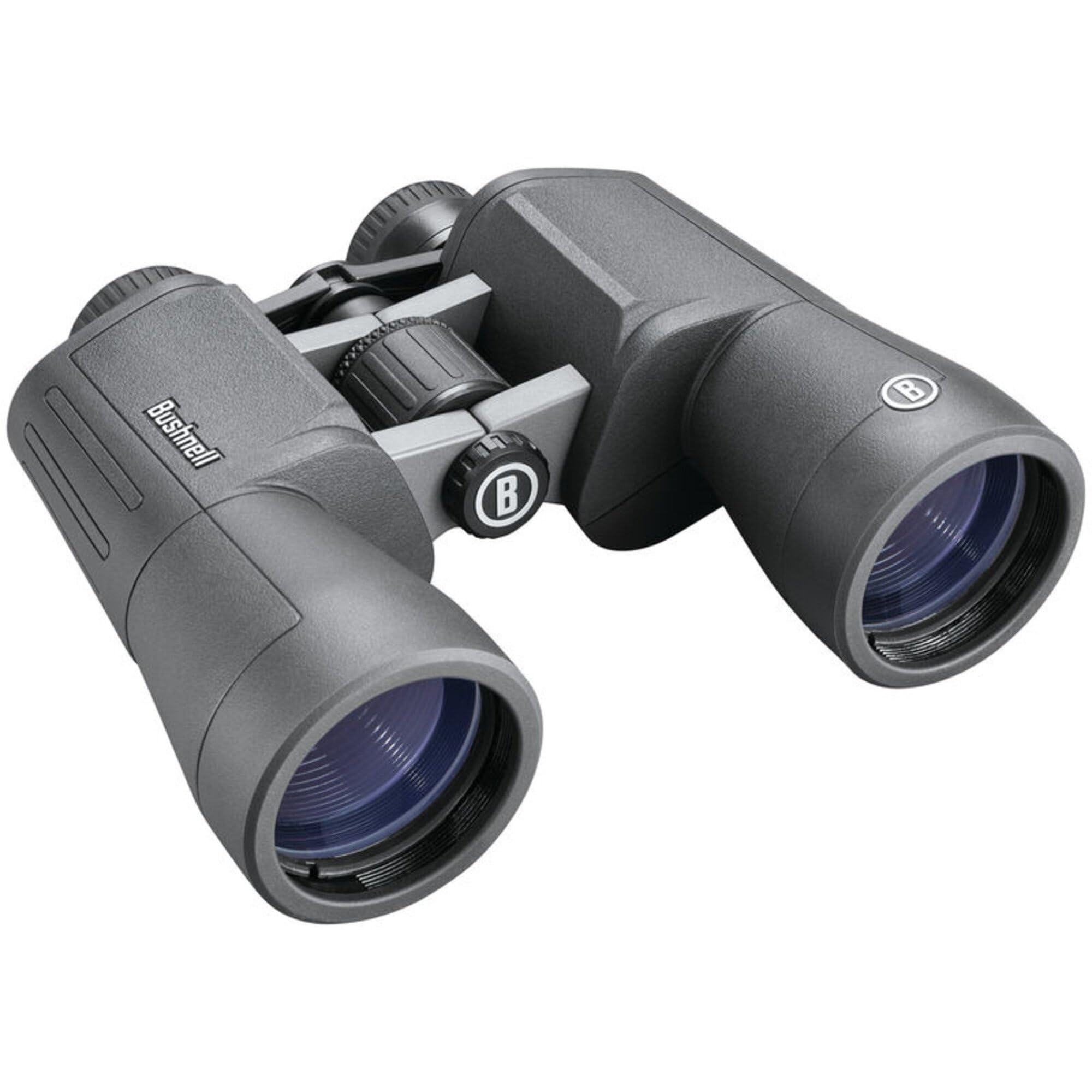
2. Bushnell PowerView 2 Binoculars, High-Definition Binoculars with Multi-Coated Lenses, Durable Aluminum Alloy Chassis, Wide Field of View, Ideal for Wildlife Observation, Hiking and Sporting Events
Serious magnification for the money, as long as you respect what 20x demands of you.
Two things stand out on the PowerView 2: 20x magnification and a 2.5 mm exit pupil (the width of the light beam reaching your eye — a smaller number means a dimmer, fussier view). The 20x is why owners bought it — one reviewer noted “True 20×50 magnification verified via exit pupil test (50/2.5=20).” That is a lot of reach for a budget pair, and it will pull the far slope into view.
But there is a trade-off baked into that 2.5 mm exit pupil. A small exit pupil means less light reaches your eye, so the view dims fast as the sun drops. The aluminum alloy chassis keeps it durable, and the multi-coated optics draw in light for clear views in good conditions. Buyers report deer and turkeys spotted past 100 yards, and it works for moon viewing when the sky is bright.
The real limitation is the tunnel. Owners describe the field of view as narrow, and at 20x every shake is magnified too, so a tripod becomes almost mandatory for extended glassing. It is tripod compatible, which helps. Alongside a steadier 8x pair, this is a long-reach backup rather than an all-day carry.
Bottom line: If you want to reach far and you are willing to brace on a tripod, nothing else here hands you this much magnification for the money.
The catch: Low light and a narrow view work against you at dawn and dusk, when the animals are out.
Who it suits: the daylight spotter who wants maximum magnification on a tight budget and does not mind a tripod.
Who should look on: anyone wanting a bright, wide, hand-held view for low-light hours.
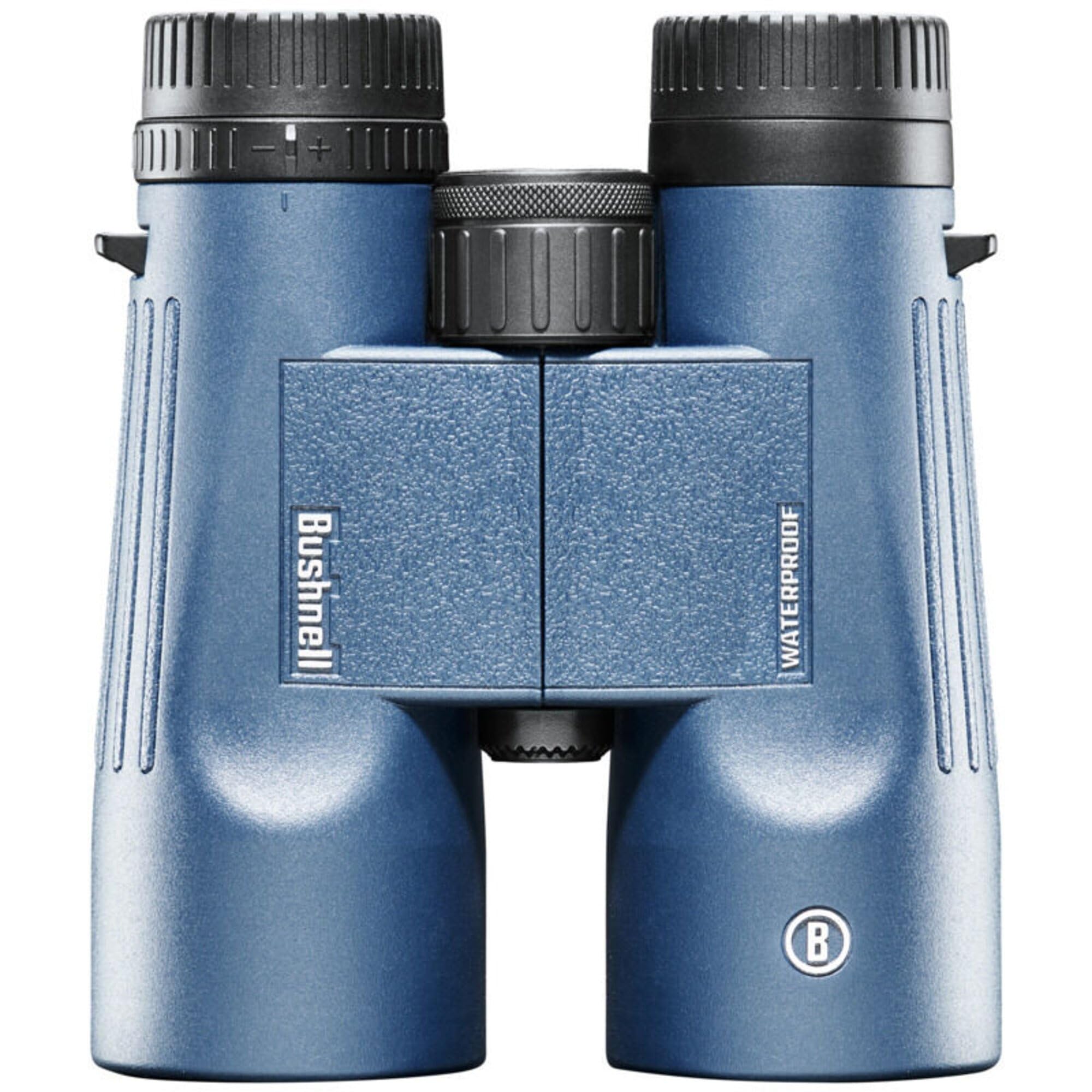
3. Bushnell H2O Binoculars
Built for the day Yellowstone throws rain, sleet, and a lake in your path — and keeps looking anyway.
The H2O’s headline number is its sealing: an O-ring system rated IPX7, which means it can survive accidental submersion up to 30 minutes. Yellowstone weather is the exact reason to care. When a squall rolls across the lake, or you fumble a pair near the water, the fogproof nitrogen purging keeps the inside clear instead of clouding over.
The optics are all-glass with fully multi-coated surfaces and BAK-4 prisms, which boost contrast and light transmission. The 8×42 setup is the easiest all-rounder to hold steady, and the 350-foot field of view means you find moving animals faster. The soft-touch rubber housing with grip runners is designed for a confident hold even in wet conditions.
Owners lean on it for birdwatching and whale watching, and its clarity at close range is a strong point — it pulls small warblers into focus at roughly 15 feet. The recurring note is weight and a stock strap that some find too long, easily swapped. It is a steady, weatherproof companion for the boardwalks and shorelines, and it pairs well with lighter glass for long walks.
Worth knowing: The IPX7 waterproofing and fogproofing are the standout — this is the one to grab when the forecast turns ugly.
Fit note: Some find it a touch heavy for all-day carry, so it suits pullout-and-shoreline viewing more than a full-day hike.
Pick this when: weather is your main worry and you want a confidence-inspiring 8×42 that shrugs off rain, spray, and a dunking.
Pass if: you need max magnification — 8x favors steadiness over reach.
4. Vortex Copperhead HD 10×42 Binoculars

A light, packable 10×42 that owners describe as easy to focus and packing a lifetime warranty.
The Copperhead’s selling point wraps comfort and confidence together: a 10×42 setup with an HD optical system (glass built to cut color fringing), fully multi-coated lenses (every glass surface treated to pass more light), and a 4.2 mm exit pupil — the same exit pupil as the Nikon PROSTAFF P3 10×42 and the Leica Trinovid. That matching figure means similar light-gathering between these three, so the Copperhead competes on weight and warranty rather than raw brightness.
Owners call it compact and lightweight, easy to focus, and tough enough to keep in the truck. The waterproof, fogproof, shockproof build handles weather and terrain. The fit details are thoughtful: adjustable eyecups, a diopter for custom focus, rubber armor for grip, and tripod adaptability for a car window mount. It ships with a Glasspak harness, comfort neck strap, tethered lens covers, and a lens cloth.
The warranty is the quiet value story — an unlimited, unconditional, lifetime VIP Warranty that is fully transferable with no registration, receipt, or box code needed. It does not cover loss, theft, or deliberate damage. There is a 334-foot field of view, and among the 10x choices here the Copperhead runs lighter and easier to pack.
What stands out: The fully transferable lifetime warranty — a repair-or-replace promise that follows the binoculars, not the original owner.
Sizing it honestly: Edge sharpness is a touch softer than pricier glass, and the included straps strike some as odd, but neither holds back real use.
Made for: the owner who wants an easy-to-carry 10×42 with warranty backup and packs it for hikes and roadside spotting.
Not the one for: pixel-peepers chasing the absolute sharpest edges over price.
5. Nikon PROSTAFF P3 8×42 Binocular | Waterproof, fogproof, rubber-armored Full-Size Binocular, wide field of view & long eye relief | Official Nikon USA Model

The do-everything starter pair where the wide view and long eye relief do the heavy lifting.
For a first serious pair, the P3 8×42 is the hard one to argue with. Its 8x magnification is the steadiest hand-held option, and the 42 mm objective with a 5 mm exit pupil gathers enough light for dawn and dusk. The multilayer-coated lenses reduce reflections, and the silver-alloy prism coating keeps colors lifelike — which helps when you are trying to tell one brown bird from another.
The numbers that stand out here are the viewing comfort ones. A 20.2 mm eye relief is the longest among the 8×42 pairs on this list, so anyone in glasses keeps the full view. The 377-foot field of view is the widest of the group, which makes finding a moving animal in the frame quick and easy.
Owners lean on it for birding, nature walks, and even a quick scan of the night sky, and the eye strain is low enough for long sessions. The body is fiberglass-reinforced polycarbonate with rubber armor and nitrogen purging, so rain and temperature swings do not fog the inside. Two honest notes: it is a touch heavier than the lightest pairs, and the strap can dangle extra length since it lacks a fixed loop.
Its quiet strength: That 20.2 mm eye relief plus a 377-foot field of view makes it the easiest of the 8×42 set to look through, glasses or not.
Minor quibble: It carries a little more weight than the lightest options, and the strap loops let the loose end swing.
Best for: newcomers who want one reliable, comfortable, waterproof 8×42 that handles birding and general wildlife watching.
Consider an alternative if: you want more magnification for far-off slopes.
6. Nikon PROSTAFF P3 10×42 Binocular | Waterproof, fogproof, rubber-armored Full-Size Binocular, wide field of view & long eye relief | Official Nikon USA Model

Nikon’s 10x step-up, tuned for pulling distant birds and animals in close while staying affordable.
Step up from the 8×42 sibling and you trade a little viewing ease for reach. The 10×42 P3 keeps the same 42 mm objective (the front lens diameter, which sets how much light enters) but pushes magnification to 10x, giving a 4.2 mm exit pupil — noticeably smaller than the 8x pair’s 5 mm, so it is a touch dimmer at dawn and dusk. The 10x is what earns it a place: it brings a far ridge or a distant animal meaningfully closer.
The multilayer-coated lenses and silver-alloy prism coating keep colors vivid, and the nitrogen-purged, O-ring-sealed body stays clear through rain and temperature changes. Turn-and-slide eyecups make it easy to dial in the right eye position, and the smooth center focus wheel is quick to adjust.
Owners use it heavily for birdwatching and report seeing fine detail at distance — individual feathers from well across a yard. It also travels well, with owners taking it on safari and reporting it easy to adjust and find animals. The single gripe that recurs is that the lens covers are flimsy. It is a strong value pick for anyone who wants Nikon glass with more reach than the 8x.
Why it earns the step-up
- 10x magnification reaches farther than the 8×42 sibling
- Multilayer-coated, silver-alloy prisms keep colors lifelike
- Waterproof, fogproof, rubber-armored and light for field use
- Owners mention fine detail like individual feathers at distance
Where it steps down
- 4.2 mm exit pupil gives less low-light brightness than an 8×42
- The lens covers feel flimsy to several owners
Choose it if: reach matters more than easy low-light brightness and you want Nikon optics with a 10x pull.
skip it if: you glass mostly at dawn and dusk, where the bigger exit pupil of an 8×42 wins.
7. Celestron Nature DX ED 8×42 Premium Waterproof Birding Binoculars

The birders’ pick, where extra-low-dispersion glass keeps plumage colors tidy.
ED — extra-low dispersion — glass is the feature that earns the Nature DX ED its spot. It is designed to virtually eliminate chromatic aberration, the color fringing that shows up as a purple or green haze at the edges of a bright subject. For Yellowstone birding, that means truer color, which is exactly what you want when you are sorting a warbler from a finch at distance.
Behind the ED objective (extra-low-dispersion glass that keeps colors true) sit phase-coated BaK-4 prisms with dielectric and phase coatings (mirror layers inside the barrel that push more light to your eye), and the 8×42 setup gives a 5.25 mm exit pupil — the largest in this group, so low-light viewing stays bright. The multi-coated optics and quick, sharp focus keep a small bird locked in. The 8x magnification also helps you find and follow a moving subject with less shake.
Owners prize it for backyard and feeder birding, where clear views make identification simple, and the close focus is tight enough for butterflies. Two notes sit alongside the praise: weight earns mixed comments, and the eyecups are the recurring reliability gripe, with a rare pair developing a loose cup. For the price, it delivers genuine ED glass and a tripod-adapter thread.
What buyers notice: The ED glass and dielectric coatings deliver true-to-life color — the standout for anyone who cares about seeing plumage accurately.
The known weak spot: The eyecups are the one component that draws reliability complaints, so treat them with care.
The fit: dedicated birders who want color-accurate ED glass and a bright 5.25 mm exit pupil for dawn outings.
Look elsewhere if: rugged eyecup longevity tops your list of must-haves.
8. Leica Trinovid 10 X 42 HD Binocular with Adventure Strap

German glass that makes distant detail feel like it is sitting right beside you.
Where the budget 10x options force a compromise, the Trinovid is the one owners describe as optically near-perfect. Its HD optics deliver excellent contrast, accurate color reproduction, and strong light transmission, so the image arrives clean from edge to edge. The 10x magnification pairs with a 42 mm objective for a 4.2 mm exit pupil and a 15 mm eye relief, and the fully multi-coated surfaces keep reflections out of the view.
What owners rave about is the crispness. The field pages sum it up as a view where the finest details resolve at a distance, from the texture of a hawk’s feathers to the edges of distant terrain. The compact, well-balanced frame makes it light in the hand, and the outstanding close-up limit of under 6.2 feet means you can also focus on something near. The Adventure-Strap carrying system is built for field carry.
Honest framing: this is a premium price and the value question splits owners, with some calling it worth it and others feeling the spend. It also has a narrower field of view than the 8x options here, a natural trade when magnification climbs. But for the birder or wildlife watcher who wants the clearest view money can buy in a compact body, it earns the place.
Why it’s here: HD optics with edge-to-edge sharpness and accurate color — this is the clearest view in the lineup for spotting fine detail at long range.
Worth flagging: It is a big spend, and the 10x view is narrower than the 8x pairs, so it favors detail over easy scanning.
For the buyer who wants: top-tier clarity and a compact, balanced body, and treats the price as the cost of the last word in optics.
Not for: value-first shoppers happy to trade a sliver of sharpness for far less outlay.
9. SIG SAUER Zulu6 FDE HDX OIS 16X42mm Roof Prism Binocular

The one that hands you the most magnification here and cancels your shake so 16x stays usable.
No other pair on this list pulls a scene as close as the Zulu6. It runs 16x magnification with a 42 mm objective, delivering a 2.63 mm exit pupil, plus a 16 mm eye relief. Usually 16x is a shaky, tripod-only proposition — but the SIG’s Optical Image Stabilization is the whole point. It electronically cancels out hand shake, with an OIS Scan Mode for gridding a hillside and a Target Mode the maker says increases stability up to 50% more for staying locked on one animal.
Owners treat the stabilization as the headline. It makes distant animals float steady with no jitter, and one owner reported being so impressed they chose it over a premium 12×50 pair. The HDX lenses are updated for enhanced light transmission and definition, and the IPX-7 waterproof rating protects it in the elements. The aluminum body stays light for its size, which is part of the appeal at 16x.
The trade-offs are real and worth stating. Image quality gets mixed feedback — some owners love the clarity, others note it falls short in low light, which the tiny 2.63 mm exit pupil explains. A few mention a little slop in the focuser, and an occasional unit shows veiling glare. For long-range daylight scanning, its OIS turns 16x into a hand-held view.
The case for stabilization
- 16x magnification reaches farther than everything else here
- OIS cancels hand shake, with a Scan Mode and a Target Mode
- HDX lenses plus an IPX-7 waterproof rating
- Customers note a steady, TV-like image with no jitter
Where it compromises
- 2.63 mm exit pupil gives up light in low-light conditions
- Image quality splits owners, and a rare unit shows glare
- Focuser feels slightly loose to some
The pick for: long-range daylight glassing across a valley, where stabilization turns 16x from a tripod job into a hand-held one.
Better served elsewhere if: you glass at first and last light, where the small exit pupil costs you brightness.
Understanding the Specs
Magnification and Objective Lens
The two numbers on every pair — like 8×42 — tell you most of the story. The first is power: the 8 in 8x means the image is eight times closer. The second is the objective lens diameter in millimeters, the big front glass. A larger objective gathers more light. Higher magnification pulls animals in farther but magnifies your own shake, which is why 16x glass tends to come with stabilization and 8x does not.
Exit Pupil and Eye Relief
Exit pupil is the small circle of light that meets your eye: divide the objective by the magnification. A bigger circle is brighter and easier to look through, which is why a 50 mm objective at 7x gives a 7.14 mm exit pupil and a small 20x pair gives just 2.5 mm. Eye relief is how far your eye sits to see the whole view — the long eye relief numbers help glasses wearers keep the full frame.
FAQ
What magnification is best for wildlife in Yellowstone?
Are 8×42 or 10×42 binoculars better for birdwatching?
Do I need waterproof binoculars for Yellowstone weather?
Can you wear eyeglasses while using binoculars?
Is a 7×50 better than an 8×42 for low light?
How much do binoculars weigh and does it matter in the park?
Do I need image stabilization at 16x?
What is the difference between 8×42 and 10×42 for a Yellowstone trip?
Are the included case and straps worth using?
How long do good binoculars last?
Final Thoughts: The Verdict
For most visitors to the park, the binoculars for yellowstone winner is the Steiner Marine 7×50, because its 7.14 mm exit pupil and 20 mm eye relief give the brightest, steadiest, glasses-friendly view for evening glassing. If you want top-tier clarity in a compact body and treat the spend as the cost of the last word in optics, grab the Leica Trinovid 10×42 HD. And for long-range daylight scanning where your hands would otherwise shake a 16x image to pieces, the stabilized SIG SAUER Zulu6 HDX is the one to reach for. A 4.8-star rating across 500+ owners keeps the Steiner at the top of this list.
How We Picked
We do not accept paid placement. Every pick is matched to a real buyer and a real use-case; we do not hands-on test units.
Sources & Methodology
Specifications: manufacturer listings and product documentation. Review insights: verified customer reviews, as of September 2026. Pricing: not shown on this page (it changes often); check the current price via the retailer link.
As an Amazon Associate, Gadgets Feed earns from qualifying purchases. This does not affect which products we feature.