
Finding a 50-inch television that delivers true black levels without blooming, has pixel-level contrast control, and fits spaces where an 80-inch screen would overwhelm the room is a specific challenge. Plasma loyalists, first-time OLED buyers, and gamers upgrading from LED all hit the same wall: the size sweet spot between immersion and room geometry.
I’m Min — the co-founder and writer behind Gadgets Feed. I’ve spent hundreds of hours digging through panel generations, processor revisions, HDR formats, and HDMI 2.1 compliance matrices to separate genuine performance gains from packaging fluff in this specific OLED size segment.
This guide delivers a filtered, no-signal-loss breakdown of the best 50in oled tv options that actually deliver on contrast, color volume, and input lag for real-world living rooms and dedicated gaming setups.
How To Choose The Best 50In OLED TV
The single biggest mistake buyers make in this category is assuming every OLED panel is identical across brands. The panel substrate, the processor driving it, and the HDR format support determine whether your content actually looks like the demo loop at the store.
Refresh Rate and Gaming Pipeline
A native 120Hz panel with VRR support matters more than a touted 144Hz or 165Hz spec if the HDMI 2.1 bandwidth or the GPU driving the signal can’t sustain those frame rates. Look for explicit NVIDIA G-Sync and AMD FreeSync Premium certification rather than vague “motion enhancement” claims.
HDR Performance and Brightness Floor
OLED peak brightness has improved dramatically, but the real category differentiator is how the TV handles a 0 nit black level next to a 200-nit highlight in a single frame. Dolby Vision IQ and HDR10+ Adaptive both tune the tone map to room lighting — a feature absent from many mid-tier Samsung panels that only support static HDR10 metadata.
Processor and Upscaling Fidelity
The OLED panel is only half the equation. The image processor determines how badly a compressed 1080p stream from a cable box or YouTube looks when stretched to 4K. The Sony XR processor and LG a9 AI Gen7 handle low-bitrate content significantly better than price-tier competitors.
Quick Comparison
On smaller screens, swipe sideways to see the full table.
| Model | Category | Best For | Key Spec | Amazon |
|---|---|---|---|---|
| Samsung S85D 55-Inch | OLED | Value First-Time OLED Buy | Motion Xcelerator 120Hz | Amazon |
| LG C4 48-Inch | OLED evo | High-FPS Gaming Rig | 144Hz / 0.1ms Response | Amazon |
| Samsung S90F 48-Inch | QD-OLED | Vibrant QD-Color Accuracy | NQ4 AI Gen3 Processor | Amazon |
| LG C4 55-Inch | OLED evo | Bright Room Filmmaker Mode | Brightness Booster Tech | Amazon |
| Sony BRAVIA XR8B 55-Inch | OLED | PS5 Primary Display | XR OLED Motion | Amazon |
| LG C3 77-Inch | OLED evo | Giant Screen Living Room | a9 AI Gen6 Processor | Amazon |
| LG C3 83-Inch | OLED evo | Home Theater Dedicated Room | 4x HDMI 2.1 | Amazon |
| Sony BRAVIA 8 II 55-Inch | QD-OLED | Cinema Reference | XR Triluminos Max | Amazon |
| Sony BRAVIA 8 77-Inch | OLED | Premiere Movie Collector | XR Contrast Booster 15 | Amazon |
| Panasonic Z95 65-Inch | Master OLED Ultimate | Bright Room Reference | 144Hz / HCX Pro AI MKII | Amazon |
| Sony XR A80L 83-Inch | OLED | Massive PS5 Fortress | Acoustic Surface Audio+ | Amazon |
| LG G5 77-Inch | OLED evo | Zero-Gap Wall Mount | Alpha 11 AI Gen2 | Amazon |
| Samsung S95F 83-Inch | QD-OLED | No-Glare Bright Room | Motion Xcelerator 165Hz | Amazon |
In‑Depth Reviews
1. LG C4 48-Inch Class OLED evo

The LG C4 packs the a9 AI Gen7 processor into a 48-inch form factor that doubles as both a primary home theater display and a high-end PC gaming monitor. The self-lit pixel panel delivers perfect black levels and 100% Color Volume, while the 144Hz refresh rate with 0.1ms response time supports NVIDIA G-Sync and AMD FreeSync Premium for smooth competitive gameplay up to 4K.
Four HDMI 2.1 inputs allow simultaneous connection of a PS5, Xbox Series X, and a desktop GPU without a switcher. The webOS 24 interface is snappy, and the 5-year webOS Re:New program ensures the software doesn’t fall behind. Dolby Vision and Dolby Atmos support means movie streaming in HDR actually looks as intended without static tone mapping.
The only compromise is built-in speaker depth — it holds its own for dialogue but lacks the sub-bass punch needed for action cinema without an external soundbar. The 48-inch screen size is ideal for desktop setups or smaller apartments where a 55-inch would dominate the room.
Why it’s great
- 84Hz native refresh rate with 0.1ms response eliminates motion blur in fast-paced shooters
- Four HDMI 2.1 ports with full 48Gbps bandwidth
- Dolby Vision IQ and Filmmaker Mode for accurate director-intended color
Good to know
- Built-in speakers lack deep low-frequency extension
- WebOS can feel sluggish compared to Google TV
- 48-inch size may feel small for wall-mounted living rooms beyond 8 feet
2. Sony BRAVIA 8 II 55-Inch QD-OLED

The BRAVIA 8 II uses a Quantum Dot OLED panel driven by the XR Processor with AI, achieving the highest brightness in Sony’s OLED lineup. Over 8 million self-lit pixels controlled by the XR Contrast Booster produce pure black next to highlights that exceed 1,300 nits, making HDR content look as close to a reference monitor as a consumer TV gets.
Google TV integration with dedicated Netflix Adaptive and Prime Video calibrated modes means streaming content is automatically tuned. The Acoustic Surface Audio+ turns the entire screen into a speaker, creating sound positioning that matches on-screen action realistically. For PS5 owners, exclusive Auto HDR Tone Mapping removes the guesswork of console HDR setup.
The premium comes at a cost significantly above the 48-inch C4. Some buyers have reported audio distortion issues, and the unit is heavy enough to require two-person installation. For buyers who prioritize reference-level picture accuracy over raw gaming frame rates, this is the most capable 55-inch panel available.
Why it’s great
- QD-OLED panel delivers the widest color gamut and highest brightness in this size class
- XR Processor upscales 1080p content with minimal artifact introduction
- Netflix and Prime Video calibrated modes eliminate manual tuning
Good to know
- Significant price premium over non-QD OLED competitors
- Some units arrive with audio distortion requiring service
- Heavy chassis requires careful wall-mount planning
3. Samsung S90F 48-Inch QD-OLED

The S90F is Samsung’s 2025 QD-OLED entry that leverages the NQ4 AI Gen3 processor running 128 neural networks. The Quantum Dot layer boosts color volume significantly compared to standard WOLED panels, while the Motion Xcelerator 144Hz ensures tear-free gameplay with VRR support. The 48-inch form factor directly competes with the LG C4 for desktop gaming users.
AI Motion Enhancer Pro sharpens fast-moving objects like sports balls and player text, reducing blur during action sequences. The One Connect Box keeps cable management clean, though the anti-reflective coating requires careful cleaning to avoid damage. Samsung’s Tizen OS is functional but the interface menus are cluttered compared to Google TV or webOS.
Buyers have reported receiving repackaged units from third-party sellers, so purchasing from an authorized source is recommended. The 48-inch size is great for gaming desks, but the lack of Dolby Vision support means HDR tone mapping relies on HDR10+ Adaptive, which has less content support.
Why it’s great
- QD-OLED panel produces richer reds and greens than WOLED competitors
- 144Hz VRR with NVIDIA and AMD certification
- One Connect Box reduces wall-mount cable bulk
Good to know
- No Dolby Vision support — HDR10+ Adaptive only
- Tizen OS menus are slower and more cluttered than webOS
- Fragile anti-reflective coating can be scratched during cleaning
4. Samsung S85D 55-Inch OLED

The Samsung S85D is the entry-level gateway to OLED without sacrificing the core self-lit pixel experience. The NQ4 AI Gen2 processor handles 4K upscaling of HD content adequately, while the Real Depth Enhancer increases foreground contrast to create a more dimensional image. The 120Hz Motion Xcelerator is sufficient for console gaming at 60fps or 120fps on supported titles.
Pantone-validated color ensures skin tones and brand logos stay accurate out of the box. The Object Tracking Sound Lite with Dolby Atmos provides directional audio that follows action on screen, though bass extension is limited. The solar-powered remote eliminates battery waste, a thoughtful sustainability addition.
The biggest risk is durability — several reports cite panel failure within six months, and Samsung’s warranty support has inconsistent response times. At this entry-tier price, the S85D offers genuine OLED contrast but buyers should confirm warranty terms before purchase.
Why it’s great
- Pantone-validated color provides accurate skin tones and brand colors
- 120Hz refresh rate at an entry-level price tier
- Tizen OS gives access to all major streaming apps
Good to know
- Panel failure reports within the first year are a known risk
- Samsung customer support response is inconsistent
- Audio lacks low-end punch without a soundbar
5. Sony BRAVIA XR8B 55-Inch OLED

The XR8B sits in Sony’s 2024 lineup as the focused gaming and movie hybrid. The XR Processor uses cognitive intelligence to analyze focus points in a scene and adjust contrast, color, and clarity in real time. XR OLED Motion handles fast-moving sports and action without introducing the soap-opera effect, keeping motion natural.
For PS5 users, the exclusive Auto HDR Tone Mapping and Auto Genre Picture Mode automatically detect when a game or movie starts and optimize settings accordingly. Google TV with Google Assistant provides voice search across apps, and Apple AirPlay 2 support makes it simple to stream from iOS devices.
The panel is best suited for controlled lighting environments — reflections are manageable but not eliminated. The Acoustic Surface Audio produces clear dialogue directionally from the screen but lacks the bass for dedicated home theater use. It’s a strong all-rounder at a mid-premium price tier.
Why it’s great
- XR Processor delivers industry-leading upscaling of compressed content
- Exclusive PS5 integration automates HDR and picture mode switching
- Google TV interface is fast and search-integrated
Good to know
- Built-in sound lacks depth for cinematic bass
- Panel brightness is lower than QD-OLED competitors
- Reflective screen coating can be distracting with room lights
6. LG C4 55-Inch OLED evo

The 55-inch LG C4 is essentially the same panel and processor as the 48-inch version but with the Brightness Booster feature, which pushes the evo panel to higher luminance. For living room setups with ambient daylight, this extra headroom makes a visible difference in highlight pop without washing out black levels.
The a9 AI Gen7 processor’s AI Super Upscaling is particularly effective for 1080p cable and streaming content, cleaning up compression artifacts better than the previous Gen6. Four HDMI 2.1 ports with 144Hz support ensure future-proof compatibility for next-gen consoles and PC GPUs. The webOS Re:New program promises firmware updates through 2029.
At 55 inches, the panel is heavy and requires two-person installation. The Magic Remote with pointer functionality is intuitive but some users find it overly sensitive in dark rooms. Sound quality is adequate for casual viewing but a soundbar remains recommended for immersive audio.
Why it’s great
- Brightness Booster increases HDR highlight impact in well-lit rooms
- AI Super Upscaling cleans low-bitrate streaming content effectively
- Four HDMI 2.1 ports at 144Hz with G-Sync and FreeSync Premium
Good to know
- 55-inch size is heavy — requires two people for safe mounting
- Magic Remote pointer can be distracting in dark movie scenes
- Built-in speakers lack low-frequency extension
7. LG C3 77-Inch OLED evo
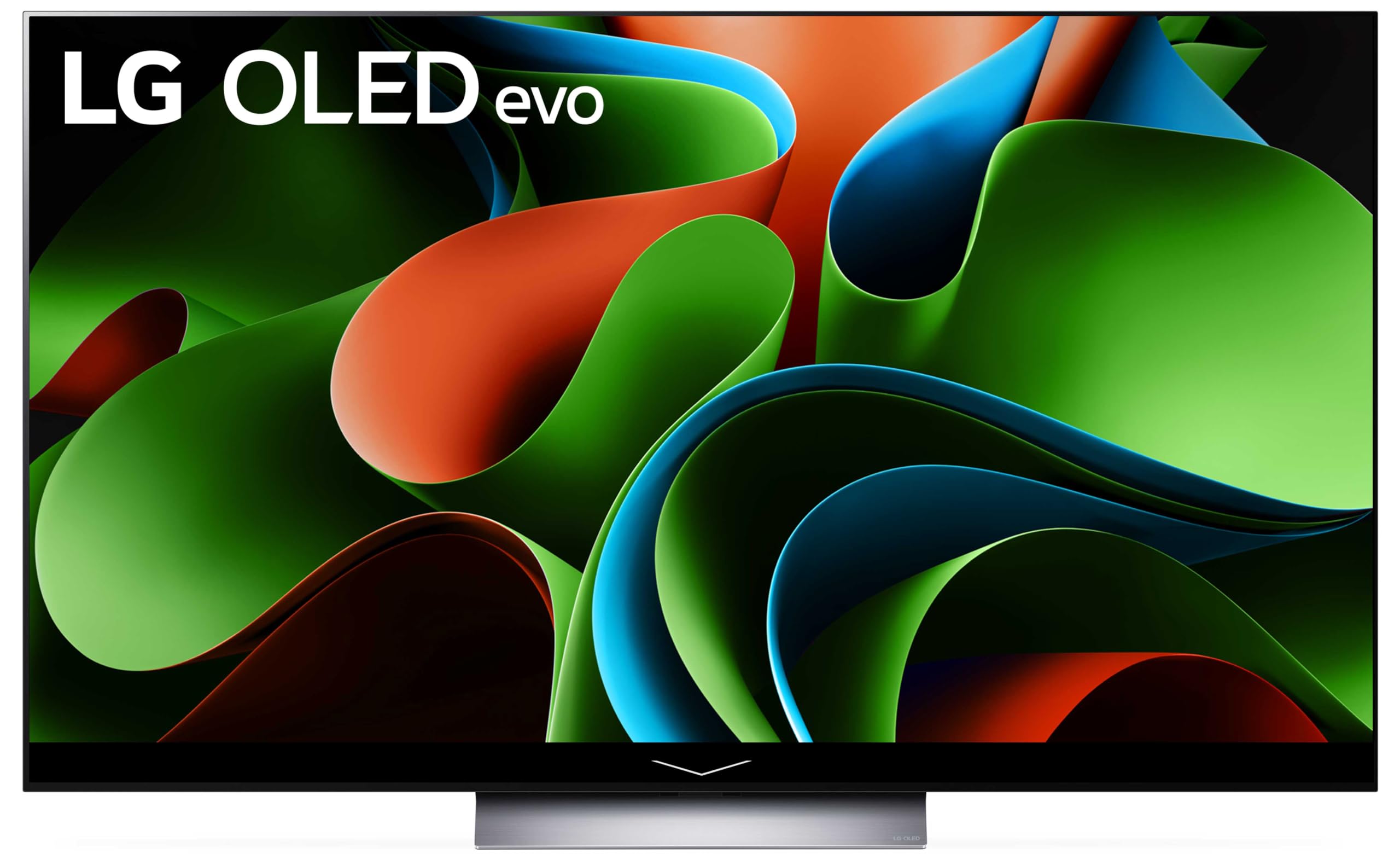
The 77-inch LG C3 from 2023 remains a strong contender for buyers who want a massive OLED without stepping into 2024 pricing. The a9 AI Gen6 processor still delivers excellent AI upscaling and dynamic tone mapping, and the 120Hz native refresh rate with NVIDIA G-Sync and AMD FreeSync Premium covers all console and PC gaming needs.
LG’s webOS 23 features Quick Cards for app organization and a customizable home screen. The Brightness Booster, while less advanced than the C4’s version, still provides sufficient luminance for most living rooms. Four HDMI 2.1 inputs ensure all devices stay connected without a switcher.
At this screen size, the bezel-less design makes the TV blend into the wall when showing art mode. The C3 lacks the Gen7 processor found in the C4, but for 4K gaming and movie streaming, the difference is marginal. The main trade-off is lower peak brightness compared to the 2024 evo panels.
Why it’s great
- 77-inch OLED at a mid-range price point now deeply discounted
- 120Hz VRR with G-Sync and FreeSync covers all gaming platforms
- Almost invisible bezel makes wall-mounted setup look clean
Good to know
- Lower peak brightness than C4 evo with Brightness Booster
- Weighs over 60 pounds — wall mount requires stud anchoring
- Remote lacks backlighting for dark room use
8. LG C3 83-Inch OLED evo
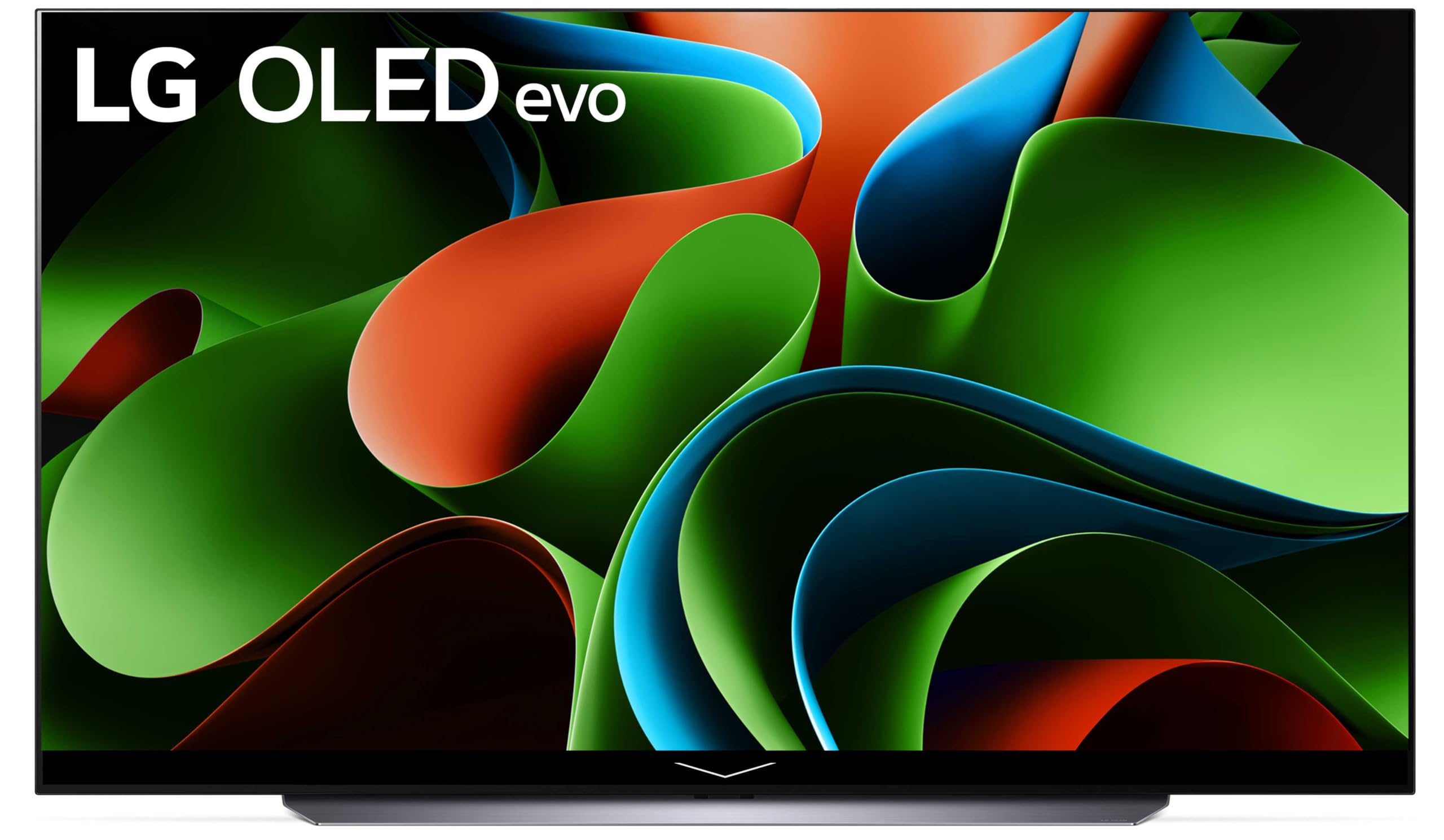
The 83-inch LG C3 is the largest size in the previous generation C3 lineup, offering a cinema-scale OLED experience. The a9 AI Gen6 processor handles AI Super Upscaling with dynamic tone mapping, and the 120Hz refresh rate with HDMI 2.1 inputs makes it viable for gaming at this giant scale. Dolby Vision and Dolby Atmos are fully supported.
For dedicated home theater rooms with controlled lighting, the 83-inch panel delivers immersive black levels that projectors simply cannot match — true 0-nit black with no light bleed. The ultra-slim bezel creates a seamless look when wall-mounted, and the AI Sound Pro adjusts audio to room layout automatically.
The massive panel is extremely heavy and requires professional installation in most cases. The previous-generation processor means upscaling of low-resolution content is slightly less refined than the C4 or Sony XR chips. Buyers who prioritize pure size over the latest processor generation will find this a compelling premium option.
Why it’s great
- 83-inch OLED provides true cinema black levels impossible with projectors
- Four HDMI 2.1 ports with 120Hz VRR for console gaming at huge scale
- AI Sound Pro adapts audio processing to room layout automatically
Good to know
- Extremely heavy — professional installation is recommended
- Gen6 processor is one generation behind current C4 evo
- Significant price premium over 77-inch models
9. Sony BRAVIA 8 77-Inch OLED

At 77 inches, the Sony BRAVIA 8 OLED delivers the XR Contrast Booster 15, which produces deeper black detail and higher highlight brightness than the standard Sony OLED panels. The XR Processor’s cognitive intelligence analyzes focal points in scenes and adjusts detail to replicate human visual perception, making this one of the most natural-looking large OLEDs available.
Sony Pictures CORE app includes five free movie credits and twelve months of access to a library of high-bitrate 4K UHD titles, a genuine value-add for cinephiles. Google TV with Google Assistant provides voice control across apps, and Apple AirPlay 2 works seamlessly with iOS devices. XR OLED Motion ensures sports and action look fluid without breaking the cinematic feel.
The main drawback is the Google TV OS, which some users find has sound dropout issues with specific apps. The built-in Acoustic Surface Audio+ is clear but lacks low-end heft. For buyers building a premium home theater around a Sony ecosystem, this is the reference screen at this size.
Why it’s great
- XR Contrast Booster 15 delivers best-in-class OLED contrast at 77 inches
- Pictures CORE app includes 5 free high-bitrate 4K movie credits
- XR OLED Motion keeps fast action smooth without soap-opera effect
Good to know
- Google TV OS has sound dropout reports with certain apps
- Acoustic Surface Audio+ lacks sub-bass extension
- Requires dark room to achieve optimal contrast performance
10. Panasonic Z95 65-Inch Master OLED Ultimate

The Panasonic Z95 is a niche but serious contender for buyers who prioritize reference-grade picture accuracy. The Master OLED Ultimate panel uses a custom heat sink to sustain higher brightness without burn-in risk, and the HCX Pro AI MKII processor applies real-time scene analysis with Filmmaker Mode with Intelligent Sensing that automatically adjusts to room lighting.
Dolby Vision IQ and HDR10+ Adaptive both adjust tone mapping based on ambient light sensors, making the Z95 equally performant in bright living rooms and dark dedicated theaters. The 144Hz refresh rate with VRR and ALLM supports competitive gaming, though Panasonic’s gaming features are less developed than LG or Sony. The 360 Soundscape Pro with integrated subwoofer produces genuinely impressive built-in audio.
The Fire TV operating system has been criticized for requiring persistent internet connection to Amazon servers and disabling features when offline. The 100Mbps wired Ethernet port is a bottleneck for high-bitrate streaming. This TV is best paired with an external streaming device like an Apple TV 4K or Nvidia Shield Pro.
Why it’s great
- Master OLED Ultimate panel with heat sink sustains high brightness
- Filmmaker Mode with Intelligent Sensing auto-adjusts to room light
- Built-in subwoofer delivers genuine bass without external speakers
Good to know
- Fire TV OS restricts features when offline from Amazon servers
- 100Mbps Ethernet port is a bottleneck for high-bitrate streaming
- Gaming feature set is less developed than LG or Sony counterparts
11. Sony XR A80L 83-Inch OLED

The Sony XR A80L at 83 inches is the largest OLED in Sony’s previous-generation lineup, built around the Cognitive Processor XR. XR OLED Contrast Pro and XR Triluminos Pro produce deep black levels and natural color reproduction that makes skin tones look lifelike. The Acoustic Surface Audio+ turns the entire 83-inch display into a center channel, making dialogue sound like it originates from the screen surface.
For PS5 owners, the exclusive Auto HDR Tone Mapping and Auto Genre Picture Mode detect console input and automatically switch to optimized game or movie settings. Game Menu consolidates all gaming picture settings in a single overlay. HDMI 2.1 supports 4K/120Hz VRR and ALLM, making this a viable gaming display at massive scale.
The 2023-era processor means upscaling of sub-4K content is less refined than the 2024 Sony XR8B. Built-in speakers are adequate but professionals will still pair a separate sound system. Google TV integration is responsive, though the A80L lacks the IMAX Enhanced support found in newer Sony models.
Why it’s great
- 83-inch OLED with Acoustic Surface Audio for immersive dialogue positioning
- Exclusive PS5 features automate HDR and picture mode switching
- XR Triluminos Pro produces accurate skin tones and color reproduction
Good to know
- 2023-era processor is outclassed by 2024 XR and a9 Gen7 chips
- Less HDR peak brightness than Sony’s BRAVIA 8 series
- Heavy TV requires professional installation
12. LG G5 77-Inch OLED evo

The LG G5 is the 2025 flagship evo with a zero-gap wall mount design — the panel sits flush against the wall with virtually no gap. The Alpha 11 AI Gen2 processor drives Brightness Booster Max, which pushes the OLED panel to over 2,000 nits peak brightness, making this one of the brightest OLEDs on the market. UL Verification for Discomfort Glare Free means bright room reflections are minimized.
The 165Hz refresh rate with 0.1ms response time is the highest native refresh rate on this list, supporting NVIDIA G-Sync and AMD FreeSync Premium for competitive gaming. Dolby Vision, Dolby Atmos, and Filmmaker Mode are all supported. The webOS Re:New program guarantees software updates through 2030.
The G5 does not include a stand — it ships with a wall bracket, designed specifically for flush mounting. The refined brightness curve makes HDR content look spectacular, but users have reported that the remote lacks direct input buttons and the 165Hz mode requires navigating to a hidden Game Optimizer menu.
Why it’s great
- Zero-gap wall mount design for flush installation
- Brightness Booster Max exceeds 2,000 nits peak HDR brightness
- 165Hz native refresh rate with G-Sync and FreeSync Premium
Good to know
- No stand included — wall-mounted only
- 165Hz mode hidden in Game Optimizer submenu
- Remote lacks direct input buttons for quick switching
13. Samsung S95F 83-Inch QD-OLED

The Samsung S95F is the 2025 QD-OLED flagship at 83 inches, featuring Samsung’s Glare Free technology that virtually eliminates reflections using a specialized matte finish. The NQ4 AI Gen3 processor powers 4K AI Upscaling with 128 neural networks, and the Motion Xcelerator 165Hz supports VRR games at up to 4K 165Hz with dynamic refresh technology for ultra-smooth competitive gaming.
AI Motion Enhancer Pro sharpens fast-moving balls and text in sports broadcasts, reducing blur and flickering so player stats and scores remain legible during action. The One Connect Box keeps cable management clean, and the SolarCell remote eliminates battery waste. OLED HDR Pro delivers bold highlights with deep black levels for dramatic contrast in HDR10+ content.
This bundled version includes a Deco Gear 6FT HDMI 2.0 cable, a Premiere Movies Streaming digital card, a home theater beginner’s guidebook, and a 26-month extended protection plan. The included HDMI 2.0 cable is insufficient for 4K/165Hz — users should purchase a certified HDMI 2.1 cable separately. Samsung’s Tizen OS lacks Dolby Vision support, relying on HDR10+ Adaptive instead.
Why it’s great
- Glare Free matte finish completely eliminates reflections in bright rooms
- 165Hz VRR supports highest refresh gaming at 4K
- Bundled 26-month extended protection plan adds warranty coverage
Good to know
- Bundled HDMI cable is 2.0 spec — must upgrade for 4K/165Hz
- No Dolby Vision support — HDR10+ Adaptive only
- Matte finish reduces perceived brightness compared to glossy panels
FAQ
Is a 48-inch OLED TV good for gaming on PC?
Why do Samsung OLED TVs lack Dolby Vision?
What is the minimum viewing distance for a 55-inch OLED TV?
Does the Samsung S90F QD-OLED have a glossy or matte screen?
How does the LG C3 compare to the C4 for movie watching?
Final Thoughts: The Verdict
For most users, the best 50in oled tv winner is the LG C4 48-Inch OLED evo because it delivers a 144Hz native refresh rate, four HDMI 2.1 ports, Dolby Vision and Atmos support, and the a9 AI Gen7 processor in a compact size that works equally well as a gaming monitor and a living room TV. If you want the brightest possible panel with quantum dot color, grab the Sony BRAVIA 8 II 55-Inch QD-OLED. And for a giant 83-inch cinema experience with true zero-gap wall mounting, nothing beats the LG G5 77-Inch OLED evo.