
Our readers keep the lights on and my morning glass full of iced black tea. As an Amazon Associate, I earn from qualifying purchases.
Specs are compiled from manufacturer listings and verified buyer reviews and can change over time — please confirm the key details on the product page before buying.
Swapping the tweeters is the fastest way to revive a tired car or home stereo — but the wrong pair turns cymbals and vocals into a hiss that wears you down on a long drive. A 1-inch tweeter is the small high-frequency speaker that handles everything above roughly 2,000 Hz: vocals, cymbals, guitar strings, the shimmer on a snare. Match the impedance and crossover to your amp and the whole system opens up. Get them wrong and the highs turn harsh and hissy, fatiguing you within minutes.
I’m Min — the founder and writer behind Gadgets Feed. This guide is built by comparing the manufacturers’ published specifications and the patterns across verified customer reviews, so you get each pick’s real strengths and trade-offs instead of marketing spin.
Impedance, power handling, and crossover quality decide whether a 1-inch tweeter sings or screams. This guide covers the best 1 inch tweeters.
Our Picks at a Glance


How To Choose The Best 1 Inch Tweeters
A 1-inch tweeter is a drop-in high-frequency driver, so it lives or dies by three specs: impedance in ohms, power handling in watts, and the crossover frequency where it takes over from the midrange. Match those three specs to your existing amp and speakers and the install is straightforward. Mismatch them and the tweeter either fades into the mix or dominates it with piercing highs.
Match the Impedance (Ohm Rating) to Your Amp
Impedance is the electrical load the tweeter puts on your amplifier, written in ohms. Most car audio runs 4 ohms, so a 4-ohm tweeter pairs with a 4-ohm midrange and the amplifier sees the load it expects. Placing a louder 4-ohm tweeter beside a quieter 4-ohm mid can tip the balance toward the highs — that is the mismatch buyers hit most. Home speakers often run 8 ohms, so check before you buy.
Understand Power Handling Without Overthinking It
Power handling comes in two figures: RMS (the continuous wattage the tweeter tolerates all day) and Max or peak (the short bursts it survives). A 60-watt RMS tweeter is fine on a modest head unit and still comfortable on a small amplifier. The real risk is a cheap amp sending distorted “dirty” power — that is what usually kills a tweeter, not clean volume.
Why Crossover Quality Separates Good From Harsh
A crossover is a filter that blocks low frequencies from reaching a tweeter that cannot handle them. A simple capacitor works for basic setups, while a dedicated outboard crossover with adjustable output gives you trim control — the 0, -2, and -4 dB settings some kits offer let you dial the highs to taste. A crossover frequency around 3.5 kHz typically produces a smoother handoff from a midrange than a bare capacitor cut higher up.
Quick Comparison
| Model | Best For | Power Handling | Impedance | Crossover | Amazon |
|---|---|---|---|---|---|
| Rockford Fosgate P1T-S Punch★ Best Overall | First serious upgrade on a stock system | 60W RMS / 120W Max | 4 Ohm | Outboard, 3.5kHz | Amazon |
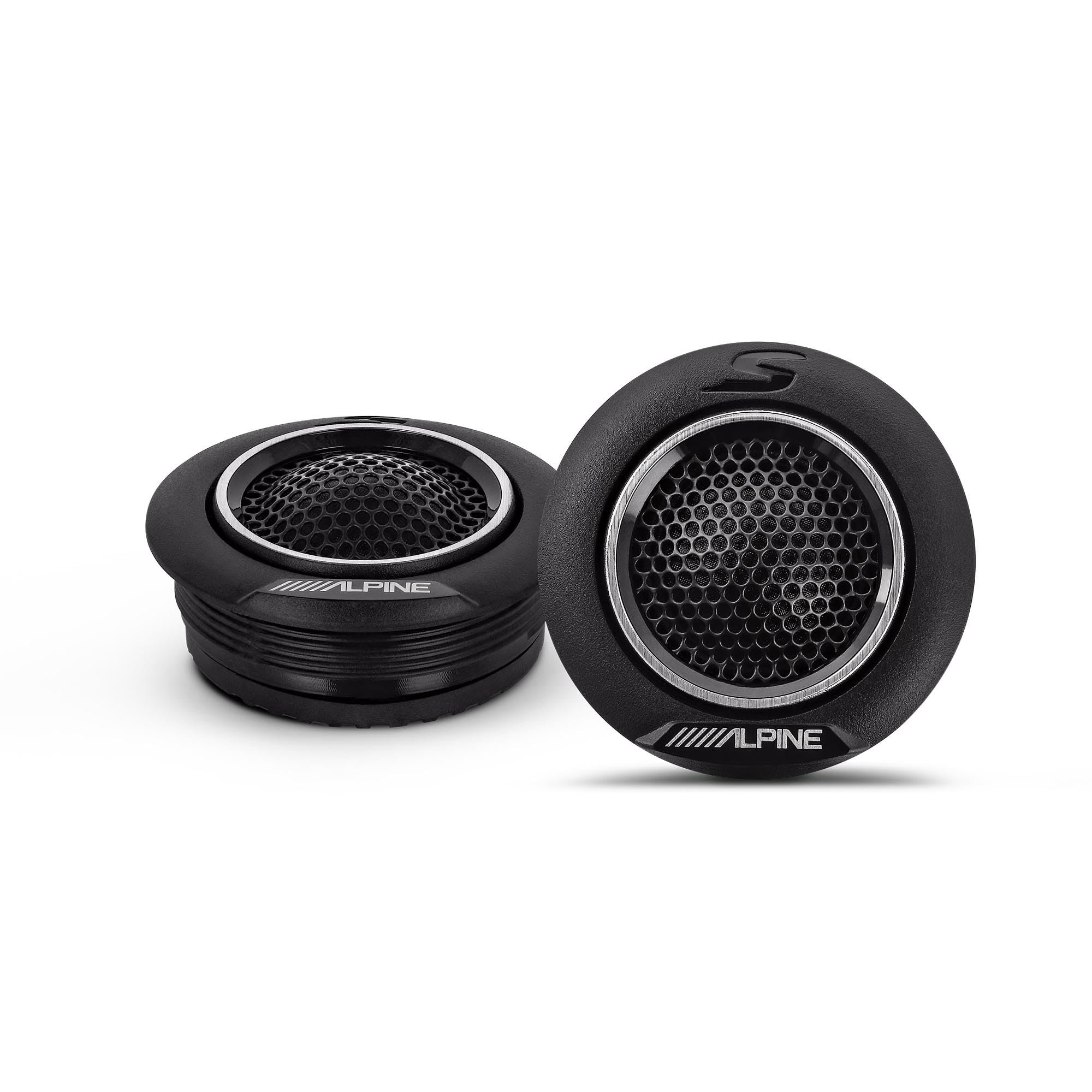
| Alpine S-S10TW S-SeriesTop Performer | Clean power on a factory-style mount | 80W RMS / 240W Peak | 4 Ohm | Included kit crossover | Amazon |
| Rockford Fosgate T1T-S PowerPremium Pick | Audiophile-grade clarity | 75W RMS / 150W Max | 4 Ohm | Dedicated crossovers | Amazon |
| KICKER 46KST2504 KS-Series | Flexible mounting in tight spaces | Not listed | 4 Ohm | In-line 12dB | Amazon |
| PRV AUDIO TW400Ti-Nd-4 v2 | High-SPL pro audio builds | 120W Max | 4 Ohm | 12dB/oct at 6kHz | Amazon |
| ORION XTR1.00TW | Silk-dome warmth on a budget | 50W RMS / 200W Max | 4 Ohm | Custom high-pass | Amazon |
| Pyle Pro PDBT19 | Replacing tired home-speaker tweeters | 150W RMS / 300W Peak | 4-8 Ohm | Mylar capacitor | Amazon |
| MB Quart Formula | Flexible mounting on a tight DIY budget | Not listed | 4 Ohm | External passive | Amazon |
| Timpano TPT-ST3 | Loud, high-SPL builds on a budget | 600W Max | 4 Ohm | Built-in capacitor | Amazon |
In‑Depth Reviews
1. Rockford Fosgate P1T-S Punch 1″ Tweeter Kit (Pair)
Our pick — over 4.5★ from 450+ verified ratings; the strongest balance of quality and price.
Outboard crossovers and three mounting bezels make this the least fussy path to real high-frequency detail.
If your factory system sounds flat and closed-in, the P1T-S is the pick that most often fixes it. The kit ships as a pair of 1-inch PEI dome tweeters (PEI is a rigid plastic film that produces a bright, detailed top end), with 60 watts RMS and 120 watts Max handling at 4 ohms. The recessed mount is cut with a standard 1-3/4″ hole saw — a common size most installers already own — so flush, surface, and angled setups are all on the table.
What wins people over is quality, and sound comes second in owner feedback across the board. The highs are clean and loud without the piercing edge that cheap domes bring, and crossover settings of 0, -2, and -4 dB let you tame them when the system feels bright. Installers report it waking up a whole sound system — fuller, brighter, more enveloping — and one described it simply as the final piece that made everything click. Buyers report the same thing: “Sounds amazing. Easy to install.”
The High-Pass filter at 3.5 kHz with a 12dB/octave Butterworth slope handles the handoff to your midrange cleanly — that means high notes roll off smoothly instead of crashing into the mid. A 1-year warranty backs the build. One caveat worth planning around: this kit is not always plug-and-play into a factory A-pillar hole. Some F-150 owners found the tweeter a touch too big and had to fabricate a bracket. Budget an extra hour for fitment on tight factory mounts.
What Earns Its Keep
- Adjustable 0/-2/-4 dB crossover trims highs without EQ
- 60W RMS / 120W Max at 4 ohms matches most head units and small amps
- Three mounting bezels cover flush, surface, and angled installs
- Standard 1-3/4″ hole saw cuts the recessed mount
- 1-year warranty from Rockford Fosgate
Fit Notes Before You Drill
- Not always plug-and-play into factory pillar holes — custom bracket may be needed
- A handful of units reportedly failed shortly after install
- Recessed mount requires a hole saw you may not already own
Step-up for stock systems: the buyer tired of muddy vocals who wants adjustable highs without leaving the mainstream brands.
Think twice if: your factory A-pillar is a tight, irregular shape — this kit may need custom fabrication to seat cleanly.
2. Alpine S-S10TW S-Series 1″ Silk Dome Tweeter Set
Silk-dome warmth with headroom to spare — 80W RMS and a height-adjustable mount that hides in factory trim.
If you want your highs smooth instead of sizzling, the Alpine S-S10TW is built for you. Its 1-inch silk dome (a soft fabric dome that damps harsh overtones) gives a gentler top end than metal domes, so vocals and cymbals stay easy on the ears on long drives. The neodymium magnet (a small, powerful magnet type) keeps the housing compact enough to fit tight door locations. Power handling runs 80W RMS with 240W Peak, which is real headroom if you plan to amplify later.
Most of the high-frequency sound in your system now comes from these speakers once installed, and that is exactly the change owners describe. A Mazda 5 owner swapped the OEM 25W tweeters for these 80W units and reported a major high-frequency improvement, with the door 5x7s finally gaining mid punch. Over on a 2008 Tundra, they sang beautifully without harshness on roughly 20W RMS from a Sony head unit. The included kit arrives complete with bass blockers and quick-disconnect wiring.
The catch is fitment on certain vehicles. An Impala owner got superb sound quality but reported the rear plastic tweeter cap is fragile and broke, requiring epoxy. A Ford Ranger owner could not fit them in the door pillar without cutting, so the tweeters were pulled from their cases and hot-glued into the factory spots. No factory wiring adapter is included on some models, so splicing is expected. If your factory location is a clean 2-inch round opening, none of this applies.
Where it shines: the height-adjustable stealth OEM mount is the standout — it lets the tweeter sit flush or angled in factory trim so the upgrade stays invisible once the door panel goes back on.
One honest note: a 1-ohm, 10W inline cable ships in the box, and not every owner knows what to do with it — it works fine when left in place, but instructions could be clearer.
balance: anyone replacing blown factory tweeters who wants smooth silk-dome detail and plans to keep the install looking stock.
skip it if: your factory mount is an odd shape — you may need to cut, glue, or splice to make these fit.
3. Rockford Fosgate T1T-S Power 1″ Component Tweeter Kit (Pair)
Fabric-dome fidelity with dedicated crossovers — the tweeter upgrade that finally makes an audiophile stop fiddling.
This is the step-up from the P1T-S above, and the jump is in the dome material and crossover hardware. The T1T-S uses 1-inch fabric dome tweeters rated at 75W RMS and 150W Max at 4 ohms — a hair more power handling and a softer, more natural top end than the PEI dome on the P1T-S. The kit lands with dedicated crossovers, trim rings, and mounting hardware, so nothing extra to source.
What wins people over is the clarity, described as crisp and perfectly clear from the driver’s seat. A Dodge 2500 owner swapped out Chrysler Infinity speakers and could finally hear highs over a loud 12-valve Cummins at lower volumes. Another owner matched them up in a Mazda 5 with Infinity crossovers and called them studio-like. The frequency response tops out at 22 KHz, which is well past what most listeners can hear but keeps plenty of air in the top end. An owner with a keen ear described the sound as “very soft natural sound” — high praise for a tweeter at this level.
Mounting is genuinely flexible. Owners mention using flush mount and a couple of different angle-mount positions to aim the tweeter toward the listener, which matters when your A-pillar sits off-axis. The trade-off is simple: this is the priciest Rockford tweeter kit here, and one long-term owner noted the price roughly doubled in three years, suggesting they would spend the money elsewhere.
The Audiophile Case
- Fabric dome produces smooth, natural high frequencies
- 75W RMS / 150W Max at 4 ohms handles amplified systems
- Dedicated outboard crossovers included
- Multiple angle-mount options to aim at the listener
- 1-year Rockford Fosgate warranty
What To Weigh
- No frequency response tuning knob — no dB trim like the P1T-S offers
- Priced well above the P1T-S without a dramatic power-handling jump
- Recessed mount still requires a 1-3/4″ hole saw that is not included
For the ear that notices: the buyer chasing studio clarity who would rather pay once for a natural dome than upgrade twice.
Look elsewhere if: you are running stock power — the P1T-S delivers a similar result and leaves money on the table.
4. KICKER 46KST2504 KS-Series KST250 1″ Tweeters w/Crossovers and Swivel Mounts

Four mounting options and swivel aiming — the tweeter that fits wherever your dashboard or pillar allows.
Kicker designed this kit for the install you have not measured yet. The 46KST2504 uses 1-inch silk-dome tweeters (a soft dome that reproduces smooth, natural highs) at 4 ohms, and it arrives with flush, angled, and surface-pod mounting options plus an in-line 12dB crossover — a filter that hands off the low notes cleanly. The swivel mounts let you rotate the tweeter to aim at your ears, which is the difference between lively and muffled highs in an offset pillar.
The highs land bright, though buyers describe a small adjustment period. One owner found them excellent in clarity but “a little bright,” tunable with the equalizer. A Jeep Wrangler TJ owner tapped them into the front speaker wires and reported a significant improvement in vocals over the factory setup. A Street Glide rider mounted them where the mirror holes sit and reported loud, clean sound even at freeway speeds. The metal enclosures with covers feel sturdy, and the four tweeter mounting options mean you can seat them almost anywhere.
The honest caveat is reliability. Most units hold up fine — one buyer described the 4-ohm build as “extremely durable” — but a matching pair with a 2-year run left one tweeter blown despite moderate volume. If you drive your system hard or run an amp near its limits, add a clean crossover point and keep the power reasonable. Tuning matters with a bright silk dome, so budget time to dial them in.
Mounting edge: with four tweeter mounting options in the box, this is the easiest kit to seat in a non-standard dash, sail panel, or mirror hole without fabrication.
Set-and-tune: expect a couple of listening sessions to dial the brightness into your system — the results reward the patience.
Best for odd-ball installs: the buyer with an awkward mount location who needs flush, angle, pod, and swivel options in one box.
Consider carefully if: you run heavy continuous power — a matched pair occasionally outlives one of its tweeters under hard use.
5. PRV AUDIO 2X TW400Ti-Nd-4 v2 Bullet Super Tweeter 1″ Exit Neodymium (Pair)

Bullet super tweeter built for high-SPL — titanium diaphragm, 106 dB sensitivity, and 120W of headroom for serious stacks.
This is the pro-audio end of the 1-inch tweeter world. The TW400Ti-Nd-4 v2 uses a titanium diaphragm paired with a Kapton voice coil former (a heat-resistant film that holds the coil in place), and it is rated at 106 dB sensitivity from 4,500 to 20,000 Hz — that means it converts power to volume efficiently, so a modest amp pushes serious sound pressure. Power handling caps at 120 watts, with a 12 dB/octave crossover at 6,000 Hz keeping the low notes out. A capacitor ships in the box for protection at high power.
The v2 redesign trims the mounting depth for tight installs, and the diaphragm is designed to be replaced easily without soldering — a real advantage when a driver fails at an event. Owners describe the sound as crisp and efficient, small enough to flush-mount and disappear until the system comes on. It plays well alongside PRV 6.5s and other pro-audio components in a mixed stack, which is the natural way these get used.
But reliability is the honest weak point here. Multiple customers note units failing after a few days, and one buyer did not even get a working unit from the start on the first try. When these fire, they are outstanding — but a small percentage of them never do, and that is the price of buying at this price tier in the pro-audio segment. If you need a bulletproof set for a daily driver, the silk-dome picks above are safer. If you are building an SPL rig and can handle a swap, the efficiency here is hard to match.
Built For Pressure
- 106 dB sensitivity — loud with modest amp power
- 120W of power handling at 4 ohms
- Titanium diaphragm for durability under high SPL
- Solderless diaphragm replacement in the field
- Capacitor included for high-power protection
What To Know
- Reliability complaints — some units fail within days of install
- Pro-audio tuning character — more aggressive than silk domes
- Mounting requires flush work for the cleanest look
Built for SPL rigs: the pro-audio builder who wants maximum efficiency from a small amp and can tolerate a rare failure.
Not for daily drivers: if you want install-and-forget reliability, the silk-dome alternatives are a safer long-term bet.
6. ORION XTR1.00TW 1″ Neodymium Silk Dome Car Tweeters, 200W Max Pair
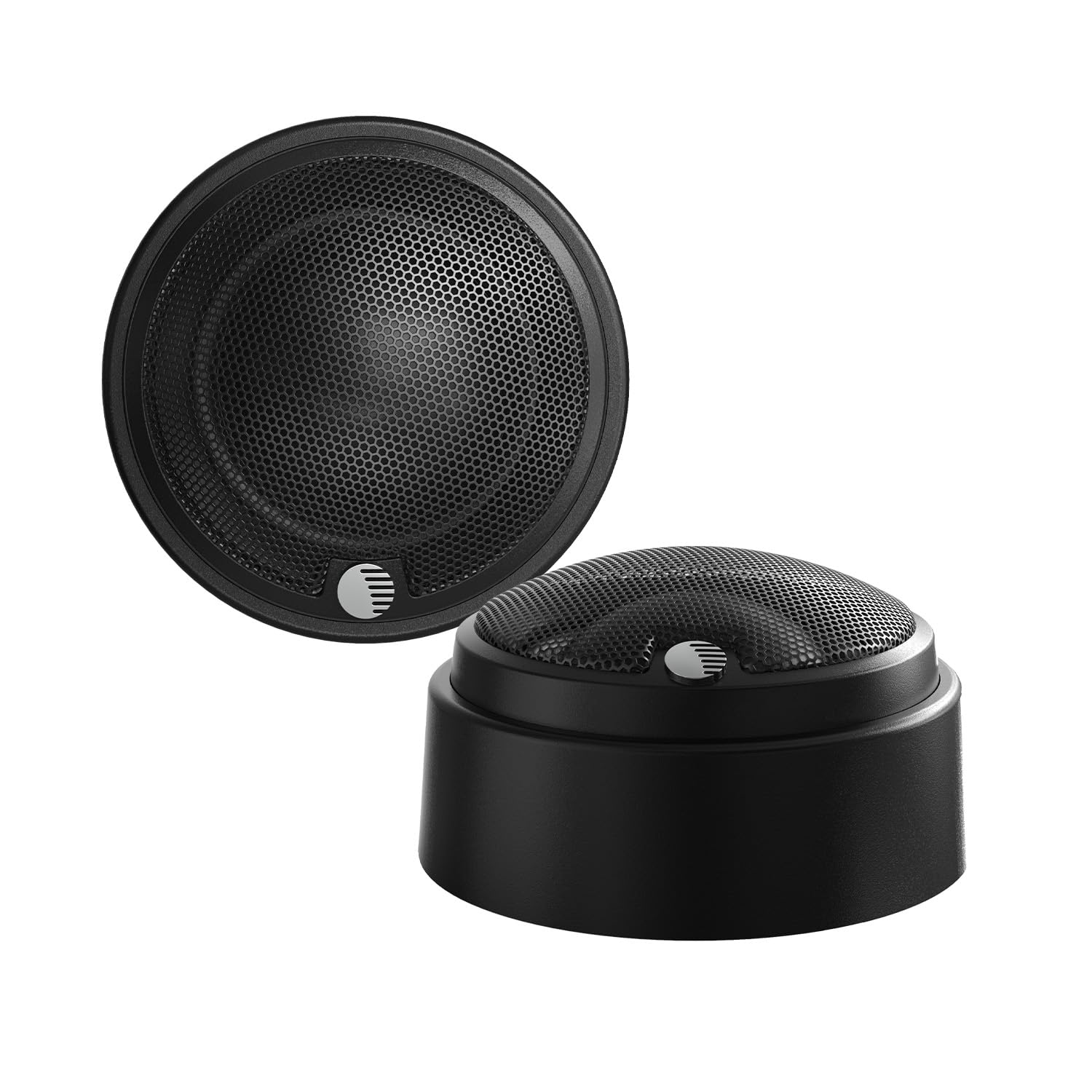
Silk-dome smoothness at a value price — Orion’s 1-inch neodymium XTR with a custom high-pass crossover.
Orion put real effort into the crossover on this XTR1.00TW kit, and it shows in the sound. The 1-inch silk dome with a neodymium magnet (a compact high-strength magnetic material) offers the smoother, warmer character silk is known for, rated at 50W RMS and 200W Max at 4 ohms. The kit ships with a 12dB high-pass custom crossover and a 0 to -3 dB level jumper, so you can trim the highs to taste. Owners describe the highs as clean, crisp, and non-fatiguing, with rubber covers on the wire connections for protection against moisture.
Installation is straightforward. A Prius owner swapped in these tweeters to shore up a JBL system and reported a “huge upgrade in the dynamic range.” Running alongside a 4 x 100W amp and Infinity Reference speakers, one listener got a clear and balanced high-end profile. The build quality is described as top-notch, from the thick wire gauge to the swivel-fit hardware. The way to read this: the Orion matches many silk-dome kits twice its tier on sound character, which is the whole reason it earns a value pick.
The honest trade-offs are mounting and crossover size. The included crossover is bulky and can be hard to hide, and mounting hardware may not fit every vehicle — one owner found the mounts did not work in a 2017 Sorento LX. A rare dissenting review calls the top end hollow and bright, which tells you this is not a match for someone chasing maximum detail. For most buyers, though, the Orion delivers warmth and control that beats budget metal-dome tweeters.
The value angle: a custom high-pass crossover and a 0/-3 dB level jumper at this price point is unusual — you get tuning control most entry-level kits leave out.
The install reality: plan for the crossover to take up space behind the dash — it is not a throw-and-go component.
Best bang for smooth highs: the buyer who wants silk-dome warmth and adjustable highs without paying premium-tier money.
Not the pick for: vehicles with tight, model-specific factory mounts — this kit may need fabrication to seat.
7. Pyle Pro 1″ Car Audio Tweeters, 300 Watt Power, 2kHz-25kHz, PDBT19 (Pair)

Replacement tweeters that revive old home speakers — 98 dB efficient with a Kapton voice coil and bullet horn.
Here is the pick most people do not expect: these Pyle Pro tweeters are aimed at car audio but shine brightest as drop-in replacements in tired home speakers. They use a 1-inch Kapton voice coil (a heat-resistant polymer that survives sustained volume) with a 98 dB SPL rating and a 4-8 ohm impedance range that compensates for the thin factory wiring in most cars. Power handling runs 150W RMS and 300W Peak, and the 20 oz magnet structure gives the housing real heft.
Owners rave about the value, and the transformation stories back it up. One replaced the blown tweeters in a pair of Dahlquist M907 three-ways with these and was very pleased, only needing to lower the receiver treble. Another swapped them into a Fisher XP65 and got clear vocals, crisp horns, and lively piano. A third reported them beating the Cerwin Vega E-715 tweeter on pronounced highs. The 2kHz-25kHz frequency response covers the audible range with room to spare.
The catch is the terminal layout. The wire tabs stick out horizontally from the sides of the magnet, so mounting in a cabinet often requires drilling or notching holes, and the paper template is thin cardboard that does not match a real cut. One reviewer was blunt about it: “One came with loos connection of the back magnetic part due to the screw unable to be tighten.” If you are dropping these into a standard speaker hole with clear side clearance, you will sail through. In a tight cabinet, budget the extra fabrication time.
Where it wins: high-efficiency 98 dB with a bullet horn gives you loud, detailed highs from old box speakers that were never meant to sing again.
One quirk to plan for: the horizontal wire tabs need side clearance — measure your cabinet before you commit.
Speaker revival project: the DIYer who wants to bring old home towers back to life with efficient, high-output tweeters.
Skip if: you need a clean drop-in fit — the exposed terminal tabs will fight you in tight cabinet holes.
8. MB Quart Formula 1 inch Tweeter Kit

A budget aluminum-dome kit with a proper compact crossover — clear highs for less money than most name brands.
MB Quart packs a real crossover into one of the friendliest budgets here. The Formula 1-inch kit uses a large aluminum dome tweeter for clear highs, paired with an external passive Cauer topology Butterworth filter crossover — that is a compact filter housing designed to tuck out of sight while smoothing the frequency handoff from the midrange. Mounting hardware is included, and the crossover housing is small enough to hide behind trim.
What wins owners over is the sound for the money. Reviewers point out these are loud enough to match 12-inch speakers, adding crisp highs and imaging to factory car stereos where the door speakers had been doing all the work. An owner who installed them in a Mazda 3 sail panel noticed a clear improvement in imaging since the doors only carried lower speakers. The 4-ohm impedance is standard, and a home-audio tuner who swapped these into a pair of tower speakers ran them hard for days without issue.
Two things to know. First, these are bright, and a matched 4-ohm system can tip toward harshness unless you dial the level in. Second, they reveal their budget side on quality control. Multiple reviewers report failure with factory-radio power — one buyer was blunt about it: “I thought cheap price decent sound speakers… and they blew the speakers speakers are garbage.” That is the flip side of a low-tier price: on a strong, clean amp these sing; on an underpowered factory radio pushed to distortion, they may not last.
Why Budget Buyers Like Them
- Aluminum dome delivers clear, detailed highs
- Compact external Cauer topology crossover fits behind trim
- Loud enough to sit beside 12-inch mid-bass drivers
- Flexible mounting hardware included
- Also works in home tower speaker replacement
Where They Reveal Budget Tier
- Can sound harsh against 4-ohm mids without level tuning
- Factory-radio power has led to failures for some installers
- Instructions are mediocre and flush-mount hardware may be missing
Best on a clean amp: the DIY installer running a proper crossover and a capable amp who wants strong highs at entry-tier pricing.
Not for weak head units: if you are pushing these off a low-power factory radio, expect a shorter life.
9. Timpano TPT-ST3 Black Slim Super Tweeter, 600 Watts 4 Ohm, 105 dB (Pair)

A 105 dB slim bullet that brings big-volume highs to A-pillar builds without eating up depth.
Timpano built the TPT-ST3 for the loudest end of a budget system. The 1-inch voice coil drives a bullet-style faceplate rated at 105 dB sensitivity and 4 ohms, with a 600-watt peak power figure that speaks to headroom more than continuous use. The mounting depth is just 1.59 inches, so it slots into A-pillars and slim pods where deeper tweeters will not. A built-in capacitor crossover handles the low-frequency cutoff, so no separate box is needed.
What wins buyers over is the volume-to-depth ratio. Running four of these in an A-pillar is a common build, and owners describe the highs as crisp and loud enough to keep up in a high-SPL environment. The black finish disappears behind factory grille cloth, which owners like. For home audio, they also work as a brightening pair — one listener used three sets to replace failing Pioneer tweeters in bookshelf speakers.
Two honest realities. First, “loud” is the point — these are aggressive by design, and one owner found they needed an L-pad (a level control) to tame them in a smoother system. Second, quality control is inconsistent. Some shoppers say their pair arrived not working at all, while many run fine. The way to read this: you are trading some reliability for a very loud, very compact, very affordable super tweeter. Buy from a seller with easy returns and inspect them on arrival.
The scene it fits: an A-pillar build where you want strong, forward highs and cannot spare depth — 1.59 inches of mounting depth is as slim as this segment gets.
Set expectations: not every unit leaves the factory working, so unbox and test before you commit to drilling.
For the A-pillar crowd: the high-SPL builder who wants a slim bullet tweeter that hits hard and fits tight.
Not for the tinkerer who wants smooth: these are bright by nature, so plan on an L-pad to dial them into a quieter system.
Understanding the Specs
Power Handling (RMS vs Max)
Every tweeter spec sheet lists two wattage numbers — RMS and Max. RMS is the continuous power the tweeter survives all day; Max or Peak is the short burst it can absorb. A 60W RMS tweeter pairs comfortably with most head units and small amps. What actually kills tweeters is not wattage, it is distortion — an underpowered amp clipping into the tweeter sends a nasty waveform that burns the voice coil. So a clean 50W amp is safer than a distorted 100W one.
Impedance and Matching
Impedance, written in ohms, is the load the tweeter presents to your amplifier. Most car audio runs at 4 ohms and most home audio at 8 ohms. If your amp expects 4 ohms and you install an 8-ohm tweeter, it plays quieter. If you install a 4-ohm tweeter where the rest of the system is 8 ohms, the tweeter dominates. The fix is easy: many quality kits include a level control (an L-pad or jumper) so you can trim the highs to match the rest of the system.
Crossover: Where the Highs Begin
The crossover is the filter that splits the audio signal between the tweeter and the midrange. A simple capacitor crossover works for basic installs; a dedicated outboard crossover with a steeper slope (like the 12 dB/octave Butterworth designs) hands off the frequencies more cleanly. The crossover frequency — often around 3.5 kHz or 6 kHz for pro-audio — tells you the point where the tweeter takes over. Lower crossover points demand more from the tweeter; higher points spare it but can leave a gap.
Dome Material: Silk, Aluminum, and Titanium
The dome is the small radiating surface that moves to create highs, and its material shapes the sound. Silk domes sound smooth and natural, with a softer top end. Aluminum and titanium domes produce sharper, more detailed highs but can edge toward harshness. Titanium is the usual choice for pro-audio and high-SPL rigs because it handles power and volume without deforming. There is no “best” material — just the match for the sound you want.
FAQ
Will 1 inch tweeters fit my car’s factory A-pillar?
Do I need a crossover or do tweeters work without one?
What is the difference between 4 ohm and 8 ohm tweeters?
How much power do 1 inch tweeters actually need?
Why do my new tweeters sound harsh or piercing?
Are silk dome tweeters better than aluminum or titanium?
Can I use 1 inch tweeters for home audio instead of car audio?
How long do 1 inch tweeters typically last?
Does a bigger magnet make a better tweeter?
Can I mix tweeter brands with my existing speakers?
Do I need an amplifier to run new tweeters?
Final Thoughts: The Verdict
For most people upgrading a tired factory system, the 1 inch tweeters winner is the Rockford Fosgate P1T-S Punch kit because the outboard crossovers, adjustable 0/-2/-4 dB highs, and three mounting bezels let you dial the sound to taste without leaving the mainstream. If you want a softer, more natural top end and headroom to grow, the Alpine S-S10TW silk dome set is the one to reach for. And for reviving a pair of tired home speakers, the Pyle Pro PDBT19 brings 98 dB efficiency and a bullet horn at a friendly budget — a rare value in a tweeter that plays as loud as it does. Whatever you pick, match the impedance and crossover to your system first, and the upgrade will pay off every time you turn the key.
How We Picked
We do not accept paid placement. Every pick is matched to a real buyer and a real use-case; we do not hands-on test units.
Sources & Methodology
Specifications: manufacturer listings and product documentation. Review insights: verified customer reviews, as of September 2026. Pricing: not shown on this page (it changes often); check the current price via the retailer link.
As an Amazon Associate, Gadgets Feed earns from qualifying purchases. This does not affect which products we feature.