
Standing on a cushioned slab of foam might look simple, but the battle for micro-stability it triggers from your ankles to your core is anything but. A quality balance foam pad transforms any flat floor into a dynamic rehabilitation tool, forcing your proprioceptive system to fire constantly to keep you upright. Whether you are recovering from an ankle sprain, battling chronic knee instability, or just trying to shave a few seconds off your 5K, the right density and surface texture of this pad determines how effective each wobbling second truly is.
I’m Min — the co-founder and writer behind Gadgets Feed. I specialize in dissecting physical therapy and home fitness gear, analyzing how subtle changes in foam density, surface grip pattern, and closed-cell construction directly translate into measurable stability benefits for real users.
After evaluating seven leading foam stability platforms for density, size, grip integrity, and long-term shape retention, I have narrowed down the very best balance foam pad options to fit your specific rehab or training needs without wasting your time or risking your progress.
How To Choose The Best Balance Foam Pad
Balance foam pads look deceptively simple, but the wrong choice can leave you fighting a squishy surface that does not provide the right level of instability or collapses under repeated use. Focus on three key factors to match the pad to your body weight and rehab goals.
Foam Density and Material
The densest closed-cell TPE foam provides the most durable, water-resistant surface that holds its shape after months of daily use. Softer open-cell foams tend to crease, indent, and absorb sweat, which breaks down the material faster. For users over 200 pounds, look for TPE or high-density closed-cell foam rated for at least 300 pounds.
Pad Size and Surface Grip
Standard pads measure around 15 by 13 inches, which works for most users up to a size 11 shoe. If you wear size 12 or larger, an extra-large pad measuring 19 by 15 inches gives you full foot contact without your toes hanging off the edge. A diamond-grid or textured non-slip surface prevents your foot from sliding during sweaty sessions or dynamic movements like lunges.
Thickness and Progressive Challenge
A 2-inch thick pad offers a moderate instability challenge suitable for beginners and early-stage rehab. Jumping to a 2.3-inch or thicker pad increases the wobble amplitude, forcing your ankle stabilizers and core to work harder. PTs often recommend starting with a 2-inch foam pad and progressing to thicker or dual-pad stacking as your balance improves.
Quick Comparison
On smaller screens, swipe sideways to see the full table.
| Model | Category | Best For | Key Spec | Amazon |
|---|---|---|---|---|
| Therapist’s Choice X-Large | Premium | Large feet & aggressive rehab | 19 x 15 x 2.3 inches | Amazon |
| THERABAND Stability Trainer | Premium | PT-clinic grade stability | Intermediate blue foam | Amazon |
| Vive Oval Balance Pad | Mid-Range | Versatile rehab & core work | Oval shape, 300 lbs limit | Amazon |
| ProsourceFit Exercise Pad | Mid-Range | Multi-use (kneeling/seating) | 2.25-inch thick TPE | Amazon |
| Fragraim Balance Pad | Mid-Range | Budget-friendly PT replicator | 2-inch thick TPE foam | Amazon |
| HAPBEAR Exercise Balance Pad | Budget | Lightweight dual-surface use | 2.4-inch thick, 11.36 oz | Amazon |
| Aiweitey Stability Trainer Pad | Budget | Senior balance & entry-level | 2-inch thick TPE, blue | Amazon |
In‑Depth Reviews
1. Therapist’s Choice X-Large Balance Pad
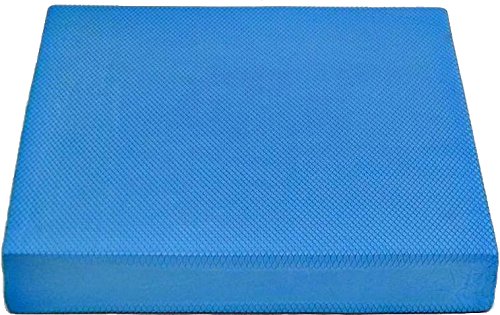
The Therapist’s Choice X-Large pad dominates the category with its 19-by-15-inch surface, giving users with larger feet or those needing a wider stance plenty of room to land lunges and single-leg stands without any edge spill. Its 2.3-inch thickness offers a noticeably higher instability challenge than the standard 2-inch pads, which means it works ankle stabilizers and hip abductors harder right out of the box.
Constructed from high-density closed-cell foam, this pad resists moisture absorption and wipes clean easily, making it suitable for sweaty gym sessions or clinic use. The latex-free material also eliminates allergy concerns, and its firm feel closely matches the pads used in professional physical therapy settings.
Some users report minor surface ripping if they use aggressive footwear with sharp treads. Removing shoes during balance work preserves the foam integrity and gives better tactile feedback for proprioceptive drills.
Why it’s great
- Largest footprint (19×15 inches) for stable foot placement
- 2.3-inch closed-cell foam delivers serious instability challenge
- Latex-free and easy to sanitize
Good to know
- Sharp shoe treads can cause surface tearing
- Firm foam may feel too aggressive for absolute beginners
2. THERABAND Stability Trainer Pad
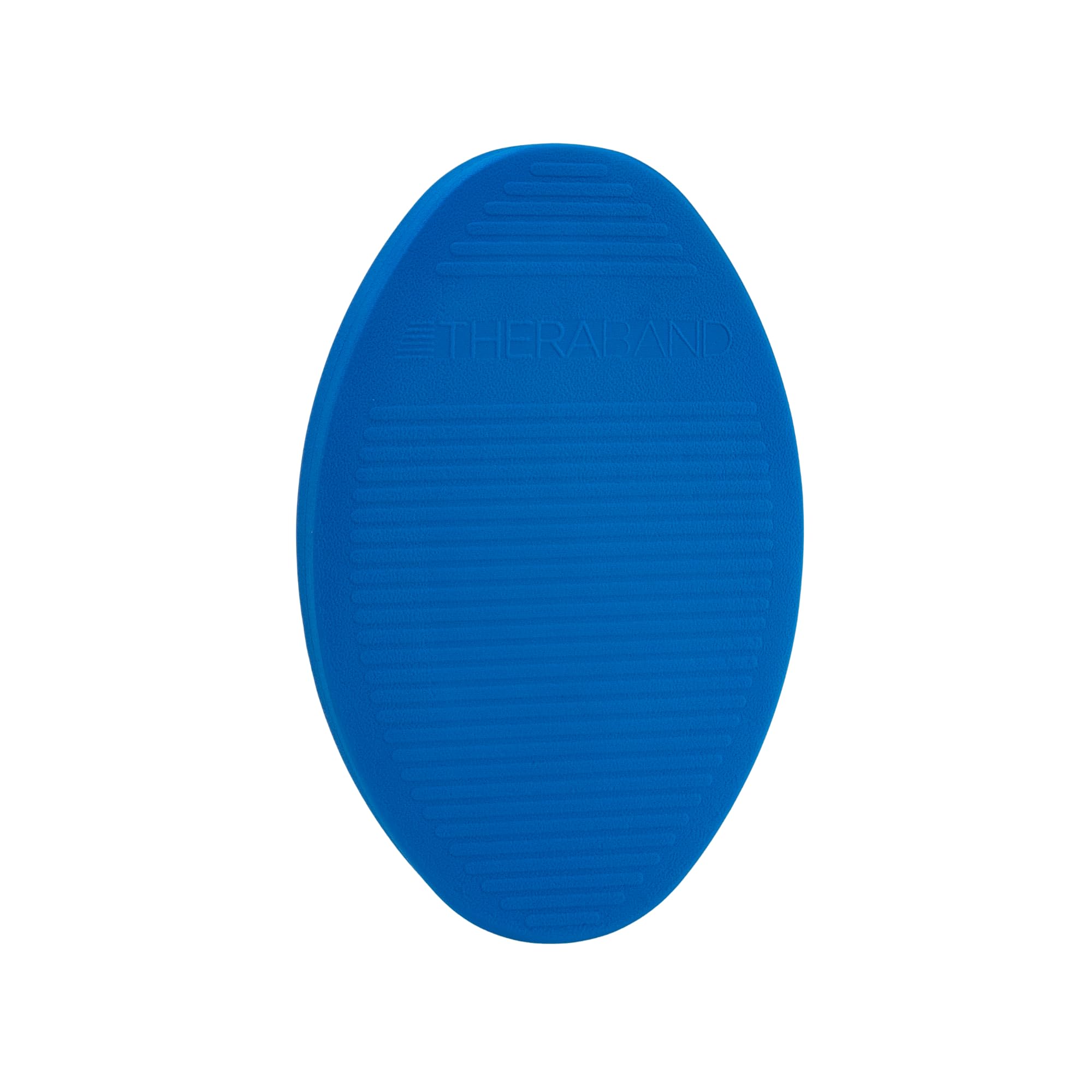
THERABAND’s stability pad uses a color-coded system that makes it easy to select the right difficulty level. The intermediate blue foam provides a moderate wobble that is forgiving enough for post-surgery rehab but still challenging enough for core and single-leg work. At 16.35 by 10.25 inches, the footprint is narrower than most, which encourages precise foot placement and forces better alignment.
Its non-slip textured surface grips the floor firmly without shifting during dynamic movement, and the water-resistant material wipes down quickly after sweaty workouts. The included full-body balance training guide offers structured progressions, so you are not guessing which exercises to perform next.
The narrower width can feel cramped for users with larger feet, and the softer blue foam may bottom out slightly under heavier loads above 250 pounds. If you need a wider or firmer surface, consider the black (least stable) THERABAND option for advanced users.
Why it’s great
- Color-coded system simplifies progressive difficulty
- Non-slip base stays locked on hardwood or tile
- Comes with a structured exercise guide
Good to know
- Narrower footprint may not suit size 12+ feet
- Soft foam can compress under very heavy users
3. Vive Oval Balance Pad
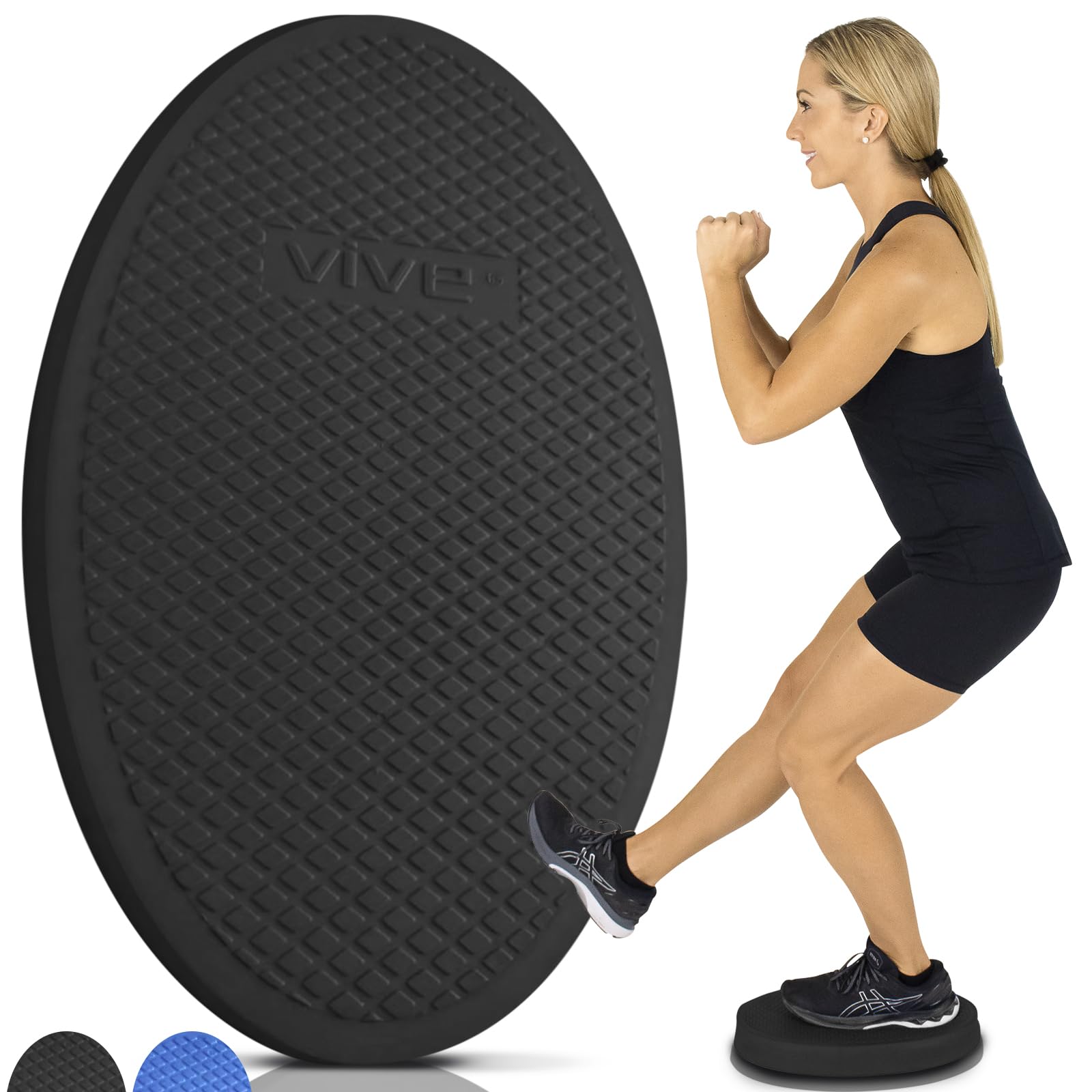
Vive’s oval pad breaks from the rectangular norm, offering a shape that naturally supports both single-leg stance and tandem walking drills. The TPE foam hits a sweet spot between firmness and give, providing noticeable wobble without feeling like you are sinking into a marshmallow. Multiple users report using this pad for just two minutes daily while brushing teeth and noticing measurable balance gains within weeks.
The diamond-grid top surface provides excellent grip even during barefoot use, and the closed-cell TPE construction resists moisture, odor, and staining better than standard polyurethane options. Its lightweight design makes it easy to toss into a gym bag for travel or use at a standing desk.
Oval shape users note it does not align perfectly with rectangular yoga mats, and the TPE layer can develop surface creases after extended folding in storage. Storing it flat between sessions preserves its uniform surface texture.
Why it’s great
- Oval ergonomics encourage multi-directional balance drills
- TPE foam hits ideal firmness-to-comfort ratio
- Portable enough for daily carry and desk use
Good to know
- Oval shape may not align with rectangular mats
- TPE can crease if folded repeatedly
4. ProsourceFit Exercise Balance Pad

ProsourceFit’s pad is the Swiss Army knife of the category, doubling as a knee pad for gardening, a seat cushion for meditation, and a foot pad for standing desks — all while delivering genuine balance training for rehab and fitness. Its 2.25-inch TPE foam provides a stable instability that suits both beginners recovering from meniscus surgery and advanced users performing plank variations.
The diamond-pattern textured surface offers reliable grip even during intense sweat sessions, and the environmentally conscious TPE material contains no harmful chemicals, making it safe for indoor use. Weighing only 12 ounces, it is easy to carry to the gym or office.
Some users find the pad too soft for aggressive lunges or box jumps, where a firmer closed-cell foam would provide better support. For gentle PT exercises and kneeling comfort, however, it excels.
Why it’s great
- Multi-purpose: balance pad, knee cushion, seat pad
- 2.25-inch thickness provides a moderate challenge
- Lightweight and easy to transport
Good to know
- Too soft for high-impact dynamic movements
- Surface may show wear under aggressive shoe use
5. Fragraim Balance Pad
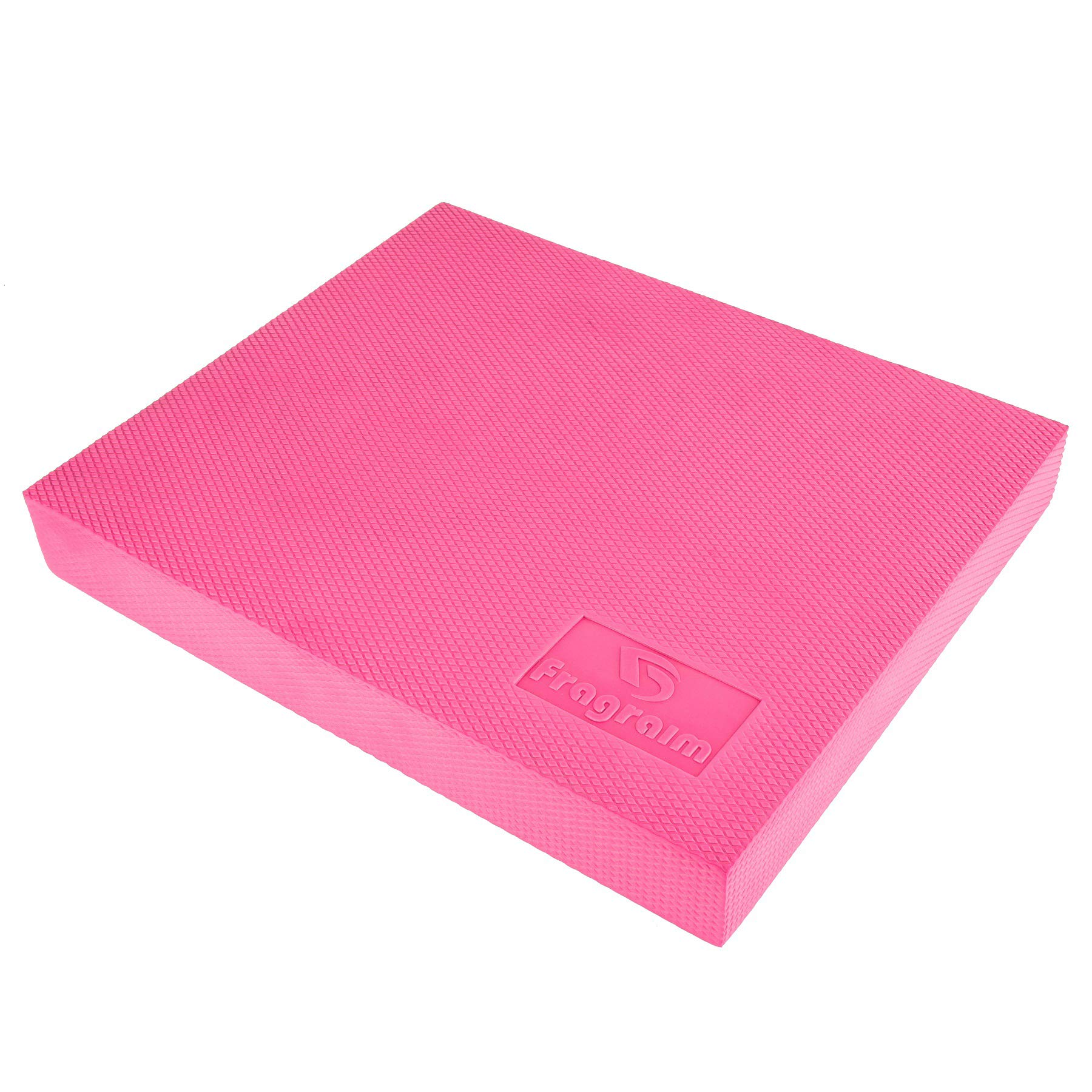
Fragraim’s pad replicates the feel of the balance pad your physical therapist uses at a fraction of the cost. The 2-inch TPE foam offers a firm, predictable wobble that makes single-leg stance work effective without feeling unstable. Physical therapists have specifically recommended this pad to patients for at-home balance homework, which speaks directly to its quality.
The textured non-slip surface holds bare feet securely, and the 15.7-by-13-inch footprint accommodates most shoe sizes comfortably. Its lightweight design makes it easy to move between rooms, and the sweat-proof material wipes clean with a damp cloth after use.
Users with shoes larger than size 16 report their toes overhang slightly during tandem stance exercises. For standard foot sizes, the dimensions work perfectly for lunges, squats, and yoga poses.
Why it’s great
- PT-recommended design at budget-friendly price
- Firm TPE foam provides reliable instability
- Sweat-proof surface is easy to clean
Good to know
- Small for users with size 16+ feet
- Foam may develop surface creases over time
6. HAPBEAR Exercise Balance Pad
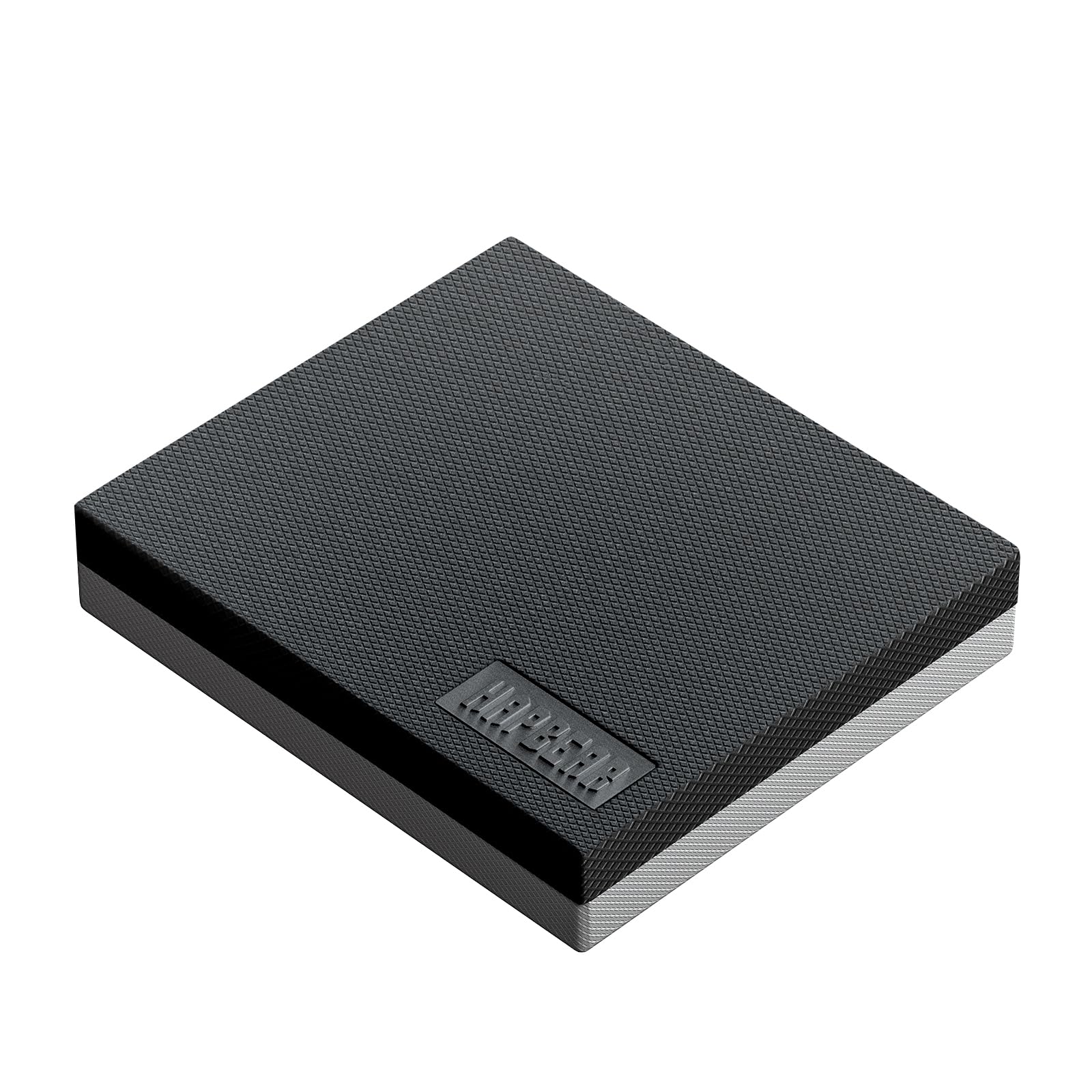
The HAPBEAR pad stands out for its dual-sided surface design, offering two different grip textures in one lightweight package. One side provides a smooth surface for gentle rehab work, while the other uses a diamond-grid pattern for more aggressive traction during sweaty workout sessions. At 2.4 inches thick, it provides more wobble than the standard 2-inch pads, challenging your stabilizers further.
Weighing just 11.36 ounces, it is one of the lightest pads in this roundup, making it ideal for travelers who need to pack a balance tool without adding weight to their luggage. The waterproof TPE material wipes clean instantly and resists stains, even after repeated use on grass or gym floors.
Some users report that the soft foam creases after several uses, especially when used at higher body weights around 180 pounds. The creasing does not affect structural integrity, but it creates a slightly uneven surface over time.
Why it’s great
- Dual-sided design offers two grip levels
- Ultra-lightweight at 11.36 ounces
- Waterproof and stain-resistant TPE
Good to know
- Soft foam creases under heavier use
- Surface may become uneven over time
7. Aiweitey Stability Trainer Pad
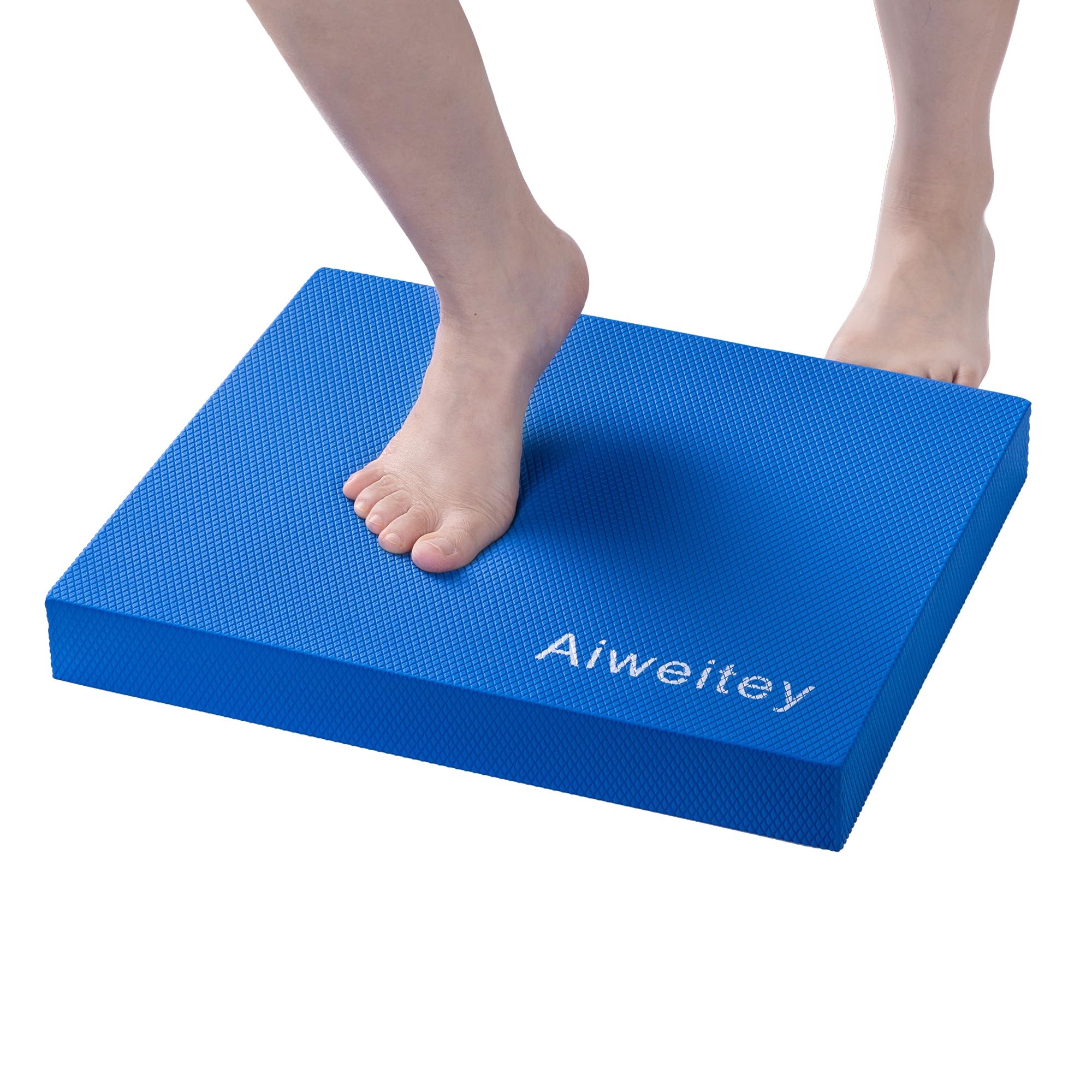
The Aiweitey Stability Trainer Pad focuses on accessible balance work for elderly users and those in early rehab stages. Its 2-inch TPE foam is firm enough to provide a stable surface for gentle exercises but soft enough to cushion knees and elbows during floor work. Multiple reviews from users in their 80s confirm that this pad maintains its shape and firmness after months of daily use.
The 15.7-by-13-inch surface is large enough for comfortable foot placement during standing exercises, and the water-resistant TPE material is easy to clean after sweaty or outdoor sessions. The non-slip design keeps the pad from sliding on hardwood or tile floors, reducing fall risk during therapy routines.
The outer TPE layer may show creases and indentations that do not fully recover over time, and some users note the surface feels slightly less durable than denser closed-cell alternatives. For gentle, low-impact balance work, it remains a solid entry-level choice.
Why it’s great
- Prescribed for 85+ year old rehab patients with good results
- Non-slip base provides safety on hard floors
- Water-resistant and easy to wipe clean
Good to know
- TPE outer layer can show permanent creases
- Softer foam may not suit high-intensity training
FAQ
Is a thicker balance foam pad always better for training?
Can I use a balance foam pad for kneeling during gardening or yoga?
Final Thoughts: The Verdict
For most users, the best balance foam pad winner is the Therapist’s Choice X-Large because it delivers the largest surface area with the thickest foam for serious instability training. If you want a step-by-step progressive system, grab the THERABAND Stability Trainer. And for budget-friendly PT replication, nothing beats the Fragraim Balance Pad.