
Finding a bale of hay that is actually green, soft, and free of dust and sticks is a constant battle. Whether you are feeding a hungry horse, a picky guinea pig, or a bonded rabbit, the wrong bale leads to waste, sneezing fits, and hungry pets that turn their noses up at dinner. The real challenge is cutting through the marketing to find a product that delivers consistent quality, proper nutritional value, and the right texture for your specific animals.
I’m Min — the co-founder and writer behind Gadgets Feed. I specialize in analyzing the agricultural and pet supply market, comparing hundreds of reviews to identify which hay producers deliver the freshest, most nutritious forage with the least amount of filler, dust, and stem waste.
This guide breaks down the top contenders on the market to help you find the most reliable option for your needs. Whether you need a small bag for a dwarf rabbit or a full 50-pound compressed bale for a barn, these are the best bale of hay choices currently available.
How To Choose The Best Bale Of Hay
Selecting the right hay goes beyond just grabbing the cheapest option. The forage type, its physical condition, and how it is packaged all determine whether your animal will actually eat it and benefit from it. Here are the critical factors to consider.
Forage Type: Alfalfa, Timothy, or Orchard Grass
Alfalfa hay is a legume, meaning it is higher in protein and calcium. It is ideal for growing, pregnant, or lactating animals but can cause urinary issues in adult rabbits and guinea pigs due to excess calcium. Timothy hay is a grass that is lower in protein and calcium, making it the staple for adult small herbivores. Orchard grass is also a grass hay, often softer and sweeter smelling than Timothy, making it a favorite for picky eaters. Match the forage type to your animal’s life stage and health requirements.
Dust and Stem Content
High-quality hay should be predominantly green, long-stranded, and contain a minimal amount of dust and thick, woody stems. Dust can cause respiratory irritation in both animals and humans, while hard stems are often discarded by pets, creating waste. Look for producers that market “low-dust” or “hand-selected” hay, as these usually go through an extra sorting process to remove undesirable material.
Package Format: Loose Box vs. Compressed Bale
Loose hay in boxes or bags is convenient for small pets and allows you to easily inspect the quality of the hay before feeding. Compressed bales, like the 50-pound STANDLEE option, are significantly more economical per pound for bulk buyers but require a bit of work to break apart. They are also typically shrink-wrapped, which locks in freshness but can hide the quality of the hay inside until you open it.
Quick Comparison
On smaller screens, swipe sideways to see the full table.
| Model | Category | Best For | Key Spec | Amazon |
|---|---|---|---|---|
| STANDLEE Timothy Bale | Compressed Bale | Bulk feeding / Barns | 50 lb compressed bale | Amazon |
| Viking Farmer 1st Cut Timothy | Small Animal Hay | Picky rabbits / Guinea pigs | 8 lb, high-fiber, long stem | Amazon |
| Grandpa’s Best Orchard Grass | Small Animal Hay | Soft texture / Low dust | 10 lb loose box, hand-selected | Amazon |
| Grandpa’s Best Alfalfa Hay | Alfalfa Forage | Treats / Young animals | 5 lb bag, soft-stemmed | Amazon |
| Aoneky Knotless Hay Net | Slow Feed Net | Horses / Waste reduction | 47 in, holds full square bale | Amazon |
| Majestic Ally Slow Feed Net | Slow Feed Net | Horses / Digestion control | 1.5 in x 1.5 in holes, 2-pack | Amazon |
| Fabbay Slow Feed Hay Net | Slow Feed Net | Budget-friendly / Durability | 1.1 in holes, 2-pack | Amazon |
In‑Depth Reviews
1. STANDLEE HAY Company Timothy Bale, 50 lb
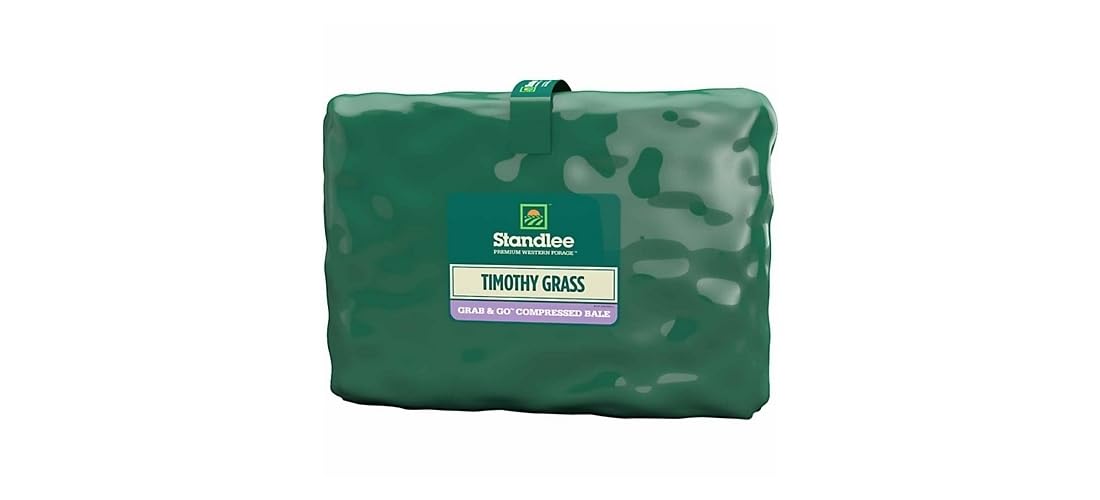
This is the volume king for a reason. The STANDLEE Grab N Go Compressed bale is a 50-pound, double-compressed, shrink-wrapped block of Timothy hay. For anyone with a herd of guinea pigs, a rabbitry, or a single horse, this delivers the absolute best cost-per-pound ratio on this list. The hay inside is consistently described as clean, dry, and mostly green with very few sticks, which is impressive for a compressed product of this scale.
The double-compression process means a standard 50-pound bale has a surprisingly small footprint, making storage in a garage or tack room far easier than a traditional loosely-stacked bale. You do have to manually break apart the flakes, but reviewers note the hay is generally soft and palatable. While some batches have reported a higher percentage of brown stems, the majority of feedback confirms this is a high-quality, economical source of forage when you cannot source a local, fresh field bale.
For owners of small animals like guinea pigs and rabbits, this bale will last a couple of months. The biggest trade-off is that you are buying sight-unseen; you cannot inspect the full contents before purchasing. However, the protective shrink-wrap keeps the hay fresher for longer compared to dried-out store shelves. If you use hay in volume, the STANDLEE bale is the most practical solution here.
Why it’s great
- Lowest per-pound cost of all products listed
- Compact shrink-wrapped bale for easy storage
- Consistently green and clean with minimal sticks
Good to know
- Requires physical effort to break apart flakes
- Quality can vary slightly between batches
- Large commitment, not suitable for single small pet owners
2. Viking Farmer 1st Cut Timothy Hay, 8 Lbs

The Viking Farmer 1st Cut Timothy Hay is the gold standard for small herbivore owners who are tired of dusty, brown hay that gets ignored. This hay is cut earlier in the season, resulting in a coarser, more fibrous texture that is excellent for dental wear and digestive motility. Customers consistently praise its long, green, and luscious stems with minimal powdery dust at the bottom of the bag, a stark contrast to bulkier store brands.
While the 8-pound bag is significantly smaller than the STANDLEE bale, the quality control here is exceptional. Reviewers note that the hay is bug-free, clean-smelling, and reliable for even the pickiest bunnies or chinchillas. It is a first-cut product, meaning it is higher in fiber and lower in protein than second or third cuts, which makes it ideal for adult animals with a tendency toward obesity or soft stools.
The main consideration is the premium price per pound. This is not a budget-feed option, but it is an investment in your pet’s health and a reduction in waste, as they are far less likely to sort through and reject it. If you prioritize consistent quality and clean hay over raw volume, Viking Farmer delivers.
Why it’s great
- Long, green, luscious stems with minimal dust
- High fiber content from first cut, great for digestion
- Excellent palatability, even for picky eaters
Good to know
- Higher cost per pound than bulk options
- 8 lb bag size is moderate for multi-pet households
- Not ideal for animals needing higher protein
3. Grandpa’s Best Orchard Grass Hay, 10lb Loose Boxed

Grandpa’s Best Orchard Grass hits the sweet spot between premium quality and reasonable bulk. This 10-pound loose box offers a massive upgrade over popular big-box pet store brands like Oxbow and Kaytee. Customers repeatedly mention that this Orchard Grass is softer, greener, and smellier (in a good, sweet way) than competitors, and that their guinea pigs and rabbits eat almost every strand, resulting in far less waste.
Orchard grass is naturally softer in texture than Timothy hay, making it a perfect base diet for animals with delicate mouths or those recovering from dental issues. It is also low in protein and calcium, making it safe for adult small pets. The hand-selected and hand-packaged process ensures that the box contains long strands rather than the powdery dust and stem fragments found in cheaper alternatives.
While the 10-pound box is a great size for one to two small pets, it may not be the most economical choice for a large barn or multiple horses. The loose box format is excellent for easy daily feeding and checking freshness. For small animal owners who want a premium hay without the premium price of smaller bags, this is the sweet spot.
Why it’s great
- Soft, sweet-smelling Orchard grass with high palatability
- Low-dust and long-stranded, very little waste
- Comparable quality to premium brands at a better value
Good to know
- 10 lb box may be small for horse feeding
- Occasional grasshopper or bug can be found naturally
- Some users prefer Timothy for higher fiber content
4. Grandpa’s Best Alfalfa Hay, 5 lbs

Grandpa’s Best Alfalfa Hay is the top tier treat or supplement hay for small animals. It is soft-stemmed, leafy, and rich in nutrients, making it an ideal supplement for picky eaters who need a caloric or protein boost. The 5-pound bag is compact, measuring roughly 6x6x12 inches, and is perfectly portioned for a single rabbit or guinea pig as an occasional addition to their grass hay diet.
This hay is notably fresh and aromatic, a testament to its careful packaging. Customers report that their tortoises, rabbits, and chinchillas go crazy for the sweet taste and soft texture. Because it is an alfalfa product, you must be careful with adult animals prone to urinary sludge, but for growing kits, pregnant does, or convalescing animals, the high calcium and protein content is exactly what is needed. The tight bundle is easy to store and dispense.
One thing to note is that the tight, crumbly texture can create a bit of fine dust when breaking it apart, so feeding it in a hay rack rather than on the floor is recommended. While it is not a replacement for Timothy hay in a daily diet, it is a fantastic product for adding variety and nutritional density to your pet’s menu.
Why it’s great
- Soft, leafy texture with high nutritional value
- Excellent for picky eaters, growing or pregnant animals
- Compact 5 lb size is easy to store and handle
Good to know
- High calcium content, not for daily adult feeding
- Crumbles easily and can be dusty when broken apart
- Treat-feeding only for most adult small animals
5. Aoneky Knotless Hay Net, 47 Inches

The Aoneky Knotless Hay Net is the premium solution for horse owners wanting to reduce waste and slow feeding. Its standout feature is the ability to hold an entire standard 36x18x18 inch square bale, drastically reducing the time spent refilling hay nets. The knotless weave is a major upgrade over traditional knotted nets, as it eliminates the hard knots that can rub and injure a horse’s gums, and it is significantly more tear-resistant to withstand aggressive pullers.
With 1.5-inch mesh openings, the net achieves an excellent balance between slowing consumption and allowing access. Large horses find it satisfying enough to continue eating, while the small mesh prevents them from gulping large mouthfuls of hay, which helps prevent colic and reduces spillage onto the ground. The reinforced hanging loop and included rope are simple but effective, though some users swap the rope for a longer one with a cord lock for easier access.
The only real downside is that the 1.5-inch holes can be too small for some greedy horses who get frustrated if the net is not absolutely overstuffed with hay. In those cases, a 3-inch hole net might be more appropriate. For durability and size, this net has proven itself to last for months, even against persistent yanking and jerking on pipe corrals.
Why it’s great
- Holds a full square bale for less frequent refilling
- Knotless design prevents gum and muzzle injury
- Excellent waste reduction and colic prevention
Good to know
- 1.5-inch holes may frustrate greedy horses
- Included rope may be short for some setups
- Heavy bale requires secure attachment point
6. Majestic Ally Ultra Slow Feed 1.5″ Hay Net, 2-Pack

The Majestic Ally Ultra Slow Feed Hay Net has earned a loyal following in barns that go through nets quickly. It is a 2-pack of 40-inch nets made from a soft yet durable nylon with 1.5×1.5 inch square holes. The real selling point here is the build quality; reviewers who run full barns with daily use report these nets lasting over a year without developing holes, which is significantly better than many more expensive “brand name” competitors.
These nets are designed to simulate natural grazing by slowing down the horse’s eating pace. The small holes are very effective at preventing gulping and reducing the risk of indigestion and boredom. Each net holds roughly 3 to 5 flakes of hay, making them ideal for stall feeding, trailer trips, or turnout. The included top rope is strong and reliable, making filling and tying quick work.
One critical safety warning from experienced users: do not use these nets for goats with horns, as there is a risk of entanglement. For horses, they are perfect and functional. The main trade-off is that because they are so durable, they add a bit of upfront cost compared to cheap nets, but the long-term value is undeniable. If you are replacing nets every few months, this 2-pack is a serious upgrade.
Why it’s great
- Exceptional durability, often lasting over a year
- Ultra slow feed design reduces colic risk
- Soft nylon material protects horse gums
Good to know
- Not safe for goats with horns due to entanglement risk
- Small holes can be tight for very hay-thick flakes
- Occasional batch variation in hole size reported
7. Fabbay 2 Pcs Slow Feed Hay Net, 35 x 31 Inch

The Fabbay 2-Pack Slow Feed Hay Net is the entry-level hero for owners who want the benefits of a slow feeder without a premium price tag. Made from PE woven rope, these nets are surprisingly sturdy and long-lasting, withstanding daily use by horses, goats, and sheep for months without developing holes or tears. The 1.1-inch mesh opening is among the smallest on this list, making it extremely effective at slowing down a voracious eater and helping with weight management.
Each net measures 35 x 31 inches and comes with loops on both sides for easy hanging in stalls, trailers, or on fences. They fold up compactly for storage or travel. Owners of multiple horses appreciate the 2-pack format, allowing one net to be washed or hung in a second location while the other is in use. The PE rope is softer on the gums than diamond-mesh nets, providing a comfortable eating experience for the horse.
The primary limitation is that the small hole size can be challenging to fill with very coarse or heavy-stemmed hay, as the nozzle may get stuck. Additionally, the top stitching on some units can loosen over time, but this is a simple repair. For the price, these nets offer incredible value and have stood the test of time in muddy, rainy conditions. They are a fantastic way to start with slow feeding.
Why it’s great
- Very affordable 2-pack for multi-horse owners
- Extremely small 1.1-inch holes for effective slow feeding
- Soft PE rope is gentle on gums and durable
Good to know
- Small holes can be tricky to fill with thick hay
- Top stitching may need occasional repair
- Can be challenging to hang low enough off the ground
FAQ
Can I feed my rabbit only Alfalfa hay?
How often should I replace a slow feed hay net?
How can I tell if my hay is dusty and low quality?
Final Thoughts: The Verdict
For most users, the best bale of hay winner is the STANDLEE HAY Company Timothy Bale, 50 lb because it offers the absolute best value for bulk feeders, providing clean, green hay at a fraction of the cost per pound of bagged options. If you want the highest quality small animal hay with minimal waste, grab the Viking Farmer 1st Cut Timothy Hay, 8 Lbs. And for horse owners fighting waste and colic, nothing beats the durable design of the Aoneky Knotless Hay Net, 47 Inches.