
Our readers keep the lights on and my morning glass full of iced black tea. As an Amazon Associate, I earn from qualifying purchases.
Specs are compiled from manufacturer listings and verified buyer reviews and can change over time — please confirm the key details on the product page before buying.
If you are shopping for a 20 inch gas chainsaw, the single most useful thing to know up front is this: bar length tells you almost nothing about how a saw actually cuts. What decides whether a saw chews through a storm-downed oak or stalls halfway in is the engine displacement, the horsepower it makes, and how much the whole unit weighs in your hands after an hour. This guide breaks down nine real gas saws that all run a 20 inch bar so you can match the engine to the wood you actually cut.
I’m Min — the founder and writer behind Gadgets Feed. This guide is built by comparing the manufacturers’ published specifications and the patterns across verified customer reviews, so you get each pick’s real strengths and trade-offs instead of marketing spin.
Gas saws earn their keep on the big stuff — storm cleanup, firewood, and felling — where cordless simply cannot keep pace. Below you will find the 20 inch gas chainsaw that best fits how you actually cut wood.
Our Picks at a Glance


How To Choose The Best 20 Inch Gas Chainsaw
If you cut firewood on weekends and want one saw that handles most jobs, a 20 inch bar is the size to aim for. That bar length (the metal guide the chain runs around) is long enough to fell a decent-sized trunk in a single pass, yet short enough that a mid-size engine can spin it without bogging down. Here is what actually separates a saw you will love from one that sits in the shed.
Engine Displacement And Horsepower
Displacement is the size of the engine, measured in cubic centimeters (cc) — think of it as lung capacity. A bigger number generally means more torque to keep the chain moving through wet hardwood. Horsepower is the output that displacement produces. A 50cc saw making 3.2 hp is a different animal from a 68cc unit claiming 4.5 hp, and that gap shows up the moment you bury the bar in a 24 inch log.
Weight And Balance
A heavier saw holds chain speed in wet hardwood but wears your arms out faster when you cut overhead or on a slope. Saw weights in this group run from around 11 pounds up past 20 pounds fully fueled. If most of your work is limbing and light cleanup, pick a saw under 15 pounds. If you are bucking big rounds all day, the extra mass keeps the chain pulling through the cut.
Fuel Mix, Oiling, And Maintenance
Two-cycle gas saws run on a mix of gasoline and oil, and the ratio matters — some engines want a richer 25:1 mix, others a leaner 40:1 or 50:1 depending on the manual. The automatic bar-and-chain oiler keeps the chain lubricated as it spins; when it is adjustable, you can dial the flow up for long cuts. Get the mix ratio and oiler flow right and the engine keeps starting season after season.
Quick Comparison
| Model | Best For | Engine Size | Horsepower | Unit Weight | Amazon |
|---|---|---|---|---|---|
| Husqvarna 450 Rancher 20 Inch Gas Chainsaw★ Best Overall | All-round home firewood and storm cleanup | 50.2 cc | 3.2 hp | 11.3 lb | Amazon |
| PROYAMA 62CC Gas Powered Chainsaw, 20in BarBest Value | Budget buyers who need big-engine grunt | 62 cc | 3.5 hp | 19.5 lb | Amazon |
| NEO-TEC 58cc Gas Chainsaw 2.8HPBest Fuel Efficiency | Quick firewood prep on a tight budget | 58 cc | 2.8 hp | 21 lb | Amazon |
| IVOVI 63CC Gas Chainsaw with 20-Inch Bar | Cutters who want two bar sizes in one kit | 63 cc | 3.5 hp | 14 lb | Amazon |
| NEO-TEC 62cc 20 Inch Gas Powered Chainsaw | Light hands wanting a lighter 20 inch saw | 62 cc | 3.5 hp | 14 lb | Amazon |
| PROYAMA 68CC Gas Powered Chainsaw | Heavy wood processing and larger trunks | 68 cc | 4.5 hp | 14.5 lb | Amazon |
| Husqvarna 450S Rancher Gas Chainsaw 20 Inch | Husqvarna fans wanting the Rancher platform | 50 cc | 3.2 hp | 14.9 lb | Amazon |
| Echo CS-590-20AA 20 in. Gas Chainsaw | Firewood cutters who want pro-grade power | 59.8 cc | 5.3 hp | — | Amazon |
| ECHO Chain Saw, Gas, 20 in. Bar, 59.8cc | Long-run firewood cutting and fence lines | 59.8 cc | 3.9 hp | 9.12 kg | Amazon |
In‑Depth Reviews
1. Husqvarna 450 Rancher 20 Inch Gas Chainsaw, 50.2-cc 3.2-HP, 2-Cycle X-Torq Engine
Our pick — 4.5★ from 550+ verified ratings; the strongest balance of quality and price.
The saw that starts on the first or second pull and keeps cutting all afternoon
This is the one most people picture when they say they want a “real” chainsaw, and there is a reason it sits at the top of the pile. It runs a 50.2-cc two-cycle X-Torq engine that puts out 3.2 hp, and it weighs 11.3 pounds — the lightest fully-equipped saw in this whole group. That combination matters. A 20 inch bar on a light frame is easier to control at the end of the day, and the LowVib handle system keeps the vibration from chewing up your hands during long sessions.
Owners bring up the Smart Start system first, because it lets you start the saw with minimal pull effort — handy when you are already tired. The inertia-activated chain brake (a safety brake that trips the instant the saw kicks back) stops the chain the moment kickback hits, a real safety net if you have ever felt a bar kick back on you. The X-Torq engine also runs an Air Injection system, which flings larger dust and debris out before it reaches the air filter, so the filter stays cleaner and the engine lasts longer between service intervals. As buyers report, a seasoned cutter put the storm-damage results simply: “20-inch bar length easily cut larger logs from recent storm damage.” That fuel appetite comes up too — it “does consume fuel a little quicker” than some older saws, which is the honest trade for the power.
Here is the part to go in with your eyes open about. The chain is the weak link. Multiple owners mention the chain breaking or finding its way off the bar more often than they would like, and that is a chain issue rather than an engine one — many simply swap to a different chain and move on.
Where This Saw Delivers
- At 11.3 pounds it is the lightest fully-equipped 20 inch saw here, so your arms last longer
- Smart Start makes cold starts a two-pull job even for casual users
- Air Injection keeps the filter cleaner, stretching service intervals for weekend cutters
- Quality is the thing buyers rave about most by a wide margin — far and away the top praise point
What To Keep In Mind
- The chain tends to break or slip off the bar; many owners upgrade the chain early
- It drinks fuel faster than some older saws
- The 50.2-cc engine has less raw grunt than the 68cc saws further down this list
Worth grabbing if: you want a lightweight, easy-starting Husqvarna that handles firewood, pruning, and storm cleanup without a fight.
Think twice if: you regularly take down big hardwood trunks and want maximum engine displacement — a 68cc saw below will feel stronger.
2. PROYAMA 62CC Gas Powered Chainsaw, 20in Bar
A 3.5-horsepower budget saw with a low-vibration handle system that punches well above its price
If you want maximum engine for the money, start here. The PROYAMA runs a 62cc two-cycle engine making 3.5 hp — more displacement than the Husqvarna above at the same bar length. It carries an anti-vibration system with dampers that isolate the engine from the handles, so your hands and arms stay fresher during long sessions. There is also a steel bar spring built into the starter that reduces the resistance you feel when pulling the cord, which makes it a friendlier saw for older users or anyone with a weaker grip.
The safety kit is solid for the tier. An inertia-activated chain brake (a safety brake that trips the instant the saw kicks back) stops the chain on kickback, and a separate safety switch prevents accidental starts. Owners consistently call out how quickly it fires up — most report it starting within one to three pulls. One owner working through backyard timber put the power into perspective: “It made quick work of a 28 inch wide tree in the backyard.” Saw quality is the aspect praised most among its owner base, followed by value for money, and both hit hard for a saw at this price point.
Two things to know before you buy. First, it is a heavier saw than the Husqvarna above — you will feel the difference during overhead work. The trade-off is you cannot argue with the power-to-dollar here. Second, the fuel mix has to be exactly right; the manual leans you toward a precise ratio and the saw will let you know if you get it wrong. A bag is included, and there is a one-year warranty backing it.
Power To Price: A 62cc engine at 3.5 hp makes this the strongest budget-tier option on the list — you get displacement that matches mid-range saws for far less.
Start And Handle: The easy-start engine, steel bar spring, and anti-vibration handle combine to make this one of the least tiring budget saws to operate all day.
Reach for this if: your budget is tight but you refuse to give up big-engine cutting power.
Look elsewhere if: you are doing extended overhead trimming and want the lightest saw you can find — the weight is the honest compromise here.
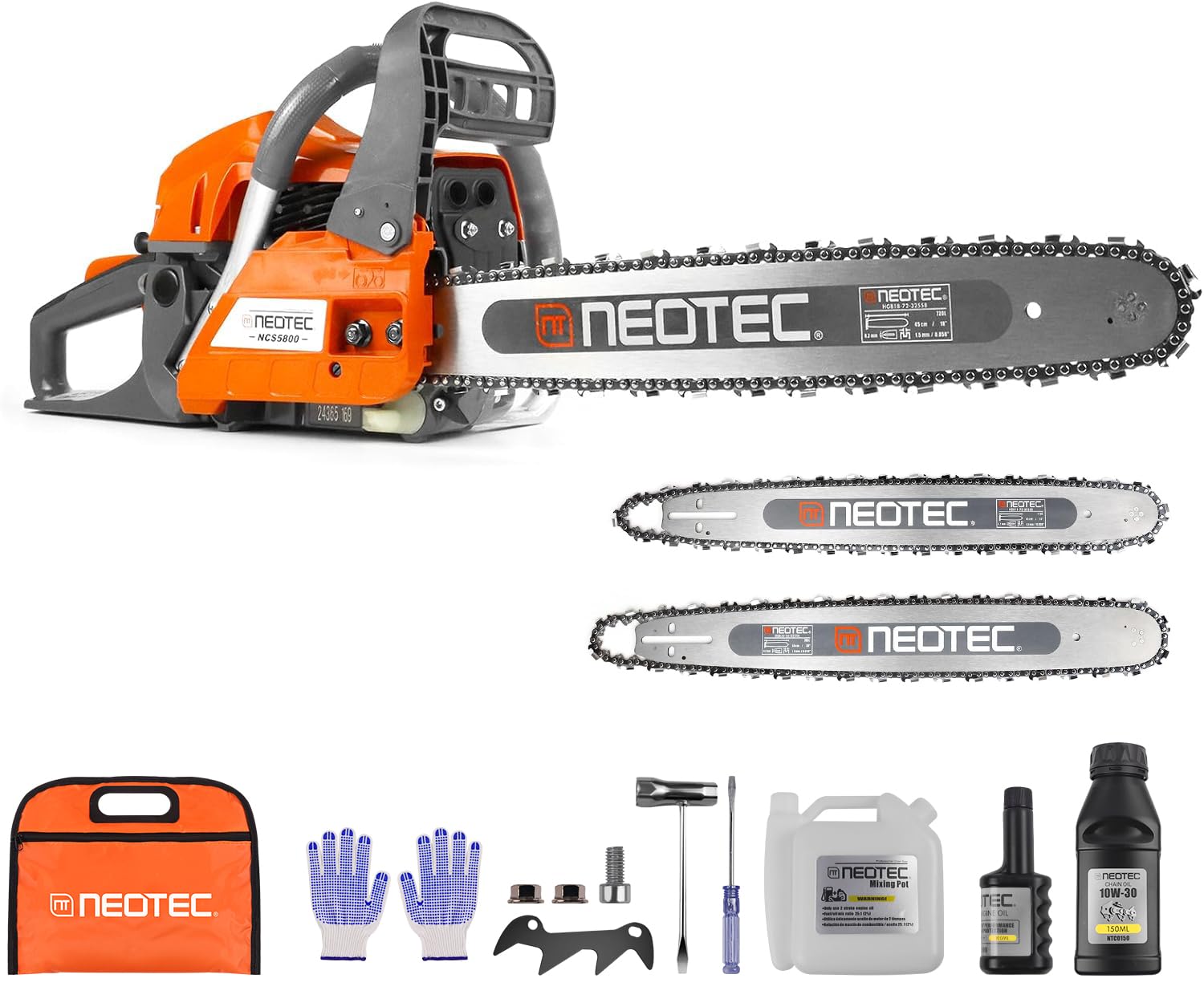
3. NEO-TEC 58cc Gas Chainsaw 2.8HP 20 Inch Guide Bar
The under-the-radar 58cc pick with a leak-proof dual-tank design and lifetime technical support
This is the saw for the buyer who hates fuel leaks and hates fiddling with carburetor settings more. The NEO-TEC 58cc engine makes 2.8 hp and spins up to 7500 RPM, which is a modest output for its displacement — but the design leans into reliability rather than peak grunt. The standout feature is the dual-tank system: 550ml of fuel and 260ml of oil capacity in sealed containers that the manufacturer says prevents leaks and extends runtime. The 25:1 fuel-oil mix ratio is clearly printed on the saw, so you are not guessing at the pump.
Starting is where this saw earns its keep. NEO-TEC engineered a cold/hot start system with an extended pull rope that fired up within about three seconds in the manufacturer’s testing. The side-mounted chain tensioner lets you adjust the chain without tools — a nice touch when the chain loosens mid-job. Safety includes a quick-stop chain brake, a safety switch lock, and a front hand guard working together as a layered system. Quality is what buyers praise most here, followed by value for money. One owner’s aggressive cutting feedback sums it up: the saw “cuts like a champ” through softwood and queen palm tops with clean results and good fuel economy.
The honest catch is the bar-size warning: this model is not CARB certified and cannot be shipped to California. If you are outside California, you are fine. The 2.8 hp output also puts it below the 3.5 hp saws on this list, so if you are felling thick hardwoods full-time, a bigger engine will serve you better. For a homeowner clearing storm damage and seasonal firewood, it is more than enough. Lifetime technical support on the engine, chain brake, and fuel system is included — unusual at this price.
Why Owners Stick With It
- Dual-tank system with 550ml fuel and 260ml oil prevents leaks
- Tool-free side chain tensioner for on-the-fly adjustments
- Starts in around three seconds with the extended pull-rope cold/hot start system
The Fine Print
- Not CARB certified — cannot be sold or shipped to California
- At 2.8 hp the engine trails the 3.5 hp saws in this group
- 25:1 mix ratio is richer than the 40:1 or 50:1 that some users prefer
Built for: homeowners who value a leak-resistant fuel system and easy starts over peak horsepower.
Pass on it if: you live in California, or you need the extra grunt of a 62cc-and-up engine for regular felling work.
4. IVOVI 63CC Gas Chainsaw with 20-Inch and 18-Inch Bars
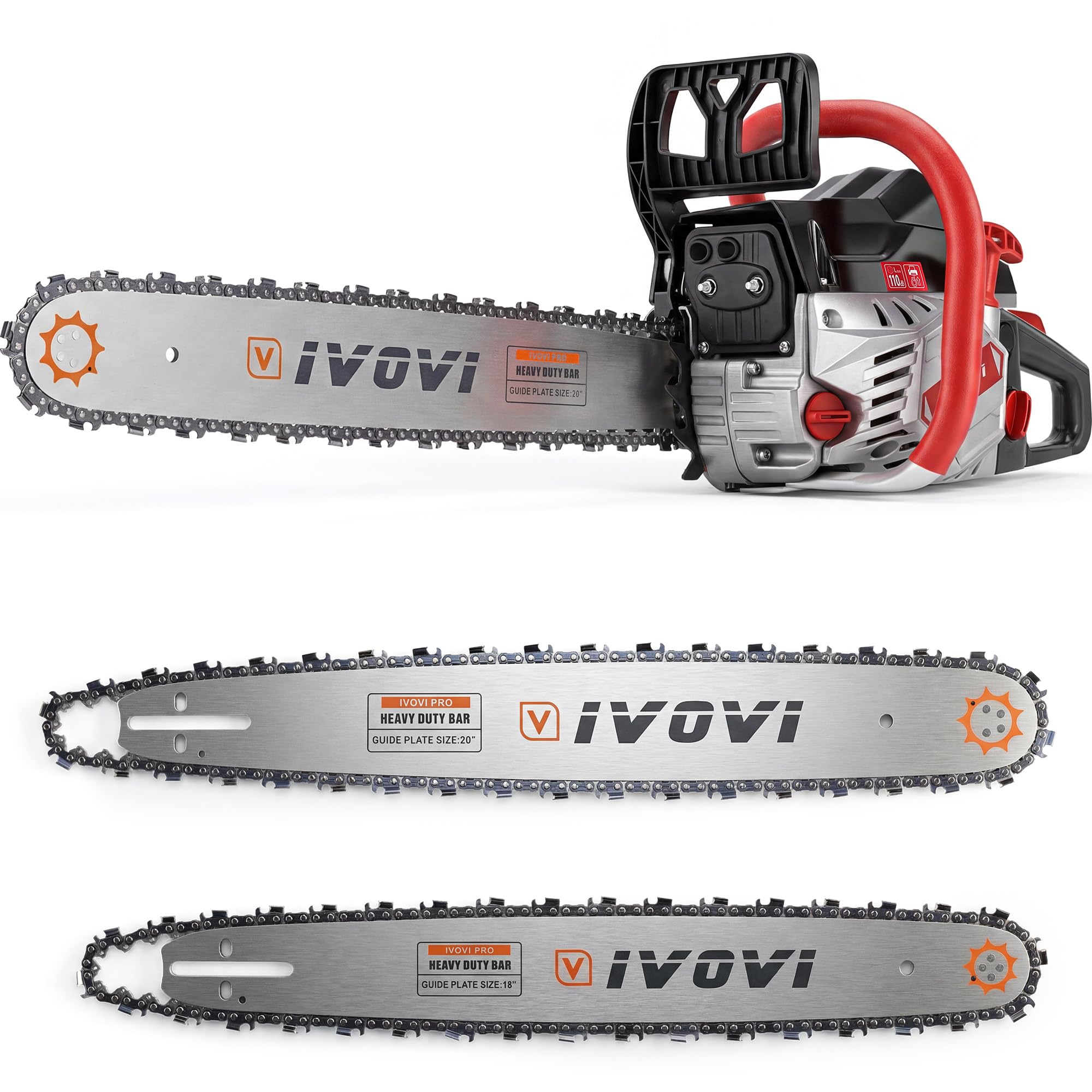
Two bars, one saw — the kit that switches between trunk bucking and close-quarters limbing
Most 20 inch saws lock you into one bar length. This IVOVI ships with two, and that is genuinely useful. The 20 inch setup handles wider trunks and bucking; swap to the 18 inch bar for limbing, trimming, and tighter spaces where the longer bar just gets in the way. The 63cc two-cycle engine makes 3.7 hp, spins at 8500 RPM, and drives the chain at 85 feet per second — enough to turn fallen limbs and thick rounds into finished firewood without a lot of drama.
The physical build is where this saw separates from the budget-tier options. It is listed at 14 pounds, which sits nicely between the featherweight Husqvarna and the heavier budget saws. The easy-start recoil system reduces the effort needed to pull the cord, and shock-absorbing handles keep the vibration from working up your arms. The 0.26 L automatic oiler keeps the bar and chain fed during use so friction and heat stay manageable — one less thing to think about mid-cut. And because replacement chain specs (0.325P, 76DL for the 20 inch; 0.325P, 0.058G, 72DL for the 18 inch) are printed up front, you can order the correct chain without guessing.
What to watch: the plastic covers feel a bit brittle to the touch, and the spring-assisted starter has its own rhythm worth getting used to before the first big job. Neither is a dealbreaker at this tier, but plan on treating the housing with care. Reviews are thin so far, which usually reads as a newer saw gaining traction — the spec sheet holds up on its own.
Two Bars, One Tool: Switching between 20 inch bucking and 18 inch limbing bar setups is a real convenience most single-bar saws cannot match.
Spec Check Before You Buy: Chain replacement specs are published clearly — 76DL for the 20 inch and 72DL for the 18 inch — so you will not waste money ordering the wrong fit.
Ideal if: your cutting mixes big rounds and tight limb work and you would rather not buy two saws.
Reconsider if: you prefer a long track record of owner feedback over a two-bar convenience kit.
5. NEO-TEC 62cc 20 Inch Gas Powered Chainsaw 3.5HP
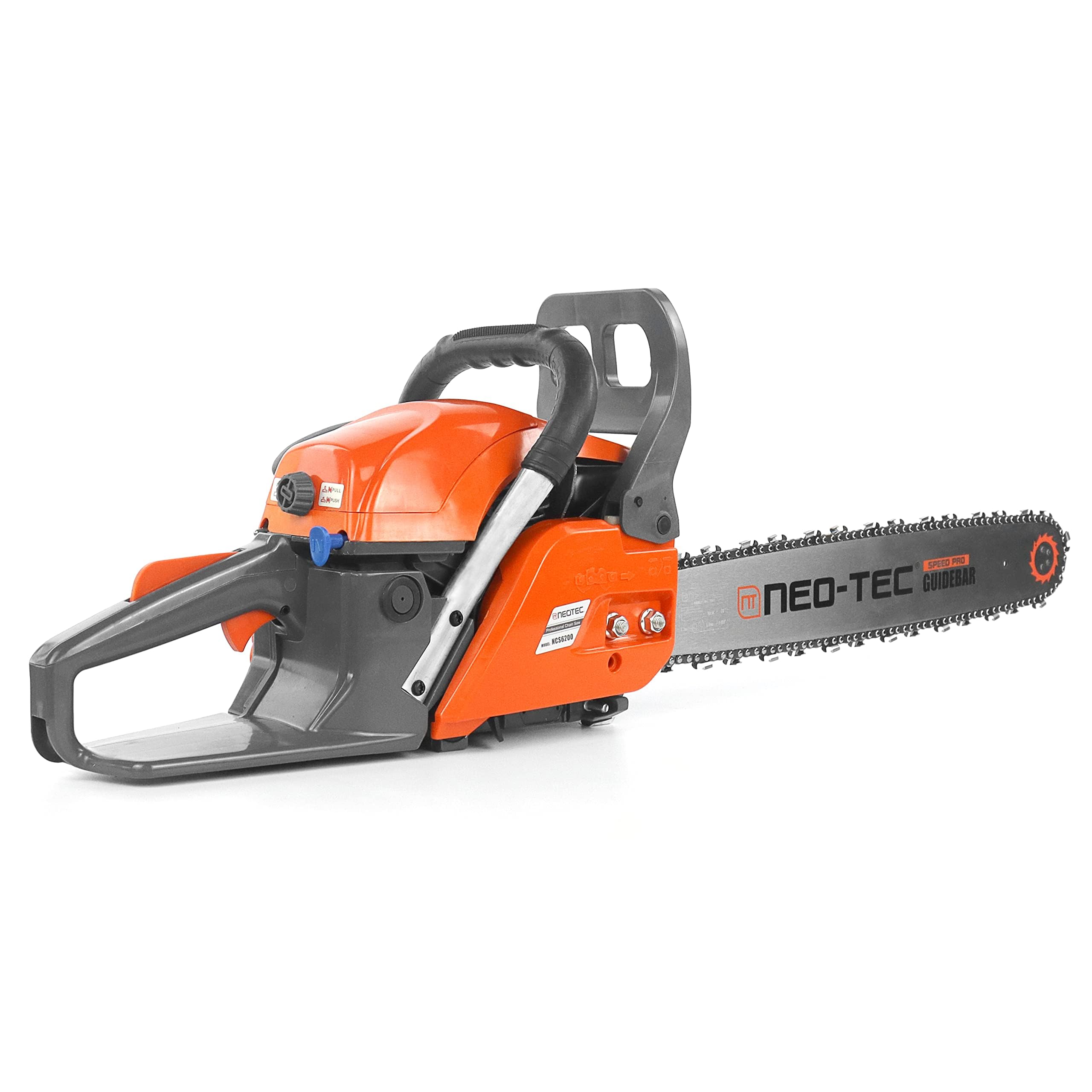
A 62cc saw that stays at 14 pounds fully equipped, so your arms last longer
Some saws hide their weight in a spec sheet and then feel like bricks in the yard. This one does not. The NEO-TEC 62cc weighs 14 pounds fully equipped, and it carries a professional 20 inch bar and chain along with a wrap-around handle for extra control when you are cutting at odd angles. The engine is a 62cc two-cycle unit making 3.5 hp, and it spins up to 8500 RPM — plenty of torque for pruning, limbing, bucking, and felling. The bar itself spec-checks as 0.325 inch pitch, 0.058 inch gauge, 76-drive-link chain.
The starting system is what makes this saw genuinely accessible. A premium starter with a choke knob gives you a smooth one-to-two pull ignition, and a chain brake plus trigger lockout round out the safety picture so a slip does not turn into an injury. The precision carburetor and tune combustion keep the engine efficient, which means fewer trips to the fuel can during long sessions. Size is what owners praise most across a large review base, followed closely by value for money and cutting performance — this saw has wide real-world feedback behind it, not a handful of early adopters.
The catch worth knowing: the handle is the honest weak point. There are owner reports of the handle cracking within a couple of hours of use, and the choke lever and fuel caps feel flimsy to some. Two-cycle gas saws of any brand require fuel mix discipline and proper bar-oil top-ups, and this one uses a specific mix ratio you will want to follow closely. For the type of work it was designed for — pruning, limbing, storm cleanup — it earns its keep, especially for anyone who wants a lighter feel without giving up engine size.
The Case For The 14-Pound Frame
- Weighs 14 lbs fully equipped with the 20 inch bar and chain mounted
- 62cc engine makes 3.5 hp and tops out at 8500 RPM
- Premium starter fires in one to two pulls thanks to the choke knob
Where It Can Falter
- Handle durability is the recurring complaint — treat it gently
- Choke lever and fuel caps feel flimsy on some units
- Specific fuel mix ratio demands attention to avoid running issues
Right for you if: you want a big-engine 20 inch saw in a lighter frame for farm, yard, or light storm work.
Skip if: you plan to run the saw eight hours a day in a commercial setting where handle abuse is inevitable.
6. PROYAMA 68CC Gas Powered Chainsaw, 24 Inch 20 Inch Top Handle

A 4.5-horsepower monster with a magnesium chain brake case and both 24 inch and 20 inch bars
For pure engine size, nothing in this group beats it. The PROYAMA 68cc two-cycle engine (a 68 cubic-centimeter engine that runs on a gas-and-oil mix) produces 4.5 hp — the highest output on this list short of the Echo CS-590-20AA’s 5.3 hp — and it makes that power with a magnesium alloy chain brake and case that resists deformation under heavy cutting loads. Two bars are included: a 20 inch and a 24 inch, so you can match the cutting length to the job. For the same reason the 20 inch saw of this same brand runs 3.5 hp, this one runs 4.5 hp — same brand, different animal.
Where the design earns its keep is in long sessions. The anti-vibration system cuts hand fatigue, and the ergonomic handle keeps the saw balanced while you work through big rounds. Assembly is straightforward from the start, and one owner reported the saw slicing through 24 inch trunks like butter — that is what 4.5 hp behind a sharp chain looks like. Quality is what buyers praise most across the review base, and value for money ranks a close second. Switching between the two bars is the easiest way to see the difference between bucking logs and clearing limbs.
Here is the honest trade: this saw is heavier and thirstier than its spec sheet suggests, and some owners note starting problems creeping in over time, especially after the saw has been run hard and refueled. The fix is usually fresh fuel and a carburetor tune-up, but it is the kind of maintenance the 68cc class asks for. Push this saw beyond what you actually need and it will show in the fuel bill and your back. Use it for the work it was designed for and it delivers on its engine spec.
Engine Grunt: A 4.5 hp 68cc engine paired with a magnesium alloy chain brake makes this the saw to grab for large trunks and heavy-duty firewood processing.
Two Bars, Two Jobs: The included 20 inch and 24 inch bars let you switch from limbing to felling without buying extra hardware.
Go with this if: your cutting involves large trunks and you want the biggest engine without jumping to premium pricing.
Second-guess it if: you cut mainly light limbs and value low weight and easy restarts over raw horsepower.
7. Husqvarna 450S Rancher Gas Chainsaw 20 Inch
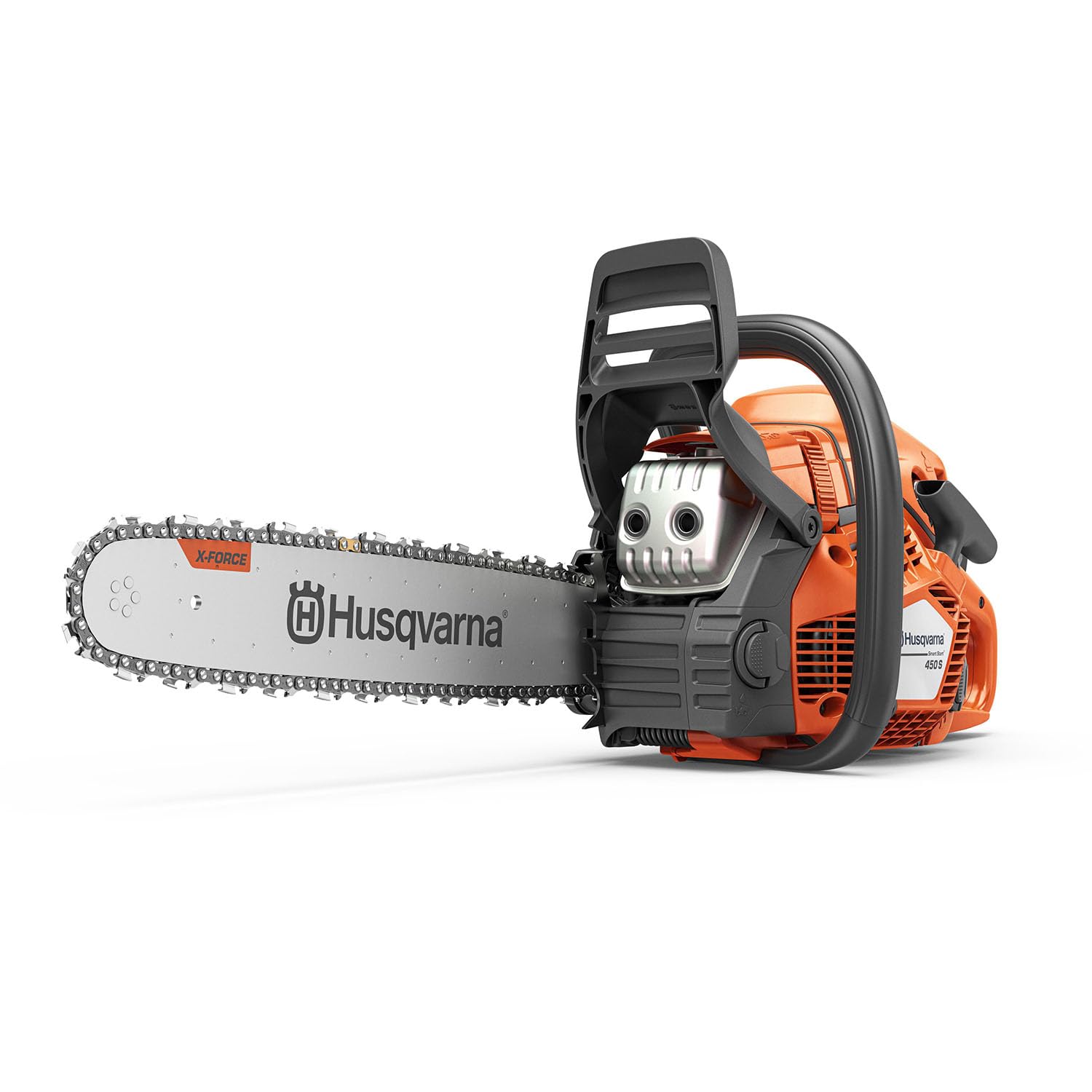
Husqvarna’s 450S Rancher — the same 3.2-horsepower X-Torq engine with an upgraded X-CUT chain
The 450S Rancher is the step up from the 450 Rancher at position one, and the main difference is the chain and crankcase. It runs a 50-cc two-cycle X-Torq engine making 3.2 hp, the same output as the 450 Rancher above. What you get on the S is the X-CUT chain — a chain Husqvarna builds for long-lasting sharpness — plus a reinforced patented crankcase that improves cooling while keeping the body slim enough to handle in tight quarters. The LowVib handle system uses dampeners between the engine and chassis to knock down vibration in your hands.
Smart Start returns on this model, easing cold starts the same way it does on its sibling above, and the 20 inch blade carries the same inertia-activated chain brake (a safety brake that trips the instant the saw kicks back) for kickback protection. The professional-oriented design thinking shows up in the reinforced crankcase — a symptom check on some cheaper saws is heat build-up during extended runs, and the Husqvarna addresses that directly. Where owners converge is on the start reliability: the saw fires consistently, and one buyer’s cattle-fence job put it plainly — “This saw is a monster and has made clearing debris, trimming trees and chopping 10″ diameter cattle fence posts super easy.”
Buyers should know going in that this is a bolder platform than the base model. Quality feedback is mixed — some owners find it excellent, others run into trouble sooner than expected. That is genuinely mixed, not a red flag; it is also a smaller review base than the base 450 Rancher, so the signal is thinner. The chain durability complaint also carries over. If you want the most established Husqvarna 20 inch on this list, position one has more feedback behind it — but if you specifically want the X-CUT chain and reinforced crankcase, the 450S is a fair step up.
What The S Badge Adds
- X-CUT chain designed for long-lasting sharpness
- Reinforced patented crankcase improves cooling during long runs
- Same Smart Start and LowVib comfort as the base 450 Rancher
What To Budget For
- Smaller review base than the base 450 Rancher, so feedback is thinner
- Chain durability complaints carry over from the rest of the Rancher line
- Same 3.2 hp output as the base model, so you are buying chain and cooling, not more power
Best for: Husqvarna loyalists who specifically want the X-CUT chain and reinforced crankcase build.
Not for: buyers who prefer the more heavily reviewed base 450 Rancher as a safer first Husqvarna pick.
8. Echo CS-590-20AA 20 in. 59.8 cc Gas Chainsaw

The 5.3-horsepower sweetheart of the firewood-cutting crowd — a 59.8cc engine in a 20 inch bar
There is a reason the CS-590-20AA keeps showing up in the same conversation as saws costing hundreds more. It runs a 59.8cc engine rated at 5.3 hp — the strongest horsepower rating on this entire list — and pairs it with a 20 inch bar. That combination is what makes it a favorite among people who cut firewood season after season and want the saw to just keep pulling when the chain is buried in a wet oak log. It also happens to share an engine designation with the ECHO saw at position nine, but the CS-590-20AA is the more heavily reviewed of the two.
Owner feedback is centered on quality and cutting performance. The saw feels solid in hand, and the cutting feedback is enthusiastic. One reviewer noted the saw “went through wood like it was BUTTER” while throwing three-inch chips — the kind of detail that tells you the engine has real torque behind it. Another praised it as a “very good replacement for a Husqvarna 460” that felt “solid” with parts that even appeared slightly higher quality. Ease of use and power both rate solidly across the owner base, and the professional feels show up in the build quality.
The honest part: starting takes some ritual. The 59.8cc engine has a specific cold-start sequence that owners learn by trial — too many choke pulls and you flood it, too few and it just will not fire. Once it starts, it runs reliably, and hot restarts are quick. The other thing to know is that it comes as a bare tool — no oil, no fuel mix, so plan your first-use supplies before the saw arrives. If you want a saw with the biggest power rating on this list and you are willing to learn its starting rhythm, this is the one to beat.
Power Number: At 5.3 hp from a 59.8cc engine, this saw packs more rated horsepower than any other pick here — and that shows up in how it handles big wood.
Start Ritual: Cold starts demand a practiced sequence; flooded engines are the most common owner frustration. Learn the procedure and the reward is reliable running.
Your saw if: you want maximum rated horsepower for firewood, felling, and heavy storm cleanup.
Not for you if: you want a saw that fires without learning a cold-start sequence — this one has a rhythm to respect.
9. ECHO Chain Saw, Gas, 20 in. Bar, 59.8cc
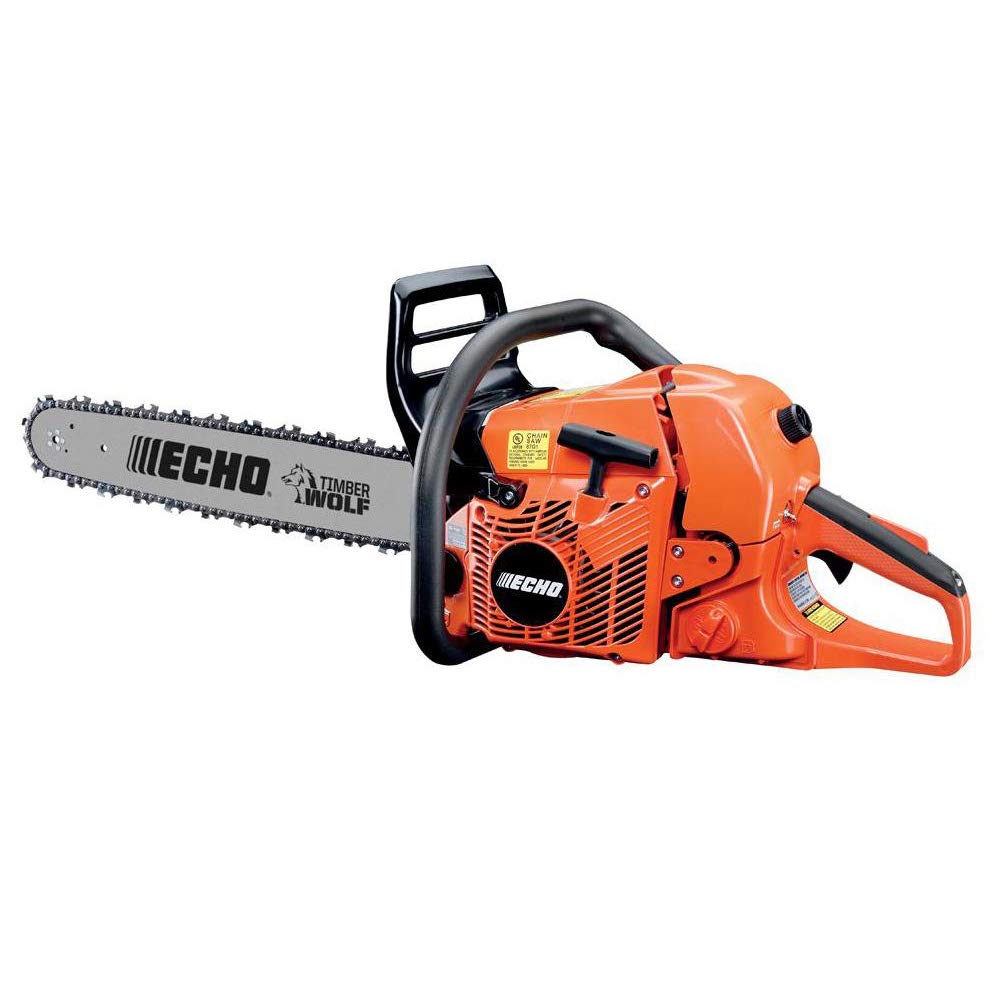
A 59.8cc ECHO built for long-run firewood cutting with a 21.8-ounce fuel tank
This ECHO runs a 59.8cc engine (a 59.8 cubic-centimeter engine that runs on a gas-and-oil mix) rated at 3.9 hp — the same displacement as the CS-590-20AA at position eight, but tuned to a lower horsepower spec — and it drives a 20 inch bar with an automatic, adjustable chain oiler that feeds the chain steadily during long cuts. The fuel tank holds 21.8 ounces, which is a lot for a 20 inch saw and directly translates into fewer refill stops during firewood sessions. Anti-vibration handles are built in, and the included kit covers the chain, bar, and operators manual.
Owner feedback is warm on performance and value. Cutting performance and power are the top positives, and one owner noted that with a sharp chain the saw powered through a 24 inch stump without needing to swap chains. Speed is a quiet strength too — customers note getting through jobs faster than they expected. There is also serious durability feedback: one 5-year owner reports the saw still clearing fence lines and handling firewood and honey locust, surviving an ATV run-over along the way, running on the original filters and plug with just a carb adjustment after break-in. That kind of long-run feedback is rare.
The foibles are worth naming. This saw has a specific starting ritual — flood it with too many choke pulls and you will spend more time clearing the engine than cutting. Owners also report the tank and bar oil reservoir being a bit low-visibility, so keep an eye on levels. And avoid running without ethanol-free gas if you can; the ethanol in standard pump gas is what eventually hardens carb diaphragms, which is what takes most saws in this class out of service. Treat the fuel right and the saw rewards you.
Firewood-Ready Build
- 21.8 oz fuel tank reduces refill stops during long sessions
- Auto/adjustable chain oiler keeps the bar fed during extended cutting
- Long-run reviewers point out years of service on original filters and plug
Where Owners Push Back
- Flooding is the main start-up risk — too many choke pulls is easy to do
- Bar oil reservoir lacks a visible level indicator, so top-ups need attention
- Wants ethanol-free fuel; standard pump gas shortens carburetor life
The pick for: firewood cutters who want a long-running ECHO with a big fuel tank and proven multi-year service.
Look past it if: you want the highest horsepower per cc or do not plan to use ethanol-free fuel.
Understanding the Specs
Engine Displacement (CC)
Displacement is the total volume the engine’s piston sweeps through, measured in cubic centimeters. A 50cc engine is good for lighter work and long sessions thanks to its lower fuel appetite. A 62cc or 68cc engine produces more torque to keep the chain spinning when you sink a 20 inch bar into wet hardwood. Bigger displacement usually means more weight, more fuel use, and more power in return.
Horsepower And RPM
Horsepower is how much work the engine can do per minute, and RPM is how fast the engine spins. Higher hp numbers translate into less bog-down when the chain is buried. Higher RPM ratings often mean faster chain speed and cleaner cuts in dry wood. Match the two to your work: a homeowner cutting storm limbs rarely needs 5 hp, while a firewood cutter running a 20 inch bar in oak does.
Bar And Chain Oiler
The bar and chain oiler feeds oil onto the bar as the chain spins, which reduces friction and heat while cutting. Automatic oilers do this without input; adjustable versions let you dial oil flow up for long cuts or down to save oil. Some saws also run a translucent reservoir or level view so you can check the tank at a glance — useful, because running the chain dry wears it out fast.
Anti-Vibration And Safety Features
Anti-vibration handle systems use dampeners to separate the engine from your grip, which reduces hand fatigue during long cutting sessions. Chain brakes stop the chain instantly when kickback happens — this is the single most important safety feature on any gas saw. Trigger lockouts and front hand guards add a second and third layer of protection.
FAQ
What engine size should I pick for a 20 inch gas chainsaw?
What fuel mix do gas chainsaws need?
How often do I need to oil the chain on a 20 inch gas chainsaw?
Is a 20 inch bar too big for pruning small branches?
Can I use a 20 inch gas chainsaw to fell a tree?
Why does my gas chainsaw flood when I try to start it?
How much does a 20 inch gas chainsaw weigh and does it matter?
Do I need to break in a new gas chainsaw engine?
What is a chain brake and do all 20 inch gas chainsaws have one?
How do I store a 20 inch gas chainsaw between seasons?
Final Thoughts: The Verdict
For most buyers, the 20 inch gas chainsaw that earns its spot at the top is the Husqvarna 450 Rancher 20 Inch Gas Chainsaw because its 50.2cc X-Torq engine (a 50.2 cubic-centimeter engine that runs on a gas-and-oil mix), 3.2 hp output, and 11.3-pound frame give you a saw that starts easily, cuts through storm damage, and does not wear you out after an hour of work. If you want maximum engine displacement for the money, reach for the PROYAMA 62CC Gas Powered Chainsaw — a 3.5 hp saw at a fraction of the premium tier. And if your work runs toward heavy hardwood and firewood by the cord, the Echo CS-590-20AA carries the highest horsepower rating in this group at 5.3 hp and the deep owner feedback to back it up. Whichever you choose, match the engine displacement to the wood you actually cut.
How We Picked
We do not accept paid placement. Every pick is matched to a real buyer and a real use-case; we do not hands-on test units.
Sources & Methodology
Specifications: manufacturer listings and product documentation. Review insights: verified customer reviews, as of September 2026. Pricing: not shown on this page (it changes often); check the current price via the retailer link.
As an Amazon Associate, Gadgets Feed earns from qualifying purchases. This does not affect which products we feature.