
Microsleep at the wheel isn’t a matter of “if”—it’s a matter of when. For truck drivers, night-shift commuters, and anyone logging long interstate miles, the body’s demand for rest overrides the brain’s commands silently and without warning. Dedicated electronic countermeasures exist, and they work by detecting the exact moment your head nods or your vigilance lapses, not by hoping you’ll stay alert on your own.
I’m Min — the co-founder and writer behind Gadgets Feed. For this guide, I spent dozens of hours cross-referencing driver fatigue studies with real user reports, mapping each device’s sensor technology, alarm volume, trigger sensitivity, and mounting practicality against the specific conditions of life behind the wheel.
After that analysis, a clear set of devices emerged that reliably deliver on their core promise. This guide breaks down the best feature combinations to help you identify the right anti sleep device for drivers for your specific driving habits and vehicle setup.
How To Choose The Best Anti Sleep Device For Drivers
Not every anti-sleep gadget is built for the road. Phone apps drain battery and rely on face tracking that fails in low light or with sunglasses. Dedicated devices use hardware sensors—tilt switches, accelerometers, or electrical stimulation—that trigger the instant your posture changes. The right choice depends on how you drive, your tolerance for wearable alerts, and your vehicle’s cabin noise level.
Sensor Type: Tilt, Motion, or Pulse
The most reliable anti-sleep devices for drivers use a mechanical tilt sensor worn behind the ear or clipped to a hat. When your head droops forward beyond a calibrated angle, the device sounds a loud alarm or vibrates. This direct physical trigger is far more dependable than cabin-mounted motion sensors, which can miss a nodding head entirely if you’re sitting still. Some premium units also offer adjustable tilt sensitivity to account for different sleeping postures and seat angles.
Alert Volume and Alert Modes
A 90 dB beep is useless if you’re running a diesel engine or have the radio on. Look for a device rated at least 110 dB with multiple alert modes—audible siren, vibration, or both simultaneously. Earpiece-mounted alarms place the sound directly against your ear, so even a moderate 100 dB tone is far more effective than a dashboard-mounted speaker competing with road noise. Vibrate-only modes are useful if you don’t want to disturb passengers, but should never be your sole safety net.
Battery Life and Charge Method
Driver alarms that rely on proprietary rechargeable batteries need to hold a charge for a full shift or a multi-day trip. Devices with replaceable standard batteries (AAA, AA, or coin cells) offer the advantage of swapping in seconds at any gas station. USB-C rechargeable units are more convenient for daily charging at home, but require planning for overnight charges on the road. Check real-world battery reports—some units drain faster in cold weather or when the vibration motor runs frequently.
Quick Comparison
On smaller screens, swipe sideways to see the full table.
| Model | Category | Best For | Key Spec | Amazon |
|---|---|---|---|---|
| LGI Driver Fatigue Alarm 3 in 1 | Wearable | Long-haul truckers | 125 dB peak volume | Amazon |
| DB DrowseBuster-E | Electrical Stim | Acupuncture-style alert | 5.93 oz weight | Amazon |
| VITALGLOW GPS Tracker | Tracking | Fleet & asset monitoring | 20-day battery life | Amazon |
| HTZSAFE Driveway Alarm | Perimeter | Driveway & rest stop alerts | 0.5-mile wireless range | Amazon |
| Kini Safe Alert | Wi-Fi Sensor | Smartphone-based alerts | 12-18 month battery | Amazon |
| LNKERCO Car Alarm | Vehicle Alarm | Theft & vibration detection | 700 mAh battery | Amazon |
| ChunHee Solar Strobe | Outdoor Alarm | Camping & parking lot | IP67 waterproof | Amazon |
In‑Depth Reviews
1. LGI Driver Fatigue Alarm 3 in 1

The LGI unit is the reference standard for driver-specific fatigue alarms because it puts the alert source directly where it belongs—against your ear. The 125 dB peak rating is the highest in this lineup, and because the speaker sits inside the earpiece, that volume hits your ear canal without competing with cab noise or insulation. It offers three alert modes: beep only, vibrate only, or both simultaneously, giving you a fallback if one sensation becomes habituated during a long shift.
The tilt sensor inside the earpiece is calibrated to trigger when your head drops forward roughly 15 to 20 degrees—the classic microsleep posture. This mechanical trigger is inherently more reliable than optical or capacitive sensors that can be fooled by sunglasses, hats, or low cabin light. Users report the device works consistently on monotonic highway stretches where fatigue sets in fastest, provided the earpiece is seated snugly.
The main ergonomic challenge is the ear-hook mounting. Several users note the hook doesn’t grip all ear shapes equally, and the device can fall off during sudden movements or when you turn your head quickly to check a blind spot. The battery is non-replaceable and requires a recharge every six months to prevent the protection circuit from locking the cell permanently. For drivers willing to customize the fit, this is the most effective dedicated fatigue alarm available.
Why it’s great
- Highest alert volume at 125 dB directly in ear
- Three selectable alert modes for different cabin conditions
- Mechanical tilt trigger is immune to optical false positives
Good to know
- Ear-hook fit varies significantly by individual ear shape
- Non-replaceable battery needs disciplined recharge schedule
2. DB DrowseBuster-E Anti-Sleepy Gadget
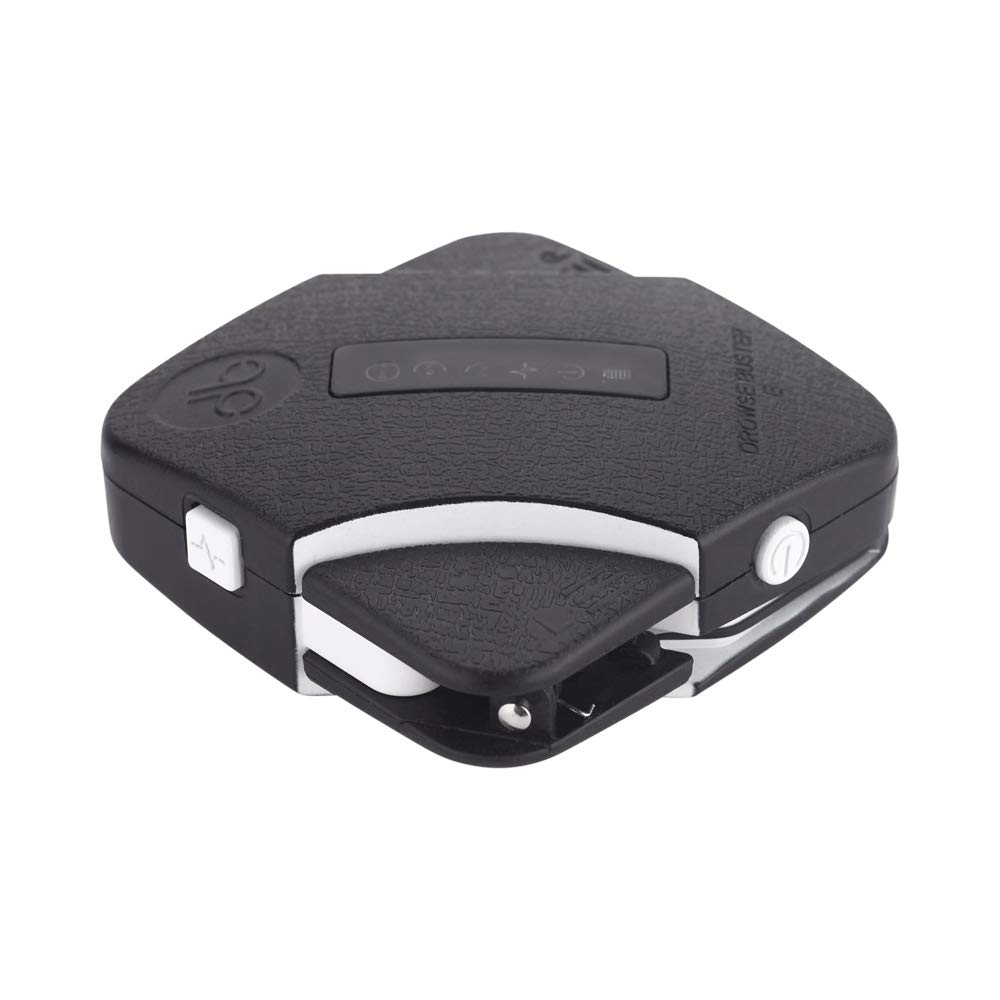
The DrowseBuster-E takes a completely different approach: instead of a tilt-triggered alarm, it uses electrical stimulation—essentially a miniaturized TENS unit—through two ball contacts pressed against the skin behind your ear. When you feel drowsy, you manually activate the device, and it delivers a mild acupuncture-like electrical pulse intended to jolt your nervous system into alertness. This makes it a proactive stimulant rather than a passive monitor.
Weighing just 5.93 ounces with a compact 2.66-inch diameter, the unit is cordless and easy to keep in a cup holder or pocket. It uses a single internal lithium-ion battery and charges via a standard USB cable. The build quality is adequate for the price tier, but the plastic housing and simple contact construction reflect its budget positioning.
The most critical limitation is that the device has no automatic drowsiness detection. It will not wake you if you fall asleep without activating it. Additionally, user reports describe the electrical sensation as “stinging” or “painful” rather than a gentle reminder—this works as a powerful alert but may be uncomfortable for sensitive users. Several units arrived non-functional out of the box, which points to inconsistent quality control. Consider this only if you want a manual-stimulation tool rather than an automatic alarm.
Why it’s great
- Acupuncture-style electrical stimulation for strong neural alert
- Compact and cordless design fits in any vehicle compartment
- Rechargeable via standard USB cable
Good to know
- No automatic detection—requires manual activation when drowsy
- Stimulation can feel painful or uncomfortable for some users
- Quality control issues reported with non-functional units
3. VITALGLOW GPS Tracker For Vehicles
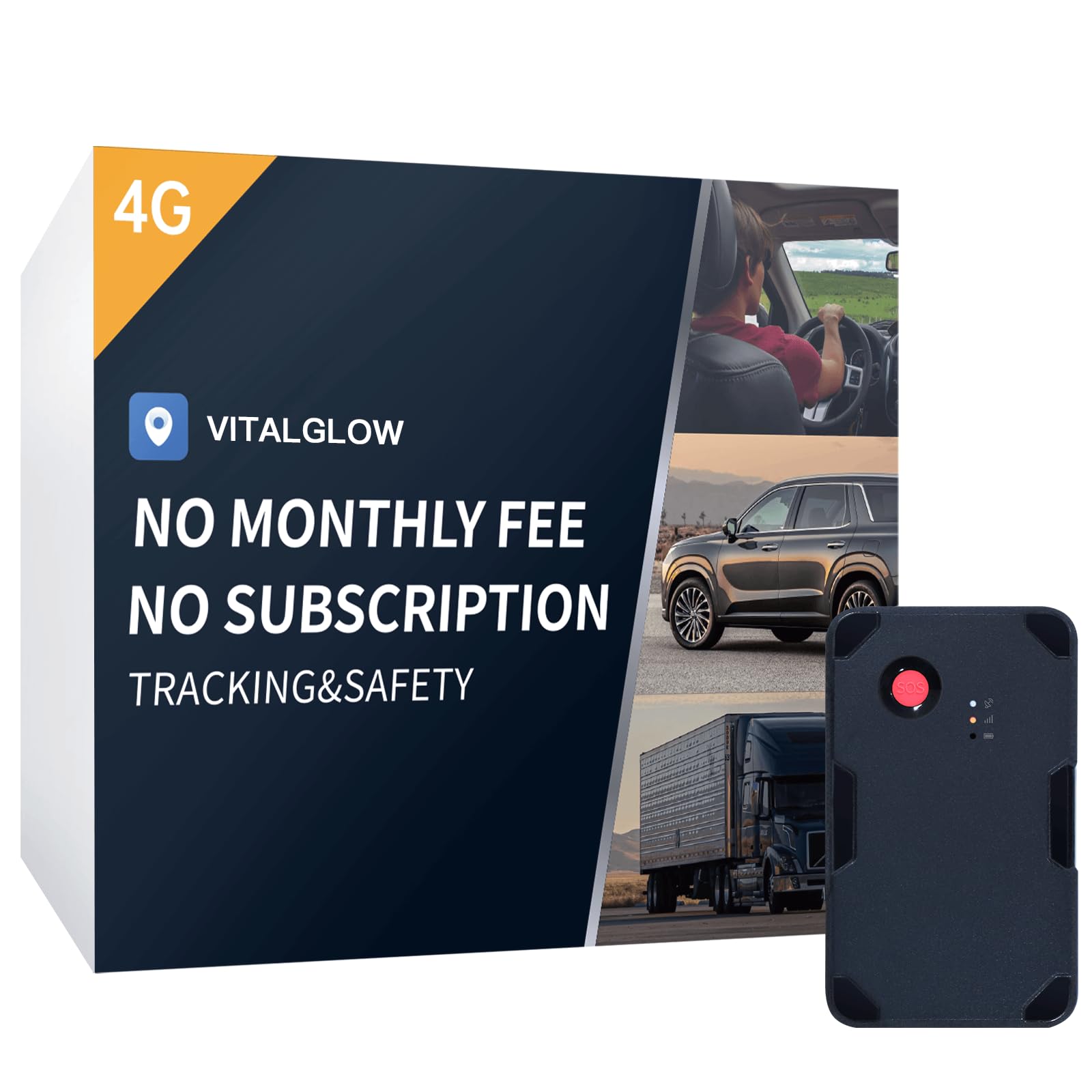
The VITALGLOW tracker is not a fatigue alarm, but it serves a critical parallel function for fleet managers and commercial drivers who need to monitor driver behavior and vehicle location during long shifts. With a 3000 mAh battery, it delivers up to 20 days of real-time tracking with 30-second update intervals—enough to cover multiple cross-country runs without removing the device from its magnetic mount.
The unit connects over 4G LTE using an included pre-activated SIM card with no monthly subscription fees, which is extremely rare in the GPS tracking market. The magnetic enclosure is compact at 2.9 x 1.7 x 0.8 inches and can be hidden under a chassis or inside a wheel well without detection. The accompanying app provides trip history, geofence alerts, speed alerts, and location playback, which can be used to identify erratic driving patterns that precede fatigue-related incidents.
Battery life depends heavily on how often you open the app to request real-time location—frequent playback requests drain the battery significantly faster than the advertised 20 days. Some users report the device stops updating after three months, and customer support responsiveness varies. For pure fatigue prevention, this is an indirect tool—but for fleet accountability and driver behavior analysis, it provides actionable data that no standalone tilt alarm can match.
Why it’s great
- 3000 mAh battery delivers up to 20 days of tracking
- No monthly subscription fees with included 4G SIM card
- Compact magnetic design for discreet installation
Good to know
- Not a fatigue alarm—primarily a vehicle tracking tool
- Battery life drops significantly with frequent app queries
- Long-term reliability concerns reported after three months
4. HTZSAFE Driveway Alarm System

The HTZSAFE system is designed for perimeter monitoring rather in-cab fatigue detection, but it serves a valuable role for drivers who rest in their vehicles at truck stops or remote parking areas. The motion sensor detects movement up to 50 feet away and transmits an alert to a plug-in receiver located up to half a mile away. This means you can park, set the sensor at the edge of your parking area, and receive an audible chime in the cab if anyone approaches.
The system uses FSK+FHSS wireless technology to avoid interference from other devices—a genuine advantage in congested truck stop environments with multiple drivers using wireless equipment. The receiver offers 35 selectable melodies and four volume levels, so you can assign a distinct alert sound that cuts through cabin noise. The sensors mount to walls, fence posts, or trees with included hardware and operate reliably in temperatures from -30°F to 150°F.
Batteries are not included, and the system requires three AA cells per sensor. Some users report the sensitivity is high enough to trigger false alarms from large animals or swaying branches, so mounting height and location require careful thought. For drivers who value situational awareness during rest periods, this alarm adds a critical layer of security that lets you sleep without constant vigilance.
Why it’s great
- Half-mile wireless range covers large rest areas and driveways
- 35 selectable melodies with adjustable volume levels
- Wide operating temperature range for extreme climates
Good to know
- Not a fatigue alarm—designed for perimeter security
- Sensitive to large animals; mounting height is critical
- Requires three AA batteries per sensor not included
5. Kini Safe Alert Wi-Fi Motion Sensor
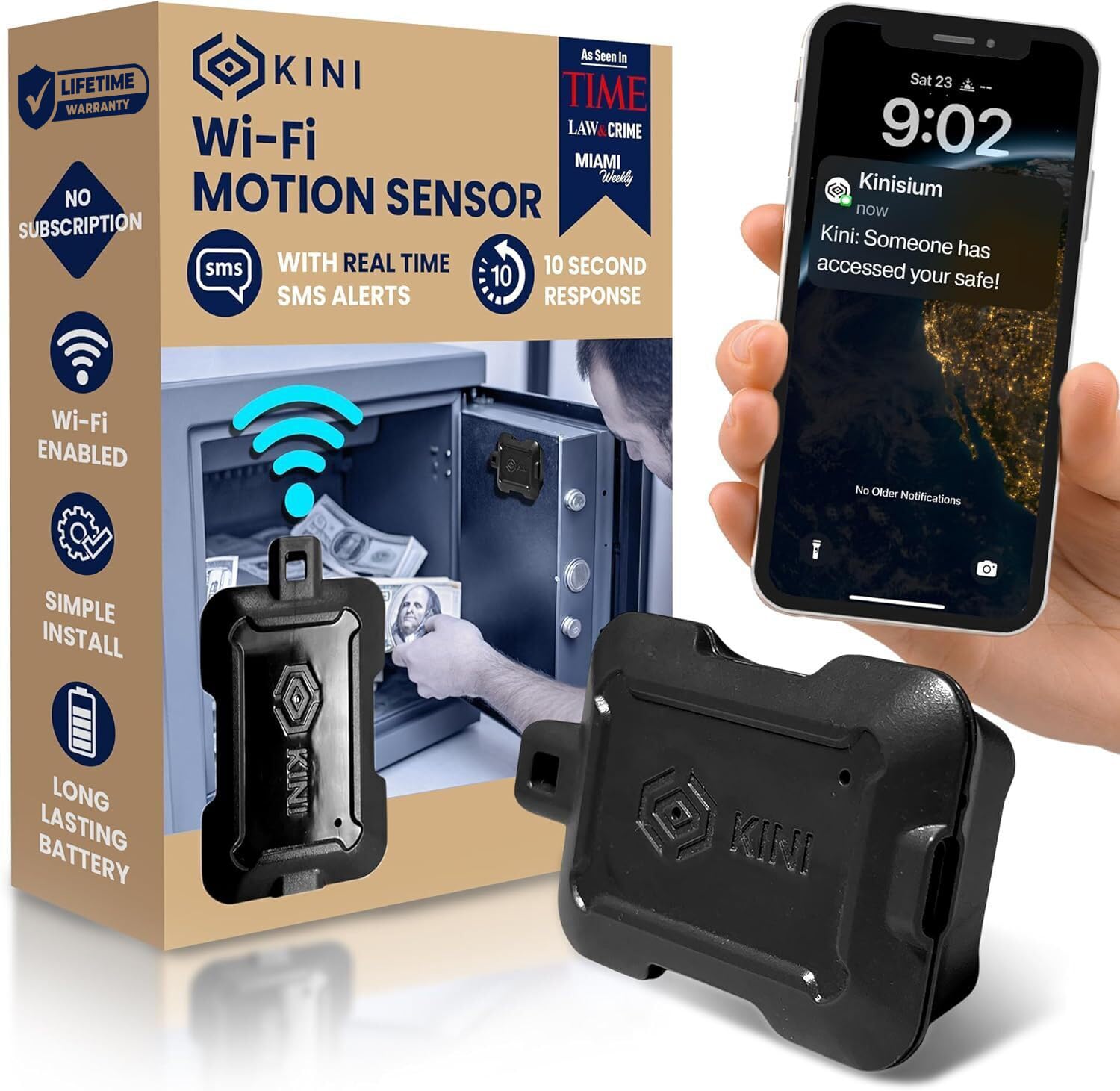
The Kini Safe Alert is a Wi-Fi-connected accelerometer sensor that sends push notifications and SMS alerts to your phone when it detects vibration or movement. Designed originally for gun safes and cabinets, its privacy-first approach—no GPS, no cameras, no subscription—makes it surprisingly useful for vehicle applications where you want to know if someone enters or disturbs your parked truck during a rest stop.
The sensor’s 12-to-18-month battery life on a single charge is exceptional. It connects to your phone via Wi-Fi and the free Kinisium app, and you can adjust the sensitivity to avoid false triggers from wind or passing traffic. The unit is tiny at 2.48 x 1.56 x 0.74 inches and can be mounted with included 3M Dual Lock tape or a steel cable tether. Alerts arrive within seven seconds of a disturbance—fast enough to wake you if you’re dozing in the driver’s seat.
The catch is that this device relies entirely on a stable Wi-Fi connection. If you’re parked in a remote area without cellular or Wi-Fi coverage, the sensor cannot send alerts. It also has no tilt detection or fatigue-specific alarm logic—it only tells you something moved. For drivers who regularly park within Wi-Fi range (home garage, fleet depot, RV park with internet), this is a capable companion sensor, but it cannot replace a dedicated wearable fatigue alarm for active driving.
Why it’s great
- 12-18 month battery life reduces charging maintenance
- Instant app and SMS alerts within 7 seconds of movement
- Compact size with versatile mounting options
Good to know
- Requires stable Wi-Fi—not suitable for remote parking
- No fatigue-specific tilt detection or driving alarm logic
- Primarily designed for asset security, not driver alertness
6. LNKERCO Car Alarm System

The LNKERCO cat-shaped alarm is a vehicle vibration sensor that uses a 3D accelerometer with an AI algorithm to distinguish between genuine intrusion and false triggers from wind or passing traffic. It produces a 120 dB siren with three adjustable volume levels, coupled with a red circle flashing light that provides a 160-degree visual deterrent. For a driver looking to secure their parked vehicle during rest stops, this offers an easy screw-lock installation and a 165-foot wireless remote range.
The 700 mAh battery is the weakest spec here—it promises one to three months of standby time, but that’s with minimal alarm activations. Frequent triggers will drain it far faster, and the Type-C charging takes three hours for a full top-up. The remote range is also somewhat optimistic; several users report needing to be within 30 to 50 feet for reliable operation, which is well short of the advertised 165 feet.
Vehicle soundproofing significantly muffles the 120 dB siren when the device is mounted inside the cabin. If you expect the alarm to be audible from outside, consider mounting the unit in the wheel well or under the chassis using the included nano tape. This device is a solid theft deterrent but is not a driver fatigue alarm—it will not wake you if you fall asleep at the wheel. Reserve it for parking lot security rather than active driving support.
Why it’s great
- AI algorithm reduces false vibration triggers
- 120 dB siren with three adjustable volume levels
- Visual red light deterrent with 160-degree coverage
Good to know
- 700 mAh battery may drain faster with frequent alarms
- Remote range is much shorter than advertised 165 feet
- Soundproofing significantly reduces external volume
7. ChunHee Solar Strobe Alarm Light

The ChunHee solar alarm is built for outdoor perimeter security rather than in-cab fatigue prevention, but its unique solar-powered design makes it a zero-maintenance option for drivers who park for extended periods in unpowered locations. The unit has a built-in solar panel that charges in 6 to 8 hours of direct sunlight and can run for up to 30 days on a full charge. The IP67 waterproof rating means it survives rain, snow, and dust without enclosure modifications.
The 120 dB siren is driven by a passive infrared (PIR) motion sensor with adjustable range—9 to 12 meters on high sensitivity, 5 to 8 meters on low sensitivity. This lets you tune the detection zone to avoid false alarms from roadside vegetation or small animals while still catching human-sized movement near your vehicle. The remote control allows you to switch between four operating modes: full-day alarm, night-only alarm, night-only flash, and disabled.
The most common complaint involves the motion sensor itself—some units have poor detection consistency, failing to trigger even when a person walks directly in front of the sensor. Volume is adequate but users consistently wish it were louder, especially in noisy outdoor environments. For a driver who needs to secure a campsite or remote parking area, this provides a self-powered alert system with no wiring, but its sensor reliability means you shouldn’t stake your safety on it alone.
Why it’s great
- Solar-powered with up to 30 days of runtime per charge
- IP67 waterproof rating for outdoor durability
- Adjustable motion detection range and four operating modes
Good to know
- Motion sensor consistency varies between units
- Volume could be louder for noisy outdoor environments
- Not a driver fatigue alarm—perimeter security only
FAQ
Can a smartphone app replace a dedicated anti-sleep device for drivers?
How long does a typical earpiece driver fatigue alarm battery last on a single charge?
Will a 120 dB vehicle alarm be loud enough to wake me if I’m falling asleep at the wheel?
Final Thoughts: The Verdict
For most users, the anti sleep device for drivers winner is the LGI Driver Fatigue Alarm 3 in 1 because its 125 dB earpiece volume and mechanical tilt trigger provide the most reliable wake-up response in real driving conditions. If you want a proactive alert system that doesn’t rely on you wearing anything on your ear, the DB DrowseBuster-E offers acupuncture-style electrical stimulation as a manual fatigue countermeasure. And for fleet managers or drivers who need vehicle location data alongside fatigue monitoring, the VITALGLOW GPS Tracker delivers comprehensive tracking with no monthly fees.