
Our readers keep the lights on and my morning glass full of iced black tea. As an Amazon Associate, I earn from qualifying purchases.
Specs are compiled from manufacturer listings and verified buyer reviews and can change over time — please confirm the key details on the product page before buying.
Chopping the carbon fiber load and the base plastic correctly is what decides whether your printed bracket survives a hot car trunk or snaps at the layer line — and that is exactly what this guide sorts out for you. Carbon-fiber filament is abrasive, it drinks moisture, and it punishes a brass nozzle, so the spool you pick has to match your printer and your part, not just the label on the box.
I’m Min — the founder and writer behind Gadgets Feed. This guide is built by comparing the manufacturers’ published specifications and the patterns across verified customer reviews, so you get each pick’s real strengths and trade-offs instead of marketing spin.
The choices below split cleanly into easy-printing PLA-CF for looks and light structural work, PETG-CF for tough everyday parts, and nylon or PPA blends for heat and load — so you can match the material to the job. This breakdown of the best 3D print carbon fiber points you to the spool that fits your nozzle, your enclosure, and your part.
Our Picks at a Glance

How To Choose The Best 3D Print Carbon Fiber
The single biggest mistake new buyers make is treating all carbon-fiber filament as one material. It is not. The carbon fiber is only the reinforcement; the plastic it is blended into decides almost everything about how your part behaves. A carbon-fiber PLA and a carbon-fiber nylon can look identical on the spool and behave nothing alike on the bed.
Match the base plastic to the job
Pick the base resin first. PLA-CF is the friendliest to print and gives you a matte, low-layer-line finish that looks great on display pieces and light brackets. PETG-CF stays tougher and handles more impact, so it suits parts that get knocked around. ASA-CF adds UV and weather resistance for anything living outdoors. Nylon and PPA blends with carbon fiber are the ones you reach for when a part must carry load or sit near heat.
Carbon fiber percentage and stiffness
A higher carbon fiber load usually means a stiffer, more dimensionally stable part, but it also means a more abrasive filament. Expect to see blends listed at 10%, 15%, or 20% carbon fiber. The higher the number, the more you should treat your nozzle as a wear item and plan for a hardened steel or ruby tip.
Nozzle and enclosure requirements
Carbon fiber is abrasive, so a brass nozzle wears out fast. Check the manufacturer’s nozzle guidance before you buy. Some blends, like PPA-CF, ask for a sealed print space and hardened steel nozzle, while plain PLA-CF runs happily in the open. Nylon-based blends often need an all-metal hotend and a dry box.
Moisture is the real enemy
Nylon and PPA soak up water from the air, and wet filament prints with bubbles, stringing, and weak layer bonds. Many of these spools ship vacuum-sealed with desiccant for a reason. If a spool calls for drying before use, follow the printed temperature and time instead of guessing.
Quick Comparison
| Model | Best For | Material | Carbon Fiber | Spool Weight | Amazon |
|---|---|---|---|---|---|
| Creality PPA-CF★ Best Overall | High-heat engineering parts | PPA-CF | 15% | 1 kg | Amazon |
| FLASHFORGE PETG-CFBest Value | Tough, general-purpose functional parts | Carbon Fiber PETG | — | 1 kg | Amazon |
| Creality Hyper PLA-CF | Fast, detailed display and light structural prints | Carbon Fiber PLA | — | 1 kg | Amazon |
| TINMORRY ASA-CF | Outdoor and UV-exposed parts | ASA-CF | 10% | 1 kg | Amazon |
| Polymaker PolyLite PLA-CF | Smooth, rigid display and functional parts | Polylactic Acid (PLA-CF) | — | 1 kg | Amazon |
| Polymaker Fiberon PA6-CF20 | Rigid, heat-resistant engineering parts | Nylon (PA6-CF) | 20% | 0.5 kg | Amazon |
| SUNLU PA6-CF20 | High-strength industrial parts on a budget | Carbon Fiber (PA6-CF) | 20% | 1 kg | Amazon |
In‑Depth Reviews
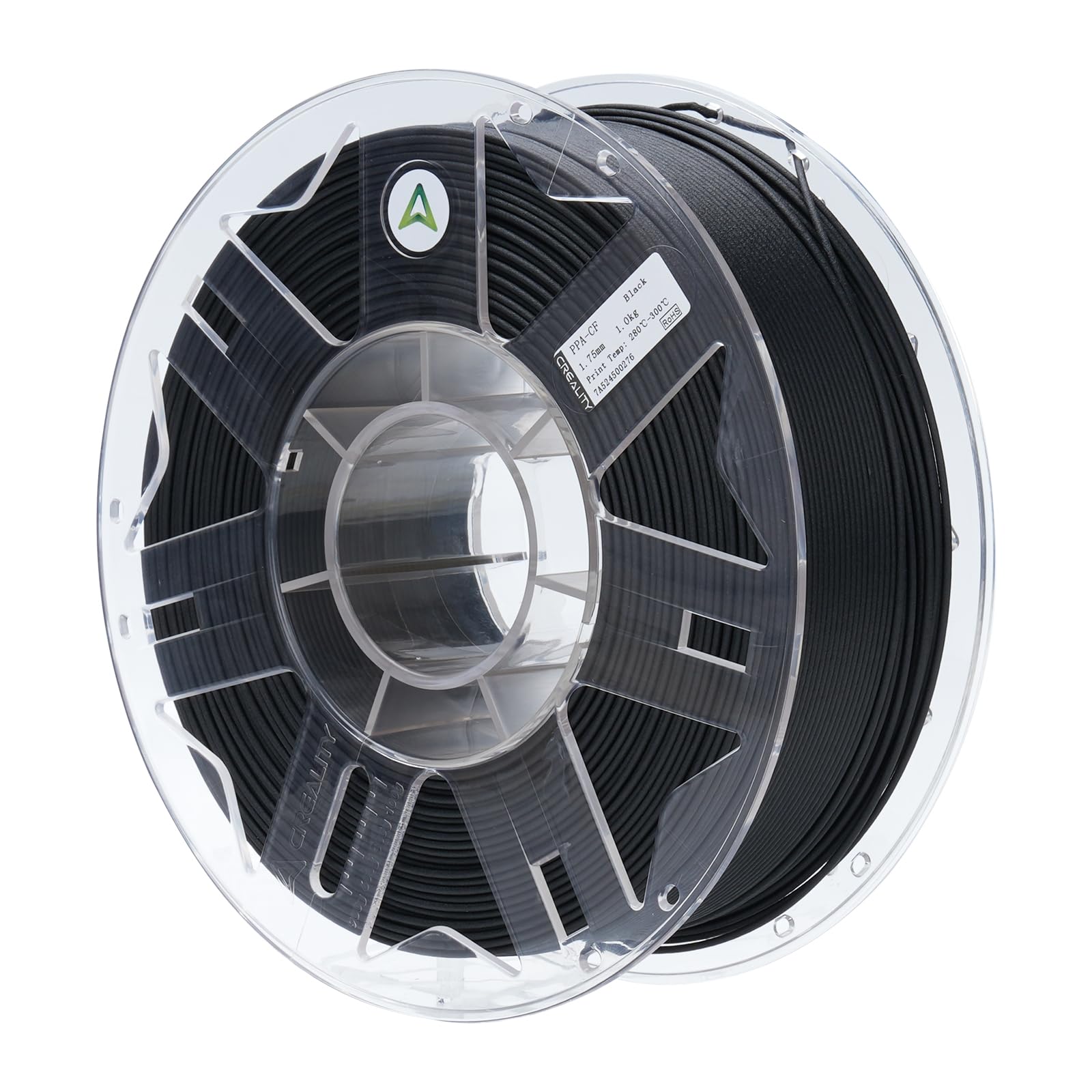
1. Creality PPA-CF 3D Printer Filament RFID, 15% Carbon Fiber Content
Our pick — over 4.5★ from 450+ verified ratings; the strongest balance of quality and price.
For engine-bay brackets and boat hardware, this PPA-CF spool holds its shape at 220°C.
If you print functional parts that have to survive real heat and load, this Creality PPA-CF blend is built for that job. It packs 15% carbon fiber into a PPA base, and the maker rates it to hold structural integrity and performance at 220°C for long stretches — heat that softens PLA or PETG parts. Printed models are also stable in humid settings and even underwater over long periods, so they keep their stiffness and thermal behavior instead of swelling or sagging.
What wins people over here is quality, and it shows up in the print feel. Owners describe a filament that lays down clean without clogging, and the RFID tracking is the quiet hero — the spool tells capable printers their temperature and speed settings, which takes the guesswork out of a material most people have never run before. The color also lands as advertised. It does still fight you on the details, though, which is the honest catch for a material this stiff.
Two things to plan for before you order. It wants a sealed print space and a hardened steel nozzle, so it is not a drop-in for open-frame budget printers or brass tips. And adhesion can be fussy — the recurring theme is that getting the first layer to bite takes more tuning than a standard PLA would need.
Where It Shines
- 15% carbon fiber reinforcement rated for structural integrity at 220°C — for parts near genuine heat
- Quasi-metallic strength stated as 48% stronger than ordinary PA6-CF, for load-bearing brackets
- RFID tracking auto-sets a compatible printer’s temp and speed, cutting setup guesswork
Plan Around This
- Needs a sealed print space and hardened steel nozzle, so open-frame printers are out
- First-layer adhesion takes more tuning than a plain PLA spool
- Moisture control matters more as the spool sits around
Buy it if: you need heat-resistant, high-strength parts and own a sealed printer with a hardened nozzle.
Think twice if: you print on an open-frame machine or just want pretty display pieces.
2. FLASHFORGE Carbon Fiber PETG Filament 1.75mm
The everyday workhorse: PETG-CF impact toughness with PETG’s forgiving bed manners.
For a filament you can keep loaded for general functional parts — frames, brackets, tools, drone arms — this PETG-CF blend is the one most people would reach for first. It is 1.75mm with a dimensional accuracy of ±0.02mm, and that number matters: it keeps flow consistent so your prints stack predictably instead of wandering. Because the base is PETG, you keep the impact resistance PETG is known for while gaining the stiffness and temperature resistance the carbon fiber adds.
Printability is the standout. It runs clean from the start, and even first-timers report good results on a 0.4mm setup with a generic profile and a small chamber tweak. The surface finish lands matte, which hides layer lines so well that fine detail almost disappears at typical layer heights. The trick is drying it first — skip that step and you get globs and rough patches instead of the finish everyone else is getting.
The honest catch is that results depend heavily on your setup and on drying the spool. Wet filament prints badly, and manual fan fiddling is where trouble tends to surface. On a tuned printer, though, this is the value pick that punches well above its tier.
Finish And Feel: the matte, low-texture surface is the crowd-pleaser — printed layers nearly vanish, and owners describe it as strong and clean.
The Real Caveat: it is moisture-sensitive, so run it dry and expect rough, blobby output if you skip that step.
Reach for this if: you want tough, general-purpose parts at the best balance of price and printability.
Pass if: you cannot control moisture before printing — this one punishes a wet spool.
3. Creality Carbon Fiber PLA Filament 1.75mm 1KG, Hyper PLA-CF
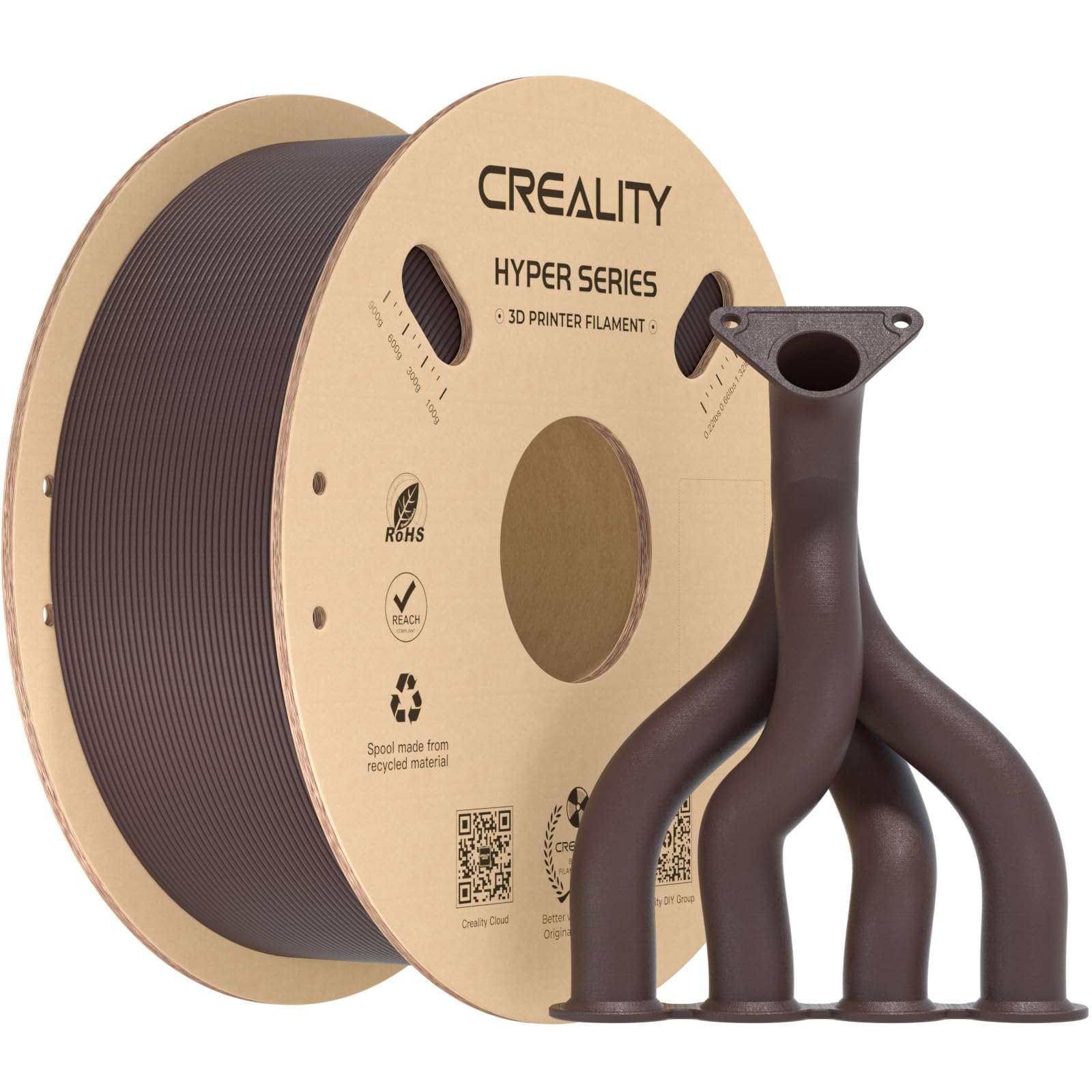
Prints at up to 300mm/s without ugly layer lines — the speed champion of this PLA-CF group.
When you want good-looking parts off the printer quickly, this Creality Hyper PLA-CF runs at up to 300mm/s while still holding a delicate finish. That is a much wider speed envelope than a standard-speed carbon fiber blend, and it pairs with a dimensional accuracy of ±0.03mm. Those tolerances hold tight enough for structural parts on drones, model aircraft joints, and drives — the sort of pieces where a sloppy diameter would throw off a press fit.
The filament is also engineered to be self-supporting, so support removal is simpler than standard PLA while still leaving a clean surface. Prints come off smooth and matte, and the strength profile gets a real lift — the maker states roughly 30% higher mechanical properties than plain PLA across flexural strength, flexural modulus, and impact strength.
The one honest snag that shows up repeatedly is spool winding. Some spools arrive with knots that can jam a print, and fine-detail pieces can struggle. On the whole the quality and finish are strong, but it is worth inspecting your spool before a long run.
Why People Rebuy It: speed and finish travel together here — smooth, matte parts with barely visible layer lines, easy to work with.
Inspect Before You Print: spool tangles are the recurring gripe, so check the wind before a long job.
Go with this if: you print detailed, light-load parts and want speed without sacrificing surface finish.
Look elsewhere if: you need the highest impact strength or the cleanest winding straight from the box.
4. TINMORRY ASA-CF Carbon Fiber 3D Printer Filament 1.75mm
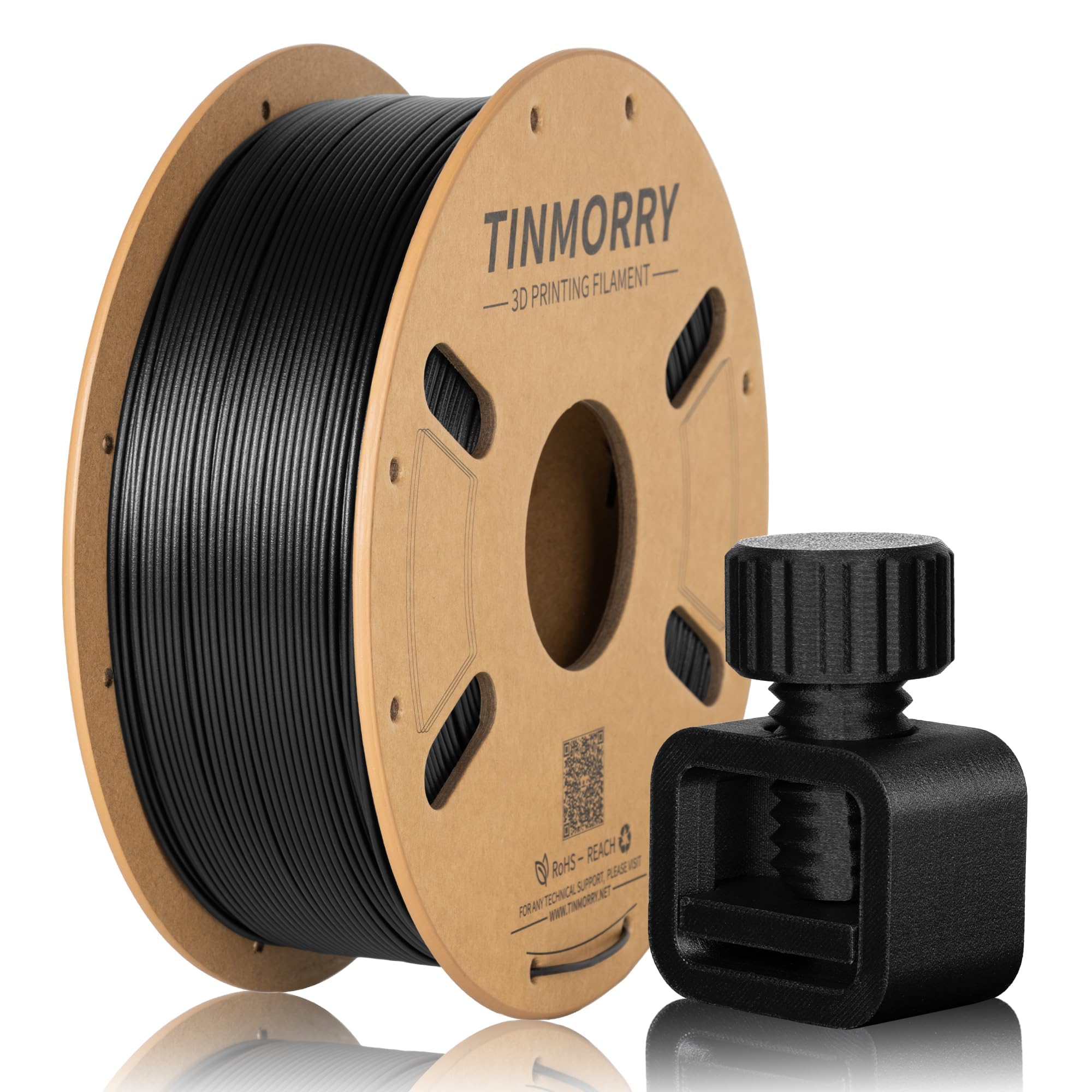
Built for garden fixtures and car exterior trim that face sun and rain year-round.
Anything that sits outside — garden fixtures, car exterior trim, patio hardware — needs a material that will not fade or go brittle under sunlight, and ASA is the base to pick for that. This TINMORRY blend adds 10% professionally processed short-cut carbon fiber to the ASA for extra stiffness and impact resistance, and it holds a tight ±0.03mm dimensional tolerance. Practically, that means parts that keep their shape and strength through sun, rain, and temperature swings instead of warping or cracking on you.
It prints with a matte, carbon-fiber texture that looks the part for auto compartments, engine peripherals, and electrical housings. The catch is that this is a fussier material than PLA. It wants a hot end in the 260–280°C range, a bed in the 90–100°C range, speeds under 200mm/s, and a wear-resistant steel nozzle of at least 0.4mm — a 0.6mm is better. It should also be dried before use, and it emits mild fumes, so you will want airflow while printing.
Owner results are solid once those boxes are ticked. Layer adhesion is good and there are no adhesion headaches for most people, and parts hold up to real heat in practice. The one consistent quibble is color accuracy — the black can read a touch navy depending on the light.
What It Does Well
- ASA base built for anti-UV, anti-aging performance — for parts that stay outdoors year-round
- 10% carbon fiber adds stiffness, tensile strength, and impact resistance over standard ASA
- ±0.03mm dimensional tolerance for parts that need to fit precisely
Know Before You Buy
- Needs a wear-resistant steel nozzle, not brass, at 0.4mm or larger
- Must be dried before use and printed with ventilation for the mild fumes
- The black color can look navy in certain lighting
Suits you if: your parts face sunlight, rain, and daily weather and need to stay rigid.
Not for you if: you want a beginner-friendly spool for indoor display pieces — this wants a hot setup and prep.
5. Polymaker Carbon Fiber PLA Filament Black 1.75mm 1KG

A rigid, satin-finished PLA-CF that gives press fits and brackets a shop-made look.
If you want functional parts that look genuinely finished — press fits, mechanical joints, bracket work — this PolyLite PLA-CF earns its keep with high strength and rigidity held alongside good toughness. It carries a satin, matte finish that flatters just about any model, and a dimensional accuracy of ±0.03mm so parts line up where it counts. The cardboard spool and resealable bag also make it one of the tidier options to store.
One reason it stands out is moisture behavior. It is noticeably less hygroscopic than other carbon-fiber filaments, so you can keep it on the shelf without running a dedicated drying setup. Print settings are simple too — a 220°C nozzle, a 50°C bed, and 50mm/s — though you should turn the fan off for the first layer to get the best bed bite.
The trade-off is what carbon fiber does to a part over time. This filament is stiff and strong, but it can be brittle: it snaps with little flexing, so it is at its best when the part is not meant to bend. It also demands an abrasion-resistant nozzle, so a stainless steel tip is a must.
Surface And Detail: the matte black finish and tight tolerances make it a favorite for display-quality and press-fit prints alike.
Strength With A Caveat: it is far stiffer and stronger than regular PLA, but it does not like flexing, so it is not the pick for parts that bend.
Choose it if: you want rigid, great-looking parts and dislike dealing with moisture control.
Move on if: your part needs to flex, since this one is stiff and can snap under bending.
6. Polymaker Fiberon PA6-CF20 Carbon Fiber Nylon Filament

The real engineering grade: 20% carbon fiber nylon for tooling and fixtures that hold shape under load.
For tooling, fixtures, and automotive or industrial prototypes that have to stay rigid under load, Fiberon PA6-CF20 is a purpose-built choice. It blends nylon 6 with 20% carbon fiber for high stiffness and dimensional stability, and the published numbers back that up: a dry X-Y tensile strength of 109.3 MPa and an 8.64 GPa Young’s modulus. Annealed at 100°C for 16 hours, the heat deflection temperature reaches 215°C at 0.45 MPa, which is why it suits parts that see genuine heat.
The catch is prep, and it is real. PA6 is moisture-hungry, so it should be dried thoroughly before printing — some owners describe getting it ready as a multi-day job — and then stored and printed below 20% relative humidity, ideally from a dry box. The payoff is a filament that prints accurately with strong layer adhesion and a clean surface finish once it has been dried.
On the printer side it wants a 280–300°C nozzle, a 40–50°C build plate, an all-metal hotend, and a wear-resistant nozzle — a hardened steel or ruby tip, not brass. A heated chamber is not required. The recurring note from buyers is that the spool counts are consistent and worth rebuying, even if it costs more per kilo. The 0.5kg spool is half the size of most here, so factor that into how much you need.
Built For Hard Use: strong layer adhesion and rigidity make it a natural for radiator fan housings, brackets, and heat-exposed parts.
Prep Is Non-Negotiable: dry it thoroughly and print from a controlled-humidity setup, or expect stringing, bubbles, and rough surfaces.
Pick this one if: you need heat-resistant engineering parts and already run a dry box and all-metal hotend.
skip it if: you are new to nylon — the drying ritual is a real time investment.
7. SUNLU PA6-CF20 Carbon Fiber Nylon 3D Printing Filament 1.75mm
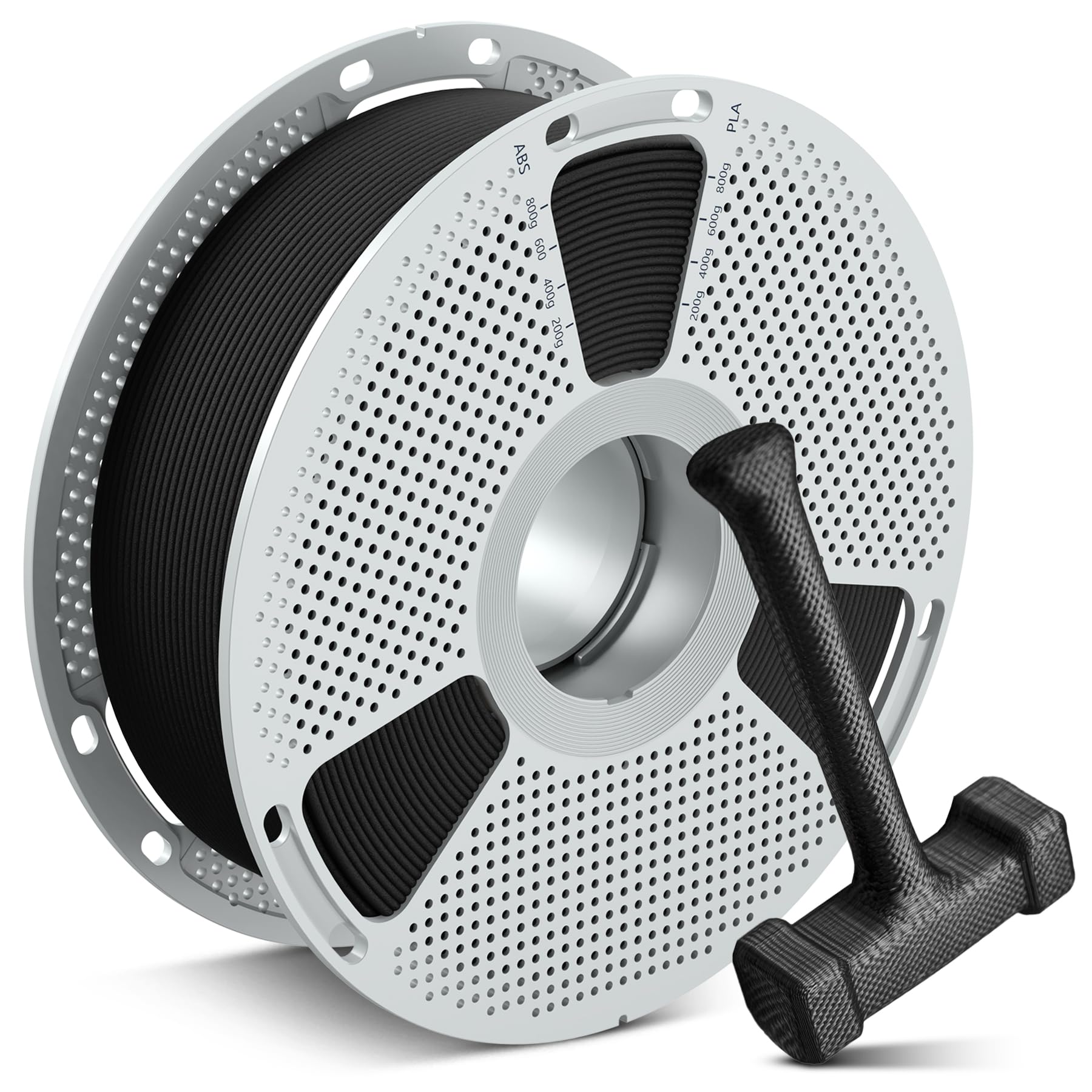
20% carbon fiber nylon strength for gears and brackets — without the premium-tier outlay.
SUNLU’s PA6-CF20 puts a 20% carbon fiber load into nylon and delivers stiffness, strength, and heat resistance that suits gears, screws, fan blades, and skateboard parts. The heat ceiling is stated at 209°C, well above Easy PA, PC, and ASA, so it holds up on parts that see real warmth like motor covers and pot handles. It comes as a 1kg spool with a ±0.03mm diameter tolerance, so it drops into most 1.75mm FDM printers without surprises.
What people compare it to is the pricey name-brand nylon, and it holds its own — many describe it as just as durable with a slightly shinier matte finish. You can print it at 240°C in practice. The catch is that it demands respect: it must be dried first (80°C for 24 hours, or 110°C for 4 hours), and it is fragile enough internally that SUNLU advises against running it in AMS or other multi-color systems.
There is one recurring frustration: the spool is often wound loose, and those tangles can snap filament in the Bowden tube and cost you a print. Dry it, use an abrasion-resistant nozzle, and watch the spool, and this is a strong value in the high-strength tier.
Strength For The Money: the 20% carbon fiber nylon delivers stiff, rigid parts at a fraction of what premium nylon costs.
Watch The Spool: loose winding is the frequent gripe, so check for tangles before a long print.
Worth it if: you want industrial-strength nylon parts and are ready to dry filament and manage the spool.
Not for you if: you rely on an AMS multi-color setup — this material is not meant to run there.
Understanding the Specs
Carbon Fiber Percentage
This is the share of chopped carbon fiber blended into the plastic, shown as 10%, 15%, or 20%. A higher number usually means a stiffer, more dimensionally stable part, but also a more abrasive filament that wears nozzles faster. The 20% nylon blends here sit at the top of that scale and are meant for load-bearing parts.
Dimensional Accuracy
This is how close the filament’s diameter stays to its stated 1.75mm size, written as a plus-or-minus range. A tighter tolerance like ±0.02mm keeps flow steadier and parts more predictable than a looser one. It is one of the clearest quality signals you can read off a spool before you buy.
Heat Resistance
This is the temperature a printed part can take before it starts to soften or lose shape. You will see it written as a number like 209°C or 220°C, or as a heat deflection temperature such as 215°C after annealing. Match this to where the part will actually live — an engine bay needs far more than a shelf.
Moisture Absorption
This describes how readily the plastic pulls water from the air. Nylon and PPA absorb far more than PLA, which is why those spools ship vacuum-sealed with desiccant and often need drying before use. Wet filament prints with bubbles, stringing, and weak layer bonds, so storage matters as much as the spool itself.
FAQ
Do I really need a hardened nozzle for carbon fiber filament?
Can I use carbon fiber filament on a standard open-frame printer?
Why does my carbon fiber nylon filament print with bubbles and stringing?
What is the difference between PLA-CF, PETG-CF, and PA6-CF?
How much filament do I actually need for a project?
Does carbon fiber filament work with an AMS or multi-color system?
Is carbon fiber filament dangerous to handle or sand?
Do I need to anneal printed carbon fiber nylon parts?
Will carbon fiber filament clog my printer?
Can I print carbon fiber parts for outdoor use?
Final Thoughts: The Verdict
For most buyers, the winner among the best 3d print carbon fiber options is the Creality PPA-CF — it pairs 15% carbon fiber with heat resistance rated to 220°C and quasi-metallic strength for parts that genuinely have to perform, and its RFID spool makes setup easier than most. If you want an easy-printing everyday workhorse for general functional parts, the FLASHFORGE PETG-CF delivers carbon-fiber toughness with PETG’s forgiving bed manners. And for high-strength engineering parts on a tighter budget, the SUNLU PA6-CF20 brings 20% carbon fiber and a 209°C heat ceiling at a value that is hard to look past. Match the base plastic to the job, keep your spool dry, and fit a hardened nozzle before you load any of them — that combination is what turns a good spool into parts that last.
How We Picked
We do not accept paid placement. Every pick is matched to a real buyer and a real use-case; we do not hands-on test units.
Sources & Methodology
Specifications: manufacturer listings and product documentation. Review insights: verified customer reviews, as of September 2026. Pricing: not shown on this page (it changes often); check the current price via the retailer link.
As an Amazon Associate, Gadgets Feed earns from qualifying purchases. This does not affect which products we feature.