
Standing on concrete for ten hours with rigid boots that cramp your toes and lock your ankles is a recipe for chronic foot pain, knee strain, and lower back fatigue. Barefoot work boots flip that script by delivering a wide toe box, zero-drop platform, and flexible sole that lets your foot move naturally while still providing the durability and protection a job site demands.
I’m Min — the co-founder and writer behind Gadgets Feed. I’ve spent countless hours dissecting sole construction, leather thickness, safety certifications, and real-world traction data across dozens of models to separate genuinely functional barefoot work boots from ones that just borrow the buzzwords.
This guide breaks down the best options currently available, from budget-friendly entries that get the fundamentals right to premium builds that marry full-grain leather with proper ground feel. Whether you’re framing houses or walking patrol, you’ll leave knowing exactly which best barefoot work boots belong on your feet.
How To Choose The Best Barefoot Work Boots
Picking the right barefoot work boot isn’t just about finding a flat sole — you need to balance safety requirements, all-day comfort, and durability against the specific hazards of your work environment. Focus on these three areas before making a decision.
Toe Shape and Splay Room
A truly foot-shaped toebox lets your toes spread naturally when bearing weight, which stabilizes your stance and reduces fatigue. Look for a last that matches the natural outline of a human foot — round or anatomical — rather than tapered profiles that pinch the pinky toe. Several products in this guide, particularly the Jim Green and Vivobarefoot models, prioritize a wide, rounded toebox that accommodates fan-shaped feet without forcing the toes inward.
Sole Flexibility vs. Protection
Barefoot boots must balance ground feel with puncture resistance. A thin, flexible outsole allows you to feel terrain contours and improve balance, but a work site with nails, rebar, or sharp rocks demands a tougher midsole. The Belleville TR102 and the Ariat Stump Jumper both incorporate shock-dispersing midsoles and slip-resistant lugs to maintain safety without turning the sole into a stiff plank that compromises natural gait.
Waterproofing and Breathability
Wet feet on a twelve-hour shift lead to blisters and long-term foot problems. Membrane-based waterproofing like the one in the Merrell Wrapt Mid keeps moisture out while allowing sweat vapor to escape, but not all waterproof boots breathe equally. If you work in hot environments, prioritize boots with vented leather or moisture-wicking liners — the Ariat Workhog XT Venttek uses a pull-on design with ventilation ports to keep air moving while maintaining a waterproof seal.
Quick Comparison
On smaller screens, swipe sideways to see the full table.
| Model | Category | Best For | Key Spec | Amazon |
|---|---|---|---|---|
| Jim Green Barefoot African Ranger | Premium Leather | All-day ground feel with resoleable build | Full-grain leather, zero-drop, wide round toebox | Amazon |
| Vivobarefoot Tracker Leather | Premium Barefoot | Trail-to-job versatility with waterproof membrane | Zero-drop, ultra-flexible 3mm sole, 4mm lug depth | Amazon |
| Ariat Stump Jumper BOA | Composite Toe | Rapid lace-up with safety toe on rough sites | BOA dial closure, waterproof, composite toe cap | Amazon |
| Ariat Workhog XT Venttek | Pull-On Ventilated | Hot-weather construction with easy on/off | Slip-on, VentTEK cooling, composite toe, waterproof | Amazon |
| Orthofeet Granite Waterproof | Orthopedic | Wide toebox for bunions and arthritis relief | Waterproof, slip-resistant outsole, orthopedic insole | Amazon |
| Belleville TR102 Minimalist Tactical | Tactical Boot | Long-ruck and EMS shifts on varied terrain | Zero-drop, slip-resistant, 12+ hour comfort | Amazon |
| Merrell Wrapt Mid Waterproof | Hiking Work Boot | Outdoor work and hunting with excellent grip | Waterproof membrane, flexible barefoot feel, wide toebox | Amazon |
| Merrell Windoc Steel Toe | Steel Toe | Construction sites requiring safety toe protection | Waterproof, steel toe, zero-drop midsole | Amazon |
| Belleville Mini-Mil Barefoot | Entry-Level Barefoot | Everyday casual work and hiking on a budget | Zero-drop, slip-resistant outsole, lightweight | Amazon |
In‑Depth Reviews
1. Jim Green Barefoot African Ranger Boots

The Jim Green Barefoot African Ranger stands apart because it doesn’t compromise on build quality to achieve its zero-drop shape. The full-grain leather upper is substantial enough to handle abrasion from concrete and steel while the wide, rounded toebox lets the metatarsals splay naturally under load — exactly what you need when you’re standing on a ladder or kneeling on rebar. The outsole is soft and grippy, providing traction on wet wood and gravel without transmitting sharp jolts through the heel.
Break-in is real with these boots — expect some blistering during the first week as the thick leather conforms to your foot. The interior uses a partial leather sock liner that can trap moisture if you’re working in hot environments, but the trade-off is durability that allows the boot to be resoled, extending its life well past cheaper alternatives. Removing the supplied insole is essential to preserve the barefoot feel; keeping it in pushes your toes against the front of the boot and creates pressure points.
Men with wide feet or bunions report that the rounded toebox resolves long-standing foot pain that conventional boots aggravated. The boot is high-volume, so narrow feet may find the heel pocket too loose even with thick socks. Sizing true to Brannock measurement works best, but ordering a half-size up accommodates the high-volume fit without compromising the zero-drop platform.
Why it’s great
- Full-grain leather that can be resoled for years of service
- Extremely wide toebox that resolves bunion and splay issues
- Soft, grippy outsole provides excellent ground feel without sharp shock
Good to know
- Thick leather requires a break-in period with potential blisters
- High-volume fit may feel loose for narrow-footed wearers
- Leather interior runs warm in hot climates
2. Vivobarefoot Tracker Leather All Terrain
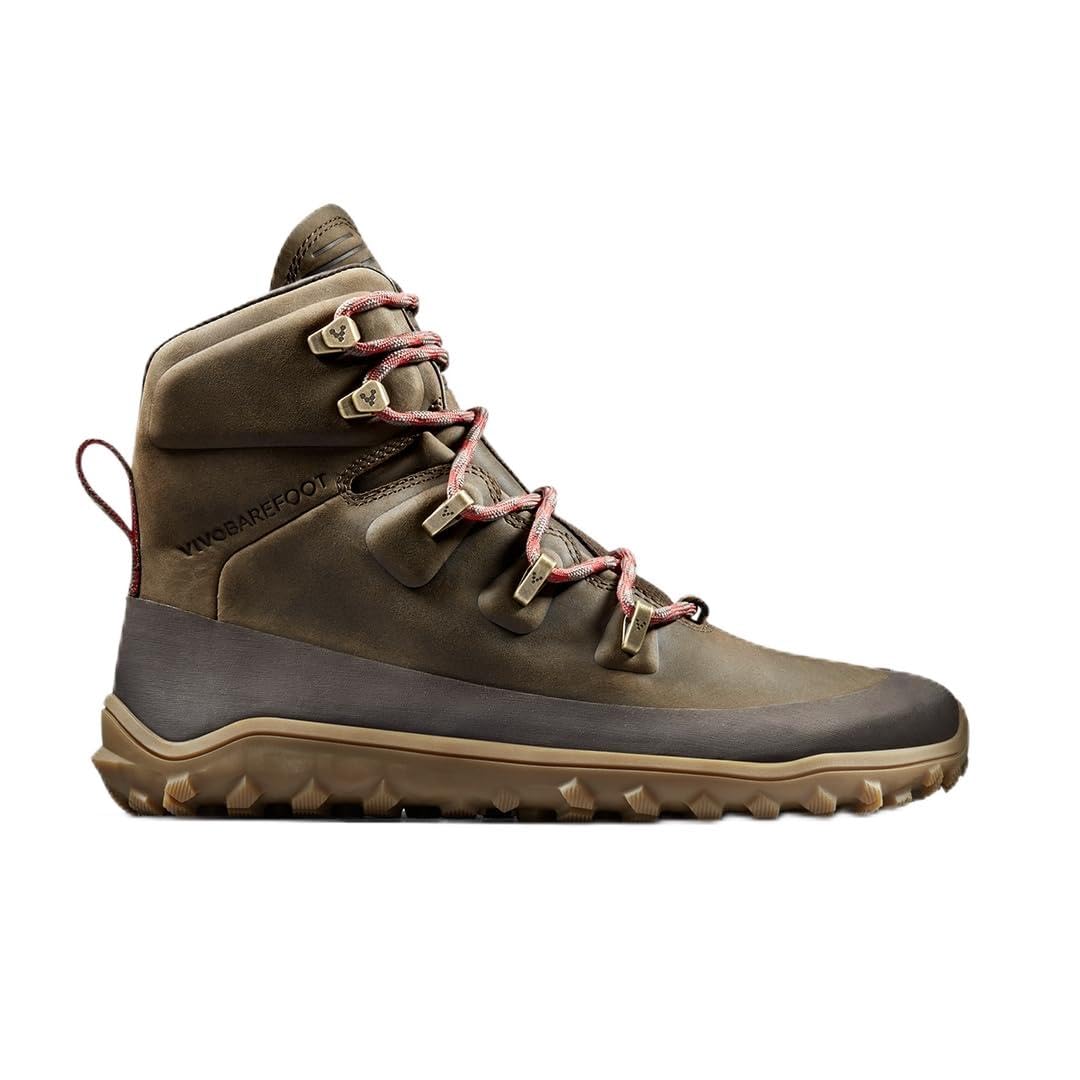
The Vivobarefoot Tracker Leather is the gold standard for how a barefoot hiking boot should feel on rocky, uneven terrain. Its 3mm outsole is thin enough that you can feel the contour of every stone underfoot, yet the lug pattern is aggressive enough to hold on wet slate and loose gravel. The leather upper is soft and supple, requiring virtually no break-in, and the waterproof membrane keeps feet dry through puddles and morning dew without turning the boot into a sweatbox.
Boots in this price tier often cut corners on construction, but the Tracker delivers consistent quality through reinforced stitching around the toecap and a secure heel cup that prevents slippage. The zero-drop platform encourages a midfoot strike that reduces knee strain on descents, and the wide toebox gives each toe independent movement — something that pay offs when you’re scrambling over debris on a construction site off-hours. Some users report that the eyelit loops can pull out under extreme tension, though this appears to be an isolated manufacturing defect rather than a systemic issue.
The boot runs true to size for most wearers and the fit is particularly good for those with average-to-wide feet. If you have narrow feet, the extra volume around the midfoot may require a snugger lacing pattern. The Tracker is not safety-rated, so it won’t replace a composite-toe boot on sites that require impact protection, but for general job work, trail maintenance, and outdoor inspections, it’s the most natural-feeling option available.
Why it’s great
- Ultra-flexible 3mm outsole delivers unmatched proprioception and balance
- Soft leather requires zero break-in out of the box
- Excellent grip on wet rock and loose dirt across multiple months of use
Good to know
- Isolated reports of eyelit detachment under heavy strain
- Not safety-toe rated for jobs requiring impact protection
- Higher price point reflects premium materials but not safety certifications
3. Ariat Stump Jumper 6″ BOA Composite Toe
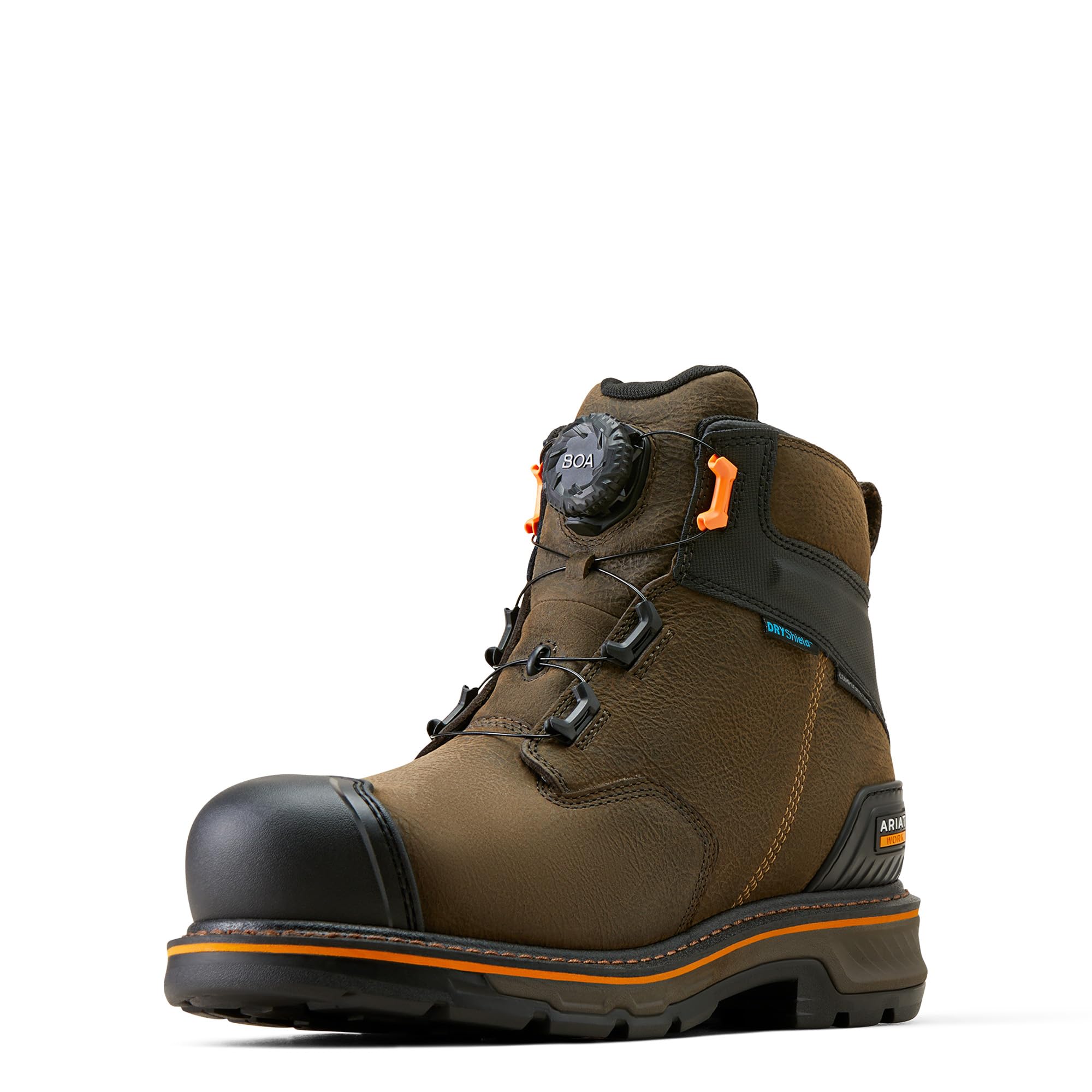
The Ariat Stump Jumper solves one of the biggest frustrations with barefoot work boots: the time it takes to lace and unlace at the end of a long shift. The BOA dial system lets you cinch the boot tight in under twenty seconds and release it in under ten, which is a serious advantage when you’re pulling them on and off multiple times a day on a construction site. The composite toe cap provides impact protection without the thermal conductivity of steel, making it suitable for cold-weather work.
Out of the box, the Stump Jumper is stiff around the ankle but softens after three or four days of wear. The sole offers more cushion than a traditional barefoot boot, which can be a positive or negative depending on whether you want maximum ground feel or all-day comfort on concrete floors. The welted construction means the boot can be resoled when the lugs wear down, extending its lifespan significantly — a feature almost no competitor in this category offers at this price level.
The boot runs slightly large, so ordering a half-size down is common. The BOA system sits flush against the tongue, eliminating the tongue-gap issue that plagues laced boots on job sites where fine dust and debris get inside. Some users with metatarsal sensitivity report that over-tightening the BOA dial creates pressure on the top of the foot, so use a light touch when securing the fit.
Why it’s great
- BOA dial enables rapid on/off without compromising lockdown security
- Resoleable welted construction dramatically increases boot lifespan
- Composite toe provides impact protection without cold soaking in winter
Good to know
- Stiffer sole offers more cushion at the expense of pure barefoot feel
- BOA over-tightening can cause metatarsal pressure pain
- Runs about a half-size large for most wearers
4. Ariat Workhog XT Venttek Bold H2O

The Ariat Workhog XT Venttek is the only boot in this guide with a pull-on design, which eliminates laces entirely and keeps the boot profile clean for environments where loose laces snag on scaffolding or equipment. The VentTEK technology uses perforated leather panels along the shaft to actively circulate air, keeping feet noticeably cooler than standard waterproof boots during summer months. The composite toe meets safety standards without adding weight, and the waterproof membrane handles standing water and mud without failure.
Durability is the Workhog’s strongest suit — the reinforced toecap resists delamination from repeated impact with bricks and mortar, and the outsole maintains its grab on wet steel and polished concrete for months of heavy use. The boot is heavier than most barefoot options, which may affect agility on uneven terrain, but the zero-drop platform still encourages a stable planting motion. The shaft height provides decent ankle coverage without restricting dorsiflexion, so you can crouch and climb without the back of the boot digging into your calf.
Sizing runs true, and the pull-on design accommodates high insteps without a struggle. The interior runs warm in direct summer sun despite the venting, so it’s better suited to moderate climates or indoor work. The boot is expensive, but owners report that the construction quality and replaceable sole make it a better long-term investment than cheaper boots that fall apart after six months.
Why it’s great
- Pull-on design eliminates lace snag hazards and enables quick removal
- VentTEK panels keep feet cooler than standard waterproof boots
- Reinforced toecap resists damage from heavy material impacts
Good to know
- Heavier than most barefoot boots, reducing agility on rough terrain
- Runs warm in direct summer sun despite ventilation ports
- Higher price point but offers resoleable construction for extended life
5. Orthofeet Granite Waterproof Work Boot

The Orthofeet Granite bridges the gap between a barefoot-inspired wide toebox and the structured support that workers with arthritis, bunions, or plantar fasciitis need. The toe box is noticeably wider than most conventional work boots, allowing the big toe to straighten and reducing the pinching that causes neuroma pain. The orthopedic insole provides arch support and heel cushioning that barefoot purists may reject, but for men who stand on concrete for ten to twelve hours, this compromise delivers immediate relief without the break-in period of full-grain leather boots.
Waterproofing is effective — the boot uses a sealed membrane that keeps feet dry through rain and puddles without the clammy feel of cheaper rubberized liners. The sole is slip-resistant on wet steel decking and oil-slicked concrete, though the tread depth is shallower than dedicated off-road boots. Several reviewers report that the boot holds up as well as Danner and Keen models in heavy equipment environments with exposure to oil, grease, and sparks, while costing significantly less.
The main drawback is that the insole and midsole pack down after about two weeks, turning the comfortable platform into a hard walking surface that can cause heel pain. Replacing the insole with a higher-quality orthotic restores comfort and extends the boot’s useful life. The leather is softer than full-grain options, so it scuffs more easily, but the trade-off is a boot that fits perfectly from day one without any rubbing or hot spots.
Why it’s great
- Extremely wide toebox eliminates pinch pain for bunions and arthritis
- Zero break-in required — comfortable from first wear
- Effective waterproofing that holds up against oil and grease exposure
Good to know
- Stock insole compresses within two weeks, requiring replacement
- Softer leather scuffs more easily than full-grain alternatives
- Shallow tread depth reduces traction in deep mud
6. Belleville TR102 Minimalist Tactical Boot

The Belleville TR102 was originally designed for military and tactical operators who need to move silently over varied terrain while maintaining awareness of ground conditions. The zero-drop platform and flexible sole provide exceptional stability during long rucks with heavy packs — users report no foot fatigue after twelve-hour patrols through rocky, uneven terrain with elevation changes exceeding 2,300 feet. The slip-resistant outsole outperforms standard tactical boots on wet floors, making it a strong choice for EMS and law enforcement shifts that alternate between indoor and outdoor surfaces.
The boot’s lace-up design offers a customizable fit around the ankle, though the fabric collar can feel loose around the heel for some wearers, causing a minor friction point that may need moleskin during the first week. The black polished leather holds up well against abrasion and cleans easily, but the natural leather variants have been reported to scuff and flake within a month. The sole is stiff compared to true barefoot shoes, providing more protection on sharp rocks while sacrificing some of the pliability that barefoot enthusiasts expect.
Sizing is tricky — women with narrow feet may need to go down a full size and select the wide option for proper toebox splay. The boot lacks a rubber wrap over the toecap, so frequent kneeling on rough surfaces will wear through the leather at the toe. Despite these quibbles, the TR102 holds up better under heavy daily use than most minimalist alternatives, and its traction on wet steel edges and loose scree remains reliable after a year of abuse.
Why it’s great
- Excellent stability and ground feel during heavy-load rucks
- Outperforms Danner and Haix on wet floor traction
- Zero break-in required for EMS and tactical shift work
Good to know
- Sizing requires careful conversion for women and narrow feet
- Not as flexible as true barefoot shoes; sole has moderate stiffness
- Natural leather variants scuff and flake faster than black polished leather
7. Merrell Wrapt Mid Waterproof
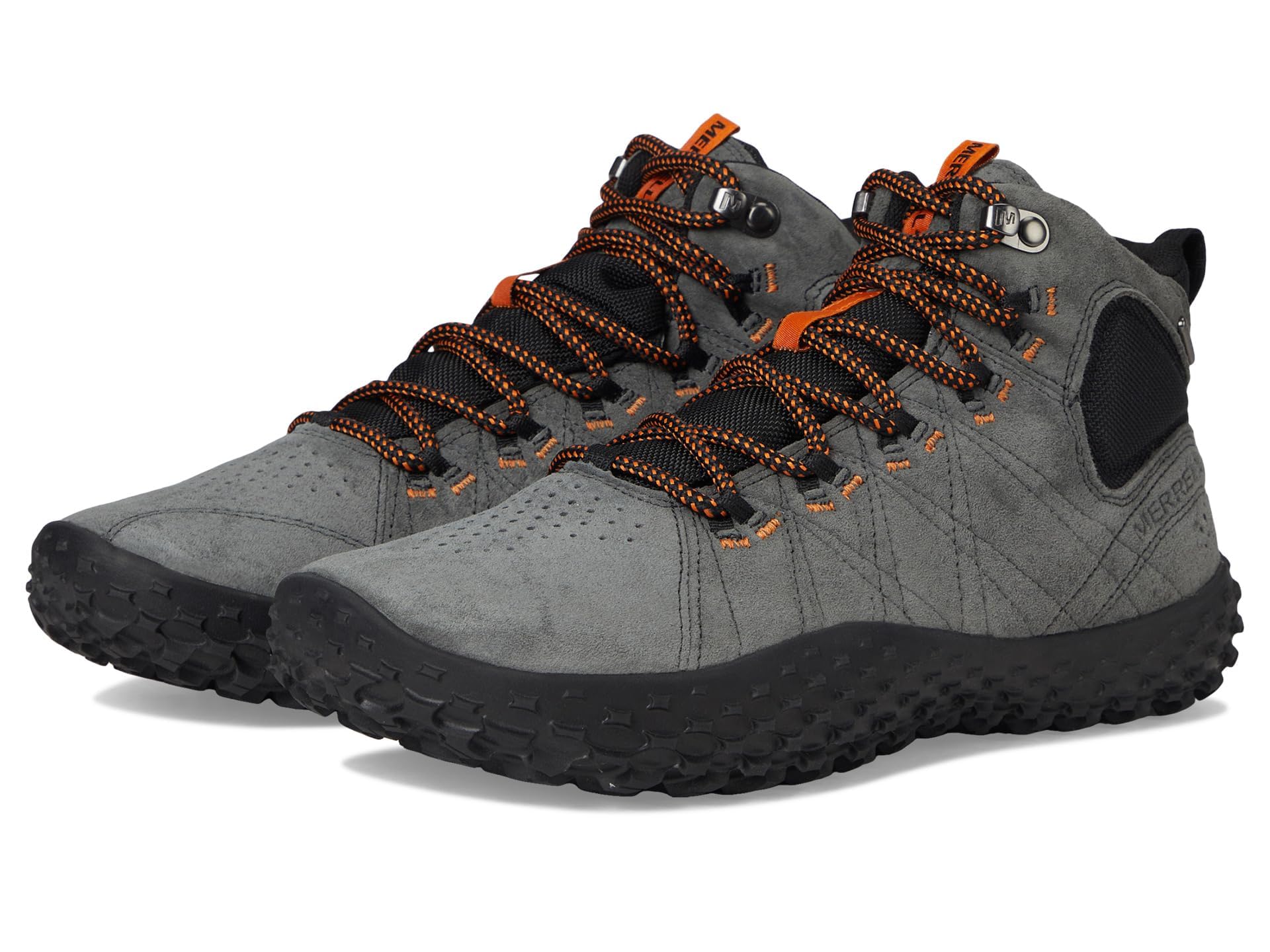
Merrell’s Wrapt Mid delivers a surprisingly authentic barefoot experience from a brand better known for conventional hiking footwear. The boot uses a wide, foot-shaped toebox that accommodates fan-shaped feet without squeezing the pinky toe, paired with a flexible sole that bends easily at the ball of the foot. The waterproof membrane beads water effectively during rain and puddle splashes, and the outsole uses angled lugs that grip wet edges and prevent sliding on steep slopes.
The Wrapt Mid is lighter than most work boots in its class, which reduces fatigue during long days spent walking on mixed terrain. The ankle support is moderate — enough to prevent rollover on uneven ground without restricting natural range of motion. The boot runs very wide in the toebox, so men with narrow or average-width feet may find their toes sliding side to side even with tight lacing. This is a pro for wide-footed workers but a potential con for those with slender feet who need a snug heel lock.
Durability is good but not exceptional — the boot holds up well against trail use and casual work environments, but it won’t survive the same level of abuse as the full-grain leather options in this guide. The arch support is moderate and works well for low arches but may lack for high-arched wearers. Overall, it’s a versatile hybrid that works equally well for hunting, light construction, and casual wear without drawing attention as a “barefoot boot.”
Why it’s great
- Foot-shaped toebox provides excellent splay for wide feet
- Lightweight construction reduces fatigue during all-day walking
- Waterproof membrane handles rain and puddles without leaking
Good to know
- Very wide toebox may allow foot sliding for narrow feet
- Moderate arch support insufficient for high arches
- Not built for heavy-duty construction exposure
8. Merrell Windoc Waterproof Steel Toe Mid
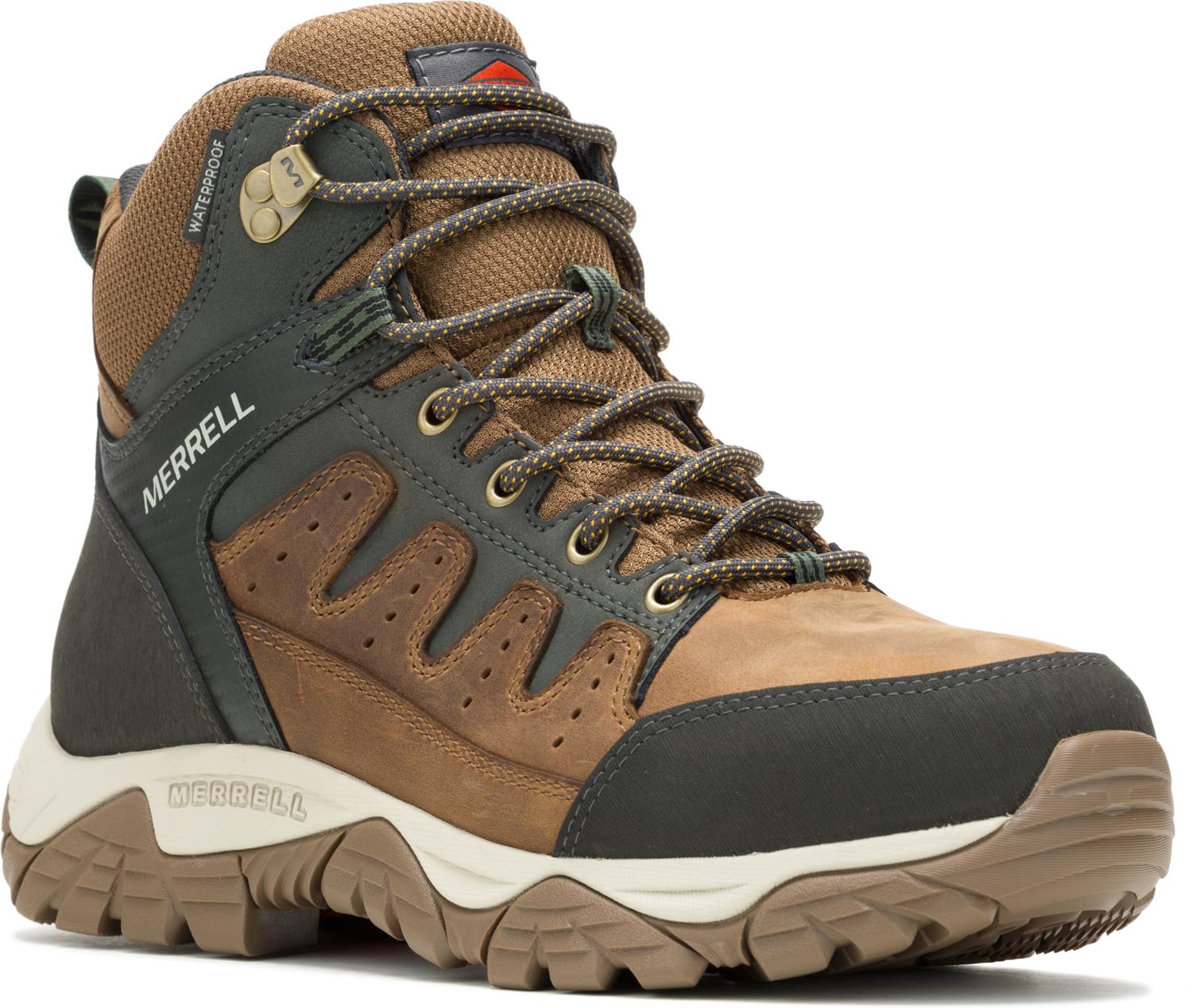
The Merrell Windoc proves that a steel toe work boot doesn’t have to feel like a concrete block on your feet. The boot incorporates a zero-drop midsole that maintains a natural foot position while the steel toe cap meets ASTM safety standards for impact and compression. The waterproof membrane in this model holds up against moderate to heavy rain and standing water, making it a reliable choice for outdoor work in wet conditions without requiring a long break-in period.
Out of the box, the Windoc offers immediate comfort with no pinching or hot spots — linemen, electricians, and construction workers report wearing them for full twelve-hour shifts without foot fatigue. The lacing system is easy to adjust and provides good ankle support for uneven terrain. The boot is lightweight for a steel-toe option, which reduces the energy cost of walking on hard surfaces throughout the day.
The downsides are typical of steel toe boots in this price range. The steel toe crease will eventually wear through the upper leather if you kneel frequently, and the waterproofing degrades after several months of heavy use in water and mud. The rubber sole can separate from the upper after extended exposure to cement and chemicals, requiring occasional repair with adhesive. Users who buy these for heavy construction report getting about six months of daily abuse before replacement, which is acceptable for the price point.
Why it’s great
- Zero-drop midsole maintains natural foot position with steel toe protection
- Immediate comfort with no break-in period for full twelve-hour shifts
- Lightweight design reduces walking fatigue on concrete
Good to know
- Steel toe crease can wear through upper leather with frequent kneeling
- Waterproofing degrades after several months of heavy water exposure
- Rubber sole may separate from upper in chemical-heavy environments
9. Belleville Mini-Mil Barefoot Shoes
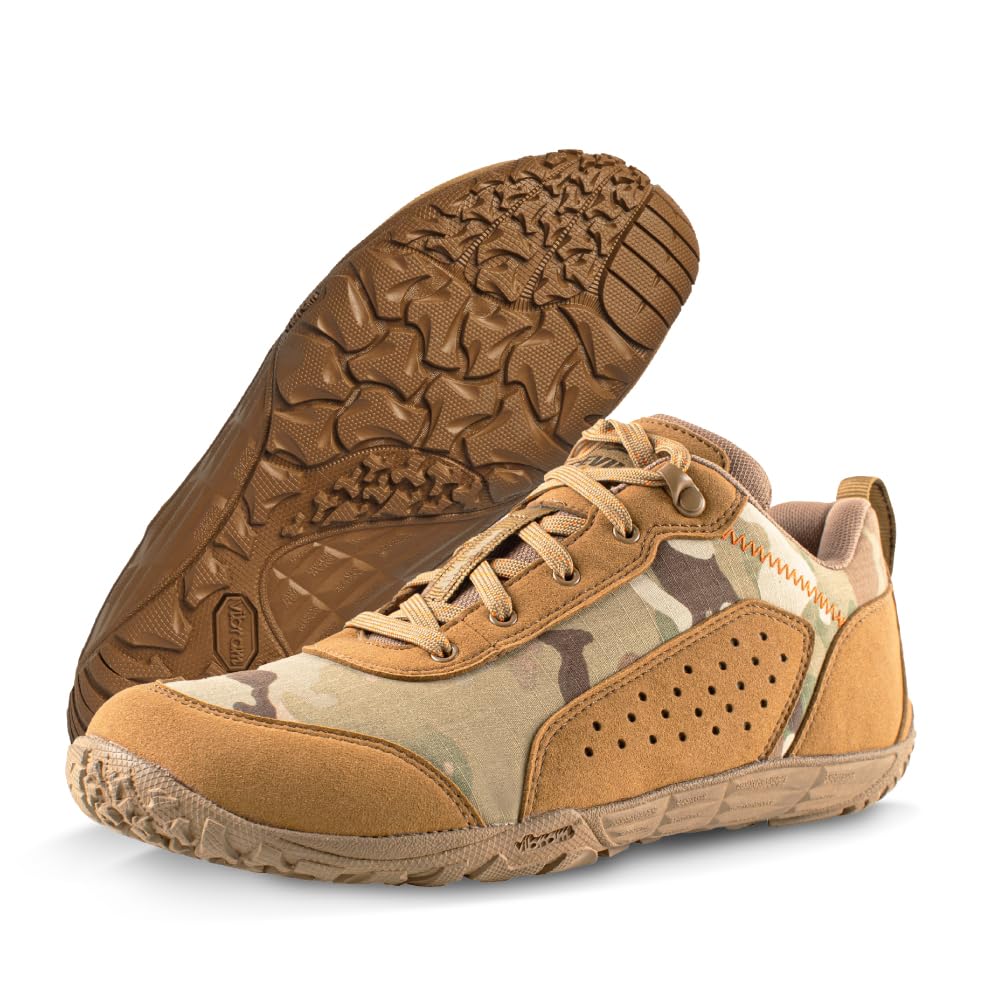
The Belleville Mini-Mil is the most accessible entry into barefoot work footwear, offering a zero-drop platform and flexible sole at a price that won’t scare off first-timers. The shoe looks like a normal sneaker from the outside, which helps in workplace environments where “barefoot boots” might draw unwanted attention. The wide toebox accommodates fan-shaped feet better than most conventional sneakers, and the slip-resistant outsole provides solid traction on smooth floors and packed trails.
Durability is surprisingly good for the price point — users report the shoe holding up well after thirty miles of rough terrain with no visible wear, and the construction quality matches what you’d expect from Belleville, a brand with deep military footwear roots. The shoe is lightweight and easy to slip on and off, making it a good option for jobs that require frequent boot removal for security checkpoints or clean-room entry. The lack of a safety toe limits its use on sites that require impact protection, but for light industrial, warehouse, or outdoor work, it provides everything you need from a barefoot shoe.
Sizing is the Mini-Mil’s weak point — the shoe runs small, so ordering a half-size up is necessary for most wearers. Even then, the toebox is narrower than some wide-footed users would like, and the return policy charges a fee, so getting the size right on the first try is important. The shoe is not the most minimalist barefoot option on the market, but it offers a transitional feel that works for people migrating from conventional boots to the barefoot world.
Why it’s great
- Zero-drop platform at an accessible entry-level price point
- Discreet sneaker look blends in without barefoot stigma
- Surprisingly durable for the price, surviving rough terrain with no wear
Good to know
- Runs small — requires ordering a half-size up for proper fit
- Toebox narrower than premium barefoot competitors
- Return fee adds cost if sizing guess is wrong
FAQ
Can I wear barefoot work boots with orthotics?
How long does it take to transition from regular work boots to barefoot?
Are barefoot work boots OSHA approved for jobs requiring safety toes?
Final Thoughts: The Verdict
For most users, the best barefoot work boots winner is the Jim Green Barefoot African Ranger because it combines resoleable full-grain leather construction with a genuinely wide toebox and soft outsole that delivers real ground feel without sacrificing work-site durability. If you want a safety-rated boot with rapid on/off convenience, grab the Ariat Stump Jumper BOA Composite Toe. And for premium proprioception and trail-to-job versatility, nothing beats the Vivobarefoot Tracker Leather.