
Our readers keep the lights on and my morning glass full of iced black tea. As an Amazon Associate, I earn from qualifying purchases.
Specs are compiled from manufacturer listings and verified buyer reviews and can change over time — please confirm the key details on the product page before buying.
If your putts keep sliding right of the hole, the problem is usually the club, not your hands. A zero torque putter is built so the face resists twisting on its own, which means your stroke has far less work to do. This guide covers nine of them, from tour-level flagships down to entry-level value picks, so you can match one to your stroke and your budget without guesswork.
I’m Min — the founder and writer behind Gadgets Feed. This guide is built by comparing the manufacturers’ published specifications and the patterns across verified customer reviews, so you get each pick’s real strengths and trade-offs instead of marketing spin.
You will see which designs stay square without hand manipulation, which lofts and lengths fit which stroke, and where the real money goes. It lays out the practical differences between every leading 0 torque putter so you can pick with confidence.
Our Picks at a Glance
How To Choose The Best 0 Torque Putter
A zero torque putter works differently from the blade you grew up with, and that changes what you should look for. Instead of hanging toe-down and forcing your hands to hold it square, this style places weight so the face stays put on its own. Get the fit right and your stroke gets simpler.
Start With Loft And Lie Angle
Loft is the tilt built into the face that lifts the ball out of its resting spot so it starts rolling instead of skidding. The picks here run from 2.5 degrees up to 6.3 degrees, and the higher-lofted heads suit players who forward-press the shaft. Lie angle is the angle of the shaft relative to the ground at address — 72 degrees is the common standard here, and a putter that sits too flat or too upright will fight you.
Match The Head To Your Stroke
A straight-back, straight-through stroke pairs naturally with a center-shafted, face-balanced head. If you arc the club on the way back, a lighter graphite-shafted head that rotates a touch more can feel friendlier. Weight matters too: a heavier head steadies the short ones but takes longer to learn for lag putts, and a lighter head gives you speed feel but less resistance to a twitchy hand.
Length, Grip, And Face Milling
You want your eyes over or just inside the ball with your arms hanging naturally, so putter length matters. These picks come in 33, 34, and 35 inch options, and one buyer found a stock length too short for their build. Grips run from standard to oversize, and a bigger grip quiets wrist movement. Milled faces (CNC or double-milled) cut a pattern into the face for consistent contact; the exact pattern differs by maker.
Quick Comparison
| Model | Best For | Loft | Length | Head Type | Amazon |
|---|---|---|---|---|---|
| TaylorMade Golf Spider ZT Putter★ Best Overall | Tour-level stability, soft insert feel | 3 degrees | 35 in | ZT mallet, center shaft | Amazon |
| COOLO Low Torque Golf PutterBudget Champion | Budget-friendly graphite-shaft feel | 3 degrees | — | Blade, center shaft | Amazon |
| PGM Zero Torque PutterBest for Beginners | Beginners wanting straight-line help | 3.5 degrees | — | Face-balanced mallet | Amazon |
| Performance Golf SQ Putter | Mid-handicappers fixing a twisting blade | 3 degrees | — | Mallet, face-down balanced | Amazon |
| Wilson Infinite Zero Torque Lakeview | Short putts inside six feet | 2.5 degrees | 35 in | Blade | Amazon |
| Wilson Infinite Zero Torque 606 | Straight-stroke players chasing value | 2.5 degrees | 35 in | Mallet | Amazon |
| PXG ZT Zero Torque Blade Mallet | Premium blade feel with heavy stability | 4 degrees | 34 in | Blade mallet | Amazon |
| Odyssey Ai-One Square 2 Jailbird ZT | Straight-stroke players wanting a big mallet | 6.3 degrees | 34 in | Mallet (JAILBIRD ZT) | Amazon |
| Odyssey Ai-One Square 2 Max Stripe ZT | Alignment-first players on a firm arc-free stroke | 6.3 degrees | 33 in | Mallet (MAX STRIPE ZT) | Amazon |
In‑Depth Reviews
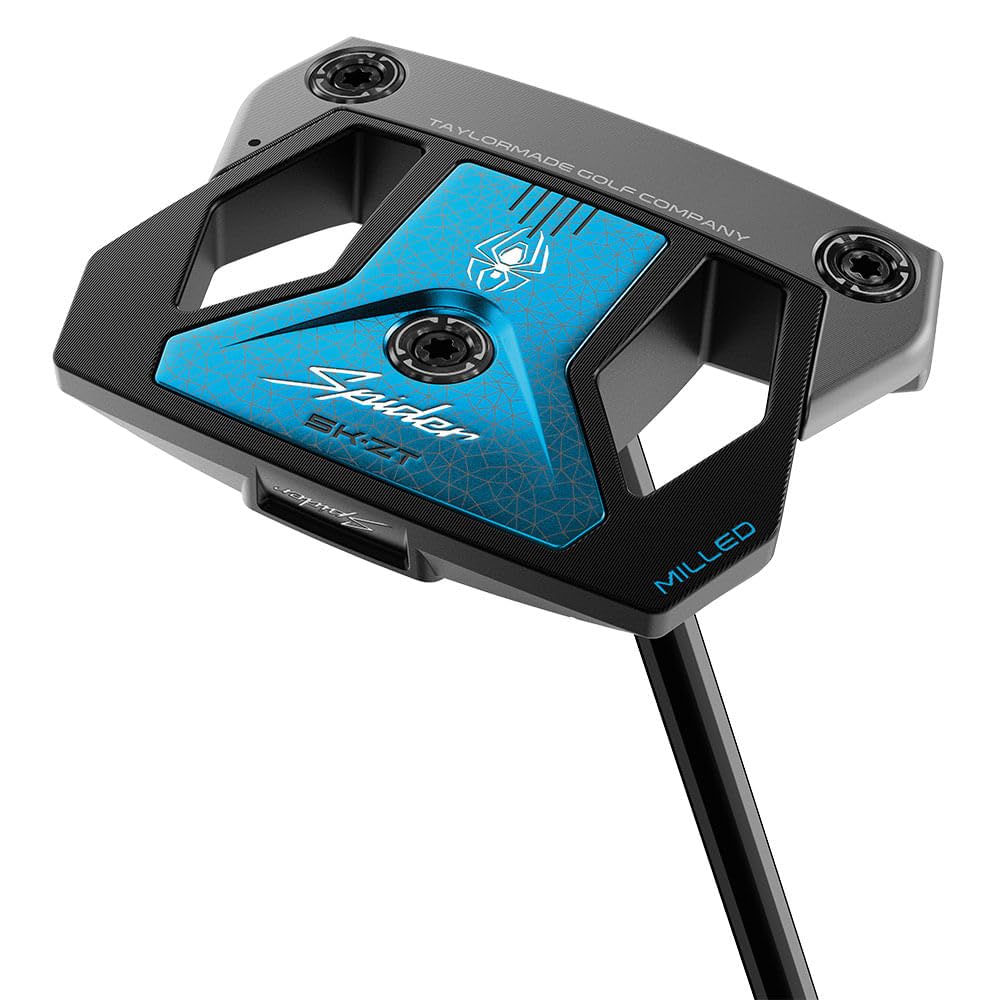
1. TaylorMade Golf Spider ZT Putter
Our pick — over 4.5★ from 80+ verified ratings; the strongest balance of quality and price.
TaylorMade’s answer to the twist-free trend, and the pick most players settle on.
This is the putter for someone who wants the zero torque idea executed with tour-level polish, and it is the strongest all-rounder in this group — the crowd favorite at 4.6 stars from 80+ owners. The defining number is the loft: 3 degrees, against 3.5 degrees on the PGM below, a deliberate 17% tighter gap that keeps the face from launching the ball too high.
The weight placement is what makes it work. TaylorMade bores the KBS shaft toe-ward near the center of gravity with 1 degree of shaft lean and 25mm of onset behind the face, so the head hangs toe-up instead of toe-down. The result is a putter that resists opening or closing on its own, and buyers report it pays off fast — “One buyer shaved 4 strokes in their first league round with no practice,” one round notes, adding that the 35 inch length fits a user just shy of six feet tall.
The face is a Pure Roll insert made from Surlyn and aluminum with grooves angled at 45 degrees, which produces the soft, quiet contact this family is known for. Milled alignment lines the width of the ball sit on the True Path system, and owners say squaring up is almost automatic. It also has a real learning curve: the head runs 16 ounces and needs patience, so a player coming from a light blade should budget a few rounds to groove its speed.
What Owners Keep Coming Back To
- Putter quality is the runaway strength — 25 reviewers single out build and craftsmanship.
- Lag and downhill putts feel anchored, with distance control that holds on slow greens.
- Toe-up balance keeps the face from twisting through the strike.
- Milled ball-width alignment lines make it easy to line up to center face.
Where It Fights Back
- 16 ounces is a heavy head and needs a few rounds to dial distance.
- Value gets mixed feedback — great putter, but the price tag stings.
- The soft insert takes adjustment coming from a firmer face.
Grab it if: you want the most complete zero-torque putter here and will trade a short break-in period for long-term consistency.
Pass if: you prefer a light, quick-twitch head or want maximum forgiveness without adjusting your speed feel.
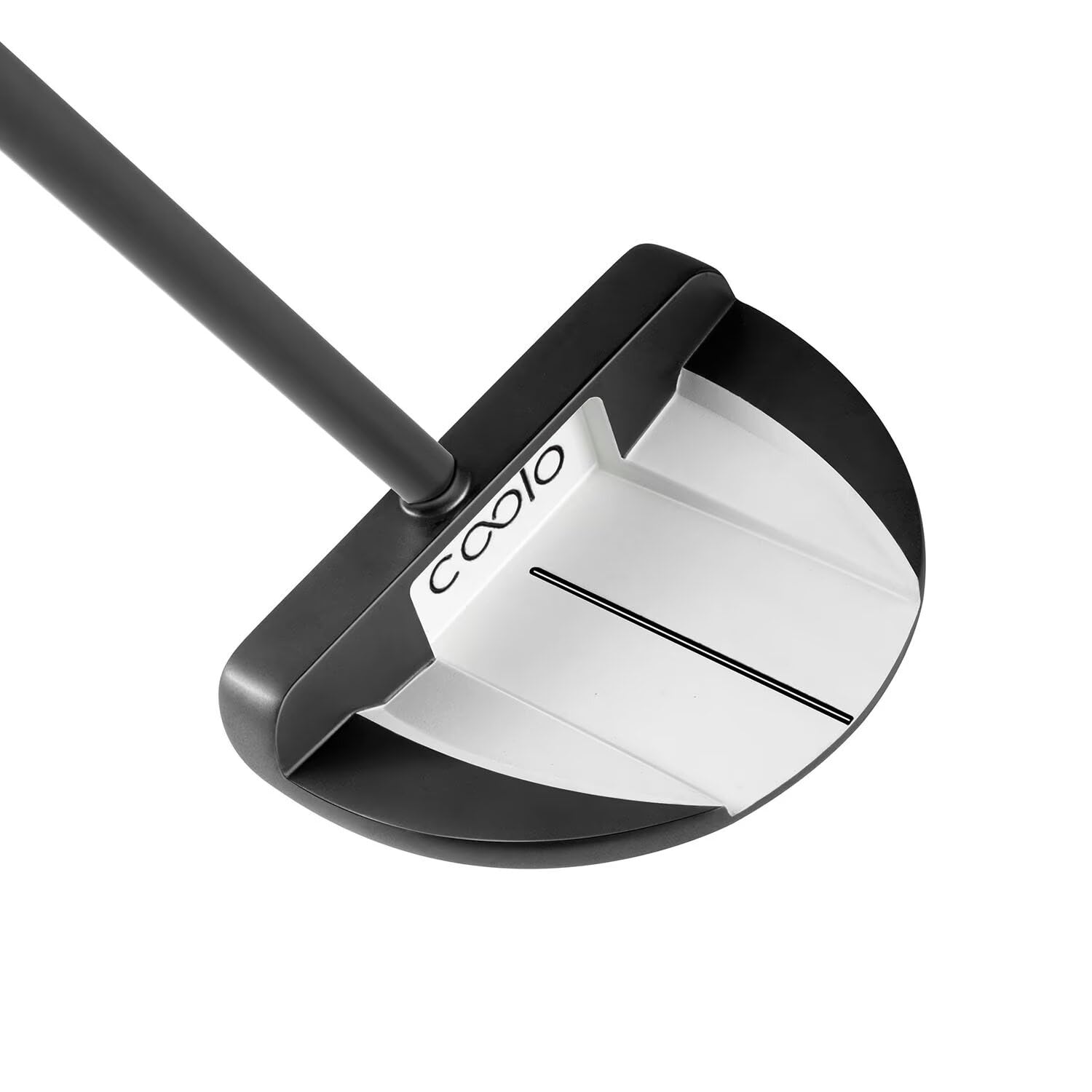
2. COOLO Low Torque Golf Putter, Center Shaft, Counter Balanced & Mallet Putter
A graphite shaft that weighs almost nothing, and a low-torque head that stays pointed at the target.
For a player who wants the zero torque feel without the flagship price, this is the first stop. The headline detail is the shaft: it comes in at just 60 grams, which lets the head move and rotate more freely for long putts and hands you more feel through the stroke. Build quality is the trait that wins people over — 21 reviewers call it out, far ahead of any other note.
The head is stainless steel with a CNC-milled face, a machining process that cuts a precise pattern for consistent contact across the face. Alignment is handled by an upper and lower line on the head, which gives your eyes a reference for staying flat through impact. Owners mention it stays on line and is easy to control — “I used it today for the first time and it did not disappoint,” one puts it, praising how quickly the speed control clicked.
Here is the honest trade: weight divides opinion. Some players love the balance and some find the head heavy, and at 0.54 kg it is a genuinely substantial club. The 3 degree loft sits right in the middle of the pack, and it ships with a headcover. If you like a light, whippy-feeling putter, this is not it.
Stroke It Suits: an arcing stroke, thanks to the pistol-shaped PU grip and the 60 gram graphite shaft that lets the head rotate naturally.
One Caveat: the cover fits a little loosely compared with the head, a small annoyance rather than a dealbreaker.
Best match: budget-minded players who want graphite-shaft feel and will happily accept a heavier head.
Look elsewhere: if a light head is a must, or if you want your putter cover to fit snug.
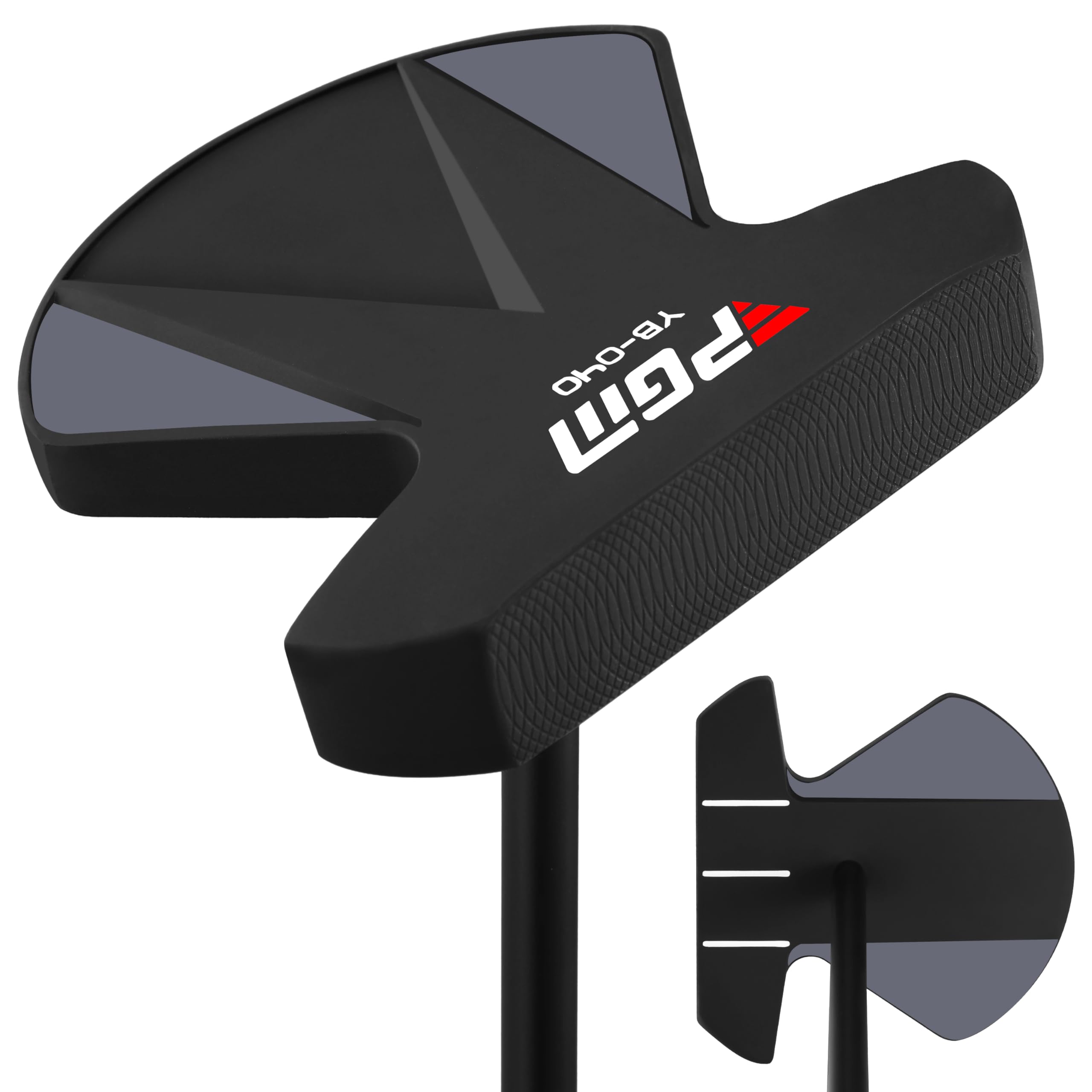
3. PGM Zero Torque Putter Golf Club for Men and Women Right Handed
The forgiving face-balanced head that makes a straight-back, straight-through stroke feel natural.
If hand tremors or a squirming face have been costing you short putts, the PGM addresses that head-on. Toe hang is 0 degrees — meaning the head hangs perfectly level rather than tilting toward the toe — and that face-balanced setup resists twisting so the face stays square on off-center hits. Build quality and value are the two things buyers rave about most, each singled out by nine reviewers.
The loft is 3.5 degrees, the highest of the value tier in this group, and paired with a 72 degree lie angle and a regular-flex graphite shaft that softens feedback at impact. A rubber anti-slip grip cuts hand fatigue on long sessions, and one player notes it suits left-eye-dominant, right-handed golfers looking to stop pushing putts right.
Two things to know before you click. It does not include a putter cover, which a couple of buyers found irritating given how hard it is to find a fitting third-party cover. And the shaft can feel light, with one golfer returning it because distance control on the practice green was hard to judge and the stock length ran short for their height. Those are preference mismatches, not defects — most owners rate the head itself highly for alignment and roll.
Why It Earns Its Place
- 0° toe hang keeps the face square without hand effort.
- Owners who used to three-putt three times a round now do it far less often.
- Solid value for a zero-torque head with a CNC-milled face.
Worth Knowing Before You Buy
- No putter cover in the box, and a fitting one is hard to find.
- The stock shaft runs light, which some find harder to control on long putts.
- Standard grip only, with no larger option from the maker.
Reach for it: as a first zero-torque putter for a player prioritizing forgiveness and alignment help over heft.
Skip it: if you want a heavier counterbalanced build or expect a cover in the box.
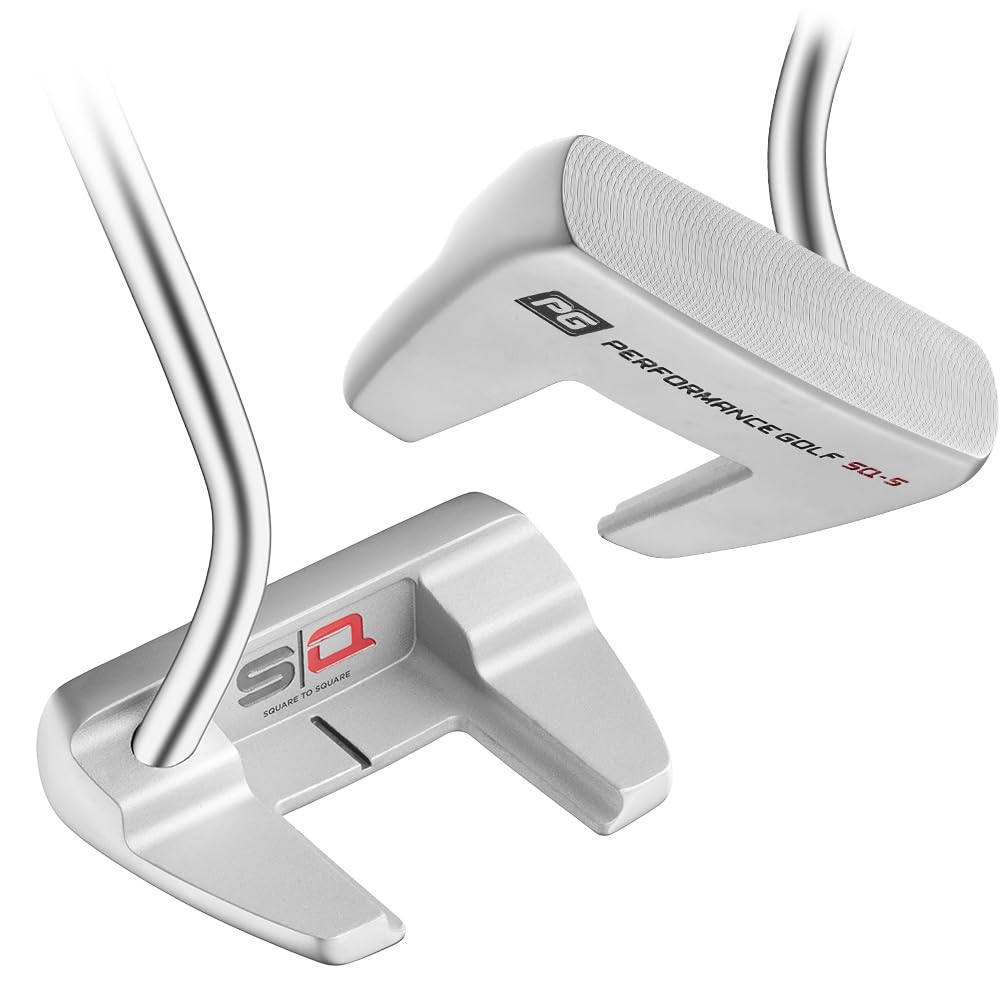
4. Performance Golf SQ Putter I Square-to-Square Technology I Make More Putts with A Straighter Stroke I Designed by Club Innovation Expert I 4 Face Stability Features
Built around four separate anti-twist features, and it takes a heavy mallet head to make them stick.
This one is pitched at the recovering blade user — the golfer whose old putter twisted at impact and cost them short ones. The SQ centers on four face stability features: face down balance, straight stroke shafting, a no-twist grip, and a straight stroke lie angle. Face down balance means the weight sits below the shaft so the head wants to hang square rather than rotate shut. On-course putting performance is the clear standout, with 22 reviewers calling it out.
The head is stainless steel with 3 degrees of loft, an oversize corded grip that quiets the hands, and a precision alignment guide for squaring up. The results talk: customers note dropping 4 to 5 strokes and finishing rounds without a three-putt. Long lags land within a couple of feet instead of sliding past.
The honest caveat is the audience. It favors beginners and mid-to-high handicappers, and one experienced player felt the pendulum-friendly design was too basic for a low-handicap game. There is no loft figure to speak of beyond the 3 degrees that puts it level with the Spider ZT, and no length options listed either — so measure before you buy.
For The Fix-It Golfer: if your blade putter keeps twisting shut at impact, this is the tool that stops it and gets your putting back on track.
For The Skilled Player: the simplicity that helps a beginner can feel limited once your stroke is already sharp.
Choose it: if you are a mid-to-high handicapper who wants a straight-stroke mallet that squares the face for you.
Consider another pick: if you are a low-handicapper chasing fine-grained distance control.
5. Wilson Infinite Zero Torque Lakeview Golf Putters- Right + Left Hand, 34″ – 35″
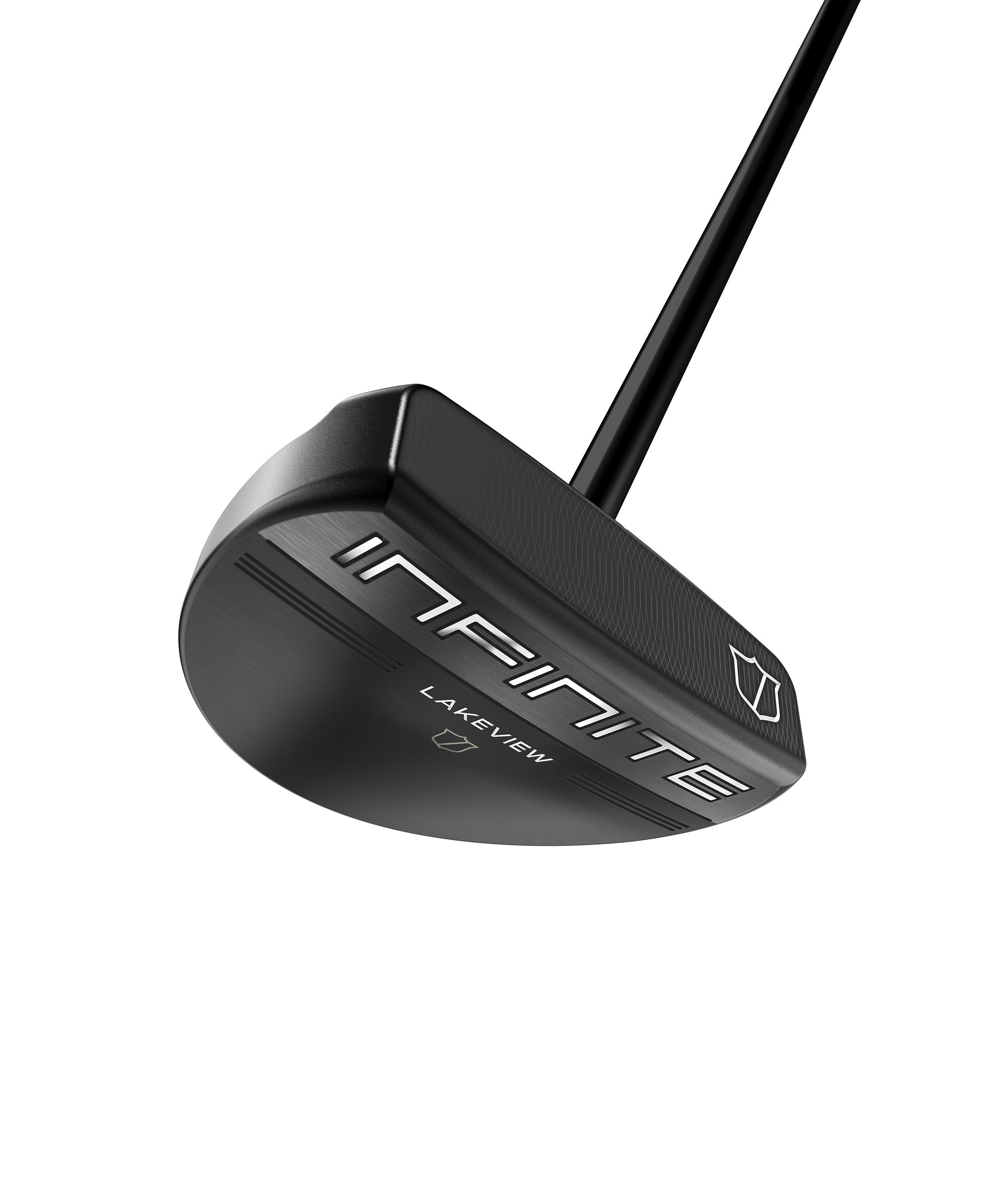
A blade that shines inside six feet, with a price that undercuts the flagship names.
Players who live and die on the six-footers should start here. The Lakeview is a blade shape with a loft of 2.5 degrees — the lowest in this group — so it keeps the ball low and rolling forward off the face. It also carries a double-milled face pattern that holds feel and distance control constant no matter where you strike it.
The engineering behind it is Wilson’s zero torque approach: the center of gravity sits under the central shaft axis so the face resists rotating through the stroke. The head is built with MIM (Metal Injection Molding, a process that shapes metal with fine detail and precise weight placement), giving the blade a clean two-tone PVD finish that cuts glare at address. Shaft lean is 1 degree forward, which sets your hands in the right spot without effort.
What owners keep saying is that the ball holds its line unless your stroke is severely off. It is not just a short-putt machine, though — one player notes it works best inside six feet and that it is very forgiving on those makeable little ones. The 4 1/4 inch grip is on the larger side. Note this block includes no review-size breakdown, so if you need a custom length you may be shopping around.
Where It Wins: short putt confidence — owners describe the ball starting and staying on line through the stroke.
Read The Fine Print: this write-up is drawn from the 35 inch right-hand model, and shorter or left-handed options are separate listings.
Pick it if: you want a lightweight-feeling blade with a glare-free finish and a price that stays in value territory.
Look past it: if you prefer a mallet with a big visual alignment aid.
6. Wilson Infinite Zero Torque The 606 Golf Putters – Right + Left Hand
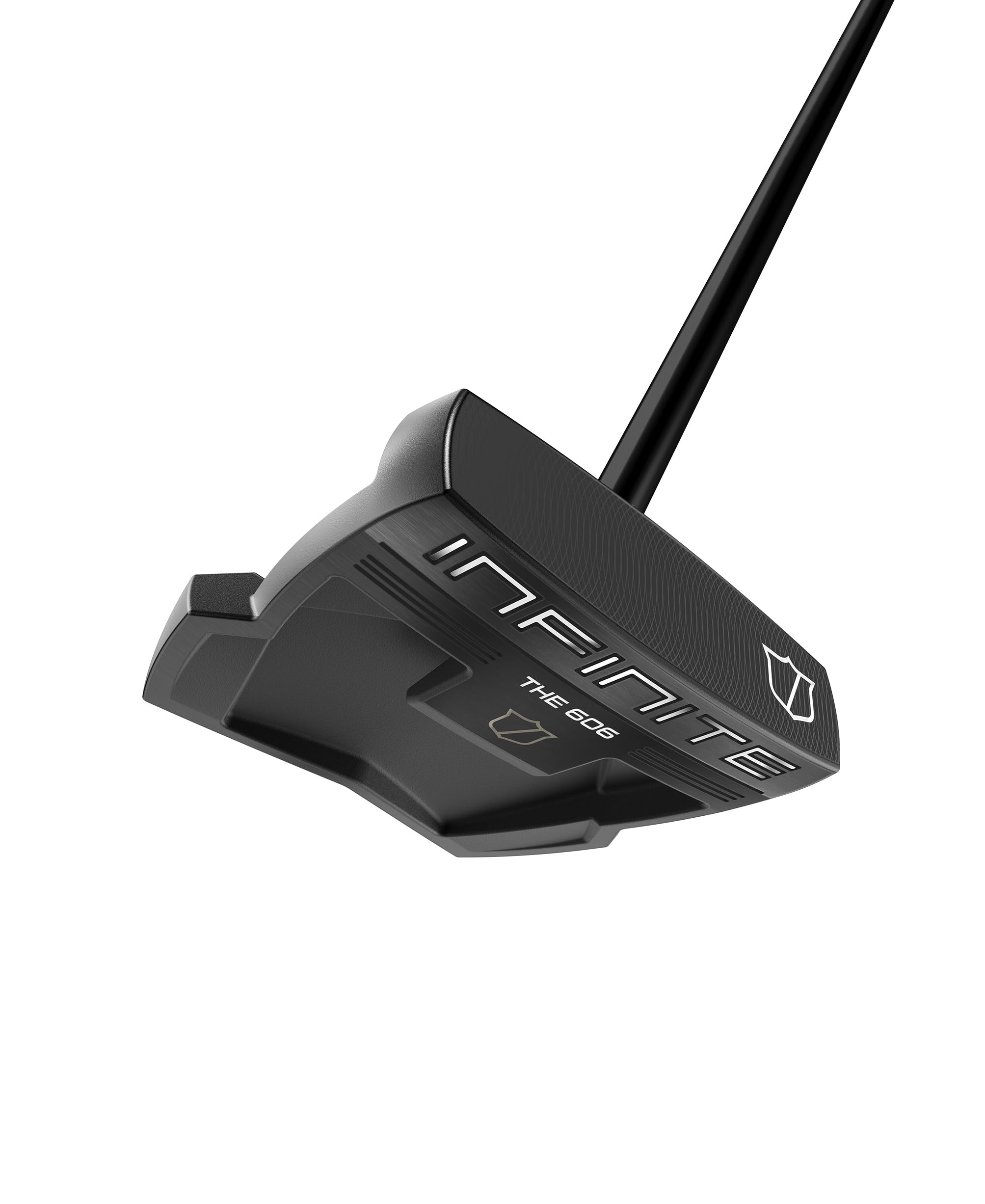
Mallet forgiveness and a milling process that lets Wilson place weight exactly where it counts.
If you have ever watched a straight putt wobble off line, the 606 was made for you. It is a mallet head — bigger and more forgiving than the Lakeview blade — with the same 2.5 degree loft and 1 degree forward shaft lean. It also uses MIM construction, which lets the maker shape fine detail and place mass precisely for a steadier roll.
Wilson’s zero torque logic places the center of gravity under the central axis of the shaft, keeping the face square to your line longer. Performance on the greens is the trait buyers flag most, followed by the feel of the double-milled face and the overall value. The double-milled pattern keeps that feel consistent across the whole face, so mishits are less punishing.
Two honest notes. The lie angle is flat and hard to adjust upright, which matters if you are taller or stand more upright at address. And a handful of reviewers point out the head cover wearing out quickly and the shaft threads being soft if you re-grip at home — worth being careful with if you plan to modify it.
What It Gets Right
- Mallet stability that keeps the face square without a wrestling match.
- Double-milled face for consistent feel and roll across the face.
- Notably strong value from a brand with real name recognition.
The Learning-Curve Notes
- Flat lie angle adapts poorly to upright setups.
- The stock head cover wears quickly and the shaft threads are delicate for re-gripping.
- Not for very high handicappers still fighting a severe slice stroke.
The call: a strong pick for a straight-stroke player who wants mallet forgiveness at a fair price and plans to leave the club mostly untouched.
Different pick: if you need an upright lie angle or re-grip often, go another route.
7. PXG Golf ZT Zero Torque Blade Mallet Putter, RH, 34 in, Magnetic Head Cover
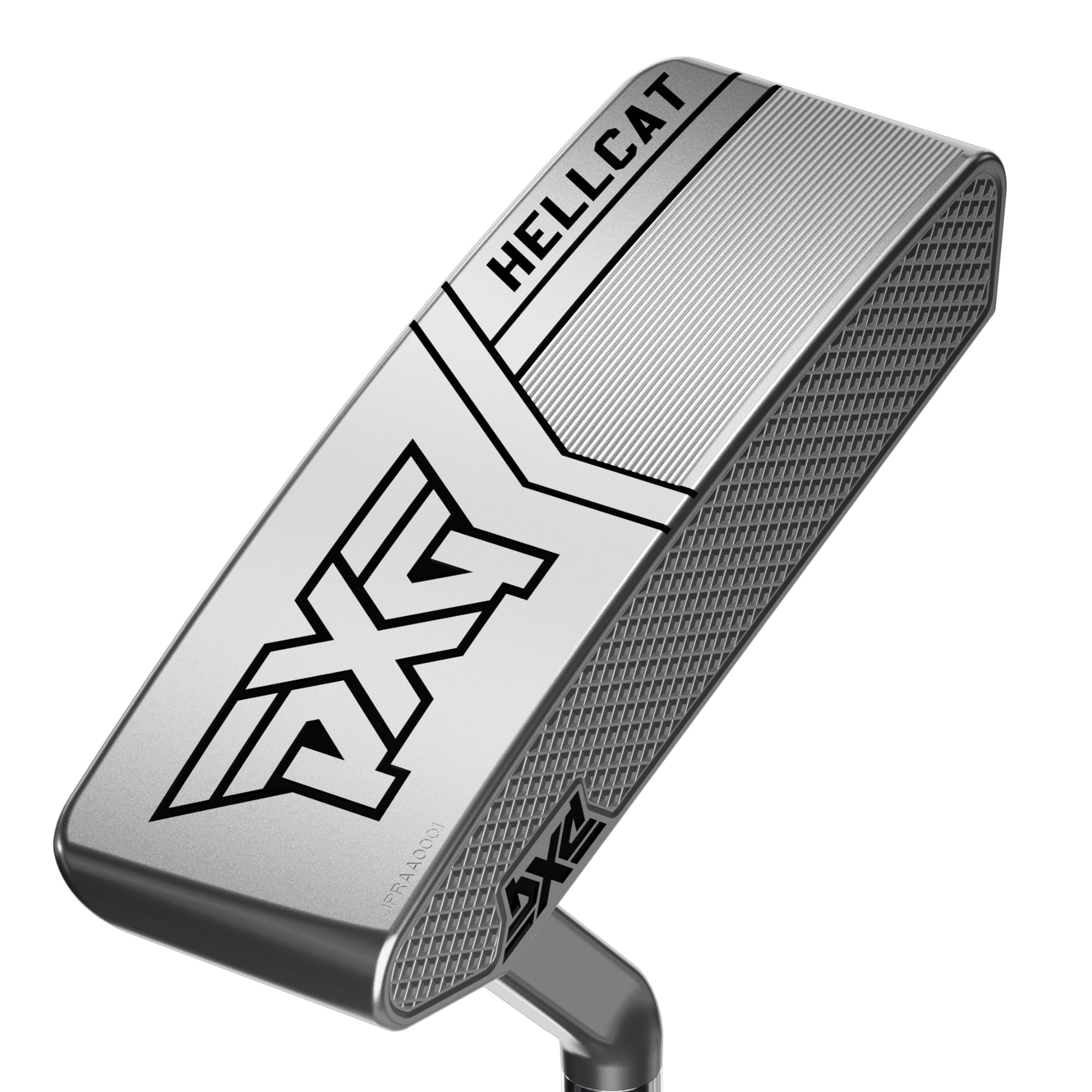
A blade-shaped mallet that hides its stability in plain sight and comes with a magnetic head cover.
You get blade looks with zero-torque guts here, plus a magnetic head cover that most zero-torque designs skip. The face is MIM 303 stainless steel with a precision-milled pyramid pattern — those raised pyramids improve contact quality on off-center hits and soften the feel. PXG places the shaft axis just above the center of gravity so the face resists twisting on its own.
The head runs 370 grams with toe-up balance, which keeps the putter from rotating through the strike. There is also a built-in 1 degree forward press — a slight tilt of the shaft into the ball that sets your hands correctly with no extra effort. Loft is 4 degrees, the highest of the traditional-loft picks, and the oversize grip carries a forward-press shape. Shoppers say the short putts become gimmes and lag putts finish closer.
One caveat worth naming: a heavier head takes reps to control. One buyer’s take is that the added heft means it took them considerably longer to dial in distance, but they got there. Another describes wanting to add length and a longer grip — and reports that this had no effect on the zero torque balance. If you like to tinker with your putter, that is good news.
Feel Under Pressure: the 370 gram head plus toe-up balance shines on short putts, where a steady face matters most.
Adjustment Window: coming from a light putter, expect a learning curve before your distance control locks in.
Worth it for: players who want premium materials and a tour-inspired blade shape without losing forgiveness.
Hold off if: you are not ready to spend a few weeks grooving a heavier head.
8. Odyssey Ai-One Square 2 Men’s Putter
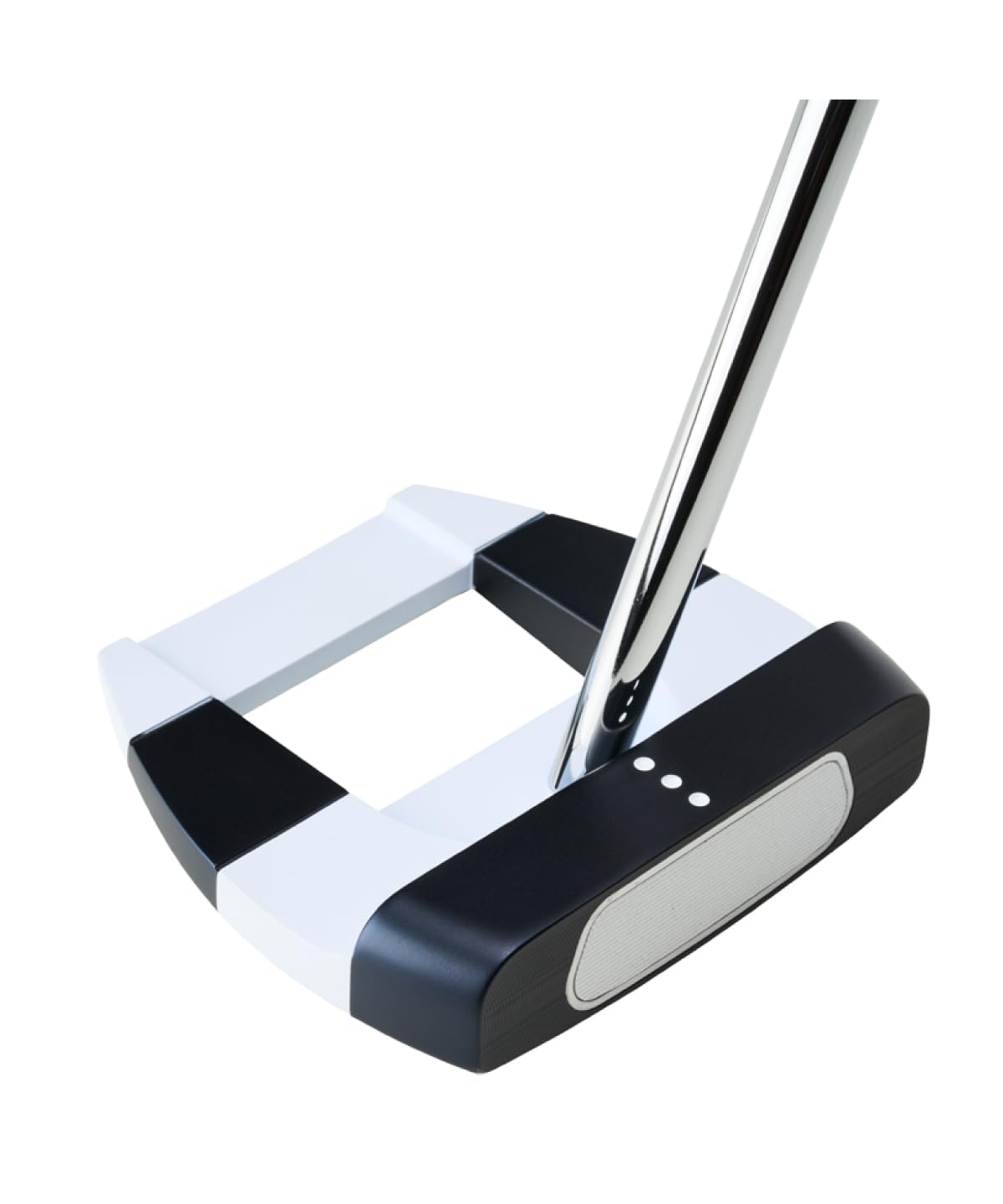
A wide-body Jailbird mallet with the highest loft here and alignment help built for square-face golfers.
If you struggle to keep the face square, this is among the most purpose-built options in this group. It pairs the JAILBIRD ZT mallet head with a STROKE LAB 90 steel shaft, an oversize Ai-One Square 2 Square grip around 2.2 oz, and a 34 inch length. The loft is 6.3 degrees — the highest here — and paired with a 72 degree lie angle, that loft is designed to lift the ball into a forward roll quickly.
The stroke correction the Square 2 line delivers is a preset level takeaway, which you take to naturally after the adjustment period. Buyers report the ball rolls supremely off center hits and stays in tap-in range on slight mishits. The broad, high-contrast alignment lines make lining up the ball easier, and the zero-torque face-balanced design suits a straight-back, straight-forward stroke in particular.
The caveat is the biggest one in this group: the preset forward shaft lean requires you to change your stroke if you have a forward-press habit. Players coming from a conventional putting motion should expect a break-in period before it feels natural. It also carries the highest list price here, which is worth weighing against the plainer mallet shapes below.
Alignment Edge: the broad visual markers and level shaft setup make squaring the face almost automatic on quick greens.
Price Consideration: this is the most expensive option here — check that the premium setup suits your stroke before committing.
The right buyer: a straight-stroke putter who wants a big mallet, easy alignment, and is happy to relearn the takeaway.
Wrong fit: anyone who does not want to change their forward-press habit.
9. オデッセイ(Odyssey) パター Ai-ONE Square 2 Square メンズ
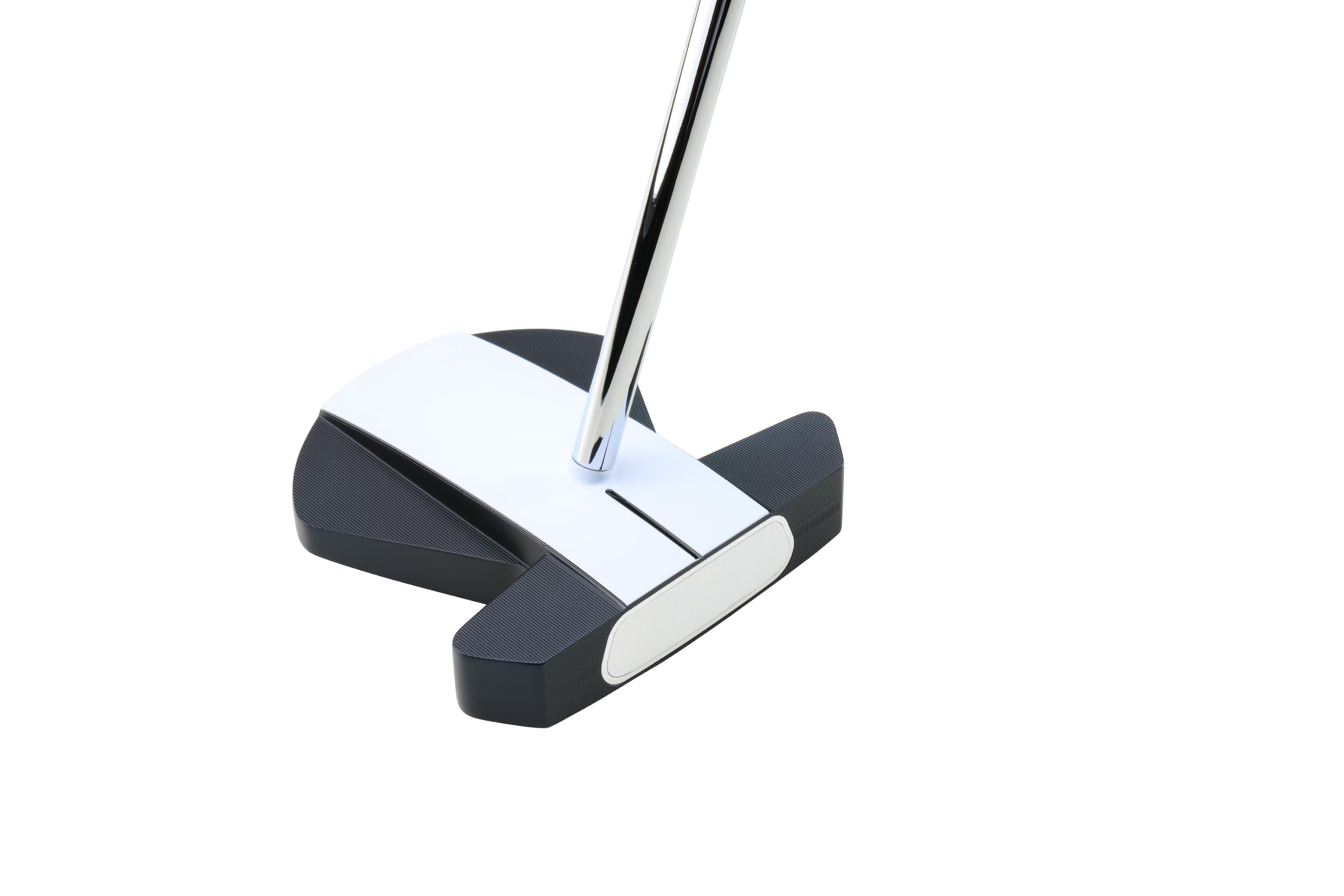
A MAX STRIPE mallet cut to 33 inches, built for a firm level takeaway and a true roll.
Odyssey’s second Square 2 entry swaps the Jailbird shape for the MAX STRIPE ZT head and trims the length to 33 inches — the shortest here — which suits a player who stands closer to the ball. Same STROKE LAB 90 steel shaft, same signature oversize grip, same 72 degree lie angle. A stainless steel body with an aluminum sole plate keeps the weight balanced low and back.
Loft checks in at 6.3 degrees, matching the Jailbird ZT — the highest of the group. Owners describe it as genuinely easy to hit straight, with the face opening or shutting far less often through the stroke. The broad stripe makes it simple to line up the ball, and mixed short putts miss inside tap-in range rather than sliding by. One 33 inch golfer fit it into an existing bag with no length complaints.
The one trade-off is the preset forward shaft. If you have a forward-press habit, you will spend a session or two retraining your takeaway to a level one before it feels natural. Once adjusted, owners mention the roll and feel are consistently strong. It is a 2025 model-year club and comes with a head cover in the box.
Alignment Strength: the MAX STRIPE marker puts a clear visual on the target line so squaring the face takes no conscious effort.
Adjustment Note: the preset forward shaft lean asks you to relearn the takeaway — worth a bucket of practice balls before league night.
Best for: a 33 inch golfer with a straight stroke who values a big alignment marker and consistent roll.
Not for: players unwilling to adjust a forward-press putting motion.
Understanding the Specs
Loft
Loft is the tilt built into the face that lifts the ball off its resting spot so it starts rolling rather than skidding. The picks here run from 2.5 degrees up to 6.3 degrees. Lower loft favors players with a level or slightly descending stroke; higher loft suits a forward-press setup. More loft than your stroke needs can pop the ball and cost you speed control.
Lie Angle
Lie angle is the angle of the shaft relative to the ground when the head sits flat. Most picks here sit at 72 degrees, with a couple flatter. If the putter is too flat at address, the toe catches and the ball leaks right; if it is too upright, the ball leaks left. Buying a lie angle that suits your height and posture is a fit issue, not a preference.
Head Weight and Balance
Head weight and balance decide how much work your hands do. A heavier head resists twisting on short putts but takes reps to dial in distance, as several owners of the 370 gram PXG describe. A lighter head feels quick and lively but punishes a nervous stroke. Face-balanced heads hang level and fight rotation; the softer end of the spectrum is a lighter, more forgiving shape.
Face Milling and Grip
Milled faces (CNC or double-milled) cut a pattern into the striking surface to lock down contact and roll consistency. Grip size and shape matter just as much: an oversize grip like the ones on the Ai-One Square 2 models quiets the wrists, while a standard grip gives more hand feel. Pick the grip style that matches your stroke, since it changes the whole motion.
FAQ
What does zero torque actually mean on a putter?
Will a zero torque putter work with my arc stroke?
What loft do I want on a zero torque putter?
Should I choose a blade or a mallet zero torque putter?
How heavy should my putter head be?
Does a 34 inch or 35 inch putter suit me better?
Do these putters come with a head cover?
Will a forward-press putting stroke work with these clubs?
Which zero torque putter is best for a beginner?
Does a zero torque putter make three-putts disappear?
Final Thoughts: The Verdict
For most players, the best 0 torque putter here is the TaylorMade Golf Spider ZT Putter, because it pairs a toe-up, low-torque design with a soft Pure Roll face and the most polished all-round package in this group. If a lighter graphite feel is your priority, the COOLO Low Torque Putter delivers at a lower price. And for a short-putt specialist who wants zero torque without a flagship cost, the Wilson Infinite Lakeview is the one to reach for.
The Spider ZT carries a premium price tag, and the budget-tier COOLO has the friendlier overall cost of the two — but the Spider ZT is the pick to beat if you decide you are committing to the zero torque style this season.
How We Picked
We do not accept paid placement. Every pick is matched to a real buyer and a real use-case; we do not hands-on test units.
Sources & Methodology
Specifications: manufacturer listings and product documentation. Review insights: verified customer reviews, as of September 2026. Pricing: not shown on this page (it changes often); check the current price via the retailer link.
As an Amazon Associate, Gadgets Feed earns from qualifying purchases. This does not affect which products we feature.