
Our readers keep the lights on and my morning glass full of iced black tea. As an Amazon Associate, I earn from qualifying purchases.
Specs are compiled from manufacturer listings and verified buyer reviews and can change over time — please confirm the key details on the product page before buying.
Two-player games live or die on one thing: whether the other person is a real threat from turn one. The best 1V1 board games listed here are all built for exactly two players, so you never sit through a dead round waiting for someone else to finish. You get fast setup, short playtimes, and rules you can teach in a few minutes — then a genuine fight over the table.
I’m Min — the founder and writer behind Gadgets Feed. This guide is built by comparing the manufacturers’ published specifications and the patterns across verified customer reviews, so you get each pick’s real strengths and trade-offs instead of marketing spin.
The real question is whether a duel box stays interesting on the tenth play. That’s what this list of 1v1 board games is built to settle for you. Each pick below was chosen for tight two-player tension, quick teach time, and replay value that holds up game after game.
Our Picks at a Glance

How To Choose The Best 1V1 Board Games
A game made for exactly two players is designed around a completely different tension than a party game that happens to seat two. Every pick here is built for a one-on-one duel, so the balance holds up when it is just the two of you at the table.
Match the playtime to your real evenings
A 15-minute duel gets played on a weeknight; a 60-minute one waits for the weekend. A 15-minute duel like Toy Battle fits a weeknight, while a title rated at 60 minutes such as Watergate wants a slower, sit-down evening. If your games keep getting shelved, the box playtime is usually why.
Decide if you want asymmetric rules or a shared ruleset
Some duels give each player a different role and different goals. In Maul Peak, one person commands the giant Guardian while the other leads the bears, and each side plays by its own rules. That asymmetry lifts replay value but means each player learns a separate rule set.
Weigh teach time against depth
The best duels teach in a few minutes and still reward planning several turns ahead. A five-minute teach gets the game to the table tonight; the depth keeps it there next week.
Quick Comparison
| Model | Best For | Playtime | Player Count | Ages | Amazon |
|---|---|---|---|---|---|
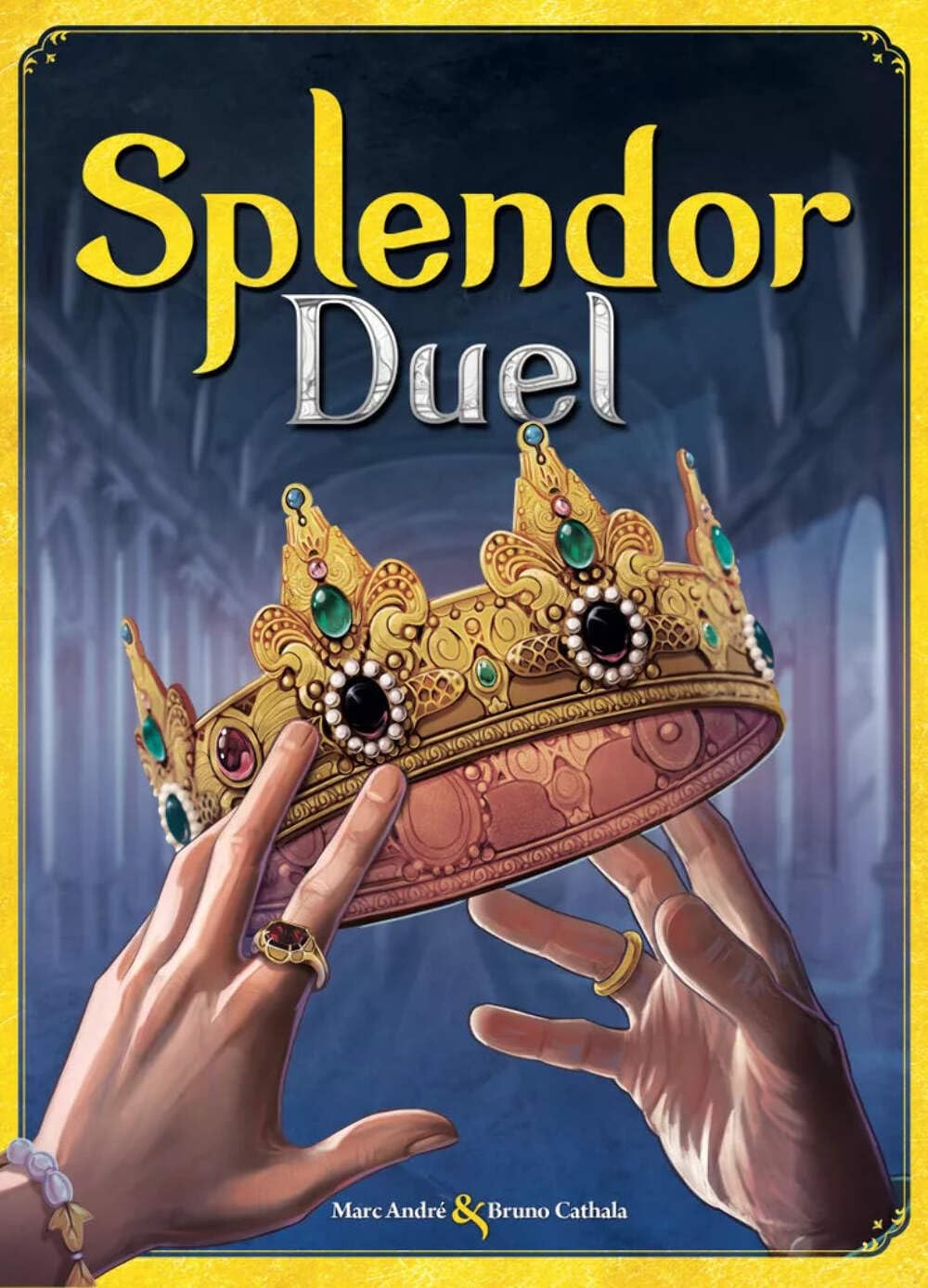
| Splendor Duel★ Best Overall | Couples and quick gem battles | 30 minutes | 2 players | 10+ | Amazon |
| Asmodee Azul DuelHead-to-Head Tile Pick | Tile-drafting strategy fans | 30 minutes | 2 players | 8+ | Amazon |
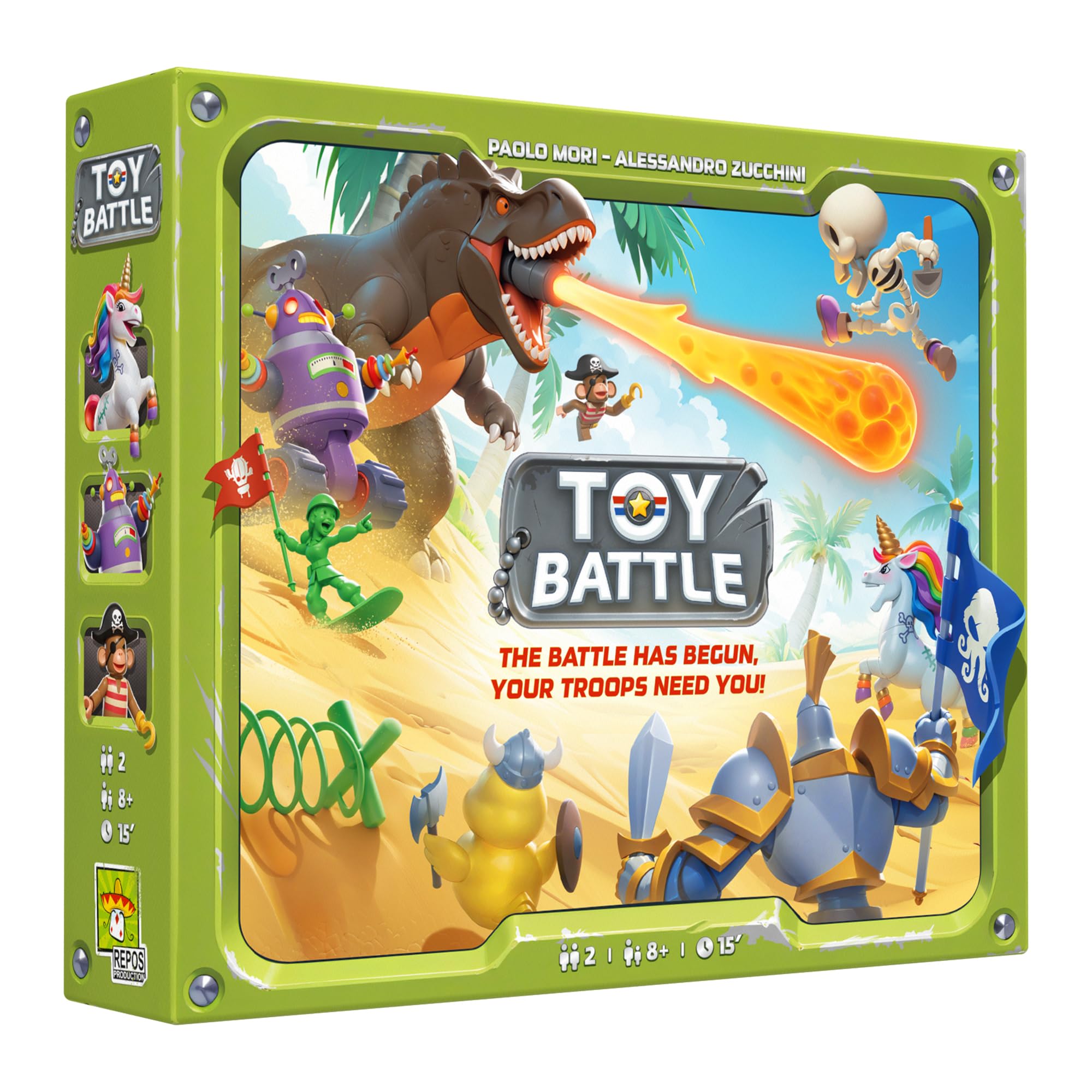
| Toy Battle Board GameFastest Duel Here | Fast family duels | 15 minutes | 2 players | 8+ | Amazon |
| Smirk and Dagger BOOP | Casual players and cat lovers | 20 minutes | 2 players | 10+ | Amazon |
| Capstone Games Watergate | History buffs who want depth | 60 minutes | 2 players | 12+ | Amazon |
| Mandala Board Game | Abstract strategy with depth | 30 minutes | 2 players | 10+ | Amazon |
| Star Wars: The DeckBuilding Game | Deck-building fans and Star Wars households | 30 minutes | 2 players | 12+ | Amazon |
| LOTR: Duel for Middle-Earth | Couples and 7 Wonders Duel fans | 30 minutes | 2 players | 10+ | Amazon |
| Maul Peak Board Game | Asymmetric combat duels | 40 minutes | 2 players | 12+ | Amazon |
In‑Depth Reviews
1. Splendor Duel Board Game
Our pick — over 4.5★ from 900+ verified ratings; the strongest balance of quality and price.
Splendor’s gem race rebuilt for exactly two — tighter, meaner, and portable enough for a backpack.
If you already know the original Splendor, the appeal here is that the whole engine is squeezed down to a single opponent — and that turns every purchase into a direct threat. You collect gemstone tokens, buy development cards, and race for prestige points, but your rival is buying from the same shrinking market. The games run a brisk 30 minutes, which is short enough to play two in an evening.
What wins people over is the pure game itself — the tension of outmaneuvering one other person, addressed by more of the review feedback than any other aspect. Alongside that, the win conditions keep things varied: you can hit 20 points, claim 10 points of a single color, or collect 10 crowns, so the endgame rarely plays out the same way twice. Buyers sum it up neatly: “Splendor variant with new win conditions: 20 pts, 10 pts same color, 10 crowns.”
A second box of special powers — Privilege Scrolls plus steal and take-another-turn abilities — layers in a pearl gem and more cards to juggle. The recurring gripe is the card size: the pieces are genuinely small, so anyone playing without glasses needs a well-lit table. Here’s the exact ask from the review pages, unedited — the review pages are blunt about it: “I do wish they made a regular size version as the tiny cards are difficult to see.”
The Gem Draft Does The Work
- Three separate win conditions (20 points, 10 points same color, 10 crowns) keep outcomes fresh.
- 30-minute games slot neatly into a weeknight or a lunch break.
- Gemstone tokens, cards, and noble tiles travel without a big box.
The Fine Print
- Cards are notably small and hard to read across a table.
- Fiddly tokens make losing one a real risk.
- Overlapping systems mean a busy first play or two.
Grab it if: you want a proven two-player duel with multiple paths to victory and a shelf-friendly footprint.
Pass if: small card text is a dealbreaker for you — the tiles are clear, but the cards are genuinely tiny.
2. Asmodee Azul Duel Board Game
Azul’s tile-drafting friction, sharpened down to two players and a five-minute teach.
If you have played anything in the Azul family, the draw here is that the same satisfying tile-grab is now a duel — no third seat, no waiting. The 75 acrylic tiles and 20 bonus chips click and stack, and the artwork pulls from traditional Chinese shadow theatre, which gives the table presence a weight most two-player abstracts don’t have. Playtime sits at 30 to 45 minutes, so it settles into an evening after dinner.
The standout beat is the tiles themselves — the physical game quality, addressed more than any other aspect, is what holds people’s attention across repeated plays. The game also packs real replay value, because the variable setup reshuffles scoring opportunities game to game. As the review pages put it, it’s “20-30 min playtime, ideal for evenings.”
The honest trade-off is complexity. Compared to Splendor Duel — 30 minutes on the box, 8+ rather than 10+ — Azul Duel asks a bit more of a new player before the strategy clicks. Several owners note it takes practice to master, and the same crowd flags the boards and tower as thinner cardboard than the tiles themselves. Neither issue bites if you’re fine with a slightly steeper first session in exchange for longer-term depth.
What’s actually in the box: you get enough pieces for a full game night: 2 player boards, 4 player tokens, 4 scoring markers, 75 acrylic tiles, 20 bonus chips, a scoreboard, 5 factories, 18 dome-plates, 4 scoring tablets, a bag, and a tower.
Where it lands: a strong fit for couples who already own Azul and want the two-player-only version, less so for first-timers who want to play within minutes of opening.
Choose it for: the tactile tile draft plus shadow-theatre art — a heavier table presence than most small-box duels.
Hold off if: you or your opponent want to be playing without reading the rulebook twice — Azul Duel takes a session or two to feel fluent.
3. Toy Battle Board Game
A 15-minute tactical punch-up that fits an eight-year-old and a twenty-year-old at the same table.
Fifteen minutes on the box is the number that matters here. Toy Battle asks both players to lead toy troops across land, sea, clouds, and space, capturing enemy headquarters or controlling regions to win. Because the round is that short, a bad beat never stings for long — you just reshuffle and go again. It plays out over a compact footprint of 8.19 by 1.95 by 9.75 inches, which is shelf and bag friendly.
What draws people in on repeat plays is the terrain variety — 48 troop tiles, 4 double-sided terrain boards, and 16 medal markers let you switch battlefields between Castle Field, Volcanic Jungle, and City of Clouds. That means the same box plays like a small batch of different games. Racing through turns feels weighty enough to matter, which is where owners consistently point as the win.
Compared to the larger-box duels on this list, Toy Battle is the one you can finish on a coffee break, and it’s also the one whose rules a younger player can absorb fastest. The trade-off is that the same approachability caps the ceiling: a few owners note the strategy is lighter than it looks, and that a lucky draw can decide a round before it gets interesting.
The secret sauce: quick turns, high replayability, and 8 alternate maps from the box — no expansions required to keep it fresh.
Where the ceiling is: if you want dozens of decisions per turn, you’ll outgrow it; if you want a family duel that finishes before dinner, this is the one.
Right pick when: a short round, a family table, and a bag you can carry it in — the eight terrain boards are the headliner.
Better elsewhere if: you’re chasing heavy think-time and multi-path depth — Toy Battle keeps the fights quick and light on purpose.
4. Smirk and Dagger BOOP 2-Player Cat Strategy Board Game

The cat game that plays like a small war — quip in a few minutes, then wonder why your kitten just launched off the quilted bed.
BOOP sneaks real strategy in under an adorable cover. The whole game is 32 wooden kitten-and-cat pieces skipping across a soft quilted bed board — the piece types are fixed, but their positions are not, so no two turns line up the same way. Under 30 minutes per game, played on a 9.5-inch square box that sits on the narrowest coffee table.
Set against the pure tile-placement of Azul Duel above, BOOP trades artful scoring for pure physical mischief — not that it slows down. What wins people over is the production itself: the wooden cats, the fabric bed, the ripple effect of a single boop — that tactile charm runs through the whole game. Nobody needs to read a paragraph to understand why a cat just slid off the couch.
One thing buyers should know before the first game: you’ll be hard-pressed to predict how the cat pushes land on the board. That randomness is where a handful of owners land, calling some rounds a bit swingy — but it’s core to the design, not a bug, and the 20-minute length keeps losing rounds cheap. Buyers sum it up neatly: “2 player fun. Easy to learn. Simple to understand. Good strategy and quick games.”
What makes it click: the boop chain reaction is the only score-tracking system — moving a piece often launches two more, and that ripple keeps every round unpredictable.
Who won’t care: anyone who needs every outcome to be controllable will find a lighter game here than the tile-drafting duelists.
Reach for this if: you want charm, quick rounds, and a teach that a younger player can pick up by watching one turn.
Look elsewhere if: you and your opponent both insist on heavy computation over charm — BOOP trades that for speed and personality.
5. Capstone Games Watergate
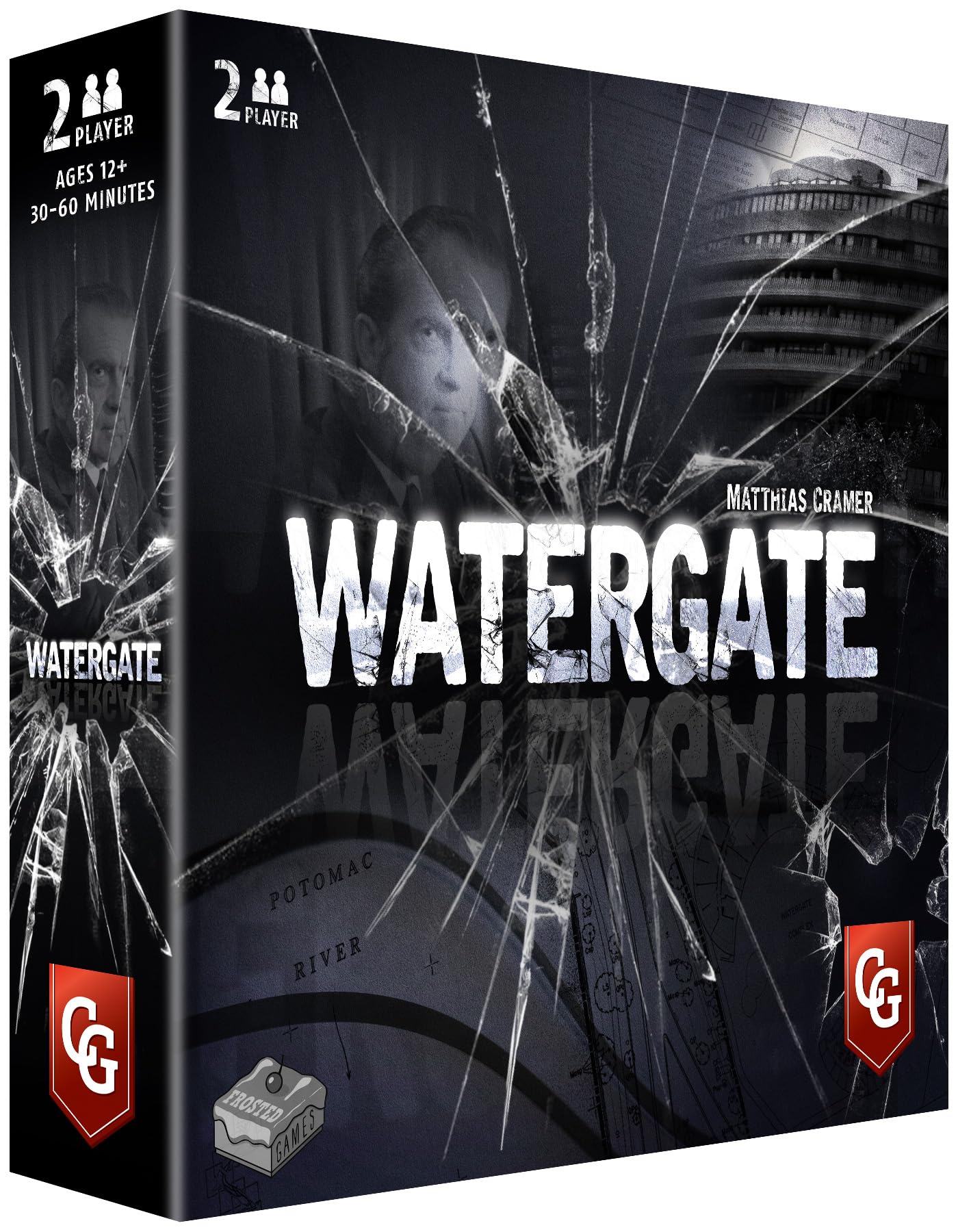
A 60-minute tug-of-war where one player is the journalist and the other runs the White House.
Watergate is the grown-up pick on this list. One player builds a case connecting two figures to Nixon, while the other blocks those chains or collects five momentum tokens. The game arrives with two complete 30-card decks, a board, 36 evidence tokens, 7 momentum tokens, 10 initiative tokens, 2 informant tiles, a momentum track, an evidence bag, and a rulebook — a lot of parts, but each side has a clear job.
The lasting hook is the tense decision-making the game forces on both roles, which is what owners rave about most. Because each side pursues different goals with its own deck, you get psychological pressure on both ends — the journalist guessing the defense, the White House guessing the next move. The rulebook is thorough on the historical background, and every choice has weight.
Budget a full hour. Watergate sits at 60 minutes per game, making it the longest single round on this list — roughly double the length of Splendor Duel, which rounds out at 30 minutes. Several owners note the rules take a session to click, and that a 20-card hand every round demands real attention.
The strategic core: asymmetric goals mean each player must plan around the other’s possible moves, not just their own score.
The honest caveat: the theme is dense — if the Watergate history doesn’t interest you and your partner, the 60-minute game length can drag.
Built for: adults who want the deepest decision-making of any pick here, played out in card-driven moves.
Not for: a quick filler slot — plan on a full evening, and expect the rules to take one dedicated session to click.
6. Mandala Board Game

Learn it in minutes, lose the next twenty games — Mandala’s quiet rug-hide hides real teeth.
Mandala looks calm and plays mean. Two players build and destroy colored mandalas on a fabric play mat, laying colored cards into shared mountains and their own fields, and collecting points based on where colors land in their personal river. One hundred and eight cards and a single play mat, and it’s the smallest box on this list to travel with.
What keeps it coming back to the table is the interaction — you take cards specifically to stop your opponent from scoring, and that direct friction is what owners praise most. The strategic floor hides real tension, and the swing is fair enough that the trailing player still has ways back in. It runs on bright, tactile components — cloth mat, chunky cards, colorful art — that make every round look worth sitting down for.
One caveat: this is not a friendly game. You will lose a card you wanted because your opponent took it in front of you, and that can sting. Several owners flag this directly — one put it plainly in the reviews: “It is not a friendly game, so if you don’t enjoy games that require you to take cards in order to prevent your opponent from scoring then this is not for you.”
The real reward: the two-step decision — build your own stack or take from the shared one — repeatedly forces you to choose between your score and your opponent’s.
The honest read: the strategy emerges after a few plays, so your first session may feel like learning a language.
Pick it when: you and your partner both want an abstract that rewards thinking several moves ahead.
skip it if: your other half needs a soft touch — this one is genuinely competitive by design, and it will land hard on a sore loser.
7. Star Wars: The DeckBuilding Game
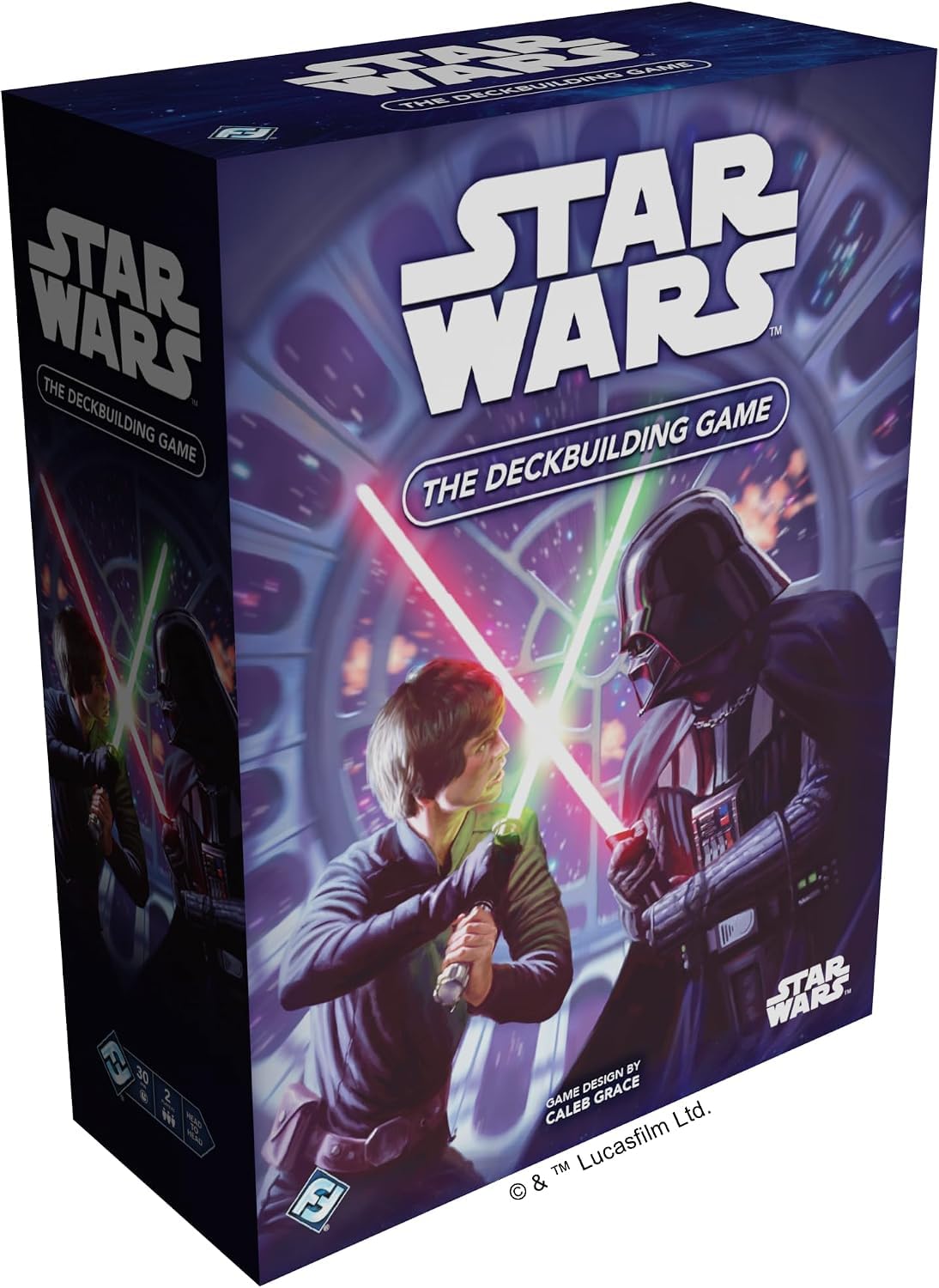
Pick the Empire or the Rebels, then race to blow up three of the other side’s bases.
If your table already loves card games, this is the natural next step. You build a deck turn by turn — buying stronger cards, thinning weaker ones, and hammering your opponent’s bases. Play as the Empire or the Rebels and each side plays measurably differently, with icons like the Death Star and Hoth fueling your deck. The box holds 142 cards, a Balance of the Force track, 70 counters, and a Force marker, and rounds run about 30 minutes.
Where it separates itself from other deck builders is the tug-of-war over the Force track, which gives the game a physical center of gravity instead of just a score pile. That mechanic, plus the asymmetric factions, is what keeps people replaying it — you can run multiple games back-to-back in a short sitting. The card stock is thick linen and the counter poker chips are sturdy, which should hold up across a lot of shuffling.
One thing to know: this one is on the heavier end of the learning curve compared to Boop or Toy Battle, so expect one slower first game. A few owners note the card text runs small, and the boxed playtime can stretch past 30 minutes when both sides dig in. Neither issue undercuts the game itself — it’s just an honest heads-up for a first session.
The reason to keep it: asymmetric factions plus a shared Force track create real decisions every turn — should you flood the board or play the long game? That question is the game.
Know this up front: unlike lighter duels on this list, Star Wars asks more of a first-time deck builder — the first play will be a slow walk through the rules.
Grab it if: you want a card-driven duel with expansion room and a theme you’ll actually rewatch.
Consider a different pick if: you want a game teachable in five minutes — Star Wars expects a full, unhurried first play from both sides.
8. The Lord of the Rings: Duel for Middle-Earth

Three ways to win, one small box, and a theme that makes every round feel like a movie moment.
Pull this out for a couple who already know 7 Wonders Duel. Duel for Middle-Earth borrows that game’s tight two-player card mechanics and drapes them in Lord of the Rings. You choose a side — the Fellowship fighting to destroy the One Ring, or Sauron fighting to hold Middle-earth — and the game plays out over three chapters using cards and High Places to expand your influence.
The flexibility is the real draw. You win by completing one of three goals: winning the Quest for the Ring, forming alliances with six Peoples, or dominating Middle-earth. Multiple routes to victory mean every play turns into a different race, and every game tends to come down to the final turn or two. The three-chapter structure also creates natural rhythm — no dead middle where everyone is just shuffling cards.
Compared with Watergate above, the Middle-Earth duel is the leaner pick: both boxes draw on asymmetric sides and multiple win paths, but this one lands in 30 minutes instead of 60 and leans hard on the LOTR theme to sell every decision. The main caveat is thematic — if you’re not a Lord of the Rings fan and neither is your partner, half the payoff is missing, because the game leans on recognition of places and characters to keep the tension personal.
Why it holds up: three alternative win conditions prevent any single strategy from becoming stale, and the chapter structure keeps the arc moving.
The fit issue: not every table cares about Middle-earth, and without that buy-in the theming is a wrapper rather than a selling point.
Right pick when: you want a 30-minute game, three win conditions, and a theme you both care about — that combination is tough to top in a single box.
Look to something else if: one of you rolls their eyes at Middle-earth — the theme carries a lot of the fun here.
9. Pencil First Games Maul Peak Board Game

One giant Guardian versus a swarm of bears — two players, two completely different rulebooks.
Maul Peak’s design is what makes it distinctive: one player commands the massive Guardian on a full-size board, while the other leads the Grizzar bears across both the Kingdom board and the Guardian’s own map. That’s an unusual two-board layout for a duel, and it means each player is literally playing a different game with different movement rules and different win conditions.
Where the design shines is replayability — multiple Guardians and multiple bear leaders mean match-ups don’t repeat, and the power balance swings back and forth through a session. Dual-purpose cards keep turns quick, and the production values are unusually high: thick cards, custom components, and an oversized wooden Guardian meeple that earns its shelf space. Games run about 40 minutes at a full table.
The catch is that asymmetric design cuts both ways: rules are different for each side, so you’ll do a little more teaching than a symmetric game like Mandala, where both players learn one rule set. A few owners find the bear deck a bit limited compared to the Guardian’s bag of tricks, and the rulebook is dense enough that you’ll want to read it once before the first play. Neither is a defect — just the honest cost of the game’s own ambition.
Why The Asymmetric Layout Works
- Two different roles — Guardian versus bears — packs two gaming experiences into one box.
- Dual-purpose cards keep turns quick and choices meaningful turn-to-turn.
- Big-ticket production: wooden Guardian and custom pieces that hold up to repeated play.
Before You Commit
- Teaching two rule sets takes longer than teaching a symmetric game.
- Playing time can run past the box number when both sides dig in.
- The bear-side toolset feels narrower to some — the Guardian has more tricks.
Best for: players who want a big, physical table moment and don’t mind learning two roles.
Not the one if: you need both players on the same rule sheet — Maul Peak’s whole hook is that each side plays by its own rules.
Understanding the Specs
Playtime
Playtime is the number on the box that tells you how long one game runs. It varies widely in this category — Toy Battle sits at 15 minutes, most duels land around 30, and Watergate asks for a full 60. If your game nights are short, a lower number matters more than anything else on the box.
Player Count
A true 1V1 game is designed for exactly two players from the ground up, not a four-player box that happens to seat two. Every game on this list is a dedicated two-player design, which is why the balance and tension hold up when it’s just the two of you.
Complexity
Complexity usually means how much players have to track at once and how long the first game runs. A low-complexity duel such as BOOP or Toy Battle teaches in minutes, while a heavier game like Watergate takes a full session to click. Match this number to who’s actually playing.
Age Rating
Age ratings signal teachability, not content. An 8+ box like Azul Duel or Toy Battle means an eight-year-old can typically follow the rules with help, while a 12+ game like Maul Peak or Star Wars asks players to juggle more decisions. Use the number as a rough guide for how much rulebook reading is involved.
FAQ
What is a 1v1 board game actually designed for?
How short can a good 1v1 board game be?
Which game is easiest to teach someone brand new?
Can I play these games solo if I’m alone?
What does “asymmetric” mean in a two-player game?
Which game gives the most replay value?
Do I need to know the source material before playing?
Which pick travels best?
Is 30 minutes really the balance for a two-player game?
Which is the friendliest for younger players?
What’s the difference between a deck builder and a tile placer?
Final Thoughts: The Verdict
For most buyers, the winner is the Splendor Duel Board Game because it delivers the tightest two-player tension in the shortest playtime and travels without a dedicated shelf. It holds a 4.8-star score across 900+ ratings. If you want pure tile-drafting strategy with a heavier table presence, reach for the Azul Duel. And if you’d rather play a full asymmetric battle with different rules for each side, Maul Peak is your pick. Whichever you choose, pick the one your partner will still ask for in week three.
How We Picked
We do not accept paid placement. Every pick is matched to a real buyer and a real use-case; we do not hands-on test units.
Sources & Methodology
Specifications: manufacturer listings and product documentation. Review insights: verified customer reviews, as of September 2026. Pricing: not shown on this page (it changes often); check the current price via the retailer link.
As an Amazon Associate, Gadgets Feed earns from qualifying purchases. This does not affect which products we feature.