
Our readers keep the lights on and my morning glass full of iced black tea. As an Amazon Associate, I earn from qualifying purchases.
Specs are compiled from manufacturer listings and verified buyer reviews and can change over time — please confirm the key details on the product page before buying.
Quick honesty note first: not every vest below is stamped exactly “60 lb” on the box. Some are adjustable vests that scale up to 60 pounds, and a couple are 35-pound vests you can grow into. What matters is whether the vest holds heavy iron without bouncing, pinching, or splitting a seam.
I’m Min — the founder and writer behind Gadgets Feed. This guide is built by comparing the manufacturers’ published specifications and the patterns across verified customer reviews, so you get each pick’s real strengths and trade-offs instead of marketing spin.
Heavy vest shopping gets confusing fast, because half the listings hide whether the filler is sand or iron. The picks below separate the iron-filled shells from the sand-filled ones.
Our Picks at a Glance

How To Choose The Best 60 Lb Weight Vest
A weight vest is only as good as the load system inside it. If the weight shifts while you squat or walk, you fight the vest instead of training. If the padding is thin, your collarbones take the punishment instead of your legs.
Filler versus filler: iron blocks, iron sand, and cast plates
Iron blocks and cast plates hold their shape through repeated handling, so they slide in and out of their pockets without tearing fabric. Iron sand bags sit flatter against your chest but are trickier to load and unload when you change intensity mid-session. Swap loads every session and iron blocks win; set one weight and forget it and sand bags are fine.
Vest weight versus total shipped weight
Every product page lists a shipped weight alongside the vest’s capacity, and the two numbers are rarely the same. A 60-pound vest can ship at 61 pounds because the empty shell and straps add the extra pound. Always check the stated capacity, not the shipping figure, when comparing how much load a vest actually holds.
The fit question nobody asks until week two
Vests that ride high on the chest protect your lower back, and vests that sit low help you squat deep without the shell catching your belt. High-ride shells favor squats; low-ride shells favor pull-ups and dips. Buyers who train mostly with squats and pull-ups usually prefer a short, snug shell that stays above the belly.
Padding, and where it actually helps
Thicker foam under the shoulder straps reduces hot spots once the total load climbs past 40 pounds. A 1.2-inch padding strip spreads the pressure far better than a thin strap, especially if you plan long rucks where the load sits on the same spot for an hour or more.
Quick Comparison
| Model | Best For | Weight Capacity | Weight Style | Closure | Amazon |
|---|---|---|---|---|---|
| MVRK Weighted Vest★ Best Overall | Progressive rucking | 35 lb (16 removable iron blocks) | Iron blocks | Buckle | Amazon |
| ONETWOFIT Adjustable Rucking VestTop Performer | Night walking and running | 2–36 lb | Cast iron blocks | Metal tactical buckle | Amazon |
| Liveet Adjustable VestBest Value | Budget 60 lb option | 60 lb (20 removable 3 lb bags) | Iron sand bags | Velcro | Amazon |
| RUNmax Pro Weighted Vest | Bodyweight strength work | 60 lb | Sandbag inserts | Hook and Loop | Amazon |
| CROSS101 Adjustable Vest | Cardio and mixed training | 60 lb (with shoulder pads) | Bead-filled bags | Hook | Amazon |
| CAP Adjustable Weighted Vest | High-volume progressive loading | 4–60 lb (fifteen 4 lb packets) | Iron ore fines | Hook and Loop | Amazon |
| MiR Short Weighted Vest | Compact mobility training | 60 lb (3 lb increments) | Solid iron | Zipper | Amazon |
| Titan Fitness Elite Series | Everyday chores and walks | 16 × 2.5 lb cast iron ingots | Cast iron ingots | Hook and Loop | Amazon |
| Kensui EZ-VEST Plate Loaded | Plate-based progressive overload | Up to 150 lb (2″ Olympic plates) | Plate loaded | Buckle | Amazon |
In‑Depth Reviews
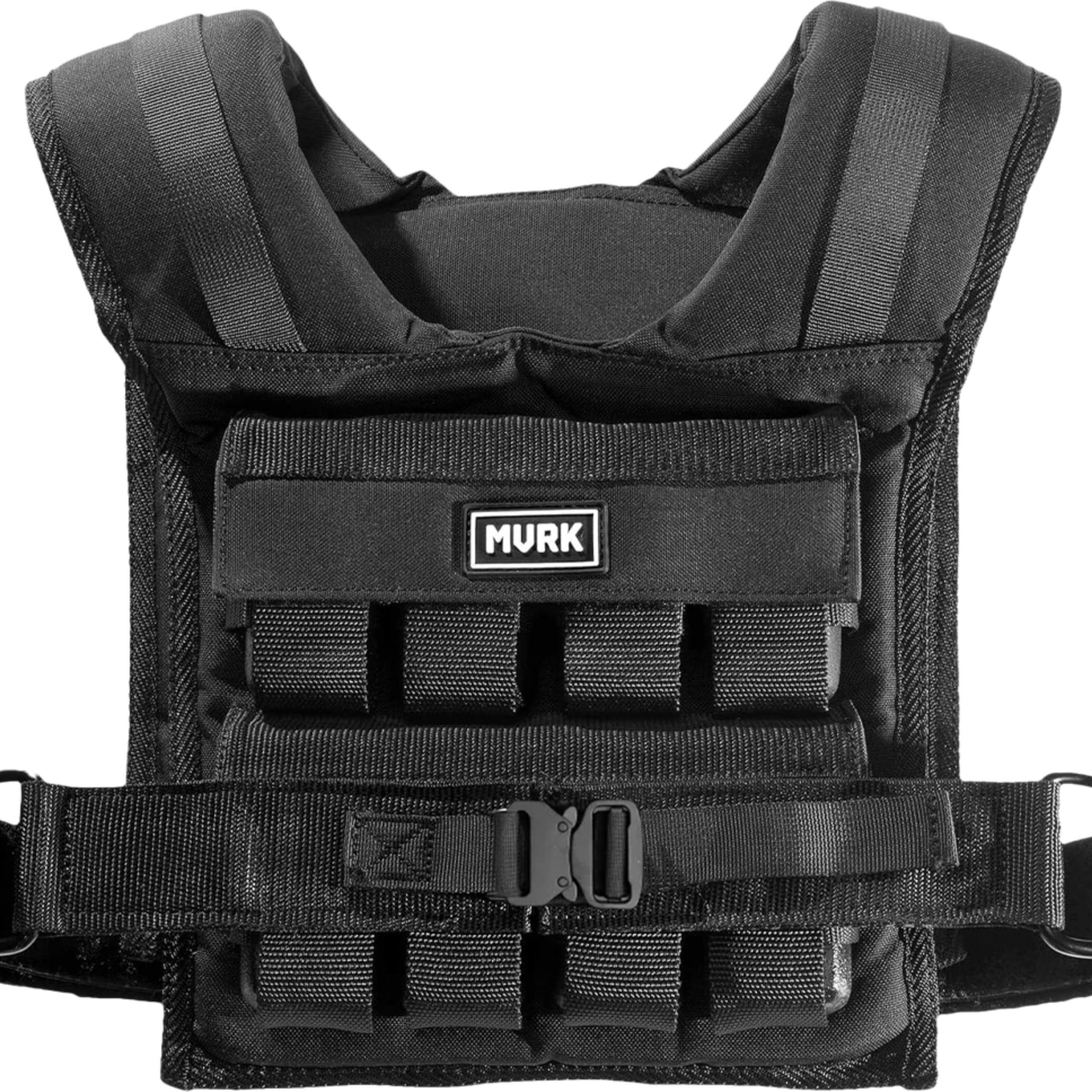
1. MVRK Weighted Vest
Our pick — over 4.5★ from 600+ verified ratings; the strongest balance of quality and price.
Sixteen iron blocks that let you start light and stack up to a real load
The MVRK ships with 16 iron weights — 8 in the front and 8 in the back — each about 2.18 lb, so the vest holds a maximum of 35 lb. That block layout is the whole point of this vest: you can walk out the door with four bricks one week and twelve the next without buying a second shell. Sales copy claims most rivals max out at 30 lb, and it lines up with what buyers report: as one reviewer puts it, “Perfect for working up to heavier weight without having to have multiple vest.”
The one thing owners consistently mention is fit. The adjustable body strap sizes to a wide range of chests, and heavy-duty buckles plus reinforced stitching at the stress points keep the shell from loosening mid-WOD. A five-foot-four retiree using the vest for walking and housework found the body strap tightness had to be balanced against the shoulder load, but in general, the vest stays snug through brisk walks and bodyweight work. If you wear a baggy shirt or nothing at all, the neoprene-coated blocks rub against shoulders a bit during explosive moves — the padding handles most of it.
Skip this one only if 35 pounds is your ceiling forever. The vest will not get you to 60, but it is the friendliest path to building up to 35 without buying multiple shells in between. If you need 60 lb, this vest cannot get you there.
What earns it top billing
- 16 individual 2.18 lb iron blocks mean fine-grained weight tuning
- Reinforced stitching at every stress point with heavy-duty buckles rated for the load
- Compact shell keeps full range of motion for calisthenics and HIIT
Where it asks you to compromise
- Caps at 35 lb — you will not reach 60 with this one
- Shoulder straps run long for some smaller frames
- Neoprene block edges can rub during explosive movements
The right pick if: you want a single vest to grow with you from recovery walks up to 35 lb rucks, and you value true progressive loading over raw capacity.
Think twice if: your training already needs more than 35 lb of resistance.
2. ONETWOFIT Adjustable Rucking Vest
A night-runner’s ruck vest with real reflectivity and a metal buckle that holds
Owners keep coming back to one thing about this vest: how evenly the weight sits. The 16 blocks distribute across front and back so well that owners mention “no lean back/forward” even while walking 3.5 miles. That balance is a real comfort advantage if you have ever worn a vest that pitched you forward and forced you to lean back just to stay upright.
The load range runs from 2 to 36 lb, with 16 cast iron blocks at 2.1 lb each — the bare vest weights 2.1 lb before you load it. Sales copy boasts the shoulder padding is 1.2 inches versus typical 0.1 inch, and that extra foam is what saves your collarbones on longer sessions. The reflective strips on the front and back are genuinely bright for evening walks, and the removable logo means you can swap out branding when you want a plain look.
The catch is heat. The 1000D nylon (a heavy-weight fabric rated for wear) wicks sweat, but several buyers still note the vest runs warm on summer sessions — reasonable for any weighted shell, but worth knowing if you train midday. The velcro gets a mixed reaction: strong enough to lock the weights in, occasionally too aggressive to peel apart quickly.
Where it scores
- 1.2-inch shoulder padding for both the strap and the load pockets
- 16 cast iron 2.1 lb blocks adjust across a 2–36 lb range
- Reflective front and back strips plus removable logo for low-light walks
Where it stumbles
- Warm to wear in summer heat
- Velcro can be hard to peel when fully locked
- Tops out at 36 lb, short of the 60 lb target
Built for: night ruckers and walkers who want reflective visibility and load counts they can jockey in 2 lb increments.
Look elsewhere if: you need 60 lb capacity or you train in heat without air conditioning.
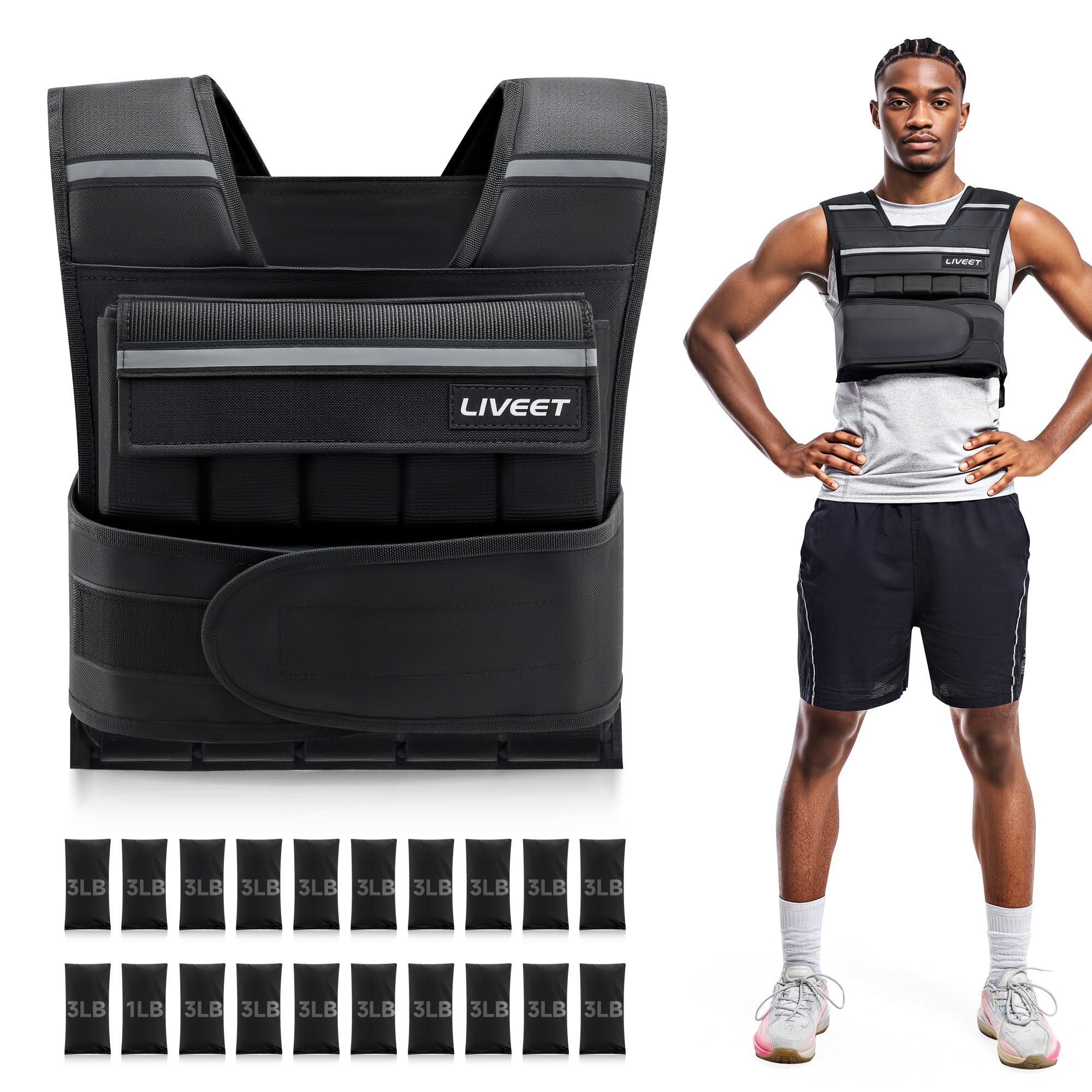
3. Liveet Adjustable Weighted Vest
A true 60-pounder that loads in 20 tiny bags so you scale at your pace
You get twenty removable 3 lb iron sand bags, so you can set the exact weight you want instead of guessing. Load five bags for a light walk, or all twenty for a serious ruck, and you never have to buy a second vest. The 600D Oxford fabric (a tough woven nylon) resists friction, which matters because heavy loads wear through cheaper shells fast.
The hook-and-loop waist strap is the ergonomic story here. It lets you micro-adjust on the fly, so the load stays close on squats and box jumps instead of throwing your balance forward. Buyers repeatedly describe the 60 lb version as balanced, and the reflective strips front and back cover you for late-evening walks with the dog.
One thing to think through: 3 lb bags are the smallest increment on the list, so once you want to advance past 60 lb there is nowhere to go. And iron sand bags sit flatter but take a beat longer to swap in and out than rigid blocks — a small annoyance if you re-load every session, a non-issue if you settle on one setting.
The 60 lb balance: this is the only straightforward 60 lb option here that still lets you fine-tune the load, and it costs less than the premium tiers.
Worth clicking on if: you want exactly 60 lb of resistance and you like adjusting in 3 lb steps.
Pass if: you train with rigid plate work or you plan on needing more than 60 lb later.
4. RUNmax Pro Weighted Vest

The 60 lb workhorse that is easiest to justify for pull-ups and dips
RUNmax has been building vests long enough that the shell-design habits show. Tear-resistant nylon, hook-and-loop closure, and an equal weight distribution layout with pockets front and back all help the vest stay put through bodyweight work. The short-with-shoulder-pads version adds foam you will want past 40 lb, especially for pull-ups where the load hangs at your shoulders.
Two things to know before you commit. First, the 6 lb sandbag weights fit the pockets but require a bit of wrestling to insert and remove — owners describe them as noticeably trickier to handle than rigid steel or iron. Second, the vertical placement pushes the load against your upper chest and back, which helps you squat but makes back-lying exercises uncomfortable — do not plan on bench work with this on.
The lifestyle match is bodyweight strength and moderate rucking, not running. Runners on record with the vest tend to complain the 60 lb model swings or compresses on each stride, which is fair for any vest this heavy.
Where the money goes
- Full 60 lb capacity in a single shell with no add-ons
- Shoulder-pad version pads the top strap for long sessions
- Equal front-and-back pocket layout keeps the load balanced
Where it asks patience
- Sandbag inserts are fiddly to swap versus cast iron blocks
- Not a running vest — the load swings on fast strides
- Back-lying exercises feel awkward with the high ride
Matches up best with: pull-up and dip training where 60 lb of load makes the set count double.
Not the one for: runners or anyone who plans to change weights mid-session often.
5. CROSS101 Adjustable Weighted Vest

A camouflage 60-pounder with sealed bead bags and room for your phone
CROSS101’s main draw is its sealed weight bags: individual pouches that keep the filler beads inside and survive repeated insert-and-remove better than cheap sand sleeves. The nylon shell is thick and waterproof, with heavy-duty stitching, wide velcro waist straps, and front pockets for a phone and a water bottle. Those details make it the easiest 60 lb vest here to wear through a long cardio session without stopping to adjust.
The honest tradeoff is shoulder pressure. At 60 lb the load bites into your shoulders after 15 to 20 minutes of brisk walking, and the included shoulder pads do not completely fix it for everyone. Buyers who want maximum shoulder relief should look at one of the padded premium vests. Buyers who can tolerate firm pressure at the shoulders get one of the softer-per-pound values in the line.
Owners flag two small annoyances: you have to lift the front shell over your head to take the vest off, which is a pain when you are already tired, and the weight bags are not labelled, so you need a kitchen scale to load exact amounts.
Weight distribution: the velcro stomach strap lets you tune where the pressure lands, which softens the shoulder issue on most builds.
A fit for you if: your training is mostly walking, jogging, and mixed cardio where you want sealed bags and useful pockets.
Rethink it if: shoulder comfort at 60 lb is your top priority.
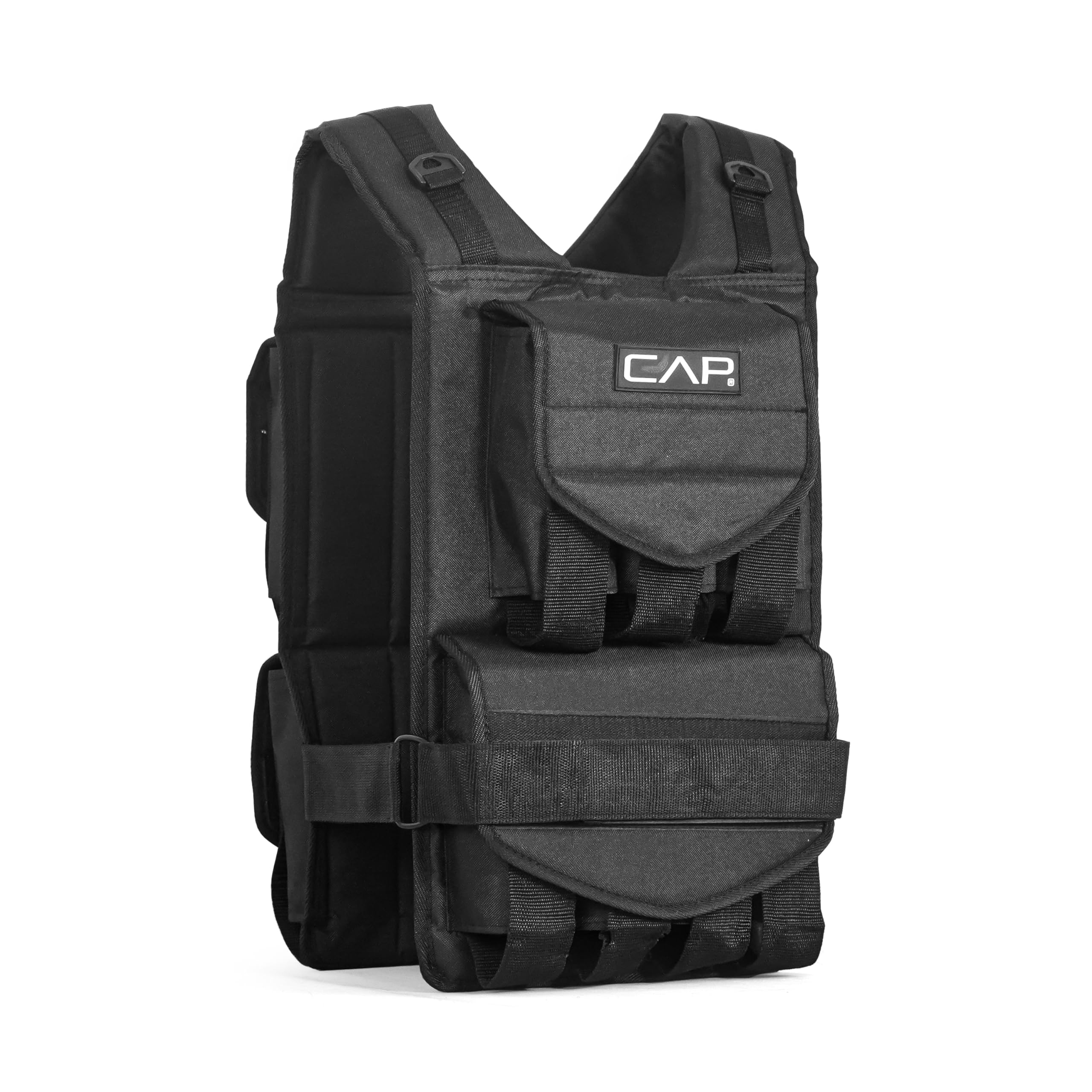
6. CAP Adjustable Weighted Vest
A 60 lb shell that gets the load-placement story right and the straps story wrong
Fifteen 4 lb packets of iron ore fines give this vest the heaviest increments on the list and the widest adjustment range — from 4 lb up to a full 60. That flexibility is the whole reason CAP sits this high: you can literally start light with one packet and grow into the top of the range over months without changing vest.
Owners describe the shell as durable and well-balanced, with velcro that holds over repeated sessions and shoulders comfortable enough for long walks. Reflective stripes on the shell help low-light visibility. The torso rides high, which protects your lower back through squats and deadlifts.
Two real caveats. The straps are not fully adjustable on every body type — shorter torsos can end up with slack that does not cinch down. And the neoprene pockets are tight, so sliding the 4 lb packets in and out takes patience; owners who change loads often find themselves leaving the vest at one setting just to avoid the fuss. Neither is a defect — the tradeoff is that secure retention comes with tighter pockets.
Why it earns its place
- Widest adjustment range on the list: 4 lb up to a full 60 lb
- Reinforced nylon and polyester shell with reflective stripes
- Wide padded shoulders and adjustable waist belt distribute pressure
Where the rough edges are
- Straps not fully adjustable on every torso length
- Tight neoprene pockets make packet swapping slow
- Bulky profile once fully loaded
For you if: you want the 4-to-60 lb range and you plan to set it up once and leave it loaded.
Skip if: you change weights every session or you have a shorter torso that struggles with fixed-length straps.
7. MiR Short Weighted Vest

An 11-inch shell that hugs high and stays out of the way for pull-ups
At 11 inches in length, the MiR is the shortest vest here, and that shortness is the whole point. It sits high on your chest and back, so your shoulders, neck, and trunk keep full mobility, and there is no waist strap to fiddle with — just two velcro straps and four D-rings for accessories. If you train on a pull-up bar, this compact shell beats longer vests that catch on the bar path.
Solid iron blocks in 3 lb increments let you dial resistance up to 60 lb, and the zipper closure makes entry and exit quick. Owners repeatedly describe the ride as locked in — the load does not shift when you move from squats to inverted rows to dips. Buyers preparing for police fitness tests particularly welcome the snug, no-swing feel on decline and inverted work.
The catch: the 3 lb iron blocks fit the pockets tightly, so swapping them takes a bit of pushing, and no instructions ship with the vest. Owners learn the layout by trial, and a fair tip from the review pages is to slide empty pockets toward the bottom corners for a better contour.
Compact without compromise: the short shell does not shorten the load, so 60 lb feels snug without swallowing your torso.
Created for: calisthenics and pull-up work where shoulder mobility matters more than a waist strap.
Reconsider if: you prefer clear instructions in the box or you dislike snug-fitting weight pockets.
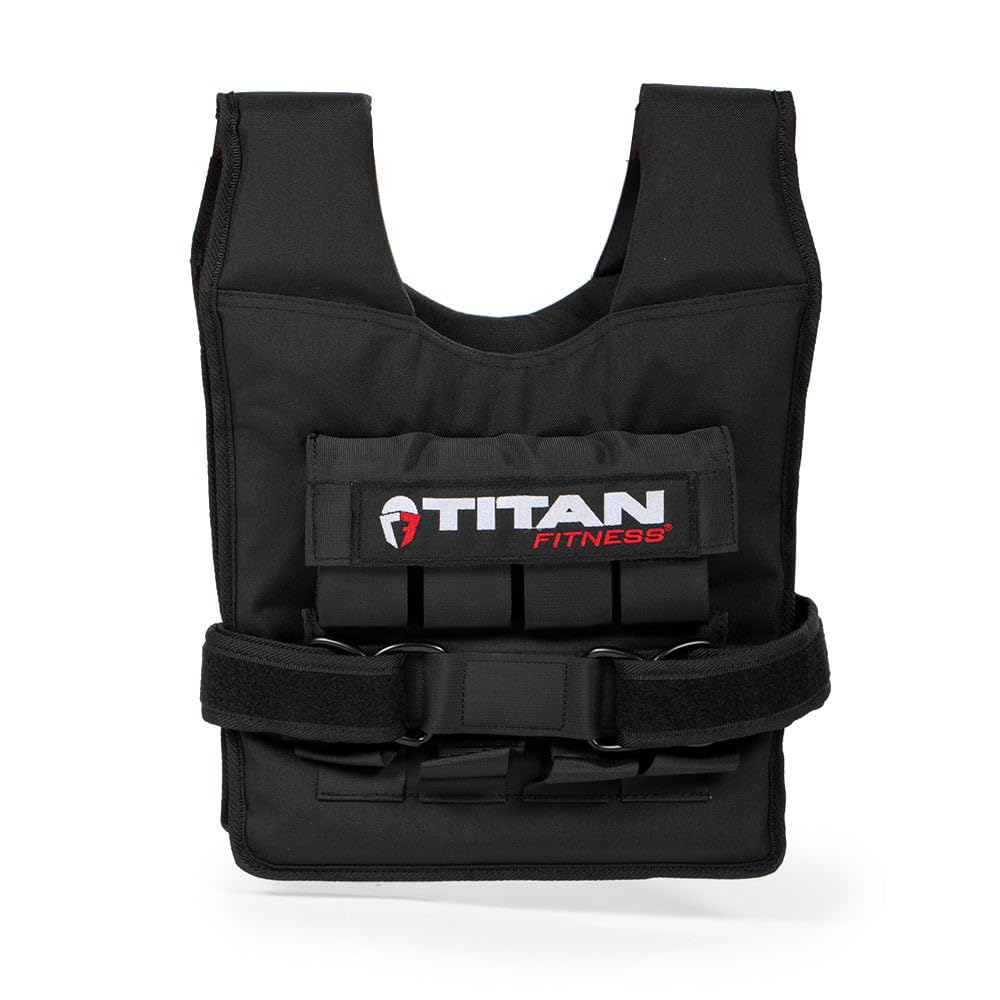
8. Titan Fitness Elite Series Adjustable Weight Vest
Wear-resistant Cordura shell that quietly beats the budget vests it is priced against
Titan’s shell is 1050D Nylon Cordura — the heaviest, most abrasion-resistant fabric on this list — with foam and rubber fill and extra padding across the shoulders and chest. That build is why owners describe it as comfortable enough for chores, walks, and everyday wear, not just workouts. The u-shaped neckline and spacious shoulder cutouts leave your arms free without restriction, and velcro on the strap adjusts on the fly for minimal movement during work.
Inside are sixteen 2.5 lb solid cast iron ingots — the smallest per-ingot weight on the list — with rounded corners so they do not chew through pockets over time. Owners describe loading and unloading as straightforward, which is unusual for a vest with this much total capacity. The price-to-quality read is where buyers land again and again: several describe it as the more cost-efficient option compared to bigger-name plates brands in the same weight class.
The honest caveat: on taller frames the padded strip sits a touch high, since the vest shell is not cut long. Buyers past six feet have noted the load lands on the traps rather than spreading lower. If your torso is short to average, this is not an issue at all.
Padding where it counts: the shoulder and chest padding makes higher loads wearable without the bite that gets through on thinner vests.
Ideal owner: anyone who wants a durable, padded vest for walking, chores, or rucking at moderate loads without fussing.
Look at other options if: you are over six feet tall and want the load to sit lower on your torso.
9. Kensui EZ-VEST Plate Loaded Adjustable Weighted Vest
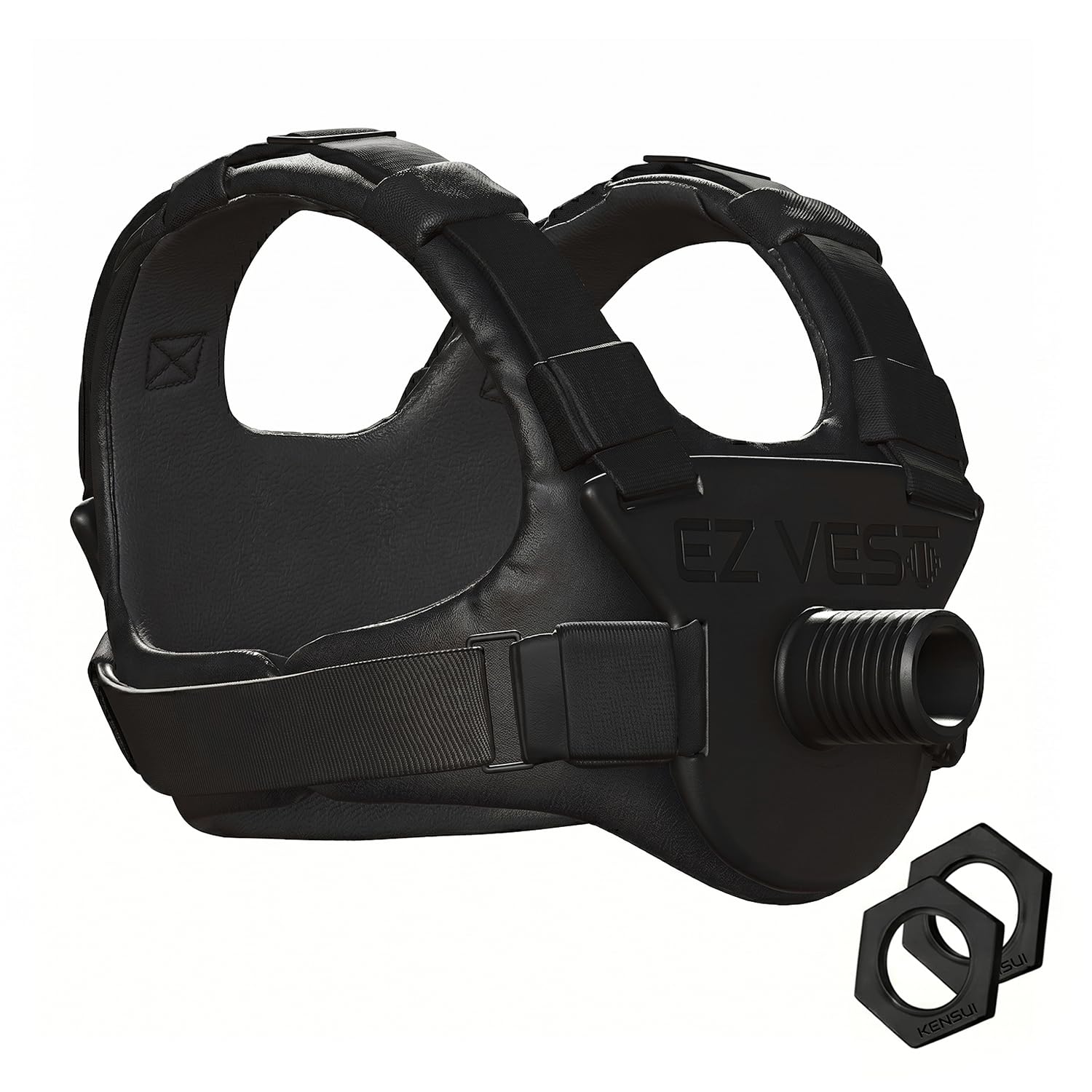
Skip the bag filler entirely — load plates you already own onto the pegs
Kensui’s EZ-VEST Pro is the plate-loaded option in this group, which means it does not ship with any weights at all. Spec-wise it claims capacity up to 150 lb using 2-inch Olympic plates; Kensui even offers separate 1-inch plate adapters if your home gym is set up with standard plates instead. For pull-ups, dips, and progressive overload where the intensity changes week to week, loading real plates on a vest shell is a genuinely different feel than stacking blocks in pockets.
Owners describe the shell as minimalist and stable — it hugs the body without shifting, which lets you focus on the lift instead of fighting the vest. The nylon-fiberglass composite shell stays comfortable through mixed workouts, and the buckle closure locks down securely for walks and rucking.
Review pages stress two honest points. The pegs fit 2-inch Olympic plates only — thinner plates slide on loosely or not at all, and you need the manufacturer’s separate adapter for 1-inch plates. Second, the capacity number reflects the total vest spec, but customers note you hit a real ceiling with big plates sooner than that number suggests: one 45 lb iron plate cracked the holder in a wear-and-tear test, and loading very heavy plates on and off the pegs is easier with a helper.
What plate-lovers appreciate
- Loads your own 2-inch Olympic plates instead of proprietary blocks
- Minimalist shell hugs the body for stable pull-ups and dips
- Buckle closure locks the load down during rucking and walking
What to weigh in advance
- No weights ship in the box — the vest alone is roughly the shell
- Big plates can crack the peg holder over time
- Needs assistance to load the heaviest plates
Pick it up if: you already own Olympic plates and want them loaded onto your chest for calisthenics and rucking.
Skip if: you want a vest that arrives loaded and ready to ruck straight from the box.
Understanding the Specs
Weight capacity
This is the maximum load the vest is rated to hold — the number that actually matters when you compare 45 lb against 60 lb shells. Adjustable vests spell out the top of the range along with the smallest increment, so you can judge how finely you will be able to dial in resistance. A 60 lb cap with 3 lb increments means twenty adjustment steps; a 60 lb cap with 4 lb packets means fifteen.
Filler material
Vests ship with three main filler types: solid iron blocks or ingots, iron sand sealed in bags, and cast iron plates on pegs. Solid iron holds its shape best across repeated insert-and-remove cycles; iron sand bags flatten against the chest but can be trickier to slide in and out; plate-loaded shells skip fillers entirely and take your own plates. Your weekly routine should drive the choice — running favors flatter filler, calisthenics favors rigid or plate-loaded.
Closure and fit system
Buckles, hook-and-loop (velcro), and zipper closures all work — the difference is how much the load shifts when you move. Hook-and-loop gives the most forgiving adjustability for different torso lengths, buckles lock down tightest for heavy loads, and zippers make on/off fastest when you are already sweating. A waist strap is the fail-safe that keeps the load from bouncing between reps.
Shell material and padding
The shell is what wears against your torso session after session, so abrasion resistance matters as much as weight capacity. Look for reinforced stitching at the strap anchors and pockets — that is where failures show up first. Padding across the shoulders and chest spreads the load, but thicker padding also traps heat; a 1050D Cordura shell and a 600D Oxford shell both hold up well, and the polyester liners improve breathability.
FAQ
Is a 60 lb weight vest safe to wear for walking every day?
Should I buy a 60 lb vest or an adjustable one?
Are cast iron plates better than sand bags inside a weighted vest?
How much should a novice start with on a 60 lb weight vest?
Will a 60 lb weight vest fit a smaller frame or a woman-sized chest?
Do 60 lb weight vests work for pull-ups and dips?
How do I clean a weighted vest that has been sweat through?
Can you run in a 60 lb weight vest?
Do 60 lb weight vests come with weights included?
How long should a 60 lb weight vest last with regular use?
Final Thoughts: The Verdict
For most people shopping for the 60 lb weight vest, the best overall pick is the MVRK Weighted Vest, because its 16 individual iron blocks let you load 35 lb without committing to a heavier shell on day one. If you need the full 60 lb number, grab the Liveet Adjustable Weighted Vest — the twenty 3 lb bags dial in cleanly and the fabric holds up. And if you want to skip fillers entirely, the Kensui EZ-VEST Plate Loaded runs on plates you likely already own.
The reviews that keep coming back to me are the ones about fit — the ONETWOFIT owners who say the load never tips them forward, the CROSS101 buyers who tighten down the chest and keep going. A vest that shifts mid-ruck gets left in the closet. Match the shell to your torso length, your usual load, and whether you ruck or lift.
How We Picked
We do not accept paid placement. Every pick is matched to a real buyer and a real use-case; we do not hands-on test units.
Sources & Methodology
Specifications: manufacturer listings and product documentation. Review insights: verified customer reviews, as of September 2026. Pricing: not shown on this page (it changes often); check the current price via the retailer link.
As an Amazon Associate, Gadgets Feed earns from qualifying purchases. This does not affect which products we feature.