
Our readers keep the lights on and my morning glass full of iced black tea. As an Amazon Associate, I earn from qualifying purchases.
Specs are compiled from manufacturer listings and verified buyer reviews and can change over time — please confirm the key details on the product page before buying.
If you have ever hung off a standard socket wrench with both feet and still heard that sickening metal creak, you already know what this page is about. A 1/2 breaker bar (a long steel handle with a fixed head that fits 1/2-inch drive sockets) ends that fight. Instead of a short ratchet head, you get a long handle that multiplies your muscle, so rusted lug nuts and seized suspension bolts break loose instead of rounding off. For most buyers, the longest bar on the page is the wrong first pick. Match the handle length to the room you actually have and the fasteners you actually touch.
I’m Min — the founder and writer behind Gadgets Feed. This guide is built by comparing the manufacturers’ published specifications and the patterns across verified customer reviews, so you get each pick’s real strengths and trade-offs instead of marketing spin.
Handle length, drive size, and head material decide nearly everything here. This breakdown of the 1/2 breaker bar options sorts the flex heads, the fixed heads, and the ratcheting versions by the jobs they handle best.
Our Picks at a Glance


How To Choose The Best 1/2 Breaker Bar
Choosing a breaker bar is mostly about geometry and steel. The bar is a lever — a longer handle gives you more turning force at the socket, but it also needs more swing room around the fastener. A rusty rear control arm bolt on a truck wants every inch of leverage you can find; a tight engine bay corner wants a shorter bar and a flexible head that can bend around obstacles.
Handle length and real-world leverage
The 18-inch bars are the compact choice — easy to store in a truck box and easy to swing where clearance is tight. The 24 and 25-inch bars trade that portability for noticeably more leverage, which is what finally cracks over-torqued lug nuts and axle nuts. If you work on trucks, trailers, or anything in the salt belt, the longer bar is usually the smarter buy.
Flex head versus fixed head
A flex head pivots, so you can angle the bar around an exhaust pipe or a brake caliper and still pull straight. A fixed head is simpler and stiffer, and some mechanics prefer that firmness because the bar never rolls on them mid-pull. Flex heads reach around exhaust pipes and calipers; fixed heads stay rigid when you have swing room.
Quick Comparison
| Model | Best For | Handle Length | Head Style | Material | Amazon |
|---|---|---|---|---|---|
| Neiko 00211A 1/2-Inch-Drive Extension Breaker Bar★ Best Overall | Everyday lug nuts and general garage work | 18 inches | 180-degree flex head | Chrome vanadium (Cr-V) steel | Amazon |
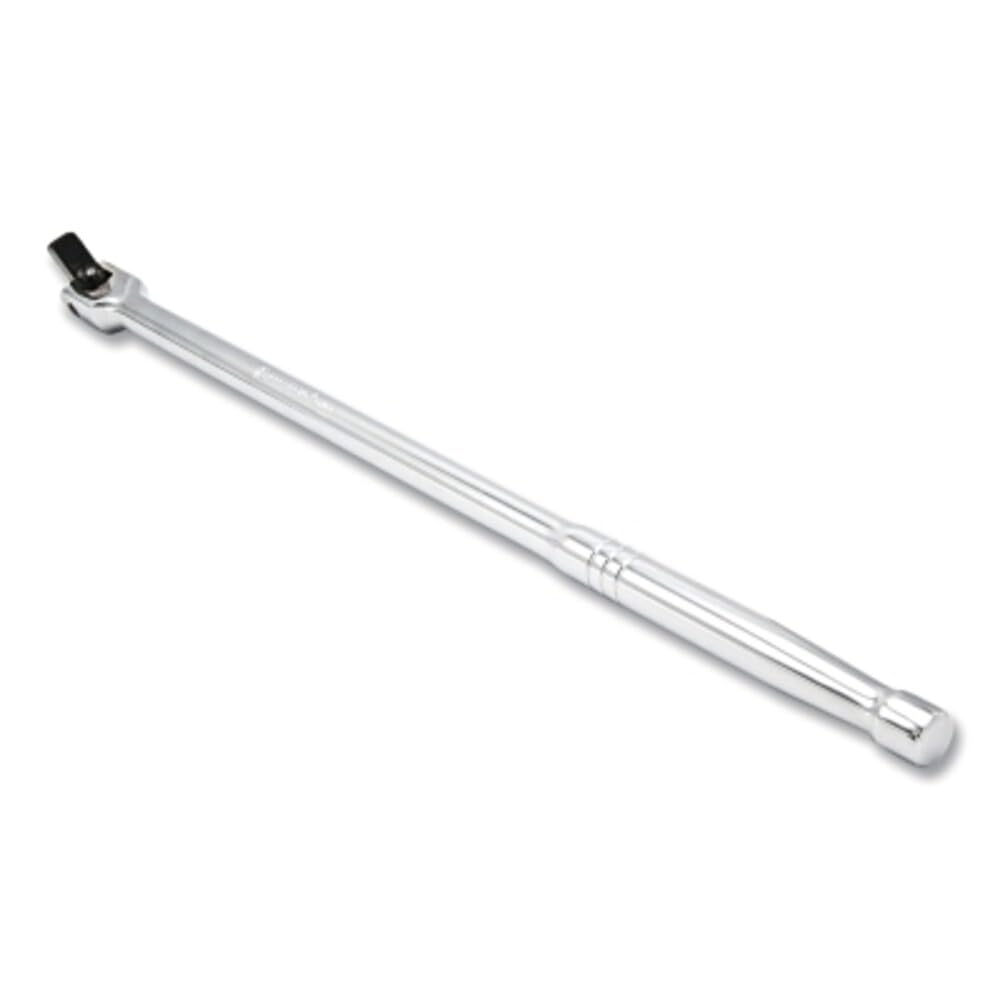
| Crescent 1/2″ Drive Flex Handle/Breaker Bar 18″ – CRW16NBest Value | Light-duty weekend repairs on a budget | 18 inches | Flex head | Chrome alloy steel | Amazon |
| 1/2″ Drive 25-Inch Breaker Bar, Heavy Duty Extension Breaker Bar with 250° Swivel HeadLongest Leverage | Frozen truck and construction fasteners | 25 inches | 250-degree swivel head | Chromium molybdenum (Cr-Mo) steel | Amazon |
| MichaelPro 1/2-Inch Drive x 24-Inch Extension Breaker Bar | Heavy truck and trailer work at home | 24 inches | Flexible head | Chrome vanadium (Cr-V) steel | Amazon |
| MAXPOWER 24-Inch Breaker Bar 1/2-Inch drive | Rusted bolts in the average home garage | 24 inches | 180-degree rotating Cr-Mo head | Chrome vanadium (Cr-V) steel | Amazon |
| GEARWRENCH 1/2″ Drive Flex Handle/Breaker Bar, 24″ – 81308D | Repeat buyers who want a trusted brand | 24 inches | Fixed square head | Alloy steel | Amazon |
| Titan 12024 1/2-Inch Drive x 24-Inch Heavy-Duty Ratcheting Breaker Bar | Reaching bolts in cramped engine bays | 24 inches | 180-degree swivel head with ratchet | Chrome vanadium (Cr-V) steel | Amazon |
| TEKTON 1/2 Inch Drive x 24 Inch Breaker Bar | Truck lug nuts and long-term shop use | 24 inches | 230-degree pivoting head | AISI 4140 steel head | Amazon |
In‑Depth Reviews
1. Neiko 00211A 1/2-Inch-Drive Extension Breaker Bar, 18 Inches Long, Made with CrV Steel
Our pick — over 4.5★ from 11,000+ verified ratings; the strongest balance of quality and price.
The short bar that refuses to lose a fight with your wheel nuts.
This is the one to reach for if you want a single breaker bar that lives in a truck box and handles almost everything you throw at it. The 18-inch handle is long enough to crack over-tightened lug nuts with real force, yet short enough to store without eating your whole toolbox. It is a 1/2-inch drive bar — that means it takes the standard half-inch sockets most home kits already use. The head flexes through a 180-degree arc, so you can angle it around a brake caliper or an exhaust pipe and still pull straight.
What wins most people over is how it holds up. The body is drop-forged, heat-treated chrome vanadium steel — a hard alloy that resists rust from grime, oil, and dirt — with a mirror-and-chrome polished finish that wipes clean. The drive head uses spring-loaded ball bearing retention, which is a small spring that grips the socket so it does not slip off mid-pull. There is also a thoughtful detail at the square drive: radius corners lock onto the flat sides of a fastener instead of its points, cutting down on socket wear over time. As owners put it after years of abuse, this bar just keeps taking it.
The catch is that a shorter bar has a limit. If you are fighting an axle nut on a salt-belt truck, an 18-inch handle will sometimes need help where the 25-inch Aiourx would have cracked it outright. A few buyers also wish the grip had a rubber sleeve, since the handle here is polished metal rather than a soft coating. Neither of those is a dealbreaker for ordinary garage work — it is simply the trade-off you accept for a bar that fits in small spaces and costs about the same as a mid-tier socket.
Where It Shines
- Drop-forged, heat-treated chrome vanadium steel resists rust from grime, oil, and dirt
- 180-degree flex head reaches tight angles around brakes and exhaust
- Spring-loaded ball bearing keeps your socket locked on during heavy pulls
- Square drive radius corners lock onto fastener sides to reduce socket wear
What to Expect
- 18-inch handle falls short on the most stubborn axle or tractor bolts
- Polished metal handle with no rubber grip sleeve
Reach for this if: you want one compact, budget-friendly bar for lug nuts, lawn equipment, and general repairs.
Look elsewhere if: your regular jobs are heavy truck or construction fasteners that demand the longest lever you can hold.
2. Crescent 1/2″ Drive Flex Handle/Breaker Bar 18″ – CRW16N
A light, honest bar for the once-a-month bolt that will not budge.
Not everyone needs a pro-shop bar, and this Crescent is built for the person who changes their own oil, swaps a bike freewheel, or frees a stuck plug a few times a year. It is an 18-inch flex handle made from chrome alloy steel with a bright, full-polish chrome finish that wipes clean and resists corrosion. The flexible head lets you angle into tight spots, and it meets or exceeds ASME specifications — an industry standard for hand-tool strength and dimensions — so you know its ratings were tested against a published benchmark.
The strongest selling point here is character for the money. Buyers describe it as the regular guy’s tool brand of choice, easy to pick up and reliable enough to trust on snug bolts. One owner got this specifically to remove a stuck freewheel on a bike and said it worked like a charm, though they wondered how it would fare under constant auto-shop abuse. Another put serious force into it — 220 pounds of body weight plus a three-foot cheater bar — and it held up fine.
The honest limit is that the flex head has a little give, which is common on lighter-duty bars. If you are torquing a tractor lug or a seized axle nut every week, that flex will eventually be your weak spot. For home maintenance, a stuck oil drain plug, or bike work, it is more than enough bar for the money. And for anyone just starting a tool kit, this is an easy, low-risk entry point.
Light-Duty Leverage: an 18-inch handle with a flex head that angles into tight spots — plenty for home repairs, less so for shop-level abuse.
Comfortable Weight: at 1.8 pounds you can hold it on a bolt for a while without arm fatigue, which matters when you are hunting for the right angle.
Good buy for: the casual wrencher who wants a trusted name in an 18-inch flex handle without overspending.
Weak spot to know: flex-head play and a light-duty ceiling mean heavy, repeated shop work is not what this bar was made for.
3. 1/2″ Drive 25-Inch Breaker Bar, Heavy Duty Extension Breaker Bar with 250° Swivel Head, CR-MO Steel, Defeats Rusted and Frozen Fasteners
Twenty-five inches of leverage for the bolts nothing else can touch.
If frozen fasteners are your problem, length is the answer — and this Aiourx runs a full 25 inches, the longest handle here. That extra reach matters: the Neiko 00211A gives you 18 inches of leverage, while this bar adds 7 more inches of handle for that much more turning force at the socket. The head swivels through 250 degrees, an even wider arc than the 180-degree flex heads on several of the shorter bars, so you can position the handle without twisting your wrist into a bad angle. The body is chromium molybdenum steel — a tough alloy often used where hardness and corrosion resistance matter — and this bar is rated for truck wheels and construction machinery chassis bolts.
In a dim workshop, the rod body is marked with size numbers, so you can grab the right accessory without squinting under a hood. The round handle is polished for a comfortable, easy grip. The proof is in the jobs it settles. Buyers report a situation that sums up its role perfectly: “My impact wrench couldn’t break my BMW’s rear lug bolts loose, but this 25-inch breaker bar got them loose with no problem.”
The trade-off is consistency. Most owners find the material strong and useful, but one reviewer noted the bar bent on its first use on axle nuts. That is a rare report against many satisfied ones, though it is worth knowing before you lean your whole body into an axle job. A swivel head that moves freely can also feel loose in hand if you are used to a rigid bar. For rusted, frozen, or salt-belt fasteners, the long reach earns its keep.
What You Get
- 25-inch handle delivers the most leverage of any bar here for breaking super-tight bolts
- 250-degree swivel head reaches twisting angles shorter bars cannot
- Size markings on the rod so you find the right socket fast in a dim shop
- Handles truck wheels and construction machinery chassis fasteners
Worth Knowing
- An occasional unit has bent under extreme axle-nut force
- Free-moving swivel head feels looser than a fixed-head bar
Made for: salt-belt trucks, farm equipment, and any frozen fastener that has beaten every shorter tool in your box.
skip it if: you want a rigid, fixed-head feel or you only ever work on small cars.
4. MichaelPro 1/2-Inch Drive x 24-Inch Extension Breaker Bar, Premium Cr-V Steel | MP007006

Twenty-four inches of leverage built for the things that fought back for years.
This MichaelPro targets the home mechanic with serious jobs — the backhoe drain plug, the seized trailer lug, the bolt that has not moved since the factory installed it. The 24-inch handle gives you real leverage to amplify torque (turning force), so a stubborn bolt turns instead of your knuckles giving out. The head is built from a combination of chrome vanadium steel with a chrome molybdenum head — a pairing designed so the working end is extra tough while the body resists corrosion. A mirror chrome polish finish makes it easy to wipe clean after a greasy job. Made in Taiwan, it is backed by a limited lifetime warranty on most of the brand’s tools.
Owners put this bar to work on genuinely stuck hardware. One used it to break a rusted hydraulic tank drain plug on a 40-year-old backhoe after ordinary bars failed — the exact scenario a longer lever is meant to solve. Another freed lug nuts that a tire iron could not budge, and a third noted a small handling tip: seat the socket fully before you pull, or you risk stripping a lug nut. The bar also earned praise as a shop companion for breaking the lug nuts on an 8-lug truck or horse trailer with no worry about quality.
The fair caveat is weight and bulk. At about 3.3 pounds it is heavier than the short 18-inch Neiko, and its larger socket head can be a tight fit in confined spaces — a buyer who chose it over several rivals flagged exactly that. Durability reports are mostly strong, though a rare unit has failed early. If you want leverage without a cheater pipe, this is a great fit.
Real-World Power: the 24-inch handle and Cr-Mo head are aimed squarely at rusted, frozen fasteners that defeat shorter bars.
A Note on Fit: the larger socket head can crowd tight quarters, so plan your angle before you commit to the pull.
Think of it as: the do-it-all mid-length bar for home mechanics who tackle trailer and truck hardware.
Downside to weigh: the heavier body and bulkier head ask for a little more clearance than a stubby 18-inch bar.
5. MAXPOWER 24-Inch Breaker Bar 1/2-Inch drive, Cr-Mo Flexible Head

A 24-inch bar with a published torque ceiling you can actually shop by.
Most breaker bars ask you to guess how much force they can take. This MAXPOWER publishes the number: 512 N.m of break-loose torque (the turning force it can take before it gives), which converts to 378 lb.ft. That is a stated ceiling for cracking rusted, frozen, or over-tightened fasteners. The 24-inch handle and 180-degree rotating head are built around getting that torque where a ratchet cannot reach. The head is chromium molybdenum steel while the forged body is chrome vanadium, with a fully polished chrome finish that is easy to clean. A spring-loaded ball bearing keeps your socket from slipping off when you lean into it.
What owners keep coming back to is how stout it feels. They note it runs slightly longer than a comparable Craftsman bar and handles frozen bolts without complaint. It also shines in a specific situation: holding a bolt head steady while you ratchet the nut, which beats wrestling a second ratchet into a blind spot. For wheel lug nuts it makes the job noticeably easier than the factory lug wrench and jack combo that came with your car.
Two usage notes come baked in, and they are worth reading. The maker says never use a cheater pipe or extension bar on this — the 512 N.m rating is the limit, and a pipe pushes past it. It also advises pulling toward your body rather than pushing, so a slip does not send your knuckles into metal. Quality is consistently praised, and for the average garage mechanic it is more than capable.
Why It Stands Out
- Published 512 N.m (378 lb.ft) break-loose torque gives you a real ceiling to shop by
- 180-degree rotating Cr-Mo head reaches tight spots and awkward angles
- Spring-loaded ball bearing keeps sockets from dropping during a heavy pull
- Slightly longer than a comparable Craftsman bar for a bit more leverage
The Trade-Offs
- Maker says no cheater pipes, so you cannot extend past the rated torque
- Heavy-duty jobs may leave you wanting a beefier bar
Pick this one for: a garage do-it-yourselfer who wants a defined torque rating and a long, stout handle at a mid-range price.
Not the tool for: the person who relies on cheater pipes, since the maker explicitly rules that out.
6. GEARWRENCH 1/2″ Drive Flex Handle/Breaker Bar, 24″ – 81308D

The 24-inch bar for tool-brand loyalists who buy the same name twice.
There is a group of buyers who do not shop by price — they shop by the brand that has never let them down, and this GEARWRENCH is built for exactly that person. It is a 24-inch, 1/2-inch drive bar in alloy steel with a polished finish. The ergonomic handle is meant to cut down on hand fatigue, and a ball detent — a small spring-loaded ball that snaps into a socket’s hole — keeps your socket locked on securely. It carries a standard limited lifetime warranty.
The appeal shows up in how owners talk about the brand rather than any single spec. People come back to GEARWRENCH again and again, calling it a favorite tool and preferring it over a 1/2-inch impact wrench specifically to avoid stripping lug nuts. One buyer used this exact bar to remove both front axle nuts from a 2010 Honda Accord, forcing it up with a jack to crack them loose, and the bar held. Others have run it through over-torqued bolts that needed a cheater bar and a hammer, and it stayed straight.
The honest note is that this is a fixed, durable workhorse rather than a flex-head reach tool — if you mostly need to angle around obstructions, a swivel-head bar like the Aiourx or MAXPOWER will suit you better. For routine lug nuts, axle work, and a brand you can replace under warranty, it earns its place.
Built to Endure: alloy steel construction with a polished finish and ball-detent socket retention that keeps everything locked together under load.
Worth the Loyalty: buyers keep returning to this brand for its balance of build quality and price — a pattern, not a one-off.
Best for: the brand-loyal buyer who wants one proven 24-inch bar with a lifetime warranty and no gimmicks.
Consider another: if you specifically want a pivoting head to reach around tight obstacles.
7. Titan 12024 1/2-Inch Drive x 24-Inch Heavy-Duty Ratcheting Breaker Bar with 180-Degree Swivel Head
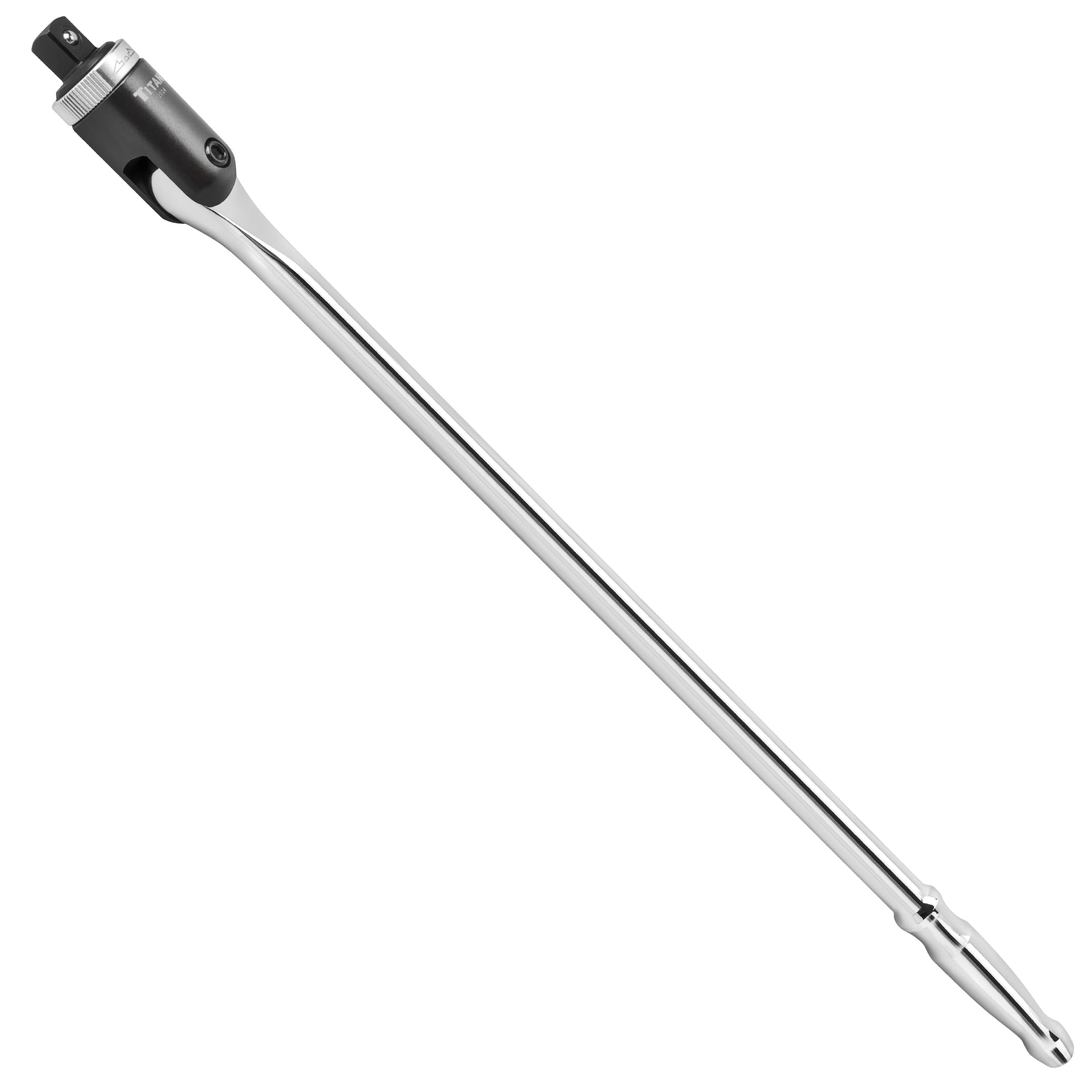
Half breaker bar, half super-sized ratchet — for the bolt nothing else can reach.
This Titan is the odd one out here, and that is its whole reason to exist. It is a 24-inch, 1/2-inch drive bar in chrome vanadium steel with a chrome-plated body and a black-oxide finished head to fight corrosion. what separates it is the 3-way ratcheting action — it ratchets in both directions for right or left-hand threads, or locks solid — combined with a head that swivels 180 degrees. In plain terms, it works as a breaker bar when you need raw force and as an oversized ratchet when you need to spin a fastener in a tight spot.
Where it wins is clearance. Owners use it to crank on seized rear control-arm bolts and to break 180 lb-ft axle nuts with near zero effort where an impact wrench was awkward to fit. It is also compatible with a tie rod and ball joint puller, so it doubles as a specialty-tool handle. The reversible ratcheting head is genuinely useful in tight working areas where you cannot swing a plain bar.
The note to respect is the head itself. The direction switch has low resistance, so it can be nudged out of position while you work — set your direction, then avoid brushing the selector. That said, this is a specialty buy, not a do-everything bar. If your work is all straight lug nuts, the simpler GEARWRENCH will not fuss at you. If your work involves awkward, obstinate bolts, the ratcheting swivel earns its keep.
What Makes It Different
- 3-way ratcheting action works both directions or locks solid
- 180-degree swivel head reaches really tight spaces
- Chrome vanadium steel with chrome-plated body and black-oxide head
- Doubles as a handle for tie rod and ball joint pullers
Keep in Mind
- Direction switch has low resistance and can shift mid-task if bumped
- Ratcheting mechanism adds complexity a basic bar does not have
The right match for: someone who works on seized suspension bolts and cramped engine bays and wants breaker-bar force plus ratchet convenience.
Pass on it if: you want a dead-simple fixed bar for ordinary lug nuts.
8. TEKTON 1/2 Inch Drive x 24 Inch Breaker Bar | SBH01224
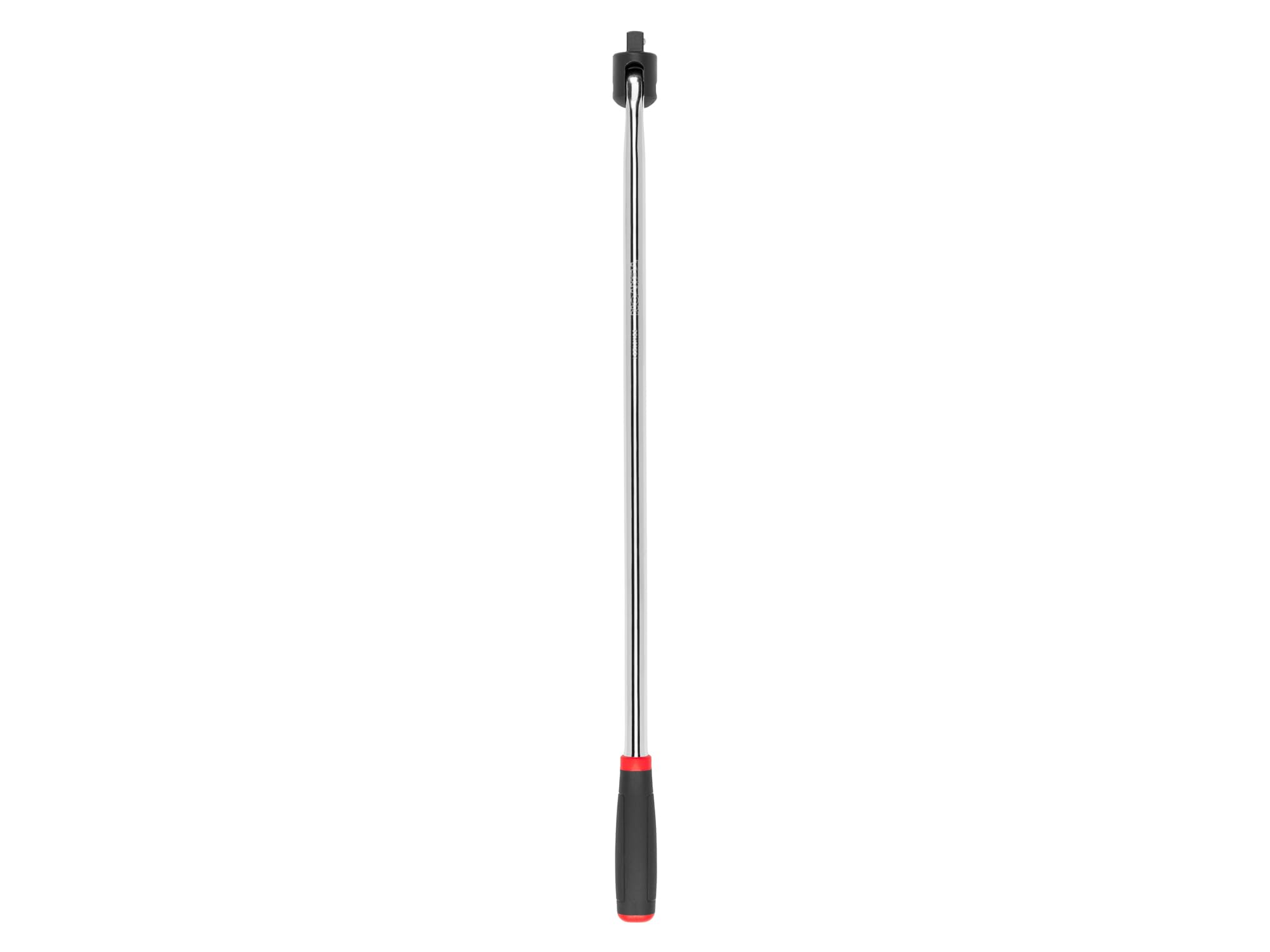
A reinforced external head that resists the flex that kills weaker bars.
The head is where breaker bars break, and this TEKTON is engineered around that fact. It uses an AISI 4140 steel head — a hard alloy heat-treated to be stronger and more ductile than the handle — arranged in an external head design that the maker says better resists spreading, twisting, or fracturing than an internal head. The head pivots continuously through a 230-degree arc, and an internal spring keeps it holding its position while you work, so the head does not flop down on you mid-pull. The handle is a rounded oval comfort grip shaped to fit your hand without being bulky.
Build quality carries the reputation here. Owners describe it as solid with a handle that feels great in hand, and note the external pivoting head allows more torque than an internal design. One buyer found quality comparable to tool-truck brands and strong enough for 175 lb-ft truck lug nuts — a real-world torque level that covers most pickup and SUV wheels. The brand also stands behind it: it took care of a ratchet repair kit the same day for an owner, and its warranty carries no time limit.
Two things to weigh. There is a touch of slop in the head pivot, which most owners consider normal, and this is the highest-tier bar of the group, so the price reflects the engineering. If you want a tool you keep for years and the head durability is worth the step up, this is a strong final pick. For occasional use, a mid-range bar does the same job for less.
Engineering Where It Counts: the AISI 4140 external head is built to resist spreading and twisting, the failure points that end a bar’s life.
Handle That Holds: the internal spring keeps the pivoting head in position, so you are not fighting the tool while you fight the bolt.
Made for: the buyer who wants one bar to keep for years and values head durability over a lower sticker price.
Not for you if: you only loosen the occasional lug nut and a mid-range bar already covers your needs.
Understanding the Specs
Drive Size
Drive size is the square nub that accepts your socket, measured in inches. A 1/2-inch drive is the common middle size — big enough to take the lug-nut sockets most home tool kits include, and strong enough to survive heavy torque. Smaller drives like 3/8-inch fit smaller sockets and flex more under extreme force, which is why the bars here all use 1/2-inch drive. Before buying, check that your existing sockets are 1/2-inch drive, or plan to pick up a set.
Handle Length
Handle length is your leverage — the longer the handle, the more turning force you get at the socket. An 18-inch bar swings in tighter spaces and stores easily, while a 24 or 25-inch bar gives you enough reach to crack over-tightened or rusted fasteners without a cheater pipe. Match the length to your most common job: short bars for cramped engine work, long bars for lug nuts, trucks, and salt-belt bolts.
FAQ
What size socket fits a 1/2 breaker bar?
Is a longer breaker bar always better for loosening bolts?
What is the difference between a flex head and a fixed head breaker bar?
Can I use a cheater pipe on a breaker bar?
What does Cr-V and Cr-Mo steel mean on a breaker bar?
Will a 1/2 breaker bar loosen lug nuts on a truck or trailer?
Can a breaker bar be used to tighten bolts as well as loosen them?
How do I keep the socket from falling off a breaker bar?
Should I pull or push when using a breaker bar?
What does ASME specification mean on a breaker bar?
Final Thoughts: The Verdict
For most people, the 1/2 breaker bar winner is the Neiko 00211A because a compact 18-inch handle with a 180-degree flex head handles everyday lug nuts and garage jobs without taking up your whole box. If frozen truck or construction fasteners are your problem, grab the Aiourx 25-Inch Breaker Bar for the longest leverage here. And for reaching bolts buried in tight engine bays, the Titan 12024 is the one to reach for. Whichever you pick, the right handle length and head style are what finally free the bolt that has fought you for years.
How We Picked
We do not accept paid placement. Every pick is matched to a real buyer and a real use-case; we do not hands-on test units.
Sources & Methodology
Specifications: manufacturer listings and product documentation. Review insights: verified customer reviews, as of September 2026. Pricing: not shown on this page (it changes often); check the current price via the retailer link.
As an Amazon Associate, Gadgets Feed earns from qualifying purchases. This does not affect which products we feature.