
Standard hiking boots with thick, elevated heels and narrow toe boxes have dominated the market for decades, but they often weaken foot intrinsics and obscure trail feedback. Minimalist hiking footwear flips the script by pairing a zero-drop platform with a foot-shaped toe box, allowing your foot to function naturally while protecting it from the elements. The result is improved balance, stronger feet over time, and a directly connected feel to every root and rock beneath you.
I’m Min — the co-founder and writer behind Gadgets Feed. I have spent countless hours analyzing spec sheets, cross-referencing sole thicknesses, drop measurements, and waterproof membrane efficacy to separate genuine barefoot designs from products that merely borrow the aesthetic.
This guide breaks down the top contenders across insulation, waterproofing, durability, and ground feel so you can confidently pick the best barefoot hiking boots for women for your next adventure.
How To Choose The Best Barefoot Hiking Boots For Women
Selecting a true minimalist hiking boot requires looking beyond marketing buzzwords. You need to verify the drop, toe box shape, sole stack height, and waterproofing method against your specific terrain and weather conditions.
Zero Drop and Stack Height
Zero drop means the heel and forefoot sit at the same height from the ground, aligning your spine and hips naturally. Stack height — the thickness of the sole — typically ranges from 8 mm to 20 mm in minimalist boots. A lower stack height increases ground feel and proprioception but reduces cushioning against sharp rocks; a moderate stack around 14-18 mm provides a balance most hikers find sustainable on rocky terrain.
Toe Box Shape and Width
A foot-shaped toe box allows your toes to splay naturally, improving stability and push-off power. Look for boots that offer at least as much width at the metatarsal heads as at the heel. Many barefoot brands now list the actual width measurement in mm across the widest part of the forefoot, which is more reliable than vague “wide” labeling.
Outsole Grip and Sole Flexibility
The outsole lug pattern should match your primary terrain — chevron lugs for mud and soft earth, shallower siping for hardpack and rock. The sole must be flexible enough to twist torsionally and bend at the ball of the foot without resistance. A sole that cannot be rolled into a cylinder is not truly minimalist.
Quick Comparison
On smaller screens, swipe sideways to see the full table.
| Model | Category | Best For | Key Spec | Amazon |
|---|---|---|---|---|
| Trailventure 2 WP | Mid-Range | Wide forefoot & 5mm drop comfort | 5mm drop, 28mm stack | Amazon |
| Lone Peak Hiker 3 | Mid-Range | Zero-drop with cushioned ride | 0mm drop, 25mm stack | Amazon |
| Vivobarefoot Primus Trail III AW | Mid-Range | All-weather trail running and hiking | 3mm stack, waterproof membrane | Amazon |
| Magna Forest ESG | Premium | Leather & wool durability | 3mm stack, Michelin outsole | Amazon |
| Tracker FG L Leather | Premium | Full-grain leather longevity | 3mm stack, leather upper | Amazon |
| Tracker Leather AT | Premium | All-terrain with maximal ground feel | 3mm stack, waterproof leather | Amazon |
| Tracker Textile AT | Premium | Waterproof textile for varied weather | 3mm stack, puncture resistant | Amazon |
| Viakix Monterra Mid | Mid-Range | Lightweight mid-cut with arch support | 8mm drop, waterproof | Amazon |
| Xero Alpine Snow Boot | Budget | Insulated snow and slush conditions | 3mm stack, 200g insulation | Amazon |
In‑Depth Reviews
1. Topo Athletic Trailventure 2 WP
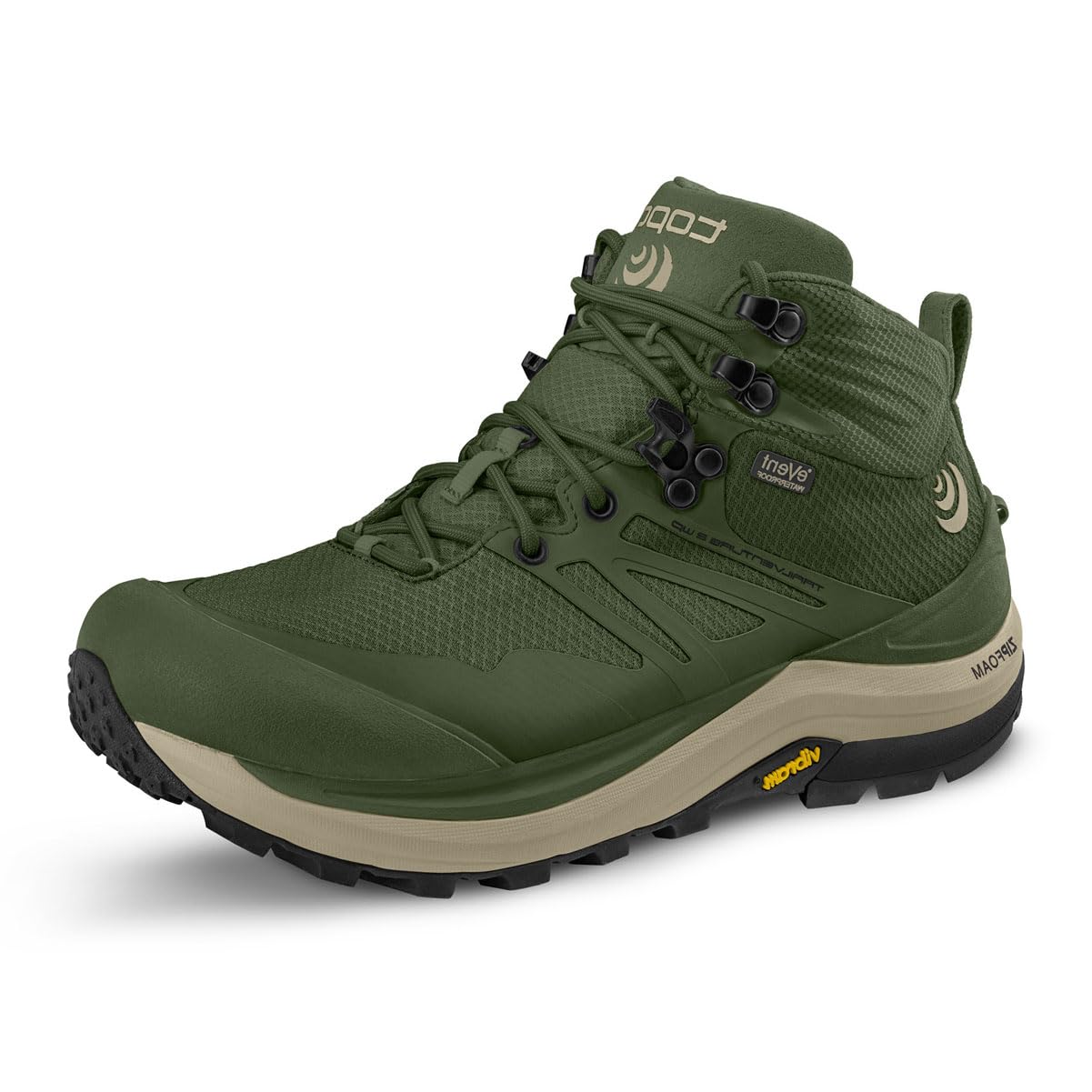
The Trailventure 2 WP hits a rare sweet spot between minimalist philosophy and real-world hiking comfort. Its 5mm drop is lower than most mainstream boots while still offering a 28mm stack height that absorbs shock on rocky descents without numbing trail feedback. The wide toe box accommodates toe spacers and splay naturally, while the locking lace loop secures narrow heels — a combination rarely executed well.
Reviewers consistently report that sizing up half a size eliminates toe-bang on downhills and that the outsole provides trustworthy traction on loose dirt and wet rock, though it struggles on sheet ice. The waterproof membrane kept feet dry during creek crossings and rain, while the boot remained breathable enough for cooler shoulder-season hikes.
Its biggest limitation is the toe box width, which some longtime Topo sneaker users found noticeably narrower than the brand’s trail runners. If you need the absolute widest forefoot available, you may need to look at Vivobarefoot’s unisex offerings — but for most women with standard-to-wide feet, this is the strongest all-rounder.
Why it’s great
- 5mm drop prevents toe jamming on descents
- Wide toe box combined with secure heel lock
- Breathable waterproof membrane for wet conditions
Good to know
- Toe box not as wide as Topo trail runners
- Lacks grip on sheet ice
2. ALTRA Lone Peak Hiker 3

ALTRA’s Lone Peak series is legendary among thru-hikers, and the Hiker 3 translates that trail-running DNA into a mid-cut boot with zero drop and a 25mm stack. The wide toe box is genuine — reviewers with Morton’s neuroma and bunions found immediate relief — while the zero-drop platform encourages a midfoot strike that reduces knee strain over long miles.
The boot weighs only 14.4 ounces, making it one of the lightest hiker options at this stack height. Its tread is aggressive enough for rocky trails yet smooth enough for neighborhood strolls. Several reviewers noted zero break-in period and no blisters even on 10-mile days, though the ankle collar can rub bare skin at the top — tall socks solve this easily.
Where the Lone Peak Hiker 3 falls short is ankle stability. The high top is flexible and offers only moderate lateral support compared to stiffer boots. If your primary concern is rugged, off-camber terrain, you may prefer a more structured option.
Why it’s great
- Zero drop with substantial 25mm stack for shock absorption
- Extremely lightweight at 14.4 oz
- Very wide toe box suitable for bunions and toe spacers
Good to know
- Ankle collar causes chafing without tall socks
- Limited lateral ankle support for technical terrain
- Not waterproof without aftermarket spray
3. Vivobarefoot Primus Trail III All Weather
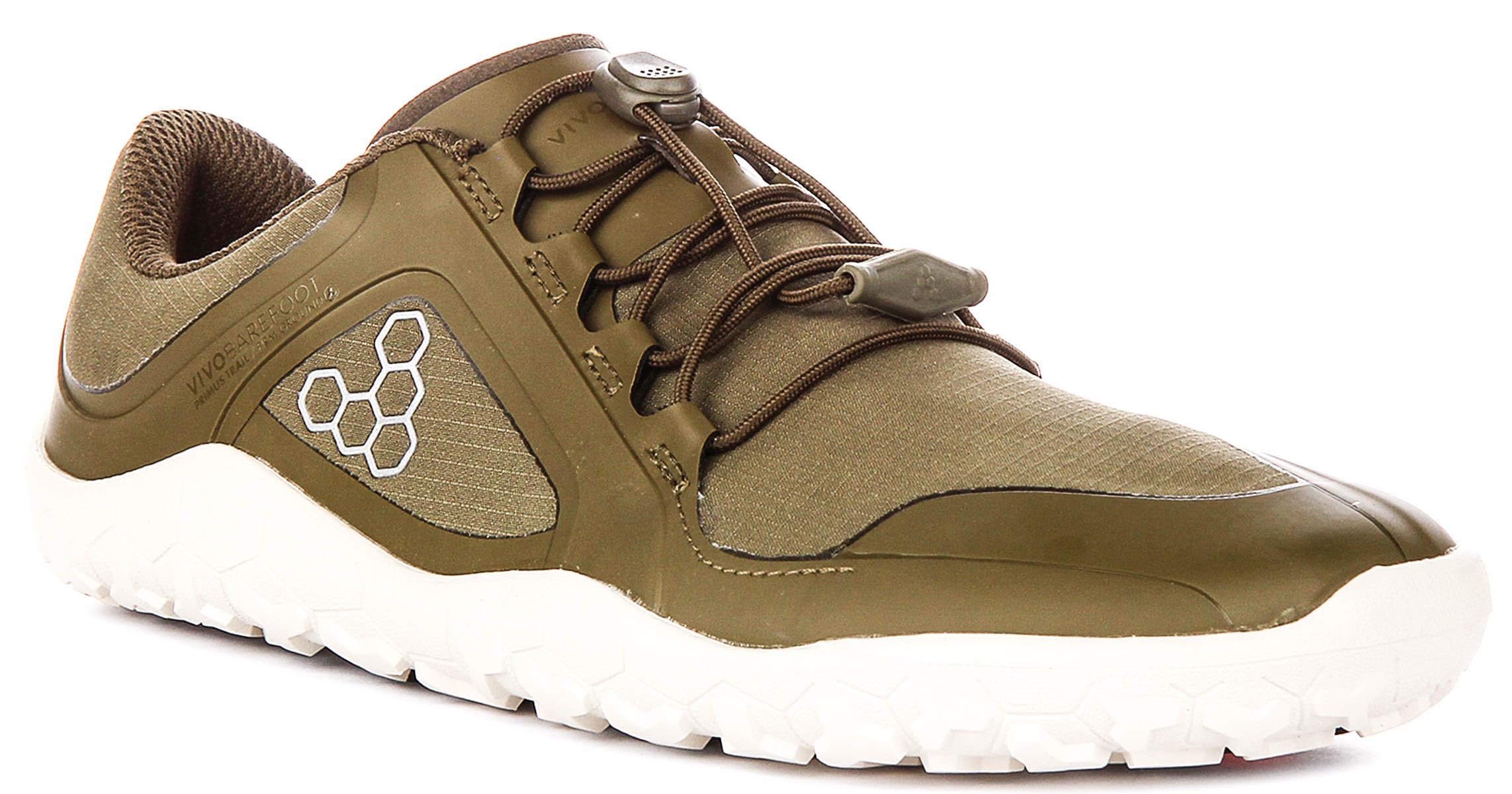
The Primus Trail III All Weather is Vivobarefoot’s most accessible minimalist hiking shoe, combining a 3mm stack height with a waterproof membrane for wet trail conditions. The sole is fully flexible — you can roll it into a ball — giving maximum proprioception on technical singletrack. Reviewers praised its true-to-size fit and how the shoe stretches the lower legs gradually, building foot strength over weeks of use.
The All Weather update includes a bonded membrane that keeps puddles and morning dew out without turning your feet into saunas. The upper is easy to clean, and the outsole pattern offers reliable grip on hardpack, dirt, and gravel. One reviewer who previously destroyed their old Vivos biking noted the build quality feels improved on this generation.
The main complaint concerns toe box width — several buyers found the forefoot too narrow relative to other Vivobarefoot models like the Magna or Tracker lines. If you have wide feet, you may need to size up or choose a different last. The lack of half sizes also forces some compromise in fit.
Why it’s great
- Extremely flexible 3mm sole for maximum ground feel
- Waterproof membrane for wet trail conditions
- Easy to clean, stylish design for town-to-trail
Good to know
- Toe box too narrow for very wide feet
- No half sizes available
4. Vivobarefoot Magna Forest ESG
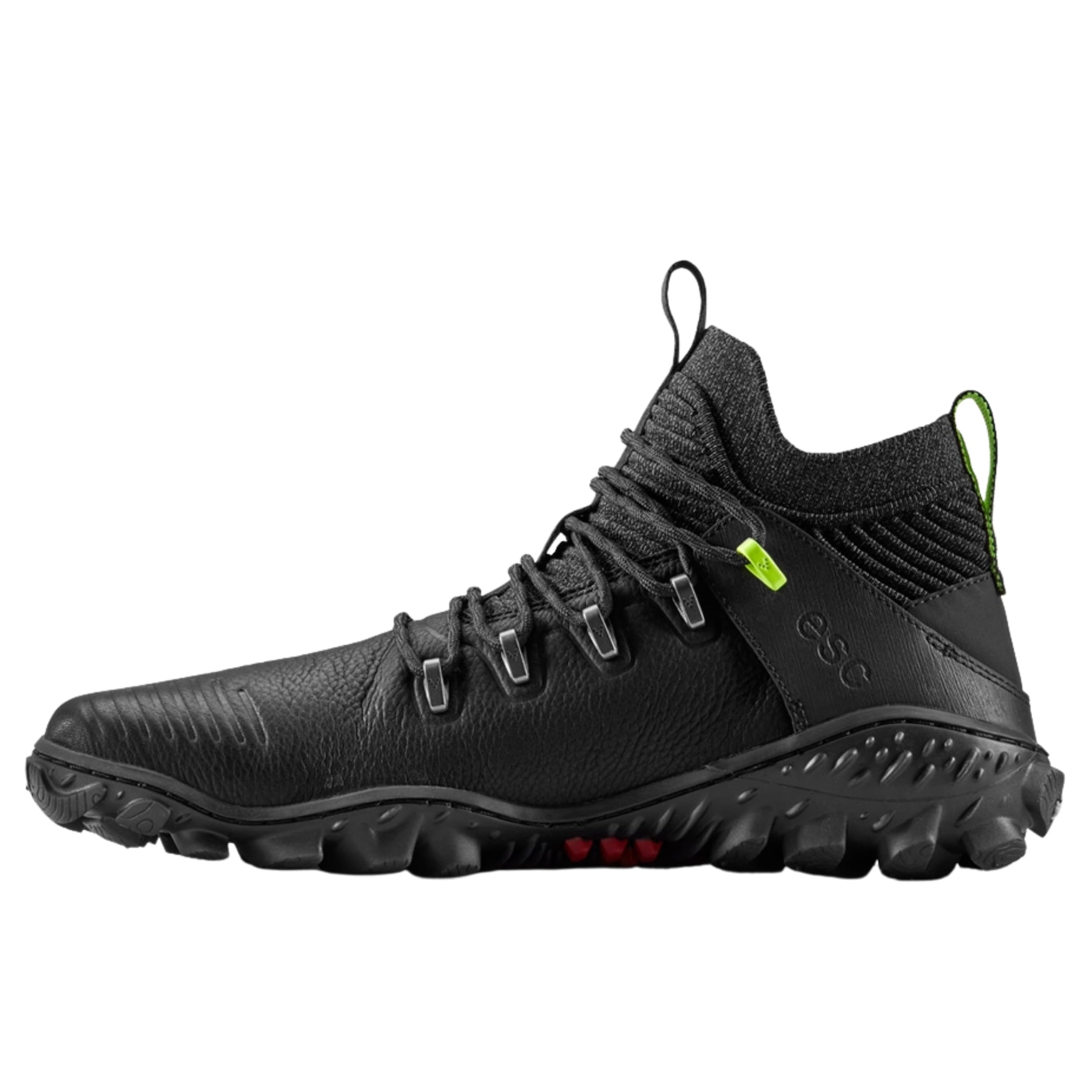
The Magna Forest ESG pairs a premium leather-and-wool upper with a Michelin rubber outsole, delivering exceptional grip on soft ground and wet leaves common in Pacific Northwest forests. At a 3mm stack height, ground feel is immediate and unfiltered — you will feel every acorn and root, which improves proprioception but some hikers may find overwhelming on sharp scree.
The leather is thick and durable, and the wool lining adds natural odor resistance and temperature regulation. Reviewers noted that the boots remained odor-free even after multiple sweaty hikes. The large thumb pull at the heel makes entry easy, and the lacing allows a secure midfoot lock. Many users wear them not only for hiking but for daily errands and gym workouts due to their all-day comfort.
Size runs small — most reviewers recommend sizing down, which is unusual for barefoot footwear. The toe box is genuinely wide for most foot shapes, though a few customers with very high-volume feet found the instep too low. The hook at the top collar can also rub the ankle bone if worn without high socks.
Why it’s great
- Michelin outsole provides excellent grip on soft ground
- Leather and wool upper resists odor and regulates temperature
- Durable full-grain construction
Good to know
- Runs small — size down recommended
- Thin sole transmits sharp edges strongly
- Ankle hook can rub without tall socks
5. Vivobarefoot Tracker FG L Leather

The Tracker FG L Leather is Vivobarefoot’s classic winter minimalist hiking boot, built from full-grain leather with a 3mm stack height and zero-drop platform. The leather upper is stiff initially but molds to your foot over time, and the ankle shaft cradles the joint without restricting dorsiflexion. Reviewers consistently call it the best winter minimalist boot for deep snow and cold temperatures down to 10-20°F when paired with thick wool socks.
The boot is fully waterproof and lightweight for its durability class at 15.4 ounces. One reviewer who had worn every mainstream boot brand described the Tracker as “life-changing” for their posture and balance, citing the thin sole for forcing natural gait corrections. The wide toe box accommodates toe splay even with thick socks, though some found the shape more shallow than expected due to the leather last.
Sizing is tricky — most buyers need to go up at least half to a full size, especially if planning for cold-weather sock layering. The outsole provides good traction on packed snow and dirt but offers minimal grip on sheet ice. A few customers also received what appeared to be used or returned pairs, so inspect upon arrival.
Why it’s great
- Full-grain leather molds to foot over time
- Waterproof and warm for winter conditions
- Lightweight for the level of durability
Good to know
- Size up at least half to full size
- Leather can feel stiff during break-in
- No grip on sheet ice
6. Vivobarefoot Tracker Leather AT
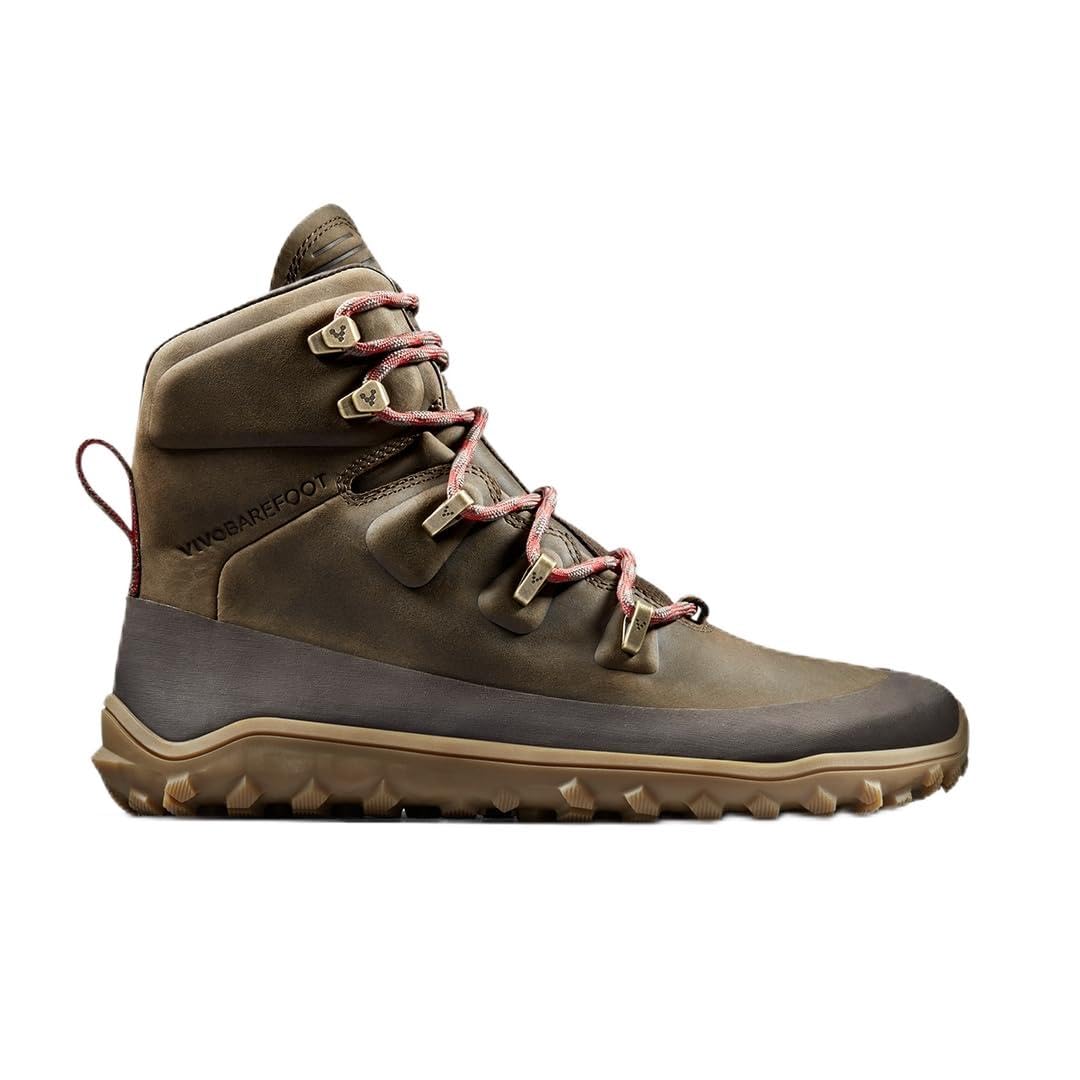
The Tracker Leather AT upgrades the classic Tracker formula with softer, more pliable leather that requires almost no break-in while maintaining full waterproofing. The wide toe box is generous enough for natural toe splay, and the outsole delivers reliable grip on wet rocks, loose dirt, and desert sand. Reviewers who tried lower-cost minimalist alternatives first found the Tracker Leather AT worth the premium for its combination of protection and ground feel.
At a 3mm stack, these boots transmit sharp edges strongly — you will feel every embedded stone on the trail. Several experienced barefoot hikers consider this a feature for improving balance, but novices transitioning from cushioned boots may find it uncomfortable on rocky terrain. The boots are light enough for 5-6 mile hikes without fatigue and come with no noticeable knee or hip pain, according to multiple long-term reviewers.
Durability concerns emerged from a small but notable fraction of users. One reviewer’s eyelet ripped off after a week, and the brand’s customer service reportedly failed to respond after initial contact. Another wore through the upper within months. For the premium price point, quality control appears inconsistent across individual units.
Why it’s great
- Soft, pliable leather with minimal break-in
- Wide toe box and excellent grip on wet surfaces
- Zero-drop platform reduces knee and hip pain
Good to know
- Thin sole transmits sharp edges strongly
- Inconsistent quality control reports
- Potentially short-lived customer service
7. Vivobarefoot Tracker Textile AT
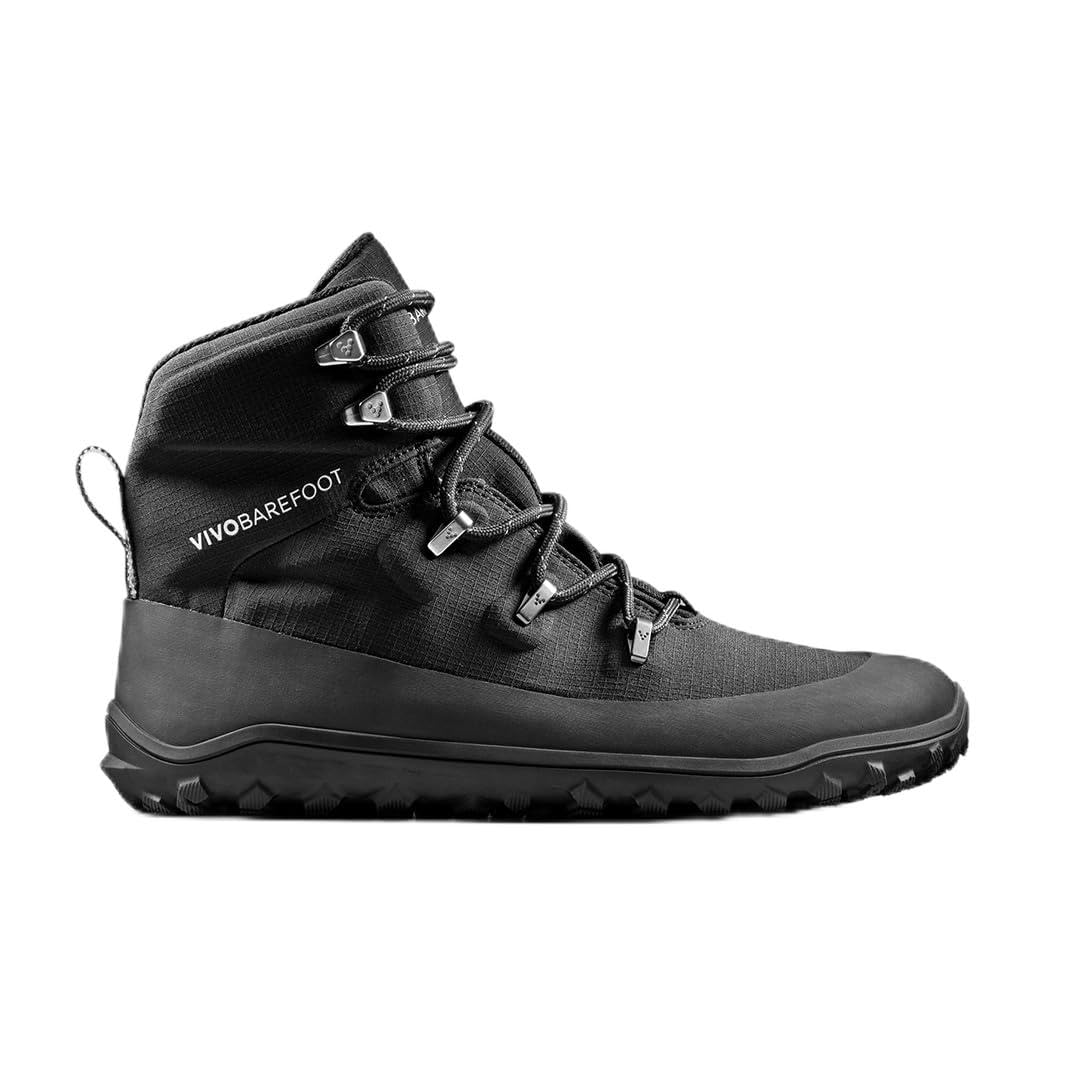
The Tracker Textile AT shares the same 3mm stack and zero-drop platform as the Leather AT but uses a waterproof textile upper that is lighter, more breathable, and more resistant to abrasion. The textile construction also dries faster than leather when fully saturated, making this the better choice for wetter climates where total immersion is possible. Reviewers wore these in snow, slush, and creek crossings without socks and reported warm, dry feet throughout.
The outsole performed admirably on snow, mud, stone, and dirt during testing in the Canadian Rockies. The boots pair well with gaiters, and the wide toe box accommodates thick socks easily. Many users sized up — one went from 9.5 US to 10 and found it too big, ultimately settling on size 9 for a perfect fit, suggesting TTS or half up rather than full up.
Durability issues mirror the Leather AT variant. One reviewer reported the boot coming apart at day 96, and Vivobarefoot refused to honor the warranty because the purchase was made through Amazon rather than direct. Another reviewer’s husband experienced separation of the upper from the sole within two months. Traction on wet, icy stone is notably weak, though the boot excels on virtually every other surface.
Why it’s great
- Waterproof textile dries faster than leather
- Lightweight and breathable for active hiking
- Excellent traction on snow, mud, and dirt
Good to know
- Weak grip on wet, icy stone
- Durability concerns reported within 2-3 months
- Warranty may not cover Amazon purchases
8. Viakix Monterra Mid Waterproof
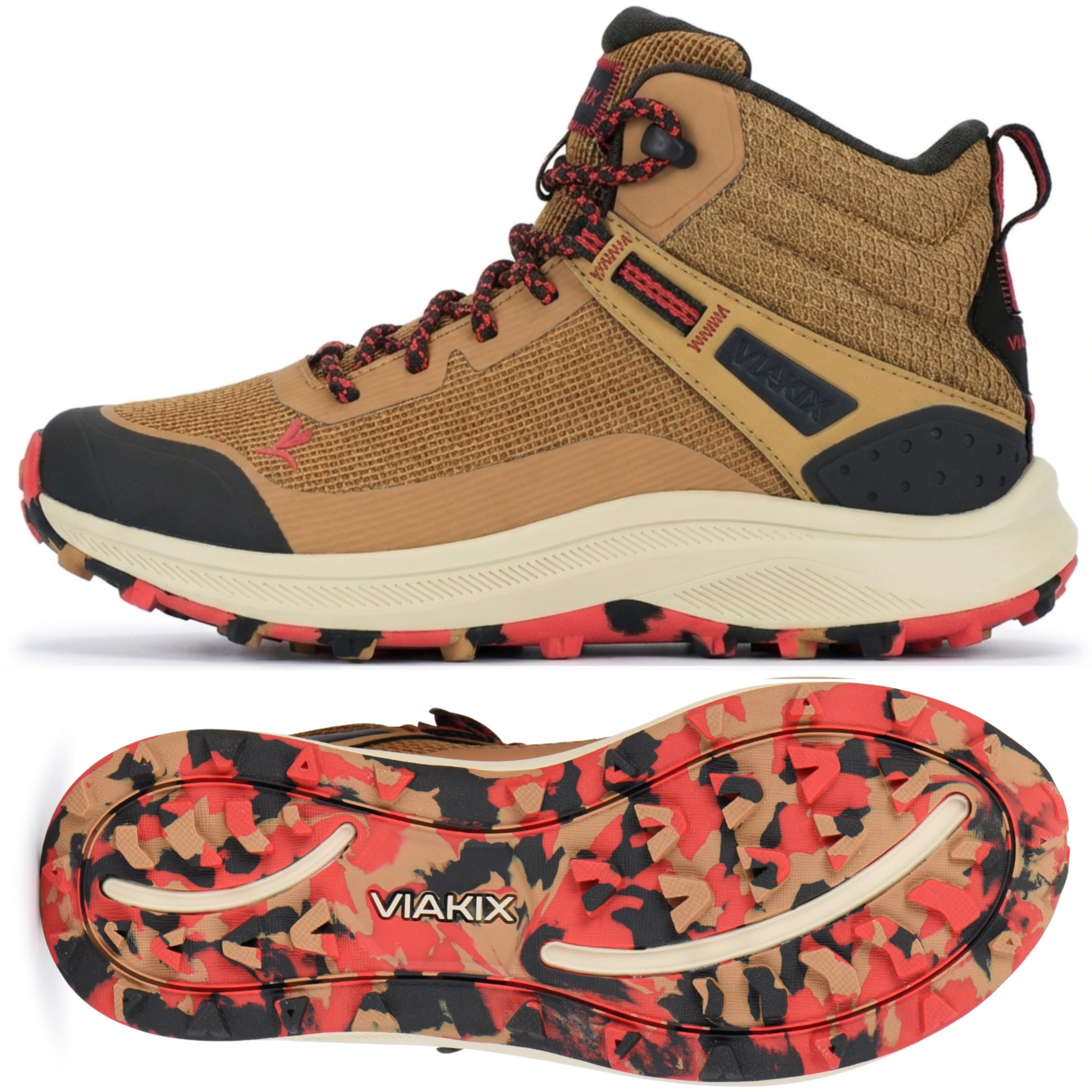
The Viakix Monterra Mid sits at the crossover point between a minimalist boot and a traditional lightweight hiker. Its 8mm drop is higher than true barefoot but still lower than the 10-12mm found in conventional hiking boots, making it a gentler transition for those new to zero-drop concepts. The wide toe box received heavy praise from reviewers who previously struggled with bunions, and the half-size option allows fine-tuning fit better than most competitors.
One reviewer wore these for six consecutive days in South Dakota’s Badlands and Black Hills, racking up over 66,000 steps without a single blister. The waterproof membrane held up across mud, snow, and creek crossings, and the outsole lugs provided trustworthy grip on loose gravel and packed dirt. The boot weighs noticeably less than traditional leather hikers, reducing fatigue over long days.
The Monterra Mid includes arch support, which purist barefoot advocates may reject on principle. If you specifically need zero drop and a totally flat insole, this boot will not satisfy that requirement. However, for women seeking a comfortable, blister-free hiking boot with a wider toe box and moderate drop, it delivers outstanding real-world performance.
Why it’s great
- Half sizes available for precise fit
- Waterproof and tested across multiple terrains
- Wide toe box with zero blisters even on long hikes
Good to know
- 8mm drop is not zero-drop
- Includes arch support not suitable for barefoot purists
9. Xero Shoes Alpine Snow Boot
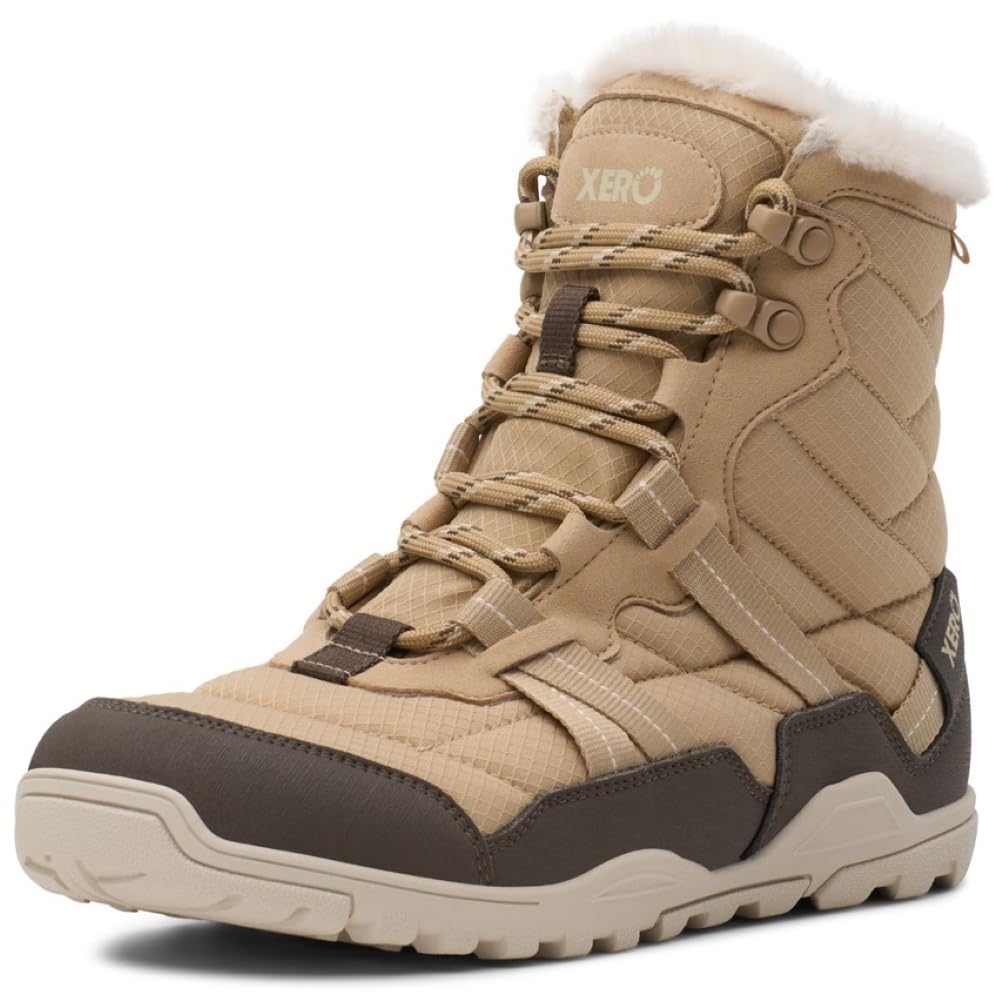
The Xero Alpine Snow Boot is the most affordable true barefoot winter boot in this lineup, featuring a zero-drop, 3mm FeelTrue sole with 200g insulation for snow and slush conditions. The wide toe box accommodates bunions comfortably, and the waterproof upper holds up well in wet snow. Reviewers consistently praise the warmth and comfort, with some noting they haven’t even needed their usual alpaca wool sock liners.
The flip side is sizing — nearly every reviewer mentioned needing to size up significantly, with one reporting that a size 9 required a 10.5. The boot runs narrow for many feet, and the overall fit is best suited for women with narrow-to-medium width feet. One clever hack: removing the stock insole and replacing it with a Sherpa insole improved warmth and snugged up the fit for one reviewer.
Traction is good on snow and slush but uncertain on icy surfaces. The flat outsole performs well on packed snow but lacks aggressive lugs for deep, loose powder. For shorter hikes or daily winter commutes in cold climates, the Alpine delivers reliable barefoot function at a friendly entry point.
Why it’s great
- 200g insulation keeps feet warm in snow
- Wide toe box accommodates bunions
- Waterproof and durable for winter conditions
Good to know
- Runs very small — size up 1.5 sizes
- Better suited for narrow-to-medium width feet
- Stock insole may need replacement for warmth and fit
FAQ
How long does it take to transition to barefoot hiking boots?
Can I wear barefoot hiking boots on rocky terrain?
Are barefoot hiking boots suitable for winter conditions?
How do I measure my foot for barefoot boots correctly?
Final Thoughts: The Verdict
For most women seeking the best barefoot hiking boots for women, the overall winner is the Topo Athletic Trailventure 2 WP because it combines a moderate stack height, 5mm drop, and genuinely wide toe box in a waterproof package that works across the widest range of trails and conditions. If you want maximum ground feel with premium materials, grab the Vivobarefoot Magna Forest ESG. And for the lightest zero-drop hiker that transitions easily from trail to daily wear, nothing beats the ALTRA Lone Peak Hiker 3.