
Our readers keep the lights on and my morning glass full of iced black tea. As an Amazon Associate, I earn from qualifying purchases.
Specs are compiled from manufacturer listings and verified buyer reviews and can change over time — please confirm the key details on the product page before buying.
If you keep getting bloated, tired, or broken out and your doctor’s standard panel came back clean, the missing piece is usually simpler than you think: an at-home food sensitivity test you can do at your kitchen table. But one choice matters more than any other — whether your kit uses a hair sample or a real blood serum sample — because that single decision changes what kind of answer you actually get back.
I’m Min — the founder and writer behind Gadgets Feed. This guide is built by comparing the manufacturers’ published specifications and the patterns across verified customer reviews, so you get each pick’s real strengths and trade-offs instead of marketing spin.
Below you’ll find the real difference between hair-sample and serum-sample kits, how many items each panel actually screens, and which of these eight options is worth your money. The best allergy test for food allergies is the one whose sample method, turnaround time, and panel size match what you’re trying to learn.
Our Picks at a Glance
How To Choose The Best Allergy Test For Food Allergies
The one decision that shapes everything else is your sample type. Some kits ask for a few strands of hair, which is completely painless and needs no blood at all. Others ask for a finger-prick blood sample, which gives you a serum the lab can analyze the same way a clinic would.
Hair Sample or Blood Serum
A hair sample test is the easier path if needles make you nervous or you want to test a child without a struggle. You snip the strands, drop them in the prepaid envelope, and wait for an email. A blood serum test takes a real drop of blood, so it demands steadier hands, but the sample type is closer to what a clinical lab works with.
One thing to settle before you buy: a food sensitivity test and a food allergy test are not the same thing. An allergy test looks for IgE antibodies, the immune response behind an immediate reaction. A sensitivity test looks at a different response that’s often linked to bloating and discomfort. Know which question you’re asking before you spend your money.
How Many Items Are Screened
The panel size tells you how many foods, drinks, and additives get screened from a single sample. Smaller panels keep the report short and easy to read. Bigger panels can surface triggers you never suspected, but they also produce a longer list that takes more work to sort through.
Quick Comparison
| Model | Best For | Sample Type | Items Screened | Results Time | Amazon |
|---|---|---|---|---|---|
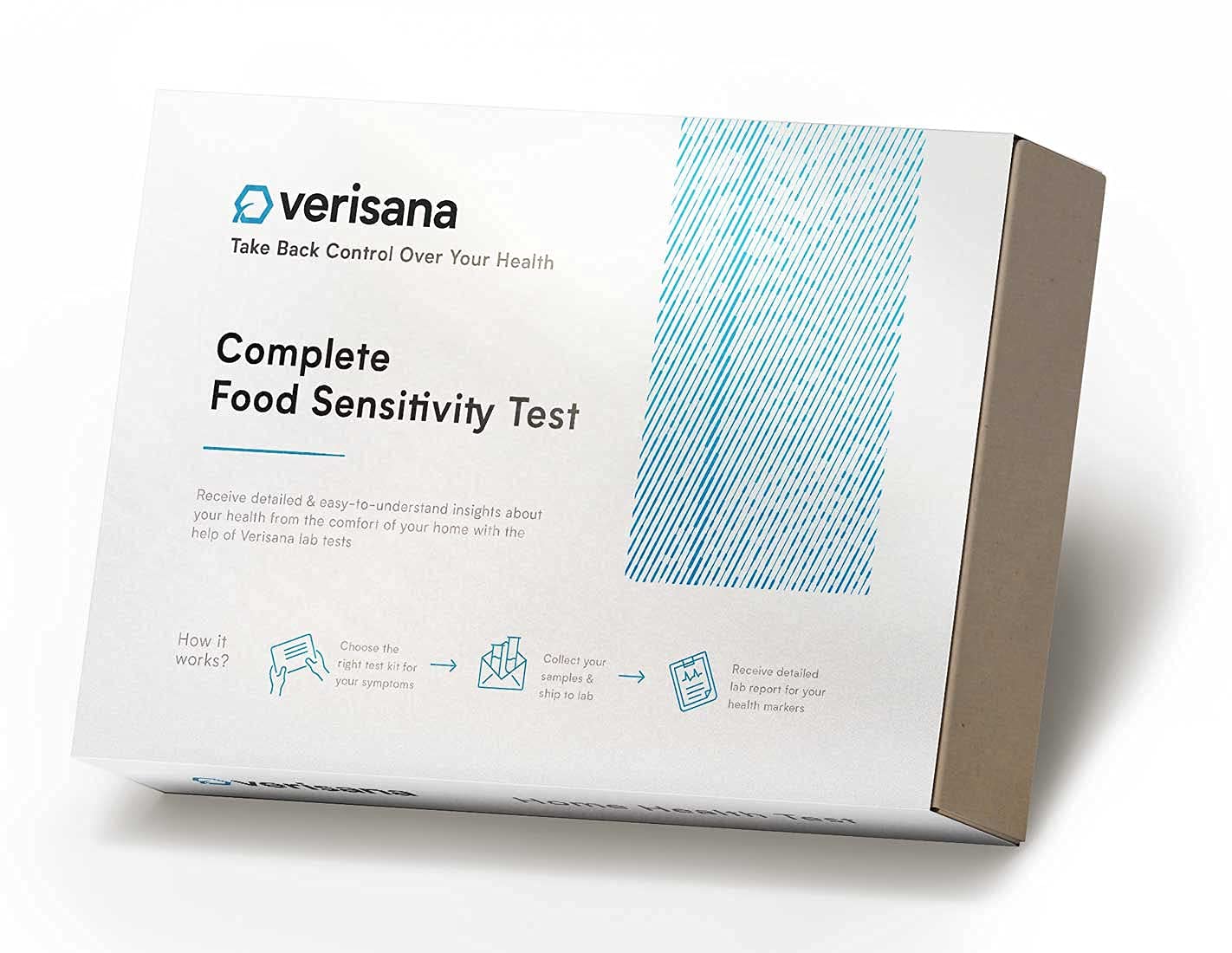
| Food Sensitivity Complete Test – 240 Foods – Verisana★ Best Overall | Physician-reviewed lab testing | Finger-prick blood | 240 items | ~2 weeks | Amazon |
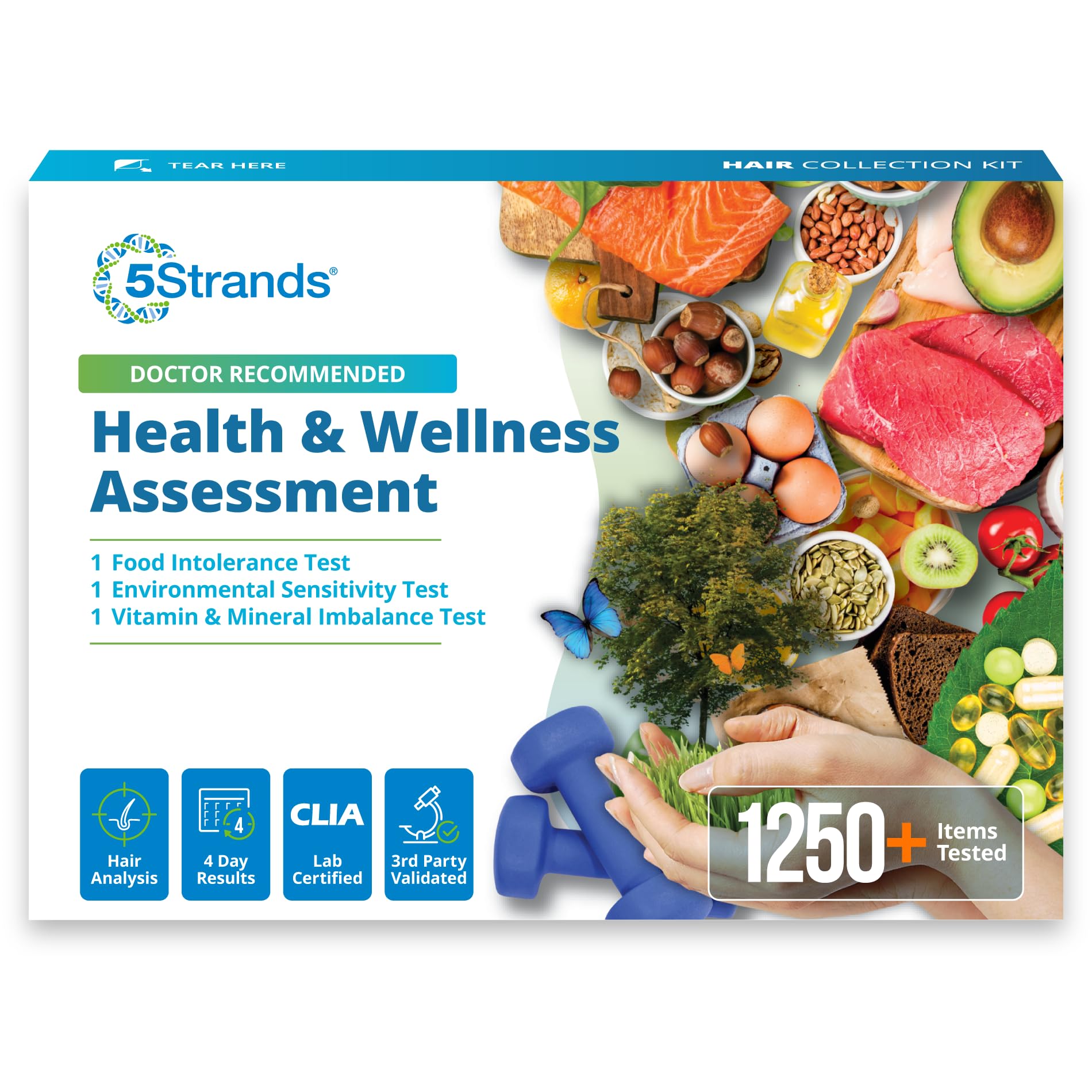
| 5Strands Health & Wellness AssessmentMost Comprehensive | Biggest combined panel | Hair | 1,250 items | About 4 days after receipt | Amazon |
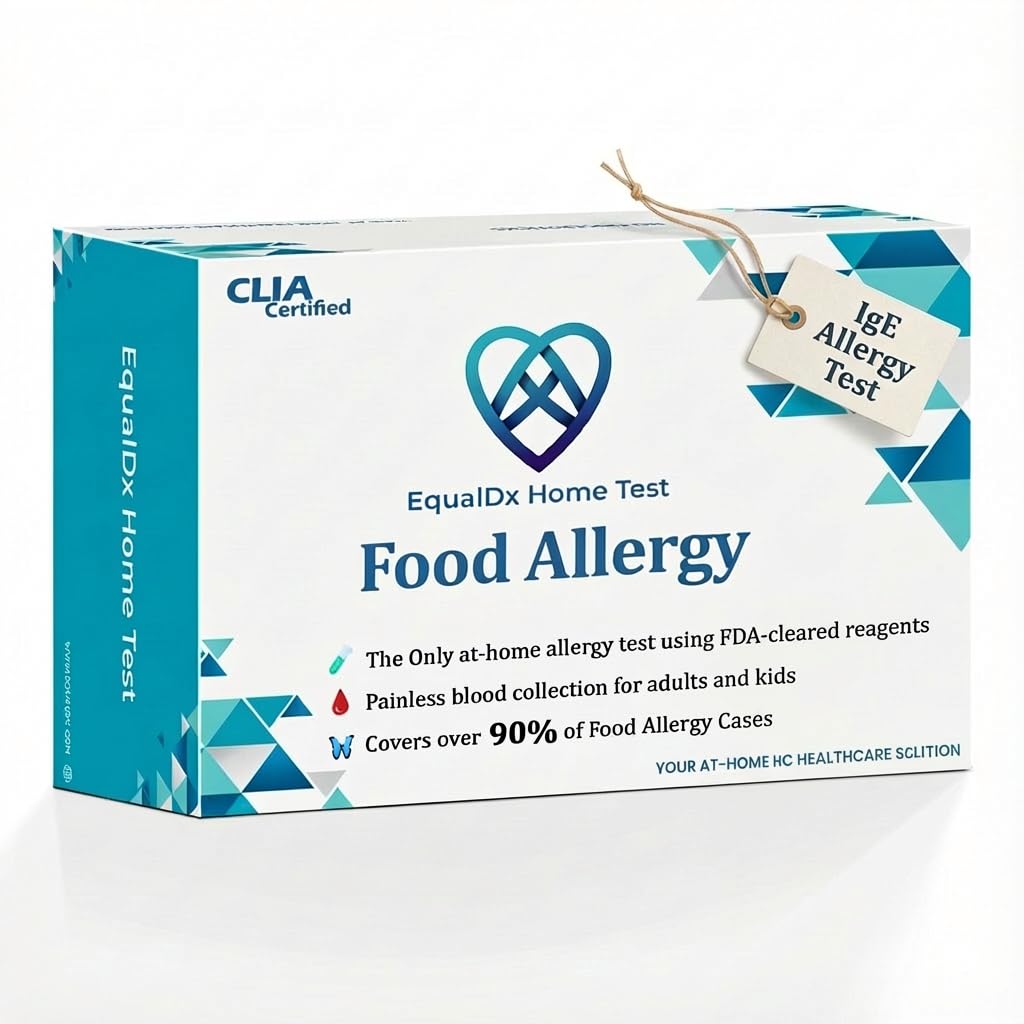
| Food Allergy Test – Clinical-Grade Accuracy – EqualDxTrue Allergy Test | True IgE allergy screening | Blood serum | 16 allergens | A few days | Amazon |
| AllergyHero 286 Foods Kit | Family testing at home | Finger-prick blood | 286 foods & beverages | 2–5 days | Amazon |
| AFIL Upgraded 750+ Foods Kit | Broad wellness snapshot | Hair | 750+ items | 72 hours after receipt | Amazon |
| AFIL 350+ Foods Kit | Focused gluten & dairy check | Hair | 350+ items | 72 hours after receipt | Amazon |
| Food Sensitivity Test Kit – 990 Items – Hair Sample | Most-tested hair option | Hair | 990 items | 3–5 days after receipt | Amazon |
| Food Sensitivity Test Kit – 650 Items – Hair Sample | Entry-level hair testing | Hair | 650 items | 3–5 days after receipt | Amazon |
In-Depth Reviews
1. Food Sensitivity Complete Test – 240 Foods Home-to-Lab Screening – Verisana
Our pick — over 4.5★ from 40+ verified ratings; the strongest balance of quality and price.
The one kit here whose results a board-certified physician actually signs off on.
What you get here that hair-sample kits simply do not offer is a chain of human review. Your sample goes to a CLIA-certified lab — that’s a lab certified under the Clinical Laboratory Improvement Amendments, the same federal standard clinical labs are held to — and an independent board-certified physician from within your state reviews and approves both the request and the results before you see them. You reach the report through a secure web portal rather than a plain email link, which matters if you’d rather not have health data sitting in your inbox.
Setup is genuinely quick. Buyers report the whole thing takes about five minutes from start to finish, with all materials and shipping included in the kit, and results landing in roughly two weeks. The panel screens 240 items from a finger-prick blood sample. That’s the honest catch worth flagging up front: this is a blood test, and some buyers opened the box expecting saliva. If you want zero needles, look at the hair-sample kits further down instead.
At 3.84 ounces with a 9.13 x 6.14 x 2.13-inch box, it’s the largest, heaviest kit on this list — and the roomier packaging shows in how neatly everything is organized inside. What wins people over is how simple the process feels: registration is straightforward, the instructions are clear, and the return packaging is prepped for you, so there’s no guessing at any step. The most common praise centers on exactly that ease of use, with clear instructions close behind. What some buyers push back on is value — several find it expensive for a single test — while a smaller group questions how accurate the results were. It’s a strong kit; it’s not a cheap one, and it shouldn’t be positioned as a budget pick.
Two practical things before you commit: test takers must be 18 or over, and the kit can’t ship to NY, NJ, RI, or MD for regulatory reasons. Both are hard limits, not preferences.
What earns the top slot
- Independent board-certified physician reviews and approves both your request and your results.
- Sample analyzed by a CLIA-certified lab, with results in a secure web portal.
- Everything included — instructions, test equipment, analysis, and the lab report.
- Roughly five minutes of hands-on work, with results in about two weeks.
Before you order
- Requires a finger-prick blood sample, not saliva — some buyers were caught off guard.
- Age 18+ only, and not shippable to NY, NJ, RI, or MD.
- The priciest per-test option in this lineup, and value is the most-debated point.
Best for: Anyone who wants a physician-reviewed, lab-verified panel and doesn’t mind a finger prick to get it.
Look elsewhere if: You need to test a child, live in one of the four restricted states, or want a completely needle-free sample.
2. 5Strands Health & Wellness Assessment for Adults & Kids Including 3 Tests
Three separate panels — food, environment, and nutrients — from 10 to 15 strands of hair.
Where most kits on this list screen food alone, this one bundles three assessments into a single sample. That’s 658 foods, plus 282 household and outdoor items, plus how your body may be absorbing and using 112 essential vitamins and minerals — 1,250 items in total. The nutrient half is the unusual part, and it’s what people mean when they say the report was eye-opening: it flags vitamin and mineral gaps you’d otherwise never think to check. Each item lands in one of four response levels, so you can see at a glance what to pull temporarily, what to rotate in moderation, and what to keep.
Turnaround is a genuine strength. Send your sample with the included prepaid shipping, and results are available about four days after the lab receives it. Reviewers report cutting flagged foods and feeling a difference within a week, including one who stopped acid reflux medication.
The honest caveat is that accuracy is the most-disputed part of this product. Some buyers are impressed by how closely the results matched what they already suspected; a vocal minority found them extremely inaccurate, and one reported that a follow-up blood serum test directly contradicted the kit’s deficiency readout. Worth-of-money feedback skews negative for the same reason. Treat the report as a piece of information to discuss with your doctor, not a verdict — several reviewers landed on exactly that framing, and the product’s own materials describe it as a hair analysis reviewed in a certified U.S. laboratory.
Two smaller things reviewers mention: the results format can take some reading before it clicks, and the report doesn’t always distinguish between foods you eat regularly and foods you rarely touch, which can make a heavily-eaten staple show up flagged. That’s a nuance to keep in mind, not a reason to skip it.
Why it earns the top spot: No other kit here covers 1,250 items across three distinct categories, and four-day results are among the fastest in the group.
The honest asterisk: The same breadth that makes it useful is also why the accuracy debate exists — a wider net catches more noise. Buy it for the direction it points you in, not for a definitive answer.
Reach for this if: You want the widest possible net — food, environment, and nutrition gaps — from one simple hair sample.
Think twice if: You need a result you can take as a clinical fact rather than a starting point for a conversation.
3. Food Allergy Test for Adults & Kids – Clinical-Grade Accuracy – EqualDx
The only kit here measuring what a clinic measures — IgE antibodies, not IgG.
Every other pick on this list is a sensitivity test. This one is a true allergy test, and the difference is worth understanding before you compare them. It measures food-specific IgE antibodies — the immune marker behind an immediate allergic reaction — rather than the IgG response that most at-home kits look at.
Unlike the hair-sample kits above, this one collects a real serum sample rather than a dried blood spot card, which is why the brand positions the results as comparable to clinical testing. Sample collection is designed to be painless, and buyers consistently describe it that way — the most-praised quality is that it’s pain-free, with no finger pricks involved, which makes it workable for babies, toddlers, and kids.
Here’s the trade-off you need to plan around: the panel is 16 allergens, not 286 or 990, because the aim is depth on the most common triggers rather than breadth. Some buyers found the collection fiddly — getting an adequate drop of blood took real effort for more than one person — and a small number didn’t receive results at all. Others had the opposite experience, with the kit matching their clinical report closely enough to give them confidence.
If seafood is your concern, note that this panel leans heavily on it, which is either exactly what you want or a reason to look at a broader sensitivity kit instead.
what separates it: This is the only pick in the lineup that measures IgE antibodies — the marker a doctor looks at for a genuine food allergy — from a real serum sample rather than a dried blood card.
Plan for this: Sixteen allergens is a targeted panel, not a broad screen. It’s built to go deep on the most common U.S. triggers, so if you’re chasing an unusual ingredient, a 286- or 990-item sensitivity kit will cover more ground.
Choose this when: You suspect a true food allergy and want IgE testing from a serum sample, especially for a young child.
Skip if: Your goal is a wide sensitivity sweep or you need a completely drop-free collection.
4. AllergyHero Comprehensive Food Sensitivity Test Kit for Adults & Kids

A step-by-step video walks you through the pinch, which is what makes this one family-friendly.
For anyone who’s nervous about the finger prick, this kit’s selling point is a guided walkthrough rather than a page of instructions. You watch the video, follow along, and you’re done. The panel screens 286 foods and beverages across multiple categories, including everyday ingredients and common drinks, so the report covers more ground than the 240-item Verisana test but comes in well under the 990-item hair kit. Results typically land within two to five days.
The thing buyers rave about most is how willing they’d be to point a friend at it. The detailed readout breaks milk into three separate proteins and eggs into whites and yolks — that granularity is what makes it click. One reviewer noted an eight-minute collection, results in about five days, and a successful elimination-and-reintroduction cycle three weeks later. Another flagged high sensitivity to eggs, peanuts, and all dairy, and felt a difference within three days of cutting them.
Set expectations on two fronts. The panel is IgG-based, which means it points at sensitivity and discomfort rather than a true allergic reaction — as one honest reviewer put it, those results are soft guidance, not hard answers. And there’s a quirk in the registration flow: the kit only lets you register yourself, not a dependent under 18, so testing a child means re-registering under your own name each time. A few buyers found the process more trouble than it was worth for that reason.
Turnaround is the rare weak spot in the marketing copy — some buyers waited closer to two weeks rather than the promised few days.
Why families like it
- 286 foods and beverages screened from one sample.
- Step-by-step video makes at-home collection approachable for first-timers.
- Splits milk into three proteins and eggs into whites and yolks for a more useful report.
- No appointments or clinic visits needed.
Where it strains
- IgG-based, so it reads sensitivity — not a clinical allergy diagnosis.
- Registration only allows the account holder, complicating testing for under-18s.
- Turnaround can stretch beyond the advertised few days.
Best fit: First-time testers who want hand-holding through the collection and a report with real detail in it.
Not the one for: Parents hoping to register a child directly, or anyone wanting a true IgE allergy panel.
5. AFIL Upgraded 750+ Foods, Drinks, Vitamins, At-Home Wellness Test Kit
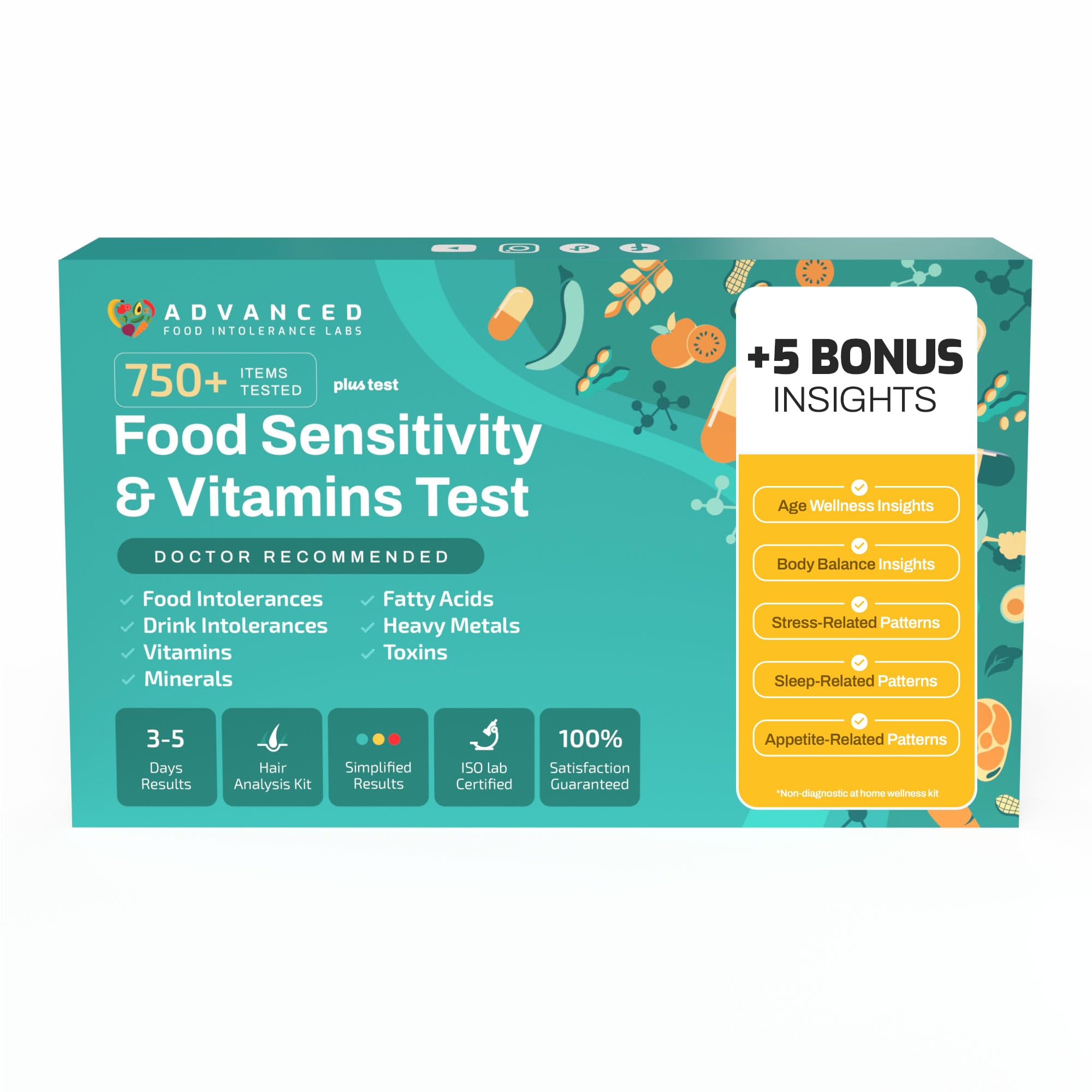
750-plus items from ten strands of hair, in a report that lands within 72 hours.
The three-step process here is about as simple as at-home testing gets: register your kit in the customer portal, snip ten strands of hair, and mail it in the prepaid return envelope. Colored, body, and facial hair are all accepted, which is a real convenience if a child’s fine hair is the sample source. Clocking in at 2.08 ounces and 6.38 x 4.92 x 1.14 inches, it’s compact enough to drop in a mailbox without a trip to the post office — a marked difference from the 3.84-ounce Verisana box.
The report covers 750-plus foods, drinks, nutrients, and household or environmental items, plus seven additional insights. It arrives in your portal, color-coded and clickable, so you can tap any item to read more about it. Timing is the standout spec: results are uploaded within 72 hours of your sample reaching the facility.
Here’s what you need to understand before buying. The manufacturer states plainly that this is for general wellness use only — it is not intended for diagnosis or for clinical sensitivities, intolerances, or medical purposes. That’s a meaningful limitation, not fine print, and it’s why this kit belongs in the “starting point” category rather than the “clinical answer” category. Buyers pick up on that split: some call the food-sensitivity portion useful for guiding an elimination diet, while the environmental portion can read as confusing when it flags animals you’ve lived with for years without issue. The company is family-run, independently recognized to ISO/IEC 27001 for data protection, and states your data is never sold.
Registration is the friction point — reviewers describe it as glitchy and long, requiring a unique account and email, though support is responsive when you run into trouble.
The reason to pick it: A 72-hour turnaround on a 750-plus item panel is the fastest turnaround-to-breadth ratio in this lineup.
Know before you buy: The maker is explicit that it’s for general wellness, not diagnosis — so treat the report as a nudge toward foods worth testing, not a medical finding.
Reach for it if: You want a quick, broad, needle-free snapshot and you’re treating it as a first step rather than a final answer.
Pass on it if: You need a clinically framed result or you want a smooth, one-take registration.
6. AFIL 350+ Foods, Gluten, Dairy, Proteins, Soy, At-Home Wellness Test Kit
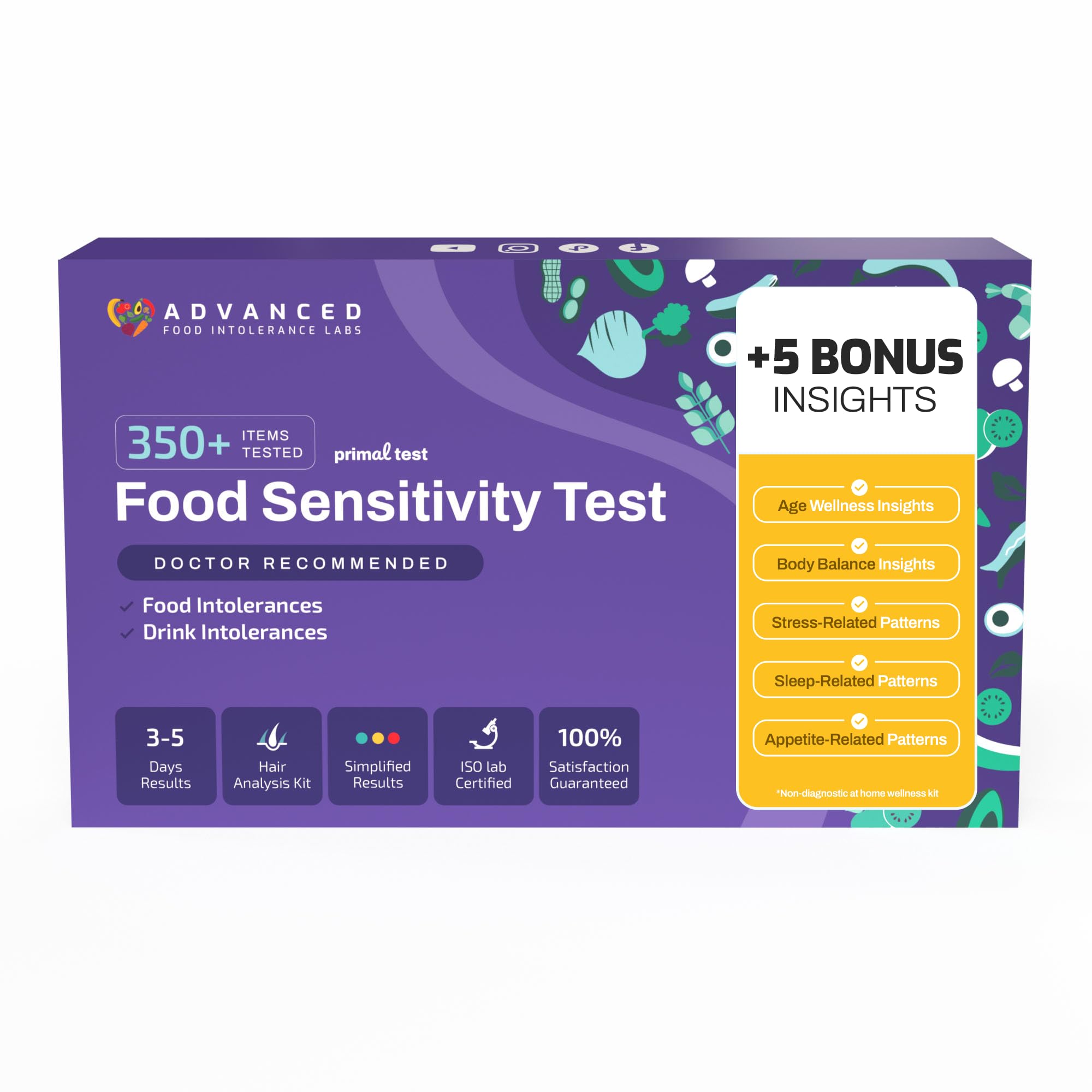
The pared-back AFIL kit for anyone who mainly wants gluten, dairy, soy, and protein flagged.
Same three-step process as its 750-plus sibling, same 72-hour report window, same ten-strand hair sample — but the panel is trimmed to 350-plus items focused on gluten-containing grains, proteins, seafood, soy, nuts, and seeds. If you already suspect your problem foods live in that cluster, this narrower panel is easier to read than a 750-item dump. At 2.08 ounces it ships just as easily, and the prepaid return envelope is included.
Buyers describe sending in about an inch of hair after filling out an online medical history form, then getting a text link with the results in under a week. One buyer’s doctor used the report to build a plan, and another cut the flagged foods and reported a major difference. A third was surprised to find foods they ate constantly sitting on the red and yellow lists.
There is a sharper criticism here than on most kits, and it’s worth stating plainly. The panel has been accused by some buyers of missing known allergies and producing results that clash with what an elimination diet showed — one described oat flour flagged while oats and oat milk came back fine, which is the kind of internal contradiction that erodes trust. Others found the app pushes products and programs ahead of the results themselves. Whether that matters depends on how much weight you put on hair-sample testing, which is not a clinically validated method.
One nice-to-have detail on the report: it breaks individual items down precisely, distinguishing oat flour from oats, and includes markers like melatonin, cortisol, and hormones alongside the food list.
What works well
- 350+ items focused on the foods most people suspect first: gluten grains, dairy-adjacent proteins, soy, nuts, and seeds.
- 72-hour report window and prepaid return shipping included.
- Granular entries — oat flour is listed separately from oats.
- A narrower panel means a shorter, more readable list than the 750+ version.
Worth knowing
- Hair-sample testing isn’t clinically validated, so results carry real uncertainty.
- Some owners mention flagged foods that disagree with their elimination-diet experience.
- Onboarding and app usage can lean toward product programs over the results themselves.
Best suited to: Someone who has a shortlist of suspects — gluten, dairy, soy — and wants a focused, fast read rather than a sprawling one.
Think again if: You want clinically framed accuracy or you’d rather deal with a streamlined app experience.
7. Food Sensitivity Test Kit for Adults & Kids – 990 Items – Hair Sample
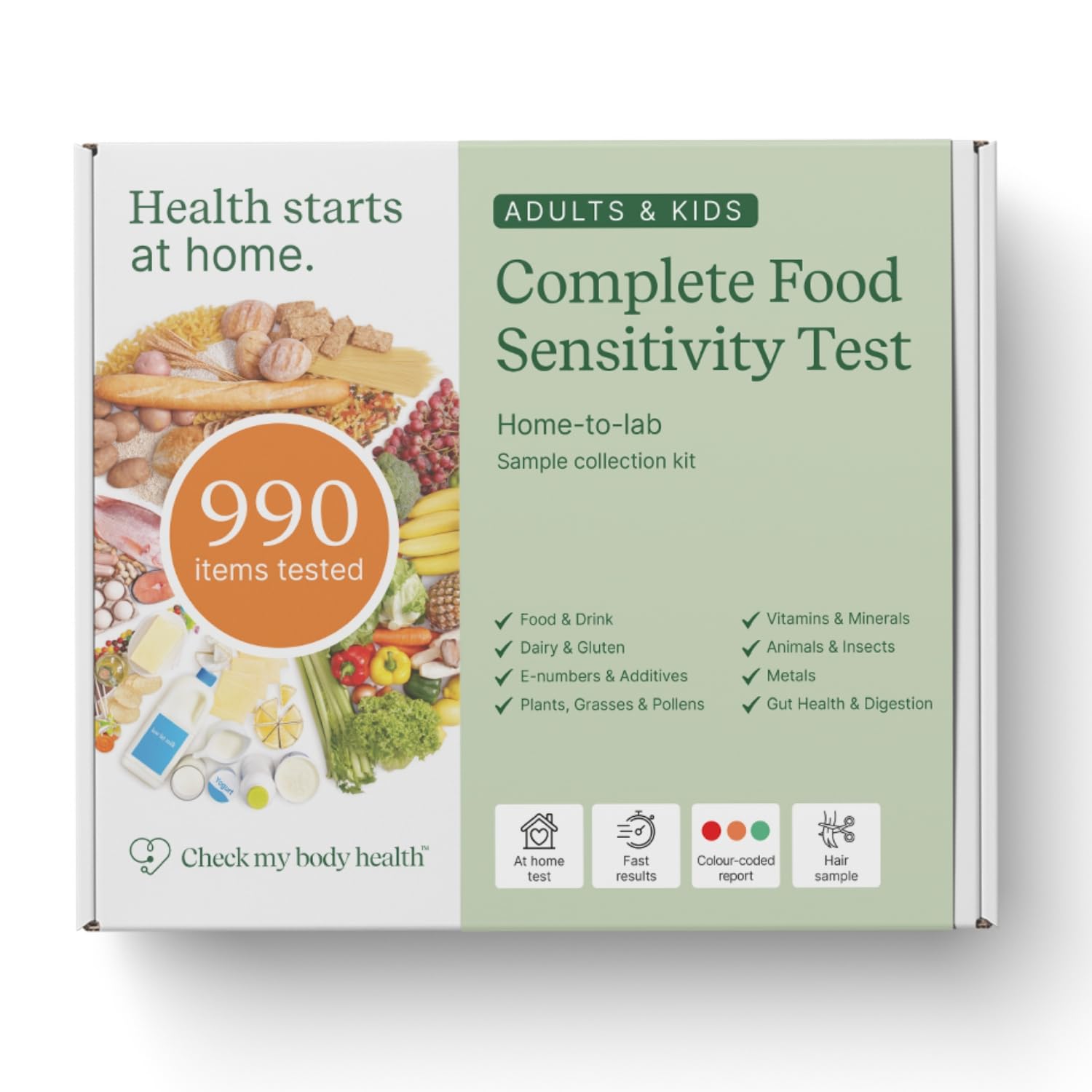
The biggest hair panel in this lineup — 990 items from a few strands and a freepost envelope.
Here’s the comparison that matters most in this category: this kit screens 990 items, while its 650-item stablemate screens 650 — a 52% wider net from the exact same hair-sample process. If you’re going to go the no-needle route, this is the version with the most coverage per sample. The panel spans food, drink, and environmental items including nuts, gluten, dairy, eggs, caffeine, chemicals, additives, and vitamins A through K. Results land in 3 to 5 days after your sample reaches the U.S. facility.
What makes this kit the most-reviewed hair option in the lineup is how often it delivers an answer. Buyers describe getting page after page of sensitivities, color-coded into good, moderate, and bad lists, back in their inbox. One buyer a year into a candida diet, still unwell, found a high sensitivity to almonds among a long list of flagged items. Another bought it after a doctor suggested expensive testing and a restrictive diet, and used the report to skip trial-and-error food elimination. Others report it picking up foods they ate regularly and never suspected.
It includes an Elimination Diet Guide for removing problem foods and 30 days of access to a meal-planning tool. The honest split in feedback is on accuracy: some buyers found it correct and useful, others were frustrated by how long the sample took to log into the system, and a handful reported never getting results at all or being asked to pay extra to process the test. Shipping isn’t included either — one buyer mentioned a tracked-return cost on top of the kit.
One structural quirk worth knowing: this is a sensitivity test, not an allergy test, so known food allergies may not appear on the report at all. Buyers who needed IgE-level allergy screening should look at the EqualDx option earlier in this list instead.
The winning number: 990 items tested — a 52% wider panel than its 650-item sibling, from the identical hair-sample workflow.
The recurring friction: Turnaround depends on the sample actually arriving and being logged, and a small number of buyers never got that far. Track your envelope.
Pick this one when: You want the largest possible hair-sample panel and a truly painless collection with no needles at all.
Reconsider if: You need a true allergy panel or you’re not comfortable with a hair-analysis method.
8. Food Sensitivity Test Kit for Adults & Kids – 650 Items – Hair Sample
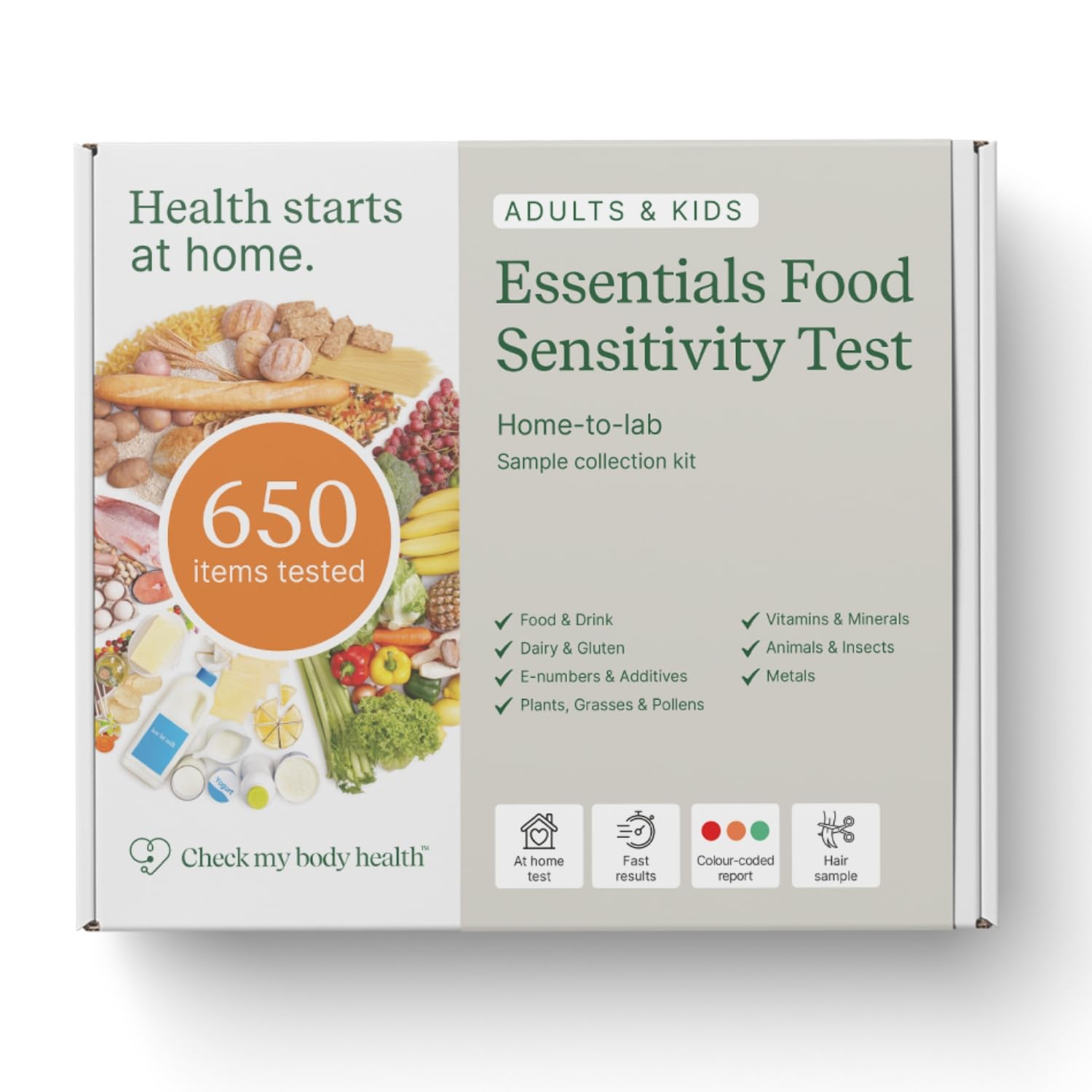
The no-needle starting point — 650 items, freepost hair sample, results by email.
If you mainly want to test the basics without committing to a wide panel, this is the most stripped-back entry in the group. It screens 650 food, drink, and environmental items including nuts, gluten, dairy, eggs, caffeine, chemicals, additives, and vitamins A through K. Collection is a few strands of hair, dropped in a freepost envelope — no blood, no GP appointment, no lab visit. You also get an Elimination Diet Guide for safely removing problem foods and 30 days of access to a meal-planning tool.
The single most careful caveat for this kit sits right at the top of the listing: it’s a food intolerance test, not a food allergy test. It’s also the smallest panel here, at 650 items versus the 990 its sibling covers — both from a hair sample, both to the same U.S. facility. If the bigger panel is available for a modest step up, that wider net is usually the better buy.
Feedback on this specific kit divides sharply. Some customers note a genuinely useful result — One buyer discovered a gluten sensitivity they would not have found otherwise; another learned of an egg sensitivity that changed their diet. Others ran into delivery problems: waiting weeks for the sample to be logged, or never being able to access the results at all. Reported turnaround runs longer than the stated 3 to 5 days, with one buyer noting a few weeks for the sample to arrive at the lab and results within 48 hours once it did.
Two practical notes: the report comes through as a lengthy PDF — one buyer described 48 pages — and it isn’t suitable if you’re seeking a clinical allergy diagnosis.
The appeal: A true no-needle, no-appointment entry point — 650 items screened from hair strands alone, with the freepost envelope included.
The reality check: This is an intolerance test and the narrowest panel here. Results can take longer than advertised, and a fraction of buyers struggled to get them at all.
Best for: Total beginners who want the simplest, lowest-commitment way to see whether a hair-sample test turns up anything useful.
skip it if: You can go straight to the 990-item version or you need a genuine allergy diagnosis.
Understanding the Specs
Sample Type: Hair vs Blood Serum
A hair sample test asks for strands you snip yourself — painless, no needles, and easy on kids. A blood serum test collects an actual drop of blood, which the lab can analyze the way a clinic would. Hair tests are ideal for a broad sensitivity sweep; serum tests are the better match when you want a result that lines up with how medical labs work.
IgE vs IgG: What You’re Actually Measuring
IgE is the antibody behind a true food allergy — the kind that triggers an immediate reaction. IgG is linked to sensitivity and digestive discomfort. Most at-home kits on this list are IgG sensitivity tests; only a few measure IgE. Knowing which one you need is the single biggest factor in whether a test gives you a useful answer.
Panel Size
The panel size is how many foods, drinks, additives, and environmental items get screened from one sample. A larger panel, like 990 or 1,250 items, casts a wider net and may surface a trigger you’d never suspect. A smaller panel, like 286 items, produces a shorter report that’s easier to read. Neither is automatically better — match the panel to how specific you want the answer to be.
Turnaround Time
This is the gap between mailing your sample and reading your report. Some kits promise results within 72 hours of the lab receiving your sample; others need a few weeks. Collection-to-lab transit is separate and can add time, so read the timeline carefully. If you’re chasing a specific symptom, the faster kits are noticeably easier to work with.
FAQ
What is the difference between a food sensitivity test and a food allergy test?
Do hair sample food sensitivity tests actually work?
Can I test a child under 18 with these kits?
How long do results take to arrive?
Is a bigger panel always better?
Do I need to avoid eating certain foods before the test?
Will a food sensitivity test show a known food allergy?
Do I need to pay extra beyond the kit itself?
How do I collect a hair sample for a food sensitivity test?
What does a CLIA-certified or physician-reviewed test mean for me?
Final Thoughts: The Verdict
For most people chasing unexplained bloating, fatigue, or skin trouble, the allergy test for food allergies that earns the top spot is the Verisana Food Sensitivity Complete Test — it’s the only kit here where a board-certified physician reviews your results and a CLIA-certified lab runs the analysis. It’s also the one you should rule out immediately if you need to test a child or live in NY, NJ, RI, or MD. If you want the broadest possible hair-sample panel without a needle, grab the 990-item hair kit. And if your real worry is a genuine allergy rather than a sensitivity, the EqualDx IgE serum test is the one to reach for — it’s the only kit on the list measuring the marker a clinic would.
How We Picked
We do not accept paid placement. Every pick is matched to a real buyer and a real use-case; we do not hands-on test units.
Sources & Methodology
Specifications: manufacturer listings and product documentation. Review insights: verified customer reviews, as of September 2026. Pricing: not shown on this page (it changes often); check the current price via the retailer link.
As an Amazon Associate, Gadgets Feed earns from qualifying purchases. This does not affect which products we feature.