
Our readers keep the lights on and my morning glass full of iced black tea. As an Amazon Associate, I earn from qualifying purchases.
Specs are compiled from manufacturer listings and verified buyer reviews and can change over time — please confirm the key details on the product page before buying.
You want olive oil that tastes peppery, green, and alive without paying boutique prices. This list covers nine genuine extra virgin olive oils (real EVOO, cold-pressed from olives with no refined or pomace oil blended in) that stay affordable. I’ve flagged which ones work best for cooking, which for dipping, and which to save for drizzling only.
I’m Min — the founder and writer behind Gadgets Feed. This guide is built by comparing the manufacturers’ published specifications and the patterns across verified customer reviews, so you get each pick’s real strengths and trade-offs instead of marketing spin.
The cheap end of the olive oil aisle is crowded with bottles that look the part but taste flat, so every pick here earns its place on flavour, freshness and how it holds up in a hot pan. What follows is a straightforward shortlist of the budget extra virgin olive oil that people actually reorder.
Our Picks at a Glance
How To Choose The Best Budget Extra Virgin Olive Oil
Cheap olive oil is only a bargain if it still tastes like olive oil. Three things separate a genuinely good budget bottle from a dull one: the grade, how it was pressed, and how it is packaged. All three are printed on the label if you know where to look.
Check the grade and the acidity first
“Extra virgin” is the top grade of olive oil — it means the oil was extracted from fresh olives by mechanical means only, with no heat or chemical refining. Acidity is the number to watch next: it measures the free fatty acid content as a percentage, with lower meaning fresher fruit. A bottle printed at 0.3% is a very low figure and signals the olives were processed quickly after harvest.
Cold pressing and polyphenols explained
Cold extraction, or cold pressing, means the olives were kept below a set temperature during pressing so the delicate aroma compounds survive. Polyphenols are the natural plant compounds behind that peppery catch at the back of your throat — a sign the oil is fresh and potent rather than old and flat.
Packaging, colour and single origin
Light and heat age olive oil fastest, so dark glass or a metal tin does real work here. Colour tells you little on its own, though a deep green usually points to early-harvest olives. Single-origin bottles name one region or one variety; blends combine oils from several places. Neither is automatically better — it depends on how they taste.
Quick Comparison
| Model | Best For | Size | Grade | Acidity | Amazon |
|---|---|---|---|---|---|
| Pompeian sturdy Extra Virgin Olive Oil★ Best Overall | Everyday cooking, salads and dipping | 32 fl oz | Extra virgin | — | Amazon |
| Terra Delyssa Organic Extra Virgin Olive OilOrganic Pick | Organic shoppers who want full traceability | 25.5 fl oz | Extra virgin, organic | — | Amazon |
| De Cecco Extra Virgin 100% Olive OilItalian Classic | Roasting, grilling and finishing | 25.4 fl oz | Extra virgin, cold extraction | Below 0.3% | Amazon |
| California Olive Ranch Reserve Collection | Dressings and delicate finishing | 1 count | Extra virgin, first cold press | — | Amazon |
| NaturaleBio Extra Virgin Olive Oil | Organic Spanish oil with bold aroma | 17 fl oz | Extra virgin, organic | — | Amazon |
| Memilon Greek Extra Virgin Olive Oil | Cooks who want big single-origin flavour | 33.8 fl oz | Extra virgin, cold extraction | 0.3% | Amazon |
| Filippo Berio Cold Pressed Extra Virgin Olive Oil | Family kitchens and high-volume cooking | 50.7 fl oz | Extra virgin, cold pressed | — | Amazon |
| Colavita 100% Greek Extra Virgin Olive Oil | Bulk buying for big households | 68 fl oz | Extra virgin, cold pressed | — | Amazon |
| Cobram Estate Classic California EVOO | All-round cooking with an easy pour spout | 33.8 fl oz | Extra virgin, first cold pressed | — | Amazon |
In‑Depth Reviews
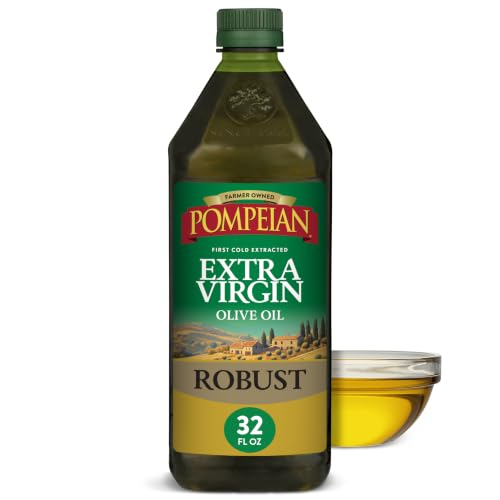
1. Pompeian sturdy Extra Virgin Olive Oil – 32 fl oz
Our pick — over 4.5★ from 32,000+ verified ratings; the strongest balance of quality and price.
The bottle that tastes expensive and behaves like a workhorse.
If you cook with olive oil daily, this is the one to buy — a 32 fl oz bottle of first cold pressed extra virgin oil made by the same family of olive growers since 1906. The flavour is full-bodied and sturdy, not thin or bitter, so it works on a salad, in a marinade, and straight from the bottle for bread dipping with salt and oregano. It is imported and first cold pressed, so the aroma reaches you as soon as you twist the cap off.
The 32 fl oz size is a real part of the appeal. At 32 fluid ounces it holds a third more oil than the 25.5 fl oz Terra Delyssa in this list, so you are reaching for it less often and replacing it less often. Customer feedback on this bottle is unusually consistent — people describe it as their sole cooking oil, good for salads and sautéing alike, and lighter-tasting than vegetable or corn oil. It comes on auto-ship for plenty of households, which tells you the flavour stays steady batch to batch.
One thing to know before you buy: the “sturdy” in the name is literal. It has a peppery, throat-catching finish that some people love and others find too strong for delicate dishes. If you want something neutral and mild, the California Olive Ranch Reserve further down is the quieter choice. But if you want a bold dip-and-drizzle oil that holds up in a hot pan, this is the pick.
Why people keep reordering
- Full-bodied sturdy flavour that is not bitter — works raw or cooked
- 32 fl oz is a third more oil than the 25.5 fl oz Terra Delyssa bottle
- First cold pressed, imported, and made by the same growers since 1906
- Consistently described as an everyday oil you can use for everything, including bread dipping
The honest trade-off
- The sturdy, peppery character is too assertive for delicate recipes
- Plastic bottle format, not the dark glass some purists prefer
- One buyer has flagged the price climbing over time
Reach for this if: you want one bottle that handles salads, marinades and sautéing without tasting thin.
Look elsewhere if: you prefer a mild, neutral oil or want glass packaging.
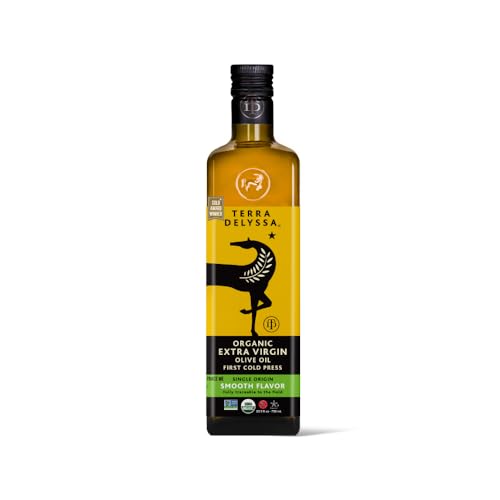
2. Terra Delyssa Organic Extra Virgin Olive Oil, 25.5 fl oz
Single-origin Tunisian oil with a paper trail long enough to trace every bottle.
This is the bottle for anyone who wants to know exactly where their olive oil came from. The olives are grown in Terra Delyssa’s own orchards in Tunisia and hand harvested by their farmers, then pressed cold within hours of picking to lock in the aroma. Each bottle carries full traceability through IBM blockchain technology — a digital record of where that specific oil came from — which is rare at any price and vanishingly rare in the budget tier.
The flavour is earthy and fruity with a genuinely bold character, so it is not the shy type in a delicate dressing. Verification is where this one pulls ahead of most of the field: USDA organic, non-GMO project verified, kosher for passover, gluten-free, allergen-free, and made in a nut-free facility, with the North American Olive Oil Association quality seal on top. It is also a dark glass bottle, which does real work keeping the oil out of damaging light.
The boldness is also a fit question rather than a fault — reviewers who reach for mild, neutral oil for baking will want something gentler.
The paper trail advantage: full traceability from orchard to bottle, plus a stack of certifications that would look at home on a premium jar.
Who it fits: organic-first shoppers and anyone who wants a go-to oil that tastes earthy and fruity rather than neutral.
Buy this one when: certifications and traceability matter as much as flavour to you.
Give it a miss when: you bake or dress cold dishes where a bold, earthy oil would overpower everything else.
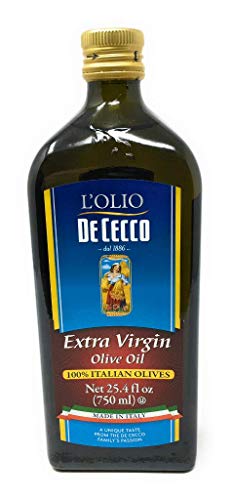
3. De Cecco Extra Virgin 100% Olive Oil, Made in Italy, Cold Extraction
A low-acidity Italian oil from a name Italian kitchens have trusted for generations.
De Cecco’s whole pitch here is provenance and gentleness. Every drop is pressed from olives grown in Italy by cold extraction — processed at a temperature below 80°F (27°C), a “gentle” method that keeps the volatile aromas and the natural polyphenols, antioxidants and vitamins intact. The acidity is printed below 0.3%, a low figure that points to fruit pressed soon after picking, and the result is a sweet, almond-like, light fruity oil rather than a punchy one.
The packaging backs that up. Dark glass is used specifically to preserve the oil’s qualities, and the bottle holds 25.4 fl oz. It is also rich in polyunsaturated fatty acids and carries Kosher BRC and IFS certifications. Cooks who have used it alongside a party spread report ordering four bottles at once and serving it with Italian bread and grated parmesan. The general read from buyers is a smooth, well-balanced oil that suits roasting, dressings and finishing alike.
What you should know: the most-repeated real complaint on this bottle is freshness and dating — some buyers have found bottles closer to the end of their window than expected, so check the date when yours arrives. It is also the tallest bottle here by a distance, measuring roughly 10 inches in packaging versus the California Olive Ranch at just over 8 inches, so it wants a shelf with headroom.
Where it shines: the low acidity and cold extraction add up to a clean, sweet, versatile oil that flatters rather than fights your cooking.
Watch for: dated stock — a handful of buyers found bottles older than they liked, and the tall glass bottle needs vertical shelf space.
The match for you if: you want an Italian single-country oil for roasting and finishing, and you like to see a temperature figure and acidity printed on the label.
Not the one for you if: you want a big, peppery oil or you are short on shelf height.
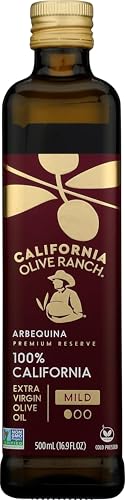
4. California Olive Ranch, California Reserve Collection (Arbequina, Pack of 1)
A buttery, subtle Californian oil built for salads and bread, not the frying pan.
Arbequina is a small, delicate olive variety, and this Reserve Collection bottle shows exactly why people seek it out. The flavour is buttery with a hint of pepper, mild enough to drizzle over a tomato plate and never overpower it, but with enough peppery catch at the back of the throat to tell you the polyphenols are there. Buyers describe it coating salad leaves better than cheaper oils, which is precisely what you want from a dressing oil.
Size and origin both count here. At roughly 1.06 pounds of oil in a narrow bottle just over 8 inches tall, it is a compact, easy-to-store format — noticeably slimmer than the tall De Cecco. The olives are Californian, it is certified extra virgin, first cold press, and Non-GMO Project Verified, and the appeal is local: buyers call this the best local US olive oil they have found. The flavours are complex and subtle in a way budget oils rarely manage — it is the bottle here most likely to make a plain green salad taste expensive.
Two honest caveats. Freshness is the recurring frustration: harvest dating has been hard for some buyers to decode, and at least one ended up with a bottle of nearly two years old. Value is the other genuinely mixed point — reviewers are split between those who think it is worth the premium for finishing and those who find it too costly to use broadly. Frying is where most agree it loses out, because the delicate flavour would burn away.
The salad-league edge: subtle, complex buttery flavour that clings to leaves and lifts a simple dish without shouting over it.
Honest limit: harvest-date opacity means freshness is a genuine gamble, and it is priced out of heavy everyday cooking.
Your bottle if: you want a finishing oil for dressings and bread, and you are happy to treat it as a garnish rather than a workhorse.
Skip when: you need a volume oil for frying or grill-work.
5. NaturaleBio Extra Virgin Olive Oil 17 fl oz — Spain, D.O.P. Certified
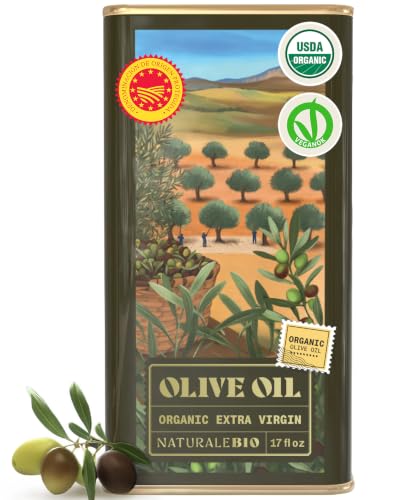
Small Spanish bottle, big aroma — cold pressed from century-old trees.
NaturaleBio presses its oil from Cornicabra and Picual olives grown on centenary trees in Spain, harvested organically and D.O.P. certified. D.O.P. (Protected Designation of Origin) is a European guarantee that the oil was genuinely produced in the named region to that region’s rules — essentially a passport for the bottle. The result is a strong aroma and a rich, complex flavour that buyers describe as upgrading bread, salad, eggs, soups and fish alike. Used as a finishing drizzle on fresh bread, it does the job that a premium bottle would otherwise be reached for.
Verification is thorough for the tier: certified organic, grown without harmful chemicals, pesticides or synthetic fertilizers, non-GMO, and suitable for vegan, vegetarian and gluten-free diets. Buyers also use it for massage and as a natural underarm option, and describe it as non-sticky. It is a 17 fl oz bottle, smaller than most of the field, so it suits the kitchen that uses oil deliberately rather than constantly.
The catch: 17 fl oz empties quickly in a busy household, and reviewers are openly split on whether the price is fair — the flavour earns their loyalty, but the cost-to-volume ratio is the honest snag. It is also a smaller bottle to store, weighing in around 15.7 ounces, so it takes up little counter space.
Where it wins: D.O.P. certification, organic growing, and a rich, complex aroma that upgrades everyday bread and salad.
Where it stumbles: the smaller 17 fl oz bottle and the cost-per-ounce will not suit heavy-cooking households.
Right for you if: you want a certified Spanish oil with bold aroma, and you are willing to buy a smaller quantity for the quality.
Wrong for you if: you go through olive oil by the litre in a busy kitchen.
6. Memilon Greek Extra Virgin Olive Oil 33.8 fl oz — Crete, Single Origin Koroneiki
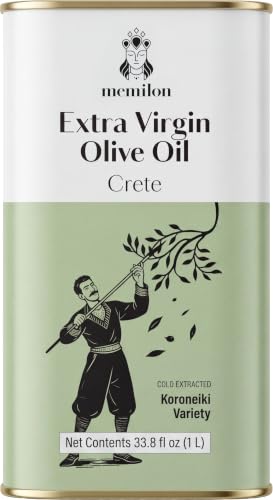
The tin carrying a printed acidity figure, published lab results, and a gold medal.
Very few budget bottles put their numbers on the label, and that transparency is what makes this Greek oil stand out. The acidity is printed at 0.3%, the polyphenols are stated at 610 mg/kg, and the makers publish laboratory results for every batch on their listing — a level of disclosure you almost never see at this price. It is 100% Koroneiki olives from Phaistos in Crete, never blended with oil from other regions, harvested each November by traditional hand-shaking and cold extracted below 27°C.
The tasting notes match the numbers: a deep green colour, a rich velvety body, a light peppery finish and a gentle bitterness that comes with the high polyphenol and vitamin E content. Both the peppery back-of-throat catch and the slight bitterness are, as reviewers point out, quality indicators rather than faults. The 33.8 fl oz tin is nitrogen-sealed stainless-steel storage territory and packed in a protective box to survive shipping — and the format has a genuine functional edge over glass, since a metal tin blocks both light and heat. A gold award from Dubai and London competitions in its launch year backs it up.
The honest snag: the peppery, bitter, intense character is deliberate, and it is not a shy, neutral oil. If you want mild, this is not your bottle. And while it works for cooking, frying and raw use, buyers report the freshly-opened tin has an intense aroma that fades with time, so use it more than you store it.
Why it earns the premium slot
- A printed 0.3% acidity and 610 mg/kg polyphenols — rare transparency at this tier
- Single-origin 100% Koroneiki from Phaistos, never blended with other regions
- Metal tin protects the oil from both light and temperature
- Cold extracted below 27°C on a traditional, hand-harvested, family-run schedule
What to expect
- The peppery, bitter, intense character is not for fans of mild oil
- The tin’s intense aroma is strongest right after opening and fades over time
- Smaller producer batch sizes mean availability can be less predictable than the mass-market brands
Pick it up when: you want to know the exact acidity and polyphenol levels of the bottle you are buying, and you want a bold, intense oil.
Pass it up when: you want a neutral everyday oil for baking and delicately flavoured dishes.
7. Filippo Berio Cold Pressed Extra Virgin Olive Oil, 50.7 Ounce rPET Bottle
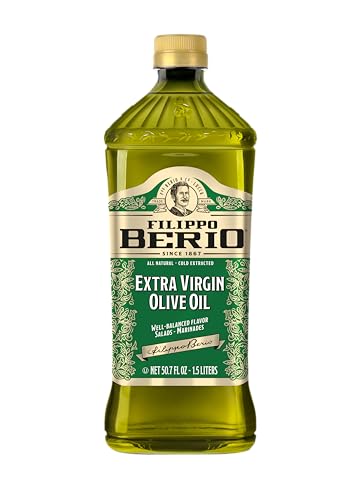
Fifty ounces of well-balanced Italian-brand oil for kitchens that cook hard.
Filippo Berio has been making olive oil under the same name since the man himself dedicated his life to the craft, and each bottle still carries his signature as a promise of the standard. This extra virgin oil is cold pressed from the finest olives and given a well-balanced, rich taste — fresh and fragrant, with subtle olive notes rather than an aggressive punch. It suits salad dressings, sauces and gravies, pasta, fruit, sandwiches, and marinating, roasting or sautéing meat, fish and vegetables.
The volume is the real argument: at 50.7 fl oz it is the biggest bottle here short of the Colavita jug. If you cook for a family or batch-cook weekly, this is the one that stops running out mid-recipe. It carries the International Olive Council quality and authenticity standard, is free from gluten, GMOs, sugar and sodium, is kosher certified, and it qualifies for the North American Olive Oil Association Quality Seal. Buyers mention the fridge test — chill a little and see whether it hardens — as a way to check it is genuinely extra virgin.
The honest caveat: reviewers are split on whether the flavour is more notable or more middle-of-the-road than some competitors, and this is a blend of oils from several countries rather than a single-origin bottle. If you want a flavour that shouts the specific place it came from, one of the single-origin picks above is a better fit.
What you are buying: a long-established Italian name, a 50.7 fl oz family-sized bottle, and standards from the International Olive Council and the North American Olive Oil Association.
The trade-off: it is a multi-country blend, and the flavour is more balanced-and-pleasant than bold-and-distinctive.
Suits you if: you cook family-scale, want one reliable bottle that does salads through to sautéing, and appreciate the IOC and NAOOA standards.
Does not suit you if: single-origin flavours are a priority.
8. Colavita 100% Greek Extra Virgin Olive Oil, 68 fl oz Plastic Jug
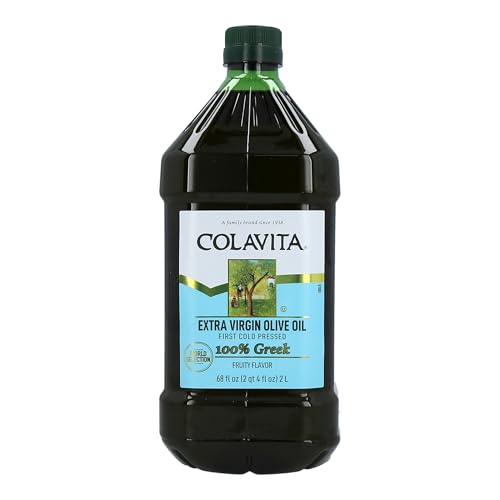
The two-litre jug for households that would empty a normal bottle in a fortnight.
This 68 fl oz bottle — a full two litres — is pressed from a blend of premium Koroneiki and Kalamata olives, both Greek varieties known for their character. The flavour is a balanced, smooth, mild fruity profile with a slightly peppery finish and a noticeable burn at the end. It works for drizzling vegetables, marinating, finishing fish, pasta, grains and cheeses, or the plain old job of dressing a salad.
Verification matters on a jug this size, because you are committing to a lot of oil. It is cold pressed, first extraction, to preserve natural antioxidants, aroma and flavour, and it carries the North American Olive Oil Association seal — which means it has been tested on the IOC’s quality and authenticity standards. Family use is what buyers describe, and the mild-but-fruity flavour keeps it flexible: it will not date-flavour everything it touches, and it will still finish a salad with a clean pepper note.
The one genuine caveat: it is a plastic jug, so once opened the oil is more exposed to oxygen and light than oil in a dark glass bottle. If you take a while to get through two litres, decant a small working bottle and keep the jug somewhere dark and cool. Buyers who cook daily will get through it before that becomes a concern; buyers who drizzle sparingly probably will not.
The bulk advantage: two full litres of certified, cold-pressed Greek oil in a single bottle, tested to the NAOOA quality standard.
Worth knowing: the plastic jug format offers less protection once opened than dark glass, so keep it cool and dark, or decant.
Meant for: big households, batch cooks and anyone who wants Greek oil that stays affordable by the litre.
Better avoided by: occasional users who will leave a two-litre jug lingering for months.
9. Cobram Estate Classic 100% California Extra Virgin Olive Oil, 1L

A Californian all-rounder with a built-in spout that ends the oil-dribble problem for good.
The single feature owners keep coming back to is the pop-up pourer spout tucked under the cap. It gives a clean, controlled pour every time, so you can finish a plate with precision rather than a glug — no sprayer or mister bottle needed. That is the kind of detail you live with daily, and it makes this the easiest bottle here to use straight out of the pantry.
The flavour is bold, not neutral. This 100% California oil from the Sacramento Valley is dominated by tomato-leaf and unripe-tropical-fruit notes, with moderate bitterness and pungency on the palate and a bold, spicy character. It holds up at high heat, so it works for salads and for searing fish or vegetables. Awards back up the reputation, including golds at the Los Angeles and London international competitions in 2019, a silver in New York in 2020, and a Best in Class in Los Angeles. The bottle is also a usefully substantial 3.84 pounds for a 1L format.
One caveat: it is a plastic bottle rather than a dark glass or metal tin, so if maximum light protection is your priority, look at the Memilon tin or the De Cecco dark glass instead. And the bold, spicy bitterness lands firmly in “tastes like something” territory — the mild fans among you should look at the Filippo Berio or California Olive Ranch instead.
What owners love
- Pop-up pourer spout under the cap gives clean, controlled pours without a sprayer
- 100% California olives from the Sacramento Valley, with tomato-leaf and tropical-fruit notes
- Holds its qualities at high heat, so it goes from salad to sautéing
- Italian-style competition awards in 2019 and 2020 back the flavour claims
Points to weigh
- Plastic bottle, not dark glass or a metal tin — less light protection than some rivals
- Bold, spicy bitterness is not for palates that prefer a mild oil
Best pick if: you cook across the whole pan-to-salad spectrum and want a bottle that pours neatly straight from the pantry.
Look at others if: you want a metal tin or dark glass for maximum freshness protection, or a mild-flavoured oil.
Understanding the Specs
Acidity — a freshness signal, not a taste rating
Acidity measures the free fatty acid content as a percentage, and the lower the number the fresher the olives were when pressed. De Cecco prints below 0.3% and Memilon prints exactly 0.3%, both figures note when you are scanning labels. A lower acidity is a genuine freshness indicator — but it does not automatically mean the oil tastes peppier or better; that is determined by the olive variety, harvest timing, and the polyphenol content.
Polyphenols & cold extraction
Polyphenols are the natural plant compounds behind the peppery, slightly bitter catch at the back of your throat. Memilon states 610 mg/kg on the label; for other oils that figure may not be printed at all. Cold extraction means the olives are pressed below a set temperature (typically 80°F or 27°C) so those compounds and the volatile aromas survive — a hot process would strip them away. That gentle pressing is why a bottle like De Cecco’s tastes clean and its “olive character” is preserved.
FAQ
How can I tell if a cheap olive oil is genuinely extra virgin?
Does cold pressed olive oil last longer than regular olive oil?
What does acidity in olive oil actually measure?
Can I use budget extra virgin olive oil for frying?
Why does the bottle format matter for olive oil quality?
What is the difference between single-origin and blended olive oil?
Is organic olive oil worth the extra cost?
How should I store a large jug of olive oil once opened?
Final Thoughts: The Verdict
For most kitchens, the budget extra virgin olive oil that best balances bold flavour, a versatile size and an everyday-friendly approach is the Pompeian sturdy Extra Virgin Olive Oil. It is genuinely sturdy rather than thin, holds 32 fl oz, and works from salads through to sautéing without forcing you to keep a separate bottle for each job. If you want certified organic standards and full traceability, the Terra Delyssa Organic Extra Virgin Olive Oil is the pick — USDA organic, non-GMO verified, kosher, and blockchain-traceable back to the orchard. And if your priority is a big family-sized bottle that also carries the NAOOA quality seal, the Memilon Greek Extra Virgin Olive Oil with its printed 0.3% acidity and 610 mg/kg polyphenols gives you numbers on the label you can actually check. One taste-anchored nudge: if you cook daily, paying slightly more for the 32 fl oz Pompeian over a small 17 fl oz bottle means far fewer reorders — and its peppery, full-bodied character is the flavour you will actually remember reaching for again.
How We Picked
We do not accept paid placement. Every pick is matched to a real buyer and a real use-case; we do not hands-on test units.
Sources & Methodology
Specifications: manufacturer listings and product documentation. Review insights: verified customer reviews, as of September 2026. Pricing: not shown on this page (it changes often); check the current price via the retailer link.
As an Amazon Associate, Gadgets Feed earns from qualifying purchases. This does not affect which products we feature.