
A sluggish load screen or a laggy file transfer is the single biggest bottleneck in an otherwise fast PC. Upgrading to a modern M.2 NVMe drive directly addresses that pain, offering sequential read speeds that can exceed 7,000 MB/s and slashing boot times to under ten seconds. The choice between PCIe Gen 4 and the emerging Gen 5 standard, along with DRAM versus HMB architectures, defines the real-world performance you will feel.
I’m Min — the co-founder and writer behind Gadgets Feed. I have spent hundreds of hours researching controller architectures, NAND flash types, and real-world benchmark data from the M.2 SSD market to cut through the marketing noise and tell you which drives actually deliver on their rated speeds under sustained workloads.
Whether you are building a high-end gaming rig, a content creation workstation, or simply reviving an older laptop, this guide breaks down the top contenders on the market right now to help you find best m.2 ssd for your specific needs and budget.
How To Choose The Best M.2 SSD
Choosing the right M.2 NVMe drive involves more than just picking the highest advertised read speed. You need to consider the PCIe generation your motherboard supports, the importance of a DRAM cache, and the total terabytes written (TBW) endurance rating that guarantees longevity.
PCIe Gen 4 vs. Gen 5: Future-Proofing or Overkill?
PCIe Gen 4 drives currently dominate the market, offering up to 7,500 MB/s sequential reads — more than enough for DirectStorage gaming and 4K video editing. PCIe Gen 5 drives, like the WD_BLACK SN8100, can double that to over 14,000 MB/s, but they demand a compatible Gen 5 motherboard and produce significantly more heat, often requiring a dedicated heatsink or active cooling solution. Unless you are a professional editor working with uncompressed 8K RAW files daily, a high-end Gen 4 drive provides the best real-world experience without the thermal headaches.
DRAM Cache vs. HMB: The Sustained Write Performance Decider
DRAM cache acts as a high-speed staging area for mapping data, ensuring consistent write speeds even when the drive is under heavy load. Drives with a dedicated DRAM chip are ideal for OS drives and professional workloads that involve writing large files. Host Memory Buffer (HMB) technology leverages a portion of your system RAM instead, offering excellent burst performance at a lower cost. For a pure gaming drive or secondary storage, a well-implemented HMB drive like the Samsung 990 EVO Plus performs admirably without the premium price tag of a full DRAM solution.
Endurance and TBW: How Long Will It Last?
Endurance is measured in Terabytes Written (TBW). A 1TB drive with a 600 TBW rating means it can rewrite its entire capacity 600 times before the cells degrade — a lifespan of many years for a typical user. High-end models from Samsung and WD often lead the pack in endurance ratings, providing additional peace of mind for heavy workloads where the drive is written to daily. Always check the TBW rating, especially for a drive that will serve as your primary OS and application drive.
Quick Comparison
On smaller screens, swipe sideways to see the full table.
| Model | Category | Best For | Key Spec | Amazon |
|---|---|---|---|---|
| Acer Predator GM7 1TB | PCIe Gen 4 | Gaming & Enthusiasts | 7400 MB/s Read / 6500 MB/s Write | Amazon |
| Samsung 990 EVO Plus 1TB | PCIe Gen 4 | General & Laptop Upgrades | 7150 MB/s Read / 6300 MB/s Write | Amazon |
| WD_BLACK SN8100 1TB | PCIe Gen 5 | Early Adopters & Professionals | 14900 MB/s Read / 11000 MB/s Write | Amazon |
| WD_BLACK SN850X 2TB | PCIe Gen 4 | Premium Gaming Storage | 7300 MB/s Read / 6300 MB/s Write | Amazon |
| BIWIN Black Opal NV7400 2TB | PCIe Gen 4 | High-Capacity Value | 7450 MB/s Read / 6500 MB/s Write | Amazon |
| Patriot Memory P400 Lite 1TB | PCIe Gen 4 | Budget-Conscious Upgrades | 3500 MB/s Read / 2700 MB/s Write | Amazon |
| Kingston NV3 1TB | PCIe Gen 4 | Everyday Computing | 6000 MB/s Read / 4000 MB/s Write | Amazon |
In‑Depth Reviews
1. Acer Predator GM7 1TB
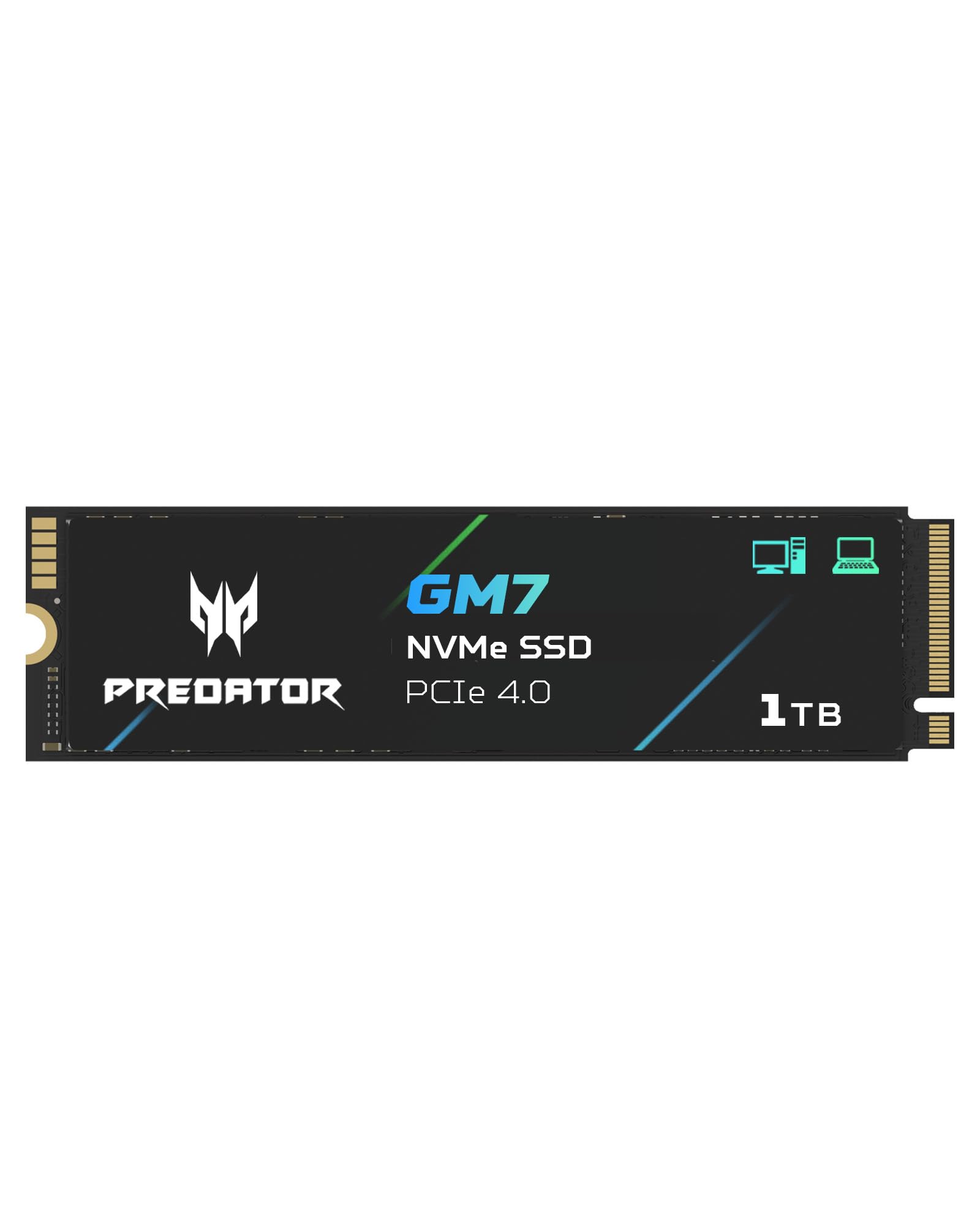
The Acer Predator GM7 edges out the competition by delivering near-maximum PCIe Gen 4 bandwidth — 7,400 MB/s sequential reads and 6,500 MB/s writes — without the premium price tag of some rivals. It leverages HMB and SLC caching to keep game load times and data transfers snappy, making it a fantastic choice for both PC and PS5 expansion. The included Biwin Intelligence software adds practical tools for drive health monitoring and firmware updates, rounding out a very complete package.
Thermal management is handled through a graphene heatsink and built-in thermal throttling, keeping the controller cool enough to avoid performance dips during extended gaming sessions. The drive supports NVMe 2.0, which brings improved power management features that are particularly beneficial for laptop users seeking better battery life without sacrificing raw speed.
Customer feedback consistently highlights dramatically reduced boot times — one user reported ARK loading times dropping significantly — and a perception of value that rivals more expensive options from Samsung. For the middle ground of the market, the Predator GM7 strikes nearly the perfect balance between cost and flagship-level performance.
Why it’s great
- Fastest Gen 4 speeds available at this price point
- Comes with useful management software
- Runs cool with well-tuned thermal throttling
Good to know
- Lacks a dedicated DRAM cache
- Speeds can be inconsistent under sustained heavy writes
2. Samsung 990 EVO Plus 1TB

The Samsung 990 EVO Plus is a deftly executed DRAM-less design that leverages Intelligent TurboWrite 2.0 and HMB technology to rival the burst performance of many DRAM-equipped drives. Its sequential speeds of 7,150 MB/s read and 6,300 MB/s write position it firmly in the upper echelon of Gen 4 SSDs. Samsung’s nickel-coated controller is a standout feature, improving thermal efficiency so the drive maintains its speed without aggressive throttling, even during prolonged file transfers.
Backward compatibility with PCIe 3.0 slots is a major advantage for users upgrading older systems — the drive still delivers roughly 3,500 MB/s in a Gen 3 slot, which is a massive leap over any SATA SSD. The Samsung Magician software suite provides excellent drive health monitoring, firmware updates, and a performance benchmark tool that is the gold standard in the industry. This makes it a top pick for users who value long-term reliability and ease of maintenance.
Users upgrading from OEM 256GB SSDs report a transformative experience in boot times and application loading, calling it a “must-have” for gamers. While some power users note the absence of a physical DRAM chip, the implementation of HMB here is so refined that most users will never notice a difference in standard workloads.
Why it’s great
- Outstanding burst performance with Intelligent TurboWrite 2.0
- Excellent thermal control via nickel-coated controller
- Superb backward compatibility with PCIe 3.0 systems
Good to know
- No dedicated DRAM cache
- Premium branding commands a higher price per GB
3. WD_BLACK SN8100 1TB
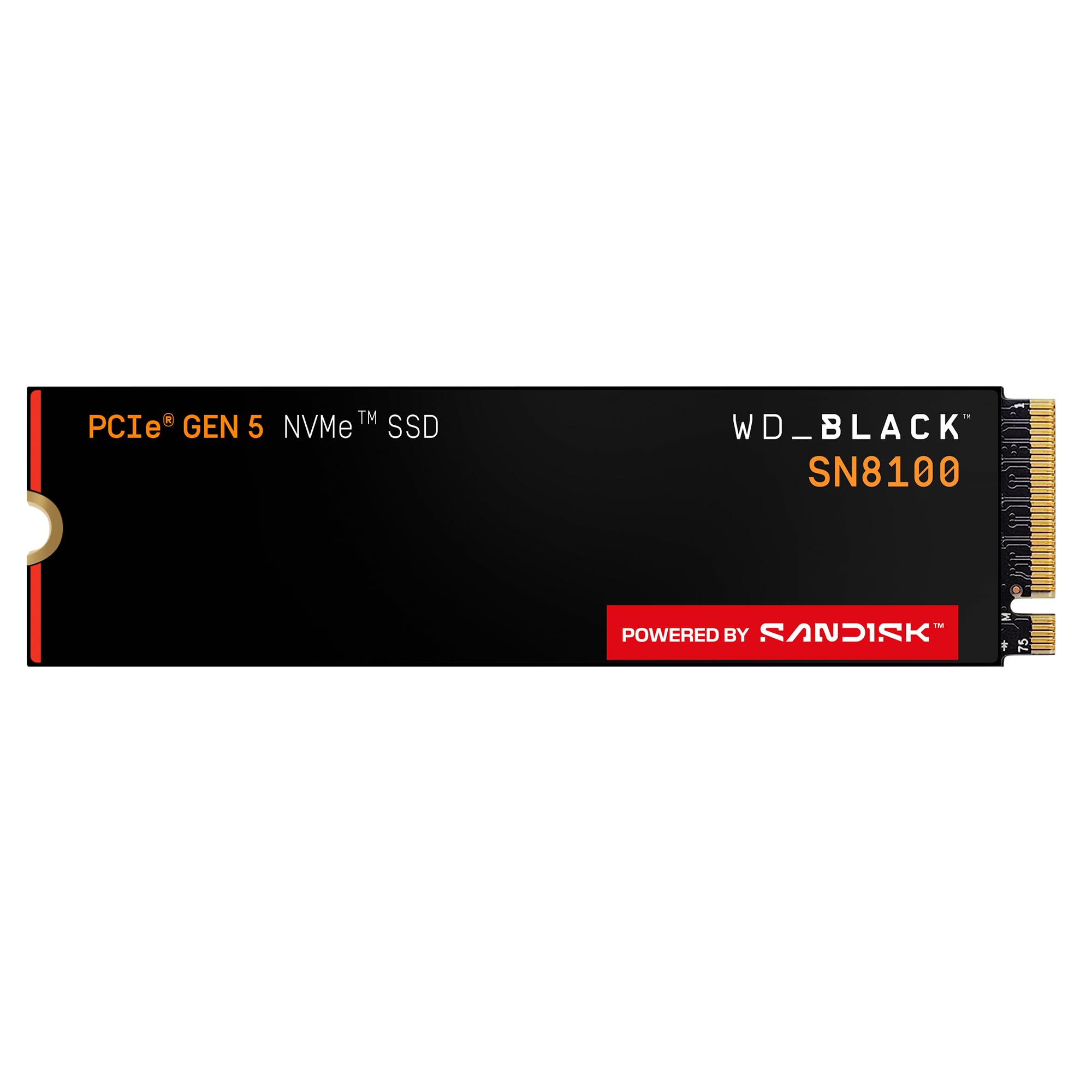
The WD_BLACK SN8100 represents the bleeding edge of consumer storage, harnessing the full power of PCIe Gen 5 to deliver sequential read speeds of up to 14,900 MB/s — more than double any Gen 4 drive. This is a drive built for a very specific user: the video editor working with uncompressed 8K streams or the developer training AI models locally. Its 2TB and 4TB models push write speeds up to 14,000 MB/s, making large file transfers almost instantaneous.
Power efficiency is a surprising highlight here; WD claims over 100% improvement over their Gen 4 drives, with an average operating power under 7.5W. This is critical for a Gen 5 drive, which would otherwise generate debilitating heat. The built-in SANDISK Dashboard software allows for health monitoring and firmware updates, and the included Acronis True Image for Sandisk simplifies migration from your old drive. The drive requires a Gen 5 motherboard to unlock its full potential, so compatibility must be verified before purchase.
Early adopter reviews confirm the staggering transfer speeds, with CrystalDiskMark figures exceeding 14,000 MB/s on a compatible platform. Users note that while it is expensive, the elimination of microstutters in demanding games and the sheer acceleration of workflow tasks justify the investment for professionals and serious enthusiasts.
Why it’s great
- Industry-leading read speeds at 14,900 MB/s
- Excellent power efficiency for a Gen 5 drive
- Includes robust cloning and health management software
Good to know
- Requires a PCIe 5.0 motherboard for full speeds
- Generates significant heat; needs active cooling in many cases
4. WD_BLACK SN850X 2TB
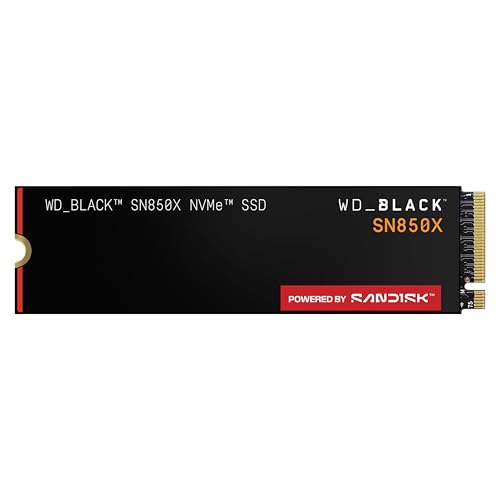
The WD_BLACK SN850X is the reigning champion of PCIe Gen 4 gaming SSDs, equipped with a dedicated DRAM cache and Game Mode 2.0 through the WD_BLACK Dashboard. Its peak speeds of 7,300 MB/s read and 6,300 MB/s write are backed by a robust algorithm that employs predictive loading and overhead balancing to reduce lag in DirectStorage games. The drive is available with an optional heatsink version that looks aggressive but performs serious thermal management for sustained workloads.
Real-world performance is exceptional: benchmarkers have recorded sustained reads around 6,500 MB/s under heavy load, with minimal thermal throttling when paired with proper airflow. The WD_BLACK Dashboard offers exclusive features like Game Mode that automatically optimizes the drive for gaming, and adaptive thermal management keeps the controller in check. The SN850X is a no-compromise solution for high-end desktop PCs where every millisecond counts.
Customer reviews consistently highlight the “blazing fast” performance and rock-solid reliability of Western Digital’s NAND. One very heavy user noted it sustained ~6,500 MB/s read under prolonged testing — impressive for a Gen 4 drive. The main drawback is the price, which has increased over time, but for the top-tier gaming experience backed by DRAM, it remains the go-to recommendation for premium builds.
Why it’s great
- Dedicated DRAM cache for sustained write performance
- Game Mode 2.0 reduces lag and optimizes gaming
- Excellent sustained performance with robust thermal management
Good to know
- Premium pricing, especially in 2TB and 4TB capacities
- Runs warm without the optional heatsink
5. BIWIN Black Opal NV7400 2TB

The BIWIN Black Opal NV7400 is a dark horse that delivers Gen 4 flagship speeds — 7,450 MB/s read and 6,500 MB/s write — at a capacity and price point that undercuts many established brands. The 2TB variant offers immense storage for game libraries and content projects while maintaining a 1,000K IOPS random performance that ensures snappy system responsiveness. It uses HMB technology with a Smart Cache to optimize data retrieval for standard workloads.
A 0.5mm graphene aluminum heatsink is included in the box, a thoughtful touch that most competitors reserve for a separate SKU. This integrated thermal solution keeps the drive cool enough to prevent throttling, as reported by users seeing consistent 42°C operating temperatures during OS drive use. The Biwin Intelligence software adds performance testing, data migration, and firmware update capabilities, providing a full management suite similar to the big players.
Users on PS5 and PC alike report zero issues and call the drive “super fast.” The main feedback is that while it offers exceptional value for the capacity, it is still a significant investment. For shoppers prioritizing raw capacity per dollar without compromising on speed, the NV7400 is an incredibly strong contender.
Why it’s great
- Exceptional 2TB capacity with flagship-level speeds
- Includes a graphene aluminum heatsink in the box
- Great value for high-capacity storage upgrades
Good to know
- DRAM-less design uses HMB
- Brand recognition is lower than Samsung or WD
6. Patriot Memory P400 Lite 1TB

The Patriot P400 Lite serves as a cost-effective entry point into the PCIe Gen 4 ecosystem, with sequential reads up to 3,500 MB/s and writes up to 2,700 MB/s. This places it firmly in the territory of high-end Gen 3 drives, but with the benefit of a Gen 4 controller that can keep latency low. The graphene heatshield is a slim, effective solution that keeps the drive cool without adding bulk, making it suitable for tight laptop environments.
End-to-end data path protection ensures data integrity, which is a crucial feature for any drive serving as your main OS volume. While its sequential speeds are modest compared to the premium options on this list, its random IOPS performance is adequate for snappy boot times and everyday application loading. This is a drive optimized for value, not maximum throughput.
User reviews are surprisingly positive, with some noting it “almost doubles the rated speeds” in certain benchmarks and even comparing it favorably to a Samsung 980 Pro in read operations. The price point makes it an excellent choice for building a budget gaming PC or upgrading an older laptop where every dollar counts and maximum Gen 4 speed is not a priority.
Why it’s great
- Excellent price for PCIe Gen 4 NVMe storage
- Includes a slim graphene heatshield
- End-to-end data path protection ensures reliability
Good to know
- Speeds are closer to Gen 3 than full Gen 4 capability
- Batch-to-batch component variation may affect performance
7. Kingston NV3 1TB
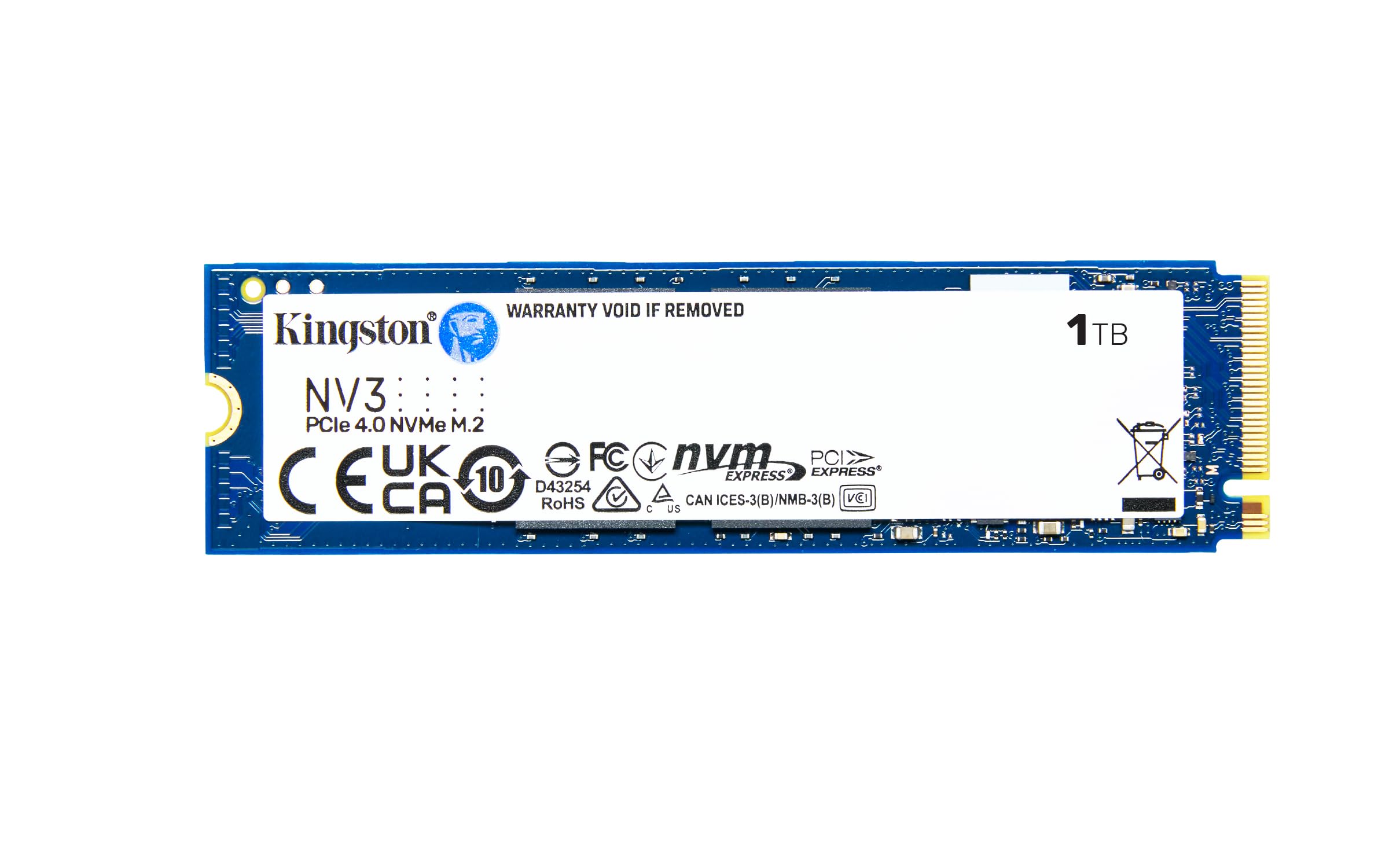
The Kingston NV3 is a straightforward, no-frills Gen 4×4 NVMe drive that hits the sweet spot of 6,000 MB/s sequential read speeds for the entry-level market. It is designed as a drop-in upgrade for desktops and laptops that will deliver an immediate and dramatic improvement over any SATA SSD or HDD. Kingston’s reputation for reliability is backed by this drive’s shock-resistant build and a 1 TBW rating appropriate for everyday use.
The drive utilizes a Gen 4×4 interface that can be backward compatible with Gen 3 systems, though users note that setting the BIOS to Gen 4 is essential to unlock the full rated performance. It supports SLC caching for burst writes, but sustained performance may drop after extended transfers. This is a secondary storage drive for games and media or a primary OS drive for a general-purpose family computer where extreme speed is less critical than stable reliability.
Customer sentiment is very positive, with many describing it as a “no-nonsense upgrade” that delivers instant boot times and responsive application loading. Some users point out performance slowdowns after 5-10 minutes of heavy use, which is expected for a budget-oriented DRAM-less drive. For the price, the NV3 provides a massive performance jump that makes old computers feel new again.
Why it’s great
- Very affordable entry point for Gen 4 speeds
- Shock-resistant build for added durability
- Excellent upgrade from SATA SSDs and HDDs
Good to know
- Sustained write speed drops under heavy load
- May require BIOS adjustment to reach full speed
FAQ
Does a PCIe Gen 4 M.2 SSD work in a Gen 3 slot?
Is DRAM cache necessary for a gaming SSD?
What is the difference between TLC and QLC NAND in an M.2 SSD?
Final Thoughts: The Verdict
For most users, the best m.2 ssd winner is the Acer Predator GM7 1TB because it delivers 7,400 MB/s Gen 4 throughput at a price that does not break the bank, striking a perfect balance for PC and PS5 gamers. If you want top-tier reliability and Samsung’s excellent Magician software support, grab the Samsung 990 EVO Plus 1TB. And for professionals needing the absolute highest bandwidth for 8K editing or AI datasets, nothing beats the WD_BLACK SN8100 1TB with its 14,900 MB/s reads.