
Our readers keep the lights on and my morning glass full of iced black tea. As an Amazon Associate, I earn from qualifying purchases.
Specs are compiled from manufacturer listings and verified buyer reviews and can change over time — please confirm the key details on the product page before buying.
You order steel online and a tube shows up with a wall thinner than you pictured or an inside hole too small to slide your post through. What really decides whether a piece works is the wall thickness (how thick the steel shell is), the cut ends, and whether it arrives rusty. This guide sorts seven real listings by exactly those things so you can order the right piece once, not twice.
I’m Min — the founder and writer behind Gadgets Feed. This guide is built by comparing the manufacturers’ published specifications and the patterns across verified customer reviews, so you get each pick’s real strengths and trade-offs instead of marketing spin.
Wall thickness, length, and finish decide whether a piece welds cleanly or sits unused. The picks below run from 0.065″ light-repair walls to 1/4″ heavy-fabrication stock. These are the strongest 2″ square tubing options you can order without handling the steel first.
Our Picks at a Glance

How To Choose The Best 2″ Square Tubing
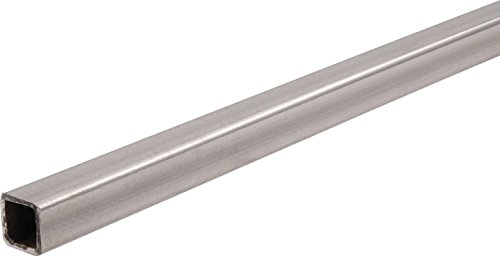
Every listing here is a genuine 2-inch square profile, so the outer size is settled before you start. Your real decision is what the steel has to survive once it is welded in place. That depends on three numbers you can read straight off the spec sheet.
Wall Thickness Decides What The Piece Can Carry
Wall thickness (how thick the steel shell is) is the single biggest lever on strength. A 0.065″ wall bends under hand pressure; a 0.25″ wall shrugs off a hitch load. Heavier walls also weld hotter and hold a bead without blowing through, which is why fabrication shops reach for thicker stock on anything structural.
The trade-off is weight. Thicker steel weighs more per foot, so a longer piece gets heavy fast. If you plan to mount something overhead or carry the tube up a ladder, weigh that against the load it has to hold.
Outside Diameter Versus Inside Diameter
Outside diameter is the measurement across the outside of the tube. Inside diameter is the clear space through the middle. A 2-inch outside diameter does not give you a 2-inch hole, because the walls eat into it. That gap catches buyers constantly, and it is the number-one reason a piece gets returned unused.
Hot Rolled Finish, Rust, and Cut Ends
Hot rolled steel is formed at high temperature. That leaves a dark mill scale surface that takes paint well and welds fine. It also tends to arrive with light surface rust, since bare carbon steel reacts with air on the shelf. Cut ends and cut tolerance matter just as much — a clean, square cut saves you an angle grinder session before you can even start.
Quick Comparison
| Model | Best For | Wall Thickness | Length | Weight | Amazon |
|---|---|---|---|---|---|
| Small Parts ALL22182-4★ Best Overall | First-time buyers who want predictable, true-to-spec steel | .083 inches | 48 inches | 8 pounds | Amazon |
| 14ga (.08″) x 2″ x 2″ Mild Steel Square TubeBudget Champion | Budget light-duty builds and small repairs | .08″ | 2 inches | 10 pounds | Amazon |
| 1/8″ x 2″ x 2″ x 48″ Mild Steel Square Tube | Engine lifts and forge welding projects | 1/8″ | 48 inches | 10 pounds | Amazon |
| 2″X 2″X.250″ Wall Steel Square Tube 24″ Piece | Heavy-duty trailer and farm repairs | 0.1905 inches | 24 inches | — | Amazon |
| 1/4″ Wall x 2″ x 2″ Steel Square Tube (36) | Load-bearing hitches, rails, and guards | 0.25 inches | 36 inches | 23 pounds | Amazon |
| Gisafai 2 Pieces Hot Rolled Steel Square Tubing | Buyers who need two short pieces at once | 0.118 inches or 3 mm | 23.6 inches | — | Amazon |
| A500/A513 Carbon Steel Square Tubing, OnlineMetals | Long structural runs and repair work | 0.065 inch | 72 inches | — | Amazon |
In‑Depth Reviews
1. Small Parts ALL22182-4 Unpolished (Mill) 1008-1010 Steel Square Tube, 2″ Square Tube, 0.083″ Wall Thickness, 1.834″ Inner Diameter, 4′ Length
Our pick — over 4.5★ from 350+ verified ratings; the strongest balance of quality and price.
The four-foot piece that turns up straight, clean, and ready to weld the day it lands.
This pick tops the list because buyers report it matches its listing, and it does that at 48 inches long, a 0.083″ wall, and a 1.834″ inner diameter. At 8 pounds, one person can carry and position it alone. For comparison, the 1/4-inch wall option further down weighs 23 pounds for a shorter 36-inch piece — this one is the easier lift for a one-person job.
Strength comes from low carbon steel rather than bulk. Owners mention mounting a spare tire above a generator on an RV cargo carrier, and another extended an engine hoist arm to lift a 180 lb roof top tent and called it “plenty strong for this application.” Customers note the look and the overall function of the steel are what get praised again and again, with the value landing right alongside them.
The one thing to plan around is where it sits in the strength order. This is a 0.083″ wall, so it is not the tube for a load-bearing hitch or a guardrail post. A “light duty box tube” is exactly how a few shoppers describe it, and that is the honest ceiling here.
What Buyers Keep Praising
- Arrives true to the listing — the finish and look are what earn the most approval
- 8 pounds and 48 inches long, so a single person can position it without help
- Low carbon steel welds and drills without fighting back
- Documented uses include a spare tire mount, a weight bench repair, and an engine hoist extension
Where It Stops Short
- 0.083″ wall is light-duty only — not for structural loads
- Costs more than the bare commodity pieces if you only need one short cut
Made for: the buyer who wants one clean, correct piece of 2-inch square steel for a repair, a mount, or a bench fix.
Think twice if: you are welding a hitch or a load-bearing frame — step up to the 1/4-inch wall further down instead.
2. 14ga (.08″) x 2″ x 2″ Mild Steel Square Tube, Hot Rolled Steel (48)
The entry-level pick that beats a trip to the steel yard on time and gas alone.
No other tube on this list costs less, and it still lets you choose your length. You get a 14-gauge (0.08″) wall on a 2-inch square tube, with cuts held to a tolerance of +/- 1/8″. That thin wall keeps it in light-duty territory, roughly on par with the 0.083″ Small Parts tube above.
Ordering it beats driving for it. Buyers describe skipping the supplier run entirely: “I made several trips to my supplier wasted a lot of time and gas. Here it came to me packaged well at better price than local.” Several repeat orders follow, which is the clearest sign the piece does its job.
Expect the surface to need attention. Hot rolled carbon steel is not a finished cosmetic product, so a rust complaint on a bare steel tube is the nature of the material, not a defect. If your project shows the steel, plan on grinding and painting it.
Where the value sits: custom length choice plus door delivery for the lowest spend, with cuts held to a tolerance of +/- 1/8″.
The honest read: 0.08″ wall is thin, and hot rolled steel arrives with surface rust. Fine for brackets and frames; wrong for anything carrying real weight.
Go this way if: you want the cheapest way to get 2-inch square tube to your door in your exact length.
Look elsewhere if: your build has to hold a structural load — the heavier walls here are the ones to shop.
3. 1/8″ x 2″ x 2″ x 48″ Mild Steel Square Tube, Hot Rolled Steel

A thicker-walled four-footer built for the jobs where the first tube kept breaking.
Double the wall of the budget tube and you get this one: a 1/8″ wall running the full 48 inches, which is stiffer than the 0.08″ stock above. Buyers use it to extend the reach on engine lifts, and the thicker wall earns its keep in forge work too — one knifemaker notes thick walls “keep the billet from breaking open before forge welding.”
Reviewers point out how closely it matches the listing, with the material quality right behind. It is made in the USA in A500/A513 hot rolled steel (A500/A513 are specs for weldable structural steel tubing).
At 10 pounds it needs two hands, and the 1/8″ wall still sits below the heavy 0.25″ stock. If you need maximum weld strength on a hitch or a load-bearing joint, the 1/4″ pick is the better call.
The Strong Points
- 1/8″ wall is a real step up in stiffness over 0.08″ stock
- Full 48-inch length gives you room to cut more than one piece
- Hot rolled A500/A513 steel welded clean for engine lift extensions
- Holds up in forge welding where thinner walls split
The Compromises
- Still not as rigid as the 0.25″ wall option for structural joints
- 10 pounds is more of a haul than the thin budget tube
Check this one out if: you need a longer length with more wall than the budget tubes but do not want the weight of 1/4-inch stock.
Keep looking if: your weld carries a trailer or a load-bearing frame — that is the 1/4″ pick’s job.
4. 2″X 2″X.250″ Wall Steel Square Tube 24″ Piece

A short, thick-walled cut for the jobs where the last piece sheared off.
Here is the beef: a 0.250-inch nominal wall, a full 3x the thickness of the Small Parts 0.083″ tube above. That is the difference between a tube that flexes and one that holds. It comes as a single 24-inch piece, cut to within +/- 1/16″, so it is ready to weld on arrival.
Buyers put that wall to work on trailer hitches, winch mounts, and machine repairs. One describes replacing a 12-gauge piece “that kept breaking” and calling this one now solid. Shoppers say the tubing arrived without surface rust, with cut ends that came in square and exact.
The main caveat is the 24-inch length — it is a fixed cut, not a longer run. Measure your span before you buy. Note too that it is the inside measurement that comes to 1.5″ x 1.5″, since the thick walls eat into the opening.
The winning spec: 0.250-inch nominal wall on a 24-inch piece, made by Harness Machine & Fab in Indiana, with clean square cuts straight from the start.
What to weigh: 24 inches is short. If your project needs a six-foot run, this is not the piece for it.
Reach for this if: you need maximum strength in a short footprint, like a hitch plate or a spindle holder.
Shop on if: your span runs longer than two feet — the 36-inch and 72-inch options fit that job better.
5. 1/4″ Wall x 2″ x 2″ Steel Square Tube – Pick Your Length (36)

The heaviest wall on the list, cut to the length you call out.
For the strongest joint on this list, this is where it tops out: a 1/4″ wall, the thickest steel here, at 23 pounds for a 36-inch piece, and you pick the length. It is A500/A513 tube (specs for weldable structural steel) with cuts held to +/- 1/8″. Think of a hitch or a guardrail post that has to stay rigid under load — that is this pick’s job.
Buyers report the material itself draws the most approval. The documented builds back it up: a custom front receiver hitch welded to a 4Runner, and a top rail on a raised patio guardrail. One buyer welded a hitch and reported it “welded just fine and came out good.”
Watch the sizing trap, because the walls are thick on purpose. With 1/4″ walls on a 2-inch tube, the clear inside opening is far below 2 inches. If you need to slide a 2-inch post through the middle, this is the wrong piece, and that exact mix-up sends tubes back unused.
Why Fabricators Choose It
- 1/4″ wall is the heaviest on this list for load-bearing work
- Pick-your-length ordering with cuts held to +/- 1/8″
- A500/A513 tube welded clean for hitches and guardrails
- 23 pounds of steel that holds a load without flexing
Where You Compromise
- Thick walls cut the inside opening well below 2 inches
- 23 pounds is heavy to handle and position alone
The clear winner for: a hitch, a guardrail, or any joint where the tube has to carry weight and stay rigid.
Wrong tool if: you need a 2-inch inside bore — the 1/4″ walls take most of it.
6. Gisafai 2 Pieces Hot Rolled Steel Square Tubing 2″ x 2″, 0.118″ Wall, 23.6″ Length Compatible with ASTM A-36

Two matched pieces in one box, so you are not paying for two separate orders.
This pick solves a different problem: you get two 2-inch square pieces at 23.6 inches each with a 0.118″ wall, made from carbon steel compatible with the ASTM A36 specification (a common structural steel spec). If your build calls for a matching pair, that twin count is the reason to look here at all.
The listing publishes a 36 Ksi (about 250 MPa) yield strength. Buyers who want the thicker-wall feel report the steel is “thick, sturdy,” with enough ductility to machine and weld.
Finish is the catch, and it is worth setting expectations. These arrive as hot rolled carbon steel with a rough, pitted surface and small rust spots from air oxidation, and the edges come more rounded than the photos suggest. The listing warns to handle the pointed edges carefully when you unpack.
The reason to pick it: two 23.6-inch pieces with a 0.118″ wall, compatible with ASTM A36, packed with foam film for shipping.
Plan for this: the mill finish is rough and dotted with surface rust, so it is a build-and-paint piece, not a display piece.
Fits best for: anyone who needs two matching cuts and wants thicker steel than the budget tubes.
Skip if: the steel will stay visible and unpainted — the rough, pitted finish will not win a beauty contest.
7. A500/A513 Carbon Steel Square Tubing, Hot Rolled, ASTM A-36, 2″ Height, 0.065″ Wall, 72″ Length, OnlineMetals

Six feet of steel with the thinnest wall here — reach, not brute force.
At 72 inches, this is the longest single piece on the list, and its 0.065″ wall makes it the lightest-walled too. That combination suits a run where you need reach rather than strength. A500/A513 is a weldable structural steel spec the maker lists for bridges, buildings, automotive, and appliance work.
Buyers use that length on projects that need reach, from a recliner footrest repair to raising the yarn guide on a sock knitting machine. It arrives well-packaged in a heavy cardboard tube, which matters on a six-footer, since bent tube is scrap tube. Owners mention that it simply works.
The 0.065″ wall is the caveat — this is the thinnest steel in the group, thinner than the 0.083″ budget tube, so it belongs on cosmetic and light-repair jobs rather than load-bearing ones. Some customers note the shape arrives slightly off-square, which is worth checking before you cut.
What It Brings
- 72-inch length — the longest single piece here
- A500/A513 weldable structural steel
- Ships in a heavy cardboard tube to protect the length
- Documented uses from recliner repairs to knitting-machine upgrades
What To Know First
- 0.065″ wall is the thinnest here — light-duty only
- Shape can arrive slightly off-square; the material can carry trim/shavings inside
Made for: long, light-duty runs where you need six feet of weldable square tube in one piece.
Not your tube if: the joint has to carry weight — thin 0.065″ walls flex under load.
Understanding the Specs
Wall Thickness (Gauge and Inches)
Wall thickness is how thick the steel shell is, and it is usually written two ways. You will see it as a gauge (14ga, 11ga — gauge is a numbered thickness scale) or as a fraction in inches (0.083″, 1/8″, 1/4″). The bigger the number in inches, the stronger and heavier the tube. A 0.065″ wall is thin and light for cosmetic work; a 1/4″ wall is thick and heavy for structural joints — the kind that stays put when a trailer pulls against it. Always check this number before you buy, because the outer 2-inch size stays the same while the wall does all the work.
Outside Diameter Versus Inside Diameter
Outside diameter is the measurement across the outside of the tube; inside diameter is the clear opening through the middle. They are never the same, because the walls take up space between them. A thicker wall means a smaller inside opening — that is why a 1/4″ wall on a 2-inch tube leaves an inside space far below 2 inches. If something has to slide through the middle, match the inside diameter first, not the outside size.
FAQ
What is the difference between 2″ square tubing and 2″ round or rectangular tubing?
What does the wall thickness number actually mean?
Will a 2-inch post fit inside 2-inch square tubing?
Why does hot rolled steel arrive with rust on it?
Which wall thickness is best for a trailer hitch or a guardrail?
Can I cut 2″ square tubing at home?
What is the difference between A500 and A36 steel tubing?
How do I keep 2″ square tubing from rusting after I buy it?
Is thicker wall always the better choice?
What length options are available in 2″ square tubing?
Final Thoughts: The Verdict
For most people, the 2″ square tubing winner is the Small Parts ALL22182-4, because it shows up true to its listing with a 0.083″ wall and a 48-inch length that welds cleanly for repairs, mounts, and bench fixes. If maximum strength is the job, grab the 1/4″ Wall x 2″ x 2″ Steel Square Tube for its 1/4″ wall and pick-your-length ordering. And for long, light-duty runs that need six feet in one piece, the A500/A513 Carbon Steel Square Tubing by OnlineMetals is the one to reach for. Whichever you choose, measure the inside opening first — that is the step that keeps a good piece of steel from sitting unused.
How We Picked
We do not accept paid placement. Every pick is matched to a real buyer and a real use-case; we do not hands-on test units.
Sources & Methodology
Specifications: manufacturer listings and product documentation. Review insights: verified customer reviews, as of September 2026. Pricing: not shown on this page (it changes often); check the current price via the retailer link.
As an Amazon Associate, Gadgets Feed earns from qualifying purchases. This does not affect which products we feature.