
A camera for still photography lives and dies by its sensor’s dynamic range, the precision of its autofocus, and the depth of its color science. These three pillars separate a keeper from a discard, and they are the filters I applied across this entire stack of 11 cameras. Whether you’re chasing the perfect portrait, freezing a fast-moving subject, or extracting shadow detail from a dimly lit scene, the real metric is not resolution alone — it is what the sensor and processor together can resolve in a single 14-bit RAW file.
I’m Min — the co-founder and writer behind Gadgets Feed. My analysis for this guide spans hundreds of hours comparing sensor readout speeds, autofocus point coverage, and real-world RAW file performance to identify the cameras that actually deliver on their spec sheets for the dedicated stills shooter.
This guide cuts through the noise to deliver the definitive best camera for still photography across every meaningful price tier, from compact mirrorless bodies to flagship full-frame machines engineered for pixel-level perfection.
How To Choose The Best Camera For Still Photography
Selecting a camera for still photography demands a shift in focus from video-hybrid marketing hype to the core specifications that define image capture: sensor type, autofocus system, and build ergonomics. The wrong choice here means investing in features you pay for but will never use.
Sensor Size and Dynamic Range Are Non-Negotiable
Full-frame sensors offer inherent advantages in light gathering and depth of field control, but not every budget reaches that tier. APS-C sensors from Canon, Sony, and Nikon now deliver dynamic range values within one stop of full-frame, making them viable for advanced work. The real differentiator is bit depth — a 14-bit RAW file retains far more tonal information than a 12-bit file, critical for recovering shadows and highlights during post-processing.
Autofocus System and Coverage Area
Phase-detection autofocus points covering 84% or more of the sensor frame ensure your subject stays locked even when positioned off-center. For still photography, the number of cross-type sensors matters for low-contrast subjects, and eye-detection AF for humans and animals reduces missed focus in portraiture and wildlife. Contrast-only systems are slower and less reliable in dim conditions.
Build Quality and Ergonomics for Stills Shooting
A dedicated stills photographer needs tactile control over aperture, shutter speed, and ISO without diving into menus. Look for dual command dials, a dedicated ISO button, and a deep handgrip that supports heavy lenses. Weather sealing matters if you shoot outdoors. Battery life measured in shots per charge (CIPA rating) directly determines how long you can shoot before needing a spare.
Quick Comparison
On smaller screens, swipe sideways to see the full table.
| Model | Category | Best For | Key Spec | Amazon |
|---|---|---|---|---|
| Sony a7 V | Premium Full-Frame | Professional Hybrid Still Work | 33MP, 16 Stops DR, 759 Phase Points | Amazon |
| Canon EOS R5 | Premium Full-Frame | High-Resolution Still Detail | 45MP, 1053 AF Points, 8K RAW | Amazon |
| Nikon D850 | Premium DSLR | Optical Viewfinder Purist | 45.7MP, 153 AF Points, 9 FPS | Amazon |
| Canon EOS R6 Mark II | Mid-Range Full-Frame | Balanced Still and Low-Light | 24.2MP, 40 FPS, Dual Pixel AF II | Amazon |
| Sony a7 III | Mid-Range Full-Frame | Value Full-Frame Start | 24.2MP, 693 Phase Points, 10 FPS | Amazon |
| Nikon Z 6II | Mid-Range Full-Frame | Versatile Stills and Video Hybrid | 24.5MP BSI, 273 Phase Points | Amazon |
| Nikon D7500 | Mid-Range DSLR | Action and Telephoto Photography | 20.9MP, 51 AF Points, 8 FPS | Amazon |
| Sony a6400 | APS-C Mirrorless | Fast AF Street and Portrait | 24.2MP, 425 Phase Points, 11 FPS | Amazon |
| OM System E-M10 IV | Compact M4/3 | Travel and Street Photography | 20MP, 121 AF Points, 5-Axis IBIS | Amazon |
| Panasonic G85 | Compact M4/3 | Stabilized Handheld Video and Photo | 16MP, 5-Axis Dual IBIS, 4K | Amazon |
| Canon EOS R100 | Entry-Level Mirrorless | Budget Introduction to ILC | 24.1MP, 143 AF Points, DIGIC 8 | Amazon |
In‑Depth Reviews
1. Sony Alpha 7 IV / 7 V
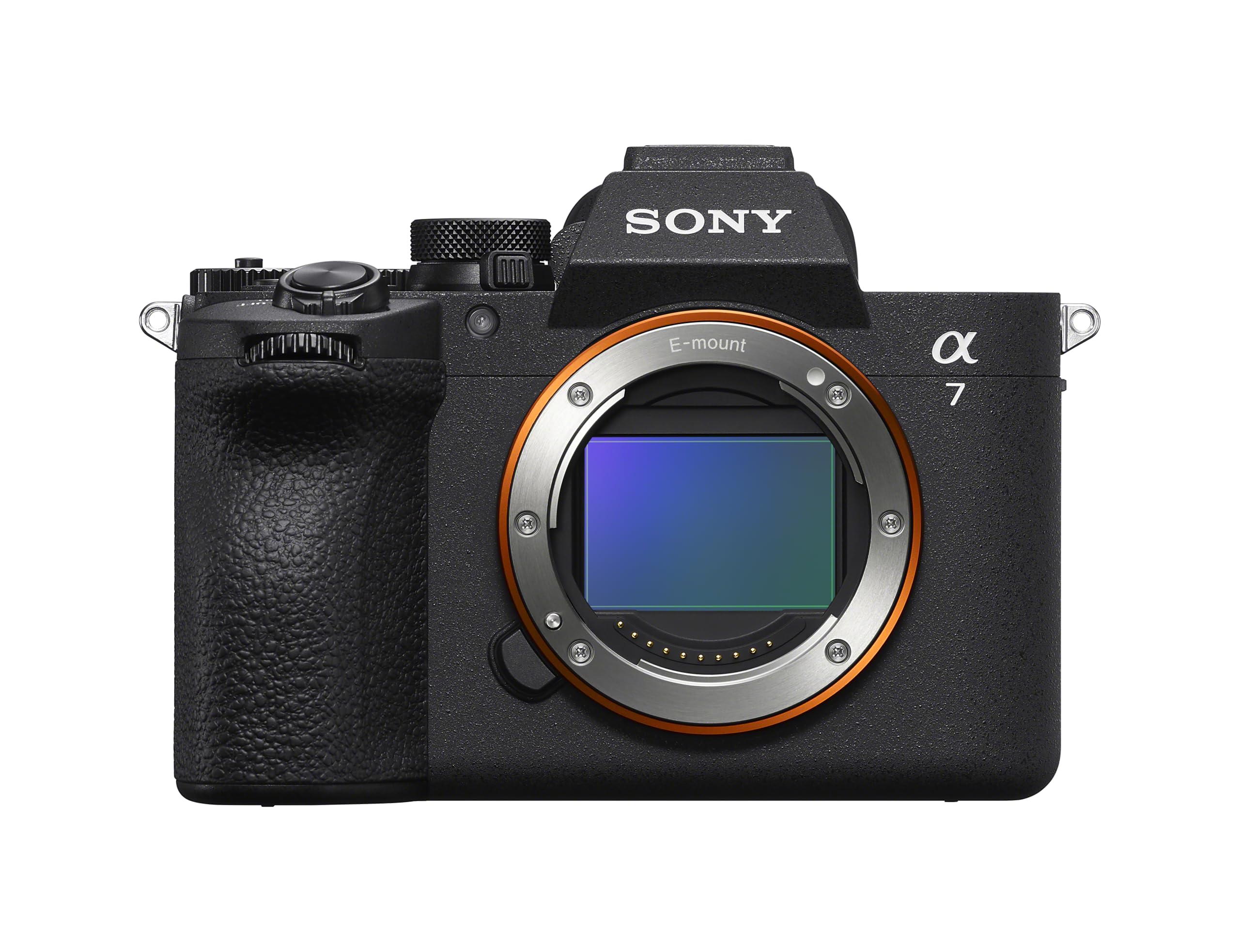
The Sony a7 V redefines the still photography benchmark with a partially stacked 33MP Exmor RS sensor that delivers 16 stops of dynamic range — the highest in this lineup. The 759 phase-detection points cover virtually the entire frame, and the AI-based Real-time Recognition AF uses human pose estimation to lock onto a subject’s eye, head, and body simultaneously. Blackout-free shooting at 30 fps with full AF tracking means you never miss a decisive moment, whether it’s a bird in flight or a moving portrait subject.
The BIONZ XR2 processing engine not only accelerates readout speed but also maintains 14-bit RAW output at all frame rates, ensuring you retain maximum tonal flexibility in post-production. The 5-axis in-body stabilization offers up to 7.5 stops of correction, making handheld long-exposure stills feasible in near-darkness. The body is weather-sealed with a deep, contoured grip that supports heavy telephoto lenses without strain.
For the stills photographer who demands both resolution and speed, the a7 V delivers a sensor with enough dynamic range to recover shadows three stops under and highlights two stops over without banding. The new lightweight RAW format also reduces file sizes by up to 60%, a practical boon for high-volume shoots. If you can work within Sony’s menu ecosystem, this camera sets the professional standard for the category.
Why it’s great
- 16-stop dynamic range captures extreme tonal range
- AI pose-estimation AF locks onto human form instantly
- 30 fps blackout-free burst with full AF
Good to know
- High price point limits it to serious enthusiasts and pros
- Sony menu complexity remains a hurdle for newcomers
2. Canon EOS R5

Canon’s EOS R5 packs a 45MP stacked CMOS sensor that delivers exceptional resolving power for landscape, studio, and portrait stills. The Dual Pixel CMOS AF II system with 1,053 AF points covers the entire frame, and the Eye Control AF feature lets you select focus points simply by looking — useful when the subject moves. Mechanical shutter tops 12 fps, enough for most action scenarios without incurring rolling shutter artifacts.
The 14-bit RAW output from the DIGIC X processor ensures deep tonal gradation, and the in-body stabilization provides up to 8 stops of correction, allowing handheld shots at shutter speeds as slow as 1/2 second. The 45MP sensor also supports a full-frame readout for 8K video, but for stills work it means you can crop aggressively into a 200mm frame and still land a printable composition. The RF mount opens access to Canon’s superior L-series glass, which pairs with the R5’s AF system for sub-millisecond accuracy.
Where the R5 shines is its build: a magnesium-alloy body with full weather sealing, a bright 5.76M-dot EVF, and a vari-angle touchscreen. The battery delivers about 650 shots per charge, which is adequate for a day of heavy shooting. For the stills photographer who needs the highest resolution and the most advanced AF in a mirrorless body, the R5 remains a powerhouse.
Why it’s great
- 45MP sensor allows heavy cropping while retaining detail
- Eye Control AF for instant focus point selection
- 8-stop IBIS enables handheld long exposures
Good to know
- High heat generation from high-res sensor
- Battery life of ~650 shots may require spare packs
3. Nikon D850

The Nikon D850 is widely considered the finest DSLR ever made for still photography, and the specs back it up. Its 45.7MP backside-illuminated full-frame sensor delivers dynamic range that rivals medium-format cameras, with virtually no moiré risk thanks to the absence of an optical low-pass filter. The 153-point autofocus system (including 99 cross-type sensors) tracks subjects with precision even in low contrast, and the pentaprism viewfinder offers a massive 0.75x magnification — the brightest optical view in its class.
For the stills purist who prefers an optical viewfinder, the D850 offers tactile controls that feel immediate: dual command dials, dedicated ISO button, illuminated buttons for night shooting, and a tilting touchscreen for Live View composition. The 9 fps continuous shooting with full AF performance is achieved with the optional battery grip, and the 8K time-lapse feature adds creative flexibility. The Expeed 5 processor ensures 14-bit RAW files record at every frame rate.
RAW files from the D850 are large — roughly 60MB per image — but the detail captured is staggering. You can crop to 50% of the frame and still produce sharp, printable images. The weather-sealed magnesium body is built to endure field conditions. For the photographer who values the optical viewfinder experience and uncompromised still image quality, the D850 remains the reference point.
Why it’s great
- 45.7MP BSI sensor rivals medium-format dynamic range
- Optical viewfinder with 0.75x magnification
- Weather-sealed magnesium body designed for field use
Good to know
- Large RAW files require high-capacity storage
- Video autofocus is weak; manual focus recommended for movies
4. Canon EOS R6 Mark II

The Canon EOS R6 Mark II strikes a near-perfect balance between performance and value. The 24.2MP full-frame sensor combined with the DIGIC X processor delivers excellent dynamic range and noise performance up to ISO 102400, making it one of the best low-light cameras in this list. The Dual Pixel CMOS AF II system provides face, eye, and body detection for humans and animals, and the 40 fps electronic shutter mode lets you capture fast-moving subjects without hesitation.
For stills photography, the 8-stop in-body stabilization is transformative — you can handhold the R6 Mark II at 1/8 second and still produce tack-sharp images. The 3.69M-dot EVF refreshes at 120 fps, offering a lag-free view of your scene. The body includes a deep handgrip, intuitive control layout with dedicated AF-On and exposure compensation buttons, and dual SD UHS-II card slots that provide peace of mind for event work.
Battery life is rated at 760 shots per charge, which surpasses many mirrorless competitors. The camera records 6K oversampled 4K video if needed, but its true strength lies in still capture — the AF tracking is sticky, the buffer is deep, and the files are manageable. For enthusiasts stepping up to full-frame, the R6 Mark II is the most rounded choice.
Why it’s great
- Excellent high-ISO performance up to ISO 102400
- 8-stop IBIS for handheld low-light stills
- 40 fps electronic burst with reliable AF tracking
Good to know
- No built-in flash on the body
- Electronic shutter can show rolling shutter under flickering lights
5. Sony a7 III

Despite being succeeded by newer models, the Sony a7 III remains a compelling choice for the stills photographer who wants full-frame performance without the newest flagship price. The 24.2MP BSI sensor still delivers 15 stops of dynamic range, and the 693 phase-detection points cover 93% of the sensor area — a density that makes subject tracking reliable in most conditions. The 10 fps continuous shooting with mechanical shutter is sufficient for action, and the 14-bit RAW output ensures flexible editing.
Battery life is a standout feature for the a7 III: the NP-FZ100 battery delivers about 710 shots per charge, easily lasting a full day of shooting. The 5-axis in-body stabilization offers 5 stops of correction, which is adequate for handheld stills in dim environments. The body is compact for a full-frame camera, with a grip that accommodates larger lenses like the 24-70mm f/2.8 without feeling front-heavy.
The menu system still divides opinion, and the touchscreen is limited compared to Canon’s implementation. But for pure image quality per dollar, the a7 III’s combination of sensor performance, battery stamina, and lens ecosystem depth makes it a resilient choice for the stills-oriented shooter on a mid-range budget.
Why it’s great
- 15-stop dynamic range delivers excellent shadow and highlight detail
- ~710-shot battery life bests many newer mirrorless cameras
- Full-frame sensor in a compact, lightweight body
Good to know
- Menu system is complex and non-intuitive
- Touchscreen functionality is limited to focus point selection
6. Nikon Z 6II

The Nikon Z 6II offers a well-rounded full-frame mirrorless experience that prioritizes image quality and handling. The 24.5MP BSI sensor paired with the dual EXPEED 6 processors provides excellent dynamic range and clean high-ISO performance up to ISO 51200. The 273 phase-detection AF points cover 90% of the sensor frame, and Eye-Detection AF for humans and animals works reliably in most lighting conditions.
For the stills shooter, the Z 6II’s 14-bit RAW files are exceptionally malleable, allowing aggressive shadow recovery without visible noise or banding. The 5-axis in-body stabilization offers up to 5 stops of correction, and the body includes dual card slots — one CFexpress/XQD and one UHS-II SD — giving you redundancy for important shoots. The electronic viewfinder is bright and clear, and the deep grip makes extended shooting comfortable.
The Z 6II is compatible with both native Z-mount lenses and the extensive F-mount lens library via the FTZ adapter. Its 14 fps continuous shooting works with full AF, and the buffer is deep enough for rapid bursts. For the photographer who wants a reliable, comfortable stills camera with a clear path to future Z lenses, the Z 6II is a trustworthy choice.
Why it’s great
- Clean high-ISO performance with excellent shadow recovery
- Dual card slots for redundancy during important shoots
- Comfortable grip and intuitive control layout
Good to know
- Battery life is about 400 shots, below class average
- AF tracking can lose subjects against busy backgrounds
7. Nikon D7500

The Nikon D7500 remains a strong choice for action and wildlife stills photography, leveraging the same 51-point AF system (with 15 cross-type sensors) and metering sensor found in the professional D500. The 20.9MP APS-C sensor delivers 14-bit RAW files with solid dynamic range, and the crop factor provides a 1.5x reach advantage for telephoto lenses — a real benefit for bird and sports shooters.
Continuous shooting at 8 fps with full AF tracking lets you capture fast sequences, and the 3.2-inch tilting touchscreen is responsive for Live View composition. The 18-140mm VR kit lens bundles excellent range for general use, and the 4K UHD time-lapse feature adds creative options. The pentaprism optical viewfinder is large and bright, essential for tracking moving subjects through the frame.
Battery life is a strong point at over 900 shots per charge, useful for long days in the field. While the D7500 lacks the latest mirrorless tech like in-body stabilization and a high-resolution EVF, its optical viewfinder, robust build, and responsive AF make it one of the best APS-C DSLRs for stills photography that requires speed and reach.
Why it’s great
- 51-point AF with 15 cross-type sensors for fast action
- 1.5x crop factor extends telephoto lens reach
- Over 900 shots per charge for long field days
Good to know
- Single SD card slot limits redundancy
- No in-body stabilization; relies on VR lenses
8. Sony a6400

The Sony a6400 packs the world’s fastest autofocus acquisition — 0.02 seconds — into a compact APS-C body. The 425 phase-detection points cover 84% of the sensor, and Real-Time Eye AF for humans and animals locks focus instantly. The 24.2MP sensor delivers 14-bit RAW files with good dynamic range, and the 11 fps continuous shooting with AF tracking is ample for street, portrait, and modest action scenarios.
The 180-degree flip-up touchscreen makes waist-level and overhead shooting easy, and the compact size allows you to carry the a6400 with a 35mm f/1.8 prime as a nearly pocketable street photography kit. The Sony E-mount ecosystem gives you access to hundreds of third-party lenses from Sigma, Tamron, and Zeiss. For stills, the image quality from this APS-C sensor is competitive with entry-level full-frame cameras of a few years ago.
Battery life is rated at about 410 shots, which is adequate for a day of casual shooting. The menu system shares the complexity of Sony’s full-frame bodies, and the lack of in-body stabilization means you need stabilized lenses for handheld low-light work. For the photographer who prioritizes autofocus speed and lens versatility in a lightweight body, the a6400 is a formidable tool.
Why it’s great
- 0.02-second AF acquisition is class-leading
- Compact body makes an ideal street photography kit
- Extensive Sony E-mount lens ecosystem
Good to know
- No in-body stabilization requires stabilized lenses
- Sony menu navigation has a learning curve
9. OM System Olympus E-M10 Mark IV

The OM System (formerly Olympus) E-M10 Mark IV brings exceptional portability without sacrificing image quality. The 20MP Micro Four Thirds sensor with TruePic VIII processor produces sharp 14-bit RAW files, and the 5-axis in-body stabilization delivers 4.5 stops of correction — enough to shoot handheld at 1/4 second with a standard zoom. The 121 contrast-detect AF points are accurate for most still subjects, though slower in low light than phase-detection systems.
At just 383 grams with the 14-42mm kit lens, the E-M10 Mark IV is the lightest interchangeable-lens camera on this list, making it ideal for travel, street, and everyday carry. The flip-down touchscreen activates a dedicated selfie mode, but the camera’s smaller body is most valuable for slipping into a jacket pocket with a pancake lens. The 16 Art Filters, including Instant Film, provide creative in-camera options.
Battery life is rated at about 360 shots, so a spare battery is recommended for a full day of shooting. The Micro Four Thirds system offers a vast library of compact lenses — from ultra-wide to super-telephoto — with excellent portability. For the photographer who values mobility and stabilization in a small package, the E-M10 Mark IV is a delightful stills companion.
Why it’s great
- Extremely light and compact for daily carry
- 5-axis IBIS delivers usable handheld shots at slow shutter speeds
- Extensive Micro Four Thirds lens ecosystem
Good to know
- Contrast-detect AF is slower in low light
- Battery life of ~360 shots requires spare packs
10. Panasonic LUMIX G85

The Panasonic LUMIX G85 offers class-leading dual image stabilization, combining 5-axis in-body stabilization with the lens-based Power O.I.S. for shake-free handheld stills even at extreme focal lengths. The 16MP Micro Four Thirds sensor, with the low-pass filter removed, resolves fine detail that rivals higher-resolution sensors in good light. The 49-point contrast-detect AF with DFD technology is fast in daylight, though it slows in low-contrast conditions.
The G85 is built around stills photography ergonomics: a deep handgrip, magnesium-alloy front plate, weather sealing, and intuitive dual control dials. The 2.36M-dot OLED viewfinder is bright and detailed, and the 3-inch tilting touchscreen makes low-angle composition comfortable. The 12-60mm Power O.I.S. kit lens provides a versatile 24-120mm equivalent range with excellent optical quality for a kit zoom.
Battery life is about 330 shots, below average for the class, so spare batteries are essential for extended shoots. The 4K Photo mode lets you extract 8MP stills from 30 fps bursts — useful for capturing peak action. For the budget-conscious stills shooter who prioritizes stabilization and build quality, the G85 delivers exceptional value.
Why it’s great
- Dual IBIS and OIS deliver outstanding shake reduction
- Weather-sealed magnesium-alloy build for field use
- Versatile 12-60mm kit lens with optical stabilization
Good to know
- 16MP sensor limits cropping flexibility
- Battery life of ~330 shots requires spare batteries
11. Canon EOS R100

The Canon EOS R100 is the smallest and lightest body in the EOS R series, designed as an entry point into interchangeable-lens stills photography. The 24.1MP APS-C CMOS sensor with the DIGIC 8 processor produces sharp 14-bit RAW files with natural color reproduction. The Dual Pixel CMOS AF covers 143 zones with human face and eye detection, and the continuous shooting speed of 6.5 fps with One-Shot AF is adequate for stationary subjects.
The R100 body weighs only 356 grams, making it easy to carry everywhere, and the RF-S 18-45mm f/4.5-6.3 IS STM kit lens adds optical stabilization for blur-free handheld shots. The wireless connectivity via Wi-Fi and Bluetooth enables quick image transfer to your phone. The compact design sacrifices some external controls — the R100 uses a simplified menu system and fewer direct buttons — but for a beginner learning the fundamentals of stills photography, this simplicity can be an advantage.
The lack of in-body stabilization means you’ll rely on the lens or a monopod for sharp images at slower shutter speeds. Battery life is about 300 shots, so an extra battery is recommended. For the absolute starting point into the world of interchangeable-lens stills photography, the EOS R100 offers a painless entry with upgrade path to the full RF system.
Why it’s great
- Lightest EOS R body at 356g for easy carry
- 24.1MP APS-C sensor with Dual Pixel CMOS AF
- Affordable entry into Canon’s RF lens ecosystem
Good to know
- No in-body stabilization; relies on lens IS
- Limited external controls may frustrate advanced users
FAQ
Is full-frame always better than APS-C for still photography?
How many megapixels do I actually need for still photography?
Should I buy a DSLR or a mirrorless camera for stills in 2025?
What does in-body stabilization mean for handheld stills?
Final Thoughts: The Verdict
For most users, the camera for still photography winner is the Sony a7 V because its 16-stop dynamic range and AI-based AF represent the current ceiling of still-image capture technology. If you want the highest resolution for cropping and print work, grab the Canon EOS R5. And for the photographer who values the optical viewfinder experience with uncompromised image quality, nothing beats the Nikon D850.