
Leaving your smartphone behind for a dedicated travel camera is the single best decision you can make to actually capture the texture, depth, and feeling of your trips. The phone in your pocket is a convenience, but a real camera with a proper sensor and optical zoom delivers images that hold detail when you zoom in, handle mixed lighting without noise, and let you frame a scene with intention rather than a digital crop. The challenge is filtering through dozens of models that promise the world but deliver only frustration when you need a fast shot at sunset.
I’m Min — the co-founder and writer behind Gadgets Feed. I’ve spent hundreds of hours sifting through technical specifications, real-world user reports, and side-by-side sensor comparisons to isolate the models that genuinely make sense for someone who wants great travel photos without a steep learning curve.
After extensive research into sensor size, zoom reach, stabilization performance, and autofocus speed, I’ve assembled this guide to help you confidently choose the best beginner travel camera that fits your style and budget.
How To Choose The Best Beginner Travel Camera
Finding the right travel camera as a beginner means balancing portability, ease of use, and image quality. You don’t need the most expensive body — you need the one that will actually be in your bag when the moment happens. Let’s break down the key factors that separate a frustrating purchase from a rewarding one.
Sensor Size: The True Foundation of Image Quality
Sensor size dictates how much light the camera can capture, which directly affects low-light performance, dynamic range, and background blur capability. A 1-inch sensor is a huge leap over a smartphone, but an APS-C or Micro Four Thirds sensor delivers another significant jump in quality. For a travel camera, an APS-C sensor (found in most mirrorless models above) offers the best balance of image quality and body size.
Zoom Reach vs. Aperture Speed
Long zoom ranges (like 30x in compact models) are tempting for distant subjects, but they often come with slow variable apertures that struggle in low light. A shorter zoom with a wider maximum aperture (like f/3.5-5.6) lets you shoot at faster shutter speeds indoors and at dusk. Consider where you’ll be shooting most: landscapes need wide angles, while wildlife or concerts demand telephoto reach.
Stabilization: The Silent Hero of Sharp Travel Photos
In-body image stabilization (IBIS) or lens-based optical stabilization compensates for shaky hands, allowing you to shoot at slower shutter speeds without blur. This is critical for travel, where you rarely carry a tripod and often shoot handheld in dimly lit churches, markets, or at twilight. A camera with effective stabilization can be the difference between a keeper and a throwaway.
Autofocus That Keeps Up With You
A beginner-friendly camera needs autofocus that works reliably without fiddling. Look for phase-detection autofocus with subject tracking (human eye, animal, or vehicle detection). This lets you focus on composition while the camera handles the sharpness, especially useful for candid travel portraits or moving subjects.
Quick Comparison
On smaller screens, swipe sideways to see the full table.
| Model | Category | Best For | Key Spec | Amazon |
|---|---|---|---|---|
| Canon EOS R100 | Mirrorless | Best overall beginner | 24.1MP APS-C / 4K Video | Amazon |
| OM SYSTEM E-M10 Mark IV | Mirrorless | Compact with IBIS | 20MP MFT / 5-Axis IBIS | Amazon |
| Panasonic LUMIX G85 | Mirrorless | Weather-sealed value | 16MP MFT / Dual I.S. | Amazon |
| Nikon Z50 II | Mirrorless | Superior autofocus | 20.9MP APS-C / 4K 60p | Amazon |
| Canon EOS RP | Full-Frame | Entry-level full-frame | 26.2MP Full-Frame | Amazon |
| Sony Alpha a6400 | Mirrorless | Fast hybrid shooting | 24.2MP APS-C / 11fps | Amazon |
| FUJIFILM X-T30 III | Mirrorless | Film simulations & style | 26.1MP APS-C / 425 AF | Amazon |
| Canon EOS M100 | Mirrorless | Smartphone upgraders | 24.2MP APS-C / Touchscreen | Amazon |
| Sony Alpha a3000 | Mirrorless | Budget interchangeable lens | 20.1MP APS-C / EVF | Amazon |
| Panasonic LUMIX ZS99 | Point-and-Shoot | Pocket superzoom | 30x Zoom / 4K Video | Amazon |
| Canon PowerShot ELPH 360 HS | Point-and-Shoot | Ultra-pocketable & simple | 20.2MP / 12x Zoom | Amazon |
In‑Depth Reviews
1. Canon EOS R100

The Canon EOS R100 is the smallest and lightest body in the EOS R series, making it a near-perfect travel companion that won’t weigh down your daypack. Its 24.1MP APS-C sensor paired with the DIGIC 8 processor delivers sharp, detailed images and Full HD video at 60 fps, with 4K capture available at 24 fps for cinematic clips. The Dual Pixel CMOS AF covers 143 zones and includes human face and eye detection, so you can trust the camera to lock focus on your travel companions quickly.
The included RF-S18-45mm kit lens offers a practical wide-to-short-telephoto range equivalent to 29-72mm, covering landscapes, group shots, and portraits. With continuous shooting up to 6.5 fps in One-Shot AF, you can capture fleeting moments without missing a beat. The 3-inch LCD is fixed but bright enough for outdoor framing, and the built-in Wi-Fi and Bluetooth make transferring photos to your phone effortless for sharing on the go.
Customer feedback consistently highlights how beginner-friendly this camera is, with users noting the intuitive GUI and custom quick menus that reduce the learning curve. The battery lasts a full day of casual shooting, though the charger is not included — you’ll need an LP-E17 charger separately. Overall, this is the most balanced entry point into a modern mirrorless system for travel.
Why it’s great
- Superb 24MP APS-C image quality in a compact body
- Dual Pixel CMOS AF with face and eye detection works reliably
- Great value for the RF mount system
Good to know
- No in-body stabilization
- Fixed LCD screen limits creative angles
- Battery charger sold separately
2. OM SYSTEM E-M10 Mark IV

The OM SYSTEM E-M10 Mark IV packs a 20MP Live MOS Micro Four Thirds sensor with class-leading 5-axis in-body image stabilization rated at 4.5 stops. This means you can shoot sharp handheld shots at shutter speeds that would leave most other entry-level cameras blurry — a massive advantage for evening city walks or indoor museum visits. The compact body with the 14-42mm EZ pancake lens slips into a jacket pocket, making it one of the most portable interchangeable-lens cameras on this list.
The flip-down monitor enables a dedicated selfie mode that activates automatically, which is a thoughtful touch for solo travelers or group shots. The 121-point contrast-detect autofocus is snappy in good light, and the 4K video recording at 30 fps is solid for travel vlogs. With 16 Art Filters including a nostalgic Instant Film mode, you can get creative looks straight out of camera without editing software.
Users consistently praise this camera for being well-made, lightweight, and delivering excellent image quality at a accessible price point. The ability to achieve 1-second handheld exposures thanks to the IBIS is a standout feature that punches above its class. The app and Wi-Fi transfer are a bit slow, but the overall package is hard to beat for someone who values portability and stabilization.
Why it’s great
- In-body 5-axis stabilization enables incredibly sharp handheld shots
- Ultra-compact with pancake kit lens
- Dedicated selfie mode with flip-down screen
Good to know
- No external battery charger included
- Contrast-detect AF struggles in very low light
- Smaller sensor than APS-C rivals
3. Panasonic LUMIX G85

The Panasonic LUMIX G85 is a rugged weather-sealed mirrorless camera with a magnesium alloy front plate, making it a durable choice for adventurous travel. The 16MP Micro Four Thirds sensor omits the low-pass filter to boost fine detail resolving power, and the 5-axis Dual I.S. 2 combines in-body and lens stabilization for incredibly smooth handheld video and sharp stills even at slow shutter speeds. The 12-60mm kit lens provides a versatile 24-120mm equivalent zoom range.
The electronic OLED viewfinder (2360K dots) is large and clear, and the 3-inch fully articulating touchscreen LCD (1040K dots) makes it easy to shoot from high or low angles. The G85 records 4K QFHD video at 30 fps with full sensor readout, plus exclusive 4K Photo and Post Focus features that let you pull stills from video or refocus after the shot. The ergonomic grip and intuitive control layout make it a pleasure to operate for long days.
Customers highlight the G85 as an excellent value for both beginners and experienced users, praising its stabilization, build quality, and overall performance. The autofocus can be sluggish in very low light for 4K recording, and battery life is average, but the feature set at this price point is remarkable. It is a strong contender for anyone wanting a weather-sealed system.
Why it’s great
- Weather-sealed body with durable magnesium alloy construction
- Excellent 5-axis Dual I.S. 2 stabilization
- Versatile 12-60mm kit lens with wide-to-telephoto range
Good to know
- Battery life is only average
- No headphone jack for video monitoring
- Autofocus can hunt in very dim conditions
4. Nikon Z50 II

The Nikon Z50 II is a serious upgrade for beginners who want advanced autofocus performance right out of the box. It features a 20.9MP DX-format APS-C sensor and the same EXPEED 7 processor found in Nikon’s flagship Z9, enabling subject-detection autofocus that can track people, dogs, cats, birds, and vehicles with remarkable accuracy. The 231-point hybrid AF system includes dedicated bird and airplane modes, making it ideal for wildlife or travel photography where your subject won’t stay still.
One of the standout features is the Picture Control button, which gives you instant access to 31 built-in color presets that let you dial in a look — from vivid travel tones to muted film styles — before you even press the shutter. The camera records 4K UHD video at 60p with full pixel readout and offers in-camera 120p slow-motion at Full HD. The built-in flash and Night Portrait mode provide balanced results indoors without external gear.
Users love the compact 17-ounce body, the easy wireless photo sharing via SnapBridge, and the fact that it inherits pro-level menu systems from larger Z-series cameras. The short battery life and single SD card slot are the main compromises, but the autofocus and color science make this a compelling choice for travel photography that demands reliability.
Why it’s great
- Flagship Z9-derived autofocus with subject detection
- 31 built-in Picture Control presets for instant creative looks
- Lightweight at 17 ounces with excellent ergonomics
Good to know
- Battery life is below average
- Single SD card slot limits backup options
- No in-body sensor cleaning
5. Canon EOS RP

The Canon EOS RP is the most affordable full-frame mirrorless camera on the market, offering a 26.2MP sensor that produces noticeably better low-light performance and dynamic range than any APS-C camera in this list. The included RF24-105mm F4-7.1 IS STM lens provides optical image stabilization up to 5 stops and a versatile zoom range equivalent to 24-105mm, covering wide landscapes to tight portraits. The Dual Pixel CMOS AF ensures fast, reliable focusing with face detection for stills and video.
Weighing just 1.07 pounds with the kit lens, the RP is lighter than many APS-C DSLRs, making it genuinely practical for all-day travel. The fully articulating touchscreen LCD is great for vlogging or creative angles, and the 4K 24p video capture (with a 1.6x crop) is enough for high-quality clips. The electronic viewfinder is bright and detailed, and the simple menu system is a relief for beginners stepping into full-frame territory.
Customers upgrading from entry-level DSLRs consistently praise the image quality leap — sharp, excellent high ISO performance, and beautiful color rendering. The kit lens is soft at the edges but sharp in the center, especially when stopped down to f/8. Battery life is adequate with a spare, and the ecosystem of RF and adapted EF lenses is vast. This is the best choice if you want to grow into serious photography without outgrowing your camera.
Why it’s great
- Full-frame sensor offers best low-light and dynamic range
- Lightweight and compact for a full-frame system
- Versatile 24-105mm kit lens with image stabilization
Good to know
- 4K video has a 1.6x crop factor
- Kit lens is soft at the edges
- Battery life is modest — carry a spare
6. Sony Alpha a6400

The Sony Alpha a6400 is a speed demon, boasting the world’s fastest autofocus at 0.02 seconds with 425 phase-detection points covering nearly the entire frame. The 24.2MP Exmor APS-C sensor with a front-end LSI delivers excellent image quality up to ISO 51,200, and Real-time Eye AF for humans and animals keeps your subjects tack sharp whether shooting stills or 4K video. The 180-degree tiltable touchscreen LCD makes it a popular choice for vloggers and selfie shooters.
Continuous shooting at 11 fps with AF/AE tracking means you can capture fast action — kids playing, wildlife, or street scenes — with confidence. The 4K video recording uses full pixel readout with no pixel binning for oversampled, detailed footage. The body is compact and durable, with a magnesium alloy chassis, and the Sony E-mount ecosystem offers hundreds of native and third-party lenses for every budget.
Reviews from owners highlight the incredible AF performance and video quality as standout features. The kit lens (E PZ 16-50mm OSS II) is a decent starting point, but many recommend upgrading to a faster prime for better low-light performance. Battery life is OK for photos but drains fast with video, so extra batteries are recommended. This is the best choice for those who prioritize autofocus speed and hybrid shooting.
Why it’s great
- Industry-leading 0.02s autofocus with 425 AF points
- Real-time Eye AF for human and animal tracking
- Excellent 4K video with full pixel readout
Good to know
- No in-body image stabilization
- Kit lens is mediocre for low light
- Battery life is average, especially for video
7. FUJIFILM X-T30 III
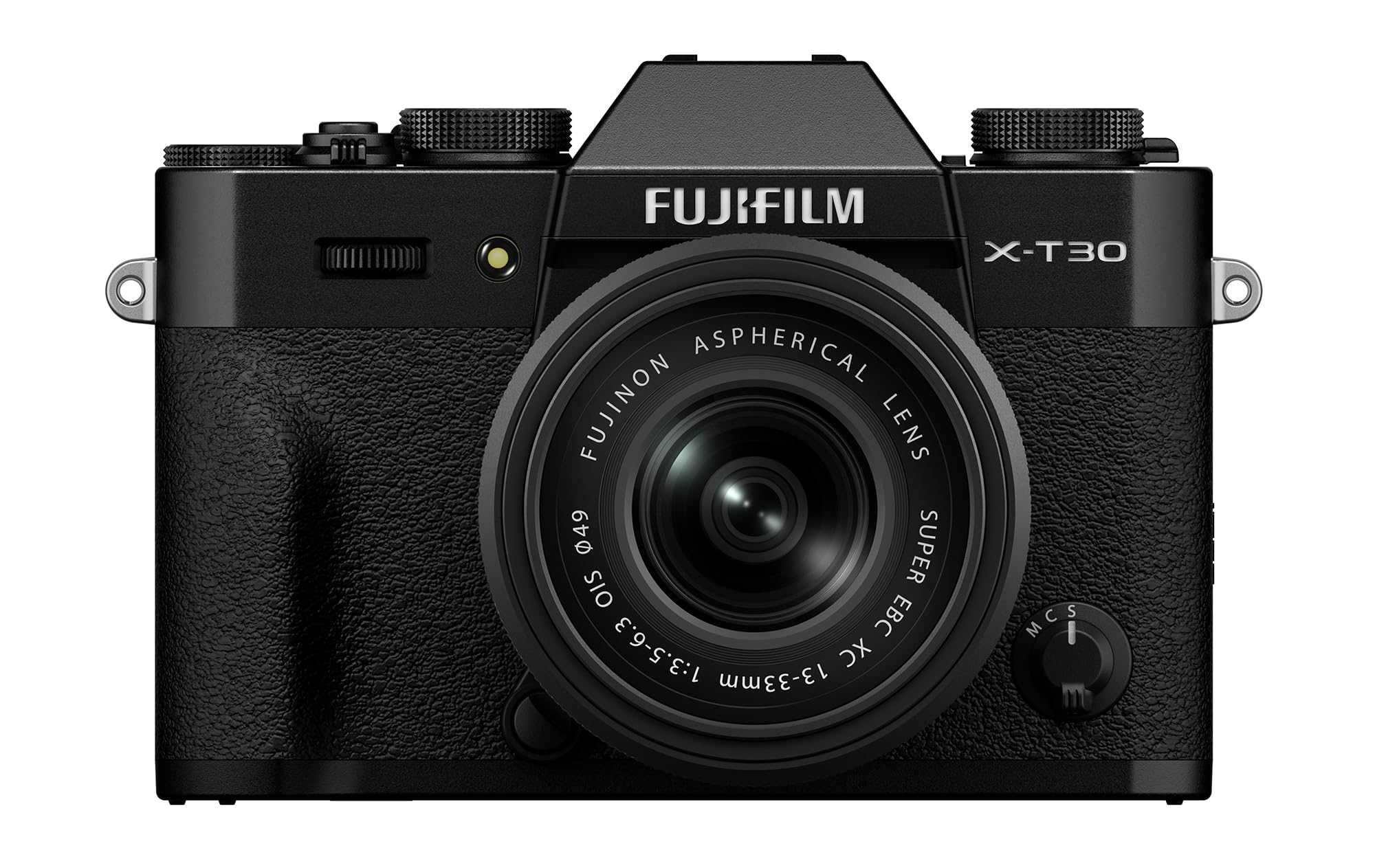
The FUJIFILM X-T30 III is for the traveler who wants stunning images straight out of camera without spending hours editing. The 26.1MP APS-C X-Trans CMOS sensor delivers exceptional detail and color reproduction, and the 20 built-in Film Simulations — including PROVIA, Velvia, and Classic Chrome — let you choose your look based on the scene, from vibrant landscapes to muted street photography. The AI-powered subject-detection autofocus with 425 points covers people, animals, and more.
The compact body with retro design and dedicated exposure dials makes shooting feel intentional and tactile. The XC13-33mm kit lens offers a practical zoom range equivalent to 20-50mm, good for everyday shooting. The camera records 4K video at 30 fps and has a built-in flash. The 3-inch tilting LCD is sharp and responsive, though the menu system has a slight learning curve for complete beginners.
Owners rave about the image quality, color science, and the fun factor of using Film Simulations — many report getting compliments on the camera’s design as a conversation starter. The lack of in-body stabilization means you’ll need to rely on steady hands or a stabilized lens, and the battery drains quickly, so spare batteries are essential. It is a creative powerhouse that grows with you as your skills improve.
Why it’s great
- Beautiful, film-like colors straight out of camera
- AI-powered subject-detection autofocus
- Classic dial-based controls are intuitive to learn
Good to know
- No in-body image stabilization
- Battery life is below average
- Kit lens is slow in low light
8. Canon EOS M100

The Canon EOS M100 is designed explicitly for smartphone upgraders who want better image quality without complexity. The 24.2MP APS-C sensor with the DIGIC 7 processor produces DSLR-level image quality, and the Dual Pixel CMOS AF ensures fast, reliable focusing via the intuitive 3-inch tilt-type touchscreen. The included EF-M15-45mm f/3.5-6.3 IS STM lens provides optical stabilization and a practical zoom range for travel.
Built-in Wi-Fi, NFC, and Bluetooth make transferring photos to your phone seamless for social sharing. The camera does an excellent job in auto mode — point, tap the screen to focus, and shoot — while still offering manual controls for when you want to experiment. The flip-up LCD is handy for selfies and vlogging, and the compact body is genuinely pocketable with the kit lens attached.
Users appreciate how easy it is to get sharp, colorful photos with no fuss. The lack of a viewfinder and hot shoe, and the EF-M lens mount’s limited native lens selection, are the main trade-offs. For someone who just wants great travel photos without learning a complicated system, this is an ideal stepping stone. The image quality is a massive leap over any phone.
Why it’s great
- Excellent image quality from 24.2MP APS-C sensor
- Super simple touchscreen interface
- Compact and lightweight with flip-up screen
Good to know
- No electronic viewfinder
- Limited EF-M lens ecosystem
- No 4K video recording
9. Sony Alpha a3000

The Sony Alpha a3000 is an ultra-budget entry point into interchangeable lens cameras with a 20.1MP Exmor APS-C sensor that delivers solid image quality. The included 18-55mm OSS lens provides optical stabilization and a standard zoom range, making it a competent starter kit for learning composition and exposure. The DSLR-style body has a comfortable grip and a built-in electronic viewfinder, which is rare at this price point.
The camera records Full HD 1080p video and supports manual controls, including aperture and shutter priority modes. The E-mount system gives you access to a huge library of Sony lenses and third-party options as you grow. The camera is lightweight compared to traditional DSLRs and the autofocus is decent for static subjects.
Customer reviews highlight the excellent image quality for the price but note the low-resolution EVF and LCD, slow wake-up time, and poor battery life as compromises. The a3000 is best suited for someone on a tight budget who wants to learn photography with an interchangeable lens system and doesn’t mind a few quirks. It is a capable learner’s tool.
Why it’s great
- Very affordable entry to APS-C sensor quality
- Built-in electronic viewfinder
- Access to extensive Sony E-mount lens ecosystem
Good to know
- Low-resolution EVF and LCD screen
- Battery life is poor
- Slow to wake from sleep
10. Panasonic LUMIX ZS99

The Panasonic LUMIX ZS99 is the ultimate pocket superzoom, packing a 24-720mm equivalent Leica DC lens with 30x optical zoom into a body that literally slips into a jeans pocket. This reach is unmatched by any mirrorless kit lens and is perfect for concerts, wildlife, or distant landmarks where you can’t get closer. The 20.3MP 1/2.3-inch sensor is smaller than APS-C, but the 5-Axis HYBRID O.I.S. stabilization helps keep telephoto shots steady.
The 1,840k-dot tiltable touchscreen is bright and sharp, and the dedicated Send Image button with Bluetooth 5.0 makes phone transfers quick. It records 4K video at 30 fps and HD slow-motion at 120 fps, adding creative flexibility. The stepped zoom function and Lens Position Resume let you return to a specific focal length easily, which is useful for repeat compositions.
Users love the zoom range and pocketability, calling it a great travel companion for family trips and concerts. Image quality is very good for a compact camera, though not on par with larger-sensor cameras in low light. The autofocus can be slow and the menu system deep, but for sheer zoom power in a small package, it is unmatched.
Why it’s great
- 30x optical zoom (24-720mm) fits in a pocket
- 5-Axis Hybrid O.I.S. for steady telephoto shots
- USB-C charging and fast Bluetooth transfer
Good to know
- Small sensor struggles in low light
- Autofocus can be slow
- Menu system is complex
11. Canon PowerShot ELPH 360 HS
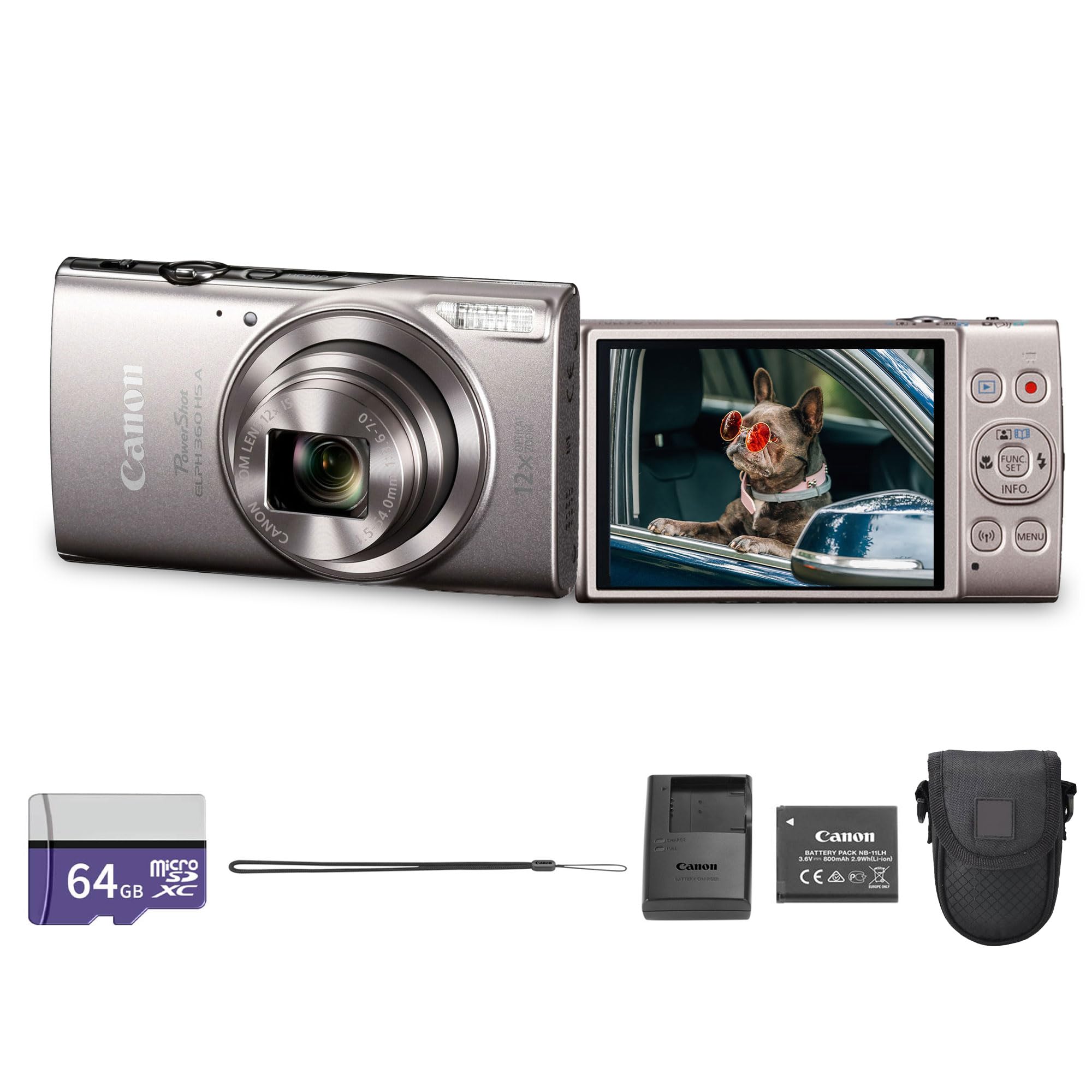
The Canon PowerShot ELPH 360 HS is the simplest, most pocket-friendly camera on this list, designed for travelers who want better zoom than their phone without any fuss. The 20.2MP CMOS sensor and DIGIC 4+ processor deliver good-quality 12x optical zoom images (25-300mm equivalent) with Intelligent IS that automatically selects the right stabilization mode for the scene. The camera fits in any pocket and weighs almost nothing.
The 3.0-inch 461k-dot LCD monitor is clear and easy to navigate, and creative tools like Hybrid Auto, Creative Shot, and Story Highlights let you produce fun results directly in-camera. It records Full HD 1080p video at 30 fps with stabilization, and built-in Wi-Fi and NFC make sharing easy. The 7.2 fps continuous shooting is decent for capturing action.
Users appreciate the simple operation and good out-of-box photo quality, though some note that the included case is too small for the camera. Image quality is a noticeable step up from a phone, especially at full zoom. The low-resolution sensor and average low-light performance are the main limitations, but for a no-brainer travel companion, it delivers reliably.
Why it’s great
- Ultra-compact and pocketable design
- 12x optical zoom with Intelligent IS
- Simple, intuitive operation for beginners
Good to know
- No 4K video recording
- Small sensor limits low-light performance
- Included case may not fit properly
FAQ
Is a mirrorless camera better than a point-and-shoot for travel?
Do I really need 4K video in a travel camera?
How many batteries should I carry for a travel camera?
What is the best single lens for a beginner travel mirrorless camera?
Why do some cameras not include a battery charger?
Final Thoughts: The Verdict
For most users, the best beginner travel camera winner is the Canon EOS R100 because it combines a modern 24MP APS-C sensor, reliable Dual Pixel autofocus, and a compact RF-mount body at an accessible price point that leaves room for lens upgrades. If you want excellent in-body stabilization in a smaller package, grab the OM SYSTEM E-M10 Mark IV. And for superior autofocus and instant creative looks, nothing beats the Nikon Z50 II.