
Our readers keep the lights on and my morning glass full of iced black tea. As an Amazon Associate, I earn from qualifying purchases.
Specs are compiled from manufacturer listings and verified buyer reviews and can change over time — please confirm the key details on the product page before buying.
If your warp threads keep slipping, your rows bow in the middle, and your bracelet comes off the loom looking lopsided, you do not have a bead problem — you have a loom problem. A loom that holds even warp tension from the first row to the last is the difference between a finished bracelet and one you unravel.
I’m Min — the founder and writer behind Gadgets Feed. This guide is built by comparing the manufacturers’ published specifications and the patterns across verified customer reviews, so you get each pick’s real strengths and trade-offs instead of marketing spin.
On a loom that slips, most of your evening goes to re-tensioning threads instead of weaving beads. Below you will find the nine looms that hold tension, adjust to length, and survive real use — the best bead loom picks worth threading up tonight.
Our Picks at a Glance


How To Choose The Best Bead Loom
Almost every beading frustration traces back to one of three things: how the loom holds your warp threads, how long it lets you weave, and whether the frame stays flat while you work. Get those three right and the rest is beads and patience.
Warp tension is the whole ballgame
Warp threads are the lengthwise strings you tie onto the loom before a single bead goes on — everything else is woven across them. If those threads pull unevenly, your piece fans out at one end and pinches at the other. A loom with a spring, groove, or peg system that grabs each thread individually keeps tension even, so rows stack straight instead of drifting.
Cheap looms fail here: a frame that bends under tension drags the rollers out of alignment. A frame that bends under tension will drag your rollers out of alignment, and you will feel it as threads that suddenly go slack halfway through a project.
Working length and width: match the loom to what you actually make
A fixed-length loom is fine if you only ever bead narrow bracelets. The moment you want a longer necklace or a belt, you need a loom whose working area extends. Adjustable designs usually slide out and lock with screws or a button, letting one loom cover short and long pieces without re-threading everything.
Width matters too. A wider warp spread fits larger beads with room to spare, while tighter spacing suits tiny seed beads — the small glass beads, often size 10/0 or smaller, that most bracelet patterns call for. Some looms give you both by letting you tighten the threads yourself.
Metal or wood — and what comes in the box
Metal looms are sturdy, compact, and easy to wipe clean; wooden looms feel warmer in the hand and often come with a wider workspace for bigger pieces. Check the included accessories before you buy. Thread, needles, and a scoop or tray sound like small extras, but they are the difference between starting tonight and waiting on a second order.
Quick Comparison
| Model | Best For | Material | Adjustable | Key Extra | Amazon |
|---|---|---|---|---|---|
| Clover 9910 Beading Loom★ Best Overall | Everyday beadwork on tiny beads | Hard plastic | Yes — several lengths | Needle, threader, 2 stoppers | Amazon |
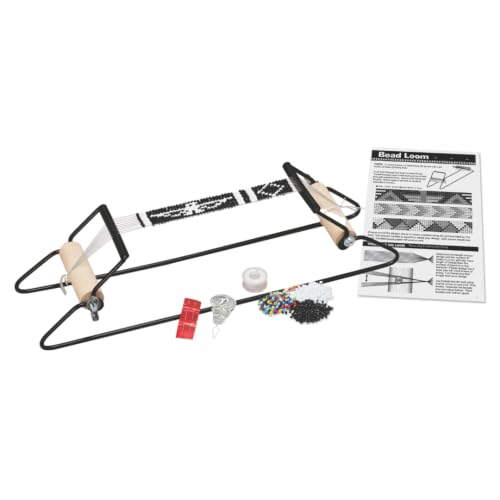
| Creativity Street Bead Loom Black, 6 inBest For Beginners | First-timers and kids | Metal | No — 6-inch area | Thread, needles, seed beads | Amazon |
| hobbyworker Third Generation Beading Loom KitTop Performer | Beginners who want a full kit | Stainless steel | Yes — 9.45 to 16.73 in | 40 m thread, scoop, 50 g beads | Amazon |
| hobbyworker Second Generation Adjustable Bead Loom Kit | Learning with everything included | Iron plating | Yes — 9.45 to 16.73 in | Tray, scissors, clasps, rings | Amazon |
| Darice 1012-24 Bead Loom | Small practice pieces | Metal | No — bendable frame | Starter beads, needles, thread | Amazon |
| INDIVSHOW Adjustable Bead Loom | Longer bracelets and necklaces | Stainless steel | Yes — up to 17 in | Calipers, thimble, scissors | Amazon |
| PP OPOUNT Adjustable Bead Loom Kit | Bigger multi-bracelet sessions | Wood | Yes — 9.8 to 14.7 in | 3 bead trays, gift box | Amazon |
| The Beadsmith Wooden Bead Loom | Large flat work like wall hangings | Cherry-colored wood | No — wide fixed frame | Illustrated assembly guide | Amazon |
| The Beadsmith Rick’s Beading Loom | Speed warping without assembly | High-quality wood | Yes — adjustable | 3 warp rods, 4 pegs, separator card | Amazon |
In‑Depth Reviews
1. Clover 9910 Beading Loom
Our pick — 4.5★ from 400+ verified ratings; the strongest balance of quality and price.
Two groove sizes, one loom — the pick that keeps tiny seed beads honest.
What wins people over here is how quickly it disappears from the process. The Clover adjusts to several working lengths by turning a button, so the same frame handles a slim bracelet and a longer band without you re-tying anything. The warp threads sit in two different groove sizes, which is why the tiny delica-style seed beads stay lined up instead of hopping from row to row. For anyone working with small glass beads, that groove detail is the whole reason the rows come out straight.
Where the design quietly earns its keep is on the bench with unsteady hands. The threads stay taut, the frame has survived real accidents — one buyer’s loom reportedly went down a flight of stairs and came back working — and the whole thing fits a small table with room to spare. It ships with a beading needle, a threader, four holders, twelve pegs, and two warp thread stoppers, so there is nothing to chase down before you start. The printed instructions are on the thin side; the QR tag on the package leads to free patterns and a video, which most people end up using instead.
Round out the honest picture with the pegs. The plastic pegs are the one part that does not match the rest of the build, and owners who crank down hard on tension eventually notice their grip softening. Treat the pegs as the consumable part of an otherwise tough tool, and this loom will outlast a dozen flimsier ones. It is the pick to reach for when your patterns live in the small-bead sizes and you want to stop re-warping between projects.
Where It Earns Its Keep
- Two groove sizes hold tiny seed beads in line instead of letting them wander
- Adjusts to several working lengths with one button — no re-warping between bracelets and bands
- Ships with bead loom, 2 warp thread stoppers, a size #10 beading needle, a threader, 4 holders, 12 pegs, and instructions
- Built to survive real handling, including a reported tumble down a flight of stairs
The Trade-Off To Know
- Plastic pegs are the weak link — they do not hold up to the same pressure as the frame
- Printed instructions are thin; the package’s pattern and video tag is the better teacher
- Costs more than the entry-level looms on this list
Thread it up if: you work mainly with small seed beads and want a compact frame that skips between lengths without fuss.
Think twice if: you plan to crank maximum tension every session — the plastic pegs, not the frame, will be your limit.
2. Creativity Street Bead Loom Black, 6 in
The starter loom that has taught two generations in the same family.
Hand this loom to someone who has never beaded before and they can start right away. The metal frame gives you a 6-inch working area, which is enough for a bracelet and small enough that you can see every thread at once. It comes with the frame, beading string, needles, and multicolor seed beads, so you need nothing else on day one. Buyers report teaching a brand-new beader to warp and start beading in about ten minutes. One buyer bought it for an 11-year-old niece; another still uses the loom they learned on as a child. Those stories say more about the learning curve than any spec sheet.
The honest catch is in the sample supplies. The included seed beads are somewhat inconsistent in size and there are too few colors to complete a full pattern, so plan on ordering your own beads if you want a specific design. Smaller beads suit this loom best — size 10/0 or finer. That is a supplies problem, not a frame problem.
What holds up: The metal frame has earned its place as the go-to starter loom — it is simple, it warps without drama, and it works for a total novice and a returning hobbyist in the same afternoon.
What to plan around: The included beads are inconsistent in size and limited in color, so treat them as practice material rather than project material.
Hand it to a beginner: anyone learning to warp, from a young kid to an adult picking up beading for the first time.
Skip the bundled supplies: if you already have a bead stash and a pattern in mind — the sample beads will not carry a design.
3. hobbyworker The Third Generation Beading Loom Kit with Seed Beads, Bead Needle, Thread, Needle Threader and Instruction Manual, Bead Looms for Adult Jewelry Beading Supplies
A stainless frame that slides from bracelet length to nearly a full necklace.
Stainless steel is the headline here, and it earns that billing two ways: the frame will not rust sitting on a shelf, and it shrugs off the knocks that shorten a plastic loom’s life. The working length runs from 9.45 inches to 16.73 inches, so you can make a small bracelet or a longer woven band. The Creativity Street has a fixed 6-inch area that caps your piece length, so this loom gives you more flexibility. The Third Generation also comes in a bigger box: 9.45 x 4.33 x 4.72 inches versus the Creativity Street’s 12.38 x 3.75 x 3.38 inches, with a 31% larger gap between the piece and its packing.
The kit is genuinely complete: a metal bead loom, three needle threaders, cotton thread, two needles, a bead scoop, a bag of seed beads, and an instruction manual. Two details stand out in practice. First, the wide warp spacing handles larger beads without crowding, and you simply pull the threads tighter when you switch to sizes 10-12. Second, the tie-off system gives you more places to anchor threads, which is where long weaves usually get messy. Beginners commonly finish their first project on the same evening they open the box.
One fair caveat on size: this loom is happiest on small and medium bracelets, and a genuinely large project can start to feel cramped. The stainless frame also has a touch of flex, which some beaders love and some do not. If your hours go into fat cuffs and long necklaces, note it. For everything up to a standard bracelet, it hits the mark comfortably.
Why it stays in the rotation: The stainless steel build survives shelf life and drops alike, and the adjustable length covers a beginner’s bracelet and a longer band from the same warp.
Size honesty: Small and medium bracelets suit it best — a very large piece will use more of the working area than you might expect.
Reach for it when: you want one kit that bundles loom, thread, needles, scoop, and seed beads so you start the same night.
Look elsewhere if: you plan to weave oversized pieces — this one is best matched to bracelet-scale work.
4. hobbyworker The Second Generation Adjustable Bead Loom Kit with Seed Beads, Large Eye Curved Beading Needle, Funnel Tray, Lobster Clasp, Open Ring and Bead Mat for Jewelry Making kit

The kit that answers the question “what else do I need” with the funnel tray.
The standout accessory is the pink bead funnel tray. Beads spill — it is a rule of the craft — and this tray has a lidded opening up front so you pour beads in, close the lid, and never chase them across the table. That single detail tells you this kit was assembled by people who have spent time at a workbench. The frame itself is made of iron plating, rust-proof and corrosion-resistant, and the working length slides from 9.45 inches to 16.73 inches to fit whatever size project you are on.
What comes in the box is the reason to pick this over the Third Generation: alongside the loom, you get a needle threader, cotton thread, two needles, the funnel tray, seed beads, yarn scissors, two lobster clasps, ten open jump rings, and four clasp tubes. That is a complete jewelry-making setup in one order, which matters when you are learning because the clasps and rings are the parts beginners forget. Buyers keep coming back to how easy it is to use. The adjustability means one loom handles small and large work, so you do not have to buy a new loom for each size.
One supply worth flagging: the included thread frays easily and is fine for practice pieces but not for wearables that see daily handling. Plenty of owners swap in their own thread for finished pieces, which is a reasonable habit. The beads that ship with the kit are also on the basic side. Neither changes the loom’s worth — the frame is the durable part.
The Kit Advantage
- Funnel tray with a lidded opening keeps poured beads from scattering across the table
- Adjustable length from 9.45 to 16.73 inches — one loom, many project sizes
- Full accessories: needle threader, cotton thread, 2 needles, yarn scissors, 2 lobster clasps, 10 open jump rings, 4 clasp tubes
- Iron plating resists rust and corrosion for repeat use
What To Buy Separately
- Included thread frays quickly — switch to a sturdier thread for pieces you plan to wear
- Bundled seed beads are basic and best used as practice
- Less refined finishing than a premium wooden loom
Ideal for: a beginner or returning crafter who wants the entire workspace — loom, tray, thread, clasps, and rings — in a single order.
Not the pick if: you already own quality thread and beads and only need a bare frame.
5. Darice 1012-24 Bead Loom

The cheap, bendy test flight — fine for a first bracelet, not for a lifetime.
If you are not sure beading will stick, this is the low-risk way to find out. The metal frame is table-sized and light, small projects like cuffs, earrings, and simple bracelets go together quickly on it, and the bendable frame can be coaxed longer when you want to try a necklace. That bendability cuts both ways: it lets you improvise, and it also means the frame will not hold its shape forever under serious tension. This is a practice loom, and it is honest about being one.
The beginner angle is the strong suit — beginners make up the largest share of what people discuss on this loom, and the results can genuinely look boutique-quality once you get the rhythm. The catch is in the accessories. The included beads are thin on quantity and the thread is low quality, and the “needles” are small sewing needles rather than proper seed-bead needles, which makes threading fussy. Seasoned beaders on this model also split into two camps on setup: some find it simple, others wrestle with the spring spacing before it clicks.
Weave with patience and YouTube open, and this loom will teach you the fundamentals without much money on the table. Then, when you know you are hooked, a sturdier frame is the natural next step. That is exactly what a budget loom is for: learn the fundamentals cheaply, then upgrade.
Why beginners pick it: The stiff-but-bendy metal frame is forgiving for small projects, and the shapes you can turn out surprise people once they get the hang of warping it.
Where it asks for patience: The bundled beads and thread are light and the needles are small sewing needles rather than seed-bead needles, so you will want your own supplies before long.
A smart first buy if: you want to test whether beading is your craft before committing to a sturdier loom.
Plan to move on if: weaving becomes a habit — this frame bends, and a firmer loom will follow it in your kit soon.
6. INDIVSHOW Adjustable Bead Loom, Seed Bead Loom Kit Includes Thread, Beading Needles, 8000 Grains Czech Beads, Calipers, Thimble, Yarn Scissors for Adults Kit, Bracelet Making Kit

Stretches to 17 inches — enough loom for necklaces, not just bracelets.
If your projects keep growing longer, this is the loom that keeps up. The frame measures 9.5 by 4.2 inches with a maximum stretch of 17 inches, so the same tool handles a tight cuff and a full necklace without a second purchase. The length adjusts with a turn of a button, and the whole thing is stainless steel, so it stays rigid and wipes down clean. For anyone who has outgrown a fixed 6-inch loom, that reach is the reason to step up.
The beading needles deserve their own sentence. They are made to bend without snapping — one detail the brand emphasizes — and in practice that means threading is fast and you are not stopping mid-project to hunt for a spare. Owners also like how expandable the design feels, calling out its versatility for different sizes. It arrives with mixed-color seed beads, white calipers, cotton thread, a needle threader, a thimble, yarn scissors, and an instruction manual, which covers most of what a first-time adult has to buy separately.
The caveats are fair to mention up front. The adjustability can loosen over a long session and needs an occasional re-tightening turn, and the bundled accessories are on the basic side compared to the loom itself. Neither is a deal-breaker; both are things to know before you unwrap the box. The stainless frame outlasts the bundled thread and beads.
What stands out: A 17-inch maximum stretch and a stainless steel build make this the adjustable option for anyone whose projects keep getting longer.
What stays basic: The included accessories are simple, and the adjustable mechanism wants a re-tighten now and then during long sessions.
Best for: beaders who bounce between bracelets and necklaces and want a single loom that covers both lengths.
Not the first choice if: you want built-in extras like a bead tray or clasps — those are not the INDIVSHOW’s focus.
7. PP OPOUNT Adjustable Bead Loom Kit, Wood Loom Beading Supplies with Detailed Instructions, Practical Jewelry Making Accessories, Beading Loom Kits for Adults Jewelry Making Bracelets Belts

A wooden loom with small grooves — and the tension control to match.
Wood changes the feel of beading, and this loom makes the most of it. The frame is quality wood with a 5.9-inch working width, and the bottom detaches so you can extend the length from 9.8 inches to 14.7 inches. The tighter grooves running along the frame hold your warp threads without slip, which is why the wire stays put and rows stack evenly. Owners describe the tension control as the quiet advantage — when the wire does not slide, you spend your time placing beads instead of chasing threads. A few mention stringing multiple bracelets on the frame at once, which is a nice bonus for anyone batching gifts.
The kit side is practical. You get three bead trays, two needles, three packs of seed beads, a roll of crystal thread, four pairs of crimp ends with chains, a set of detailed instructions, and a gift box. Crimp ends are the metal pieces that finish a bracelet cleanly, and having four sets ready to go saves a trip to the craft store. Assembly is straightforward — disassembled on arrival, put together with the included Allen wrench, often in a few minutes. The instructions walk a first-timer through step by step, which is why beginners report assembling and starting to bead quickly.
The one thing worth checking before you buy is needle durability. A few owners note the included needles bend easily and wish the kit shipped with spares. That is a small order to add. Everything else about this kit — the wood, the grooves, the trays, the crimp ends — puts it in the premium tier for good reason.
Why It Feels Premium
- Quality wood frame with small, tight grooves so the wire does not slip under tension
- 5.9-inch working width with adjustable length from 9.8 to 14.7 inches
- Three bead trays, crimp ends with chains, crystal thread, and a gift box included
- Detailed step-by-step instructions make first-time assembly quick
Small Things To Know
- Included needles bend easily — buy a spare set
- Arrives disassembled; you will need the included Allen wrench to put it together
- Slightly shorter maximum length than the all-metal adjustable looms on this list
Suits: the beader who wants a wooden frame with control grooves, a wide working face, and a kit that finishes projects cleanly from the start.
Consider a pass if: you want the longest possible extension — the metal adjustable looms stretch further.
8. The Beadsmith Wooden Bead Loom
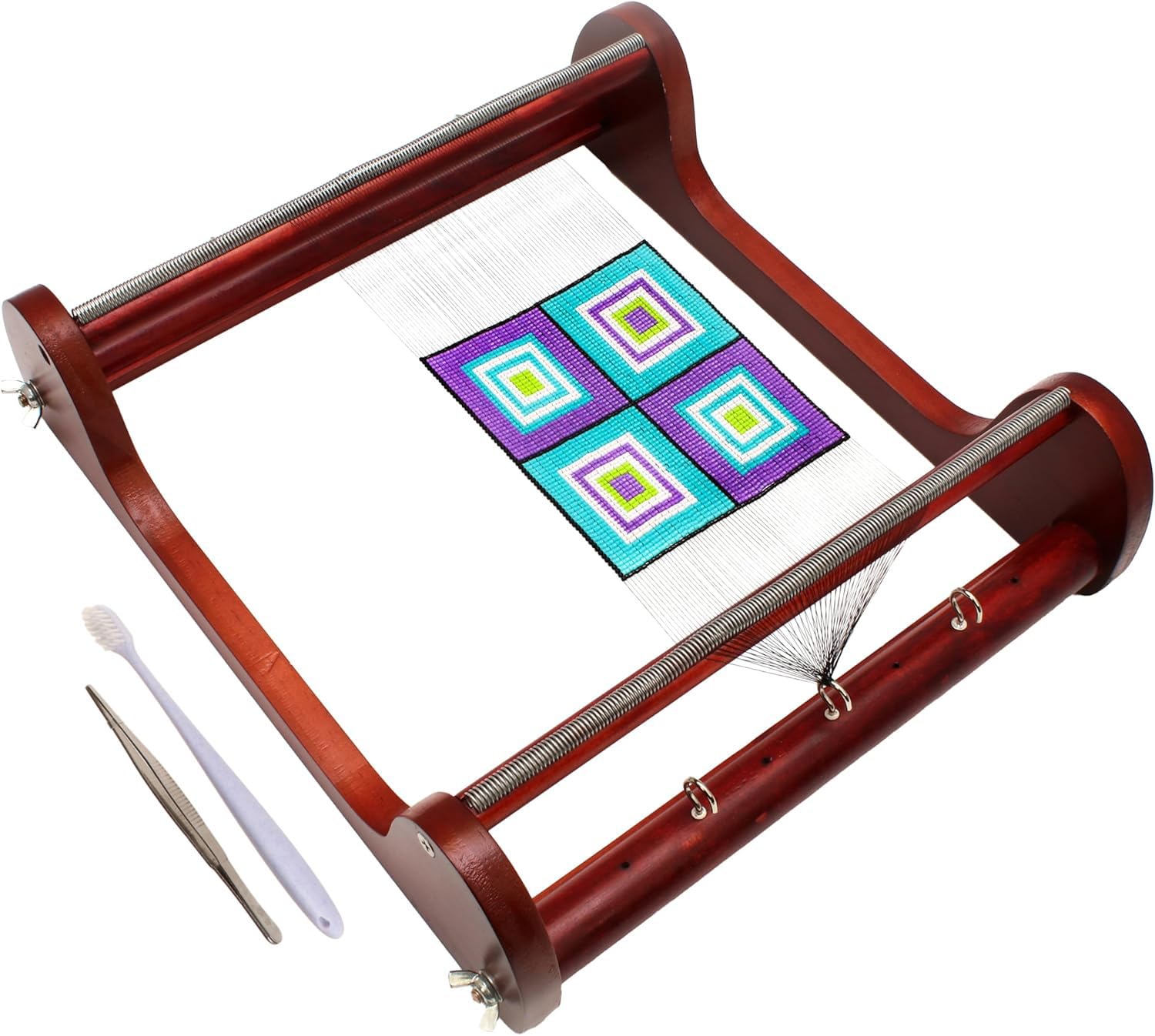
Cherry-colored wood and a table-sized workspace — if you have the room.
A 12.5-by-13-inch frame changes what you can make. The Beadsmith Wooden Bead Loom is built from high-quality cherry-colored wood and gives you enough surface for wall hangings, wide belts, and large pieces that smaller looms simply cannot hold. If your projects have been spilling off a 6-inch area, this is the upgrade. The frame fits roughly 8.5-inch bracelets without rolling the work, and the wood is solid enough to stay flat while you pull tension across a wide band.
Assembly is part of ownership here. The box includes illustrated instructions, and putting it together takes a wrench for the hooks — plan a short evening for the setup rather than expecting it ready to weave. Once assembled, the wide frame is the reward, and it opens project types that the compact looms on this list cannot touch. This is the pick for the beader who has graduated from bracelets to bigger canvas-sized work.
Two trade-offs are worth knowing before you commit. First, the frame is large and needs its own table space — check your workbench before buying. Second, some owners note that the protruding wing nuts and cup hooks can catch the weft — the cross-thread you weave horizontally — during longer passes. The workaround is simple: swap the protruding hardware for flat screws when you can, and the interference disappears. That is a small adjustment for the workspace this loom provides.
Space it creates: A 12.5 x 13-inch cherry-colored wooden frame that handles broad pieces like wall hangings and wide belts with room for the shuttle.
Adjustment it wants: Protruding wing nuts and cup hooks can snag longer weft passes — flat screws fix it, but it is worth knowing on day one.
Right size for: anyone moving up from bracelet looms into wall hangings, wide belts, and bigger woven panels.
Not the pick if: you bead on a small desk and want something compact — this wants a table of its own.
9. The Beadsmith Rick’s Beading Loom, 13.5 x 3.75 x 4.5 inches
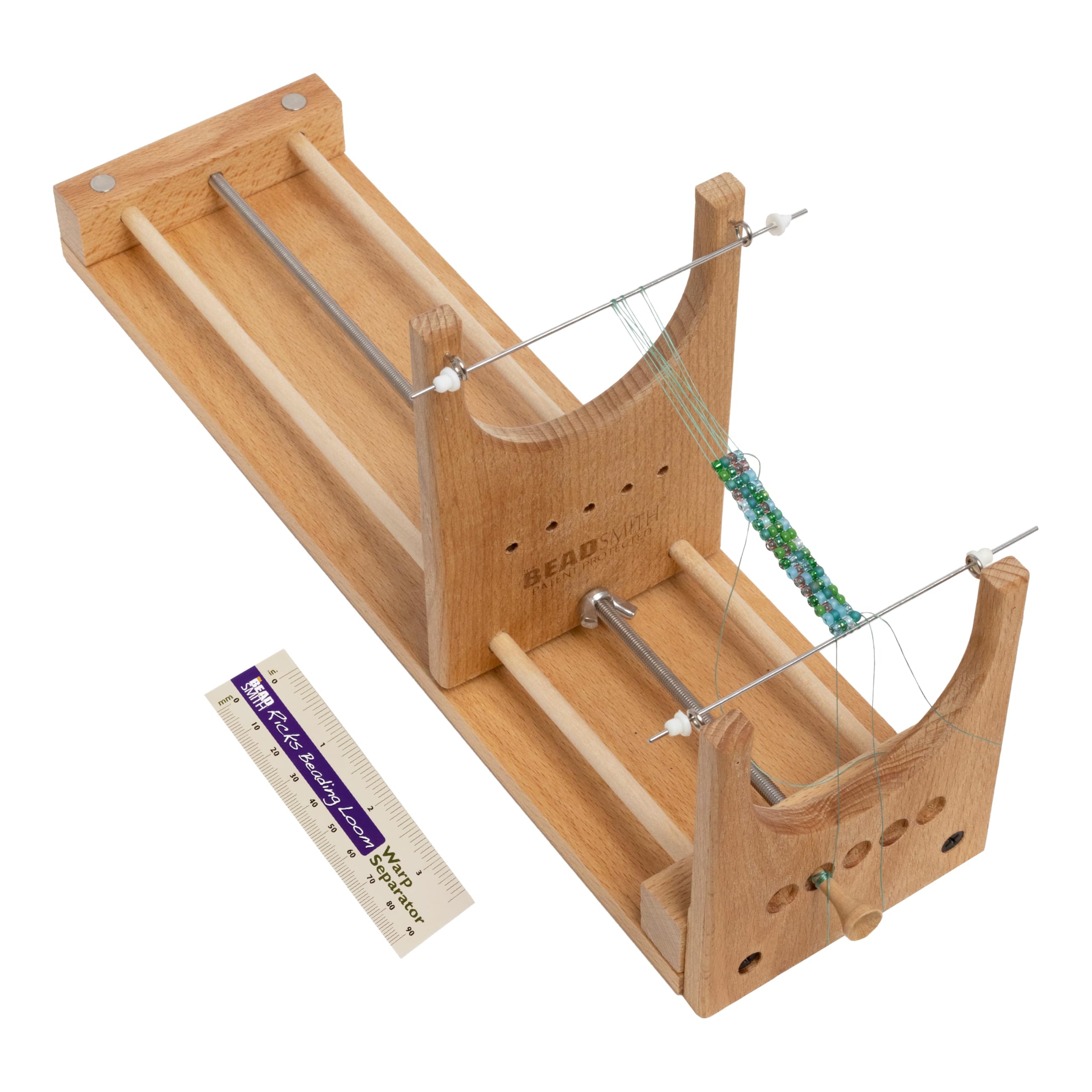
Set 40 warps in under five minutes — no assembly, no fuss.
Speed is the story here. Rick’s Beading Loom arrives already put together, and the maker states you can set 40 warps in less than 5 minutes. A pre-assembled design makes that believable, because there is no bolt-turning to slow you down. The frame is high-quality wood, ergonomically shaped, and measures 13.5 by 3.75 by 4.5 inches, so it stays portable without shrinking the workspace below useful. It ships with a comprehensive user guide, three warp rods, four warp pegs, and a warp separator card, so you have everything to warp up on day one.
The feature that makes it a keeper is the two-warp finish. This loom — a patent-protected design — closes out a project with just two warps to weave back into the piece, which means far less thread to hide when you finish. Anyone who has spent twenty minutes burying warp tails knows exactly how valuable that is. The adjustable length handles bracelets, hat bands, pouches, necklaces, and tapestries, and it works with any size bead you like.
A couple of small notes for honest reporting. The warp rods are on the thin side, and under high tension they can bend, letting threads loosen; smooth rods can also allow thread to overlap, and the silicone tips can pop off over time. Threaded rods and wing nuts are the fix savvy owners reach for. Seed beads at the very top and bottom can also be fiddly to place, so leave a margin and finish ends with a knot or bead. None of that overrides the two-warp convenience.
The Standout Strengths
- Ships fully assembled — set 40 warps in less than 5 minutes per the maker
- Two-warp finish means far less thread to weave back when closing a project
- Adjustable length covers bracelets, hat bands, pouches, necklaces, and tapestries
- Works with any size bead and includes warp rods, pegs, and a separator card
The Fixes To Know
- Warp rods are thin and can bend under strong tension, loosening threads
- Smooth rods may let warp thread overlap; silicone tips can pop off over time
- Placing seed beads at the very top and bottom of the piece takes care
Buy it for: the speed — no assembly, fast warping, and a two-warp finish that saves you an hour of thread-hiding per project.
skip it if: you plan to crank the tension high on wide projects — the thin warp rods will be your practical ceiling.
Understanding the Specs
Warp System: Springs, Grooves, and Pegs
The warp system is how the loom holds each lengthwise thread. A groove system cuts narrow channels into the frame so each thread sits in its own slot — tighter grooves suit small seed beads, wider grooves suit larger ones. A peg system uses small posts to hook threads, and a spring system uses a coiled wire that spaces the threads for you. The right choice depends on the beads you use most: small seed beads want fine, closely spaced channels, while beads sized 10-12 or larger want more gap between threads.
Working Length and Width
Working length is how long a piece the loom can hold, and working width is how many warp threads fit across the frame. Adjustable looms extend by sliding a bottom section out — often from a short bracelet length up past 14 inches — which lets one loom cover multiple project sizes. Wider working areas handle larger patterns, but they also need more table space and a sturdier frame to avoid bowing under tension. Match the length to the longest piece you plan to make, not the shortest.
FAQ
What size seed beads work best on a bead loom?
How long does a good bead loom last?
Do I need an adjustable bead loom or will a fixed one work?
Is a metal or wooden bead loom better?
What extras should come with a bead loom kit?
Why do my warp threads keep slipping on the loom?
How many warp threads do I need to start a bracelet?
Can I use a bead loom for more than bracelets?
How do I hide the thread when I finish a loomed piece?
Is a bead loom good for kids?
Final Thoughts: The Verdict
For most people, the bead loom winner is the Clover 9910 Beading Loom because its two groove sizes hold small seed beads in line, and the frame adjusts to several lengths so one loom covers bracelets and longer bands. If you want a complete kit that includes the loom, thread, needles, scoop, and seed beads in one order, grab the hobbyworker Third Generation Beading Loom Kit. And for beaders who jump between bracelets and full necklaces, the INDIVSHOW Adjustable Bead Loom is the one to reach for, with a 17-inch maximum stretch. If you are buying your very first loom and want to learn the craft quickly, the Creativity Street Bead Loom Black, 6 in is a proven starting point.
How We Picked
We do not accept paid placement. Every pick is matched to a real buyer and a real use-case; we do not hands-on test units.
Sources & Methodology
Specifications: manufacturer listings and product documentation. Review insights: verified customer reviews, as of September 2026. Pricing: not shown on this page (it changes often); check the current price via the retailer link.
As an Amazon Associate, Gadgets Feed earns from qualifying purchases. This does not affect which products we feature.