
Subterranean termites don’t just nibble wood—they silently hollow out your home’s structure from the soil up, colony by colony. The only way to intercept them before they reach the foundation is with a perimeter of bait stations that trick foraging termites into carrying a slow-acting lethal dose back to the nest.
I’m Min — the co-founder and writer behind Gadgets Feed. I’ve spent hundreds of hours cross-referencing active ingredients, EPA registrations, installation requirements, and real-world customer feedback to separate the professional-grade systems from the weekend gimmicks you’ll find on the shelf.
Effective termite control hinges on choosing the right delivery mechanism and toxin. This guide evaluates the top contenders to help you secure the best bait stations for termites and defend your property without overpaying for monthly pest-control contracts.
How To Choose The Best Bait Stations For Termites
Unlike surface sprays that just kill whatever they touch, bait stations rely on termites voluntarily feeding on a treated matrix and then sharing it with the colony through trophallaxis. That means the active ingredient, station design, and placement protocol all matter far more than brand name. Here are the critical factors to evaluate before drilling your first hole.
Active Ingredient: IGR vs. Fast-Kill vs. Detection-Only
The most effective termite baits use insect growth regulators (IGRs) like novaluron or hexaflumuron. These compounds disrupt chitin production during molting, so the worker termites don’t die immediately—they return to the colony, share the poisoned food, and the entire colony collapses within weeks. Fast-acting contact poisons kill the individual forager on the spot, which actually undermines colony elimination because no toxin travels back to the nest.
Station Design: Sealed Cartridge vs. Open Bait Matrix
A quality station keeps moisture out while letting termites crawl in. Cartridge-based systems (like Trelona or Advance TBS) allow you to swap the monitoring wood block for a poison cartridge without disturbing the station’s position. Open-stake designs with pop-up indicators are simpler to inspect but can fill with water, making the bait matrix unpalatable. Look for stations that use a locking lid with a dedicated access tool—this prevents accidental pet or wildlife exposure.
Installation Preparation and Soil Compatibility
Every station needs a clean hole the same diameter as the station body, usually 2.5 to 3 inches wide. Hard clay or rocky soil demands a powerful auger bit; trying to hammer a station into compacted soil will crack the plastic housing. Some kits include a digging tool or auger handle; others expect you to supply a drill. Budget-friendly granular or spray alternatives require trenching and watering, not hole-digging, so your soil type directly dictates which product category fits your property.
Quick Comparison
On smaller screens, swipe sideways to see the full table.
| Model | Category | Best For | Key Spec | Amazon |
|---|---|---|---|---|
| BASF Termite Bait & Monitoring System Home Kit | Complete Kit | Full perimeter colony elimination | 10 stations + 6 Trelona bait cartridges (0.5% Novaluron) | Amazon |
| Advance Termite Bait Monitoring Stations (TBS) 10 Pack | Monitoring System | Detection-first DIY users | 10 stations with wood block monitors (no poison included) | Amazon |
| Protecta EVO Ambush Bait Stations (6 Pack) | Station Enclosure | Rodent + termite multi-pest use | 6 locking stations, 4 vertical bait rods each, 1 key | Amazon |
| BASF Trelona Compressed Termite Bait (6 Cartridges) | Refill Cartridges | Replacing poison in existing BASF stations | 6 cartridges with 0.5% Novaluron IGR | Amazon |
| Spectracide Terminate Detection & Killing Stakes (15 Count) | Stake System | Quick-install monitoring with pop-up alert | 15 stakes with hexaflumuron bait and pop-up indicator | Amazon |
| BioAdvanced Termite Killer Granules (9 lb) | Granular Barrier | Fast-acting surface barrier treatment | Covers 4,500 sq ft, 30-day protection, water-activated | Amazon |
| Bonide Termite & Carpenter Ant Killer Concentrate (32 oz) | Liquid Concentrate | Trench-based soil barrier treatment | 32 oz concentrate, 5-year barrier, dual-action spray | Amazon |
In‑Depth Reviews
1. BASF Termite Bait & Monitoring System Home Kit
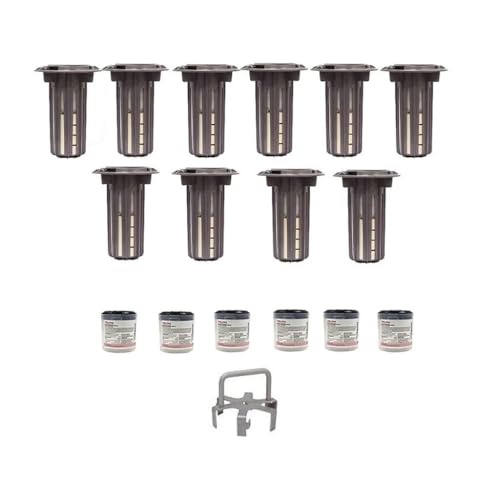
BASF engineered this 17-piece kit to mirror the exact same stations and cartridge refill schedule that professional pest-control franchises install at a fraction of the monthly service cost. Each pre-loaded station ships with a termite inspection cartridge (TIC) containing a highly palatable Puri-cel matrix wood base that termites prefer over the framing lumber in your house—so they actively seek the station before you ever add poison.
The kit includes six Trelona bait cartridges with 0.5% novaluron, a slow-acting IGR that prevents molting. Once you confirm feeding in a station during routine checks every 8-12 weeks, you swap the inspection cartridge for the purple bait cartridge. The toxin then spreads through the colony via trophallaxis, causing complete colony elimination within 4-6 weeks. An access tool is included for opening and servicing the stations.
The one investment you’ll need beyond the kit is a 3-inch diameter auger bit for your drill, because the stations measure 2.6 inches wide and must seat flush with the soil surface. Users report saving over per year versus Terminix or Orkin contracts, and the stations themselves last for years—so the only recurring cost is replacement bait cartridges during active infestation periods.
Why it’s great
- Complete, professional-tier system out of the box with both monitoring and elimination cartridges
- Uses novaluron IGR that wipes out the entire colony, not just individual foragers
- Massive cost savings compared to annual pest-control subscription plans
Good to know
- Requires an auger bit for installation, especially in hard clay soil
- Monitoring cartridges need replacement every 6 months if no termite activity is detected
2. Advance Termite Bait Monitoring Stations (TBS) 10 Pack

This is the pure monitoring half of the BASF Advance system—identical physical stations, same cartridge compatibility, but zero poison included. You get 10 TBS stations, 10 termite inspection cartridges (TICs), and 10 untreated wood block monitors. The strategy here is to install the entire ring first, observe whether termites find the stations over 1-2 seasons, and then buy Trelona bait cartridges only for the stations that show activity.
Because the wood blocks and TICs are untreated, there is zero risk of driving termites away from the stations before they commit to feeding. This approach works well for proactive homeowners who want to stake their perimeter before any swarm or mud-tube sighting. The stations are the same units pest-control crews bury; you can confirm compatibility because Trelona cartridges (ASIN B07G1R9137) fit perfectly without modification.
The main trade-off: you’ll need to buy the Trelona poison separately, and if you have an active infestation, you’ll pay more in total versus the all-in-one kit. Users mention that the wood blocks can rot in consistently wet soil, so annual inspection and replacement of the cellulose matrix is part of the routine. An auger is strongly recommended, and you’ll want a 2.6-inch bit for a snug fit that keeps soil from backfilling around the station rim.
Why it’s great
- Lowest entry cost for a professional-grade below-ground station network
- No premature poisoning—termites freely discover and feed on monitoring wood blocks
- Compatible with Trelona bait cartridges, creating a modular DIY system
Good to know
- Bait cartridges and access tool are not included—sold separately
- Inspect stations at least every 90 days, especially during spring swarm season
3. Protecta EVO Ambush Bait Stations (6 Pack)

These are heavy-duty, lockable bait boxes designed primarily for rodent control but frequently repurposed by DIYers for in-ground termite baiting. Each station holds four vertical bait rods on a removable insert, and the tamper-resistant design requires a specific key to open—critical for pet safety and to prevent children from accessing the toxin inside. The plastic housing is durable enough to survive years of outdoor exposure without cracking or UV degradation.
The stations measure 10.3 inches long and 4.15 inches tall, making them larger than dedicated termite stations. This extra volume is useful if you want to load multiple bait types or place large parafin-based termite blocks. However, the station is not designed specifically for termite monitoring—there is no pop-up indicator or dedicated inspection channel. You must manually lift the lid and check the bait for feeding signs every few weeks.
Bell Labs manufactures these in the USA, and customers report that local vector-control agencies use the same model for field treatments. One key is included per order of six stations, so if you lose it, you’ll need to drill out the locking mechanism. Combined with professional-grade termite bait blocks, this is a rugged solution for rural properties where rats and termites coexist and you want one enclosure to manage both threats.
Why it’s great
- Lockable, tamper-resistant design keeps children and pets away from bait
- Exceptional build quality—stations withstand years of outdoor weather
- Four vertical rods allow flexible bait loading for rats, mice, or termite blocks
Good to know
- Not optimized for termite-only monitoring—no inspection window or pop-up indicator
- Only one key included per six-pack, so store it carefully
4. BASF Trelona Compressed Termite Bait (6 Cartridges)

When your monitoring stations detect termite feeding, these Trelona compressed cartridges are what you insert to start the colony elimination clock. The compressed bait geometry means the cartridge holds 33 percent more active matrix than standard loose-fill designs, extending the time between refills. The 0.5 percent novaluron concentration is consistent across all BASF bait products, so mixing different BASF station brands in one perimeter won’t create inconsistent dosing.
The cartridge fits any BASF Advance station (including the TBS models from product 2) and many third-party station housings that accept a 2.6-inch bayonet-style insert. You simply pull out the wood inspection block and click the purple Trelona cartridge into place. Termites feed on the novaluron-treated cellulose, return to the colony, and share it through trophallaxis—within two months, the queen stops laying viable eggs and the colony starves.
Note that these six cartridges alone do not include station housings or inspection cartridges. Current regulatory restrictions prevent sale to residents of AK, AL, CA, GA, HI, MA, PA, TN, WA, UT, and NY, so check local EPA compatibility before ordering. Users who previously paid for monthly pest-control subscriptions report recouping the cost of these cartridges within a single treatment cycle.
Why it’s great
- 33 percent more bait matrix per cartridge for extended protection
- Direct replacement for the identical cartridges used by professional exterminators
- IGR mechanism ensures colony-wide elimination, not just individual forager kills
Good to know
- Only compatible with BASF Advance station housings—not universal
- Shipping restricted in several states; verify eligibility before purchasing
5. Spectracide Terminate Detection & Killing Stakes (15 Count)

Spectracide’s Terminate stake system takes a hybrid approach: each stake acts as both a monitoring station and a bait delivery device, using hexaflumuron as the active IGR. The pop-up indicator on the stake cap physically rises when termites have been actively feeding inside, giving you a above-ground visual signal without digging or pulling the stake. This is the simplest system to check—just walk your perimeter and look for raised caps.
The kit includes 15 stakes, a digging tool (auger-style handle), and locator shields that prevent the stake from being pushed too deep into the soil. Installation is straightforward: twist the auger tool to create a pilot hole, insert the stake, and snap the cap flush with the ground. The locator shield also reduces the chance of accidentally mowing over a stake. Spectracide recommends spacing stakes 2 to 3 feet from the foundation and no more than 10 feet apart.
The primary weakness is durability. Because the bait matrix is exposed to soil moisture inside the open-bottom stake, it can degrade faster in wet clay compared to sealed cartridge systems. Customers report that one season is the typical functional life before the wood bait becomes mushy. Also, the hexaflumuron concentration is fixed at manufacturing time—you cannot swap between monitoring and elimination modes like you can with the BASF Advance system.
Why it’s great
- Pop-up indicator makes inspection effortless and eliminates guesswork
- Comes with 15 stakes plus a digging tool for under the price of 5 professional rebait visits
- Decent IGR chemistry that targets colony reproduction through molting disruption
Good to know
- Open-bottom stake design allows moisture to degrade bait faster than sealed cartridges
- Not suitable as a standalone solution for active heavy infestations—monitor weekly
6. BioAdvanced Termite Killer Granules (9 lb)
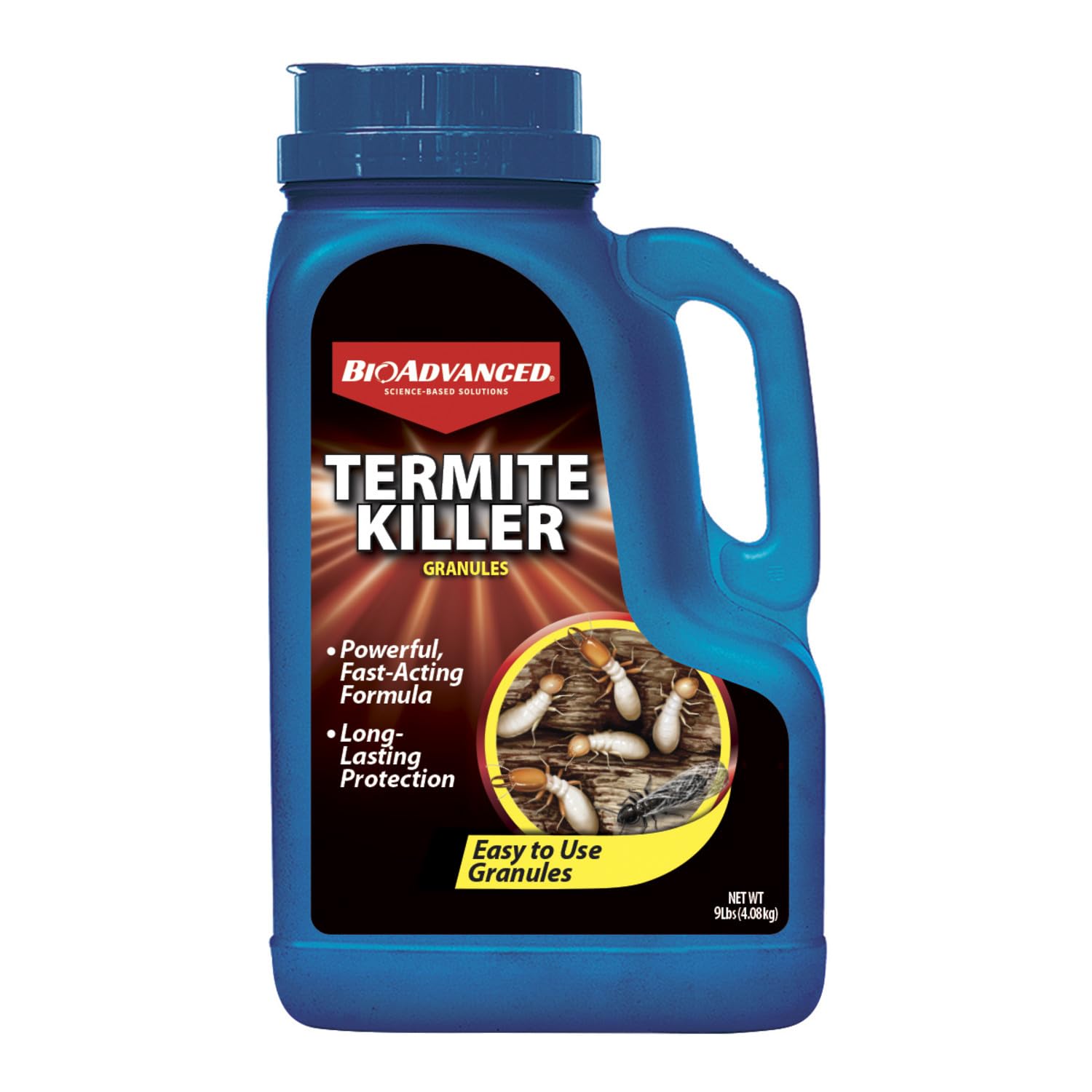
This is not a bait station in the traditional sense—it is a granular barrier treatment that you spread around the foundation and then water in. The active chemistry works instantly on contact, killing foraging termites, ants, centipedes, and cockroaches that crawl through the treated zone. The 9-pound bottle covers 4,500 square feet, which is enough for an average suburban house perimeter plus attached garage.
BioAdvanced markets the formula as providing 30 days of residual protection after watering. Because the granules kill on contact rather than using an IGR, they function more like a chemical fence than a bait-and-spread colony elimination system. For property owners with an existing small trail of termites near the slab edge, this can break the immediate foraging chain, but it will not reach the colony underground. The material is BB-sized and dry, so you can toss handfuls under bushes or into crawl spaces without a spreader.
The main limitation: you need reapply every 30 days during swarm season, and heavy rain can dilute the barrier prematurely. Customer reports indicate that the product excels at stopping perimeter ants and crickets, but for subterranean termite colony elimination, it should be paired with a true bait-station ring. The 78-year-old reviewer who applies it annually for light prevention is precisely the use case this fits best.
Why it’s great
- No drilling or tool required—just broadcast granules and water them in
- Kills a broad spectrum of crawling insects on contact, not just termites
- Large coverage area makes it cost-effective for whole-house perimeter defense
Good to know
- 30-day residual is short compared to IGR bait stations, requiring monthly reapplication
- Contact-kill mechanism does not transmit poison back to the nest
7. Bonide Termite & Carpenter Ant Killer Concentrate (32 oz)

Bonide’s concentrate is a liquid termiticide—you mix 32 ounces with water and apply it as a soil drench around the foundation. The chemical emulsion forms a 7-year barrier in the soil, intercepting foraging termites before they reach the structure’s wood. Bonide claims the treatment lasts up to 5 years for subterranean termites if the trench-and-fill method is performed correctly, though the “dual action” label means the product also provides immediate contact kill when sprayed on exposed insects.
Application requires digging a shallow trench around the foundation, mixing the concentrate with water in a hand sprayer or sprinkler can, and saturating the soil. This is more labor-intensive than inserting stakes or granules, but the barrier duration is significantly longer than any monthly granular. One 32-ounce bottle makes enough finished spray for a typical single-story home perimeter. Customers in wooded areas report annual spring applications completely resolved previous-owner termite issues.
The critical factor to understand: this is not a bait station. It does not attract termites; it simply creates a dead zone they must cross. Termites can tunnel under or around a poorly applied trench. For maximum efficacy, you must maintain continuous soil contact 4 to 6 inches deep across the entire foundation line. Gaps in the treated zone create a walkway for termites to bypass the poison entirely.
Why it’s great
- Longest-lasting barrier of any non-station product—up to 5 years in stable soil
- Concentrate format is extremely economical for large properties
- Broad-spectrum insecticide also handles carpenter ants, bees, and beetles
Good to know
- Requires digging a physical trench for proper barrier formation, adding installation complexity
- Contact-kill mechanism does not reach or eliminate the colony—only intercepts foragers
FAQ
How far apart should I place bait stations around my home?
Can I use bait stations with liquid soil treatments for double protection?
How long does a Trelona bait cartridge last once termites start feeding?
Final Thoughts: The Verdict
For most users, the best bait stations for termites winner is the BASF Termite Bait & Monitoring System Home Kit because it bundles 10 professional-grade stations with 6 Trelona novaluron cartridges in one box, giving you both detection and colony elimination without separate purchases. If you want a pure detection-first system that lets you buy poison only after confirming activity, grab the Advance Termite Bait Monitoring Stations 10 Pack. And for budget-friendly perimeter defense without station installation, nothing beats the Bonide Termite & Carpenter Ant Killer Concentrate for creating a long-lasting soil barrier on a tight budget.