
That trail you’ve been eyeing? It won’t forgive a helmet that fits wrong or crumples on impact. Four-wheeler riding kicks up dust, jolts your spine through every rut, and punishes any weak spot in your gear — which is why your helmet choice is the single most important safety decision before you twist the throttle.
I’m Min — the co-founder and writer behind Gadgets Feed. I’ve spent hundreds of hours analyzing rider safety data, comparing shell construction methods, and cross-referencing real-world crash reports to bring clarity to this specific category.
After sorting through dozens of models on fit, safety certifications, ventilation design, and impact-absorption materials, I’ve assembled a precise lineup of the best 4 wheeler helmets that balance protection, comfort, and real off-road usability for riders of all ages.
How To Choose The Best 4 Wheeler Helmets
Your head shape, the type of terrain you ride, and your typical ride duration all dictate which helmet features matter most. A fast trail rider needs ventilation and a lightweight shell, while a slow technical crawler benefits from a snug jawline and high-density foam. Here are the three pillars to evaluate before buying.
Safety Certifications and Impact Technology
DOT FMVSS 218 is the baseline federal standard in the U.S., but it only tests linear impact absorption. For angled hits — the kind that happen when your helmet glances off a rock or tree — MIPS (Multi-directional Impact Protection System) reduces rotational forces transmitted to the brain. Some helmets pair DOT with ECE 22.06, a European standard with more rigorous testing, including multiple impact zones and shell integrity checks. If you’re picking between two similarly priced models, the one with MIPS or dual certification is the safer long-term investment.
Shell Material and Weight
Most helmets in this category use an injection-molded ABS shell paired with an expanded polystyrene (EPS) liner. ABS is durable and cost-effective but heavier. Premium models sometimes use a polycarbonate blend or composite materials to shave 100–200 grams, directly reducing neck fatigue during long rides. Weight matters more for younger riders; a youth helmet that feels light at 1,050 grams puts far less strain on developing cervical spines than a budget model pushing 1,400 grams.
Ventilation, Liner, and Fit System
Off-road helmets prioritize airflow because physical exertion in warm weather causes rapid sweat buildup. Look for at least six intake vents and four exhaust vents — more is generally better. The cheek pads and liner should be removable and machine-washable to prevent odor and bacteria accumulation. A quick-release buckle or a double-ring closure both work, but the quick-release is easier for children to handle. Always measure head circumference with a soft tape measure; if you land between sizes, size up and use the optional thicker cheek pads that many brands sell separately.
Quick Comparison
On smaller screens, swipe sideways to see the full table.
| Model | Category | Best For | Key Spec | Amazon |
|---|---|---|---|---|
| Troy Lee Designs SE4 | MIPS | Competitive off-road racing | MIPS rotational protection, 16 vents | Amazon |
| Fox Racing V Core MIPS | MIPS | All-day trail riding | MIPS, 13 vents, 4 shell sizes | Amazon |
| Bell Powersports MX-9 Adventure | Adventure | Dual-sport / ADV touring | MIPS, 3.75 lbs, Cardo ready | Amazon |
| O’Neal 1SRS Adult | Solid Build | Mid-speed trail and track | Lightweight shell, thick EPS | Amazon |
| NENKI NK 310 Adult | Budget | Entry-level / casual riders | DOT certified, flip-up visor | Amazon |
| Oumurs Youth Dino | Youth | Kids ages 5–14 trail riding | 1,050g, includes goggles+gloves | Amazon |
| ILM Z705 Youth | Youth | Youths needing dual certification | DOT + ECE 22.06, 2.4 lbs | Amazon |
In‑Depth Reviews
1. Troy Lee Designs SE4 Polyacrylite Helmet with MIPS
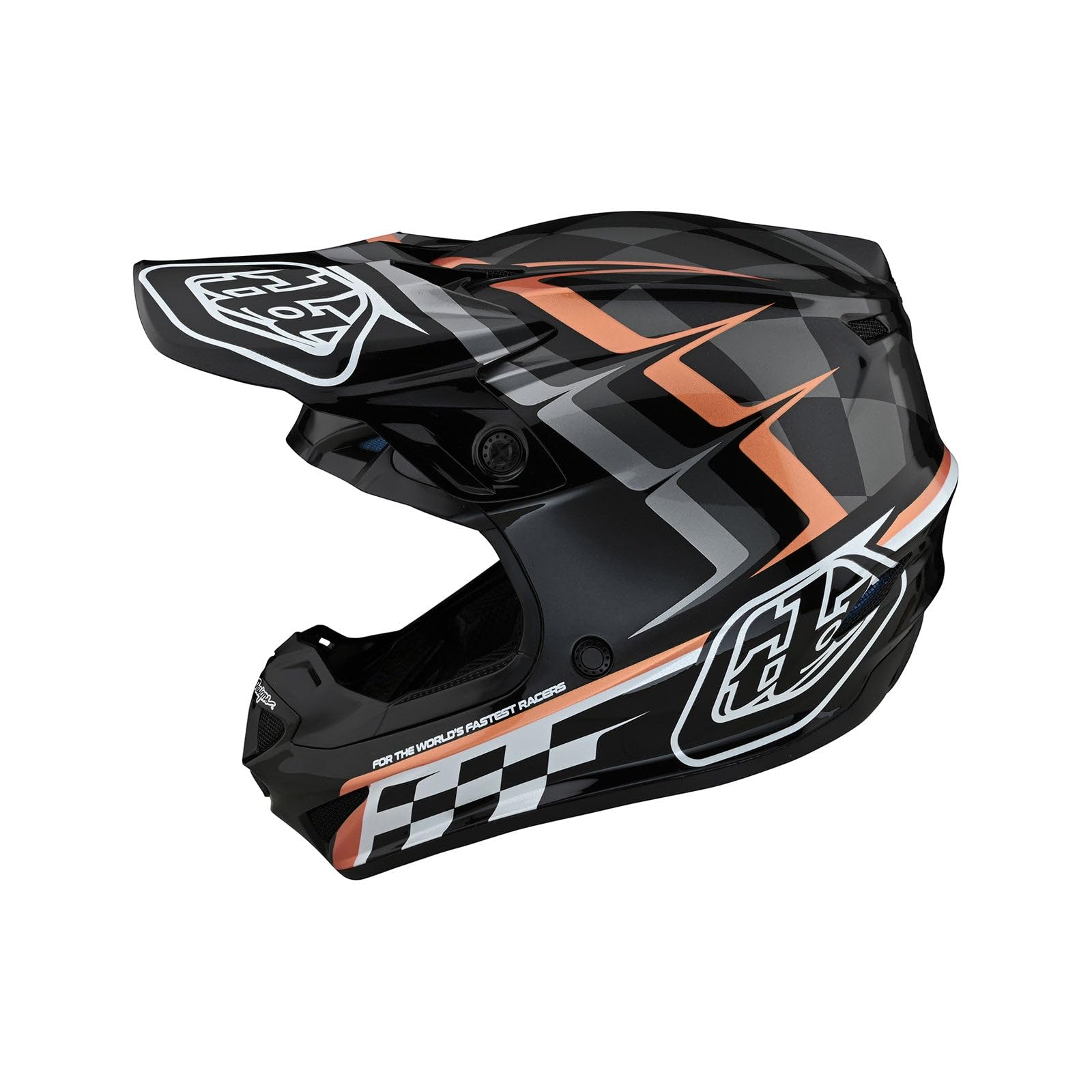
The SE4 brings over 40 years of racing pedigree into a single helmet that prioritizes coverage without adding unnecessary weight. Its polyacrylite shell — a blend of polycarbonate and ABS — keeps the weight manageable, while the integrated MIPS liner handles rotational forces that standard DOT helmets leave unchecked. The 16 cooling vent ports include a chin bar ventilation system made from EPP (expanded polypropylene), which also protects the collarbone during a frontal impact.
Interchangeable cheek pads and a removable liner let you fine-tune the fit across six standard shell sizes. Riders consistently note that the helmet runs small compared to street helmet sizing, so ordering one size up from your usual street helmet size yields a snug but not painful fit. The rear head coverage is noticeably deeper than most entry-level off-road helmets, a critical detail when you’re leaning back on a steep climb and a branch whips past.
At this price point, you’re paying for the MIPS rotational protection and the brand’s proprietary EPS foam density tuning. The included visor is positioned high enough to avoid catching wind at highway speeds, and the shell accepts standard off-road goggles without gaping. If your riding budget can stretch for one serious safety upgrade, this is the model to anchor your gear set around.
Why it’s great
- MIPS rotational protection at a competitive price for this feature set
- 16 ventilation ports with collarbone-safe EPP chin bar
- Interchangeable cheek pads and washable liner for long-term hygiene
Good to know
- Runs small; size up from your street helmet size
- Not designed for sustained high-speed road use or wet/cold weather
2. Fox Racing Unisex-Adult V Core MIPS Helmet

Fox Racing’s V Core MIPS helmet delivers the rotational protection of MIPS without forcing you into a premium price bracket. The injection-molded polycarbonate and ABS shell meets both DOT FMVSS 218 and ECE 22.06 standards — a dual certification that adds confidence for mixed-use riding. The shell comes in four sizes with five EPS liner sizes, which means a more anatomically precise fit than helmets that stretch one shell over three sizes.
The magnetic visor release system is a standout detail: under normal roost and brush it stays locked, but during a crash it detaches to reduce the risk of neck torsion. Nine intake vents and four exhaust vents pull hot air out efficiently, though the pads run snug initially and require a short break-in period. Riders who have crashed in this helmet report that it stayed firmly in place and absorbed impact without shifting.
At 5 pounds, it’s not the lightest helmet on this list, but the weight distribution is balanced well, so you don’t feel the neck strain after a two-hour ride. The double-ring closure provides a more secure anchor than a quick-release buckle, and the removable liner survives repeated machine washing. If your priority is maximizing safety technology per dollar, this Fox Racing model is the smartest use of your budget.
Why it’s great
- Dual DOT and ECE 22.06 certification with MIPS included
- Magnetic visor release reduces crash-induced neck loads
- Four shell and five EPS sizes ensure precise fit
Good to know
- Heaviest option in this lineup at 5 pounds
- Cheek pads start tight and require break-in
3. Bell Powersports MX-9 Adventure MIPS Helmet
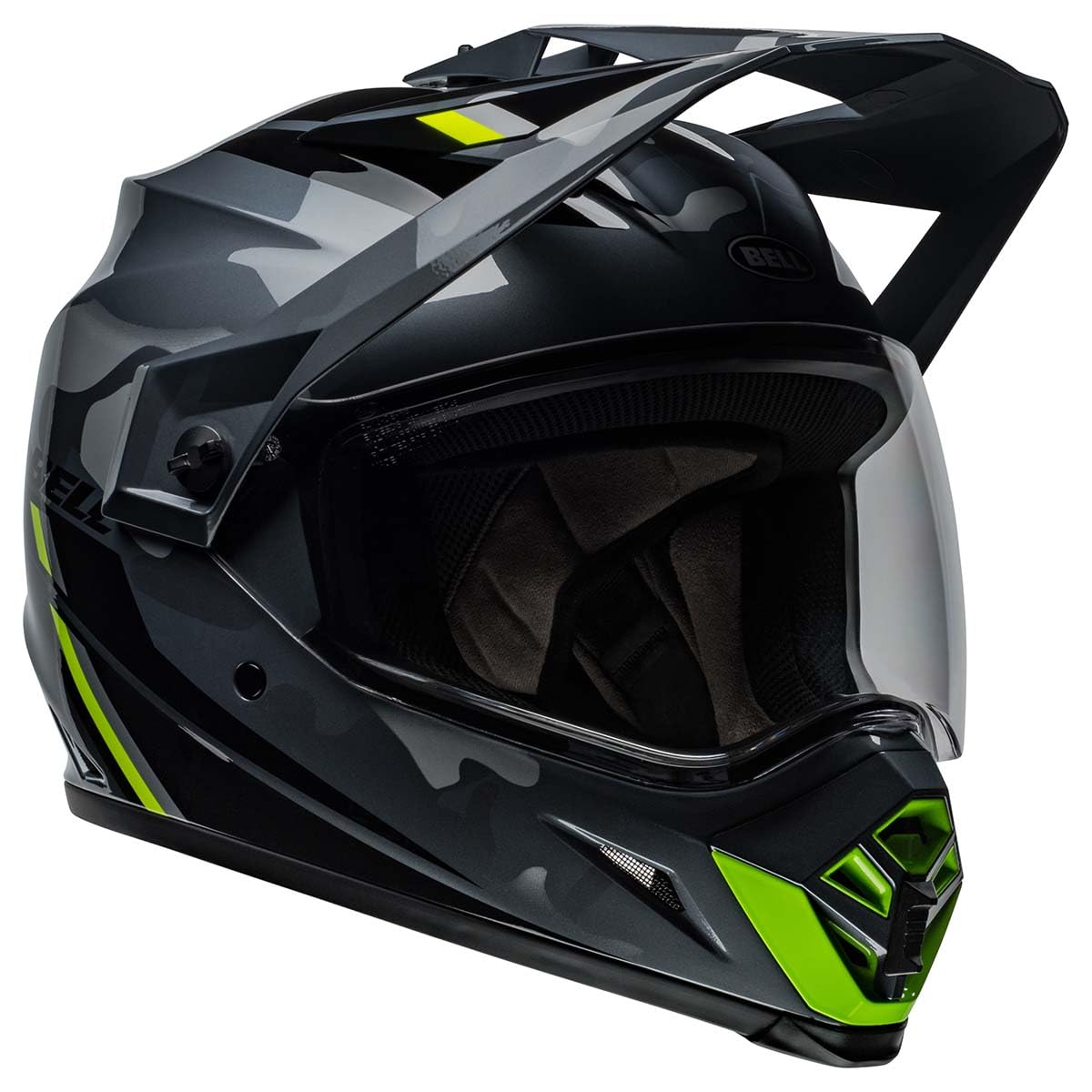
The MX-9 Adventure occupies a specific niche: it bridges the gap between a motocross helmet and an adventure-touring helmet. The shell uses a fiberglass composite blend rather than pure ABS, which brings the weight down to 3.75 pounds while maintaining impact resistance. Bell integrated MIPS into the liner and designed the interior pockets to accommodate Cardo communication systems without bulging — a practical touch for riders who ride in groups or rely on GPS audio cues.
Out of the box, the plush lining feels noticeably more padded than budget helmets; riders who compare it to helmets costing twice as much often report that the MX-9 fits more comfortably on the first wear. The visor is adjustable and removable, but it does catch wind at highway speeds — Bell sells an aftermarket screw kit that tightens it further, or you can simply remove the visor for extended pavement sections. The peak also creates noticeable wind noise above 60 mph, so earplugs are strongly recommended for sustained road use.
Ventilation is good but not class-leading; the vents stay open permanently, which helps airflow in warm conditions but lets cold air in during winter. Fogging on the clear visor is a known issue in damp cold, so a Pinlock insert is a worthwhile add-on. If your riding mixes dirt trails with paved connector roads, this Bell model offers the best comfort-per-dollar ratio for that dual-purpose lifestyle.
Why it’s great
- Lightweight composite shell at 3.75 lbs for all-day ADV riding
- Cardo communication system ready with speaker pockets
- Plush liner that rivals helmets at twice the price
Good to know
- Visor catches wind at highway speeds; earplugs recommended
- Fogs easily in cold wet conditions without Pinlock insert
4. O’Neal 1SRS Adult Dirt Bike Helmet
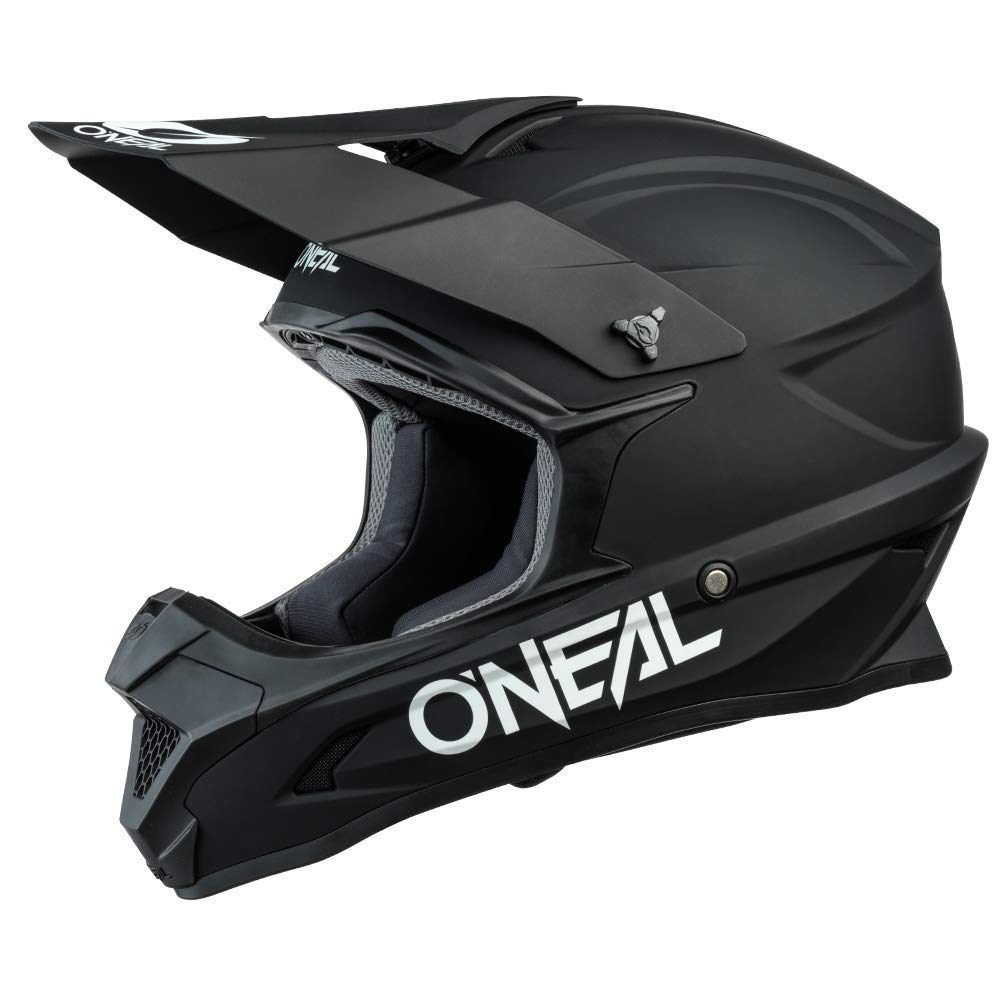
O’Neal’s 1SRS is a straightforward, well-constructed dirt helmet that skips gimmicks and focuses on the fundamentals: a lightweight shell that won’t cause neck strain, a thick EPS liner for impact absorption, and a field of view wide enough to spot trail obstacles early. Riders consistently praise the low weight — multiple reviews mention how it feels noticeably lighter than previous helmets they’ve owned — which directly reduces fatigue during multi-hour rides.
The build quality holds up well in crashes. One verified review describes a high-speed roll on a Yamaha Raptor 700r where the helmet sustained direct impact without transferring injury to the rider. The included storage bag is thick enough to protect the shell during transport, and the chin strap uses a secure double-ring system that doesn’t loosen over time. Ventilation is adequate for trail speeds up to 45 mph; above that, airflow becomes noticeable but not uncomfortable.
The color options are limited compared to graphics-heavy brands, and the helmet does not include MIPS or ECE certification — it’s DOT only. That limits the protection profile for angled impacts, but for riders on a mid-range budget who prioritize a lightweight feel over advanced rotational technology, the 1SRS delivers dependable protection without breaking your wallet. It’s a workman’s helmet, and it does the job well.
Why it’s great
- Very lightweight shell minimizes neck fatigue on long rides
- Thick EPS foam proven in crash scenarios
- Included storage bag protects helmet during travel
Good to know
- DOT certified only; no MIPS or ECE dual certification
- Limited graphic and color selection
5. NENKI NK 310 Adult Dirt Bike Helmet

The NENKI NK 310 meets DOT FMVSS 218 safety standards at a price point that makes it accessible for entry-level riders or those who need a spare helmet for passengers. The ABS shell uses high-pressure thermoplastic molding, and the EPS foam liner provides the necessary cushioning layer for linear impacts. One differentiating feature is the flip-up visor — you can prop it open for extra airflow without removing the entire helmet, which is useful during slow technical sections or warm weather breaks.
Multiple vent channels help keep air moving, and the microfiber inner lining is removable for washing. Riders report that the included tinted visor is not too dark, allowing it to pair with sunglasses underneath. Two visors ship in the box — a clear one and an orange mirrored one — which adds versatility for changing light conditions. The streamlined shape reduces wind drag compared to boxier budget helmets, and the overall weight is surprisingly low for a sub-hundred-dollar model.
The trade-offs come in long-term durability and finish quality. The rubber nose piece can shift off-center during assembly, and the EPS liner density is not as high as mid-range or premium helmets. It also lacks MIPS or ECE certification, so rotational impact protection is not addressed. For light trail riding, a pit bike, or a first helmet for a new rider, the NK 310 offers adequate protection. For aggressive riding or high-speed desert runs, you’ll want to step up to a model with dual certification.
Why it’s great
- Flip-up visor provides adjustable airflow without removing helmet
- Includes both clear and orange mirrored visors in the box
- DOT certified at an accessible entry-level price point
Good to know
- No MIPS or ECE certification for rotational impact protection
- EPS liner density is lower than premium models
6. Oumurs Youth Dirt Bike Helmet with Goggles and Gloves
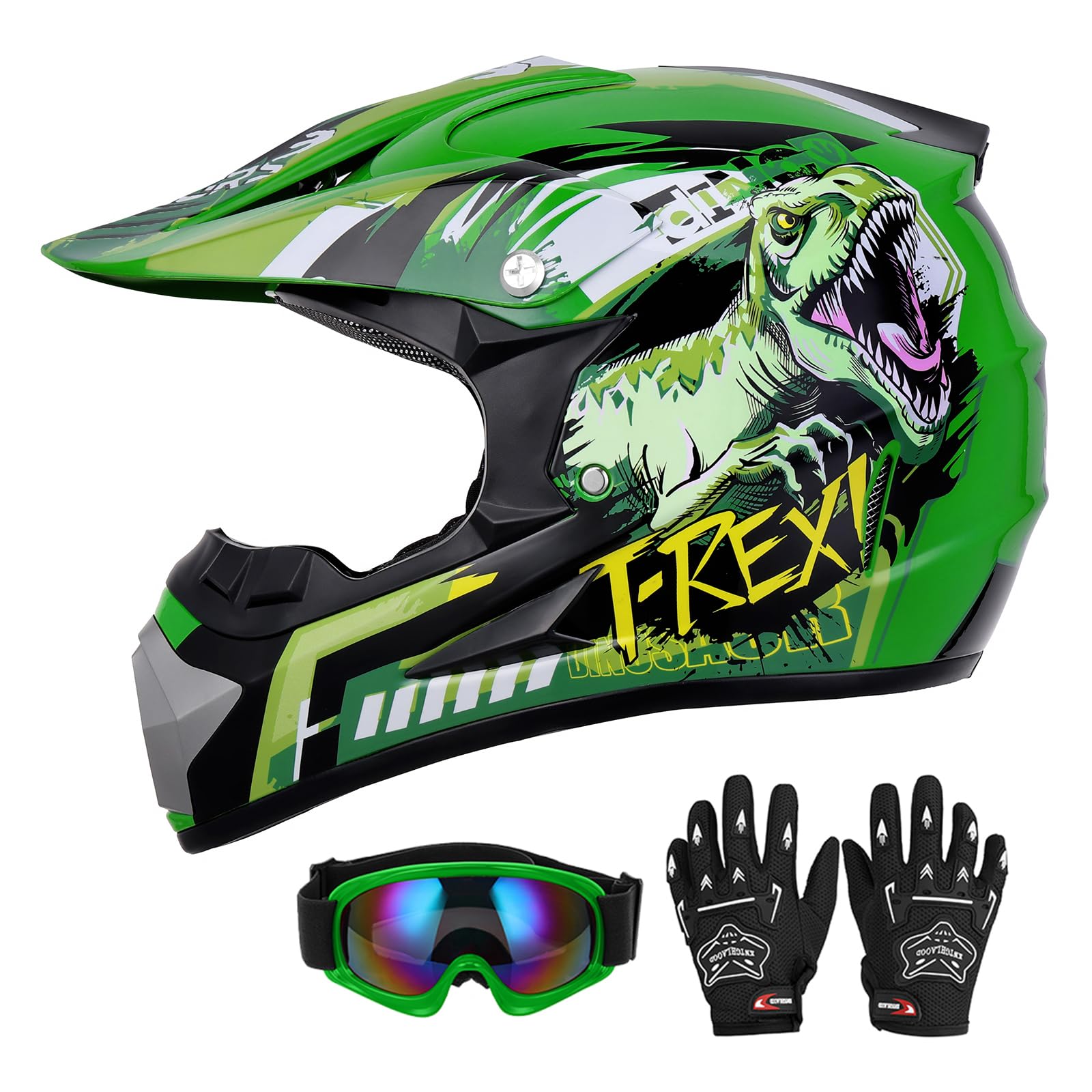
The Oumurs youth helmet is engineered specifically for riders aged 5 to 14, with a weight of just 1,050 grams at the smallest shell size — up to 20 percent lighter than typical youth helmets. That reduction is critical because a child’s cervical spine has not fully developed, and excessive helmet weight can cause discomfort and poor head posture. The ABS shell meets DOT FMVSS 218 standards, and the EPS liner is thick enough to absorb moderate impacts from trail falls or low-speed bike crashes.
This package includes UV-protective goggles and a pair of riding gloves, which simplifies the buying decision for parents who want a complete kit. The one-hand quick-release buckle makes it easy for young riders to take the helmet on and off independently. Multiple verified reviews describe crashes where the helmet stayed in place and prevented head injury, which is the primary reassurance any parent needs.
The exclusive Dino Green graphic adds a fun visual element that kids enjoy wearing. The liner and cheek pads are removable and machine-washable, a practical feature for sweaty or muddy rides. One minor drawback: the included gloves run warm, and some children prefer to ride without them. But the helmet and goggles alone justify the purchase — this is the best turnkey solution for a young rider’s first season behind the bars.
Why it’s great
- Ultra-light 1,050g shell reduces cervical spine strain for growing kids
- Complete kit with DOT helmet, UV goggles, and gloves
- Quick-release buckle enables easy on/off for young riders
Good to know
- Gloves run warm; some children prefer to skip them
- Graphic options limited to a few fun styles
7. ILM Youth ATV Helmet Kids Dirt Bike Z705

The ILM Z705 stands out in the youth category because it carries both DOT FMVSS 218 and ECE 22.06 certification — a dual rating that is rare at this price tier and for this age group. The ABS shell and high-density EPS padding are combined at a net weight of 2.4 pounds, which the manufacturer claims is 20 percent lighter than comparable youth helmets. The ECE 22.06 standard tests shell integrity at multiple points and includes impact angles that the DOT standard does not require, giving parents an extra layer of confidence.
This helmet ships as a 4-in-1 kit that includes a pair of motorcycle gloves, a balaclava face mask, and UV-resistant goggles. The removable sun visor can be adjusted or taken off entirely, and the multiple vent openings provide decent airflow for active riding. The hook-and-loop closure is easy for children to fasten, though some parents note that the helmet is not recommended for children under 5 years old due to its weight-to-head-size ratio.
The matte black finish hides scratches well and presents a clean, understated look. Sizing is accurate to the included chart, and the removable cheek pads are breathable. The weakest component is the included goggles — the lens is not as optically clear as standalone goggles — but they serve well for casual rides. If dual certification is your non-negotiable requirement for a child’s helmet, the ILM Z705 is the most affordable way to meet it.
Why it’s great
- Rare dual DOT and ECE 22.06 certification for a youth helmet
- 20% lighter than typical youth helmets at 2.4 lbs
- Complete kit with mask, goggles, and gloves included
Good to know
- Included goggles have a weaker lens than standalone models
- Not recommended for children under 5 years old
FAQ
What is the difference between DOT and ECE certification for 4 wheeler helmets?
How should a youth 4 wheeler helmet fit for maximum safety?
Why is helmet weight important for off-road riding?
Can I use a motorcycle street helmet for 4 wheeler riding?
How can I tell if my 4 wheeler helmet needs replacement?
Final Thoughts: The Verdict
For most riders, the best 4 wheeler helmets overall are the Troy Lee Designs SE4 and the Fox Racing V Core MIPS because they wrap proven MIPS rotational protection into well-ventilated shells at prices that undercut premium brands. If you prioritize a lightweight feel for long adventure rides, grab the Bell Powersports MX-9 Adventure. And for a young rider’s first helmet, nothing beats the complete-kit value of the Oumurs Youth Dirt Bike Helmet or the dual-certified safety of the ILM Z705.