
The first rule of a blackout is that your gas generator runs out of fuel at the worst possible moment. A battery based generator sidesteps that entire problem, converting stored electrical energy into pure sine wave AC power without a single drop of gasoline, a pull cord, or an ear-splitting roar. These units are defined by their chemistry—almost exclusively lithium iron phosphate (LiFePO₄) these days—their watt-hour capacity, and their inverter’s continuous output rating.
I’m Min — the co-founder and writer behind Gadgets Feed. I’ve spent hundreds of hours digging into balance-of-system efficiency, cycle-life curves, and real-world inverter behavior to separate the spec-sheet hype from the gear that actually delivers quiet, reliable power.
Whether you’re keeping a fridge cold during a storm or running power tools at a remote job site, this guide stacks the top contenders in the best battery based generator category so you can match real capacity and output to your actual needs.
How To Choose The Best Battery Based Generator
Buying a battery generator is a multi-year investment. Focus on these three factors to avoid the most common mistakes.
Capacity vs. Output vs. Runtime
Capacity is measured in watt-hours (Wh) and tells you the reservoir size. A 768Wh unit might run a 60W fridge for about 10 hours, but that same fridge may pull 600W during compressor startup — exceeding the inverter’s continuous rating if you pick too small. Always check the inverter’s continuous wattage and its surge capacity. For home backup, 2kWh and 2000W+ continuous is the sweet spot.
Battery Chemistry and Cycle Life
Lithium iron phosphate (LiFePO₄) is now the standard for all serious portable power stations. It lasts 3,000 to 6,000+ full charge cycles before degrading to 80% capacity. That translates to 8–17 years of daily use. Avoid older NMC or lead-acid units unless you find a deeply discounted niche use case — the per-cycle cost of LiFePO₄ is dramatically lower.
Recharge Speed and Solar Input
A battery generator is only useful if you can refill it quickly. Premium models now charge from 0–80% in under an hour via AC. Solar input is measured in watts — a 500W max input with a high MPPT voltage range lets you use more panels in series, dramatically cutting recharge time off-grid. Check the solar connector type (XT60 vs. MC4 vs. Anderson) to avoid adapter headaches.
Quick Comparison
On smaller screens, swipe sideways to see the full table.
| Model | Category | Best For | Key Spec | Amazon |
|---|---|---|---|---|
| BLUETTI AC70 | Mid-Range | Fast charging portable | 768Wh / 1000W inverter | Amazon |
| BLUETTI Elite 200 V2 | Premium | Long cycle life & high output | 2073.6Wh / 2600W inverter | Amazon |
| Anker SOLIX F2000 | Premium | Wheeled transport & UPS | 2048Wh / 2400W inverter | Amazon |
| Jackery Explorer 2000 v2 | Premium | Lightweight 2kWh | 2042Wh / 2200W inverter | Amazon |
| GROWATT INFINITY 2000 Pro | Premium | RV & cold weather | 2048Wh / 2400W inverter | Amazon |
| AFERIY P210 | Mid-Range | High capacity on a budget | 2048Wh / 2400W inverter | Amazon |
| DJI Power 2000 | Premium | Fastest AC recharge | 2048Wh / 3000W inverter | Amazon |
| EF ECOFLOW DELTA Pro | High-End | Whole-home backup potential | 3600Wh / 3600W inverter | Amazon |
| VTOMAN Jump 600X | Budget | Jump start & small loads | 299Wh / 600W inverter | Amazon |
In‑Depth Reviews
1. BLUETTI AC70 Portable Power Station

The BLUETTI AC70 hits the sweet spot between portability and useful capacity. With 768Wh of LiFePO₄ storage and a 1000W pure sine wave inverter (2000W power lifting), it easily handles a CPAP machine, a 12V cooler, and multiple device charges through the night. What sets it apart is the 950W AC input that brings it from zero to 80% in just 45 minutes — no other unit in this size class charges faster out of the box.
The single AC charging cable eliminates bulky power bricks, and the 100W USB-C port charges a MacBook Pro 16” at full speed. Solar input peaks at 500W, letting you refill from a pair of 200W panels in under three hours. The bright LCD shows remaining capacity in both percentage and estimated runtime, so you never guess when to recharge.
At 22.5 pounds, it’s light enough to carry with one hand, and the compact footprint slides into a car trunk corner. The BLUETTI app adds remote monitoring and charge/discharge scheduling. For a mid-range station that balances price, weight, and recharge speed, the AC70 is the most versatile daily driver.
Why it’s great
- 0–80% AC recharge in 45 minutes
- High 500W solar input for its class
- 100W USB-C PD for modern laptops
Good to know
- Capacity is sufficient for essentials but won’t run a full-size fridge all day
- Standby power draw is slightly higher than some competitors
2. BLUETTI Elite 200 V2

The BLUETTI Elite 200 V2 (2073.6Wh, 2600W inverter) is the unit you buy when you want one station for the next decade. Its LiFePO₄ pack is CNAS-certified to automotive-grade standards, rated for over 6,000 cycles before hitting 80% capacity — that’s roughly 17 years of daily use. The 2600W continuous output rises to 3900W in power lifting mode, enough to start a refrigerator compressor while running a microwave simultaneously.
Dual AC inputs (Turbo, Standard, Silent) let you prioritize speed or noise. Turbo mode hits 0–80% in one hour; Silent mode throttles to 800W and runs at just 16 to 30 dB, quiet enough to keep in an RV bedroom. The standby power consumption is only 10W — three times lower than typical power stations, which extends actual runtime for small loads like a diesel heater overnight.
The dual-carry-handle design makes the 53-pound chassis manageable for two people, though it’s heavy enough that wheels would be appreciated. The BLUETTI app offers full monitoring and mode switching. For anyone planning to use a battery generator as a long-term home-backup core, the Elite 200 V2’s cycle life and raw output make it the value king over the long haul.
Why it’s great
- 6,000+ cycles with 17-year lifespan
- 3900W power lifting for high-startup appliances
- Ultra-low 10W standby drain
Good to know
- No built-in wheels at 53 pounds
- Lacks a dedicated 30A RV port
3. Anker SOLIX F2000 (PowerHouse 767)

The Anker SOLIX F2000 (formerly PowerHouse 767) is the only 2kWh station in this lineup with a built-in wheeled trolley and telescoping handle, making its 67-pound bulk genuinely easy to roll from garage to patio. Inside it packs 2048Wh of LiFePO₄ cells with Anker’s InfiniPower technology, rated to last a decade. The 2400W inverter handles a standard household fridge, and SurgePad allows brief draws up to 3600W for tools or pumps.
HyperFlash AC charging refills 0–80% in 1.4 hours, and the solar input can accept up to 1000W of panels. Port selection is the best in class: four AC outlets, three USB-C (two at 100W, one at 60W), two USB-A, a 30A RV port, and two car outlets. That’s 13 ports plus the dedicated RV hookup. The 16ms UPS switchover keeps network gear alive through flickers.
The primary tradeoff is weight — at 67 pounds, even with wheels, stairs are a chore. Some users also report that pass-through charging in UPS mode caps AC output at 1440W, which limits simultaneous high-draw backup. Still, for anyone who needs to roll a battery generator to a travel trailer or across a basement, the F2000’s mobility and port density are unmatched at this capacity tier.
Why it’s great
- Built-in wheels and handle for easy movement
- Four USB-C ports including dual 100W
- Dedicated NEMA TT-30 RV outlet
Good to know
- Heavy at 67 pounds, even with wheels
- UPS bypass mode caps AC output at 1440W
4. Jackery Explorer 2000 v2

The Jackery Explorer 2000 v2 weighs just 39.5 pounds — a full 15 to 25 pounds lighter than most 2kWh competitors — thanks to Jackery’s CTB (Cell-to-Body) technology that integrates the cells directly into the structural chassis. That makes it the easiest 2000Wh-class station to lift into an SUV or carry up a flight of stairs. The 2200W inverter handles most kitchen and power tool loads, and the 2042Wh capacity can run a full-size fridge for roughly 24 hours.
AC fast charging hits 0–80% in 66 minutes, and the app’s Emergency Super Charging mode pushes a full charge in 102 minutes. Silent Charging mode drops fan noise below 30 dB for overnight indoor use. The 20ms UPS switchover is UL1778 certified, making it a legitimate UPS for sensitive electronics. Solar input maxes out at 400W, so refilling off-grid takes about 6 hours with a full array.
The tradeoff for the light weight is a slightly smaller input bay — there’s only one USB-C port (100W) and three AC outlets instead of four or five. The handle is integrated but comfortable. For overlanding, boat use, or any situation where every pound matters, the Explorer 2000 v2 is the clear lightweight champion in the 2kWh category.
Why it’s great
- Only 39.5 pounds in the 2kWh class
- Silent Charging mode under 30 dB
- UL1778-certified UPS with 20ms switchover
Good to know
- Only three AC outlets
- Solar input limited to 400W max
5. GROWATT INFINITY 2000 Pro
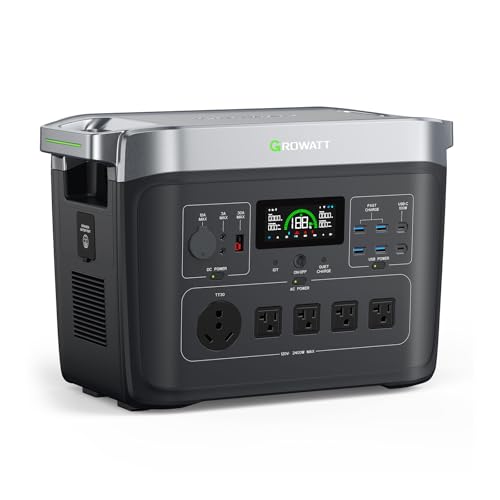
The GROWATT INFINITY 2000 Pro is built for the subset of battery generator buyers who face real winter conditions. Its Cold Start technology allows the LiFePO₄ cells to operate down to -22°F, a genuine advantage when most LFP-based stations shut off below 32°F. The 2048Wh pack and 2400W inverter (4000W surge) run RV heaters, sump pumps, and workshop tools without drama.
Charging is fast: 0–100% in 90 minutes at 1800W AC. The solar input accepts up to 1200W via a high-voltage MPPT range, which means you can wire three 400W panels in series and still recharge in under two hours on a sunny winter day. The included NEMA TT-30R (30A) RV port and Anderson PowerPole output make it plug-and-play for travel trailers and overland electrical systems.
The build quality is immediate — rubber corner bumpers, a recessed carry handle, and a tidy 26-pound chassis for this capacity. The app with Wi-Fi and Bluetooth offers granular control. A small number of owners reported fan noise was noticeable under heavy AC load, and a rare defect in early units caused startup issues when fully depleted. Still, for anyone who lives where temperatures drop below freezing, the INFINITY 2000 Pro’s cold-weather capability is a legitimate category differentiator.
Why it’s great
- Rated to operate down to -22°F
- 1200W solar input for fast off-grid recharge
- Includes TT-30R and Anderson ports for RV use
Good to know
- Fan audible under sustained high load
- Some early units exhibited startup issues when fully depleted
6. AFERIY P210

The AFERIY P210 delivers 2048Wh of LiFePO₄ storage and a 2400W pure sine wave inverter (4800W peak) at a price point that typically buys only 1.5kWh from bigger brands. The pure sine wave AC is identical to grid power, making it safe for sensitive electronics like audio gear, CPAP machines, and medical devices. The 3500-cycle lifespan (10 years) is competitive with premium peers.
AC charging fills the unit from zero to full in about 2 hours, and the <10ms UPS switchover is fast enough to keep a desktop computer running through a brownout. The 16-port panel includes six AC outlets, four USB-C (including one 100W), and a regulated XT60 port for 12V devices. At 48.5 pounds, it’s not light, but the form factor is more compact than its capacity suggests. Noise stays under 30 dB at normal loads.
The 7-year extended warranty (industry typical is 5 years) shows confidence in the build. The app offers energy consumption tracking and automation. Where AFERIY cuts corners is in chassis refinement — the plastic panel fit isn’t as tight as Jackery or Anker — and the lack of a dedicated RV port limits its usefulness for travel trailers. For stationary home backup or food-truck power, the P210 is the best pure-value proposition on the market.
Why it’s great
- Best price-per-watt-hour in the 2kWh class
- <10ms UPS switchover for sensitive electronics
- 7-year warranty is longer than most
Good to know
- Chassis plastic fit could be tighter
- No TT-30 RV outlet included
7. DJI Power 2000
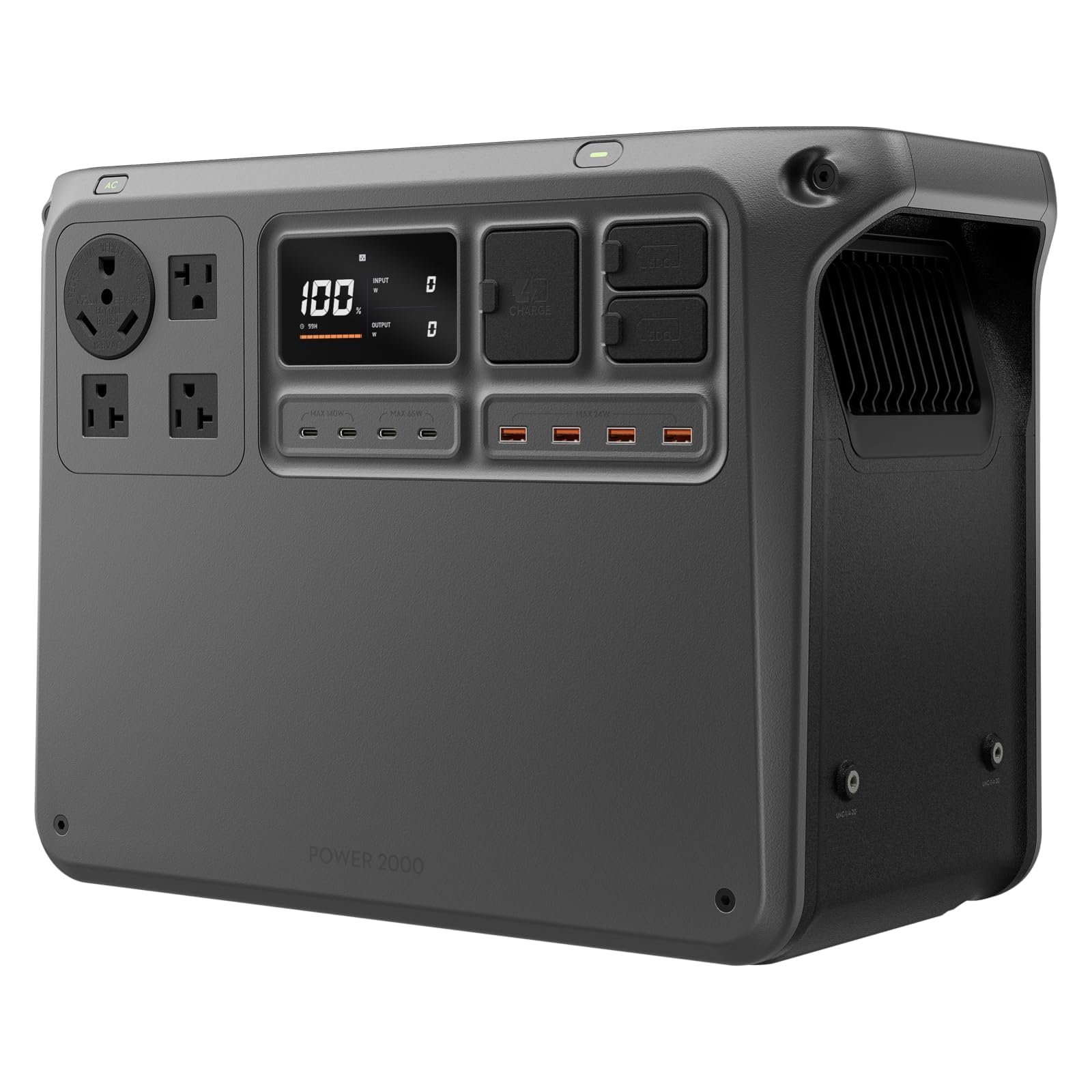
The DJI Power 2000 is the new speed king: 0–80% in 55 minutes and a full charge in 90 minutes from a standard AC wall outlet. That’s thanks to an 1800W internal charger that doesn’t require an external brick. The 2048Wh LFP battery feeds a 3000W continuous inverter (4000W peak), which is enough to run a 1500W space heater or a table saw while still powering a lights and a fan.
DJI brings its drone-engineering mindset to thermal management. The unit has 26 temperature sensors, sub-nano coating on the circuit boards for moisture resistance, and a flame-retardant housing. Noise under 30 dB makes it unobtrusive in an RV interior. The expansion capability scales to 22.5kWh using extra batteries, and the dual full SDC ports support high-current 48V output for power tool charging or solar input up to 1800W.
The downsides are real. The 48-pound chassis lacks built-in wheels or a telescoping handle, making it awkward to move. The connectors are proprietary SDC ports rather than standard XT60 or Anderson, requiring adapters for third-party solar panels. The DJI app is polished but mandatory for some advanced charging modes. For anyone who prioritizes raw AC refill speed above all else — emergency preppers and event vendors especially — the Power 2000 is unmatched.
Why it’s great
- 0–80% AC recharge in just 55 minutes
- 3000W continuous inverter output
- 26 internal temperature sensors for safety
Good to know
- Proprietary SDC connectors require adapters
- No wheels or telescoping handle for transport
8. EF ECOFLOW DELTA Pro
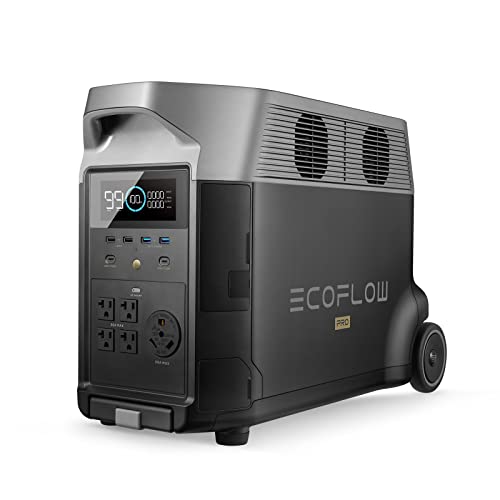
The EF ECOFLOW DELTA Pro is the category powerhouse: 3600Wh of LFP storage with a 3600W AC inverter (7200W when paired with a second unit). That’s enough to run a home kitchen — fridge, microwave, coffee maker, toaster — simultaneously for hours. X-Boost extends the inverter to handle loads up to 4500W, so a well pump or a circular saw stays operational. The 3600Wh base expands to 25kWh with extra batteries, approaching whole-home backup territory.
X-Stream AC charging refills 0–80% in 1.8 hours on a 240V outlet or 2.7 hours on a standard 120V outlet. Solar input is rated for up to 1600W, and the MPPT efficiency claims up to 23%, real-world verified by owners getting excellent off-grid recharge rates. The five charging methods include EV station charging via a J1772 adapter. The app offers granular load scheduling and battery level monitoring.
The catch is all that capability weighs 99 pounds and is the size of a medium suitcase. There are no wheels, so moving it requires a dolly or strong arms. The 120V model reviewed here is limited to 3600W on a single leg, which means it can’t power a 240V well pump or central AC without additional equipment. For serious home backup or a mobile food business, the DELTA Pro’s capacity floor is unmatched — but it’s a commitment.
Why it’s great
- 3600Wh base capacity expandable to 25kWh
- 3600W inverter with X-Boost up to 4500W
- Five charging methods including EV stations
Good to know
- 99 pounds with no wheels or handle
- 120V model only — no 240V split-phase output
9. VTOMAN Jump 600X

The VTOMAN Jump 600X is the only battery generator on this list that also jump-starts a 12V vehicle — a genuine two-in-one that lives in your trunk and serves roadside emergencies as naturally as it powers a campsite. The 299Wh LiFePO₄ pack (expandable to 939Wh with an optional extra battery) delivers 600W continuous AC (1200W surge) through two outlets. It ran a CPAP machine for ten hours in user testing while simultaneously charging phones and lights.
The 600W constant-power feature is unusual at this price: instead of shutting off when an appliance exceeds the rated wattage, the unit continues to deliver 600W, giving you an emergency buffer for things like a small space heater. The regulated 12V DC outputs (two 5521 ports plus a car port, total 120W) are stable enough for a car refrigerator or tire inflator. The five-mode LED light is a bonus for tent setup.
The drawbacks are predictable at this capacity tier. AC wall recharge takes about three hours, and solar input is capped at 110W, so off-grid refills are slow. The 14.6-pound weight is very manageable, and the 3000-cycle LFP chemistry means this unit will last years as a glove-box standby. For the buyer who needs occasional small-load backup plus the convenience of a jump starter, the Jump 600X is the most creatively engineered budget entry in the category.
Why it’s great
- Built-in car jump starter saves trunk space
- 600W constant-power mode for over-wattage loads
- Expandable from 299Wh to 939Wh
Good to know
- 299Wh capacity is sufficient only for small electronics
- Solar input limited to 110W
FAQ
Can a battery based generator run a whole-house air conditioner?
How long does a LiFePO₄ battery generator last if I use it every day?
Can I leave a battery generator plugged in all the time?
What’s the real difference between a pure sine wave and modified sine wave inverter?
How many solar panels do I need to recharge a battery generator in one day?
Final Thoughts: The Verdict
For most users, the best battery based generator winner is the BLUETTI AC70 because it offers the fastest recharge in its class, a useful 768Wh capacity, and a lightweight chassis at a mid-range price that hits the perfect balance for camping, emergencies, and daily use. If you want the longest cycle life and enough output to run a full kitchen, grab the BLUETTI Elite 200 V2. And for heavy-duty whole-home backup or mobile business power where capacity is king, nothing beats the EF ECOFLOW DELTA Pro.