
Our readers keep the lights on and my morning glass full of iced black tea. As an Amazon Associate, I earn from qualifying purchases.
Specs are compiled from manufacturer listings and verified buyer reviews and can change over time — please confirm the key details on the product page before buying.
If your room sounds hollow, echoey, or loud even when nobody is being loud, the fix is usually the walls, not the furniture. An acoustic wall board is a panel you mount on a wall or ceiling to soak up reflected sound — the slap-back you hear in empty rooms, hard-floored living spaces, and home offices with bare drywall. The right board does two jobs at once: it makes speech and music sound cleaner, and it can look like genuine interior decor instead of a padded studio box. Below are nine panels that actually work, sorted by what they are best at.
I’m Min — the founder and writer behind Gadgets Feed. This guide is built by comparing the manufacturers’ published specifications and the patterns across verified customer reviews, so you get each pick’s real strengths and trade-offs instead of marketing spin.
Echo in a shared-wall apartment, a home office, or a podcast corner each needs a different fix, so match the acoustic wall board to the room you actually have to treat. Wood slat boards warm up an accent wall, foam wedges tame a podcast corner, and fabric-wrapped studio panels (panels wrapped in cloth that soak up sound) cut echo in a recording space.
Our Picks at a Glance


How To Choose The Best Acoustic Wall Board
The first thing to get straight is the difference between absorbing sound and blocking it. An acoustic wall board absorbs sound — it soaks up the reflections bouncing around inside your room so voices and music sound tighter and less echoey. It does not stop noise from traveling through the wall into the next room, because that job belongs to mass, insulation, and sealed gaps. Almost every disappointed review in this category traces back to a buyer expecting one and getting the other.
Match the panel to the room you are actually fixing
A hard-floored living room with bare walls and a tall ceiling is the classic echo problem — that hollow slap you hear when you clap. A small home office with thin shared walls is a different problem, where the goal is softening your own voice and muting everyday noise. Wood slat panels with a felt backing handle the first beautifully and look like decor. Foam wedges and thick fabric panels handle the second without pretending to be furniture. Decide which room you are treating before you look at any listing.
Coverage is the number that decides whether it works
Panels are sold by coverage area, and a small pack rarely transforms a whole room on its own. A single 4-panel wood slat set typically covers a modest accent wall, while a 36 or 56-piece foam pack spreads thin foam across a much larger surface. Acoustic treatment works best when you cover a meaningful share of the reflective wall, so measure your wall first, subtract windows and doorways, then compare that figure against the panel coverage in the spec sheet.
Mounting method matters as much as the panel
Self-adhesive backing is the fastest route on clean drywall — peel and stick. But adhesive struggles on brick, textured paint, and dusty ceilings, where screws, nails, or a construction adhesive are more reliable. Wood slat panels screw or glue directly through the felt backing. Foam tiles usually ship with no adhesive at all, so budget for tape or spray glue separately. Decide your mounting method before you buy, because it changes the panel you should pick.
Quick Comparison
| Model | Best For | Panel Material | Coverage | Thickness | Amazon |
|---|---|---|---|---|---|
| NeatiEase Wood Panels for Wall★ Best Overall | Best Overall accent wall | Wood (MDF + polyester fiber) | 432.64 sq ft | — | Amazon |
| Soon Global Acoustic Wall PanelsMost Artistic | Big graphic wall art panels | Polyester | 3348 square inches | — | Amazon |
| ATS Acoustics Sound Absorbing PanelStudio Grade | Serious studio treatment | Mineral wool core, Sona fabric wrap | — | 2 inches | Amazon |
| Art3d Fluted Acoustic Wood Slat Wall Panel | Designer DIY backdrop | Wood (MDF + polyester fiber) | 23.3 sq.ft | 0.01 inches | Amazon |
| TONOR Dual-Layer Thickened Acoustic Wall Panels | Peel-and-stick apartment fix | Polyester | Approx. 4400 sq inches | 0.72 inches | Amazon |
| Yuzzy Wood Panels for Wall and Ceiling | Tall vertical slat walls | Plastic, Wood (MDF + polyester fiber) | 30.67 square feet | — | Amazon |
| Avana Acoustic Wood Wall Panels | Large commercial-grade walls | MDF, polyester fiber, technical wood veneer | 33.04 Square Feet | — | Amazon |
| 36 Pack Pyramid Acoustic Foam Panels | Budget studio corner | Polyurethane Sponge | 36 square feet | 2 inches | Amazon |
| 56 Pack Acoustic Foam Panels | Biggest cheap coverage | Polyurethane Foam | 56 square feet | 1 inches | Amazon |
In‑Depth Reviews
1. NeatiEase Wood Panels for Wall, 4-Piece 96″ x 12.6″
Our pick — over 4.5★ from 550+ verified ratings; the strongest balance of quality and price.
Four long teak slats that turn a bare wall into warm, echo-free architecture
For the room where you want the echo gone and the wall to look like a designer did it, this is the panel to beat. Four boards measuring 96″ x 12.6″ each spread out to about 33 square feet of coverage, which is enough for a genuine accent wall rather than a token patch. They mount horizontally or vertically, so a wide living room wall and a narrow stairwell wall are both fair game. And you can cut them to any shape, which matters the moment your wall has an outlet in the wrong place.
The sound side is where these boards earn their keep. A wood slat face over a high-density polyester fiber backing absorbs the reflections that make rooms sound hollow — the same fiber that makes the surface feel dense rather than hollow when you press it. Owners consistently report that the panels quiet echoey rooms. Comparison note: because this set is a full 4-board pack of 96″ panels, it covers dramatically more wall than the 2-piece Art3d fluted set below, which tops out around a single 15.5 sq ft section.
What buyers rave about most is the look — the teak finish reads as a warm red-orange cherry tone over a realistic veneer, with a thick felt backing behind it. Installation is nearly as prized: screws or superglue, on walls or ceilings, and it goes up fast. The honest catch is odor. A few owners note a strong smell right from the start that fades over time, so if you are sensitive to fresh-material scent, air the panels for a day before mounting. Note the “teak” name can read darker or redder in person than on screen — order what matches your room, not your monitor.
What it gets right
- About 33 sq ft of coverage from four full 96″ x 12.6″ boards — a real accent wall, not a sample
- MDF and high-density polyester fiber with low TVOC levels and certified sustainable sourcing
- Cuttable to any shape and mountable horizontally or vertically
- Fast install with screws or superglue on walls or ceilings
Where it asks for patience
- Fresh from the start the panels carry a noticeable odor that fades with airing
- At roughly 44 lb for the set, plan the mounting points before you lift them
- Screws and glue are not included, so add those to your list
Best for: the buyer who wants one wall to look intentional and sound calmer at the same time.
Think twice if: you need coverage across a whole room rather than one statement wall — go wider with a multi-panel pack instead.
2. Soon Global Acoustic Wall Panels, Art Acoustic Panels, Canvas
Wall art that happens to swallow echo — six large 72″ x 48″ printed panels
If your instinct is that acoustic treatment looks like a recording studio, these panels are the counter-argument. Each piece is a 72″ x 48″ printed panel wrapped around a polyester fiber core, and the six-pack totals 3,348 square inches of surface. That is a lot of real estate to hang as decor in a rental, a cafe, or an office lobby where bare walls are doing the echoing. Peel-and-stick with the included transparent dots, and the whole install is done after dinner.
Owners treat these as a two-for-one. The pattern does the decorating, and the panel does the room correction — Customers consistently mention covering ugly rental walls with them while quieting the room at the same time.. Cutting to fit around an outlet is easy; the panels trim cleanly without crumbling. One owner summed up the install side by noting the adhesive pads are fussy on brick but work fine on drywall. That is the honest reality of peel-and-stick: great on smooth painted walls, less reliable over rough masonry.
Where this pick stands apart from the wood slat boards is the aesthetic direction. The NeatiEase above gives you warm wood strips; the Soon Global gives you a large graphic print that reads as art. Buyers call the design “decor” rather than “acoustic panel” — which is exactly the point for a space where studio padding would look out of place. Budget one extra piece of double-sided tape if your wall is anything other than smooth drywall.
Where it wins: nowhere else in this list turns six printed panels into a designed gallery wall that also cuts reflections, at a size most decor pieces never reach.
Where it needs a plan: the included sticky dots are designed for smooth painted walls, so brick or heavily textured surfaces will need your own adhesive.
Pick this one when: the wall has to look good for guests, tenants, or clients while doing quiet acoustic work.
Choose elsewhere if: you need maximum absorption per square foot for a studio or rehearsal room — cover-and-absorb fabric panels do the job harder.
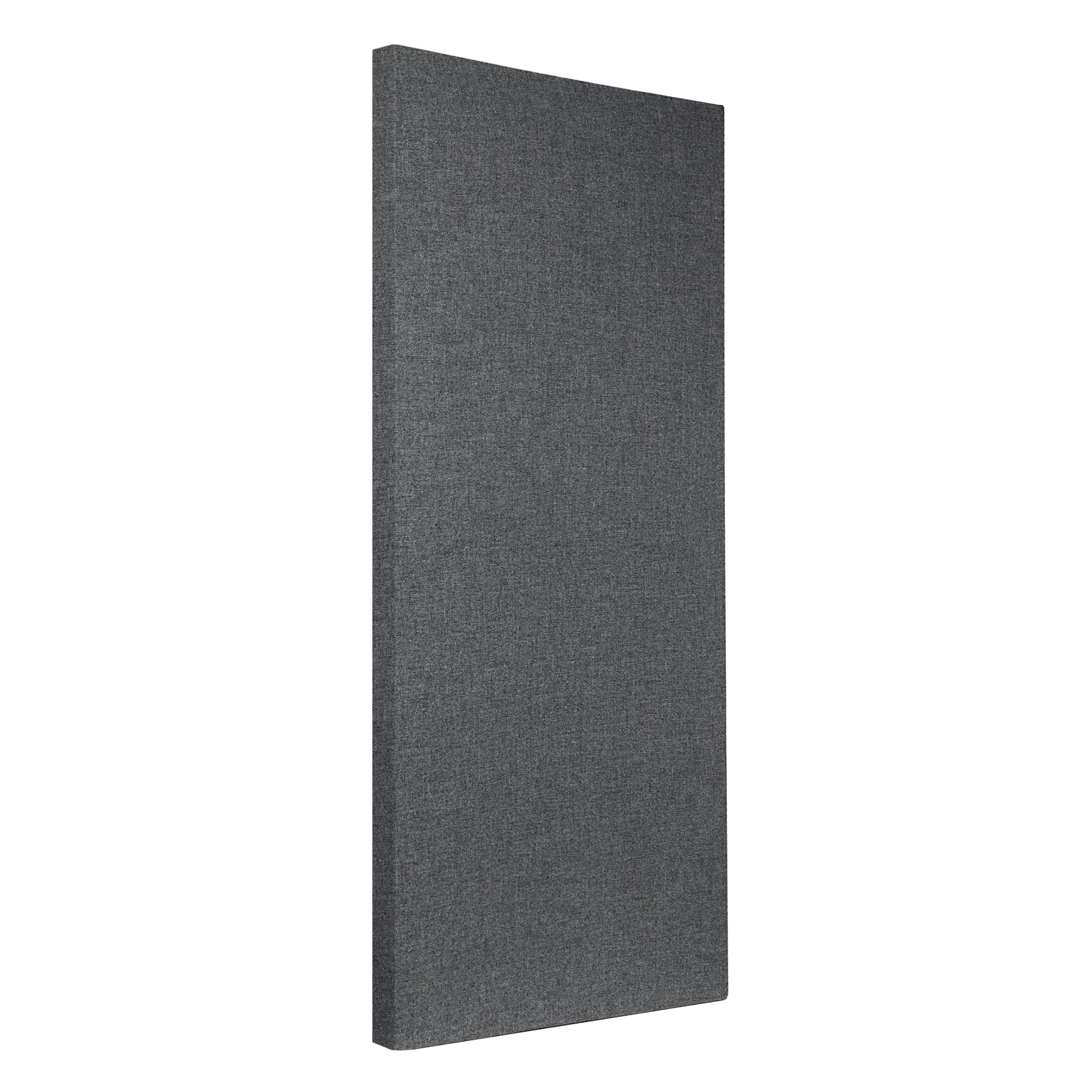
3. ATS Acoustics Sound Absorbing Acoustic Panel with Sona Fabric (Charcoal)
A single 24″ x 48″ x 2″ mineral wool panel with an NRC of 1.0 out of 1
Each panel measures 24″ x 48″ x 2″ and mounts flush to the wall, wrapped in ATS Acoustics high-performance Sona fabric over a mineral wool core held by a solid wood internal frame. The headline number is the NRC — a Noise Reduction Coefficient of 1.0 out of 1, which is the top of the scale for absorbing sound rather than reflecting it back. It is also Fire Rated Class 1 or Class A per ASTM E84, the same standard commercial installers check before putting panels in public spaces.
The real-world payoff shows up exactly where you would expect: Buyers report that music which sounded smeared resolves into a clean, defined soundstage after mounting two panels at the reflection points.. Home theater owners mention that the panels absorb everything but subwoofer bass, so dialogue comes through distinctly. What is note is that a lot of this crowd buys ATS twice: The listing has repeat buyers who added the panel to one room and came back to order more.. That kind of follow-up purchase is the strongest signal this category produces.
Where this pick differs from the slat panels above is that it delivers serious treatment in one panel and skips the decor angle. Buyers looking for an accent wall that happens to absorb will find the NeatiEase slats more their speed. The ATS panel is a professional component that happens to look clean on a wall. Also worth flagging: the fabric has a habit of grabbing hair and dust, and the mounting system has drawn mixed notes. Plan for a light vacuum pass now and then, and use the included template and hardware rather than improvising.
Numbers that matter
- NRC 1.0 out of 1 — the top end of the absorption scale
- Fire Rated Class 1 or Class A per ASTM E84
- Mineral wool core with solid wood internal frame and Sona fabric wrap
- Mounts flush to wall with included template and hardware
- Manufactured in the USA and individually signed and dated
The trade-offs
- Fabric surface collects hair and dust and needs periodic cleaning
- Mounting system draws mixed reception — follow the template closely
- At 8.25 lb per panel, this is a wall element, not a temporary decor piece
The right buyer: anyone treating a listening room, theater, or home studio where the goal is sound quality, not wall dressing.
Look elsewhere if: you want one panel to solve echo across a wide open room — a single 2″ x 24″ x 48″ panel is an installation, not a full solution.
4. Art3d 2-Pack Fluted Acoustic Wood Slat Wall Panel (Walnut)

A walnut fluted two-pack that fixes small rooms and doubles as a video call backdrop
Small spaces do not need the biggest panel — they need the right one, and this two-pack of 47.2″ x 23.6″ walnut fluted boards is built for exactly that. Each set covers about 23.3 square feet, which suits a home office nook, a bedroom feature corner, or the wall behind your webcam. The MDF core with high-density polyester fiber does the acoustic work, and the walnut finish with the fluted slat profile gives the room a warm, considered look. Owners keep describing the result the same way: the wall reads as intentional design rather than hardware.
The use-case is unambiguous once you have tried it — the panels make an excellent backdrop that kills the echo your microphone would otherwise pick up. One owner cuts theirs at a 45° angle with a circular saw and jig saw to route around outlets, and the finished paneling looks factory-fitted once installed. The material takes glue and nails without argument, though staples on a cut edge can come loose; if you trim to size, plan to glue rather than rely on staples alone. Also worth knowing: this is a walnut veneer, so wrap an edge and you will see the fiberboard underneath. Keep the cut edges inside the layout.
Where this differs from the NeatiEase above is scale and cost — Art3d is a two-piece set for one wall zone, while a four-piece set spreads across an entire accent wall. That makes this the smart choice for a rented room or a single office, and the wrong one for a large open-plan living room. An occasional buyer notes minor denting at the corners on arrival, so unbox carefully and keep the packaging until you have installed everything.
The pattern on offer: fluted walnut slats over a MDF and polyester fiber core — the same construction as the higher-coverage picks, sized for a small wall.
One caveat to bank: cutting panels leaves bare edges, so measure twice and hide any trims behind furniture or inside a corner.
Good fit for: a video-call office, a rented apartment accent corner, or any wall where 23.3 sq ft is genuinely enough.
Skip if: you are covering a large living room — two panels will not span it, and you will want the wider NeatiEase set instead.
5. TONOR Dual-Layer Thickened Acoustic Wall Panels (4 Pack)

Peel, stick, done — four black felt panels with adhesive already on the back
If you live somewhere the landlord forbids drilling, this TONOR set is the answer. Each panel is 47.2″ x 23.6″ x 0.72″, and the back already carries a strong adhesive, so the entire install is peel and press. No screws, no glue, no tape to buy, no drill to borrow. The four panels are wrapped in 100% high-density polyester fiber with a classic stripe pattern, which reads as a soft felt wall rather than studio foam — a distinctly rental-friendly aesthetic.
You get the most from these panels in the spots owners actually use them. If you live in a thin-walled apartment, mount them inside a shared door or across the wall where you can hear the neighbors, and you can play TV and music at normal volume without complaints. Cover the wall next to a laundry room and the washer quiets down noticeably. For a podcast rig, commit to full-wall coverage and the recording gain (how much the mic picks up) tightens up. Coverage matters more than the panel itself here — that is the difference between an OK result and a great one. The material is dense enough to feel durable and cuts cleanly when you trim around an outlet. The adhesive is already on the back, so you cannot really reposition after the fact — measure, mark, then commit.
Where this pick sits relative to the wood slat panels is a matter of taste and tooling. The TONOR costs about the same per foot as the Art3d walnut set but installs in minutes and hides noise without pretending to be a specific wood tone. What buyers mention most is the quality feel and the noise reduction — the wall looks like felt, the room sounds calmer, and the panels stay where you put them. The recurring note is that seams can show through over time in high-traffic areas; align panels edge to edge and clean the wall first for the strongest hold.
Why renters reach for it
- Self-adhesive backing — peel and stick with no tools or extra tape
- Dual-layer thickened polyester fiber at 0.72″ per panel
- Classic stripe pattern reads as felt wall decor rather than foam padding
- Cuttable to fit outlets and corners, and 4 panels cover a meaningful wall run
What to plan around
- Once the adhesive grabs, repositioning will damage the panel or the paint
- Seams between panels can be visible in high-traffic wall areas
- At 7.5 kg for the pack, these are easier to place than to remove
Hands down the pick for: renters, apartment dwellers, and anyone who wants treatment done in an afternoon with zero tools.
Consider a different route if: your wall is textured or you plan to remove the panels — the adhesive bond is not designed for a clean peel afterward.
6. Yuzzy Wood Panels for Wall and Ceiling, 108″ x 11″ (Rustic Black Oak)

Nine-foot wood slat panels that climb a full ceiling height in one clean line
Standard slat panels stop short of a full ceiling and leave you faking it with filler strips. Not this set. Each panel measures 108″ long — nine feet — by 11″ wide, and the four-pack covers 30.67 square feet of sound absorption. That length means you can run vertical slats floor to ceiling without a visible break, which is the look you see in hotels and high-end homes. The felt backing behind the MDF slats does the acoustic work — reducing reverberation and absorbing reflections so the room sounds tighter while it looks architectural.
What buyers praise most is the appearance, and the Rustic Black Oak finish is exactly the sort of tone that gains a real presence in a room with any natural light. The panels screw straight through the felt backing into the wall, or glue straight onto the surface — no complex install, no hidden clips. One regular gotcha: if you try to hang them with adhesive strips alone, the felt backing will eventually give up the bond. Mounting with drywall screws, roughly four per panel, is what holds long-term on a nine-foot panel. Cut to length with a miter or circular saw; the veneer is thin, so any trim edge you expose will show the fiberboard underneath.
How this pick stacks up against the Avana panels below depends on wall height and the finish you want. Avana runs about 93″ per panel, while Yuzzy goes a full 108″, so a standard ceiling-height wall installs cleaner with fewer seams. One trade-off: attaching to felt backing or meeting panels side-by-side in a corner can leave a slightly larger black gap than a rigid tile would. Plan the layout so the seams land on room architecture, not in the middle of a feature wall.
What stands out
- 108″ x 11″ panels run floor to ceiling without a mid-wall seam
- MDF with high-density polyester fiber backing for real sound absorption
- Screw-through-felt or direct-glue install with no specialist hardware
- Rustic Black Oak finish reads as architectural rather than as foam padding
Worth knowing
- Veneer is thin — trimmed edges reveal the fiberboard core
- Adhesive strips alone will eventually fail on the felt backing; use screws
- Side-by-side panels can show a slightly wider black gap than tiled products
The one to order when: your wall is a standard ceiling height and you want continuous vertical slats with no awkward joins.
Reconsider if: you prefer a tile-style panel layout where every piece meets flush — this design lives and dies by the vertical lineup.
7. Avana Acoustic Wood Wall Panels (Dark Walnut, 4 Pack)

Commercial-grade dark walnut panels sized for a full feature wall, not a corner
Each panel measures 93.2″ x 11.25″, and the four-piece pack covers 33.04 square feet — with a panel length designed to slot into a 94×12 layout cleanly. That makes it a natural fit for an open-concept apartment, a home office with a long wall, or a small commercial space. The construction is MDF over high-density polyester fiber with a technical wood veneer finish in Dark Walnut, and the whole panel carries a Commercial grade rating.
The sound side is where owners notice the change fastest. One buyer covered a basement wall with these panels and reported cutting noise by roughly 65%. Avana uses a felt backing behind the slats so vertical mounting reads as continuous wood; you can also run the panels across a ceiling for a look that hides a popcorn finish underneath. Installation is the same screw-through-felt or glued approach as the other wood panel picks, so no specialist hardware is needed.
Customers note loving the finish and the weight — this is a dense, substantial panel that feels premium when you unwrap it. The honest caveats are shipping and color consistency. Damaged shipments show up in reviews, but the fix is recoverable: replacements arrive and the finished wall looks great, so inspect the boxes on arrival and start the claim right away if any panel is bent or crushed. A small number of reviewers point out slight color variation between panels, so order all your panels in one shot rather than adding more later. Order the sample pack first — the listing itself suggests it, and at this coverage level a wrong tone is an expensive mistake.
Better for big walls: at 33.04 sq ft of coverage in a 4-pack, Avana gives you room to properly treat a wall rather than patch it.
One thing to plan: the panels are heavy, so unpack near the wall and have a second set of hands ready — this is not a one-person lift onto a ceiling.
Best match for: open-plan apartments, basement feature walls, and small studios where quality of finish matters as much as coverage.
Not the pick if: you want a lightweight self-adhesive install — these are screw-or-glue panels and they want a solid wall behind them.
8. AUSLET 36 Pack Pyramid Acoustic Foam Panels, 2″ Black

Thirty-six thick 2″ pyramid tiles for the smallest budget and the fastest treatment
For a starter studio, a podcast corner, or a spare bedroom that echoes, this AUSLET set is the classic budget answer. Thirty-six pyramid tiles at 12″ x 12″ x 2″ each cover 36 square feet — enough to fill a corner or a reflective wall segment. The 2″ thickness gives you meaningfully more material to work with than ultra-thin foam, and the 30 kg/m³ density holds the shape so the tiles keep their pyramid profile against the wall. The foam is flame-retardant, which is a sensible baseline for a panel you are placing on an interior wall. The 3D pyramid surface increases the surface area for managing reflections, echo, and reverb — designed for treatment, not soundproofing, note carefully.
How they behave from the start is worth knowing before you order: the tiles ship vacuum-packed, so give them 3-5 minutes of fluffing to expand, or under an hour if you shake them out and fan them. It is that easy — no soaking, no drying. Shoppers say a noticeable echo drop in small rooms and say the 30 kg/m³ foam feels denser than typical thin tiles. The result is a room that sounds tighter, and the foam cuts cleanly with a knife or scissors if you are routing around fixtures.
The honest caveats come down to two basics. First, the tiles do not include adhesive, so budget for double-sided tape, spray glue, or hook-and-loop strips separately — the listing is upfront about this and it catches new buyers off guard. Second, foam going onto a wall is a visual commitment: some buyers love the studio look, and some prefer the wood slat alternatives above for the same coverage. A few owners also note slight initial foam odor that dissipates after a day or two of airing; set them out before mounting if you are sensitive. Occasional thinner tiles have been seen in batches, so sort through the stack before you commit to a layout.
Why it earns a spot
- 36 pyramid tiles at 12″ x 12″ x 2″ for a solid 36 sq ft of coverage
- 30 kg/m³ density holds the pyramid profile on the wall
- Flame-retardant foam rated for indoor acoustic treatment
- Expands in 3-5 minutes out of the vacuum pack
What to budget for
- No adhesive included — plan for double-sided tape, spray glue, or hook-and-loop strips
- Occasional thinner tiles appear in batches; sort before you lay them out
- Foam pads onto walls do not have the hardwood or canvas aesthetic of other picks
A smart entry point for: a first studio, a podcast or gaming corner, or anyone treating echo on a tight budget.
Look elsewhere when: you want peel-and-stick convenience or a wall that double-duties as decor — the wood and felt panels handle that better.
9. Saiqiang 56 Pack Acoustic Foam Panels, 1″ x 12″ x 12″ Black Wedge

Fifty-six thin wedge tiles — the cheapest way to cover the biggest wall
When the wall is long and the budget is short, this is the panel count that wins. Fifty-six 12″ x 12″ wedge tiles at 1″ thick each cover 56 square feet — far more wall area than any other pick in this list, delivered in one box. The wedge profile reduces reverb in studios, podcasts, gaming rooms, and home offices, and the polyurethane foam manages reflections without needing any structural work. For an office video call wall, a bedroom corner, or a first podcast setup, this is the fastest way to make the room sound less like a hallway.
Owners consistently report the base function working. The tiles ship vacuum-packed and expand to their full size in 24-48 hours — give them the time, flattening them out on the floor to finish recovering before you mount. A pattern that shows up in reviews is the sound-side improvement: the reverberation drops and speakers sound tighter in the treated space. Density and reliability are the aspects most named by buyers, and if you are treating a studio-adjacent surface like thin plywood behind a television, it performs. One buyer mounted the tiles behind a TV and reported the wall stopped passing sound into the next room.
The honest limits on this pick are worth stating clearly, because a thin foam tile is not a miracle worker. At 1″ thick it absorbs reflections but will not silence low bass or block sound through walls — it treats echo, not transmission. The adhesive tabs that ship with it are also a known frustration; they stick, but peeling the backing off is fiddly work, and they can pull paint on removal. Buyers planning a long install may prefer double-sided tape or construction adhesive. If you need thicker, denser treatment, look at the 2″ AUSLET pyramid set above instead and accept fewer panels for the same budget.
The play: fifty-six tiles for 56 sq ft — the simplest way to physically cover a wall without adding any decor theme.
Be realistic: 1″ thin wedge foam treats echo, not soundproof; expect tightening and definition, not silence.
Order this if: the goal is max square feet covered per order, and you are treating a home office, podcast corner, or gaming wall.
Step up instead if: you need 2″ thickness or thicker density for a serious studio — the pyramid set does that math better.
Understanding the Specs
Coverage Area in Square Feet
Coverage is the total wall surface a pack will treat, and it is the number most buyers underweight. A 4-panel set can cover around 23 to 33 square feet, while a 56-piece foam pack covers 56 square feet. Acoustic treatment works best when the treated area is a meaningful share of your reflective wall, so measure your wall, subtract windows and doorways, and compare that against the pack coverage before you buy. A pack that is too small for the room will not fix the echo no matter how well it is installed.
Thickness and Density
Thickness determines how much sound energy a panel can absorb, and density determines whether it holds its shape against the wall. A 2″ panel has more material working for it than a 1″ panel; a 30 kg/m³ density tile holds its pyramid profile better than a soft sponge. Fabric-wrapped mineral wool with an NRC of 1.0 out of 1 falls at the professional end of the scale. Thick, dense panels tackle more of the frequency range — thin foam usually tightens reflections without stopping bass.
Mounting Method and Tools
Self-adhesive panels peel and stick to clean drywall and are the fastest install. Screws and construction glue suit wood slat panels on walls and ceilings, hold securely on textured surfaces, and are not damaged by repositioning. Foam tiles usually ship without adhesive, so budget separately for tape, spray glue, or hook-and-loop strips. The right method depends on your wall surface: smooth painted drywall handles adhesive; brick, plaster, and rough finishes are more reliable with mechanical fastening.
Absorption vs Soundproofing
Acoustic wall boards absorb sound inside the room — they cut echo and reverberation so voices, music, and recordings sound cleaner and tighter. They do not stop sound from traveling through the wall into the next room; that job belongs to mass, insulation, and sealed gaps. Most disappointment in this category comes from buyers expecting one and getting the other. If your goal is a tighter-sounding space, an absorbing panel is the right tool; if it is a quieter neighbor situation, panels are only part of the answer and will not deliver on their own.
FAQ
Will acoustic wall boards actually reduce noise between rooms?
How much wall coverage do I need for a normal room?
Can acoustic panels be cut to fit around outlets and windows?
Do I need adhesive or screws to mount acoustic wall boards?
What does NRC 1.0 mean on an acoustic panel?
Are wood slat acoustic panels better than foam tiles?
Do I need to leave a gap between the panel and the wall?
How heavy are wood slat acoustic panels and do I need help installing them?
Will the adhesive on peel-and-stick panels damage my wall when removed?
Can I mix wood slat panels with foam tiles in the same room?
Final Thoughts: The Verdict
For most people shopping for the acoustic wall board, the NeatiEase Wood Panels for Wall earns the top spot — roughly 33 square feet of teak-finished slat coverage per pack, so one order gives you a real accent wall that sounds as good as it looks and does decor and acoustic work at once. If you want studio-grade treatment without dressing the wall, ATS Acoustics holds the highest absorption number in the list at NRC 1.0 out of 1 (NRC is a 0-to-1 scale for how much sound a panel soaks up). And if you need to cover the widest wall for the least, the Saiqiang 56 Pack foam panels puts 56 square feet against your wall in one order — thinner and less pretty, but a lot of treated wall for the money.
How We Picked
We do not accept paid placement. Every pick is matched to a real buyer and a real use-case; we do not hands-on test units.
Sources & Methodology
Specifications: manufacturer listings and product documentation. Review insights: verified customer reviews, as of September 2026. Pricing: not shown on this page (it changes often); check the current price via the retailer link.
As an Amazon Associate, Gadgets Feed earns from qualifying purchases. This does not affect which products we feature.