
Banana plants are heavy feeders — they consume massive amounts of potassium and micronutrients to push out those massive leaves and heavy bunches of fruit. Without a targeted feeding schedule, your plant can stall, produce thin growth, or skip flowering entirely. Choosing the right supplement is the difference between a sad, yellowed dwarf and a towering, fruit-laden specimen.
I’m Min — the co-founder and writer behind Gadgets Feed. I’ve spent countless hours cross-referencing NPK ratios, analyzing soil science research, and studying user-reported results across dozens of formulations to find what actually fuels banana plants.
Every supplement here was evaluated for its potassium profile, application ease, and long-term effect on soil biology. This guide delivers the data you need to confidently select the best banana fertilizer for your backyard clump or container grove.
How To Choose The Best Banana Fertilizer
Bananas are not low-maintenance ornamentals — they are essentially giant herbaceous grasses that demand a steady diet of macronutrients. A generic 10-10-10 blend might keep a fern alive, but it will leave your banana plant starving for the potassium it needs to produce thick pseudostems and heavy fruit clusters.
NPK Ratio: The Potassium Priority
Bananas require a higher potassium (K) ratio than most other fruiting plants. Look for a formulation where the third number is the highest — a ratio of 3-1-6 or 16-8-24 is ideal. Nitrogen supports leaf expansion, phosphorus aids root development, but potassium drives fruit quality, stalk rigidity, and disease resistance. A low-K fertilizer will result in weak stems and undersized bananas.
Application Form: Spikes, Granules, or Liquid
Spikes like Jobe’s provide a mess-free, timed-release option for in-ground trees — just push them into the soil. Granular organic options like Down To Earth feed slowly and improve soil texture over time. Liquid concentrates (TPS Nutrients, Wellspring Gardens) deliver an immediate nutrient hit that is perfect for container plants or correcting visible deficiencies during the growing season. For potted bananas in small spaces, liquid is almost always the better choice because it reaches the root zone faster without pooling on the surface.
Quick Comparison
On smaller screens, swipe sideways to see the full table.
| Model | Category | Best For | Key Spec | Amazon |
|---|---|---|---|---|
| Wellspring Gardens Banana Fuel | Premium Liquid | Fruit production & recovery | 3-1-6 NPK ratio | Amazon |
| Grow-More Fruit Fuel 16-8-24 | Water-Soluble | High-potassium feeding | 16-8-24 NPK ratio | Amazon |
| Farmer’s Secret Fruit Tree Booster | Concentrated Liquid | Early growth cycle support | Phosphorus-rich concentrate | Amazon |
| Down To Earth Organic Fruit Tree 6-2-4 | Organic Granular | Long-term soil health | 6-2-4 ratio, OMRI listed | Amazon |
| TPS Nutrients Banana Tree Fertilizer | Specialty Liquid | Leaf growth & root strength | Made for banana trees | Amazon |
| Jobe’s Organics Fruit & Citrus Spikes | Organic Spikes | Mess-free timed release | 3-5-5 ratio, OMRI listed | Amazon |
| Bloom City Organic Berry Fertilizer | Organic Liquid | Container berry & banana plants | 32 oz, OMRI listed | Amazon |
In‑Depth Reviews
1. Wellspring Gardens Banana Fuel Liquid Fertilizer
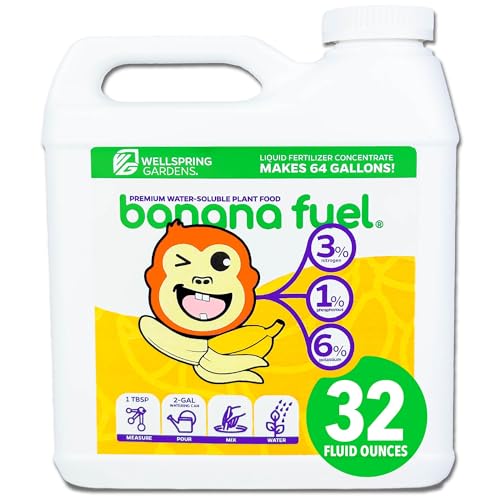
Wellspring Gardens specifically formulated this liquid concentrate with a 3-1-6 NPK ratio — a profile that aligns directly with University of Florida recommendations for banana cultivation. The high potassium content (the “6” in 3-1-6) is exactly what banana pseudostems need to thicken and support heavy fruit bunches without snapping in wind or rain. The formula also includes minor elements that container-grown bananas often lack.
Users report rapid recovery in heat-stressed plants, with leaves perking up and new growth appearing within a week of the first application. A single tablespoon mixed with two gallons of water is the standard dosage, making this 32-ounce bottle stretch across many feedings. Reviewers mention that the same concentrate works on other fruit trees in a pinch, though it is calibrated primarily for bananas.
One caveat: the bottle is small relative to the volume of water you mix, so if you are feeding a large grove of mature in-ground plants, you will need to reorder more frequently than with a 5-pound bag of water-soluble powder. For container growers and small backyard clumps, this is the goldilocks ratio.
Why it’s great
- Research-backed 3-1-6 ratio optimized for banana potassium needs
- Fast-acting liquid delivers visible results within one week
- Simple mixing ratio (1 tbsp per 2 gallons) reduces guesswork
Good to know
- Concentrate may require reordering sooner for large in-ground groves
- Not OMRI certified for strict organic certification programs
2. Grow-More Fruit Fuel 16-8-24
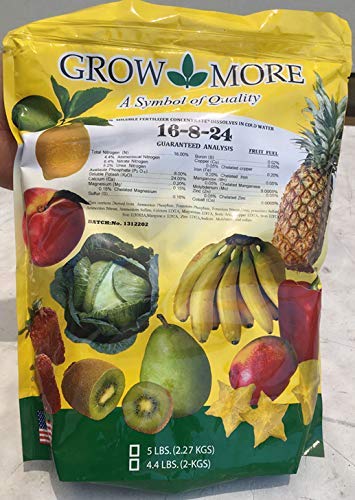
Grow-More’s Fruit Fuel delivers the highest potassium ratio in this roundup — 16-8-24 — making it an aggressive feeding option for banana plants that are already established and pushing for fruit. The 5-pound bag of water-soluble crystals dilutes at roughly 1 tablespoon per gallon, providing dozens of feedings at a fraction of the per-use cost of bottled liquids.
Customer feedback highlights dramatic recovery stories: hurricane-damaged banana plants that were written off bounced back with large, sweet bananas after a few applications. The formula also works on guava, mango, and general fruiting trees, so a single bag can cover your entire yard. The granular mix dissolves fully in water, making it suitable for hose-end sprayers or watering cans.
Storage is the main headache — the bag lacks a resealable closure, and the powder will absorb humidity and harden into a brick if left open in a shed or garage. Users recommend transferring the contents into a sealed airtight container or keeping the bag in the refrigerator during humid months. For diligent gardeners, the cost-per-feed advantage is unbeatable.
Why it’s great
- Extremely high 16-8-24 ratio targets maximum fruit production
- Extremely economical cost per feeding over 5 lbs of powder
- Versatile enough for bananas, guava, mango, and vegetables
Good to know
- Bag is not resealable; must be stored in an airtight container
- Powder clumps into a hard block if exposed to moisture
3. Farmer’s Secret Fruit Tree Booster Fertilizer

Farmer’s Secret leans hard into phosphorus, making this 32-ounce liquid concentrate ideal for the early growth phase right after dormancy breaks. Bananas emerging from a cold season or recovering from transplant shock need phosphorus to push out new root tips and establish a strong anchor before the heavy leaf growth begins.
The super-concentrated formula requires only 1 teaspoon per gallon of water — a little goes a long way, and a single bottle lasts through multiple growing seasons for a modest home clump. Reviewers report explosive bud set on pomegranates and dramatically increased bloom counts on stone fruit trees, indicating the phosphorus is bioavailable and effective.
One user noted bitter peaches after heavy application, suggesting the concentrate may shift fruit chemistry if overused or applied too late in the season. For banana growers, this is best reserved for early spring feeding cycles, switching to a higher-potassium formula once the pseudostem reaches shoulder height.
Why it’s great
- Extremely concentrated — 1 teaspoon per gallon goes very far
- Phosphorus-heavy formula supports post-dormancy root development
- Produces rapid bloom set in a wide range of fruit trees
Good to know
- Too much phosphorus late in season may alter fruit taste
- Best paired with a potassium booster for the fruit-fill stage
4. Down To Earth Organic Fruit Tree 6-2-4
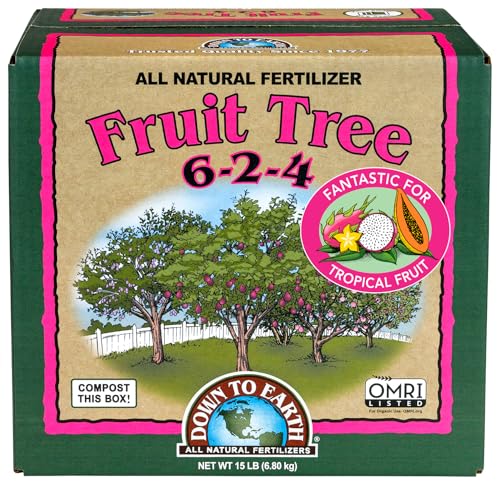
Down To Earth delivers a slow-release granular option that prioritizes soil biology as much as the plant itself. The 6-2-4 ratio is lower in immediate NPK than the liquid concentrates, but the OMRI-listed organic formula feeds soil microbes, improves water retention, and releases nutrients steadily over several months — a better match for in-ground banana plantings where you cannot water-soluble feed every week.
This 15-pound bag is the largest bulk option in the lineup, designed for multiple trees or a sizable banana circle. Reviewers report revived crabapple trees and recovered citrus after frost damage, indicating the granular formulation builds resilience over time rather than producing a quick green flush.
The granules need to be worked into the topsoil and watered in thoroughly — simply scattering them on the surface under mulch will slow release even further. For container-grown bananas, the granular form can be messy and less precise than liquid dosing, so this is best reserved for outdoor, in-ground setups.
Why it’s great
- OMRI listed for certified organic gardening without synthetic chemicals
- Slow-release granules feed for months, reducing application frequency
- Large 15-lb bag covers multiple trees or an entire banana grove
Good to know
- Granules require soil incorporation and thorough watering to activate
- Slower acting than liquid — not ideal for correcting acute deficiencies
5. TPS Nutrients Banana Tree Fertilizer
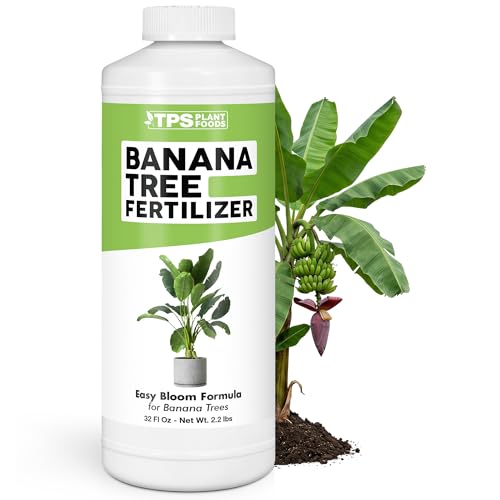
TPS Nutrients built this liquid fertilizer specifically around banana tree physiology, avoiding the guesswork of adapting a general fruit-tree formula. The nutrient profile targets rapid leaf expansion and pseudostem girth while supporting root architecture — critical for potted banana plants that cannot sprawl their roots into native soil.
The liquid mixes at 2 teaspoons per gallon for watering and 1 teaspoon per quart for foliar misting, giving growers a dual application method. Users report their banana plants gaining over a foot in height within a few weeks of first use, with noticeably more vibrant leaf color. The concentrate is made in the USA and comes with clear, banana-specific instructions.
The 32-ounce bottle is a modest volume, and the label does not provide a full NPK breakdown prominently on the front — buyers may need to consult the fine print or product page for the exact ratio. For container banana growers who want a no-mix, purpose-built solution, this is a clean entry point.
Why it’s great
- Specifically formulated for banana trees, not a general fruit tree blend
- Supports dual application — soil drench and foliar mist
- Produces measurable height and leaf color improvements quickly
Good to know
- Exact NPK ratio not prominently displayed on the bottle
- Smaller bottle size may require frequent reordering for larger groves
6. Jobe’s Organics Fruit & Citrus Spikes

Jobe’s Organics spikes offer a set-it-and-forget-it feeding method for in-ground banana plants. The 3-5-5 NPK ratio is lower in nitrogen than most banana-specific formulas but provides a balanced dose of phosphorus and potassium that benefits both flowering and root health. Each package contains six pre-measured spikes that you drive into the soil around the drip line.
The OMRI listing confirms the absence of synthetic chemicals, and Jobe’s proprietary Biozome microorganism blend helps break down organic matter faster in the root zone. Reviewers note that timing and placement matter — spikes driven too close to the trunk or applied during peak summer heat can cause localized root burn. Following the package directions (late fall or early spring, away from the trunk) produces visible growth improvements.
The spikes are not ideal for container bananas because the concentrated release zone can overwhelm a restricted root ball. For a small in-ground clump of 2-3 banana plants, one package covers the season with zero measuring or mixing.
Why it’s great
- Mess-free pre-measured spikes eliminate mixing and measuring
- OMRI listed organic formula with Biozome microorganisms
- Time-release feeding lasts through the growing season
Good to know
- Placement and timing are critical to avoid root burn
- Not suitable for container plants with restricted root zones
7. Bloom City Organic Berry Fertilizer

Bloom City’s organic liquid is marketed primarily for berries, but its balanced micronutrient profile and OMRI certification make it a viable entry-level option for small container bananas. If you are growing a single dwarf banana cultivar in a pot and already have this fertilizer for your strawberries, it will sustain basic leaf and root health without burning the plant.
Users report excellent results on blueberries and strawberries, with noticeable new growth and early fruit set. The 32-ounce bottle mixes at 3 tablespoons per gallon, and the organic base is gentle enough for frequent light feeding. The liquid has a distinct organic smell (common with fish-based or kelp-based formulas), so indoor application can be noticeable.
The formula is not banana-specific — it lacks the elevated potassium ratio that big-fruiting banana varieties demand. For growers aiming for heavy bunches of dessert bananas, this is a maintenance food rather than a production booster. It is best used as a supplement between stronger potassium feeds or for ornamental banana varieties.
Why it’s great
- Organic OMRI-listed formula safe for frequent light feeding
- Works well for container plants and mixed tropical gardens
- Gentle enough for dwarf and ornamental banana varieties
Good to know
- Not banana-specific — potassium ratio may be too low for heavy fruiting
- Liquid has an unpleasant organic odor upon mixing
FAQ
What NPK ratio should I look for in a banana fertilizer?
Can I use a general fruit tree fertilizer on my banana plants?
How often should I fertilize a container banana plant?
Is organic or synthetic fertilizer better for banana production?
Final Thoughts: The Verdict
For most users, the best banana fertilizer winner is the Wellspring Gardens Banana Fuel because its 3-1-6 ratio is precisely matched to banana potassium demands and delivers fast, visible results in both container and in-ground plants. If you want maximum potassium at the lowest cost per feed, grab the Grow-More Fruit Fuel 16-8-24. And for organic, no-mess, season-long feeding of an in-ground grove, nothing beats the Down To Earth Organic Fruit Tree 6-2-4.