
Our readers keep the lights on and my morning glass full of iced black tea. As an Amazon Associate, I earn from qualifying purchases.
Specs are compiled from manufacturer listings and verified buyer reviews and can change over time — please confirm the key details on the product page before buying.
If you want the short answer: the NURI Portuguese Sardines in Spiced Olive Oil is the tin worth building your pantry around, and the Wild Planet Skipjack is the everyday tuna that never tastes like a factory. The rest of this list splits into two camps — whole-fillet cans packed with real fish, and budget bulk packs that trade some texture for shelf space. Knowing which camp you actually want is the whole game.
I’m Min — the founder and writer behind Gadgets Feed. This guide is built by comparing the manufacturers’ published specifications and the patterns across verified customer reviews, so you get each pick’s real strengths and trade-offs instead of marketing spin.
You want fish that holds its shape on the fork, not a tin that pours out as shredded mush. Below is the difference between a tin packed with firm, whole pieces and one that turns to paste, so you can pick the right canned fish for your shelf without paying for a label you don’t need.
Our Picks at a Glance

How To Choose The Best Canned Fish
Two cans can look identical on the shelf and behave nothing alike when you open them. The label words that matter most are the ones describing how the fish was cut and what it was packed in — those two decisions shape flavor, texture, and how much fish you actually eat versus pour down the drain.
Solid, Chunk, or Filet — the Cut Tells You Everything
A can marked “solid” or “filet” holds large, intact pieces of fish. A can marked “chunk” holds flakes and smaller bits. Both are perfectly good, but they suit different jobs. Solid packs hold their shape in a salad or on a cracker. Chunk packs mix into a sandwich or a casserole more easily and tend to cost less per ounce.
What the Fish Is Packed In Changes the Flavor
Water-packed fish keeps the taste mild and lets you control the seasoning. Oil-packed fish — olive oil especially — carries more of the fish’s natural richness to your tongue. Mustard sauce sits between the two and adds tang without extra work. Whichever you pick, you drain the liquid before eating, so the packing liquid mostly matters for flavor, not for what ends up on your plate.
Drained Weight Beats Total Weight
The number on the front of the can is the total weight, including liquid. What you actually eat is the drained weight. Some brands skip that trick entirely and measure by pressed weight, which is the fish after the liquid is squeezed out — a more honest number for comparing two cans side by side. If a label brags about a big total weight while hiding a small drained weight, that is your signal that you are buying broth.
Quick Comparison
| Model | Best For | Fish & Cut | Packed In | Total Units | Amazon |
|---|---|---|---|---|---|
| NURI Portuguese Sardines in Spiced Olive Oil★ Best Overall | Best overall upgrade | Sardines, hand-packed | Spiced olive oil | 44 Ounce | Amazon |
| Wild Planet Skipjack TunaCrowd Favorite | Everyday tuna | Skipjack tuna | Water | 80 Ounce | Amazon |
| Bumble Bee Wild Caught Sardines in Mustard SauceGreat Value | Mustard-sauce fans | Sardines | Mustard sauce | 45 Ounce | Amazon |
| King Oscar Mackerel Variety 6-Pk | Flavor variety | Mackerel, skinless & boneless | Olive oil / Mediterranean / lemon / jalapeño | 24.3 Ounce | Amazon |
| StarKist Chunk Light Tuna in Water 25% Less Sodium | Lower-sodium bulk | Chunk light tuna | Water | 120 Ounce | Amazon |
| Bumble Bee Chunk Light Tuna in Oil | Bulk tuna in oil | Chunk light tuna | Oil | 120 Ounce | Amazon |
| MW Polar Solid White Albacore in Water | Solid albacore | Albacore, solid | Water and salt | 60 Ounce | Amazon |
| Tonnino Yellowfin Tuna in Olive Oil | Premium everyday tuna | Yellowfin tuna | Olive oil | 59.3 Ounce | Amazon |
| Natural Catch White Albacore Filets | Filet-style albacore | Albacore, hand-cut filets | Water | 52.8 Ounce | Amazon |
In‑Depth Reviews
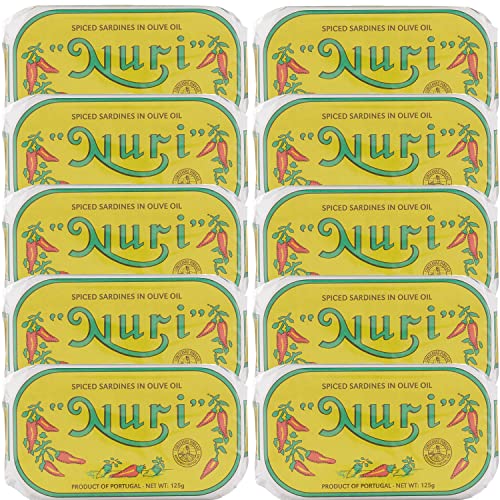
1. NURI Portuguese Sardines in Spiced Olive Oil – 10 Pack – (4.4 oz cans)
Our pick — over 4.5★ from 600+ verified ratings; the strongest balance of quality and price.
The tin that turns a two-dollar lunch habit into something you look forward to.
NURI is the rare pantry can that people describe as a destination rather than a convenience. Every tin holds just 3-5 sardines alongside olive oil, cucumber, piri-piri, carrot, laurel, clove, and black pepper — a short, recognizable ingredient list with no broth doing the heavy lifting. The label says 44 Ounce across the ten cans, and owners consistently describe the fish as large and tightly packed rather than swimming in filler.
The eating experience is the reason this one holds the top slot. What wins people over most is the sheer consistency of the quality — can after can, the fish arrives firm, well-cooked, and free of the muddy fishiness that puts most people off sardines. The spiced oil is the second thing that keeps coming up in the reviews: warm, rich, and pleasant enough that discarding it feels like wasting the best part. The chili heat is gentle, and the vegetable pieces in the tin are edible save for the clove, which you pluck out.
Where other brands crowd their cans with water to inflate the number on the front, NURI packs tight and lets the meat-to-oil ratio speak for itself. Buyers report the ratio runs close to double that of cheaper brands, which reframes what looks like a higher shelf cost. Texture-wise it eats more like a proper piece of fish than a spread — firm enough to sit on toast without falling apart, which is exactly what you want if you have been burned by mushy tins before.
What Earns The Top Slot
- Firm, hand-packed sardines with a meat-to-oil ratio buyers describe as nearly double cheaper brands
- Spiced olive oil layered with cucumber, piri-piri, carrot, laurel, clove, and black pepper
- Very mild odor and no overpowering fishiness, per the review pages
- 10 tins totaling 44 Ounce, so a single order covers a real stretch of lunches
The Honest Trade-Off
- A pricier shelf position than commodity sardine cans — treat it as an upgrade, not a pantry staple
- The clove in the tin is inedible and needs to be picked out
- An occasional tin arrives dented in transit, though buyers describe the brand as quick to sort it
Worth it if: you already like sardines and want to taste the ceiling of what a tin can do — this is the upgrade you build lunches around.
Think twice if: you want a can you can drain and forget; the spiced oil here is meant to be kept and used, not poured away.
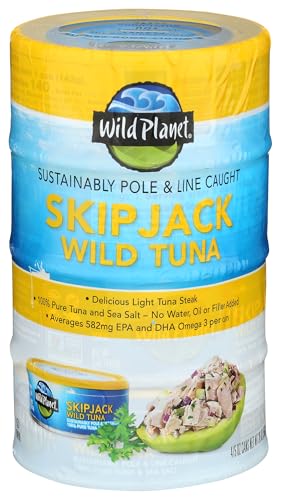
2. Wild Planet, Skipjack Tuna, 20 Ounce (Pack of 4)
Four big 20-ounce cans of skipjack that eat like the tuna you remember from childhood.
Most tuna in this category comes in dainty 5-ounce tins. This one ships 80 Ounce across four 20-ounce cans — three times the fish per vessel, which changes how you use it. One can makes a full batch of tuna salad instead of limping through a couple of sandwiches. The 5.59 x 3.46 x 3.27 inch package footprint is also remarkably compact for that much fish, which keeps shelf space manageable if you buy more than one pack.
The flavor profile is what hooks people. Skipjack is a smaller, milder fish than albacore, so it carries less of the metallic bite that some cheap tuna brands have. What owners keep praising is the freshness — the fish arrives with no fishy aroma and lands close to the tuna people remember eating growing up. One buyer put it simply: “This is the only Tuna I will eat.” The label flags no hydrogenated fats and no high-fructose corn syrup, and it avoids bleached or bromated flour in its supply chain.
Skipjack sits lower on the food chain than albacore, so buyers who eat tuna several times a week treat this can as the lower-mercury pick. The catch is real: skipjack and albacore are not the same eating experience, and several owners say they still prefer Wild Planet’s albacore for flavor. If you already know you love a richer, more steak-like albacore bite, that preference will survive. If you want a milder, more versatile tuna that disappears into salads and casseroles without asserting itself, skipjack is the smarter everyday can.
Why It Stays In The Rotation: four 20-ounce cans at 80 Ounce total means you stop rationing tuna across sandwiches and start cooking with it again.
The One Trade: skipjack is milder and less steak-like than albacore, so buyers who know they want a bolder albacore bite should look further down this list.
Reach for this if: you eat tuna a few times a week and want a big, mild can you can use freely without pinching portions.
Look elsewhere if: albacore’s firmer, richer texture is the reason you buy tuna in the first place.
3. Bumble Bee Wild Caught Sardines in Mustard Sauce, 3.75 oz (12-Pack)
Mustard-sauce sardines in a rip-top tin — the old-school lunch that still works.
Twelve tins of 3.75-ounce wild caught sardines in mustard sauce, 45 Ounce total, each can carrying 18 grams of protein, gluten-free and Kosher Certified. The mustard angle is the whole point. Sardines in water taste neutral and need seasoning. Sardines in mustard arrive ready to eat on a cracker with nothing else added, which is the version people who ate this as a kid actually want. The cans are easy-open, so you do not need a tool to get in.
The catch here is portion honesty. The tins are the smallest on this list at 3.75 ounces each — this is a snack-size can, not a meal-size one. Buyers are split on whether you get enough fish pieces per tin, and the smaller size means if you eat two cans at a sitting, a whole pack disappears in six sessions. That is still a real pack of twelve, but it is not a bulk pantry investment the way the tuna 24-packs are.
Where the dry versus oil packing comparison matters most is right here. Mustard sauce is neither oil nor water — it clings to the fish so the sardines do not come out dry the way water-packed versions can. If you have ever opened a water-packed sardine can and found the fish dry and mealy, the mustard sauce solves that specific problem. The trade is that mustard dominates flavor, so this is the one tin on the list where the condiment has a strong point of view.
Suits: anyone who wants sardines pre-seasoned and ready to eat straight from the tin with crackers — a genuine no-prep lunch.
Look past if: you prefer plain oil-packed sardines you can season yourself, or you want big lunch-size portions instead of snack-size tins.
4. King Oscar Mackerel Variety 6-Pk, 4.05 oz Cans, Skinless & Boneless
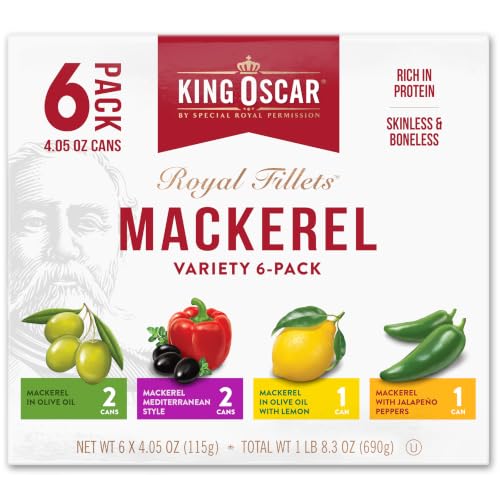
Mackerel in four flavors, filleted by hand and packed without a single bone or scrap of skin.
If you find sardines too fishy and tuna too bland, mackerel sits in a useful middle ground. It is bolder and saltier than tuna but not as assertive as a full-flavored sardine, and this King Oscar pack leans into that by offering four sauces — olive oil, Mediterranean, lemon, and jalapeño — across six cans totaling 24.3 Ounce. The fish is skinless and boneless, which is the detail that makes this the easiest can on the list to recommend to someone who has never liked canned fish before. Nothing has to be picked out.
Each can lands at 12-16 grams of protein with 0-4 grams of carbs, gluten-free with 100% simple ingredients. The texture reads closer to tuna than to sardine — firm flakes that hold together when you stir them into a pasta sauce or flake over a cracker. The Mediterranean version draws the most enthusiasm, with its tight-packed chunks and sliced olives. People who braced themselves for something aggressive report the opposite: buttery, mild, and consistent.
The four-flavor structure is the honest trade. You do not get to pick six cans of your favorite — you get a sampler, and the olive oil flavor is the one several buyers wish there was more of. If you already know you love jalapeño or Mediterranean, that variety pack is going to feel like a compromise rather than a treat. If you are new to mackerel, though, working through four flavors is the fastest way to find which one earns a repeat order.
Standout Detail: skinless and boneless hand-filleted cuts mean you can eat it straight from the can with nothing to pick out — genuinely rare for canned mackerel. The four-flavor pack lets you learn what you like without committing to six cans of one sauce.
Choose this when: you are new to canned fish or want tuna-style texture with more flavor variety and zero bones or skin to deal with.
Skip if: you already know the exact flavor you want — buying a variety pack to get what you could pick directly will feel like paying for cans you would not choose.
5. StarKist Chunk Light Tuna in Water 25% Less Sodium, 5oz Can, 24-Pack
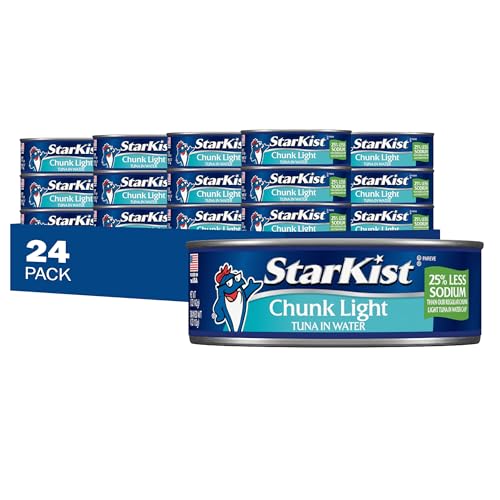
Twenty-four 5-ounce cans of water-packed chunk light tuna at 25% less sodium than the regular version.
Sodium is the invisible spec nobody notices until they cut it. This can holds 270mg per 5-ounce serving while the same brand’s regular chunk light tuna holds 360mg — the same sandwich, 90mg lighter on salt. Each can delivers 20g of protein and 90 calories, and 24 cans total 120 Ounce, which is the largest unit count on this list. For a lunch staple you eat multiple times a week, that math accumulates.
The trade on this one is texture — chunk light by definition is flakes, not whole pieces. What buyers like is that the flakes come out firm and chunky rather than mushy, with white meat and a cleaner taste than heavier-salt brands. It drains well, rinses easily if you want to cut salt further, and works for the recipes chunk light was built for: tuna salad, patties, casseroles. The can also doubles as a low-effort cat treat, which appears frequently in the review pages.
The one thing to plan for is rotation. Mercury is why regular tuna eaters cap themselves at a few cans a week, even with skipjack and light tuna, which sit lower on the food chain than albacore. A two-dozen pack will last weeks or months depending on your habits; treat it as a pantry investment, not a sprint. On one of the cans, buyers have flagged a large bone making its way into the pack, but it is a rare event in a 24-can case and the fix is a glance before you flake it.
Built for: anyone who eats tuna several days a week and wants a lower-sodium, high-protein lunch staple at a bulk-pantry scale.
Not for: somebody who wants whole tuna pieces — this is chunk light, and flakes are the point.
6. Bumble Bee Chunk Light Tuna in Oil, 5 oz (Pack of 24)

The oil-packed bulk can that keeps tuna moist even when you drain every drop.
Twenty-four 5-ounce cans, 120 Ounce total, wild caught and MSC Certified Sustainable Seafood, dolphin safe, packed in the USA, with 22g of protein and 145mg of DHA and EPA Omega-3s per can. The oil is the one detail that changes everything about eating these. Water-packed tuna drains dry and can go mealy in the tin. Oil packs the fish in a protective film, so even after you drain the can the flesh stays moist when it hits the plate. Nothing gets gray and dry.
Because this is a bulk case, shipping bulk becomes part of the story. The 9.3-pound package arrives as a stacked case, and every can is shelf-stable — good for emergency storage, good for camping, good for the office drawer. The only catching point is that “Chunk Light” is a misnomer in this format: what pours out is flakes and small mince, not the chunky bites the word “chunk” implies. Owners who shop for texture say the flaky style spreads better in a sandwich anyway.
The oil here wins over water in a side-by-side. Tuna in oil tastes richer and stays soft enough to mix without crumbling into mush. The trade is that “Chunk Light” is a misnomer here — what pours out is flakes and small mince, not chunky bites.
The Oil Advantage
- 22g protein and 145mg DHA and EPA Omega-3s per can, packed in 120 Ounce total
- Oil packing keeps the tuna moist even after draining, avoiding the mealy texture of water packs
- MSC Certified Sustainable and dolphin safe, canned in the USA with recyclable packaging
A Few Cans, Watch The Edges
- Despite the “Chunk” label, the fish comes out as flakes and mince, not chunky bites
- A small number of cases arrive with dented cans, so inspect the case on delivery
- Two-dozen bulk order requires real pantry space to store properly
Stack the pantry if: you want a shelf-stable tuna supply you can drain and mix freely, with oil protection keeping each can moist.
Look elsewhere if: you want big visible tuna chunks and would just as soon buy a smaller case to test first.
7. MW Polar Tuna, All Natural Solid White Albacore in Water, 5 oz Can (Pack of 12)
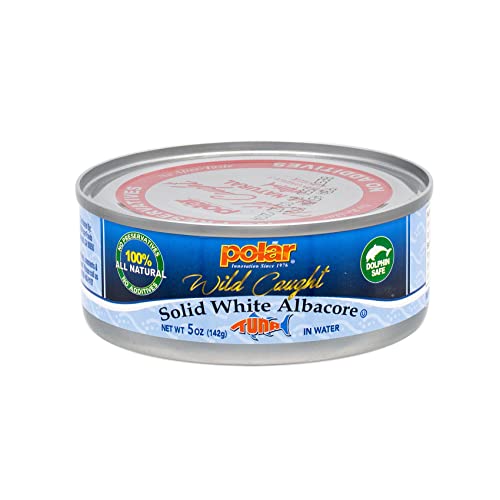
Three-ingredient albacore — tuna, salt, water — with nothing inflating the can weight.
Most albacore is bulked up with vegetable broth and pyrophosphate. Those additives add liquid weight that you drain off before eating, which means you paid for water. Polar skips the broth entirely: the tin holds tuna, salt, and water, and nothing else. It is gluten-free, Kosher Pareve, and the label notes the brand measures by pressed weight — the fish after liquid is squeezed out — rather than the drained weight that other makers advertise. Twelve 5-ounce cans, 60 Ounce total.
The solid albacore cut is what the price buys. Instead of shredded scraps, you get intact pieces that flake apart cleanly when you fork them. No mush, no cloudy liquid poured off, no chemical aftertaste from broth additives. The flavor lands clean and mild — one buyer summarized the whole approach with a single note that this is simply what tuna should taste like. The pull-top lid is a small daily convenience that matters more than you would think if you take these to work.
Buying a 12-pack is the honest catch. The per-can math is good, but it means keeping twelve cans on the shelf, which requires real cabinet space if you are not already eating albacore once or twice a week. If you go through tuna faster, the case is a convenience. If you think of this as a seasonal experiment, twelve cans is a lot of albacore to work through before you have proven you love it.
The Real Selling Point: no vegetable broth and no pyrophosphate means every ounce in the can is tuna you eat, not liquid you pour out.
The Catch: a 12-can case is a commitment — good if you eat albacore regularly, tight on cabinet space if you only dabble.
Buy this if: you want solid white albacore with a short ingredient list and no filler liquids propping up the weight.
Wait on it if: you only eat tuna occasionally — a twelve-can stockpile outlasts most casual pantry plans.
8. Tonnino Yellowfin Tuna Fish in Olive Oil – Pack of 12 Can (4.94 Ounces (Pack of 12), Olive Oil)
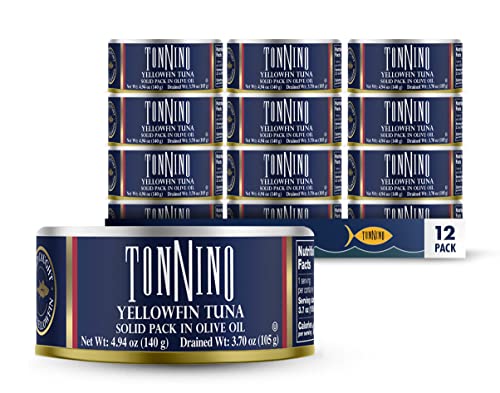
Yellowfin in olive oil that eats less like tuna salad and more like a sliced steak.
Yellowfin is the cut that raises the price tier without argument. It is a firmer, meatier fish than light tuna, and Tonnino packs 12 cans at 4.94 ounces each, 59.3 Ounce total, in slightly salted olive oil rather than water. What arrives in the tin is a real whole cut — not the small chops and leftovers that get swept into cheaper cans. Firm enough that the pieces hold their shape when you flake them into a salad, rich enough that you can eat one straight from the tin with nothing added.
The olive oil does more than carry flavor. It preserves the firmness of the cut through shipping and storage, so the texture stays consistent from the first can to the twelfth. The cans also ship well — one reviewer noted the 12-pack arrives flat on cardboard and plastic-wrapped with no dents in transit, which is a real thing to check when you are buying a canned product in a case. The flavor lands where premium canned tuna should: not too salty, not too rich, meaty without any of the dry chalky quality that plagues water-packed albacore.
Oil is the wrong pack for some palates. The tuna is genuinely rich, and buyers accustomed to water-packed tuna say the olive-oil version can be too oily for them. That is the honest fork: if a slightly dry tuna is your benchmark, and you reach for a squeeze of lemon to cut richness, water-packed albacore might actually be the smarter can. If you want the tuna itself to feel substantial and steak-like, oil-packed yellowfin is the right answer.
Pick this when: you want a can that eats like a whole cut of fish and can stand alone on a plate without mayonnaise to rescue it.
Skip if: your taste runs lighter or drier — oil-packed yellowfin is genuinely rich, and water-packed albacore will suit you better.
9. Natural Catch Tuna White Albacore Filets, Hand Cut, Pole & Line Caught (4.4 oz per can – Pack of 12)

Hand-cut white albacore filets that look more like a sliced steak than a tuna can.
Most canned tuna is diced by machine and swept into a can. Natural Catch does the opposite. Every filet in these 12 cans, 52.8 Ounce total, is hand cut in a whole-filet shape the brand explicitly compares to a Grade A steak. The cut shows up the moment you open the tin — one intact filet in each can instead of the small chopped pieces you get elsewhere. Pole-and-line caught, so no nets are used in the harvest, which is a different fishing method than most cheap tuna brands rely on.
Protein runs at 22g per can and the fish is pale, clean-looking, and firm when it flakes. Buyers describe the taste as the best canned tuna they have found, with enough presence to stand alone on a plate without dressing. The peel-back container is a genuine convenience upgrade over a standard tin — no key, no pull-tab fight, just peel and eat. For someone who eats tuna for the protein number rather than the flavor, the filet cut also makes portioning easy — one filet is one serving.
The honestly reported trade is dryness. Water-packed filets are not oiled, so they can come out dry straight from the can; the fix that recurs in customer notes is a squeeze of lemon juice and a drizzle of olive oil before you eat it. For tuna salad that dryness is annoying; for eating filet-style with lemon and olive oil on top, it is the right base. The 4.4-ounce can is also a single-serving format, so a heavy tuna eater will burn through twelve quickly.
The Sales Pitch: hand-cut whole filets, 22g protein per can, and a peel-back lid that skips the tin-opener dance.
The Habit To Build: these cans are water-packed and dry, so keep lemon and olive oil nearby — a tuna-salad recipe will disappoint you, but a filet-on-a-plate will not.
For: eaters who want one whole albacore filet per can, high protein, and the option to serve it like sliced fish rather than tuna mush.
Against: it is dry out of the tin and each 4.4-ounce can is a single serving — bulk tuna salad makers should look at the 24-can packs instead.
Understanding the Specs
Drained Weight and Pressed Weight Explained
Drained weight is what you eat once you tip the liquid off the fish. Pressed weight is the fish after the liquid has been squeezed out by hand — it is the stricter, more honest number, and brands that pack less filler advertise it. If a label trumpets total weight in large type, that number includes the liquid you will pour away. Two cans with the same total ounces can deliver very different amounts of actual fish depending on how much of that total is water or oil.
Oil Packing vs Water Packing
Oil forms a protective film on the fish so it stays moist even after you drain the can, which usually gives a richer, firmer result. Water keeps the fish’s natural taste front and center and lets you season it however you want, but it can leave the fish slightly dry once drained. Neither is better in the abstract — oil is the pick when texture matters, water is the pick when flavor control matters. Some brands add vegetable broth or pyrophosphate to inflate the weight; if the ingredient list runs long, that weight is often filler rather than fish.
FAQ
Is solid white albacore tuna actually better than chunk light tuna?
Does oil-packed canned fish need to be drained before eating?
How many cans of tuna is it OK to eat per week?
What does “pressed weight” mean on a tuna can, and why does it matter?
Are sardines in mustard sauce spicy, or is the flavor pack milder than it looks?
What is the difference between pole-and-line caught fish and net-caught fish?
Will canned sardines or mackerel taste fishier than canned tuna?
How long does sealed canned fish last in the pantry?
Does skinless and boneless canned fish actually mean no bones at all?
Is it worth paying more for yellowfin tuna or premium albacore over store brand light tuna?
Final Thoughts: The Verdict
For most households, the canned fish winner is the NURI Portuguese Sardines in Spiced Olive Oil because it delivers the whole point of a premium tin — firm, tightly packed fish in a spiced oil worth keeping — and is the can that turns “sardines” into something you plan a meal around. If you eat tuna a few times a week and want the biggest can of it, grab the Wild Planet Skipjack Tuna; its four 20-ounce cans mean no more rationing. And for a shelf-stable tuna stack that lives in your pantry for months, the StarKist 25% Less Sodium 24-Pack is the one to reach for — same brand, 90mg less sodium per serving than its regular chunk light, twenty-four cans deep. Whichever direction you go, the patterned upgrade worth making is choosing a can where the drained weight is honest — once you have had one tin of tightly packed fish, the commodity cans quietly stop satisfying you.
How We Picked
We do not accept paid placement. Every pick is matched to a real buyer and a real use-case; we do not hands-on test units.
Sources & Methodology
Specifications: manufacturer listings and product documentation. Review insights: verified customer reviews, as of September 2026. Pricing: not shown on this page (it changes often); check the current price via the retailer link.
As an Amazon Associate, Gadgets Feed earns from qualifying purchases. This does not affect which products we feature.