
Our readers keep the lights on and my morning glass full of iced black tea. As an Amazon Associate, I earn from qualifying purchases.
Specs are compiled from manufacturer listings and verified buyer reviews and can change over time — please confirm the key details on the product page before buying.
If your lawn drains slowly, feels hard underfoot, and drinks water without ever greening up, compaction is almost always the reason. Aeration fixes that by pulling little cores of soil out of the ground so air, water, and fertilizer can actually reach the roots. The catch is that aeration tools come in two very different designs — hollow-tine pluggers that remove soil cores and spike rollers that punch holes — and picking the wrong one for your soil type wastes a weekend. The nine picks below cover both designs across small flower beds, average backyards, and full acreage, so you can match the tool to your ground instead of guessing.
I’m Min — the founder and writer behind Gadgets Feed. This guide is built by comparing the manufacturers’ published specifications and the patterns across verified customer reviews, so you get each pick’s real strengths and trade-offs instead of marketing spin.
Most homeowners assume aeration is a once-a-year chore best handled by a service, but the right manual tool pays for itself in a season and lets you aerate exactly when the soil is soft enough. The picks ahead show which design suits your soil and yard size, from three-tine pluggers to 40-inch tow-behinds, and which of these aeration tools is worth your money.
Our Picks at a Glance
How To Choose The Best Aeration Tools
Two questions decide which aeration tool belongs in your shed: what kind of soil you have, and how big the area is. Answer those honestly and the rest of the spec sheet falls into place.
Core removal versus spike punching
A hollow-tine coring aerator pulls actual plugs of soil out of the ground, which is what relieves hard compaction and opens channels for water and seed. A spike aerator instead pushes tapered points into the soil, which is faster but leaves the soil compressed around each hole. If your lawn is soft and you mostly want to open it up before overseeding, spikes are fine. If the ground is clay-hard and water pools on top, hollow-tine plugging is the design that genuinely fixes it. You can tell the difference at a glance: hollow tines look like little pipes, spikes look like nails.
Walking, pushing, or towing
Push-and-pull pluggers work best in tight beds, around sprinkler heads, and in small compacted patches. Rolling spike aerators reduce arm strain on medium lawns because you push them ahead of you, and tow-behind models from a rider sit hundreds of pounds heavier, which is why they penetrate deeper. Match the tool to the job: a three-tine hand plugger on a third of an acre will leave your arms sore, while a tow-behind on a postage-stamp lawn is overkill and awkward to store.
Moisture, weight, and spike depth
Every manual aerator on this list works better after rain or a good watering — dry clay defeats all of them. Weight also matters: models with a fillable tray let you add sand, rocks, or blocks to push tines deeper. And check spike length before you buy, because short spikes sit on top of thatch instead of reaching soil.
Quick Comparison
| Model | Best For | Tine Type | Weight | Spike/Corer Reach | Amazon |
|---|---|---|---|---|---|
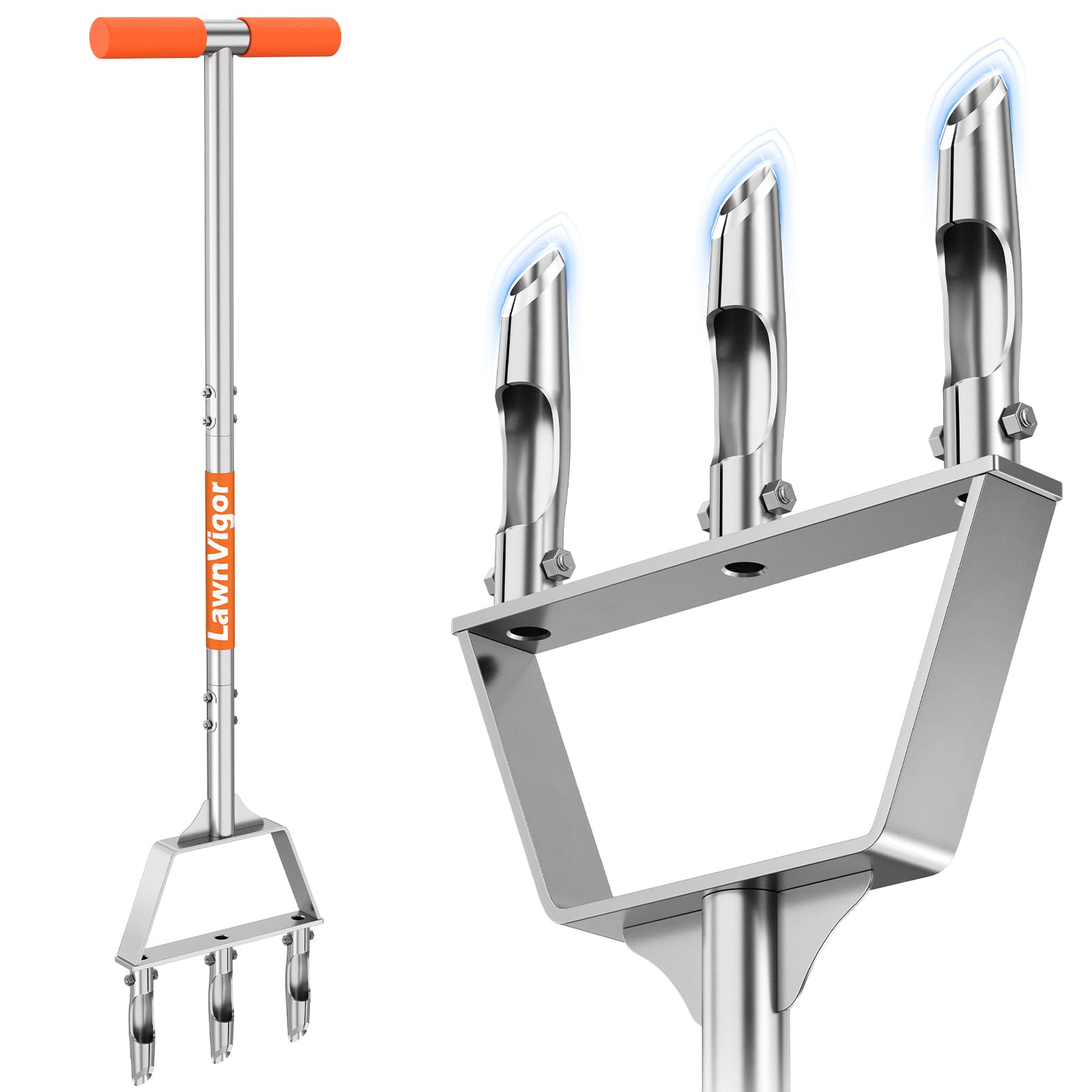
| Manual Lawn Core Aerator (LawnVigor)★ Best Overall | Small compacted beds | 3 hollow tines | 3.52 lb | Hollow corer | Amazon |
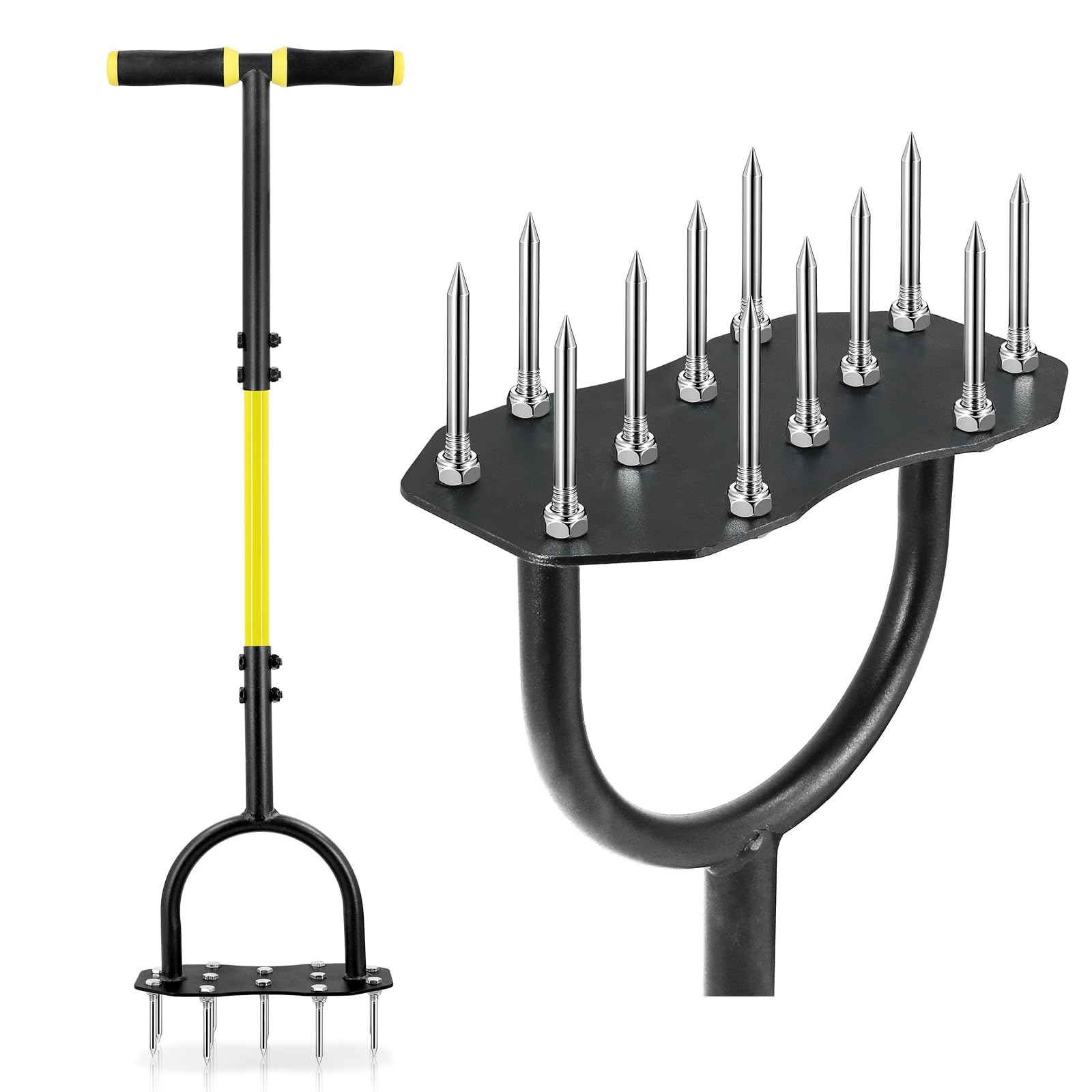
| Jardineer 36″ Spike AeratorBudget Champion | Quick small-lawn touch-ups | 12 steel spikes | 5.1 lb | 2.75-inch spikes | Amazon |
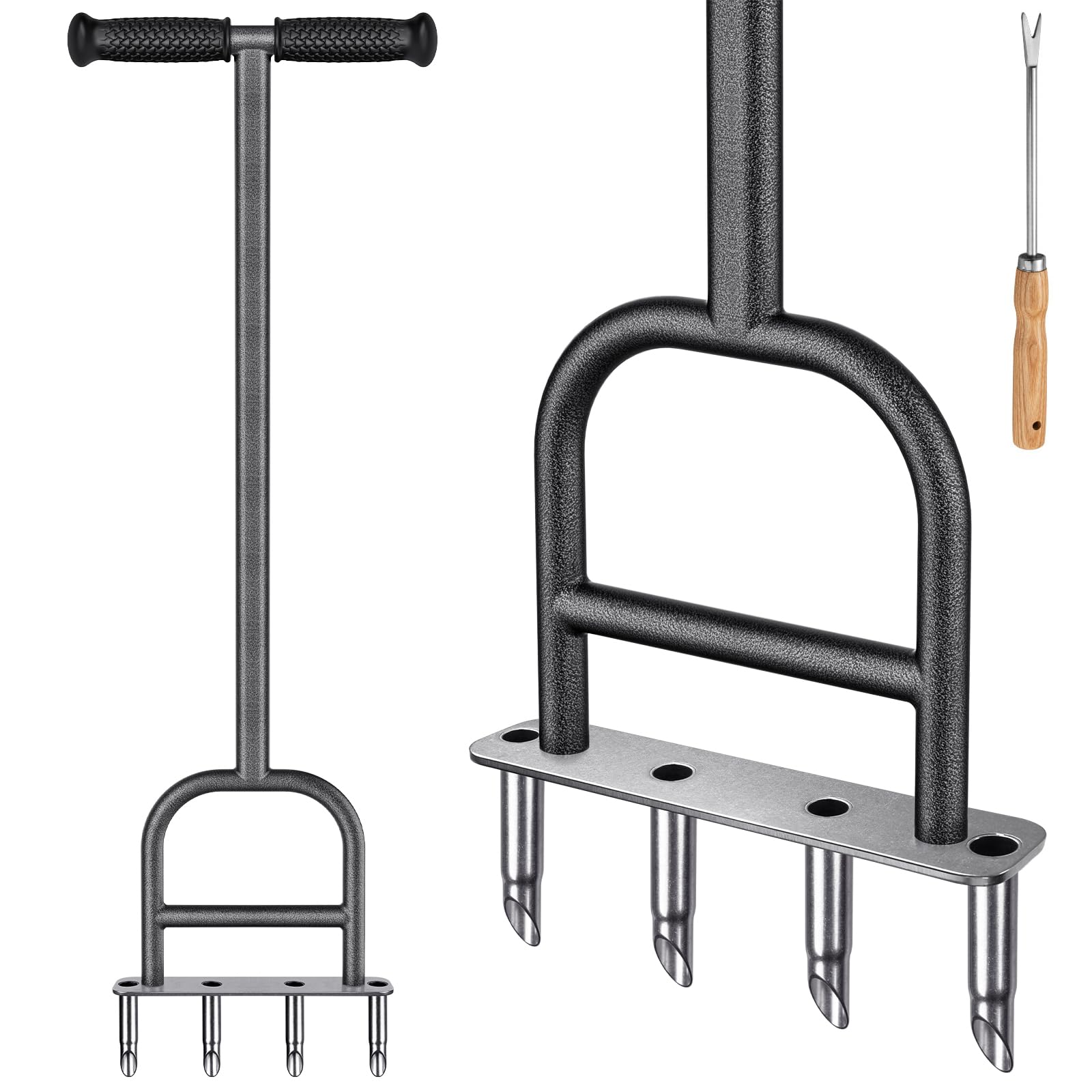
| Dolibest Lawn Coring AeratorTop Performer | Small to medium projects | 4 hollow tines | 5.46 lb | 3.5-inch corers | Amazon |
| Walensee Rolling Lawn Aerator | Medium lawns, low effort | 42 steel spikes | 11.82 lb | 2-inch spikes | Amazon |
| Landzie 42″ Hollow Tine Core Aerator | Tough compacted spots | 3 hollow tines | 5.6 lb | Hollow corer | Amazon |
| Suchtale 40-Inch Tow Behind Spike Aerator | Larger lawns behind a rider | 10 star tines | 39.5 lb | Up to 2-inch depth | Amazon |
| Brinly SAT2-40BH-P Tow Behind Aerator | Monthly maintenance on big lawns | 11 tine stars | — | Up to 2-inch depth | Amazon |
| Craftsman 40 Inch Tow Behind Plug Aerator | Deep core plugging on acreage | 24 coring points | 78.8 lb | Up to 3-inch depth | Amazon |
| Brinly Combination Aerator Spreader | Aerating and overseeding in one pass | 132 tine tips | 77.8 lb | Up to 2-inch depth | Amazon |
In‑Depth Reviews
1. Manual Lawn Core Aerator for Compacted Soil with Non-Clogging Hollow Tines
Our pick — 4.5★ from 200+ verified ratings; the strongest balance of quality and price.
The one that pushes out clean plugs of clay without clogging, at a third of the weight of the big rollers.
Here is the tool to reach for if your problem is small patches of hard, compacted ground — paths, beds, and the worn spots where the dog runs. It pulls actual soil cores instead of just poking holes, which is the whole point of aeration. What makes it the pick of this bunch is that it simply works: owners consistently point to its effectiveness on compacted soil as the reason they keep using it, with assembly coming in second as a pleasant surprise. Three hollow tines remove plugs while resisting clogs, and the non-slip ergonomic handle sits at a height that cuts back strain — you push down, the plug comes up, and you move on.
The numbers are light where it counts. It weighs 3.52 pounds — that is 55% lighter than the Dolibest coring aerator, so it is easier to carry out to the far corner of the yard and swing between beds. And at 15 x 10 x 2.8 inches it is 2.2x more compact than that same 32.68 x 11.69 x 2.36-inch Dolibest, which means it tucks into a shed corner instead of dominating the shelf. The tines are replaceable, so a worn or bent tip does not retire the whole tool. Clean it with a screwdriver and a hose, and it keeps pulling cores season after season.
This three-prong tool covers a small area with each push, so you’ll want a second aerator to cover a big lawn faster — buyers report that pairing. Impacted clay still needs days of rain before it gives. If your soil is bone-dry or your lawn is a quarter acre of packed clay, it will test your patience and may bend a tine. For soft soil and small compacted areas, it does exactly what it promises on soft soil with very little fuss.
What wins people over
- Effectiveness on compacted soil is the single thing buyers keep coming back to — it does the job it exists to do
- Quick to assemble and easy to clean, so it is ready the day it arrives
- Light at 3.52 pounds and compact at 15 x 10 x 2.8 inches — easy to store and carry
- Non-clogging hollow tines with replaceable tips for cheap long-term upkeep
Who this is not for
- Three tines means small footprint per push — large lawns take a long time
- Needs moist soil; hard dry clay will fight back and can bend a tine
- Full body weight is still required to sink the corers
Reach for this if: you have small compacted patches, flower beds, or landscaping edges the powered machines cannot reach.
Think twice if: your whole yard is packed, dry clay — you will want a tow-behind or a longer hollow-tine tool instead.
2. Jardineer Lawn Aerator Tool, Updated 36″ Spike Aerator Lawn Tool with Longer Spikes, Pre-Assembled Manual Grass Aerator for Lawn Aeration
The tall, back-saving spike aerator that arrives pre-built and pokes holes without pulling a single plug.
If your back is the thing you are trying to protect, this 36-inch spike aerator lets you work standing up. Twelve heat-treated steel spikes, each 2.75 inches long, drive into clay, sand, loam, and compacted soil at the same time, pushing air and water toward the roots. Its quality is what buyers keep praising — the build and effectiveness both land as the top reasons it earns its spot. A 36-inch shaft with a comfortable rubber grip does the bending for you, and the thick steel foot plate takes your full weight so you can drive the spikes in without fighting the tool.
Simplicity separates it from the hollow-tine picks above. You get no plugs to collect, no barrel to unclog, and no wrench work — it arrives pre-assembled with a wrench and manual, and it detaches for storage. Spare spikes and screws come in the box, which matters because spikes that hit a rock or irrigation line can bend. Buyers describe it as a good little tool for punching a bunch of holes in the lawn, and note it is especially suited to small, tight areas.
Be clear on one thing before you buy: this is a spike aerator, not a core aerator. It pokes holes; it does not remove soil plugs. Owners mention the holes are narrower and shallower than true core aeration, which makes it less effective for overseeding — the seeds have less soil contact to grab. It is also labor-intensive, best for small lawns, and one owner reported two spikes bending on the first use and replacing them from the spares. For quick weekly or seasonal openings on a modest yard, none of that matters. For deep compaction relief and seeding, look at the hollow-tine tools.
Best fit for soft-ground touch-ups: small yards, easy assembly, and a design that spares your back make this a strong entry pick.
The real limitation: spikes poke holes, they do not pull plugs — so it helps water infiltrate but will not match a corer for overseeding.
Pick this for: a cheap, no-assembly spike aerator to open up a small, soft lawn without bending over.
Pass if: your goal is deep compaction relief before overseeding — you need a hollow-tine core aerator for that.
3. Dolibest Lawn Coring Aerator, Stainless Steel 4 Corer Plug Aerator Tool with Soft Rubber Grip
Four stainless corers, a foot bar, and a bonus weeder handle — built to loosen soil and stay rust-free.
For anyone tackling small to medium projects who wants a corer that will not rust, this all-steel tool with a stainless bottom and coring plug is worth a look. Four corers each measure 3.5 inches long and 0.5 inches in diameter, pulling soil plugs that are deep and narrow for water and nutrient flow. A soft rubber grip keeps your hands from tiring or blistering on long sessions, and a foot bar keeps your shoe from blocking the core as it ejects.
The extras are genuinely useful. A 12-inch weeder handle tool comes in the box for cleaning the aerator, transplanting seedlings, and weeding — a small bonus that saves you grabbing a second tool. The whole thing is stainless steel with a black powder-coated finish, so it does not rust or bend in normal use. At 5.46 pounds it feels substantial without being a burden, and a screwdriver plus a hose clean it right up.
Where it stumbles is clogging. On very dry or compacted clay, the barrel can jam, and customers note that plugs sometimes stay in the tines and need a push to eject — a recurring gripe across most manual corers in this class. The remedy is real: water the soil thoroughly first, wear sturdy boots, and clear the barrels before storage. Buyers also report needing full body weight and a bit of wiggling to pull the tines out of dense ground, so this is a workout for harder soils, not a passive task.
The standout spec: four 3.5-inch corers with 0.5-inch diameters dig deep, narrow plugs that open channels for water and roots.
Where it asks more of you: dense, dry clay will clog the barrels unless you water ahead and put your weight behind it.
Ideal when: you want a rugged stainless corer with a bonus weeder tool and can prep your soil before you start.
Look elsewhere if: your ground is bone-dry clay and you want zero clogging — that is where tow-behind tines cope better.
4. Walensee Rolling Lawn Aerator, Heavy Duty Manual Aerator with 42 Spikes
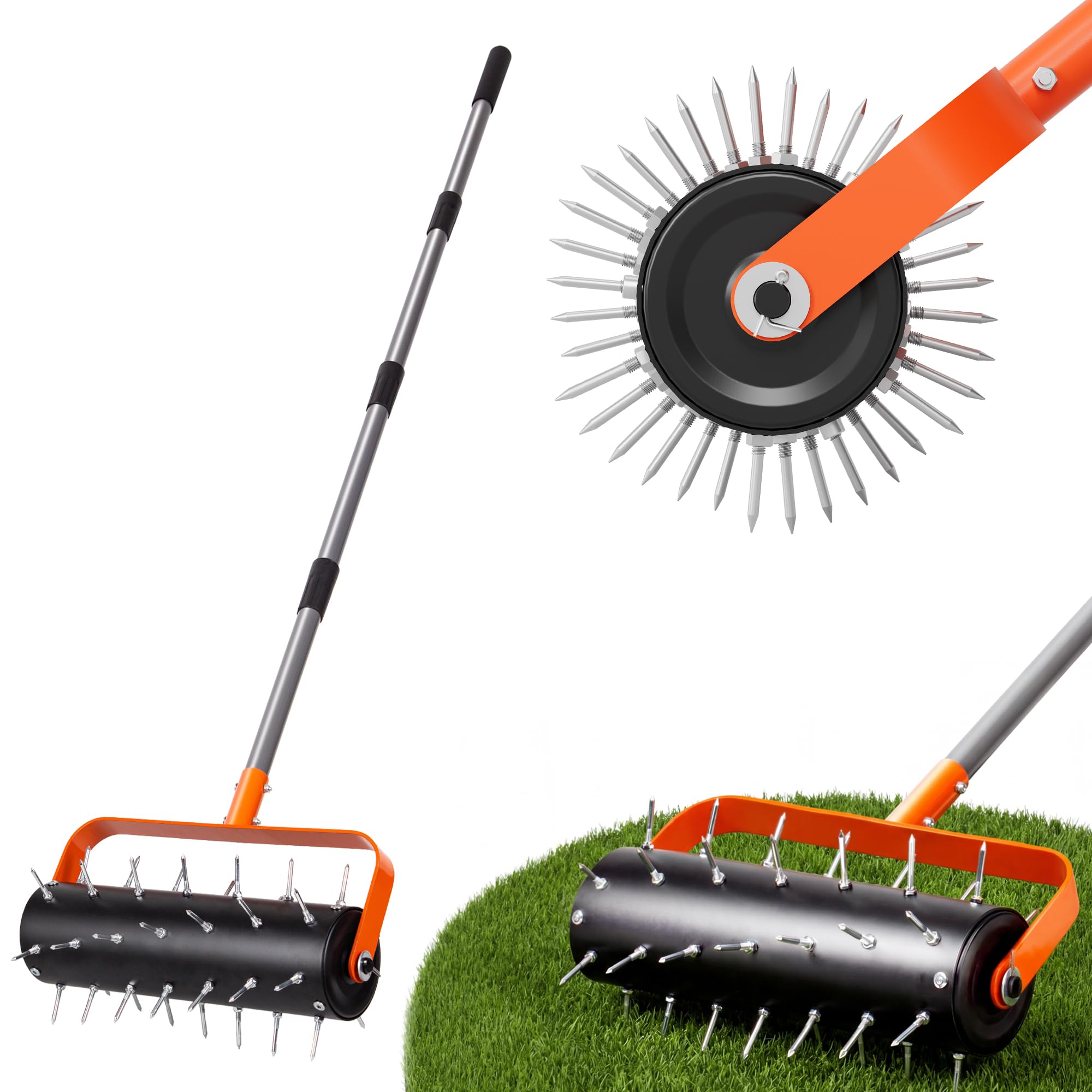
Push it like a mower and let 42 spiral spikes roll a ring of holes into the lawn.
If you would rather walk behind a roller than bend over a plugger, this is the pick. Its functionality on lighter, pre-watered lawns is what buyers mention most — the tool does its job on pre-watered lawns, and buyers praise the build quality next. Forty-two reinforced 2-inch tine spikes run in a spiral pattern that forms a complete circle as it rolls, cutting down on the vertical bouncing you feel with cheaper rollers. The adjustable four-piece handle lets you set the height so you do not stoop, and the ergonomic non-slip rubber grip keeps long sessions comfortable.
The clever part is the fillable roller. Load it with stones and the extra heft drives the spikes deeper into the soil — this is where the Walensee earns the “most versatile” tag, since you tune the penetration to your soil. High-grade steel and a solid, stable frame keep the roller tracking straight. Assembly is straightforward; all spikes come pre-installed, so you attach the handle and roll.
The honest catch is weight and penetration. As shipped it runs light, and buyers disagree on whether it goes deep enough — some fill the roller with rocks or concrete weights to fix that, and the end caps can leak whatever you fill it with. On hard-packed clay or dry soil, short of heavy weighting and a good watering, it may ride on top of the thatch instead of biting in. On a healthy, softened lawn it works well and, as reviewers point out, beats strapping on spiked shoes.
The one spec that defines it: 42 heat-treated 2-inch spikes in a spiral ring that rolls smoothly without bucking the handle.
The tuning knob: its ability to take added weight is what decides how deep it actually reaches.
Choose it for: a medium lawn you can walk a roller over, and you want to dial in depth with your own fill.
Reconsider if: you want set-and-go depth — the light stock weight needs loading and moisture to bite into hard ground.
5. Landzie – Lawn Aerator Tool 42″, Hollow Tine Core Aerator
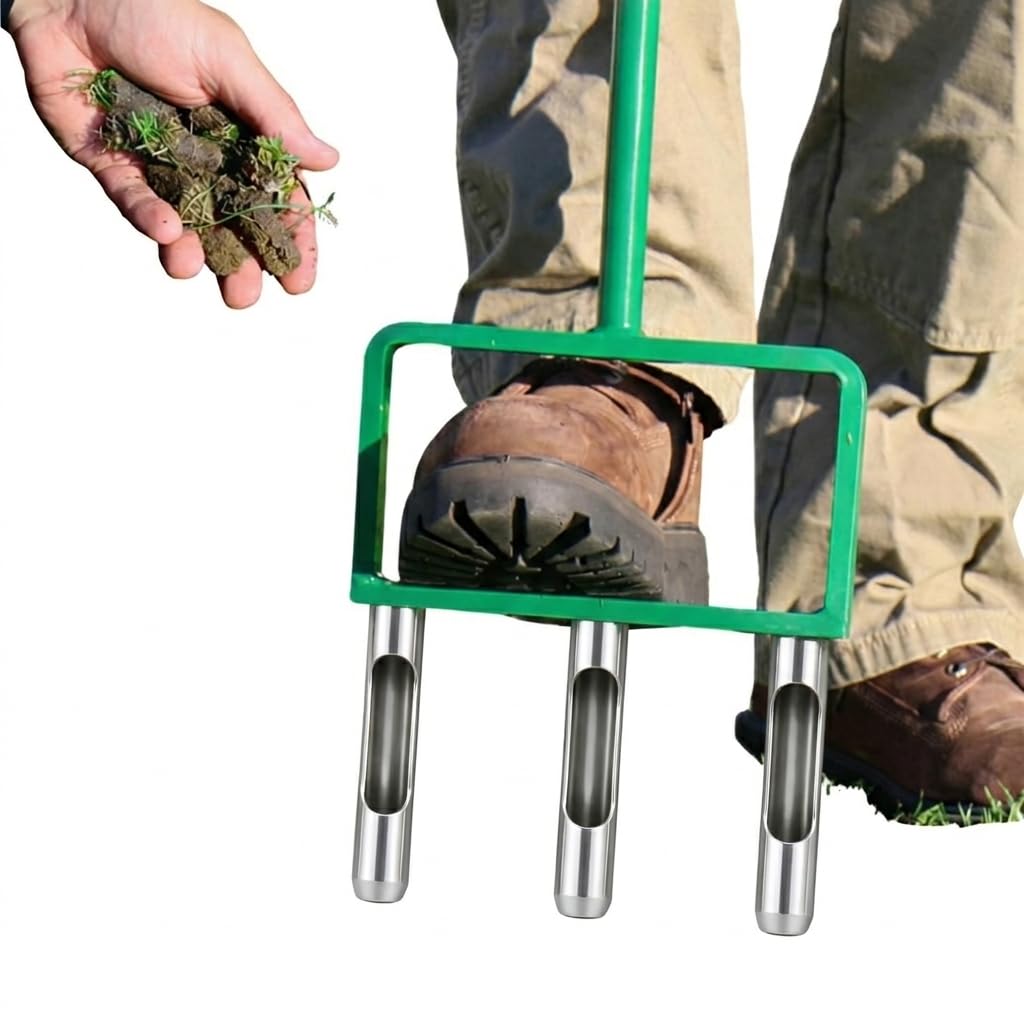
Three beveled stainless tines that pop plugs up and out with no unclogging between pushes.
People seek out this coring aerator specifically for hard spots and tight areas where a tow-behind cannot reach. Owners mention quality most — the tines, the durability, and the overall construction all land near the top of what buyers praise, and it is built to take abuse, surviving even a large man jumping on it. Three solid stainless steel tines with a beveled, clog-free design push old material up and out each time you press down. The tines arrive already fitted to the frame, so there is no assembly at all — you grab it and start plugging.
For anyone who hates clearing jammed barrels, the beveled tine geometry is the headline: plugs eject as you go, keeping you moving instead of stopping to poke out clay. The tines are removable for cleaning and replacement, and a 42.38-inch-long, 5.6-pound frame is light enough to swing between patches. It works on dense clay after just light watering, and buyers describe it as the tool for tough compacted spots rather than a whole-yard marathon.
The trade-off is effort. This is strenuous, manual work — an hour of it raises a sweat, and it is best done in sections so your joints do not complain. Shoppers say soft ground is essential; dry caliche will resist all the way down. It is also the pricier hollow-tine option here, and some find it costs more than they want to spend for a small lawn. Worth it if you are attacking genuinely hard ground and want the clog-free design.
Why it wins the coring category: clog-free beveled tines eject plugs continuously, so you never stop to clear a barrel.
What it demands: moist, softened soil and honest physical effort — it is built for hard spots, not a whole acre.
Made for you if: you are fighting tough, compacted patches and want a hollow-tine plugger that never jams.
skip it if: you want to aerate a large lawn in one pass — this is a deliberate, spot-by-spot tool.
6. Suchtale 40-Inch Tow Behind Spike Aerator with Galvanized Steel Tines

Hitch it to your rider and let ten star-shaped tine wheels punch the whole lawn in one pass.
When your lawn is measured in fractions of an acre, towing beats pushing. This 40-inch tow-behind runs on ten steel star tines, each 8 inches in diameter and studded with uneven tips that drive into compacted soil up to 2 inches deep. The stars rotate independently, so water, seed, and nutrients reach the roots, and they keep revolving through turns — fewer missed spots than fixed tines. Ease of use is what buyers appreciate most — it hitches to a riding mower’s pin hitch and tows without adjustment. A pin-style hitch attaches to ATVs or riders with no extra equipment, and the included pictorial manual makes assembly manageable.
The build is steel throughout, with a reinforced side plate and a thick channel-shape tow bar to resist bending, and nylon spacers between each star for durability. There is a big weight tray on top that takes up to 110 pounds of extra load — cement blocks, bricks, whatever you have — to push the spikes deeper. That is the feature that turns a light spike roller into something that actually bites into packed ground.
Two things to weigh honestly. Buyers report the assembly is fiddly — this is not a five-minute bolt-together — and while the frame is solid, some note the tips can bend if they strike rocks, and durability draws fair criticism from a few who found them flimsy under rough use. On a smooth, well-watered lawn behind a rider, none of that bites. On rocky or root-riddled ground, go gentler and expect to reinforce. It is a value-priced way to aerate acreage without hiring out.
The spec that earns its keep: a 110-pound weight tray turns those 8-inch star tines into serious soil penetrators.
The honest caveat: assembly takes patience and hardened tips can bend on rocks — it rewards smooth, moist ground.
Right for: a rider-owner with a larger, reasonably smooth lawn who wants a value tow-behind with a big weight tray.
Not for: rocky, root-heavy ground or anyone hoping for a quick five-minute build — it asks for care.
7. Brinly SAT2-40BH-P Tow Behind Spike Aerator with Transport Wheels, 40″

Eleven reinforced tine stars and a lever you flip to roll across the driveway without scarring it.
The standout feature here is the transport mode — a single lever engages turf-tread wheels so you can tow this across driveways and sidewalks without tearing them up, then drop the tines back into the lawn. Value for money is the aspect buyers praise most, with sturdiness close behind. Eleven tine stars, each 8 inches in diameter with twelve spike tips, reach up to 2 inches into the soil. The patent-pending 3-D tines in galvanized steel resist rust and bending, and the frame runs on a 5/8-inch solid steel axle with nylon spacers between each star.
Compared to the Suchtale above, the Brinly leans on its tine design and transport wheels rather than a huge weight tray — though there is still a rigid weight tray that holds up to 150 pounds of extra heft for maximum penetration. Buyers run these monthly to improve water retention ahead of seeding, and one buyer saw noticeably thicker turf within four weeks. The lawn-tractor hookup is straightforward, and the extra-strength double tow bar adds rigidity where cheaper rollers flex.
Two honest notes. The tine tips are very sharp — wear gloves when you handle it, and follow the assembly pictures closely, because the documentation gets mixed marks for clarity, though the build itself earns high praise. A few owners mention wheels coming loose over time, so check the fasteners as you go. It is aimed at monthly maintenance rather than one-and-done deep compaction relief, so plan to run it regularly for the best result.
Its signature move: turf-tread transport wheels plus a single lever, so you cross hard surfaces cleanly between lawn sections.
What to know going in: razor-sharp tines and a confusing manual demand gloves and patience during setup.
Reach for this if: you tow behind a tractor and want a well-built spike roller with transport wheels for frequent monthly passes.
Look elsewhere if: you need deep core plugs, or you want a bolt-together build with clearer instructions.
8. Craftsman 40 Inch Tow Behind Lawn Plug Aerator with 24 Galvanized Steel Coring Points and 140 lb Weight Tray

Twenty-four galvanized coring points pull real soil plugs three inches deep — the deepest reach in this bunch.
If you want the deepest penetration and genuine core removal, this is the one to look at. Twenty-four galvanized steel coring points pull soil plugs up to 3 inches deep — a full inch deeper than the spike rollers above — improving airflow, water absorption, and nutrient penetration. Performance is what buyers value most, with build quality running a close second. It is a true plug aerator, not a spike roller, so it removes cores rather than just poking holes — the tool for genuinely compacted soil that needs relief before spring or fall planting.
The practical touches are strong. A wide weight tray holds up to 140 pounds of ballast to drive the coring points deeper into tough soil, a lift-handle release system makes transport easier, and the whole thing stores vertically against a wall to save space — handy given its 78.8-pound bulk. Flat-free tires keep it rolling over lawn terrain without the hassle of dealing with flats, and it hooks up to most lawn and garden tractors. It is built by Agri-Fab in Sullivan, IL, with global materials, and backed by a 3-year limited warranty.
Be ready for the build. Customers note assembly running from 90 minutes to roughly three hours, and progress depends on following a video, having wrenches on hand, and wearing gloves near the sharp tines. That is the time cost of a heavy-duty plug aerator with this many parts. Once it is together, though, owners say it tows up steep hills, punches soil well, and opens the ground effectively on the first pass.
The spec to remember: 24 coring points reaching 3 inches deep — the deepest core aeration on this list.
The setup reality: expect a multi-hour build with many parts before you ever touch grass with it.
Best if: you want true plug removal at the deepest reach and can set aside an afternoon to build it once.
Not the pick if: you want quick assembly or a light tool — it is a heavy, part-dense machine.
9. Brinly Tow Behind Combination Aerator Spreader with Weight Tray, 40-Inch

Aerate and drop seed or fertilizer in a single pass, so your lawn gets fed where it is poked.
This is the one that does two jobs at once. The combo design drops seed, fertilizer, or lime from a hopper while the tines aerate, so material lands in the opened soil instead of sitting on top. Functionality is what owners praise most, with assembly running a close second — it goes together in under half an hour, which is refreshingly quick for a machine this size. The 8-inch steel tine stars carry 132 tine tips that perforate the soil up to 2 inches deep, and an all-steel hopper holds up to 100 lb (1.74 cu. ft.) of material without twisting or flexing. A calibrated flow control with an adjustable stop keeps the spread pattern accurate and wastes less seed.
It shares Brinly’s patent-pending 3-D galvanized tines, which resist rust and bending, and runs on solid tine shafts with nylon spacers for dependability. A 75-pound weight tray lets you add ballast for deeper penetration on harder terrain. Transport mode uses a single lever to engage the 10-inch pneumatic wheels to cross driveways, and a universal hitch pin fits most riders, tractors, ZTRs, and ATVs.
Two honest watch-outs. Reviewers point out the drop spreader gives better results than a rotary spreader for overseeding, but there is a recurring gripe about durability — the drive chain and some tines not holding up under rough use, and the top speed lever drifting without a hand on it. Buyers also warn to mark sprinkler heads before you drag 78.8 pounds of steel over them. Treat it as a capable one-pass tool for moderate lawns and it delivers; push it hard on rough ground and the chain is the weak link.
What makes it smart: aerate and spread seed in one pass with a 100 lb steel hopper and calibrated flow control.
What to watch: the drive chain and speed lever need gentler handling than the frame would suggest.
Reach for this if: you want to aerate and overseed in a single tow-behind session and value the fast build.
Think twice if: you plan heavy, rough-ground use — the chain is the part to keep an eye on.
Understanding the Specs
Hollow Tine vs Spike
A hollow tine is a small pipe that cuts a core of soil out of the ground, while a spike is a tapered nail that pushes soil aside. Hollow tines create real channels and are the choice for hard, compacted clay — that is why the coring tools here pull plugs and the spike rollers only poke holes. Spikes are faster and cheaper but compress the soil around each hole, so they suit softer lawns and quick seasonal openings.
Weight and Penetration
How deep your aerator reaches depends on how hard you press down and how much the tool weighs. That is why tow-behind models have fillable trays rated for extra ballast — more weight means deeper spikes. Manual corers rely on your body weight, so moist soil and a firm foot plate matter far more than the tool’s heft.
FAQ
Should I choose a hollow tine or spike aerator for clay soil?
Do manual aerators really pull plugs out of the ground?
What soil moisture is best before aerating a lawn?
How much weight should go in a tow-behind aerator tray?
Will a spike aerator work for overseeding?
Can hollow tines be replaced when they bend?
How long does it take to aerate a lawn manually?
Do I need to water the lawn before using a spike roller?
Is aeration worth doing every season or just once a year?
Final Thoughts: The Verdict
For most small yards and targeted compacted patches, the Manual Lawn Core Aerator (LawnVigor) is the pick — it pulls real plugs, stays light at 3.52 pounds, and does not clog. If you want to cover ground standing up, grab the Walensee Rolling Lawn Aerator and load its roller to dial in depth. And for genuine acreage with a rider, the Craftsman Tow Behind Plug Aerator pulls plugs 3 inches deep, a full inch past the spike rollers. Whatever you choose, aerate when the soil is soft — that single habit decides whether any of these tools works at its best.
How We Picked
We do not accept paid placement. Every pick is matched to a real buyer and a real use-case; we do not hands-on test units.
Sources & Methodology
Specifications: manufacturer listings and product documentation. Review insights: verified customer reviews, as of September 2026. Pricing: not shown on this page (it changes often); check the current price via the retailer link.
As an Amazon Associate, Gadgets Feed earns from qualifying purchases. This does not affect which products we feature.