
Our readers keep the lights on and my morning glass full of iced black tea. As an Amazon Associate, I earn from qualifying purchases.
Specs are compiled from manufacturer listings and verified buyer reviews and can change over time — please confirm the key details on the product page before buying.
You do not need a cinema rig to get footage that looks like a cinema rig. What actually matters is a sensor big enough to shoot clean in low light, autofocus that keeps a moving face sharp, and stabilization that kills the handshake when you walk and talk. This guide sorts the strongest value-focused filmmaking bodies by those exact traits, so you know which one to buy the moment you finish reading.
I’m Min — the founder and writer behind Gadgets Feed. This guide is built by comparing the manufacturers’ published specifications and the patterns across verified customer reviews, so you get each pick’s real strengths and trade-offs instead of marketing spin.
Entry-level prices no longer mean entry-level footage. Every camera here records 4K video, and each one earns its spot for a different reason, so you can match the body to your style rather than guessing. The smartest way to spend is matching the body to your footage style.
Our Picks at a Glance



How To Choose The Best Budget Filmmaking Camera
Most first-time buyers walk into this category staring at megapixels, then wonder why their footage still looks like a phone. The number that actually decides your video quality is the sensor — the chip that captures the image — because a larger sensor gathers more light and shoots cleaner at night. That is the first fork in the road, and it changes everything downstream.
Sensor size sets your low-light ceiling
A 1-inch sensor (a chip bigger than a phone’s but smaller than most mirrorless bodies) is the pocketable option, and it can shoot 4K at 120fps with surprisingly rich color. An APS-C sensor is the balance for most beginners because it drops noise in dim rooms while keeping the body small. A full-frame sensor is the largest of the three, and it is your pick if you shoot indoors, at dusk, or anywhere light is scarce — you get cleaner shadows and a shallower background blur that makes your subject pop.
Stabilization decides your walking shot
Shaky handheld footage is the fastest way to look amateur, so understand your two options. In-body stabilization (IBIS) cancels small hand tremors by physically shifting the sensor inside the camera. A mechanical gimbal goes further — it is a motorized arm that holds the whole camera level no matter how you move, which is what lets pocket cameras film while you dance or run. Match the tool to your shoot: IBIS for talking heads, a gimbal for movement.
Autofocus and Log color are your edit-room insurance
Reliable tracking autofocus — the mode that locks onto a face or object and follows it — is worth more than resolution for a solo creator, because you cannot pull focus and talk at the same time. Then look for a Log profile, a flat, washed-out color mode that preserves highlight and shadow detail so you can grade it to taste later. Ten-bit color, the depth that gives you roughly a billion shades to work with, is the pro-grade version of the same idea.
Quick Comparison
| Model | Best For | Video Resolution | Sensor | Stabilization | Amazon |
|---|---|---|---|---|---|
| Nikon Z 6II★ Best Overall | Hybrid shooters wanting full-frame | 4K UHD 60p | 24.5MP full-frame | In-body (IBIS) | Amazon |
| Xtra MuseBest Value | Pocket-sized pocket gimbal footage | 4K/120fps | 1″ CMOS | 3-axis gimbal | Amazon |
| DJI Osmo Pocket 3Vlogging King | Vloggers on the move | 4K/120fps | 1″ CMOS | 3-axis gimbal | Amazon |
| Insta360 Luna Ultra | Travel and zoom reach | 8K30fps | 1″ + 1/1.3″ dual Leica | 3-axis gimbal | Amazon |
| Sony ZV-E10 | Beginners who want lens options | 4K (oversampled from 6K) | 24.2MP APS-C | Electronic | Amazon |
| Nikon Z 30 kit | First camera, out-of-the-box kit | 4K/30p | 20.9MP APS-C | Electronic VR | Amazon |
| Sony ZV-1 | Run-and-gun vlogging | 4K HDR | 20.1MP 1″ | Optical (SteadyShot) | Amazon |
| Panasonic LUMIX G85 | Hybrid photo + video value | 4K QFHD (3840×2160) | 16MP Micro Four Thirds | 5-axis dual IBIS | Amazon |
| Canon EOS R10 | Fast-action and sports content | 4K video | 24.2MP APS-C | Electronic (Movie IS) | Amazon |
| Blackmagic Pocket Cinema 4K | Narrative filmmakers and colorists | 4K (4096×2160) | 4/3″ sensor | None | Amazon |
| Canon EOS R8 | Full-frame step-up on a value budget | Uncropped 4K60 | 24.2MP full-frame | Electronic (Movie IS) | Amazon |
In‑Depth Reviews
1. Nikon Z 6II Mirrorless Camera (Body Only, Nikon USA Model)
Our pick — over 4.5★ from 400+ verified ratings; the strongest balance of quality and price.
The full-frame workhorse that shoots like a small cinema rig without the rig running behind.
If you shoot weddings, events, or anything on assignment, the Nikon Z 6II is the pick that will not embarrass you when the light drops. Its 24.5MP full-frame sensor is the largest chip on this list, and it is built to shoot clean when the room goes dim — the exact reason its owners keep calling out its image quality. The 4K UHD video runs at up to 60p with full pixel readout, which means every pixel on the sensor contributes to the frame instead of the camera skipping lines to keep up. That is the difference between footage that holds up on a big screen and footage that looks soft.
Where it quietly wins is durability of workflow. It carries dual card slots — one for CFexpress or XQD cards and one for standard UHS-II SD — so if one card hiccups mid-shoot, your second card has the backup. You get a 3.5x larger buffer than the original Z 6 for sustained shooting, and 14fps burst for fast action. The autofocus uses 273 phase-detection points, so it locks onto eyes quickly. It also charges and runs on USB-C constant power, which means long livestreams and timelapses will not eat through batteries while you are plugged in.
The honest catch is workflow friction: the screen does not flip fully forward for self-filming, so this is not the camera you grab for talking-head solo videos — the flip-screen Sony models down the list handle that better. There is also no sensor dust protection shield when you swap lenses, so be careful in dusty venues. The rest is trust: with 4.8 stars and the bulk of its feedback clustered around quality and image quality, this is the body the crowd trusts with paid work.
Where it earns its keep
- 24.5MP full-frame BSI sensor that excels in low light
- 4K UHD 60p with full pixel readout for sharp footage
- Dual card slots (CFexpress/XQD plus UHS-II SD) for shoot insurance
- USB-C constant power for livestreams and timelapses
- 273 phase-detection autofocus points and 14fps burst
- Works with a growing NIKKOR Z lens line and about 360 F-mount lenses via the FTZ adapter (sold separately)
Trade-offs worth knowing
- No forward-flipping screen, so self-filming is awkward
- No sensor dust shield when changing lenses
- Vertical battery grip is a separate add-on
Buy this if: you shoot events or client work and need a full-frame body that holds up in dim rooms with backup card security.
Pass if: solo vlogging from a forward-facing screen is your main job — the flip-screen picks serve that better.
2. Xtra Muse Pocket Vlogging Camera with 1″ CMOS & 4K/120fps
The pocket gimbal that keeps walking shots smooth while you dance, run, or hike.
The Xtra Muse is aimed at the creator who films themselves — the one running down a hill with a camera in hand. Its 1-inch CMOS sensor records 4K resolution at 120fps, so you can shoot high-frame-rate footage for slow motion. The reason it exists, though, is the 3-axis gimbal stabilizer: a motorized arm that holds the whole pocket camera level so your footage stays smooth even when you are moving fast. A 2-inch touch screen switches between horizontal and vertical shooting, so you can flip from a YouTube frame to a Reels frame without remounting anything.
The color story is where it surprises. It records in 10-bit X-Log color modes that reach up to one billion colors, which gives you serious grading headroom in editing, and its battery runs up to 161 minutes on a charge. Buyers report it connects instantly over USB to a phone, and its Master Follow tracking keeps you centered while you jump or spin and stay in frame. One reviewer, a 25-year video pro, used it for run-and-gun work with a native DJI mic connection and said a client could not tell the footage apart from gear costing several times more.
Be realistic about what a pocket camera can do: it has no multi-lens flexibility, and the reviews are clearest on that point — brilliant for everyday and social shooting, less so when the lighting is genuinely hostile. Functionality and battery life still draw some mixed notes about the device behaving inconsistently, so treat it as a great second camera rather than a do-everything rig. What wins people over is the one-touch portability you can drop in a purse and the gimbal that makes handheld look unintentionally professional.
The gimbal payoff: a 3-axis stabilizer plus 4K/120fps in a body that slips into a bag is the whole pitch — you get smooth movement without rigging.
The honest limit: no interchangeable lenses, and challenging lighting is where it stops performing like a large-sensor camera.
Reach for this if: you film yourself on the move and want stabilizer-grade smoothness without a rig.
Look elsewhere if: you need to swap lenses for different looks, or shoot often in low light.
3. DJI Osmo Pocket 3 Creator Combo
The gimbal camera that turned one reviewer away from a DSLR — and it fits in a sweater pocket.
Compare it to the Xtra Muse above and you see the same pocket-gimbal idea, but the DJI Osmo Pocket 3 has the track record to match the concept. It packs a 1-inch CMOS sensor that shoots 4K resolution at 120fps, exactly the frame rate you want for slow motion, and it adds D-Log M with 10-bit color depth for up to one billion colors in your grade. The 2-inch touch screen rotates, so you flip between horizontal and vertical capture with a quick twist. A 3-axis mechanical gimbal delivers the stability that keeps your dancing, pet-chasing, or hiking shots clean — and its ActiveTrack 6.0 mode keeps you center-frame while filming on the move.
What owners keep coming back to is how quickly it gets out of the bag: a creator who compared it against a Sony ZV-E10 DSLR said the setup is instant and the face tracking actually holds. The Creator Combo adds a DJI Mic 2 Transmitter in the box, plus a battery handle and mini tripod, so audio and power are solved without extra shopping. The battery runs up to 166 minutes, and the compact body fits a sweater pocket — portability that earns its own section in the feedback, right alongside stunning 4K footage.
The friction here is setup rather than shooting. You must register the device before its fifth use, and the app can require a workaround to install — genuinely annoying when you just want to film. Some owners also note the value feels mixed and that the lens wants careful handling, with a case that leaves parts exposed. None of it changes the footage; the fastest, slickest handheld you can buy.
The standout: instant setup with a rotating screen and ActiveTrack 6.0 that keeps you in frame — plus the DJI Mic 2 Transmitter included.
The catch: mandatory registration before the fifth use, and the app install can be a headache.
Who it beats: any smartphone-and-gimbal combo for solo creators who want cinematic 4K without heavy gear.
Who should skip it: shooters who need interchangeable lenses or want zero app setup.
4. Insta360 Luna Ultra 8K Vlogging Camera with Dual Leica Lenses
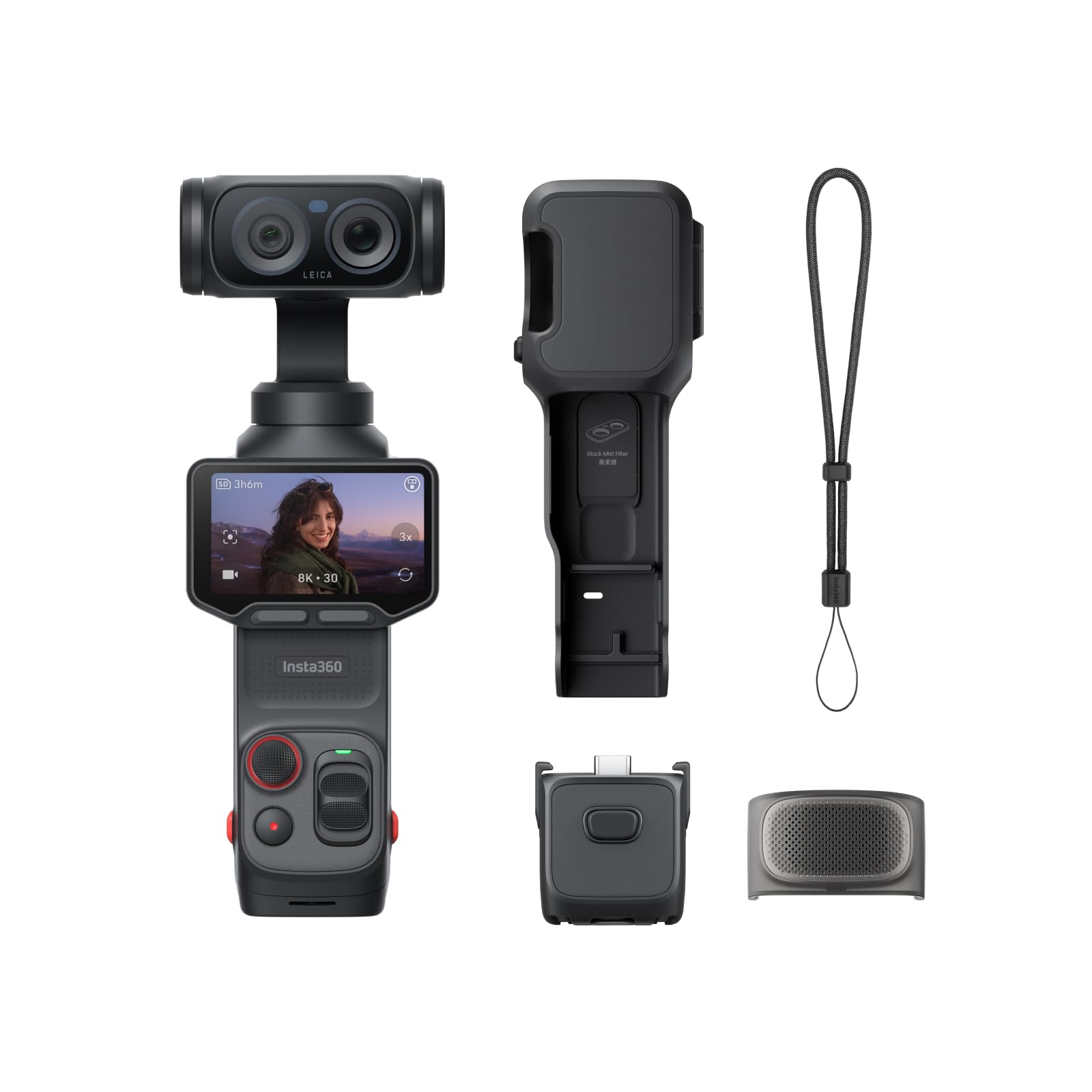
A detachable-screen gimbal camera that carries dual Leica glass and shoots in 8K.
Where the Osmo Pocket 3 hands you a single lens, the Insta360 Luna Ultra hands you two. It pairs a 1-inch main sensor with a pro-grade telephoto lens on a 1/1.3″ sensor and an F2.0 aperture, and it shoots up to 8K30fps with Dolby Vision for footage with vivid contrast and fine detail. The zoom range reaches a 12× span with 6× lossless zoom, which is the reach that makes a distant subject fill the frame. Portrait makers will love the true optical background blur from the telephoto lens — natural-looking separation instead of a software trick.
The real party piece is the detachable 2-inch OLED touch screen. It lets you preview and control the camera from as far as 20 meters away, so solo shooting and group photos do not force you to sprint back and forth. Stabilization comes from a 3-axis mechanical gimbal, and AI tracking holds your subject centered while moving. Add 10-bit I-Log for smooth tonal transitions, support for ACES and DaVinci Resolve workflows, and up to 4 hours of recording with fast charging to 80% in 23 minutes, and you have a camera built for a full day out.
Buyers who took it on a three-week trip through crowded night markets loved the 20mm wide lens and the 60mm zoom for temple details, and the battery held up across full sightseeing days. The learning curve is real, though, and the lens can feel front-heavy on a small tripod. A few owners still weigh the value as mixed, and it is not waterproof — treat it as a beautiful traveler, not a rugged one.
The clever bits
- Dual Leica lenses: 1″ main sensor plus a 1/1.3″ telephoto at F2.0
- 8K30fps with Dolby Vision and 14 stops of dynamic range
- Detachable 2″ OLED touch screen with remote control up to 20m
- Up to 4 hours of recording; fast charge to 80% in 23 minutes
Worth flagging
- Mode learning curve takes some time to master
- Not waterproof, so weather is a limit
- Lens feels front-heavy on a small tripod
Pick it for: travel and solo creators who want zoom reach plus a screen they can frame with from across the room.
Skip it for: anyone who wants a weatherproof body or zero learning curve.
5. Sony ZV-E10 APS-C Mirrorless Camera (Body Only)
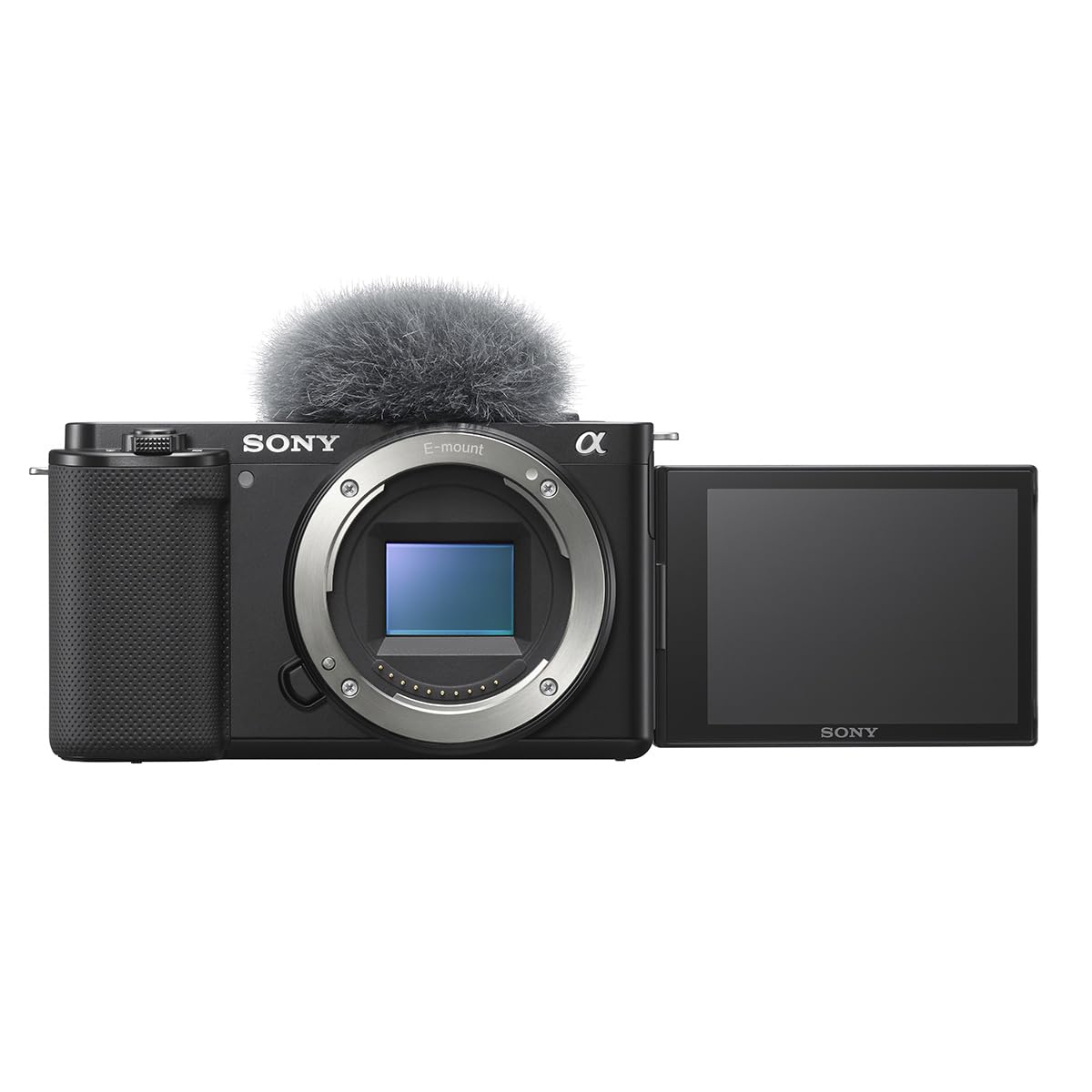
The beginner body that lets you grow into lenses instead of out of the camera.
What separates the Sony ZV-E10 from the pocket cameras above is the mount. That is the ring where lenses attach, and here it takes Sony E-mount glass, so one body can serve as a wide, portrait, or telephoto setup as you add glass. The 24.2MP APS-C sensor and BIONZ X processor produce footage oversampled from 6K with full pixel readout and no pixel binning, so every pixel does the work and your 4K stays sharp. Its 425 autofocus points with Eye Detection keep a subject’s face locked in focus.
For solo creators, the workflow touches are the sell: a Product Showcase Setting that shifts focus from your face to an object you hold up, a Background Defocus button that toggles the blurred-background look on and off with one press, and one-cable live streaming over USB with no extra hardware. It handles S-log and HLG color profiles for grading, and owners note it stays cool without overheating — a real advantage over the full-frame bodies further down this list that shut off during long takes.
Plan ahead on one thing: this listing is the body only, so you need a lens before you can shoot, and good lenses add real money. A buyer who learned that the hard way still called the color accuracy good and the camera easy to learn from tutorials. The autofocus is fast and reliable on native glass, though it slows with third-party lenses, and the review pages flag reliability as a mixed point. Nothing here is a dealbreaker for a beginner — just budget for glass.
Why beginners click with it: a 24.2MP APS-C sensor, 4K from 6K oversampling, and a lens mount that lets you upgrade later.
What to budget for: it ships body-only, so a lens is a required purchase before your first shoot.
Settle here if: you want one affordable body you can build a lens collection around and stream from with a single cable.
Keep shopping if: you want everything in the box on day one or need stabilization built into the body.
6. Nikon Z 30 Mirrorless Camera with NIKKOR 16-50mm Lens and Creator’s Kit

An all-in-one starter kit that bundles the camera, a mic, a tripod grip, and a remote.
If the idea of buying a body and then hunting for accessories sounds exhausting, the Nikon Z 30 Creator’s Kit was built for you. Everything comes together: the camera, a NIKKOR 16-50mm lens, a RODE VideoMicro Microphone II, a SmallRig Tripod Grip, and a Nikon ML-L7 Bluetooth Remote Control. The body carries a 20.9MP CMOS sensor and the EXPEED 6 processor, with a standard sensitivity range of ISO 100-51200 that keeps noise down even in indoor or night shots. Its 209-point Hybrid autofocus with Eye-Detection AF holds sharp focus on the eyes of people, dogs, and cats while tracking them.
The creator-focused touches show up in the details. A red REC lamp tells you at a glance when you are rolling, a Vari-angle screen flips to let you tap-to-focus and adjust brightness from the front, and the built-in stereo mic is paired with an external mic input. It streams live at up to 1080/60p or 4K/30p through an HDMI port, and it can record for over 2 hours.
The thing to know before you buy is the heat. One long-form video shooter reported a unit that overheated badly — 4K at 30fps ran about 10 minutes before shutting down, and even with a cooling fan it stopped after 20-plus minutes. Treat short-form filming as its strength, not marathon 4K takes. One buyer also noted the box listed a lens but shipped without a charger. Still, for a first camera that arrives ready to shoot with a mic and a grip, the convenience is the point.
Ready from the start: a 20.9MP APS-C body plus a RODE VideoMicro II, a SmallRig tripod grip, and a Bluetooth remote in one purchase.
The real caveat: long 4K takes run hot, so this is a short-form kit rather than a marathon recorder.
balance for: a first-time creator who wants a mic and grip bundled in with no accessory shopping.
Think twice if: your work is long uninterrupted 4K recording — heat will cut takes short.
7. Sony ZV-1 Digital Camera for Content Creators

The all-in-one that flips its screen your way and needs zero lens decisions.
The Sony ZV-1 packs a fixed 24-70mm F1.8-2.8 ZEISS Vario-Sonnar T lens onto a 1-inch sensor, which means no lens buying — one purchase and you are filming. Its 20.1MP stacked back-illuminated sensor with DRAM is built for speed, and it shoots 4K HDR with a side flip-out 3.0″ LCD screen that also tilts up and down, so you can frame yourself easily for selfie shots. Fast Hybrid Autofocus pairs with Real-Time Eye AF and Real-time Autofocus tracking, keeping a face sharp across the frame.
For the “point the camera at myself and talk” crowd, the convenience features are the whole reason to buy. Its forward-directional on-board mic includes a detachable wind screen, so outdoor audio does not sound like a wind tunnel, and there is a 3.5mm mic jack plus an MI shoe if you want better sound later. It shoots Pro video functions including HLG and S-Log3/2 for grading, its image stabilization suppresses shake while walking, and it does clean HDMI out — so it doubles as a webcam for streaming and screen recording, running indefinitely without shutting off. That combination is why it is such a popular pick for beginners and vloggers alike.
The trade-off you feel fastest is battery life. One 4/5 owner got only about 25 minutes of filming and flagged that the battery door is blocked by the tripod mount, requiring a swap-off every time you change a card. Others stretch it to about two hours while streaming over USB. Long-session shooters can also run into heat, and the autofocus draws mixed notes from a minority. Carry a couple of spares and it rewards you.
Why creators reach for it
- Fixed ZEISS 24-70mm F1.8-2.8 lens means no lens shopping
- Flip-out 3.0″ LCD that tilts for selfie framing
- Detachable wind screen kills outdoor mic noise
- Clean HDMI out doubles it as a streaming webcam
What to plan around
- Battery life is short — spares are near-mandatory
- Battery/SD card door is blocked by a tripod mount
- Can run warm during long sessions, and it takes only one lens
Go here if: you want a grab-and-go camera that streams, vlogs, and films outdoors with no lens decisions.
Look past it if: you expect long takes on one battery or plan to build a lens collection.
8. Panasonic LUMIX G85 4K Mirrorless Camera with 12-60mm Lens

Five-axis stabilization that makes handheld 4K look like it came off a tripod.
The LUMIX G85’s headline trick is dual image stabilization — an in-body 5-axis system that works during both photo and 4K video recording to produce clear handheld shots even in low light. Unlike the pocket gimbals above, this is a mirrorless body with a Micro Four Thirds mount, so you can change lenses, and its 16MP sensor drops the low-pass filter for about a 10 percent boost in fine detail compared to older 16MP sensors. The kit adds a 12-60mm Power O.I.S. lens, giving you a versatile zoom range right from the start. It records 4K QFHD at 3840 x 2160, and its 49-point autofocus handles eye detection.
Beyond raw specs, this camera is beloved for ergonomics and value. It has a built-in eye-level OLED viewfinder, a rear 3-inch touch LCD that tilts, two custom dial modes and many function buttons, plus customizable color profiles like Cine-D that owners lean on for filmic footage. The body and kit lens are weather-sealed, so light rain and dust are not instantly fatal. Its DFD focus is quick and reliable in low light, and its in-body stabilization is strong enough that people shoot handheld at long focal lengths. For the money, few bodies offer this much flexibility for both stills and video.
Be honest about the aging spec sheet: 16 megapixels is modest by today’s numbers, the sensor gets noisy past ISO 6400, and 4K video carries a slight crop that narrows your field of view. One owner also found the G85 heavier than the smaller G7 it replaced and returned it for that reason. None of that stops it being the value stabilization king of this bracket — its 5-axis dual IS is the reason it keeps reappearing in the recommendations.
Where it shines: in-body 5-axis dual IS that steadies handheld 4K, plus a weather-sealed body and kit lens.
Where it shows age: 16MP resolution, noise above ISO 6400, and a slight 4K crop.
Worth it for: hybrid shooters who want stabilization and lens flexibility from one body at a value price.
Think twice if: you need maximum resolution or crop-free 4K.
9. Canon EOS R10 Mirrorless Camera (Body Only)

The fast, light body that mixes quick action stills with clean 4K video.
If your footage leans toward movement — sports, pets, cars, events — the Canon EOS R10 is built for it. Its 24.2MP APS-C CMOS sensor and DIGIC X image processor push 4K video while cutting noise, and the autofocus is the star: Dual Pixel CMOS AF with 651 points keeps your subject in focus, with Movie Servo AF adding subject detection and subject tracking for smoother shooting on the go. It captures up to 15 fps with the mechanical shutter, which is why it feels like a tiny sports camera in the hand.
For video makers, the welcome detail is recording time. Canon built it to record over 30 minutes without the automatic stop that frustrates short-clip cameras, so interviews and courses run uninterrupted. It is compact and light enough to carry all day, and it takes RF-S and RF lenses, plus EF and EF-S glass through the EF-EOS R adapter. Battery charging runs over USB, and the touchscreen plus a clear electronic viewfinder make menu work feel intuitive. It is widely seen as the natural upgrade from older Canon entry bodies.
The one spec it lacks is in-body stabilization, so handheld footage leans on lens stabilization or a steady hand. One wildlife shooter who used it as a backup said the missing IBIS was not missed during fast-shutter work, which is the fairest way to read the trade-off. Feedback also notes shorter battery life than owners would like, and no weather sealing. Bring spares and a gimbal for movement, and this becomes a very capable compact shooter.
What speed buys you
- 24.2MP APS-C sensor with the DIGIC X image processor
- Dual Pixel CMOS AF with 651 focus points and subject tracking
- Up to 15 fps with the mechanical shutter
- Records over 30 minutes without automatic stops
What to work around
- No in-body image stabilization
- Battery life is on the short side
- No weather sealing
Match this to: creators filming fast-moving subjects who want long continuous takes and quick bursts.
Not your body if: you shoot mostly handheld and need stabilization inside the camera.
10. Blackmagic Design Pocket Cinema Camera 4K

A true cinema camera at a fraction of studio cost — if you can live without a flip screen.
This is the pick for the narrative and documentary filmmaker who wants the most image quality per dollar, and it makes clear what you trade away for it. The Blackmagic Pocket Cinema Camera 4K pairs a 4/3″ image sensor at a native resolution of 4096 x 2160 with 13 stops of dynamic range — the range of bright-to-dark detail it captures — and a dual gain ISO up to 25,600 to keep grain down in any light. Your file format options include Apple ProRes up to 4K and 12-bit Blackmagic RAW, and it even includes a DaVinci Resolve Studio activation key to keep your color-grade in a professional workflow. Its 5-inch LCD serves as a big monitor, so you do not need a separate display.
What owners love is the outright picture. Reviewers capture cinematic footage in varied lighting and praise how the low-cost SD and SSD recording makes high-end output surprisingly affordable to shoot. Many say it has earned its place for those willing to learn the craft — one builder said the kit pays for itself on a single high-end shoot.
But this is not a point-and-shoot. There is no continuous autofocus, no in-body stabilization, and no flip screen. Its battery lasts about 30 minutes at most, and one reviewer found the 5-inch screen about 250 nits, which is hard to see outdoors in sunshine. It also carries a huge crop in 1080p mode. Great for documentaries, narrative, and interviews — the wrong tool for vlogging. Buy it for the image, not for convenience.
Where it wins: 13 stops of dynamic range, 12-bit Blackmagic RAW, and ProRes up to 4K with a DaVinci Resolve Studio key included.
What you trade away: no autofocus, no IBIS, no flip screen, roughly 30 minutes of battery, and a dim screen outdoors.
The right fit is: an independent filmmaker shooting narrative, documentary, or interviews who works on a tripod and grades in post.
Wrong fit for: run-and-gun vlogging and handheld solo shooting — the missing firmware conveniences make that painful.
11. Canon EOS R8 Mirrorless Camera (Body Only)

The lightest full-frame RF body Canon makes, with uncropped 4K60 video.
Step upto full-frame without a huge body and this is where the EOS R8 lands. It carries a 24.2 million pixel full-frame CMOS sensor and the DIGIC X image processor, and it records uncropped 4K movie at up to 60 fps that is oversampled from 6K, plus Full HD high-frame-rate recording at up to 180 fps for slow motion. A maximum movie record time of 2 hours means long takes stay rolling, and Canon Log 3 or HDR PQ gives you grading room in post.
The autofocus is the headline feature for solo shooters: Dual Pixel CMOS AF II covers up to 100% x 100% of the frame with 1,053 AF zones, and it uses deep learning subject detection that recognizes people, animals, vehicles, aircraft (jet planes and helicopters), trains, and horses. There is also a 0.39″ 2.36 million dot OLED viewfinder that refreshes at up to 120 fps and a 3.0″ 1.62 million dot vari-angle touchscreen, so you can flip it forward for vlog-style work. A buyer who upgraded from the EOS RP called it a powerhouse thanks to the 40 frames per second electronic shutter with full autofocus.
What it gives up to stay light is battery capacity. The small LP-E17 battery drives concerns across the feedback, with mixed notes about how little a single charge delivers for heavy video days. There is no in-body stabilization and only one card slot — a real consideration for paid gigs. But for a first full-frame body that shoots uncropped 4K60 and tracks everything from faces to airplanes, this is the most approachable way into the format on this list.
Why it earns a slot: full-frame 24.2MP sensor, uncropped 4K60 oversampled from 6K, and up to 2 hours of recording.
Where it pinches: no IBIS, a single card slot, and small batteries that need spares for long shoot days.
Choose it for: a step up to full-frame video with smart subject detection and 4K60 without the crop.
Choose the R10 instead if: you want in-camera stabilization and APS-C flexibility at a lighter carry weight.
Understanding the Specs
Sensor size and low-light performance
The sensor is the light-catching chip inside the camera, and its physical size decides how clean your footage looks when the light drops. A full-frame chip (found in the Nikon Z 6II and Canon EOS R8) is the largest here, gathering the most light so shadows stay clean and background blur looks natural. An APS-C chip (Sony ZV-E10, Canon EOS R10, Nikon Z 30) sits in the middle — less bulky, still far ahead of a phone. A 1-inch chip (DJI Osmo Pocket 3, Sony ZV-1, Xtra Muse) keeps bodies tiny, and Micro Four Thirds (LUMIX G85) trades some resolution for portability. Bigger is not automatically better — match the sensor to how much light you typically shoot in.
Bit depth, Log profiles, and dynamic range
Bit depth is how many shades of color your footage can hold — 10-bit gives you far more than a standard 8-bit file, which is why cameras like the DJI Osmo Pocket 3, Insta360 Luna Ultra, and Blackmagic Pocket Cinema 4K advertise it. A Log profile is a flat, low-contrast color setting that squeezes more highlight and shadow detail into the file so you can grade it later without the image falling apart. Dynamic range is the total spread from darkest to brightest detail the sensor can hold at once; the Blackmagic’s 13 stops and the Insta360’s 14 stops are large figures for this bracket. If you plan to color-correct your footage seriously, bit depth, Log, and dynamic range matter more than megapixel counts.
FAQ
Do I really need a full-frame sensor for filmmaking?
What is the difference between a gimbal and in-body stabilization?
Is 4K/120fps better than standard 4K?
What does a Log profile actually do for my video?
Why do some cameras overheat during long 4K takes?
Do I need to buy a lens separately?
Can these cameras also work as a webcam for streaming?
How important is autofocus for a solo filmmaker?
Why is battery life so short on mirrorless cameras?
Does sensor size change how much background blur I get?
Final Thoughts: The Verdict
For most creators, the budget filmmaking camera winner is the Nikon Z 6II because its full-frame sensor, 4K UHD 60p full-pixel-readout footage, and dual card slots cover both paid client work and low-light shooting without compromise. If smooth solo footage matters more than a big sensor, grab the DJI Osmo Pocket 3 and let its 3-axis gimbal and ActiveTrack 6.0 do the framing. And for pure image quality on a tripod, the Blackmagic Pocket Cinema Camera 4K is the one to reach for, with 13 stops of dynamic range and 12-bit Blackmagic RAW. Whichever you pick, match the sensor and stabilization to how you actually shoot.
How We Picked
We do not accept paid placement. Every pick is matched to a real buyer and a real use-case; we do not hands-on test units.
Sources & Methodology
Specifications: manufacturer listings and product documentation. Review insights: verified customer reviews, as of September 2026. Pricing: not shown on this page (it changes often); check the current price via the retailer link.
As an Amazon Associate, Gadgets Feed earns from qualifying purchases. This does not affect which products we feature.