
Our readers keep the lights on and my morning glass full of iced black tea. As an Amazon Associate, I earn from qualifying purchases.
Specs are compiled from manufacturer listings and verified buyer reviews and can change over time — please confirm the key details on the product page before buying.
If your hips ache by mid-afternoon, the chair under you is usually the reason — not your desk, not your age. The fix is a seat that spreads your weight across your hips and thighs instead of digging into one spot, plus a backrest that keeps you from slumping forward. This guide breaks down eleven chairs that owners actually sit in for eight-hour days, from budget mesh to big-and-tall recliners, so you can match the seat to your body and your hips.
I’m Min — the founder and writer behind Gadgets Feed. This guide is built by comparing the manufacturers’ published specifications and the patterns across verified customer reviews, so you get each pick’s real strengths and trade-offs instead of marketing spin.
You’ll see what actually separates a hip-friendly chair from a pretty one, and the specs that quietly decide whether your hips stay happy all day. Below is the shortlist of the best chair for hip pain.
Our Picks at a Glance

How To Choose The Best Chair For Hip Pain
Hip pain from sitting usually comes from pressure piling onto a small area, or from a seat that forces your legs into an awkward angle. The right chair spreads your weight across a wide, well-padded surface and keeps your thighs roughly parallel to the floor. Here is what to focus on before you click buy.
Seat Cushion Thickness and Type
A thicker, denser cushion keeps your sit bones and hips from bottoming out on the frame beneath. Thick molded foam, pocket springs borrowed from sofas, or a 5-inch padded seat each absorb pressure differently. If you have sensitive hips, pockets springs that move independently contour to your body and avoid hot spots far better than a thin flat pad. Thickness matters, but density matters more — a squishy cushion that flattens in a month defeats the purpose.
Seat Width and Depth
A seat that is too narrow squeezes your hips, and one that is too deep pushes you forward until your thighs carry the load. Wider seats suit bigger frames and let you shift position without sliding off. Seat depth around 20 to 21 inches works for most bodies, but tall users need more and shorter users need less. Check the seat width against your hip width — a couple inches of clearance on each side keeps pressure even.
Lumbar Support Adjustability
Lumbar support that you can move up, down, and in or out of your lower back determines whether your spine stays neutral or curves into a slump. Static support works for some, but adjustable support lets you dial in the exact spot that takes strain off your lower back and hips. A support that cups your lower back rather than jabbing it is the difference between relief and irritation.
Weight Capacity and Frame Material
Weight capacity tells you how much the base, gas lift, and frame can hold without wobble. Heavy-duty nylon bases and steel frames hold up better under daily use. If you are near the top of a chair’s range, picking one with headroom keeps it stable and quiet. The gas lift class matters too — a Class 4 lift is the sturdier option and is often paired with certified safety standards.
Recline and Footrest
Being able to recline changes the angle of your hips and takes load off them. A chair that locks at several angles lets you shift from typing to resting without leaving your seat. A retractable footrest lets you stretch out and change how your weight sits on your hips during longer sessions.
Quick Comparison
| Model | Best For | Backrest Width | Weight Capacity | Recline Range | Amazon |
|---|---|---|---|---|---|
| MOLENTS Ergonomic Office Chair★ Best Overall | Bigger frames and all-day desk work | 19.7 inches | — | 90°–120° | Amazon |
| Fizzin Office Chair MeshBudget Champion | Budget buyers who want adjustability | 18.9 inches | 400 lbs | 125° tilt | Amazon |
| EGSEAT PU Leather Rocking ChairCompact Pick | Compact home offices and smaller rooms | — | — | 120° rocking | Amazon |
| Humergo Ergonomic Chair with Footrest | Long shifts with nap breaks | 20 inches | 365 lbs | 90°–145° | Amazon |
| HYLONE 400lb Big and Tall Chair | Big and tall users wanting a budget pick | — | 400 lbs | — | Amazon |
| QLTPLUS Molded Foam Chair | Sensitive hips and thigh pressure relief | — | 350 lbs | — | Amazon |
| GTPLAYER Pocket Spring Gaming Chair | Gamers and recliner lovers | 23.23 inches | — | 0°–145° | Amazon |
| Dowinx Big and Tall Chair | Cross-legged sitters and bigger builds | — | — | 90°–135° | Amazon |
| NYPOT Kneeling Chair | Posture correction and hip alignment | — | 250 lbs | Rocking motion | Amazon |
| SIHOO B100 Mesh Chair | Dynamic lumbar support for seat shifters | 19.7 inches | 300 lbs | 110°/125°/135° | Amazon |
| GABRYLLY Ergonomic Office Chair | Big and tall users wanting proven durability | 18.5 inches | 300 lbs | 90°–120° | Amazon |
In‑Depth Reviews
1. MOLENTS Ergonomic Office Chair, Mesh Computer Desk Chairs with BIFMA X5.1 Cert (Dawn Grey)
Our pick — over 4.5★ from 350+ verified ratings; the strongest balance of quality and price.
The wide-seat mesh chair that keeps pressure off your hips and your lower back in line.
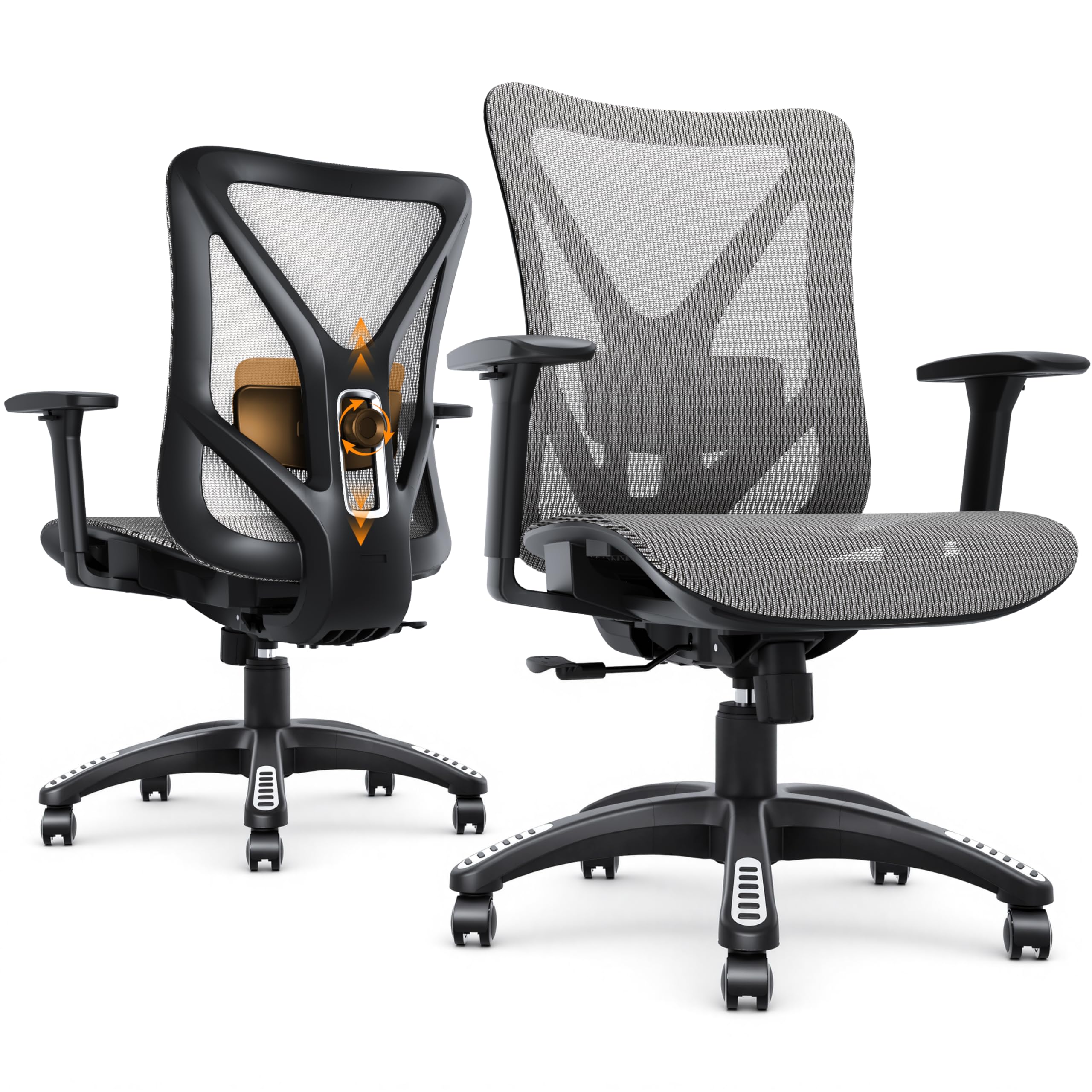
Start with the width, because that is where hip comfort begins. This chair’s backrest measures 19.7 inches across, which is 0.8 inches wider than the Fizzin below — a small gap that adds up when you are shifting through an eight-hour desk day. That wider back gives your upper body more room to settle instead of pinning your hips into one fixed spot. The seat itself is a full 19.8 inches wide and 18.9 inches deep, sized for a genuinely large sitting area.
Your hips get the most direct help from two things here: the adjustable lumbar pad and the tilt range. The lumbar support slides up and down as well as forward and back, so you can position it exactly where your lower back curves inward. When that spot is supported, you naturally stop slumping forward, and slumping is what pushes pressure down onto your hip joints. The backrest also reclines through three positions between 90° and 120°, letting you change your hip angle during the day instead of holding one posture for hours.
Build quality is what wins people over — the sturdy frame and mesh earn the loudest praise, with the seat and arm heights both adjustable to fit a range of bodies. That adjustable lumbar does an outstanding job supporting the lower back, and one buyer reports lower back pain relief within three days. It holds up for six-foot-plus users over 200 pounds without creaking, which is the real test of a chair meant for long sitting. Buyers report it measures up to chairs that cost several times more, and it carries a BIFMA X5.1 certification — an independent standard for office chair safety and durability. Assembly uses a labeled manual with all tools included, and one person can put it together in 15 minutes.
What Earns It First Place
- 19.7-inch backrest and 19.8-inch seat give your hips and thighs room to spread out
- Lumbar pad adjusts up, down, forward, and back for a precise lower-back fit
- Reclines 90°–120° so you can shift your hip angle through the day
- BIFMA X5.1 certified frame holds six-foot-plus, 200-pound-plus users without creaking
The Fine Print
- The 3D armrests can slide forward and back on their own when you pull the chair in — owners mention it as a minor annoyance
- It is a premium-tier chair, not a budget buy, so it asks more than the entry-level mesh options
Made For: Bigger frames and anyone who parks at a desk for eight-plus hours and wants their hips and lower back held in a neutral line.
Look Past It: If you dislike armrests that can slide, or you want the lowest entry-level tier, the simpler mesh picks below cost less.
2. Fizzin Office Chair Mesh Computer Chairs with Adjustable Lumbar Support
An entry-level mesh seat that still gives your hips a 400-pound-capacity base and real lumbar adjustment.
For the money asked here, the headrest and lumbar systems do more than most chairs in this tier. The headrest travels up and down 3.9 inches and tilts, while the lumbar support moves 1 inch forward and back plus 3.15 inches up and down. That range means you can line the pad up with your own spine curve rather than accepting a fixed bump in your back. The seat height, backrest, and reversible armrests all adjust too, so the chair fits people from about 5′ 4″ to 6′ 3″.
The breathable mesh back keeps air moving, which matters when you are in the seat for long stretches, and the heavy-duty base plus silent rollers roll without dragging on floors or carpets. Comfortably supporting up to 400 pounds, it is one of the higher-weight-rated chairs on this list. Assembly is quick — the manual and all screws and tools come in the box, and most people finish in about 15 minutes. A 125° tilt and 360° swivel let you readjust your hip angle whenever the pressure builds.
Here is the honest part: the seat cushion is the one thing that splits opinion. Some owners find it soft and supportive, while others say it is not well padded enough for all-day sitting. If your hips are sensitive, pair it with a cushion or lean toward one of the thicker-foam picks higher up this list. What wins most people over is the overall comfort — the backrest is 18.9 inches wide, slightly narrower than the MOLENTS above, and the adjustable lumbar fits the curve of your back well. Owners mention it feels sturdy with a 275-pound user and holds up without creaks, and the armrests flip up rather than adjust in height.
Where the value lands: You get independent lumbar and headrest adjustment plus a 400-pound capacity — features that usually show up on pricier chairs — without paying premium-tier money.
The trade-off to know: Seat padding is the weak spot, so heavier or longer-sitting buyers may want extra cushioning underneath.
Reach for this if: You want maximum adjustability and a high weight rating on a tighter budget and can live with a firmer seat.
Step up instead if: You sit eight-plus hours and want a plush, thick cushion from the start.
3. EGSEAT Home Office Chair with Lumbar Support, 5″ Thickened Seat (Black PU Leather)
A thicker-than-average seat and a removable lumbar pillow make this the friendly choice for smaller rooms.
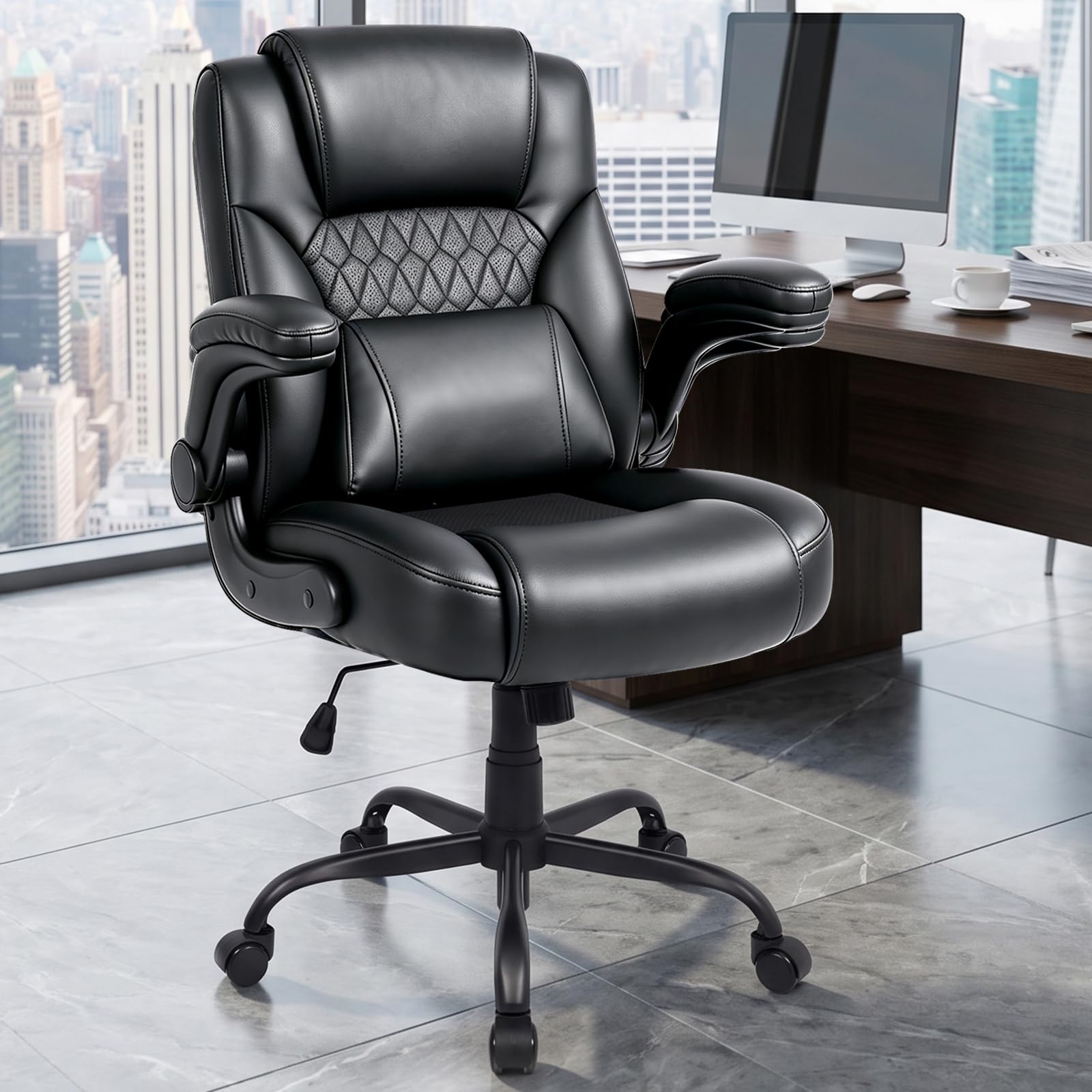
The headline here is the seat. At 5 inches thick, this cushion uses a silent spring core to hold its shape even after months of daily use, so it does not flatten out under your hips the way thin office pads do. On top of that sits a 2.5-inch detachable lumbar pillow, which you can move or remove depending on how much lower-back support you want at any given time. For a small chair, the padding punches above its size.
The rest of the design rounds out the comfort. The armrests flip up 90°, the seat rocks through a 120° range for a gentle back-and-forth that shifts pressure off your hips, and a 4-inch gas lift changes your seat height to match different desks. The perforated PU leather breathes better than solid leather, so you are not stuck to the seat in warmer months. It carries a 2-year warranty, longer than most entry-level chairs offer.
Owners describe it as surprisingly comfortable for its size, with one long-time sitter praising the thick seat and effective lumbar support for extended sessions. The brown faux leather gets called out for looking more expensive than it is, and the wheels glide smoothly. One honest limitation: this is a medium-sized chair aimed at average builds. A 5’9″, 185-pound user fits fine, but a larger frame may feel the narrower seat — so it is best as a compact home-office pick rather than a big-and-tall seat. It ships requiring assembly, and a rare owner notes it can feel a little light in the frame.
Best matched to: Average builds and smaller home offices where a thick padded seat and a movable lumbar pillow matter more than maximum width.
Think twice if: You are a bigger or taller user — the compact seat is not sized for large frames.
4. Humergo Ergonomic Office Chair with Footrest, 90-145° Reclining Mesh Desk Chair
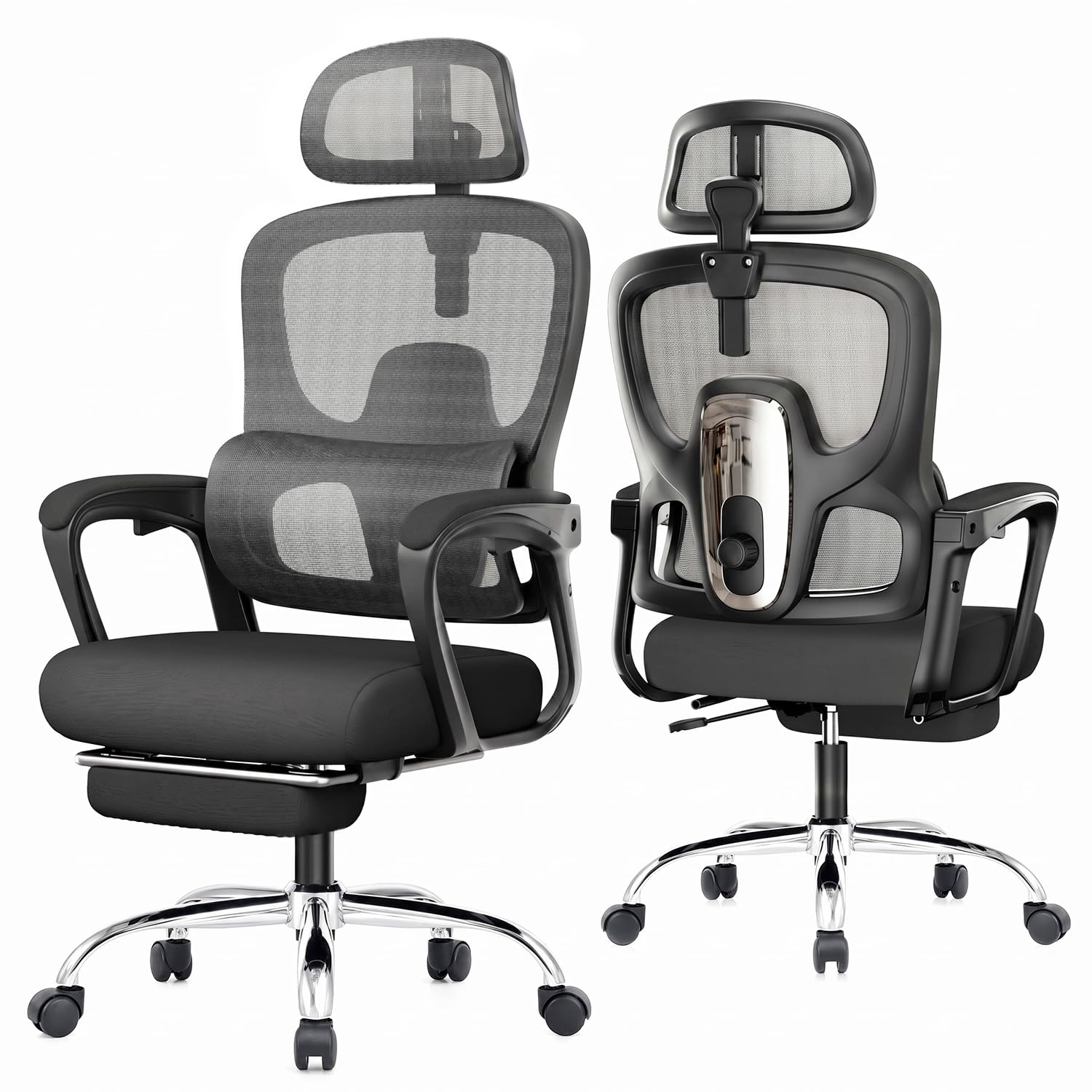
Recline flat, kick out the footrest, and let your hip angle reset between long work blocks.
If your hips complain most when you hold one position for hours, this chair is built to change that. The backrest reclines anywhere from 90° to 145° and locks at whatever angle you pick, so you can move from typing to leaning back without leaving the seat. Pull out the padded retractable footrest and you can stretch your full body, which is exactly the kind of position change that takes load off stiff hips and lower back.
The seat cushion adds to the story. It uses high-density polyurethane foam chosen to keep its shape over years rather than squashing into a dip, and the maker states the foam eases hip and tailbone pressure. The backrest runs professional-grade racing mesh for airflow, so you stay cool when you are parked in it all day. Underneath, an SGS and BIFMA certified Class 4 gas lift and a reinforced heavy-duty nylon base support up to 365 pounds — enough headroom for big and tall users who need the stability.
What buyers value most is the comfort, and the footrest is a genuine bonus rather than a gimmick. Height-adjustable and 45° rotating, the headrest lets you dial in neck support, and the lumbar pad has a movable crossbar system that adjusts forward and backward to follow your spine’s curve. The linkage armrests rise and angle automatically as you recline, keeping your elbows supported the whole way down. One buyer sums it up plainly: this chair “exceeded my expectations,” with lumbar support that “helps a lot when you spend several hours sitting.” The dual-wheel casters roll quietly on hardwood, tile, and carpet without scratching.
Why It Stands Out
- 145° recline plus retractable footrest lets your hips fully reset
- Density foam seat designed to resist sagging, easing hip and tailbone pressure
- 365-pound capacity with SGS and BIFMA certified Class 4 gas lift
- Linkage armrests track your arms as you lean back
Worth Knowing
- The footrest is a nice extra for reclining, but a few owners treat it as a minor add-on rather than a daily-use feature
- Mesh seat and back mean less plush padding than a fully cushioned chair
The right call for: Long-shift workers and gamers who want to lie back and change hip angles without standing up.
Skip this one if: You prefer a deeply padded foam seat over a breathable mesh one.
5. HYLONE 400lb Office Chair Big and Tall, Desk Chair with Lumbar Support (Black)
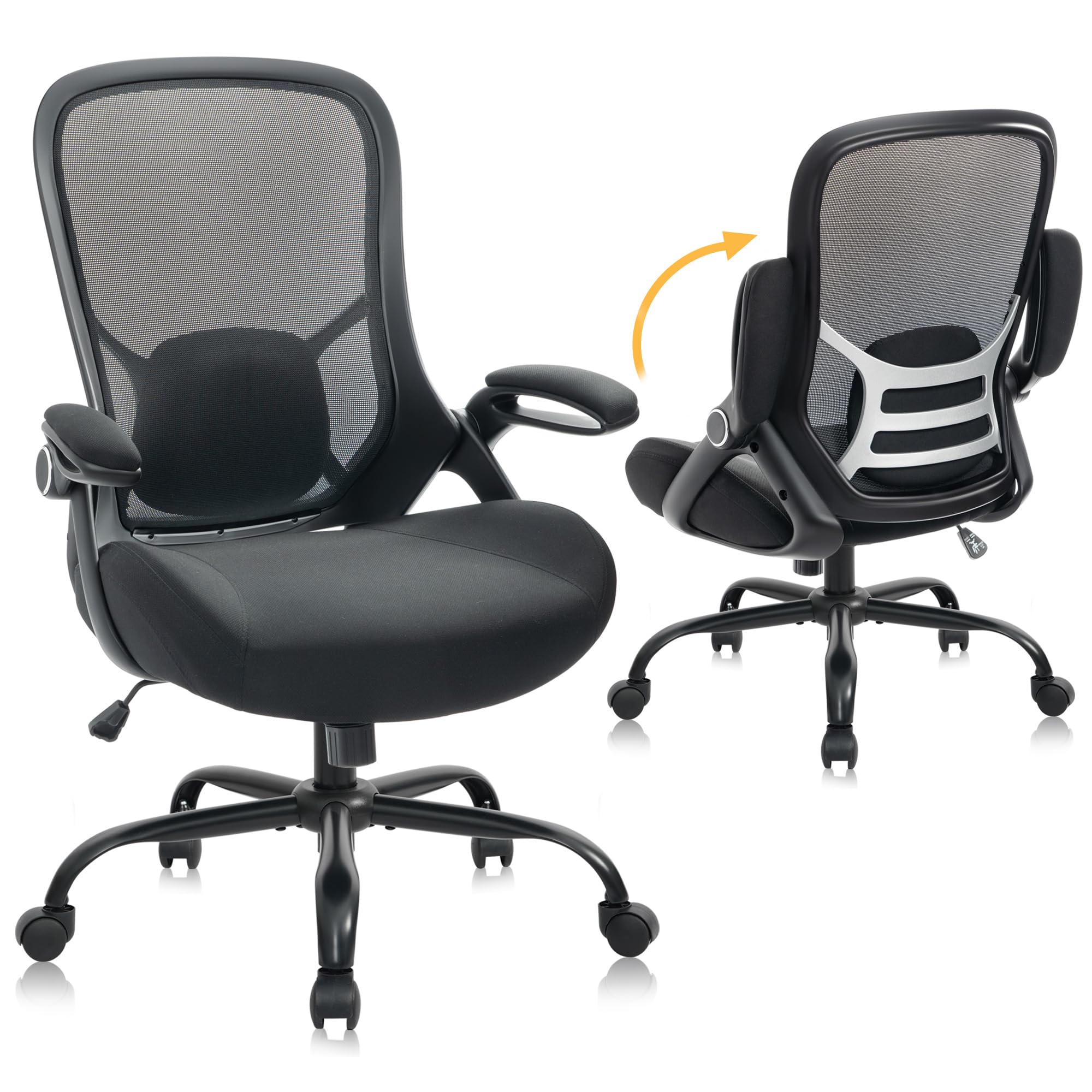
A wide 28-inch base and a 5-inch cushion give bigger sitters stable, well-padded hip support.
Stability is the point here. The large 28-inch five-star base widens the footprint under you, which cuts down on the side-to-side wobble that can aggravate a sore hip. On top of the base sits a 5-inch streamlined seat cushion, soft and elastic, filled with high-quality sponge designed to hold its shape without deforming or collapsing. The nylon mesh back adds breathability and durability so the seat does not turn muggy in warm months.
The lumbar support is tailored for comfort through long hours, and the flip-up arms and adjustable seat height and backrest let you tune the fit. It is sized for people about 5’5″ to 6’2″. The ergonomic build is meant to support your head, back, hips, and arms together, so the whole sitting posture stays aligned through a full workday. Rolling casters move smoothly on tile, wood, and carpet.
Durability earns the most confidence among owners. Buyers describe it as sturdy, stable, and not too heavy, with materials that keep looking good after months of daily use — one long-term sitter says it still looks new. The liftable armrests tuck under a desk cleanly, and assembly is quick with clear instructions. One honest note: some owners mention the cushioning is not the plush kind, so if you want a soft, cloud-like seat you may want a topper. Customers note it holds up fine for a 6-foot, 210-pound user, and it comes with a 24-month free-parts policy. For a big-and-tall chair at a mid-range asking price, it delivers steady support without charging a premium.
Strongest selling point: The 28-inch base and 5-inch seat combine for a stable, generously padded perch that suits larger bodies.
One thing to weigh: The cushion is more supportive than plush, so softness seekers may prefer a foam topper on top.
Ideal for: Big and tall users who prioritize a wide, stable base at a mid-range price.
Not the fit if: You want a deeply plush, sink-in cushion straight from the start.
6. QLTPLUS Office Desk Chair for Long Hours & Lower Back Pain Relief (Black)
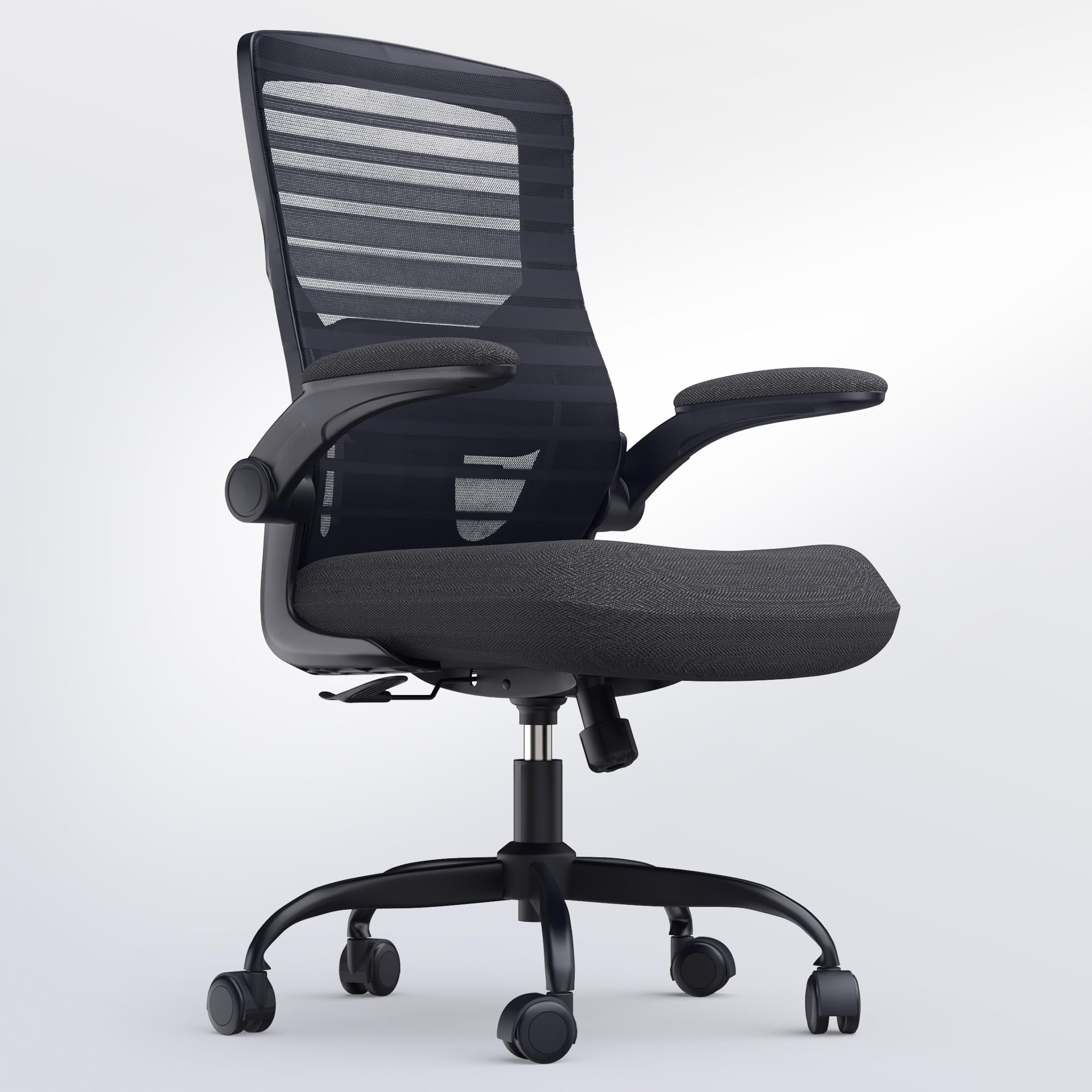
Molded foam shaped to spread your weight and stop hip and thigh pressure from building.
This chair leads with a 4-inch molded foam cushion engineered to distribute your weight evenly, which is the exact job a hip-pain chair needs to do. Instead of a flat pad that lets your sit bones dig in, the molded shape spreads load across a wider area so you can stay comfortable through 8-plus hours. The manufacturer frames the molded foam as built to fight hip and thigh pressure — the padded surface is the reason it works for long days at a desk.
The back does its share too. A contoured mesh backrest aligns with your spine, and the adjustable lumbar cushion cups your lower back rather than jabbing it — exactly the difference between support that helps and support that hurts. Flip-up armrests let you tuck the chair under a desk to free up space, handy in shared or tight setups. The tilt and rock function lets you customize the rocking tension so the seat moves with your body, promoting circulation. Construction uses a reinforced metal base and quality casters with a 350-pound capacity, and it comes with a 5-year warranty — the longest coverage on this list of standard desk chairs.
Reviewers point out strong assembly experiences, with clear visual instructions and even included gloves, and several note the lumbar support is soft enough that it cups the lower back without needing an extra pillow. One full-time work-from-home user with a bad back put it together alone and found it comfortable all day. A 70-year-old buyer ran into the opposite of a problem — their feet did not reach the floor — and customer service sent a shorter gas cylinder free of charge, though swapping the cylinder took some effort. Shoppers say the upholstery stands up to cat scratches and hot-chocolate spills, and it is widely called a solid, well-built chair for the money.
Where It Excels
- 4-inch molded foam seat spreads weight to ease hip and thigh pressure
- Adjustable lumbar cushion cups the lower back rather than poking it
- 350-pound capacity with a reinforced metal base and a 5-year warranty
- Flip-up arms tuck cleanly under tight or shared desks
Points to Consider
- Shorter users may find the standard gas cylinder too tall until they swap it for a shorter one
- Swapping that cylinder is fiddly, as the chair can be hard to take apart
Pick this for: Sensitive hips and thigh pressure on long desk days, backed by the longest standard warranty here.
Note before buying: If you are on the shorter side, ask about a shorter gas cylinder so your feet can rest flat.
7. GTPLAYER Big and Tall Office Chair with Pocket Spring Cushion & Ergonomic Lumbar Support
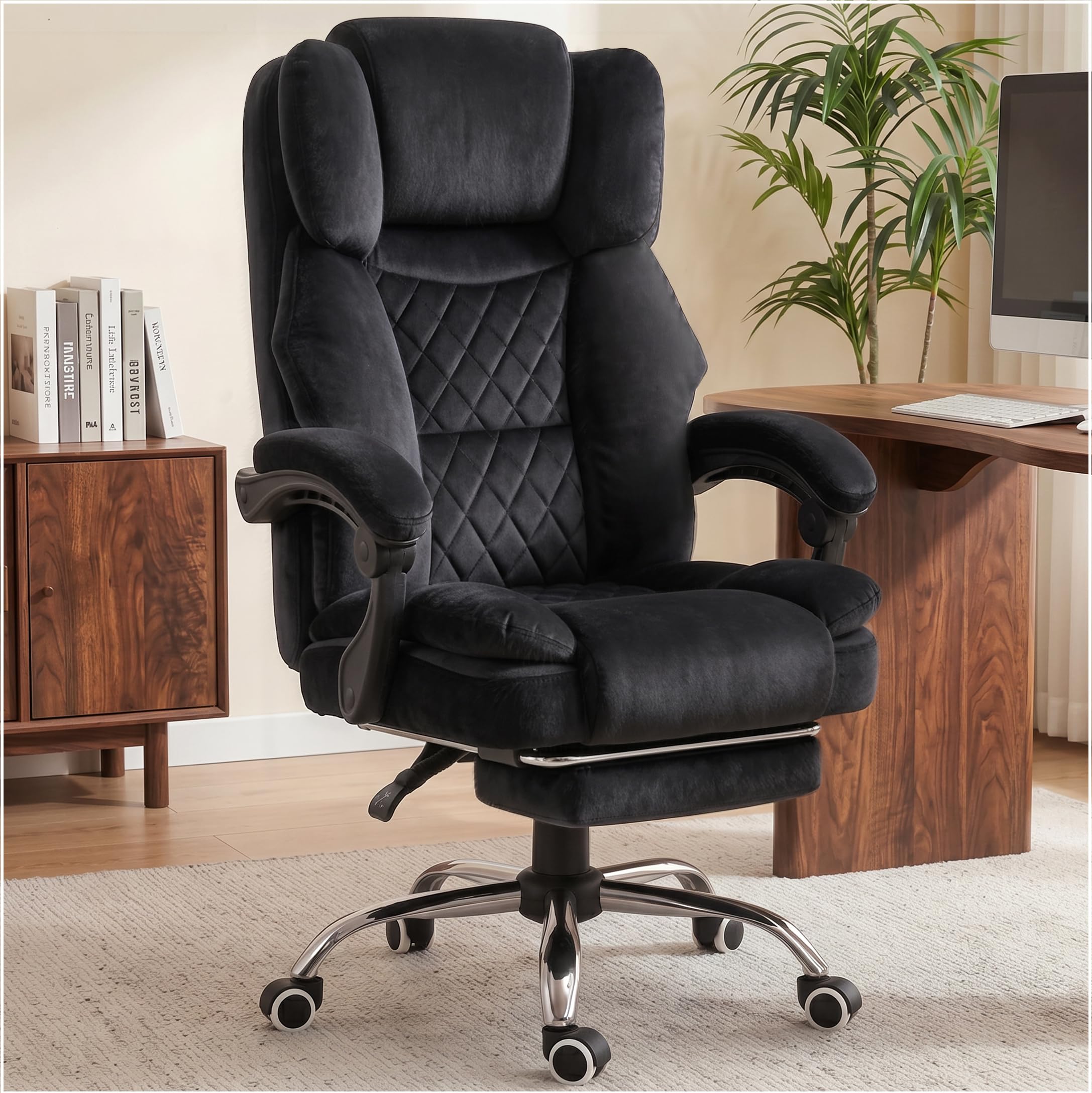
Sofa-grade pocket springs under a wide 23.23-inch back give your hips a bouncy, contouring base.
The seat here borrows technology from sofas: pocket springs, each moving independently so the cushion responds to your every shift in weight. On top sits a dual-layer high-density foam chosen for bounce-back resilience so the seat does not develop flat spots or sag over time. That combination is what makes the seat contour to your body instead of fighting it, which is a real advantage when hip pressure builds on a flat foam chair. The backrest measures a wide 23.23 inches, the broadest on this list.
The full-wrap high-back design contours to your spine with a dual-layer backrest — a soft cushion layer over firm structural support — cradling your upper, middle, and lower back. The reclining back moves smoothly to 0°–145° with stepless adjustment, so you can stop at any angle between upright and nearly flat and hold there with the heavy-duty gas lift and reinforced tilt mechanism. Premium velvet fabric keeps the surface breathable and soft without the sweaty back that cheaper velvets cause, and it resists pilling and fading.
Owners describe the cushion as feeling like a recliner or couch, and they consistently report no back or butt pain after hours in it. A six-foot buyer notes their head goes a little over the top, but the included lumbar pillow bridges the gap. One honest caveat: a few owners call the seat firm under the fabric, so if you want a sink-in feel, temper expectations. Assembly takes about 20 minutes, and there is a one-year warranty. The 3-inch-thick cushion is the standout — one sitter says it feels like a recliner and would buy it again.
Made for: Gamers and recliner-lovers who want a sofa-like spring seat and a broad backrest to lean into.
Factor in: The seat reads firm to some sitters, and the footrest only feels useful when fully reclined.
8. Dowinx Big and Tall Office Chair with Pocket Spring Cushion (PU-Brown)

Wide enough to fold your legs up, with pocket springs that contour to your hips and thighs.
If you like to sit cross-legged to give your hips a break from standard sitting, this wide seat accommodates it — a point buyers call out directly. The cushion is built from pocket springs, the same type used in sofas, with each spring working independently to adapt to pressure and contour to your body’s weight. That self-adjusting surface is what lets you comfortably change how you sit, which matters when a fixed position is what makes hips stiff.
The dual-layer backrest pairs a soft cushioning layer with a supportive layer for ergonomic comfort across long sessions. Reclining spans 90° to 135°, so you can work or relax at your preferred angle, and the padded armrests adjust in height to line up with your desk. You can also choose between classic PU leather and breathable tech cloth, so buyers who overheat can pick the softer mesh option. A one-year repair service and after-sales support back the purchase.
Buyers report it is easy to assemble with clear directions and feel it is well-made for the money. One daily user logs 12-hour stretches and credits the durable steel powder-coated frame and the firm seat with helping their lower back pain. Owners mention it comfortably holds a 220-pound sitter and supports a 5’8″, 155-pound athletic build while keeping shoulders from hunching. The honest catch: the PU leather can feel sticky in warm weather, and the footrest is on the short side — both easy fixes if you choose the cloth version and prioritize the recline instead.
Why it earns its spot: The independent pocket springs and wide seat give you freedom to shift into cross-legged or reclined positions that relieve hip pressure.
Small gripes, easy fixes: PU leather can feel tacky when warm, and tall users may find the footrest short — the breathable tech cloth option solves the first.
Choose it if: You want to sit cross-legged and let springy support contour to your hips and thighs.
Choose the cloth version if: You overheat easily — the PU leather runs warm in summer.
9. NYPOT Ergonomic Kneeling Chair with Adjustable Seats

No backrest, no seat pan — this kneeling stool shifts weight off your hips and onto your legs.
If sitting in a normal chair leaves your hips aching, this kneeling chair works differently. Instead of a wide padded seat, it tilts your pelvis forward and spreads your weight between your hips and your legs. That helps you sit with an upright spine and takes pressure off the joints a normal chair digs into. The height adjusts from 29 to 35 inches, so it fits most standard desks at home or in the office without extra gear.
The seat pads move through their adjustments so you can dial in your own position, and a gentle rocking motion shifts pressure points to reduce the stiffness that builds from long sitting. It is armless with no back, built for fidgeters who like to change position often rather than lock into one pose. Construction uses a sturdy wood frame rated to 250 pounds, with thick high-density sponge cushions designed to hold their shape through extended sitting. It also works as a cross-legged chair, meditation chair, or criss-cross seating option, and it carries a 5-year warranty.
Where this chair genuinely shines is posture. Customers note the kneeling position relieves low back and arm stress and keeps hips aligned with shoulders. One sitter reports hip pain eased in two days of kneeling, and another praises the rocking as the best feature for shifting pressure. That said, it is not for everyone: kneeling chairs take some getting used to, and some owners find the shin cushion firm and the rocking slightly wobbly at first. The height also runs a bit tall, so users who want their feet flat may need to adjust. Owners tend to see it as a complement to a regular chair rather than a full replacement — a strong posture tool for short, focused bursts rather than an all-day seat.
What It Does Best
- Shifts weight between hips and legs to keep your hips aligned and spine upright
- Gentle rocking motion reduces stiffness from long sitting
- Adjustable seat pads fit most desks from 29 to 35 inches
- Sturdy wood frame rated to 250 pounds with a 5-year warranty
Before You Commit
- Sitting on it all day is hard for most users — owners use it in shorter sessions
- Some sitters find the shin cushion firm and the rocking a touch wobbly at first
Great for: Fidgeters and posture-focused sitters who want to alternate this with a regular chair through the day.
Not meant for: All-day sitting — plan to rotate it in for shorter, focused stretches.
10. SIHOO B100 Mesh Ergonomic Office Chair with Adaptive Lumbar Support
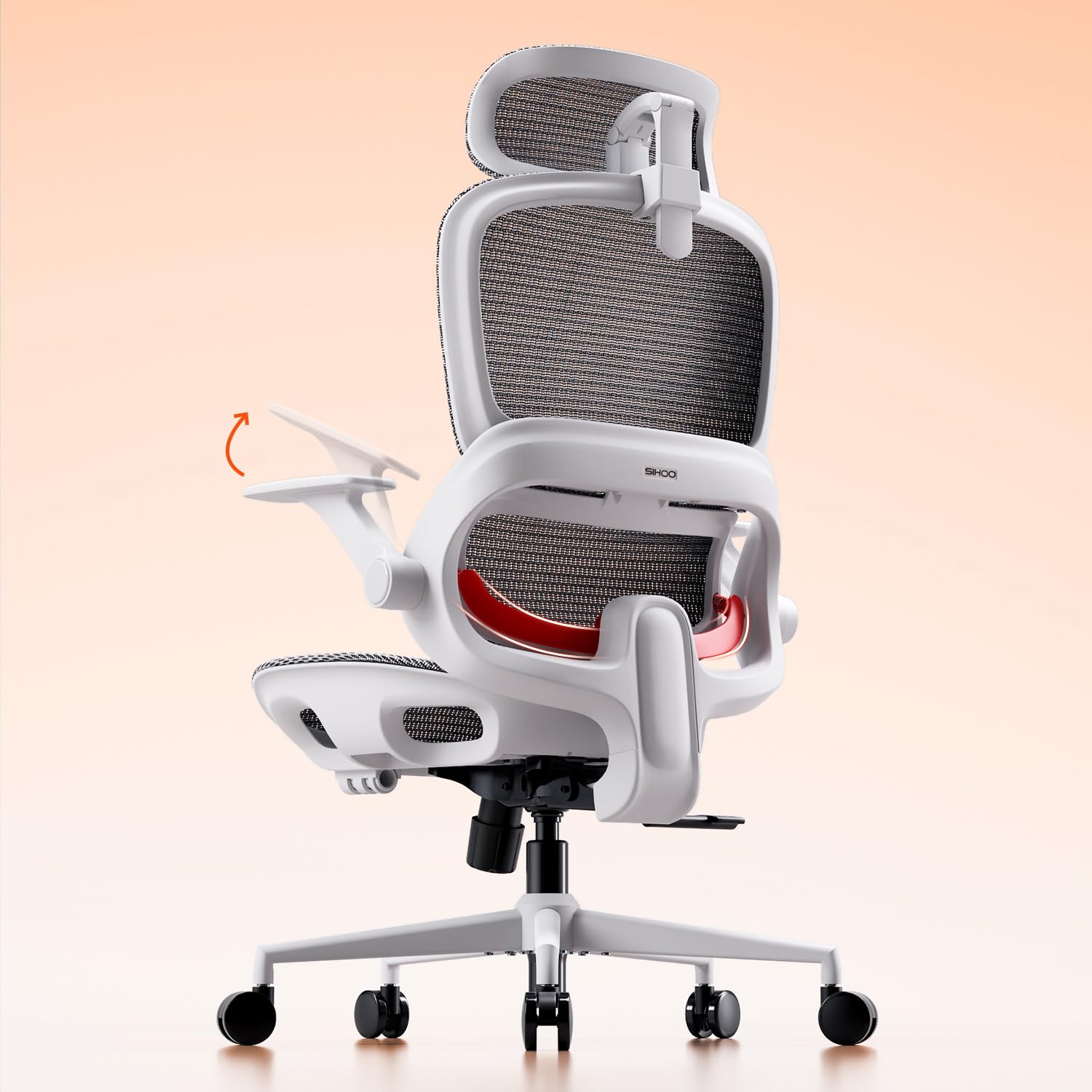
A dynamic lumbar pad that follows your spine every time you lean forward or shift your hips.
Most chairs hold their lower-back support in one fixed spot; this one moves with you. The dynamic lumbar support tracks the natural curve of your spine as you lean forward to focus or sit upright in meetings, so you stay supported without the stiff, forced feeling that a rigid pad creates. If your hips and lower back ache because you are always shifting around, support that follows that movement is the whole point. The widened seat cushion spreads your weight across your hips and thighs rather than concentrating it in one spot.
Fit and airflow round out the picture. Seat height adjusts from 18.3 to 21.9 inches to match different body types and desks, and the adjustable headrest supports your neck while you type or lean back. Three lockable recline angles — 110°, 125°, and 135° — let you change your hip angle on demand, and the full-mesh backrest keeps air moving so you stay cool during long afternoons. A reinforced metal base and SGS-certified Class 4 gas lift support up to 300 pounds, and the chair carries a 36-month coverage plan plus 30-day returns.
Reviewers point out the build quality is what wins them over, and the mesh seat gets the most praise for keeping you comfortable through long stretches. It suits larger users too — one full-time work-from-home buyer calls it the best of four chairs in six years. Two things to know: assembly is the weak spot, with some owners finding the instructions a struggle and one hitting a misaligned armrest cam that needed a YouTube video to fix; and a couple of sitters note the armrests are not useful unless raised. This one is for you if you like to shift positions all day and want lumbar support that keeps pace.
What makes it different: The adaptive lumbar follows your spine as you move, so support never leaves your lower back mid-shift.
What to expect from setup: Assembly divides opinion — some breeze through it, others need to sort out an armrest fit.
Reach for this if: You move around a lot in your seat and want lumbar support that tracks you rather than staying put.
Be ready to: Budget extra time for assembly and raise the armrests to a useful height.
11. GABRYLLY Ergonomic Office Chair, High Back Home Desk Chair with Headrest (Black)

A broad, big-and-tall mesh chair with four support points built for tall frames over long days.
What sets this chair apart is its size. The whole chair measures 24.5 inches wide by 27.5 inches deep, with a seat of 20.5 inches wide by 20 inches deep — a genuinely large sitting surface, sized for people about 5’2″ to 6’1″. That extra seat width and depth give your hips and thighs more room to rest without spilling over the edges, and the wide cushion has a waterfall front edge that takes pressure off the back of your thighs. A 300-pound loading capacity backs the bigger-build use case.
The chair is built around four support points — head, back, hips, and hands — with proper lumbar support anchoring the lower back. Seat height, headrest, backrest, and flip-up arms all adjust, and the recline tilts the backrest between 90° and 120° so you can change your hip angle or sit upright freely. Folding the armrests up 45° lets you push the chair under a desk to save space, and pressing the black buttons on the arms raises or lowers them. The mesh back and mesh seat keep air circulating for 4 to 8 hoursof comfortable sitting. PU mute wheels roll smoothly without harming hardwood, and the sturdy five-point base adds durability.
A 6’3″, 290-pound owner calls it more comfortable than a Herman Miller chair. Shoppers say a full-height build with adjustable arms and headrest, and a recline that moves from 90° to 120°. The recurring gripe is adjustability on smaller bodies — the armrests do not drop low enough for some desks, so shorter users may need to sort out the arm height. It carries a 3-year warranty, and assembly runs about 15 to 20 minutes with the included tools and video guide.
Why It Lasts
- Large 24.5-inch-wide, 27.5-inch-deep frame with a 20.5-inch seat built for big and tall users
- Four support points — head, back, hips, hands — with proper lumbar support
- Track record of holding up for 300-pound users over a year without creaks
- Flip-up arms tuck under a desk in tight spaces; 3-year warranty
Worth Checking
- Armrests do not lower far enough for some shorter users and tighter desks
- The headrest is not adjustable, so you cannot fine-tune its angle
Made for: Tall and big-and-tall users who want a wide, proven-dependable mesh chair that stays quiet for years.
Check your fit if: You are shorter, since the arms may sit higher than you want and the headrest angle is fixed.
Understanding the Specs
Seat Cushion and Padding
The cushion is the part your hips and thighs press into all day, so thickness and material decide your comfort. A thicker cushion — like the 4-inch molded foam on the QLTPLUS or the 5-inch seat on the EGSEAT and HYLONE — spreads your weight instead of letting it concentrate on your sit bones. Material matters just as much: pocket springs move independently to contour to your body, high-density foam holds its shape without sagging, and mesh keeps air moving so you stay cool. A squishy cushion that flattens in a month is a false economy, so favor density over softness.
Lumbar Support and Backrest
Your lower back and your hips move together, so support that lines up with your spine keeps you from slumping forward and pushing load onto your hip joints. Adjustable lumbar support — moving up, down, forward, and back — lets you place the pad exactly on your curve, while fixed support suits some bodies and not others. A dynamic lumbar pad that follows you as you move, like the SIHOO B100, keeps support in place even when you lean. Backrest width and recline range also matter: a wider back gives your shoulders room, and a recline between 90° and 145° lets you change your hip angle through the day.
Weight Capacity and Frame
Weight capacity tells you how much the base, gas lift, and frame can carry without wobble. Higher-rated chairs, like the 400-pound Fizzin and HYLONE or the 365-pound Humergo, use heavy-duty bases and certified gas lifts to stay stable. A Class 4 gas lift is the sturdier grade, and BIFMA or SGS certification signals the chair passed independent durability and safety testing. If you are near the top of a chair’s range, pick one with headroom so it stays quiet and steady.
Seat Width, Depth, and Adjustability
Seat width and depth determine whether the chair squeezes your hips or lets you shift position freely. Wider seats — like the 24.5-inch-wide GABRYLLY frame — suit bigger builds, while compact chairs fit smaller rooms. Depth around 20 inches works for most bodies, but tall users need more and shorter users less. Adjustability pulls it together: seat height, armrest height, and recline angle let you tune the chair to your desk and your body. Flip-up arms free space under tight desks, and a headrest supports your neck so your upper back does not slump into your hips.
FAQ
What kind of chair is best for hip pain?
Does a kneeling chair help hip pain?
How thick should a seat cushion be for hip comfort?
Will a big and tall chair help with hip pain?
What is the difference between fixed and adaptive lumbar support?
Do I need a chair with a footrest for hip relief?
Is mesh or foam better for long sitting with hip pain?
How long does it take to adjust to a kneeling chair?
What weight capacity should I look for in a hip-friendly chair?
Do flip-up armrests help with hip pain?
Final Thoughts: The Verdict
For most people chasing the best chair for hip pain, the MOLENTS Ergonomic Office Chair earns the top spot. Its 19.7-inch backrest and wide seat give your hips room, its lumbar pad adjusts in four directions to hold your lower back where it belongs, and its BIFMA X5.1 certified frame carries bigger users without creaking. If you want to recline and reset your hip angle, grab the Humergo Ergonomic Chair with Footrest and its 90°–145° lean. For hip and thigh pressure on long desk days, the 4-inch molded foam and 5-year warranty of the QLTPLUS Chair are the ones to reach for. And if you want to attack the problem from a different angle, the posture-shifting NYPOT Kneeling Chair is worth rotating into your day. Whichever you choose, match the seat width and cushion to your body — that is where hip comfort actually starts.
How We Picked
We do not accept paid placement. Every pick is matched to a real buyer and a real use-case; we do not hands-on test units.
Sources & Methodology
Specifications: manufacturer listings and product documentation. Review insights: verified customer reviews, as of September 2026. Pricing: not shown on this page (it changes often); check the current price via the retailer link.
As an Amazon Associate, Gadgets Feed earns from qualifying purchases. This does not affect which products we feature.