
The single biggest daily battle for any guinea pig owner is balancing cage cleanliness with your pig’s respiratory health and comfort standards. Loose wood shavings kick up dust, paper pellets turn to mush, and most fleece liners require a second mortgage worth of washing cycles if you pick the wrong one.
I’m Min — the co-founder and writer behind Gadgets Feed. I have spent countless hours cross-referencing guinea pig bedding absorption rates, dust particle counts, and customer maintenance routines to find the products that genuinely hold up under real living conditions.
From odor-neutralizing pine pellets to washable fleece mats, the right choice dramatically reduces your daily chore load while keeping your pets healthy and happy. This guide breaks down the top contenders to help you choose the best bedding for guinea pigs.
How To Choose The Best Bedding For Guinea Pigs
Choosing the right bedding for your guinea pigs isn’t just about aesthetics — it’s about respiratory health, odor management, and your weekly cleaning schedule. The wrong bedding can lead to ammonia burns, respiratory infections, or a never-ending cycle of expensive disposables. Here’s what to look for.
Absorbency and Moisture Wicking
Guinea pigs produce significant urine volume, and bedding that simply absorbs without wicking moisture away from the surface will leave your pigs sitting in wet conditions. Look for fleece liners with a high-absorbency inner layer (like cotton or microfiber) paired with a waterproof TPU bottom, or loose bedding that turns liquid into a solid clump or pellet. The metric matters: how many days can the bedding stay dry on top before you feel moisture?
Dust Levels and Respiratory Safety
Guinea pigs have extremely sensitive respiratory systems. Pine and cedar shavings release aromatic oils that can cause chronic respiratory distress. The best options are kiln-dried pine pellets that are 99% dust-free, paper-based bedding that is over 99% dust-free, or fleece liners that produce zero airborne dust at all. A low-dust or dust-free label is non-negotiable for healthy pigs.
Ease of Cleaning and Maintenance
Your daily routine matters. Loose bedding requires full replacement every 4-7 days, while washable fleece liners can be spot-cleaned daily and fully washed weekly. Consider the upfront cost: fleece liners have a higher initial price but eliminate the recurring cost of buying bags of loose bedding every month. The best system is the one you can stick with consistently.
Quick Comparison
On smaller screens, swipe sideways to see the full table.
| Model | Category | Best For | Key Spec | Amazon |
|---|---|---|---|---|
| Paw Inspired PopCorner | Fleece Liner | Midwest cage owners | 47″ x 24″ with Sweep-EZ finish | Amazon |
| GuineaDad Liner | Fleece Liner | Premium absorbency | Burrowing pocket sleeve included | Amazon |
| Bissap Cage Liners (2-Pack) | Fleece Liner | Budget fleece transition | 47″x24″ with TPU backing | Amazon |
| GINIDEAR Liners (4-Pack) | Fleece Liner | Multi-pet households | Pack of 4, machine washable | Amazon |
| Small Pet Select Pine Pellets | Wood Pellet | High odor control | 20lb, 99% dust-free pellets | Amazon |
| CareFresh Complete Paper Bedding | Paper Bedding | Soft burrowing substrate | 23 liters, natural unscented | Amazon |
| Fresh News Recycled Paper | Paper Bedding | Eco-friendly budget option | 40 liters, 99% dust-free | Amazon |
In‑Depth Reviews
1. Paw Inspired PopCorner Guinea Pig Cage Liners
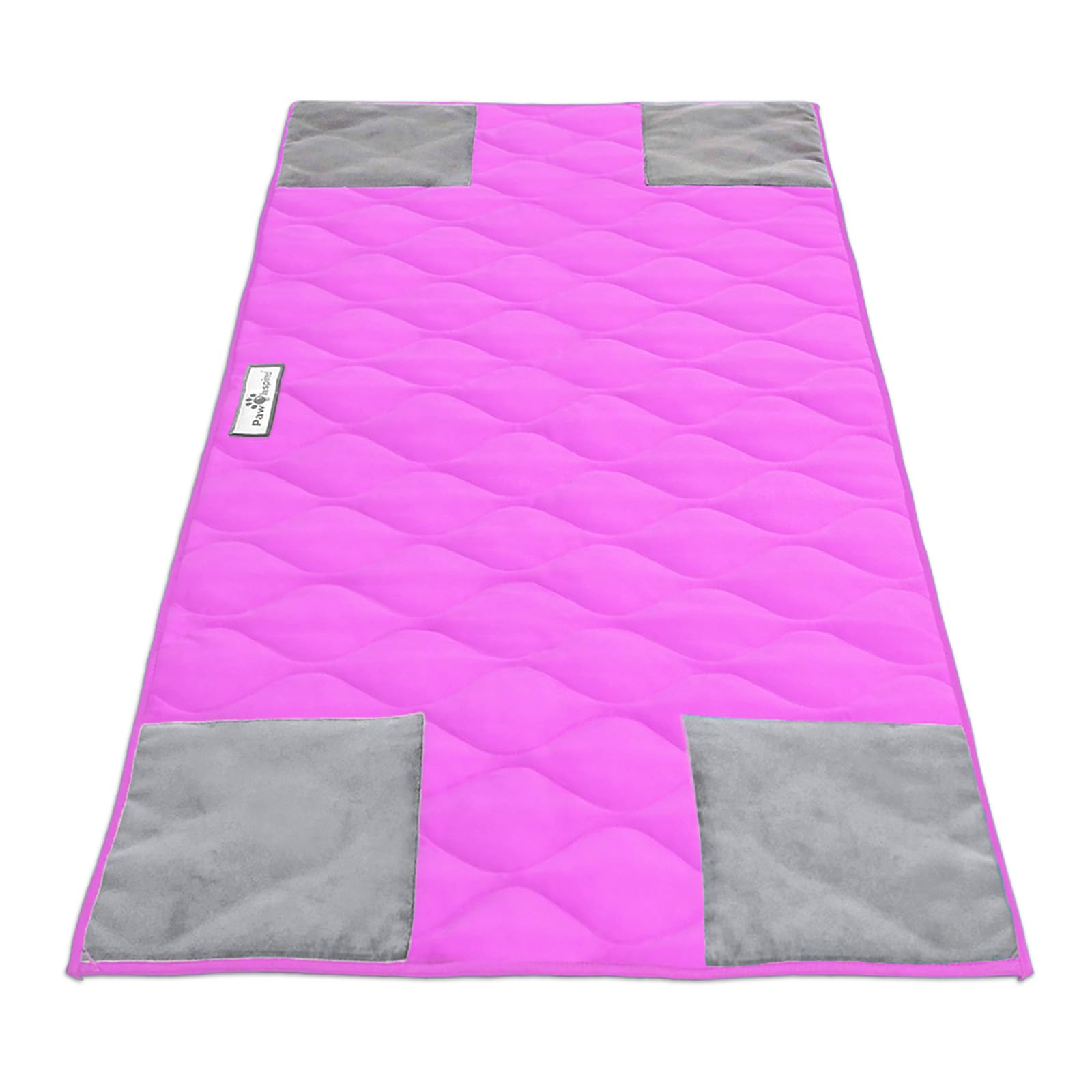
The Paw Inspired PopCorner liner is built specifically for the 47″ x 24″ Midwest Guinea Habitat, and it nails the fit with zero bunching. The Sweep-EZ velvet fleece top layer is non-stick, meaning hay and poop sweep right off instead of embedding into the fabric. This dramatically reduces your daily spot-cleaning time compared to standard fleece that traps debris.
The absorbency structure uses an inner layer designed to wick moisture away from the surface, and the reinforced corners add an extra absorbent layer where pigs tend to concentrate their urination. The 100% waterproof polyester backing prevents any leaks onto the cage floor. Users report that with daily sweeping and a weekly full wash, the surface stays dry for several days.
At roughly 0.15 inches thick, it’s thin enough to dry quickly in the machine but substantial enough to handle multiple days without saturation. The anti-pill construction prevents the fuzzy surface deterioration that cheaper fleece liners develop after a few wash cycles. This is the liner to beat for convenience and overall cage hygiene.
Why it’s great
- Sweep-EZ velvet fleece prevents hay and debris from sticking
- Reinforced corner booster pads target high-urine zones
- Perfect fit for Midwest and similar 47″x24″ cages
Good to know
- Absorbency may feel damp by day 3 if not spot-cleaned daily
- Chewers may target the edges over time
2. GuineaDad Liner

GuineaDad’s liner is the most substantial fleece option on this list, using a thick polyester fiber fill sandwiched between a soft fleece top and a waterproof bottom. The 0.99-kilogram weight and 0.5-inch approximate thickness give it a plush feel that guinea pigs adore, and the integrated burrowing pocket sleeve provides a hidey-hole that reduces stress.
The moisture-wicking fleece draws liquid down into the absorbent core, leaving the surface dry to the touch. Users consistently report zero odor even after several days of use, thanks to the high absorbency capacity. The custom fit for the MidWest cage is precise, with no gaps for waste to seep onto the cage tray. The included chewable cardboard hide and tunnel add enrichment value.
The liner is machine-washable, and the thick fill dries faster than expected in a tumble dryer on low heat. For owners who want the absolute best for their pigs and hate dealing with loose bedding mess, this is the endgame option.
Why it’s great
- Thick, plush padding with excellent moisture wicking
- Integrated burrowing pocket reduces pig stress
- Durable construction lasts over a year with proper care
Good to know
- Higher upfront cost than most alternatives
- Needs low-heat drying to prevent shrinkage
3. Bissap 2 Packs Guinea Pig Cage Liners
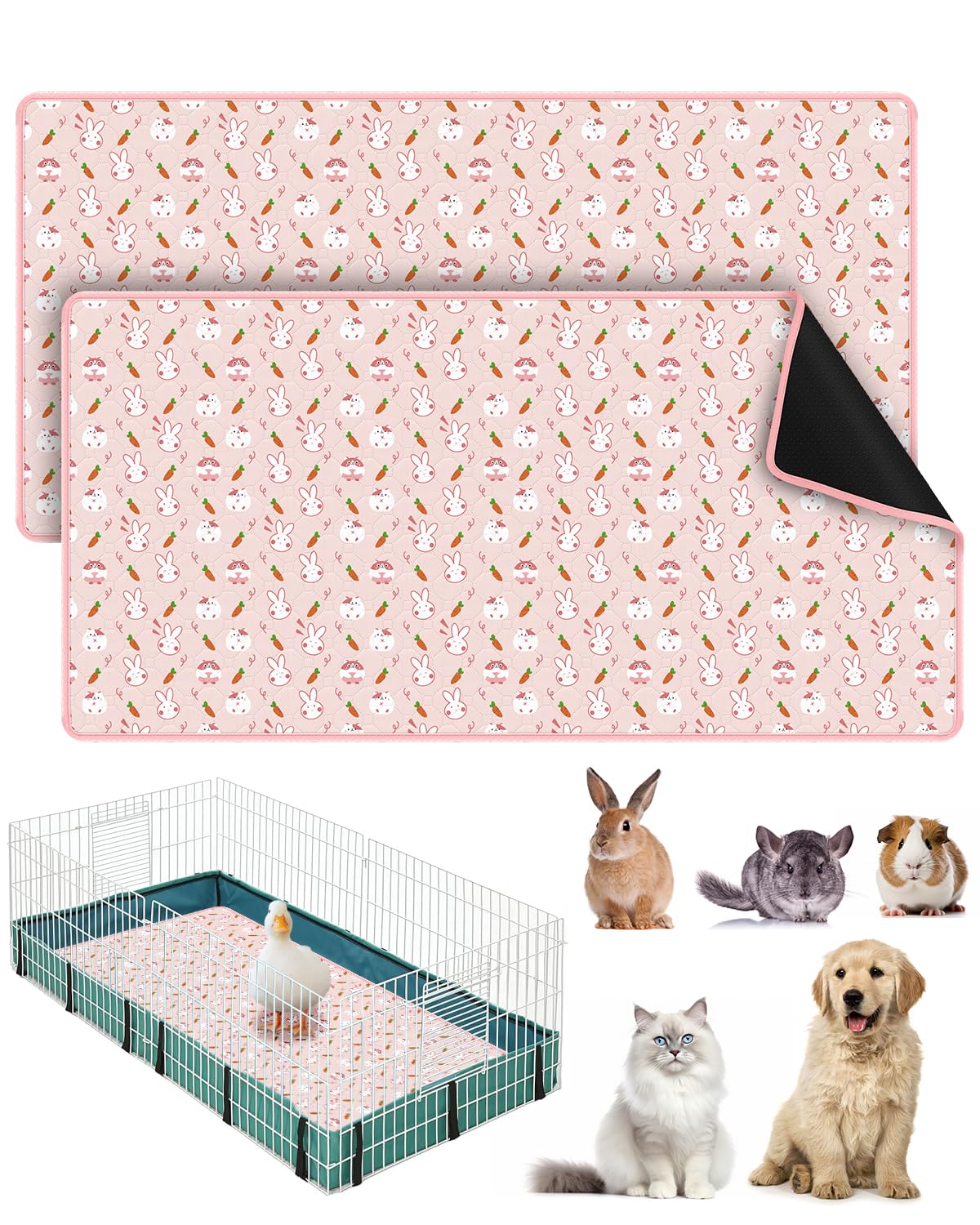
The Bissap two-pack offers an affordable entry point into reusable fleece bedding without sacrificing core functionality. Each liner measures 47 x 24 inches and features a four-layer construction: a breathable mesh top, an absorbent cotton core, a waterproof TPU membrane, and a non-slip plastic bottom. The TPU layer is key — it prevents urine from soaking through to the cage floor or your flooring.
Users praise the thin profile, which dries quickly after washing, and the non-slip rubber backing keeps the liner in place even if your pigs are active runners. The pink color is a nice aesthetic touch, and the two-pack allows you to rotate liners during washing. Cleanup is straightforward: sweep debris off the surface, then machine wash on a gentle cycle.
The trade-off is that the absorbent cotton core is thinner than premium options, so you will need to wash more frequently — roughly every 3-4 days compared to weekly for thicker liners. Users report minor leakage after day four. The thin profile also means the fleece surface can feel damp sooner. But for the price point, this is the best budget-friendly transition from disposable bedding to a washable system.
Why it’s great
- Affordable two-pack reduces cost per liner
- TPU waterproof layer prevents cage leaks
- Fast-drying thin construction
Good to know
- Thin cotton core requires washing every 3-4 days
- Absorbency drops off compared to thicker fleece pads
4. GINIDEAR Guinea Pig Cage Liner (4-Pack)

The GINIDEAR 4-pack delivers the best per-unit value for owners of multiple cages or those who want a full weekly rotation without washing mid-week. Each liner measures 15.7 x 29.5 inches, designed to fit C&C 2×1 cage sections perfectly. The four liners together can cover a 2×4 C&C cage with overlap, or you can use them as individual pee pads in different zones of a larger habitat.
The construction features a soft polyester fleece top that wicks moisture quickly, paired with a waterproof bottom layer dotted with anti-slip rubber nubs. The anti-slip feature is especially useful if your guinea pigs like to zoom around — the liner stays put on the cage tray. The fleece is fast-wicking, meaning liquid passes through the surface and into the absorbent core, keeping your pigs dry on top.
Machine washing is straightforward: sweep or shake off hay and poop, use a sticky roller for stubborn hair, then toss them in the wash on a delicate cold cycle. Users report the liners hold up well after two years of weekly washing, with no delamination of the waterproof layer or fraying at the edges. The only minor complaint is that the liners run slightly larger than advertised, so they may require folding or trimming for exact-fit cages.
Why it’s great
- Four-pack provides full weekly rotation without rewashing
- Anti-slip rubber dots keep liners securely in place
- Durable construction lasts through years of washing
Good to know
- Size runs slightly large for some cage models
- Fleece may need daily sweeping to prevent hay buildup
5. Small Pet Select Pine Pellet Bedding

Small Pet Select’s pine pellet bedding is a standout for owners who prefer loose bedding but demand low dust and high ammonia control. The pellets are made from kiln-dried pine — the kiln-drying process eliminates the aromatic oils that make raw pine dangerous for guinea pig respiratory systems. The pellets are triple-screened to achieve a 99% dust-free rating, which is critical for sensitive lungs.
When wet, the pellets expand into a sawdust-like consistency that locks moisture in, preventing it from pooling on the cage floor. This expansion provides superior odor control by trapping ammonia before it can evaporate into the air. Users report that a single application under a fleece liner can last up to two weeks without smell, making this an excellent base layer for a hybrid bedding system.
The 20-pound bag is substantial for the price, typically providing two full cage changes for a standard guinea pig habitat. The pellets are sustainably sourced from downed trees and are compostable, appealing to eco-conscious owners. The one caveat is batch consistency — a small number of users reported receiving a batch with an off-color and a detergent-like smell, though this appeared to be an isolated shipping issue.
Why it’s great
- 99% dust-free kiln-dried pine safe for guinea pig lungs
- Pellets expand to lock moisture and trap ammonia
- Long-lasting odor control works well under fleece liners
Good to know
- Batch consistency can occasionally vary
- Not ideal as a standalone top layer for burrowing
6. CareFresh Complete Natural Paper Bedding (Confetti)

CareFresh’s Confetti bedding brings a visual upgrade to the paper bedding category with its multicolored flecks that brighten up any cage. But the appeal goes beyond aesthetics: the natural paper fibers are highly absorbent, and the bedding is processed to be safe for small animals with no added dyes or scents. The 23-liter bag fluffs up significantly when poured, providing a deep, soft substrate for burrowing.
Users consistently note the exceptional odor control compared to other paper-based beddings. This is a significant improvement over cheaper paper beddings that start to smell after just a few days.
The soft texture is ideal for guinea pigs who love to tunnel and nest. The bedding is also compostable, making disposal easy. However, because it is a loose substrate, you will need to fully replace it every 5-7 days, and you cannot spot-clean as effectively as you can with fleece liners. Some users also note that the confetti colors fade after a few days of urine exposure, but the odor control remains unaffected.
Why it’s great
- Excellent odor retention — stays fresh for over a week
- Soft, fluffy texture ideal for burrowing and nesting
- Non-toxic and safe for sensitive respiratory systems
Good to know
- Needs full replacement every 5-7 days
- Confetti colors fade after a few days
7. Fresh News Recycled Paper Bedding

Fresh News Recycled Paper Bedding is the most cost-effective loose bedding option per liter on this list, offering a 40-liter bag at an entry-level price point. The bedding is made from 100% post-consumer recycled paper, making it a strong choice for owners who prioritize sustainability. It is biodegradable and compostable, and the manufacturing process diverts paper from landfills.
In terms of performance, the paper particles are small, soft, and over 99% dust-free, which is excellent for guinea pig respiratory health. The bedding uses an Ammonia Locker technology that neutralizes urine odors on contact. Users report that the smell is well-controlled for roughly three days before a full change is needed. The lightweight nature of the paper makes it easy to handle and dispose of.
The main downsides are that the small particle size can be kicked out of the cage more easily than larger pellets, and the absorbency is moderate — it does not expand or clump as aggressively as paper pellets or pine pellets. Some users have noted the presence of small plastic debris in the bag, which is a manufacturing quality concern. For the price and eco-friendly sourcing, it remains a solid entry-level option, but you may need to change it more frequently than premium alternatives.
Why it’s great
- 100% recycled post-consumer paper — eco-friendly choice
- Over 99% dust-free and non-allergenic
- Ammonia Locker technology controls odors effectively
Good to know
- Small particle size tracks out of the cage easily
- Some users report occasional plastic debris in packaging
FAQ
Should I use fleece liners or loose bedding for my guinea pig?
How often should I change guinea pig bedding?
Final Thoughts: The Verdict
For most users, the bedding for guinea pigs winner is the Paw Inspired PopCorner Liner because it combines the best elements of convenience, dust-free health, and daily maintenance ease without breaking the bank. If you want the absolute thickest plush comfort and a built-in burrowing pocket for your pig’s enrichment, grab the GuineaDad Liner. And if you prefer a loose pellet system with exceptional ammonia control, nothing beats the Small Pet Select Pine Pellets.