
Our readers keep the lights on and my morning glass full of iced black tea. As an Amazon Associate, I earn from qualifying purchases.
Specs are compiled from manufacturer listings and verified buyer reviews and can change over time — please confirm the key details on the product page before buying.
A 14mm hex socket is the tool you only think about when a job stops dead — a fork damper bolt buried deep in a slider, a valve cover stud no standard socket will touch, an axle bolt that has to come out before anything else moves. The problem is that “14mm hex” hides a split: some of these tools are only 1.5 inches long, and some reach a full 4 inches, and buying the short one when the bolt sits deep is how a Saturday job turns into a parts order. This guide sorts the real difference-makers — drive size, overall length, steel, one-piece versus two-piece construction — so you land on the right one the first time.
I’m Min — the founder and writer behind Gadgets Feed. This guide is built by comparing the manufacturers’ published specifications and the patterns across verified customer reviews, so you get each pick’s real strengths and trade-offs instead of marketing spin.
Each pick below is judged on the specs that decide whether the socket reaches your bolt: drive size, overall length, steel, and construction. Once you know your bolt’s depth and your ratchet’s drive size, the 14mm hex socket choice narrows to one or two tools.
Our Picks at a Glance

How To Choose The Best 14mm Hex Socket
Almost every mistake in this category is a mismatch between the tool and the bolt, not a bad tool. Get the drive size, the length, and the construction right and the job is quick. Get one of them wrong and a socket that is perfectly good sits in the drawer while you improvise.
Drive size has to match the wrench you already own
The drive is the square hole in the base of the socket — a 1/2-inch drive takes a 1/2-inch ratchet or impact wrench, a 3/8-inch drive takes a 3/8-inch tool, and a 3/4-inch drive takes the heavy 3/4-inch guns. Buying a 14mm hex socket in the wrong drive size means it will not click onto your ratchet at all. Check the square end of your ratchet before anything else.
Length is the spec that decides whether you reach the bolt
A recessed bolt — the kind set deep inside a fork slider or behind a caged stud — needs a long socket, and a standard-length one simply cannot get there. These picks range from a 1.5-inch socket up to a 4-inch one, so the bolt depth you are working on tells you which end of that range you need.
Impact rating and steel type matter under load
An impact-rated socket is built to survive the hammering of a power impact wrench, where a hand-only socket can crack. Chrome Molybdenum (Cr-Mo) steel is the common pick for impact use, while Chrome Vanadium (CR-V) and S2 steel show up in hand-driven and precision applications. The material is printed on the listing, so match it to how you plan to drive the tool.
Quick Comparison
| Model | Best For | Drive Size | Overall Length | Material | Amazon |
|---|---|---|---|---|---|
| CTA Tools 8554 Long Hex Bit Socket★ Best Overall | Deep-reach fork and damper bolts | 1/2-inch | 4 inches | Alloy Steel | Amazon |
| uxcell H14 Impact Hex Bit SocketImpact Ready | Impact-grade brake and axle work | 1/2-inch | 3 inches | Chrome Molybdenum Steel | Amazon |
| ZKTOOL 14MM Deep Metric Hex SocketExtra Deep Reach | Extra-deep studs and valve covers | 3/8-inch | 120 mm deep | Alloy Steel | Amazon |
| JEUCLEL 2PCS 14mm Hex Impact Bit Socket | Two-socket spare-tire and general duty | 1/2-inch | 3.07 inches | Chrome Molybdenum Steel | Amazon |
| Williams JHW35297 1/2″ Drive Hex Long Bit Socket | Torque-critical fork mounts | 1/2-inch | 1.5 inches | Polished Steel | Amazon |
| toolant 1/2-Inch Drive 14mm Impact Hex Bit Sockets | Tight-space work with anti-roll flats | 1/2-inch | — | S2 Steel | Amazon |
| Aiourx 3/4-Inch Drive H14 Impact Hex Bit Socket | Heavy 3/4-inch drive and bike freehubs | 3/4-inch | 3 inches | Chrome Molybdenum Steel | Amazon |
| TEKTON 3/8 Inch Drive x 14 mm Hex Bit Impact Socket | Precision two-piece impact use, pack of 3 | 3/8-inch | — | Alloy Steel, S2 Steel | Amazon |
In‑Depth Reviews
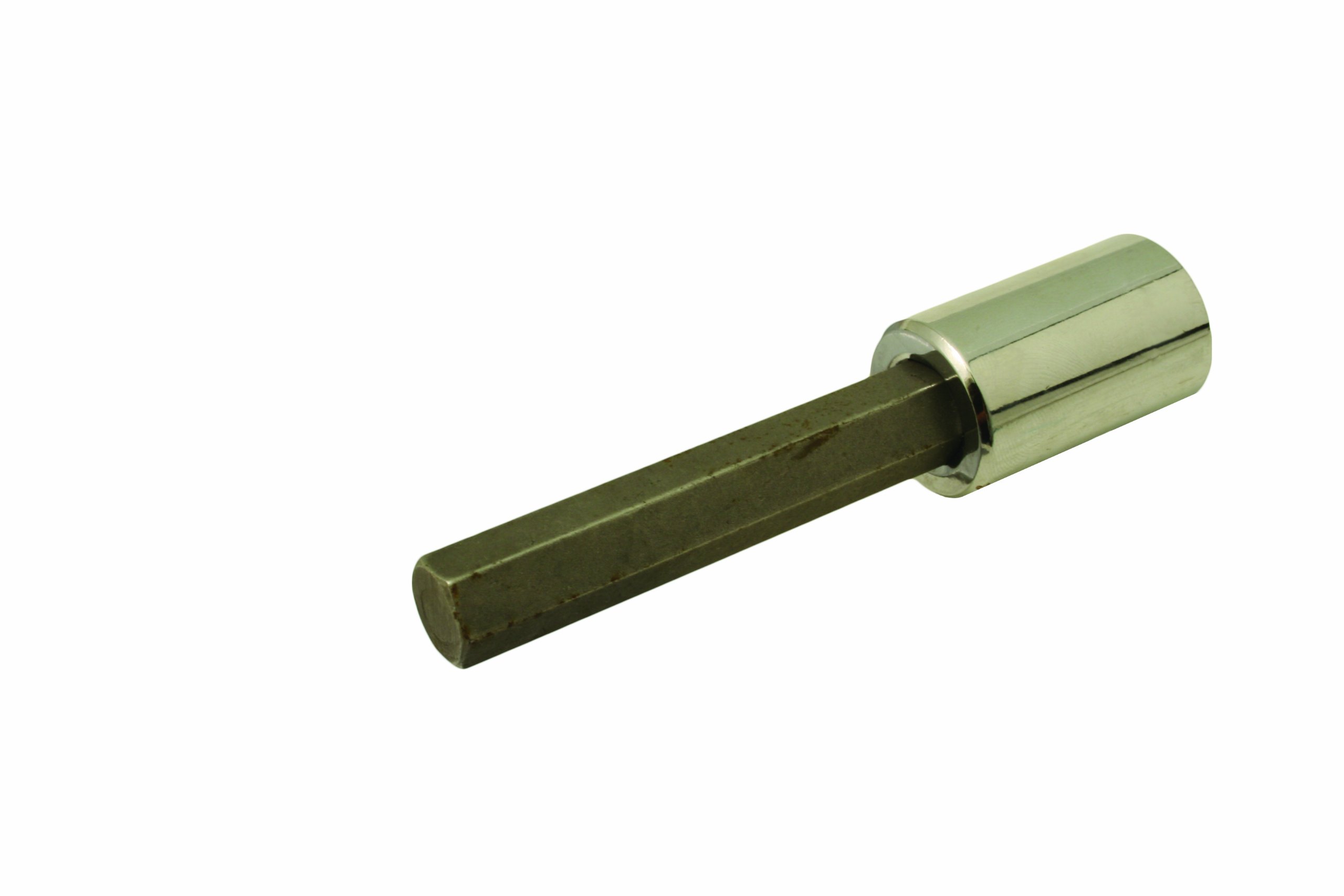
1. CTA Tools 8554 Long Hex Bit Socket – 14-Millimeters
Our pick — over 4.5★ from 500+ verified ratings; the strongest balance of quality and price.
The four-inch reach that turns a buried damper bolt into a five-minute job.
If you own a Harley Touring model and need to get at the bottom fork bolt, this is the socket the job was designed around. It runs a 4-inch length — that extra reach is exactly what lets it find the bolt a standard socket leaves stranded. It takes a 1/2-inch drive, so it clicks straight onto the ratchet already in your box. The steel is steel, alloy grade, and the finish is a straightforward one. The 4-inch span is the whole story here, and owners treat it as the tool that ends the job rather than starts it — the highest-rated socket in this group at 4.8 stars across 500+ ratings.
What wins people over is how clean it handles the fork bolt job specifically. Owners on 2014-and-up Touring models describe it as long enough and doing the job quite well, with no drama on a 2023 Limited. It also earns its place on the smaller bolts at the bottom of fork tubes and on damper bolts inside a Dyna slider. The common thread is reach on a bolt that sits recessed inside the assembly — the spot where most 14mm hex sockets come up short.
For comparison, this 4-inch socket clears the same deep-reach jobs the shorter Williams JHW35297 handles, but with a full 2.5 inches more length when a stud sits past where a 1.5-inch tool stops. The length is also what the recurring shipping note runs into: a couple of listings show conflicting dimensions, so confirm the 4-inch figure before you order, and Prime delivery has occasionally taken an extra day rather than the promised two.
Why it took the top spot
- 4-inch length reaches recessed fork and damper bolts where standard sockets cannot follow
- 1/2-inch drive matches the common ratchet in most home boxes
- 2-piece construction is built for high-torque applications
- Handles both the Harley fork bolt job and the smaller fork-tube bolts
What to know before you buy
- 4-inch length is more tool than a shallow bolt needs, so it is overkill for tight-clearance spots
- Some listings carry conflicting dimensions — verify the 4-inch spec
- Prime shipping has slipped past two days on a few orders
Reach for this if: your bolt sits deep inside a fork slider or damper assembly and a normal 14mm hex socket keeps bottoming out before it grips.
Look elsewhere if: your bolts are shallow and close to the surface, where the shorter 1.5-inch Williams does the same job with far less length to swing.
2. uxcell 1/2″ Drive x H14 (14mm) Impact Hex Bit Socket, Metric 3″ Length
Built to take a breaker bar’s worst without cracking.
The steel is the point with this one. It is made from Chrome Molybdenum (Cr-Mo) — the tougher alloy that holds up when you are hammering a bolt with an impact or a long breaker bar rather than nudging it by hand. A black phosphate finish coats the surface to keep rust and corrosion off, which matters when the tool lives in a toolbox under a car. It takes a 1/2-inch drive, runs 3 inches of length, and the chamfered ends are shaped to slide into the fastener head smoothly so you wear the bolt less over time.
Buyers report it holding up where it counts. Used on 2007 RS4 axle bolts, it had the reach to remove, install, and torque them cleanly. It also earned its keep on Durango brake work — described as durable on impact, steady, with a perfect fit. And owners mention: “15mm tool withstood extreme force from a 24″ breaker bar removing a Shimano freehub without breaking, despite others reporting breakage.” That is the kind of load that separates impact steel from the rest.
Here is an honest line to hold in mind. This is a hand-and-impact socket; it carries no insulation properties, so it is not the tool for live electrical environments. At 3 inches it is about 33% shorter than the 4-inch CTA 8554 — fine for most brake, axle, and freehub jobs, but on a stud set deep enough to need the full four inches, the CTA gets there and this one comes up short.
The buyer pattern: the picture that emerges from the reviews is a socket chosen for punishment — axle nuts, brake bolts, and bike freehubs where the fastener fights back and a soft tool would round or snap.
The honest limit: one owner notes it was the wrong size for their job, which is a reminder to confirm your bolt is genuinely 14mm hex before ordering — a sizing miss is the most common way these reviews go badly.
Who it suits: the DIY mechanic driving a 1/2-inch impact or leaning on a breaker bar for brake, axle, and drivetrain bolts that need real torque.
The one caveat: it is a hand-and-impact tool only — never use it on anything live, because the listing is clear it has no insulation for electrical work.
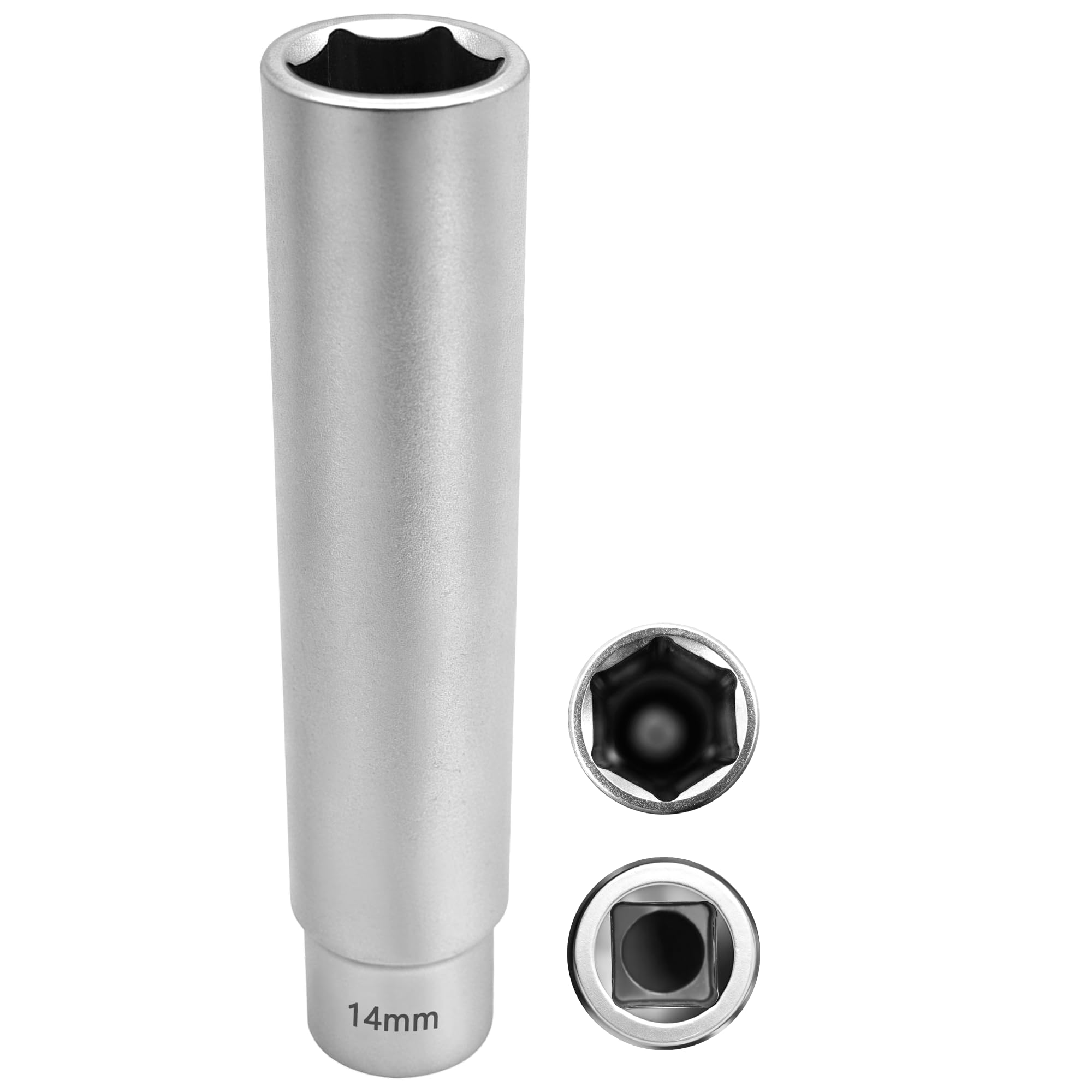
3. ZKTOOL 14MM Deep Metric Hex Socket Tool, 3/8-Inch Drive
When the stud runs longer than the socket, this is the one that gets there.
The number that defines this socket is 120mm — a deep design that puts far more socket between your ratchet and the bolt than a standard tool. That extra depth is what lets it wrap a long engine stud or a recessed fastener properly instead of just tapping the top. It runs a 3/8-inch drive, so it clicks onto the common smaller ratchet. The build is Chrome Vanadium (CR-V) steel with a polished finish, hardened for strength and resistance to corrosion.
The job this owns is the one where a normal deep socket runs out of room. Customers note: “Worked great for removing my valve cover on my 2010 135i N54. Those long studs were impossible to get with standard deep socket.” That is the whole argument for the 120mm depth in one line — the studs that beat an ordinary socket are exactly what this clears. It has also been the tool that dropped a fuel tank on an older Dodge Ram 3500, and it comes with reducers that step a 3/8-inch drive down to 1/4-inch for finer work.
Worth weighing against the CTA 8554 above: that socket wins on the pure 4-inch length for a fork bolt, while this one wins on the bore depth needed to swallow a long stud. They solve different problems. If your bolt is recessed but your real challenge is a long, exposed stud, the ZKTOOL depth is the deciding spec — and it is the one people keep finding uses for after the first job that made them buy it.
What makes it different: a 120mm deep bore is not a small step up from a standard deep socket — it is the difference between reaching a hidden bolt and not reaching it at all, and the valve-cover and fuel-tank jobs it clears are the proof.
Where it wants care: the 3/8-inch drive is a lighter-duty interface than a 1/2-inch socket, so it is happiest with a hand ratchet or a modest impact rather than a big gun taking it to extremes.
Pick this one for: long engine studs, valve covers, and any fastener sitting so deep that an ordinary deep socket simply never contacts it.
Leave it for another pick if: you mostly drive big 1/2-inch impact work — the 1/2-inch-drive picks on this list suit that better than a 3/8-inch tool.
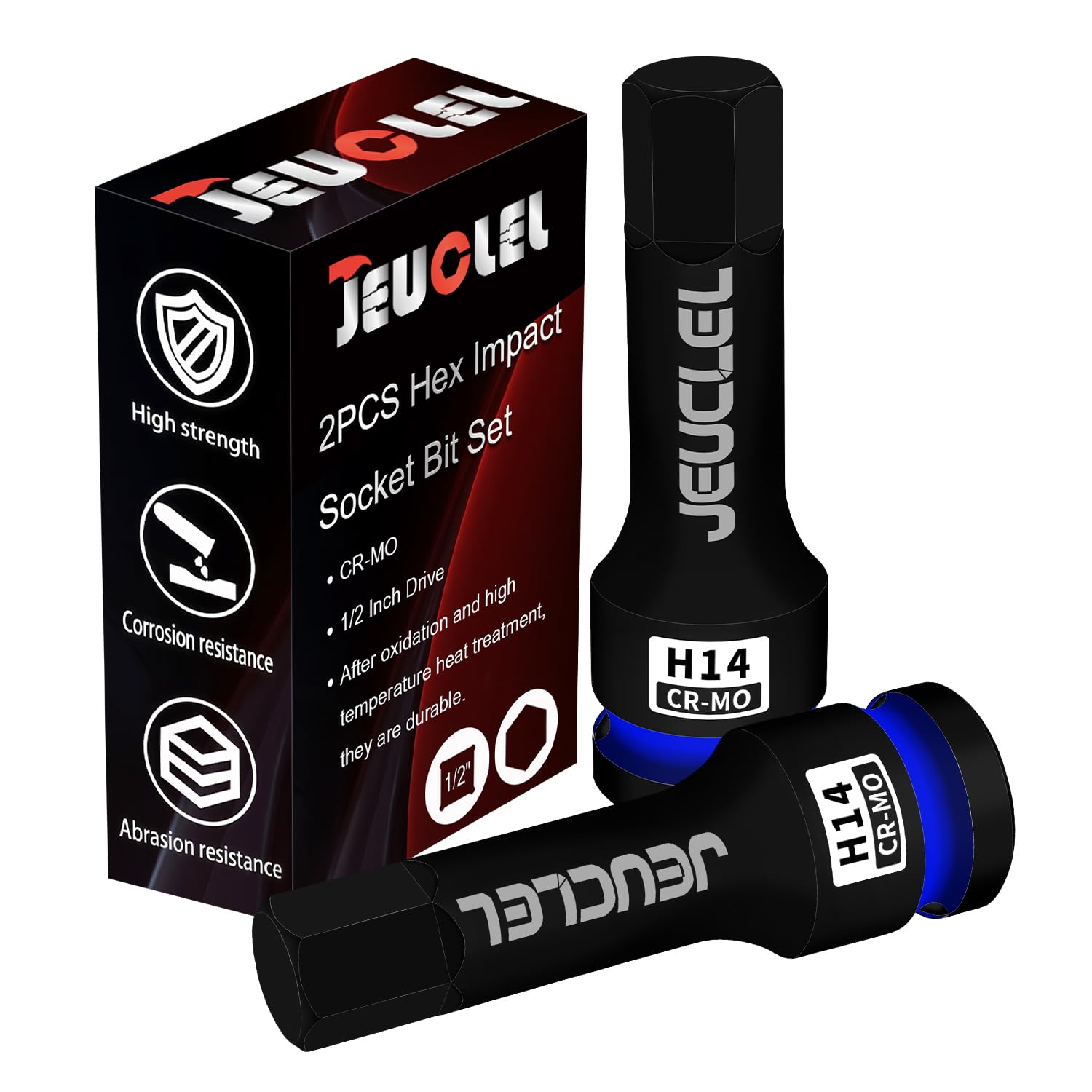
4. JEUCLEL 2PCS 14mm Hex Impact Bit Socket, H14 1/2″ Drive Allen Socket
Two sockets, one price — the spare you keep in the second toolbox.
Two of them turn up, and they run a 3.07-inch length with a 1/2-inch impact drive. The steel is Chrome Molybdenum, the alloy built for impact loads and long service life, with a black phosphate coating over the top to hold off rust. The hex is precision-machined so the dimensions stay exact, and the beveled, chamfered ends slide into the fastener without chewing it up. A separate pinhole base takes a locking pin for extra security when you put serious torque through it.
The standout use case is the one that does not need a torque wrench or a lift. Reviewers point out using one on a battery impact with a 3/8-inch drive to raise and lower the spare on a Ford Transit Connect, calling it “fast and is a seniors dream come true when needing to quickly change a tire.” That is the socket doing its best work: a small, repeated job that a socket makes easy. Others praise the build directly — “Quality heavy duty.”
Set the honest expectation plain. The full 3.07-inch length is the same as the uxcell above, so on a deep fork or damper bolt neither reaches as far as the 4-inch CTA. And among the feedback, one owner felt it was not as polished as advertised and wondered about long-term durability — a fair thing to weigh if you plan to lean on it hard every weekend. For the price of a single socket elsewhere, though, getting two makes the risk of one failing on the job pretty small.
Best matched to: the home toolbox that wants a spare — two 1/2-inch impact sockets for repeated light-duty jobs like spare-tire work and general fastening.
Think twice if: your task is a single deep, high-torque bolt, where you would rather have one tool with the full 4-inch reach than two with 3.07 inches.
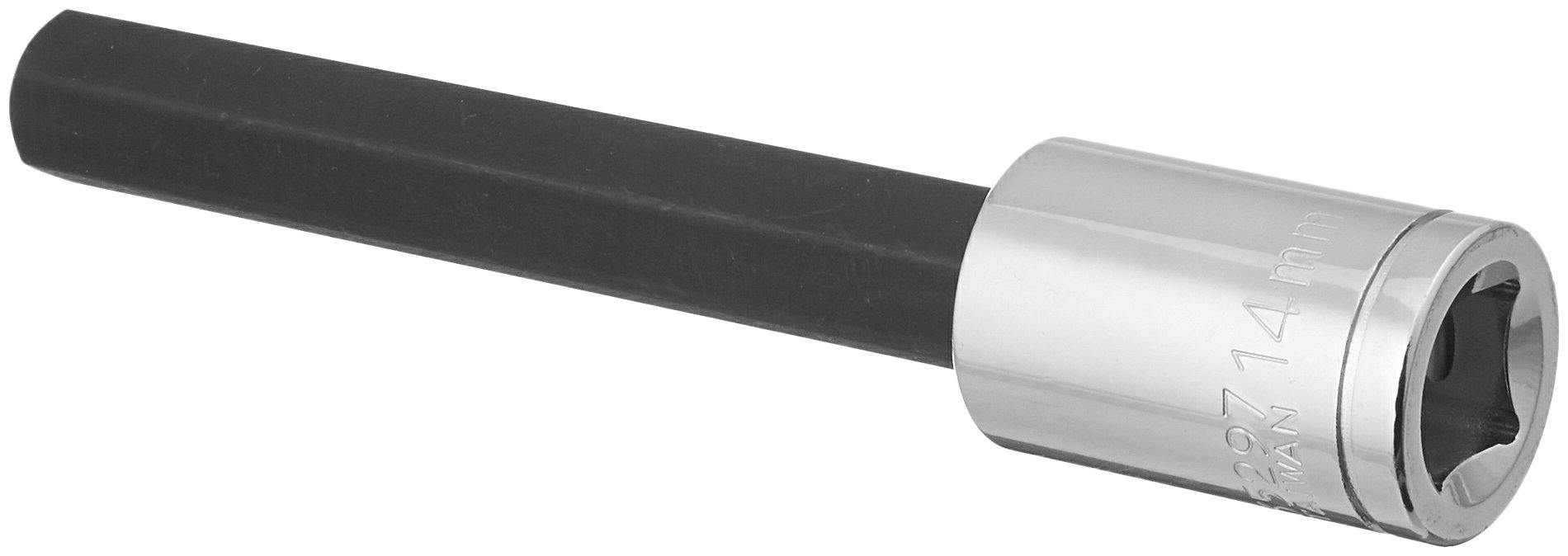
5. Williams JHW35297 1/2″ Drive Hex Long Bit Socket, 14mm
The compact torque specialist that reaches deep-set fork bolts without a long body.
At 1.5 inches long, this one is the opposite approach to the 4-inch reach tools — it stays short and lets the reach come from a deep-set internal tube, rather than a long socket body. It runs a 1/2-inch drive and has a highly polished chrome finish that wipes clean easily. The socket outside diameter is 1 inch, which keeps it slim enough to maneuver in tight fork assemblies. It is made for exactly that job: getting to an internal fork tube bolt a standard-length allen socket will not reach.
The reviews read like a Harley service manual. Shoppers say: “The exact hex drive I needed for removing the bolts on the bottom of the front forks on my 2018 Street Glide.” Another describes it as a well-made long allen socket that “easily reaches the rather deep set internal tube that a standard length allen socket won’t reach,” and calls it perfect with no downside. Honda Grom and Monkey owners get the same benefit — the long reach tightens the lower fork mounts and lets them apply proper torque. Owners have torqued it past 100 ft-lbs without issue, the load a fork bolt demands.
Where does it sit against the longer sockets? The 1.5-inch length is shorter than almost everything else in this guide, so on a bolt that sits deep inside a slider — the CTA’s home job — this one comes up short on pure reach. But for the deep-set internal fork tube it was made for, the short body is the advantage, and the polished finish separates it from the coated steel tools around it.
What earns the spot
- 1.5-inch body has taken over 100 ft-lbs of torque without issue
- Reaches the deep-set internal fork tube a standard-length allen socket cannot
- 1/2-inch drive matches the common ratchet
- Polished chrome finish cleans off grease easily
Worth factoring in
- 1.5-inch length is far shorter than the 4-inch reach tools, so it is the wrong pick for a deep slider bolt
- Short body gives it less contact depth on a very long stud
- Only one socket here, so there is no spare if it goes missing
The pick for you if: you are servicing motorcycle forks and need a compact tool that torques a deep-set internal tube to spec without a long body in the way.
Wrong tool for: a recessed bolt needing a long reach across a gap — the 4-inch CTA, not this short socket, is built for that.
6. toolant 1/2-Inch Drive 14mm Impact Hex Bit Sockets, 2-Piece
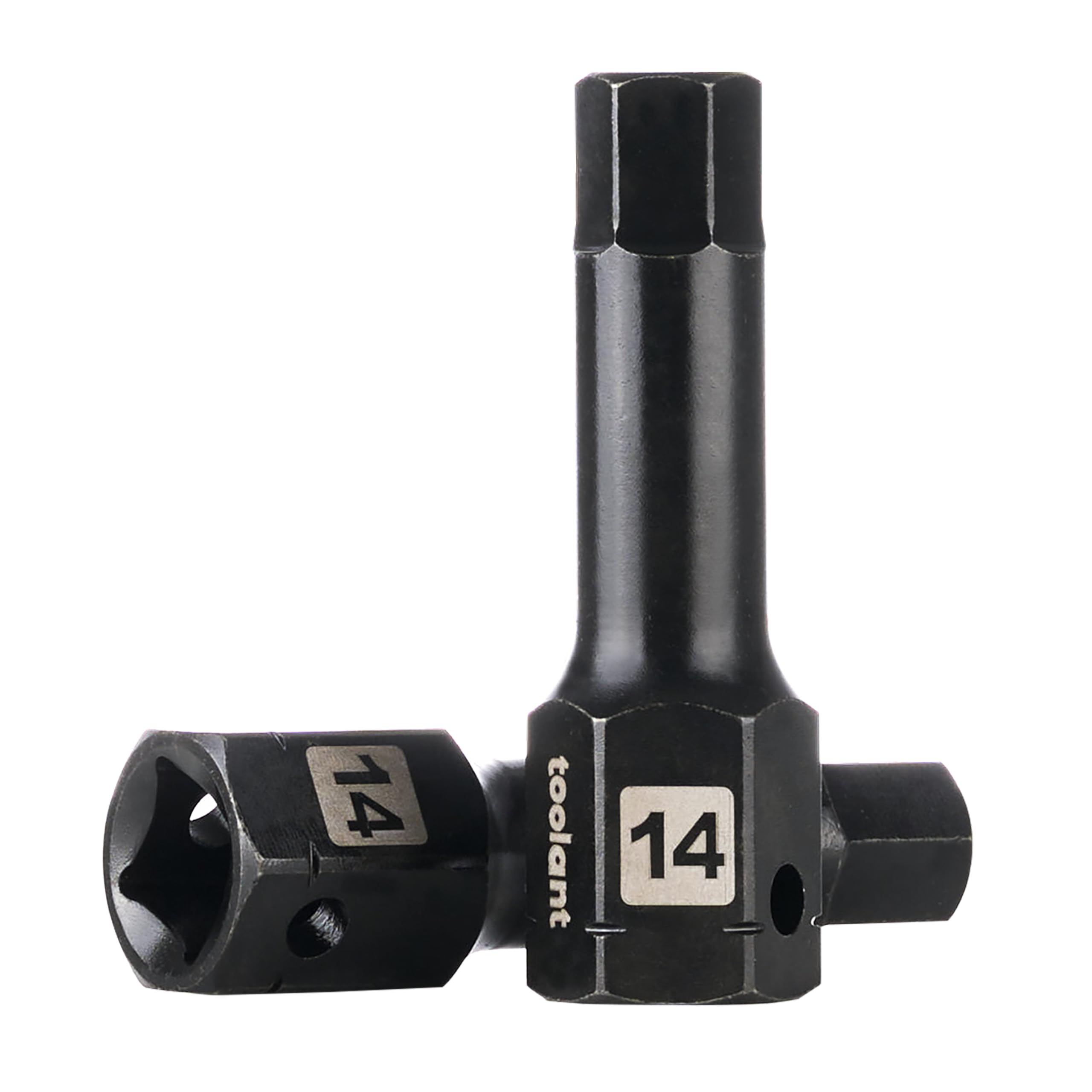
Six flat sides keep it off the floor and on the bolt.
Two things make the toolant set stand out, and neither is subtle. First, the S2 steel one-piece construction — the bit and socket are one solid piece, so there is no joint to separate under load. That is a deliberate contrast to the two-piece builds that press a bit into a separate socket. Second, six parallel flat sides built into the body: they stop the socket rolling off your bench, and they let a flat wrench grip it directly. The set takes a 1/2-inch drive, carries pin holes for a locking pin and O-ring, and has laser-etched size markings so you read the size without squinting.
That flexibility is what keeps it in play. Buyers report a set that fits “in tight spaces that most Allen sockets won’t,” driven by either a 3/8-inch ratchet or a flat wrench, with a work set bought and a home set bought alongside it. It handles an impact wrench, a ratcheting box wrench, and an open-end wrench — one tool, several ways in. The same builders note the foam organizer is a genuinely useful bonus, keeping the pair together in a drawer.
Now the honest part. Durability is the split opinion on this set. Owners mention: “Works well. Only broke 2!” — and short-term snapping is the recurring theme on the critical side, so it suits measured torque over brute abuse. The laser-etched markings also wear off with heavy use, and there is no warranty mentioned on the listing. Treat it as a sharp, versatile tight-space tool and it rewards you; lean on it like a forged impact-grade socket and it may let you down.
The case for it
- Fits tight spaces most Allen sockets cannot
- One-piece S2 steel design prevents bit separation under load
- Anti-roll flats allow a flat wrench to grip the body
- Works with impact, ratchet, box wrench, and open-end wrench
- Foam organizer keeps the pair together
The knocks to weigh
- Short-term breakage comes up among the durability feedback
- Laser-etched sizing wears off over time
- No wrench included, and no warranty noted on the listing
Weigh this one in if: your bottleneck is a cramped, hard-to-reach fastening where a low-profile, anti-roll socket driven by a flat wrench saves the day.
Mind the trade-off: short-term snapping turns up in the durability feedback, so save it for measured torque rather than the heaviest abuse.
7. Aiourx 3/4-Inch Drive H14 Impact Hex Bit Socket, 14 mm
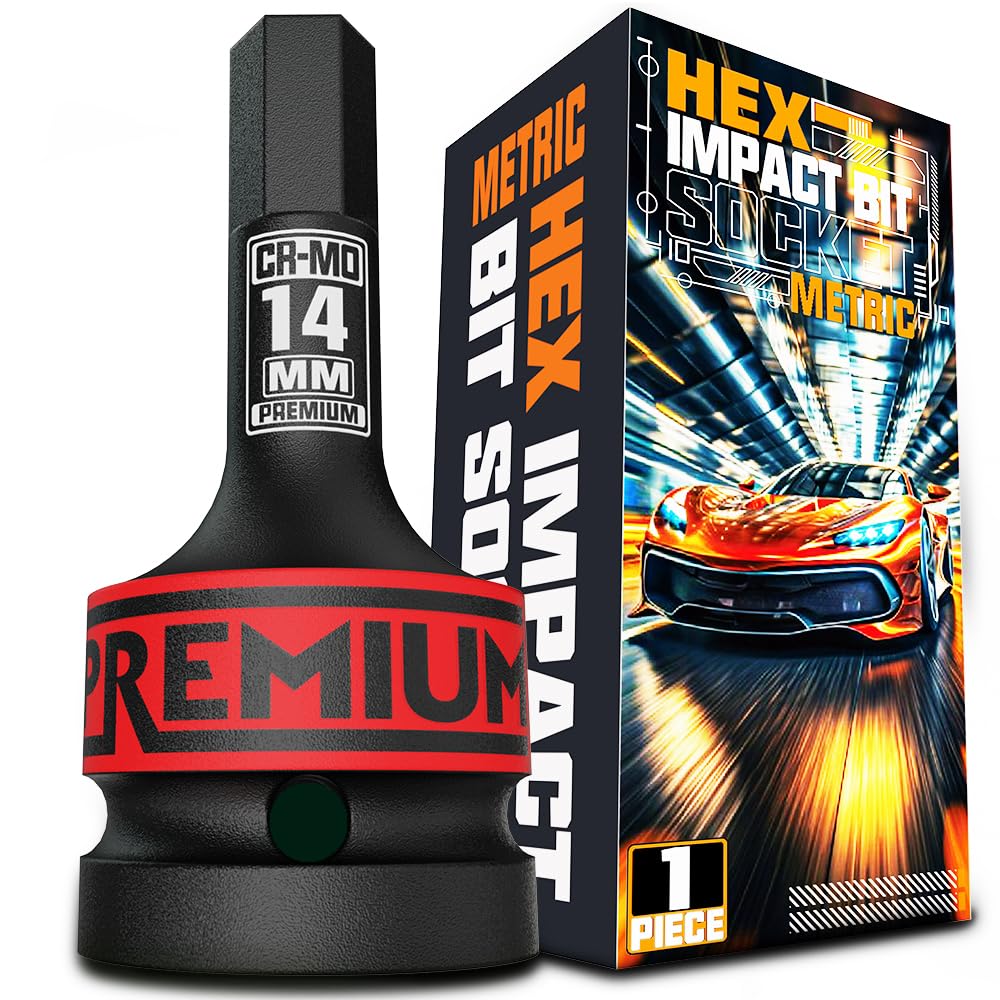
The big-brother drive that only the heaviest jobs call for.
This one is a 3/4-inch drive — the square-hole size reserved for the big torque guns, not a standard 1/2-inch ratchet. The hex is 14 mm, machined from Chrome Molybdenum steel for strength and corrosion resistance, and it runs a 3-inch length. The construction is solid one-piece, which removes the weak joint of a two-piece design, and the size markers are high-contrast so you can read them even in low light, which is a small thing that matters under a car at night. The maker lists it for car maintenance, furniture installation, and mechanic use.
Where it earns its keep: on the jobs that already call for 3/4-inch drive hardware. It has been used as the right tool for Shimano freehubs on nicer bikes and generally earns short, direct praise — “Good quality, did the job!” and “Great deal works great well made.” Owners appreciate the heft and the machined finish, and the one-piece body holds up to the torque the drive size invites.
Two things to know before it lands in a 1/2-inch toolbox. First, a 3/4-inch drive will not fit a 1/2-inch ratchet — you need the matching 3/4-inch tool, so confirm yours before ordering. Second, the durability feedback is mixed: some buyers find it very sturdy, others less so. Neither is a knock on the tool so much as a signal to match it to the load — this is a socket for genuinely heavy work, not a fiddly precision job.
Where it shines: heavy, high-torque tasks driven by 3/4-inch tooling, where the one-piece construction and the 3-inch length give an impact gun the strength to turn a stubborn fastener.
The compatibility check: a 3/4-inch drive is a firm gate — if your ratchet is 1/2-inch, this socket will not mount until you have the right drive tool, so confirm it first.
Own it for: the garage with a 3/4-inch impact wrench and a genuinely heavy fastening job that needs the big drive behind the 14 mm hex.
Not the one if: everything you own is 1/2-inch drive — a 1/2-inch socket from this list will fit your tools without a new purchase.
8. TEKTON 3/8 Inch Drive x 14 mm Hex Bit Impact Socket (Pack of 3)
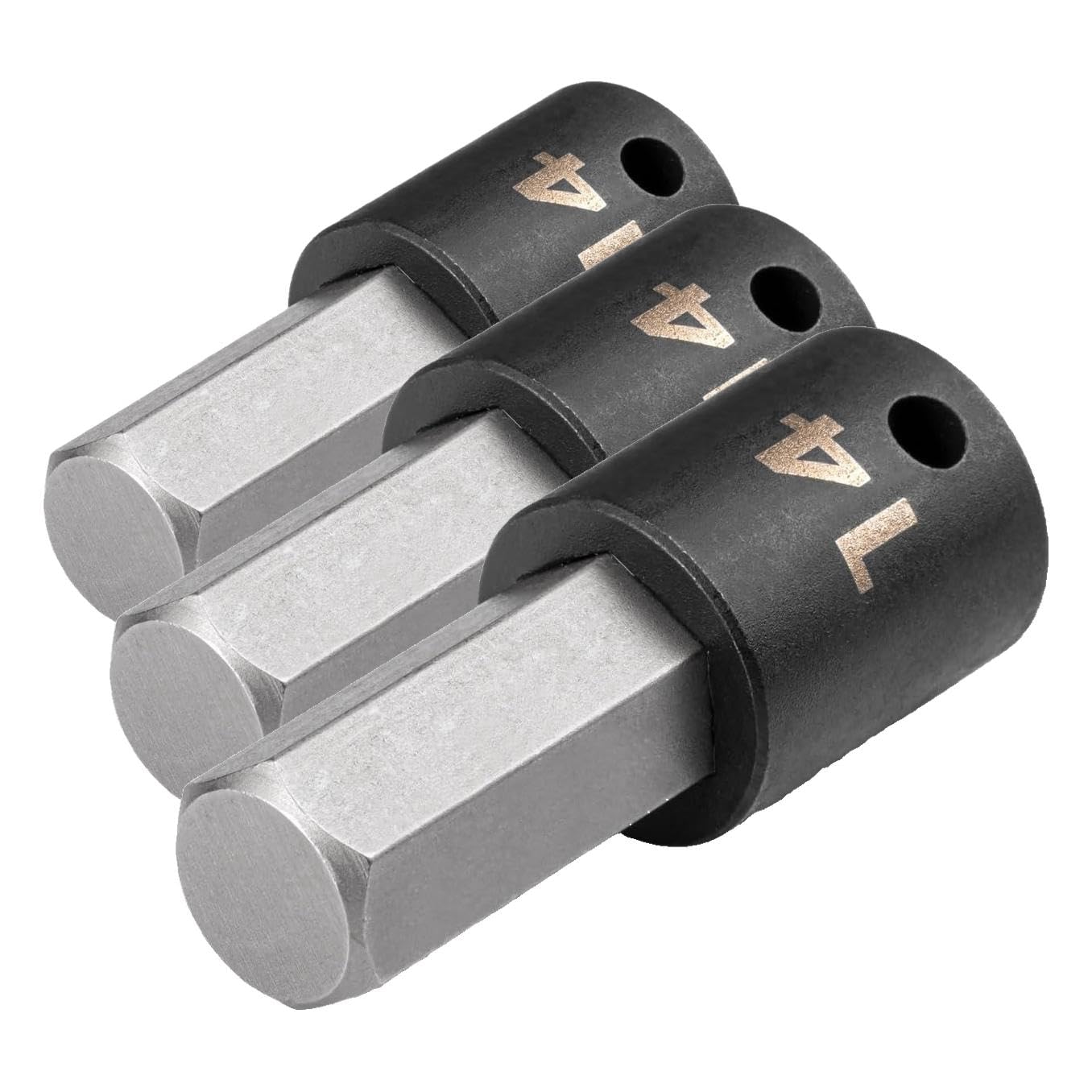
The precision-machined set that leans on tolerance, not length.
The defining detail here is how the bit is made. The tip is machined to precise tolerances for an exact fit with hex fasteners, and the build is a deliberate two-piece design — separate steel alloys and processes for the bit and the socket, which the maker says results in a higher-performing tool than one-piece designs. The two pieces are joined by pressing the bit directly into the socket for a permanent connection meant to hold under stress. It runs a 3/8-inch drive. The size is marked twice, with a high-visibility laser marking and a stamped marking that will not rub off.
The anvil compatibility is a quiet advantage. Smooth walls inside the drive end and a detent pin hole make it work with both drive-tool anvil types — the friction ring or the detent pin — so it seats securely whichever ratchet or impact you own. It is sold as a pack of 3, so you get spares. Customers note it as good quality and fair price, and one buyer who ended up not needing it kept it anyway as a toolbox addition. Another used it to hold up under high torque removing a fastener with a 1/2-inch adapter, expecting failure and finding none.
The lasting on the coating — the recurring gripe is the finish: it is not a heavy chrome, so it will rust over time and the marking is best relied on via the stamped side once the laser wears. Otherwise the picture is a precision-first socket that works on both anvil types. It suits a 3/8-inch tool box that wants exact tolerance rather than brute length, and the multi-pack keeps a spare on hand.
Strengths worth noting
- Bit tip machined to precise tolerances for an exact hex fit
- Two-piece design uses separate alloys for bit and socket
- Stamped size marking will not rub off even as the laser fades
- Compatible with both friction-ring and detent-pin anvil tools
- Sold as a pack of 3, so spares are included
Points to weigh
- 3/8-inch drive is lighter-duty than a 1/2-inch socket
- Finish is not heavy chrome and will rust over time
- Two-piece design is the opposite approach to the one-piece toolant
Good fit for: a 3/8-inch-drive toolkit that values an exact-tolerance hex fit and wants spares on hand in the same pack.
Consider another pick if: you work under a car where the coating takes a beating — the toolant or a coated Cr-Mo socket holds up better against rust.
Understanding the Specs
Drive Size (1/2, 3/8, or 3/4-inch)
The drive is the square hole at the base of the socket, and it has to match the square end of your ratchet or impact wrench or the tool simply will not mount. A 1/2-inch drive is the everyday home-mechanic size and fits most of the sockets in this guide. A 3/8-inch drive works with the smaller ratchet many people keep for lighter jobs. A 3/4-inch drive is the heavy, high-torque size, and it will not fit a 1/2-inch ratchet at all — that is the fastest way to end up with a socket you cannot use, so check your tool’s square end before you buy.
Overall Length and Depth
Length is not a vanity number — it decides whether the socket can physically reach a recessed bolt. These picks range from 1.5 inches up to 4 inches, and a deeper one is the difference between reaching an internal fork tube bolt and never contacting it. Depth and length work together: a longer body buys you reach across a gap, while a deep bore (like the 120mm ZKTOOL) lets the socket swallow a long exposed stud. Match the number to the job — a shallow bolt is served perfectly by a short socket, and a deep one demands the long tool.
Steel Type and Finish
The steel tells you what the socket can survive. Chrome Molybdenum (Cr-Mo) is the impact-grade alloy, tough enough for a hammering power wrench. Chrome Vanadium (CR-V) and S2 steel appear in hand-driven and precision work, and the toolant’s S2 one-piece build is chosen for hardness at the bit. The finish follows the steel: a black phosphate coating is added specifically to fight rust and corrosion, polished chrome wipes clean easily, and a plain finish will show wear sooner. If the tool lives in a damp toolbox, the coating is not cosmetic.
One-Piece Versus Two-Piece Construction
Both styles appear on this list, and they fail in different places. A one-piece socket is a single solid chunk of steel, so there is no joint to separate — good under heavy, sudden torque. A two-piece socket presses a separate steel bit into the socket body; done well, the maker claims it performs better, but a poor two-piece build is where breakage tends to happen. Look for how the two parts are secured — a permanent press or a pinned connection is a stronger sign than an open joint, and it is worth reading the durability feedback on any two-piece tool before heavy use.
FAQ
Will a 14mm hex socket fit my ratchet?
How long does a 14mm hex socket need to be?
Can I use a 14mm hex socket on an impact wrench?
What is the difference between one-piece and two-piece hex sockets?
Will a 14mm hex socket fit a Harley fork bolt?
What steel is best for a 14mm hex socket?
Do I need a locking pin with a 14mm hex socket?
Why does my hex socket round off bolts?
Can I use a 1/2-inch socket on a 3/8-inch ratchet?
What is a 14mm hex socket best used for?
Final Thoughts: The Verdict
For most people staring down a deep, recessed bolt, the winner is the CTA Tools 8554 Long Hex Bit Socket — a 4-inch, 1/2-inch-drive socket that reaches the damper and fork bolts shorter tools miss, and its 4.8-star rating across 500+ ratings backs that up.
If you want impact-rated steel for heavy brake, axle, and drivetrain work, grab the uxcell H14 Impact Hex Bit Socket with its Chrome Molybdenum build. And for the specific job of reaching a long engine stud that a standard deep socket cannot touch, the ZKTOOL 14MM Deep Metric Hex Socket is the one to reach for. Whichever you pick, confirm your drive size and your bolt depth first — those two numbers decide whether the socket actually does the job. If you are unsure which length your bolt needs, the CTA 8554’s 4-inch reach covers the deep fork and damper jobs shorter sockets miss.
How We Picked
We do not accept paid placement. Every pick is matched to a real buyer and a real use-case; we do not hands-on test units.
Sources & Methodology
Specifications: manufacturer listings and product documentation. Review insights: verified customer reviews, as of September 2026. Pricing: not shown on this page (it changes often); check the current price via the retailer link.
As an Amazon Associate, Gadgets Feed earns from qualifying purchases. This does not affect which products we feature.