
Our readers keep the lights on and my morning glass full of iced black tea. As an Amazon Associate, I earn from qualifying purchases.
Specs are compiled from manufacturer listings and verified buyer reviews and can change over time — please confirm the key details on the product page before buying.
If the blue jays in your yard land, look at the feeder, and fly off, the problem is almost never your feeder — it is the filler. Cheap mixes are padded with red milo, wheat, and white millet, grains that jays physically cannot crack. Load a feeder with a whole peanut or a black oil sunflower seed instead and the same birds will come back every morning, loud and impatient. This guide sorts the nine bags worth carrying to your platform, tray, or tube feeder, and tells you exactly which ones reward a jay’s size and which ones quietly go to the cardinals and doves instead.
I’m Min — the founder and writer behind Gadgets Feed. This guide is built by comparing the manufacturers’ published specifications and the patterns across verified customer reviews, so you get each pick’s real strengths and trade-offs instead of marketing spin.
Blue jays are bold birds with a clear favourite seed, so a few targeted tweaks to your seed selection can turn a quiet yard into a loud one. Here are the nine bird seed for blue jays options worth considering this season.
Our Picks at a Glance

How To Choose The Best Bird Seed For Blue Jays
Blue jays are the largest regular visitors to most backyard feeders, and that size is the whole shopping problem. They cannot crack the small, hard grains that make up the cheap end of the seed aisle, so a mix that looks generous on the label can leave jays circling a feeder and giving up. Choosing well depends on two questions: what is physically in the bag, and how much of your feeder traffic is actually going to be jays.
Read the ingredient line before the price tag
Jays are drawn to high-fat, high-protein food — whole peanuts, peanut pieces, and black oil sunflower all qualify. Red milo, wheat, and white millet are the classic filler grains, and jays will kick them out of a tray feeder to get at what they want. A blend that lists corn and sunflower near the front is doing more work for jays than one padded with millet. If your bag smells sweet and nutty when you open it, that is a freshness signal worth trusting; a flat, dusty smell usually means the nuts have been sitting.
Match the seed to the feeder you already own
Whole peanuts and striped sunflower need a wide opening — a tray, platform, or hopper feeder handles them without jamming. Black oil sunflower runs comfortably through a tube feeder. Shelled peanuts are the low-mess choice because there is no husk to sweep off the patio, while whole in-shell nuts give a jay something to hold and crack, which some birds prefer. If you want the least cleanup, shelled wins. If you want the most jay activity, whole is often the draw.
Buy the bag size that matches your traffic
A busy yard can go through a five-pound bag in days, which is why bags run up to 40 pounds. Larger bags cost less per pound but only pay off if you have somewhere airtight to store them — moisture and heat turn nuts stale and moldy fast. Resealable and airtight barrier bags matter more than most shoppers expect, and a bulk bag stored in a hot garage can arrive at the feeder already past its best.
Quick Comparison
| Model | Best For | Bag Size | Form | Star Rating | Amazon |
|---|---|---|---|---|---|
| Wildlife Black Oil Sunflower Seeds★ Best Overall | Tube and tray feeders | 12 pounds | Black oil sunflower (in shell) | 4.8 | Amazon |
| prdseed Fresh Shelled PeanutsTop Performer | Squirrel-buster and platform feeders | 10 pounds | Shelled peanuts (raw, unsalted) | 4.7 | Amazon |
| Cool Birds Nut & FruitBest Value | Variety-style tray feeding | 10 pounds | Nut and fruit blend | 4.6 | Amazon |
| Nature Anywhere Bird Banquet | Cardinal and finch traffic | 5 pounds | No-filler seed blend | 4.6 | Amazon |
| Wagner’s 57055 Shelled Peanut Pieces | Woodpeckers and jays | 10 pounds | Shelled peanut pieces | 4.5 | Amazon |
| Desert Valley Raw Shelled Peanuts | Mesh and specialty feeders | 5 pounds | Shelled peanuts (raw) | 4.5 | Amazon |
| Armstrong Royal Jubilee Jays Blend | Jay-specific tray feeding | 16 pounds | Corn, sunflower and peanut blend | 4.4 | Amazon |
| TRAILMARK NATURALS Raw Shelled Peanuts | Bulk nut feeding | 11 pounds | Shelled peanuts (raw, unroasted) | 4.3 | Amazon |
| Armstrong All Season Blend | Large hopper and platform feeders | 40 pounds | Cut corn, wheat, millet, sunflower | 4.3 | Amazon |
In‑Depth Reviews
1. Wildlife Black Oil Sunflower Seeds for Birds and Wildlife, Non-GMO & USA Grown on Small Farms (12 lbs)
Our pick — over 4.5★ from 750+ verified ratings; the strongest balance of quality and price.
The clean 12-pound sunflower bag that keeps a feeder busy all season
Black oil sunflower is the single most useful seed you can put out for jays, and this is the strongest bag on the list — the crowd favourite at 4.8 stars from 700-plus owners. The shells are thin and easy for a jay to split, and the soft, oil-rich kernel inside is exactly the fat and protein that keeps a big bird coming back. One 12-pound bag weighs 12 pounds on the label and arrives in a heavy, sturdy sack that holds up in a garage, which is more than you can say for the flimsier paper bags at this tier.
What wins people over is the seed itself — clean, fresh, and nearly all large pieces with almost no empty shell or chaff in the bag. Buyers report birds crowding the feeder within a day of filling it, and the mix draws more than jays: house finches and purple finches turn up on the same seed, so a single bag covers several species. At 12 pounds it also beats the 11-pound TRAILMARK NATURALS bag on weight, which matters when you are refilling every few days in peak season.
Black oil staple
- Thin-shelled black oil sunflower is easy for jays to crack and high in fat and protein.
- 12-pound sturdy bag holds up to storage and refilling.
- Draws finches alongside jays, so one bag serves several species.
Messy hulls
- The natural, unprocessed seed can carry field debris and twigs in the bag.
- Sunflower hulls drop below the feeder and need occasional sweeping.
- This is a straight sunflower bag — no peanuts or corn for jays that prefer those.
Everyday feeder pick: Buy this if you run a tube or tray feeder and want one dependable seed that jays, finches, and cardinals all work through.
Look elsewhere if: you specifically want to serve whole peanuts or a nut-heavy mix instead of sunflower.
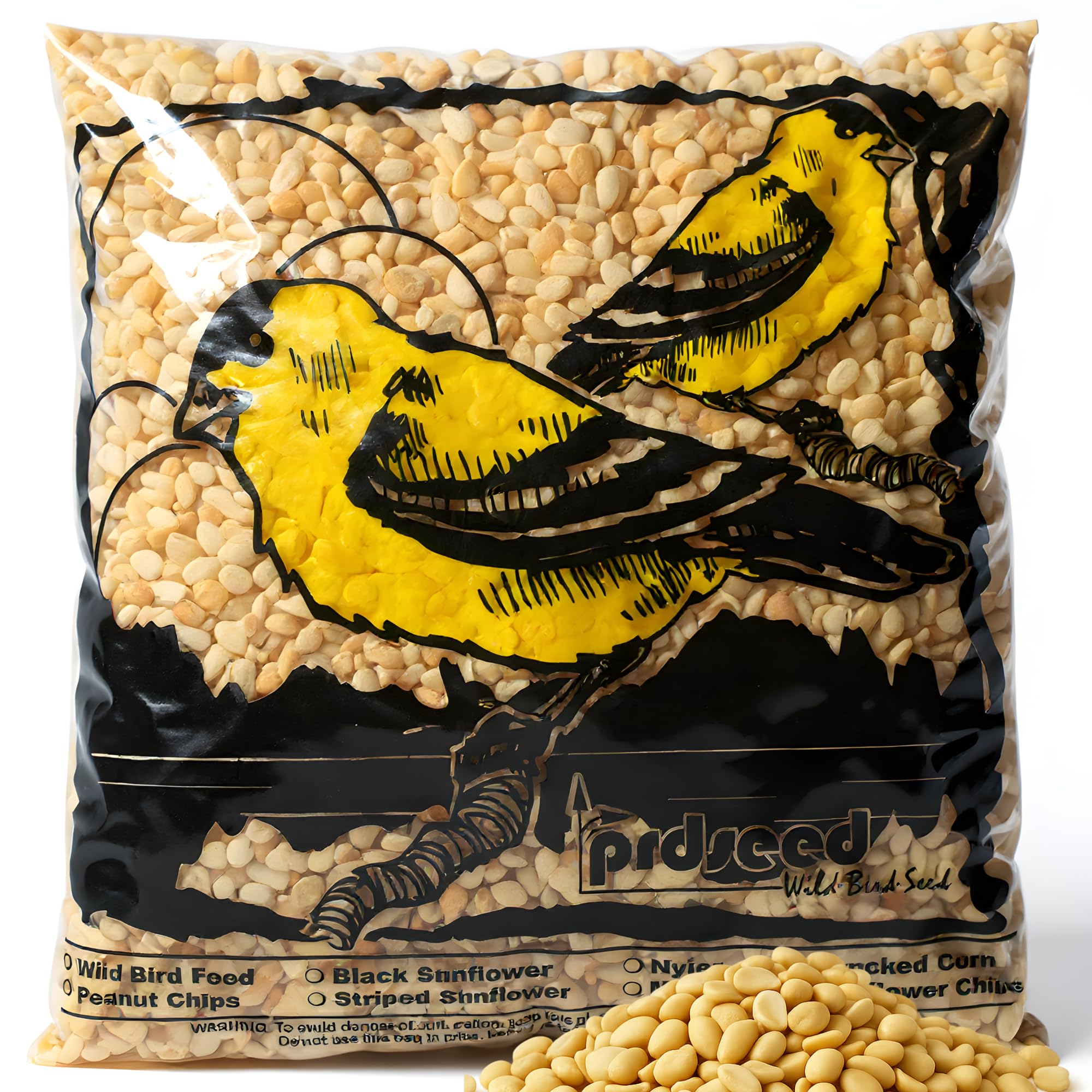
2. prdseed Fresh Shelled Peanuts for Birds & Squirrels (10 lbs)
The no-mess shelled peanut bag that jays and squirrel-proof feeders both love
If you have ever watched a jay wrestle a whole peanut off a tray and drop the husk into your flowerbed, this bag solves the cleanup problem before it starts. It is shelled, raw, and unsalted — the peanut is already out of its jacket, so there is nothing for the birds to leave behind. Owners describe the peanuts as clean and plump, with no chaff, sticks, or debris shaking out of the bag, and they stay fresh for a long stretch once opened, which matters with a 10-pound sack sitting in a hot garage.
The 10-pound format is the right middle ground for most yards. It is lighter than the 12-pound Wildlife sunflower bag, so it is easier to pour one-handed, and it feeds a squirrel-buster feeder without the constant refilling that small peanut bags require. What stands out most is the steady quality — long-time buyers reorder year after year and report the same clean, plump nuts each time. The peanuts also work well in a mesh or platform feeder, where jays, woodpeckers, and cardinals all take a share.
Shelled peanut halves: Peanut pieces of this kind run through most wide-opening feeders without jamming, and the shell-free form means you are not sweeping a patio every evening.
Costly per pound: Raw shelled peanuts are a premium-tier feeding habit — jays and squirrels go through them quickly, so a heavy-traffic yard may want two bags on the shelf.
Best if you want jays without a patio full of husks.
Think twice if: your feeder traffic is so heavy that a 10-pound bag lasts only a short run.
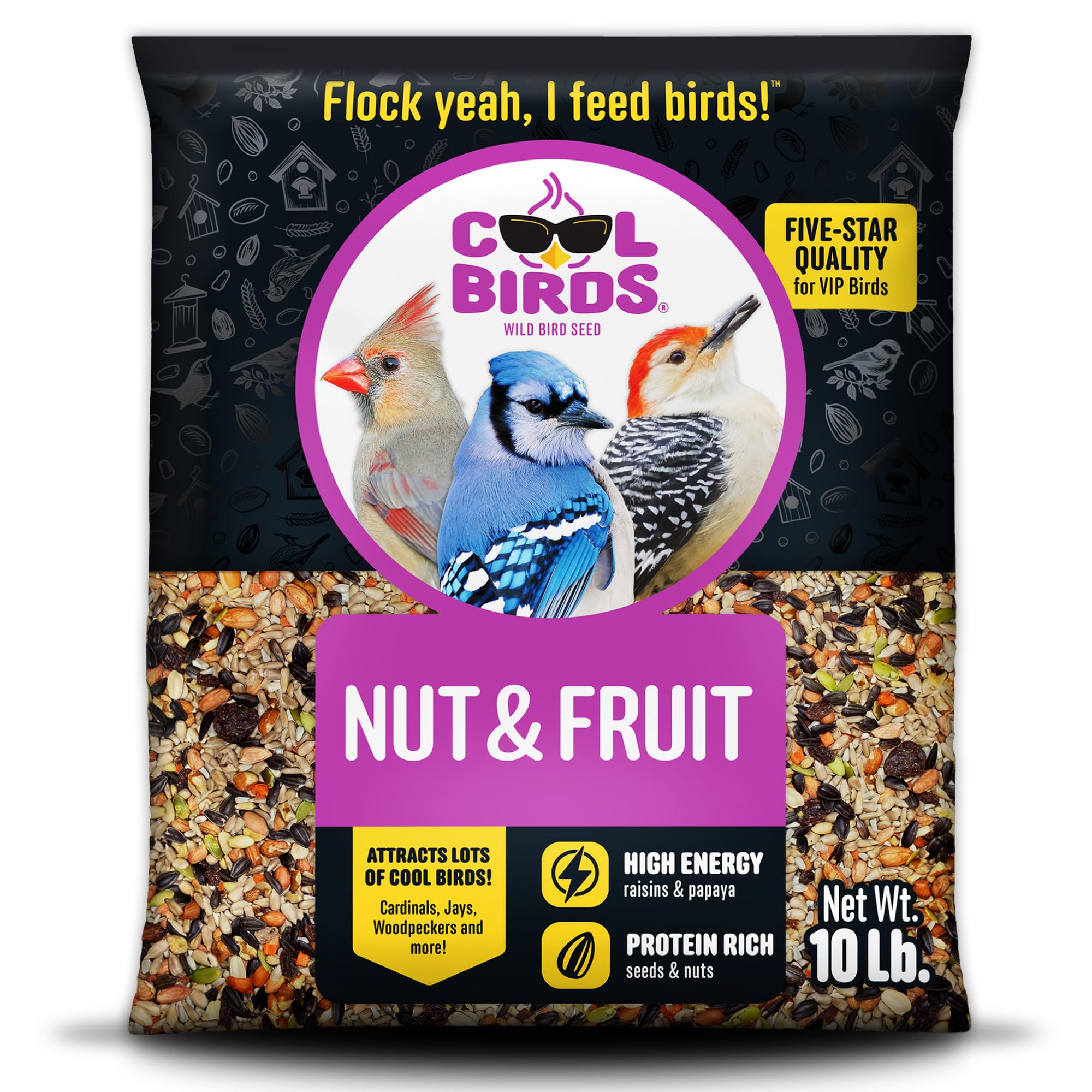
3. Cool Birds Nut & Fruit Wild Bird Seed, 10 lb
A nut-and-fruit blend built to turn a quiet tray into a busy one
This is the blend for a yard where the tray feeder has gone stale and you want a crowd. It stacks sunflower hearts, peanuts, tree nuts, raisins, and papaya in one bag — no corn, no milo, and no millet, which means almost everything in it is edible to a jay. The fruit is real, not flavoured pellets, and jays plus woodpeckers, cardinals, chickadees, and grosbeaks all work through the same mix.
What people notice first is how long it lasts. Owners who refilled a plain no-waste blend every few days report this one lasting well past a week, because there is nothing in the bag the birds toss on the ground. The trade-off is that it disappears into more than just the birds — squirrels are equally fond of the nuts, and a family of them can thin a bag fast. It runs happily in tube, tray, hopper, platform, and smart feeders, so it suits whatever you already have hanging.
Two small things to weigh before you commit. First, it is a 10-pound bag, and a couple of reviewers noted it listing lighter than some rival 15-pound bags they had used; if you feed heavily, factor that into how often you reorder. Second, the mix is rich enough that some owners blend it with a cheaper seed to stretch it, which works — jays pick out the nuts and leave the rest for smaller birds.
Go for this if: you want the widest variety of birds on one tray and do not mind feeding squirrels into the bargain.
Skip the reorder if: you are strictly feeding jays and want nothing going to the furry crowd.
4. Nature Anywhere Bird Banquet Bird Seed for Outside Feeders, 5 lbs

The five-pound bag that empties fast because the birds fight over it
Here is the honest math on a five-pound bag: it is the right size if you want to test whether a new blend works in your yard, and the wrong size if you already know it will. Owners mention feeders going from full to nearly empty in a couple of days — songbirds, doves, and cardinals working through it that quickly — so this is the bag you buy to try a no-filler mix without committing to a 12- or 16-pound sack.
It is made with no cheap filler grains, so nearly everything you pour is something a bird will eat, and the formula deliberately leaves out milo, wheat, and canary seed — the three grains jays and most backyard birds reject. That no-filler approach draws finches and cardinals well beyond jays, so if your goal is a busy yard rather than jays alone, this delivers a wider spread than a straight sunflower bag.
The catch is the pace. A busy yard can drain a five-pound bag in days, so the cost per pound runs higher than the bulk options and regular feeders will find themselves reordering often. Storage is easier, though — a small bag stays fresh in a cupboard and there is less risk of a half-used sack going stale.
Reach for this if: you want to try a filler-free blend without buying a large sack.
Look to larger bags if: your feeder is already busy and you need a stock that lasts more than a week.
5. Wagner’s 57055 Shelled Peanut Pieces for Wild Birds, 10 Pound Bag
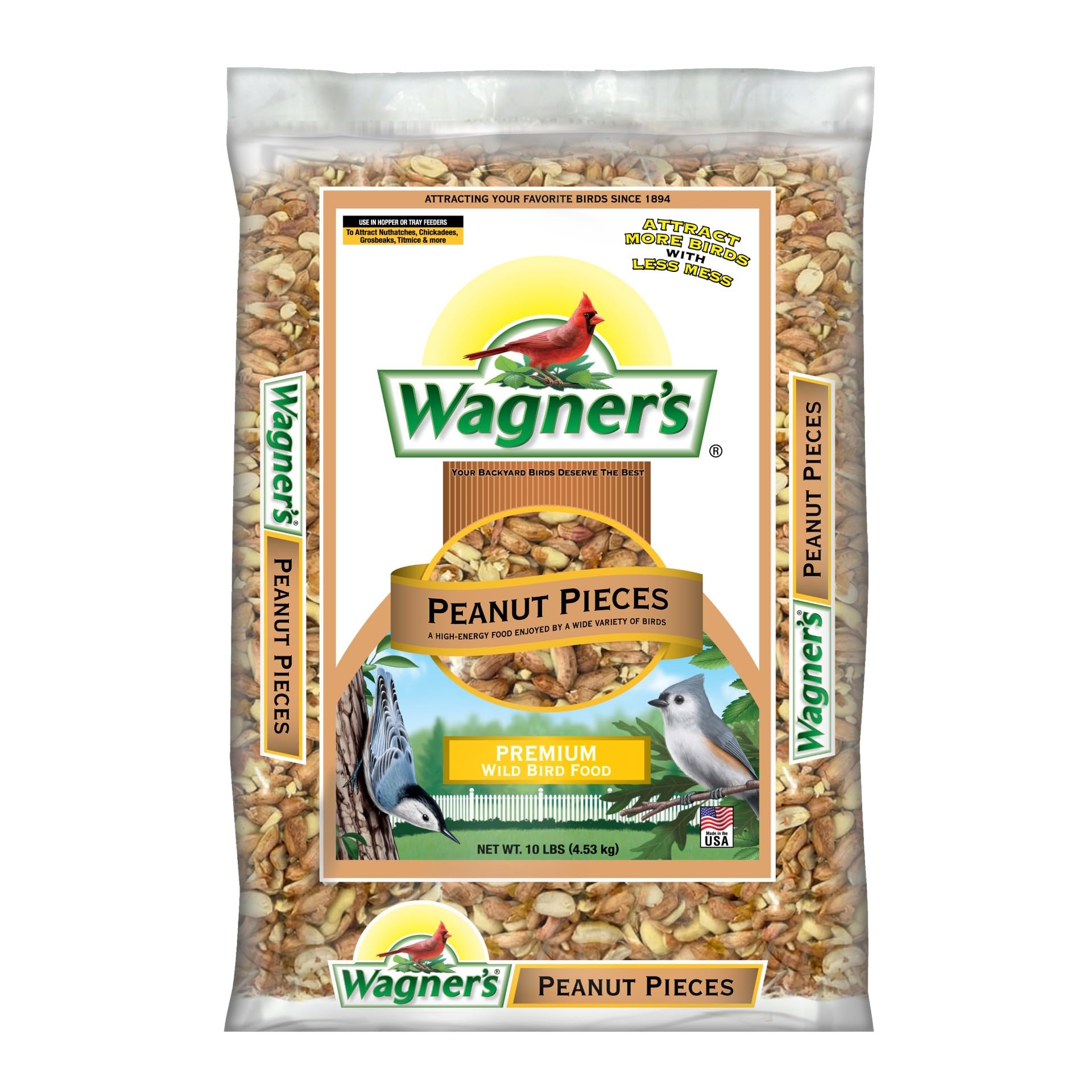
Peanut pieces sized for smaller beaks without losing the jay appeal
Shelled peanut pieces solve a specific problem: a whole peanut is a mouthful for a chickadee or a nuthatch, but broken pieces go straight down. This bag is aimed at exactly that — high-protein, high-energy peanut chunks that suit woodpeckers, chickadees, jays, and nuthatches, with no shell to clean off the ground and nothing left for the lawnmower to throw.
Jays take to it, and so do squirrels, which is worth knowing before you hang it. The wildlife in most yards queues up for these nuts — the morning routine of refilling the feeder and watching everything arrive is the part owners talk about most. Because the pieces are small and shell-free, they also flow through most tube and hopper feeders without the clogging that whole nuts can cause in narrow ports.
There is a quality variable to watch. Some bags arrive with the pieces noticeably small, and the peanut dust that shakes to the bottom of the bag is a common note — it is not a defect, just the nature of broken nuts, but it does mean the bag feels lighter in usable food than the weight suggests. The freshness is inconsistent too, with some bags arriving plump and others dried and shriveled, so it helps to buy from a seller who moves stock quickly.
Peanut pieces value: the small, shell-free pieces feed a wider range of bird sizes than whole peanuts, and the high-protein, high-energy formula matches what jays need.
Fine crumbs waste: shake the bag before pouring — the dust settles, and the good pieces are worth digging for.
Suits: yards with a mix of small and large birds sharing one feeder.
Not ideal if: you want consistent plump nuts bag after bag.
6. Desert Valley Premium Quality Raw Shelled Peanuts, 5 Pound Resealable Bag
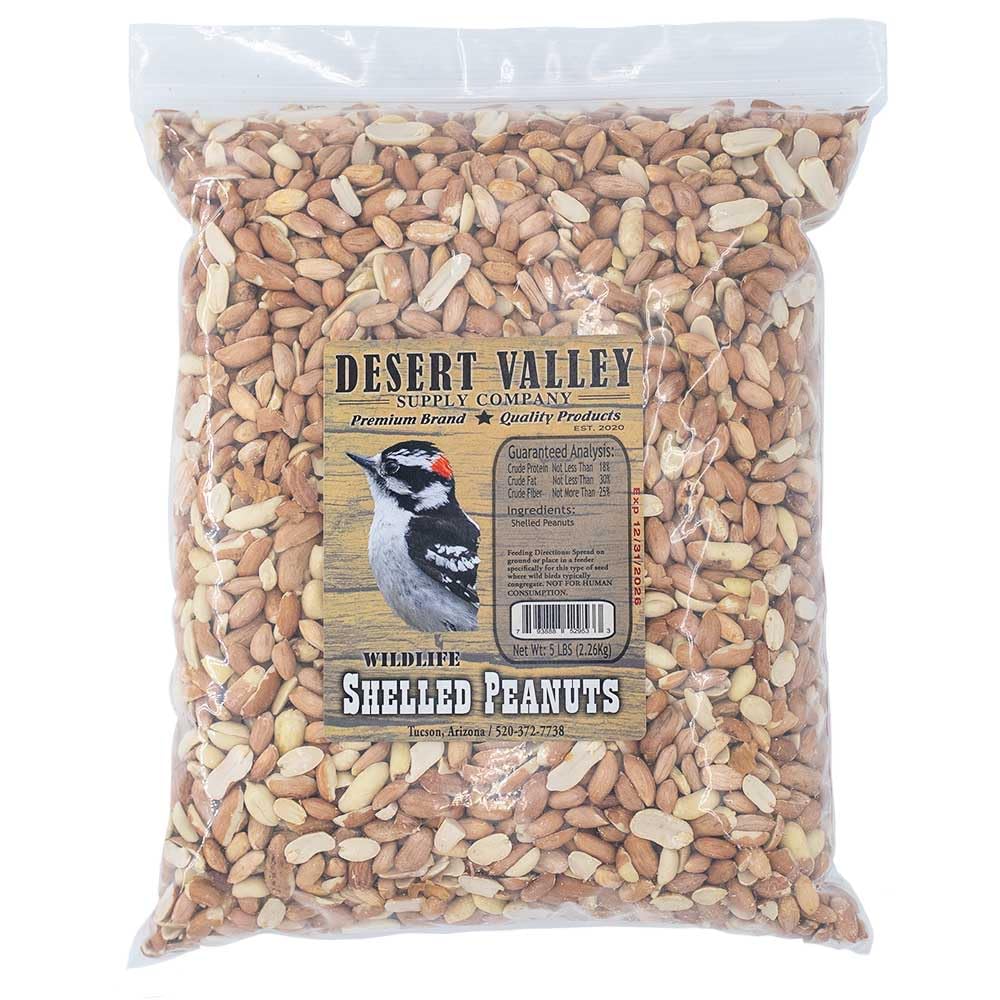
A resealable five-pound bag that treats jays to an easy, no-work snack
Jays love a peanut they do not have to shell, and this is the bag built around that. It is raw, shelled, and additive-free — no artificial colours or flavours, no added hormones — high in fat, fibre, and protein, and the whole bag is peanuts with no filler shaken through. The resealable top is the detail that matters here: a five-pound sack of nuts left open in humid air goes soft, and the zip closure keeps the contents fresh between refills.
What the jays get is an easy meal. Owners describe blue jays taking these as a treat with no work involved, and the nuts suit mesh, platform, and specialty feeders, or a scoop mixed in with a regular blend. Cardinals, nuthatches, titmice, and woodpeckers work the same bag, so a single five-pound supply covers a lot of visitors. It is a tidy option too — no chaff, sticks, or debris, and the peanuts stay contained rather than scattered.
The catch is the skins. These peanuts keep their red skins, and squirrels peel them off before eating, which leaves a mess under the feeder — a trade-off an owner who dislikes sweeping would want to know upfront. Some birds also turn their beaks up at them entirely, so if you are feeding a picky yard it is worth trying a small bag first.
Best for: jays you want to spoil with a no-shell, no-work treat in a bag that reseals.
Not for you if: red skins left under the feeder would bug you.
7. TRAILMARK NATURALS 11 LB Raw Shelled Peanuts for Squirrels, Birds and Wildlife
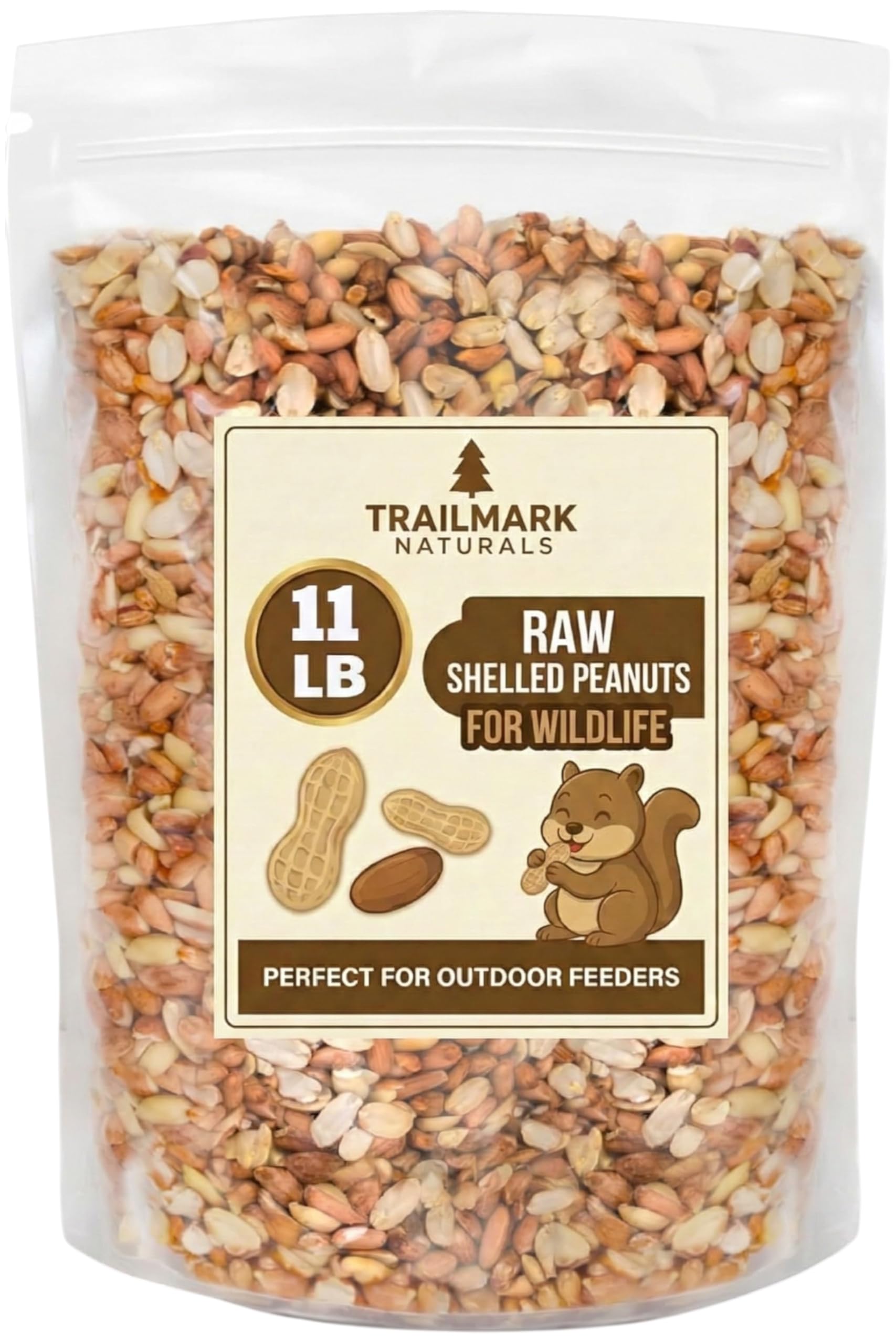
A big, inexpensive bag of shell-free nuts with one real quality question
At 11 pounds this is the largest shelled-peanut bag short of the prdseed sack, and it is aimed squarely at mixed yards — jays, crows, woodpeckers, squirrels, chipmunks, and rabbits all take these nuts. They are unroasted, unsalted, and grown in the USA, with no shells to litter the yard, and owners appreciate the sheer quantity that arrives for the tier. On pure volume it is the most generous nut supply on the list.
Which is where the honest part comes in. The quality swings between shipments — some bags arrive with large, plump peanuts, and others show up with small, hard, dried-out nuts mixed with sticks, pebbles, and the occasional bad one. That inconsistency is the most-discussed issue with this bag, and it means an occasional order lands below expectations. When it arrives right, though, it earns its place: customers note the nuts smelling fresh, with no shells to clean up and plenty to last.
If you do get a dried bag, there is a workaround owners have shared — a light roast at 350°F for 15 to 18 minutes with a touch of olive oil softens them enough that the birds return. Not something you should have to do, but a reasonable rescue for a bag that arrives below par.
Ideal for budget-minded feeders serving a whole yard of jays, squirrels, and crows from one big, shell-free bag.
Less ideal if: you want every bag to look identical and cannot tolerate the occasional small, dry batch.
8. Armstrong Wild Bird Food Royal Jubilee Jays Blend, 16 Pounds
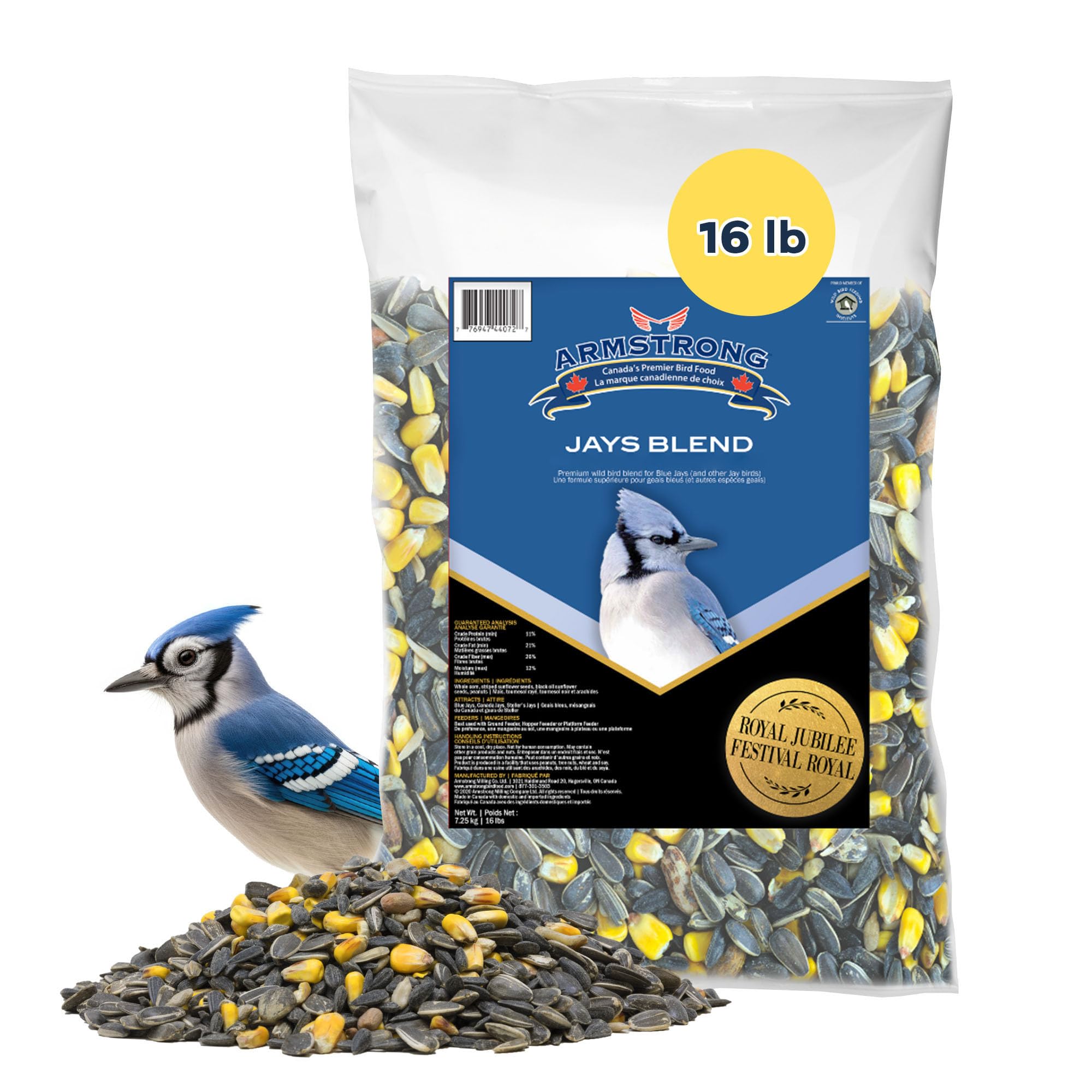
Named for the bird it targets, and it delivers on the corn and sunflower
This is one of only two bags here named specifically for jays, and the 16-pound sack loads whole corn, striped sunflower, black oil sunflower, and peanuts into one blend — the four ingredients a blue jay, Steller’s jay, gray jay, or Canada jay actually. It is packed in an airtight barrier bag and flushed with CO2 to hold freshness, which is why a 16-pound bag does not go musty on the shelf as fast as a plain paper sack.
What stands out in real yards is how fast the jays find it. Buyers with native jays nearby report the birds finding the feeder within a couple of days, and those who could not attract Steller’s jays before this blend report them becoming daily visitors once it went out. The whole corn is a particular draw — jays seem to go for it over the sunflower in the blend.
One design note to weigh. The mix is intentionally chunky rather than evenly blended, so a tray or platform feeder is the right home for it; a tube feeder will jam on the whole corn. With its smaller review base and 4.4-star standing, it is the pick for a feeder you are dedicating to jays.
Jay attracting blend: four jay-friendly ingredients in one bag, with whole corn and shell-on sunflower doing the heavy lifting.
Large birds crowd: tray or platform only — whole corn will clog the narrow ports of a tube feeder.
For the blue jay devotee feeding a single dedicated tray.
Hold off if: your setup is a tube feeder that cannot take whole corn and striped sunflower.
9. Armstrong Wild Bird Food All Season Bird Seed Blend, 40 Pounds
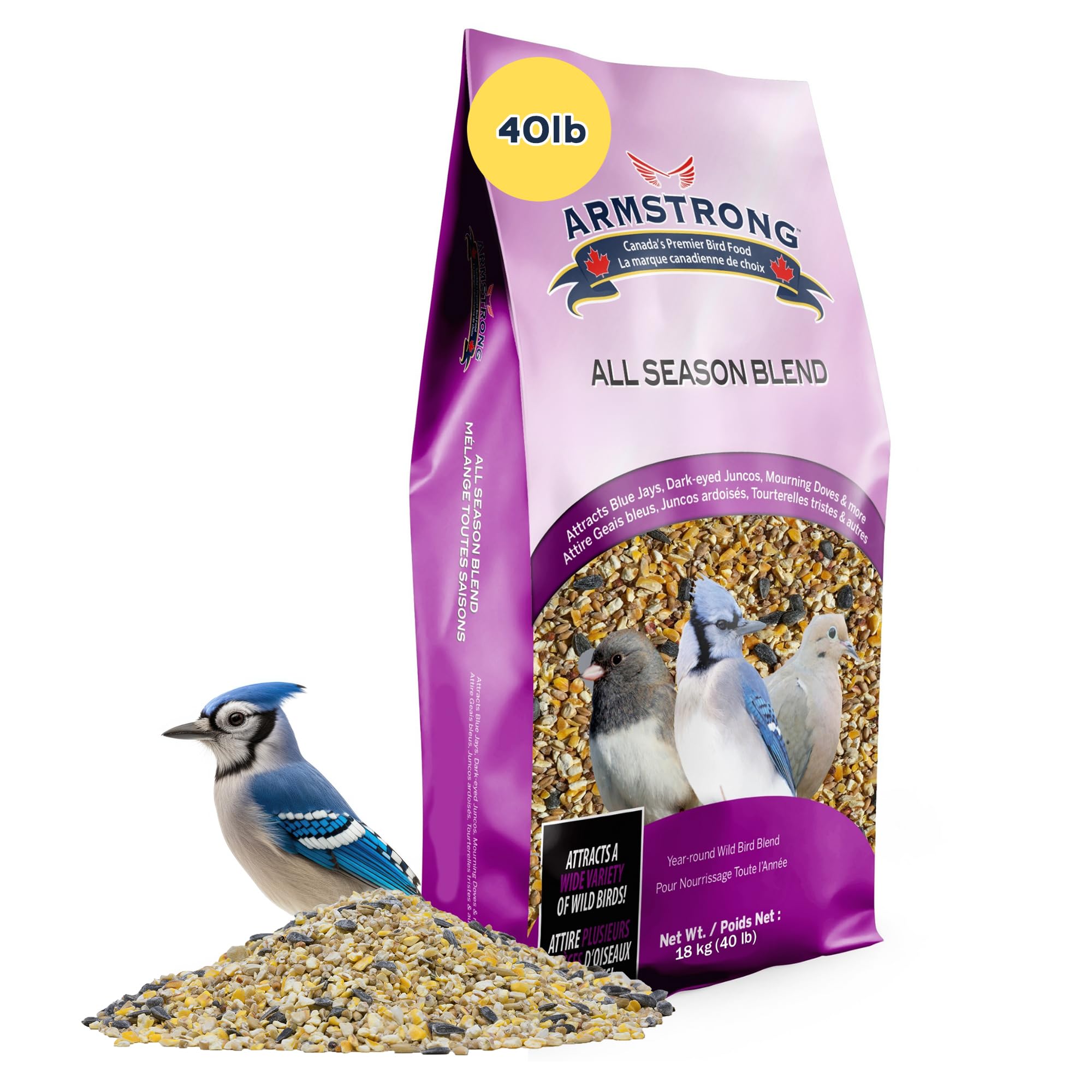
The 40-pound general blend that feeds a whole yard on a budget
This is the bulk bag — 40 pounds of cut corn, wheat, red milo, white millet, black oil sunflower, and red millet, packed in an airtight barrier bag and CO2 flushed for freshness. It is a general feeding blend rather than a jay-specific one, aimed at the widest spread of backyard birds: blue jays, mourning doves, dark-eyed juncos, black-capped chickadees, northern cardinals, house sparrows, and Steller’s jays all appear on its list. If you feed heavily and want a large, economical supply, this is the one that fills the hopper with the least fuss and the biggest volume.
The caution is in the mix itself. It carries millet, wheat, and milo — the filler grains jays and many birds reject — so a jay will dig the sunflower and corn out and leave the rest, which some owners work around by blending in a richer seed to stretch the bag. The results genuinely split: buyers describe good quality seed with little dust or broken casings, while others find the filler content high and report birds ignoring it. It is a fair pick for a mixed yard and a poor one if jays are your only interest.
The other practical note is storage. A 40-pound sack is a lot of seed to keep dry, so an airtight bin matters as much as the bag. Buyers feeding a full yard describe birds going through the mix steadily, which is the whole point of a size this big.
Worth it if: you feed a large mixed yard and want the biggest, most economical bag on the shelf.
Rethink it if: jays are your focus — the millet, wheat, and milo in this blend will go largely uneaten.
Understanding the Specs
Bag Size and Weight
Bag size is the fastest way to compare seed on a per-pound basis, and it ranges widely here, from 5 pounds up to 40 pounds. A 5-pound bag suits testing a new blend or feeding a light yard; a 40-pound sack is for heavy traffic but demands airtight storage. Nuts and fruit mixes go stale faster than plain sunflower, so the bigger the bag, the more a resealable or barrier-sealed closure matters. If a bag is not resealable, plan on a bin from day one.
Seed Form and Filler Content
Form is the second big decision. Whole peanuts and shell-on sunflower give jays something to crack and hold, which draws them strongly but leaves husks on the ground. Shelled peanuts and nut pieces are no-mess and flow through most feeders, at a higher cost per pound. Filler grains — red milo, wheat, white millet, and red millet — are what jays leave behind, so a blend loaded with them feeds a broader yard but wastes a share of the bag on birds you did not invite. Match the form to your feeder: whole corn and striped sunflower need a tray or platform, black oil sunflower and shelled nuts work in a tube.
FAQ
What bird seed actually attracts blue jays to a feeder?
Will blue jays eat sunflower seeds or peanuts more readily?
What feeder is best for whole peanuts and whole corn?
How long does an open bag of bird seed stay fresh?
Is shelled or in-shell peanut better for jays?
Do these seed mixes attract squirrels as well as jays?
Can I mix a premium blend with a cheaper seed to save money?
Why do some bags of shelled peanuts arrive dried and shriveled?
Is a 40-pound bag worth it for a small yard?
What time of year do blue jays need the most seed?
Final Thoughts: The Verdict
For most yards, the bird seed for blue jays winner is the Wildlife Black Oil Sunflower Seeds, because clean, fresh black oil sunflower is the seed jays can crack easily and the one that keeps a feeder busy with finches and cardinals too. If you want the no-mess route that jays and squirrel-busters both love, grab the prdseed Fresh Shelled Peanuts, shelled and unsalted, with no husks to sweep. And if your goal is a dedicated jay tray, the Armstrong Royal Jubilee Jays Blend is the one to reach for, with whole corn, striped sunflower, black oil sunflower, and peanuts in one airtight bag. Whichever you choose, start with a small bag, watch which grains your jays actually eat, and size up from there — a jay never lies about what is in the feeder.
How We Picked
We do not accept paid placement. Every pick is matched to a real buyer and a real use-case; we do not hands-on test units.
Sources & Methodology
Specifications: manufacturer listings and product documentation. Review insights: verified customer reviews, as of September 2026. Pricing: not shown on this page (it changes often); check the current price via the retailer link.
As an Amazon Associate, Gadgets Feed earns from qualifying purchases. This does not affect which products we feature.