
Our readers keep the lights on and my morning glass full of iced black tea. As an Amazon Associate, I earn from qualifying purchases.
Specs are compiled from manufacturer listings and verified buyer reviews and can change over time — please confirm the key details on the product page before buying.
A 3000 watt amp monoblock is one job and one job only: push your subwoofers hard without cooking itself or draining your wallet. The tricky part is that “3000 watts” means very different things from brand to brand. Some amps advertise 3000 watts as a peak number that lasts a split second, while others rate it as RMS — the real, continuous power the amp can hand your subs hour after hour. This guide sorts that out for you.
I’m Min — the founder and writer behind Gadgets Feed. This guide is built by comparing the manufacturers’ published specifications and the patterns across verified customer reviews, so you get each pick’s real strengths and trade-offs instead of marketing spin.
One heads-up before you scroll: these picks use flexible matching, so a couple of amps here are rated a bit above or below a strict 3000 watts — the closest same-class monoblock that serves the same purpose. Below you’ll find the real-world amps worth your money and the specs that actually matter on the road. This guide breaks down the 3000 watt amp monoblock picks that deliver true power without frying your wiring or your budget.
Our Picks at a Glance


How To Choose The Best 3000 Watt Amp Monoblock
Buying a 3000-watt monoblock is really about matching the amp to your subs and your car’s electrical system, not just grabbing the biggest number. Get those two things right and almost any amp on this list will pound. Get them wrong and even a great amp will shut down, run hot, or sound flat.
RMS Power Is The Number That Counts
RMS stands for “root mean square” — the continuous power an amp can deliver all day, not just for a split second. Peak wattage is a brief spike that tells you almost nothing about how the amp performs in daily driving. When you see a 3000-watt amp priced near a 750-watt amp, the low one is usually quoting its peak number while the high one is quoting RMS. Always compare RMS to RMS.
Impedance And Why 1 Ohm Matters
Impedance is the electrical resistance your subwoofers present to the amp, measured in ohms. Lower impedance lets the amp flow more power — that’s why a 1-ohm-stable amp makes more watts at 1 ohm than at 2 or 4 ohms. Just know that running at 1 ohm draws more current, so your wiring, fuse, and battery need to keep up.
Your Electrical System Is Half The Build
A true 3000-watt amp pulls serious current. If your power wire is too thin or your grounds are weak, the amp protects itself and cuts out on the loudest notes. Thick oxygen-free copper wire, a properly rated fuse, and a healthy battery or alternator are not optional here — they’re what lets the amp deliver its rated power.
Quick Comparison
| Model | Best For | Rated Power | Channels | Impedance | Amazon |
|---|---|---|---|---|---|
| Taramps Smart 3 Bass★ Best Overall | Deep, boomy sub bass | 3000W RMS | 1 | 0.5–2 Ohm | Amazon |
| Rockville dB13Best Value | Budget sub power | 3000W peak / 750W RMS | 1 | 2 Ohm | Amazon |
| Taramps HD 3000Full-Range Flexibility | Full-range flexibility | 3000W RMS | 1 | 1 Ohm | Amazon |
| SounDigital EVO6 3000.1 | Tight-space mids and highs | 3000W RMS | 1 | 1 Ohm | Amazon |
| PRV Audio QS3000 | Pro-audio builds | 3000W RMS | 1 | 1 Ohm | Amazon |
| Stetsom Bravo Attack 3000 | Tunable bass control | 3000W RMS | 1 | 1 Ohm | Amazon |
| Timpano TPT-BASS3000 | Compact bass applications | 3000W RMS | 1 | 1 Ohm | Amazon |
| Hifonics Zeus ZXX 3200W | Max power per dollar | 3200W max | 1 | 1 Ohm | Amazon |
| Hifonics ZG-3200.1D Zeus Gamma | Cool-running heavy builds | 3200W max | 1 | 1 Ohm | Amazon |
In‑Depth Reviews
1. Taramps Smart 3 Bass 3000 Watts RMS Monoblock
Our pick — 4.5★ from 450+ verified ratings; the strongest balance of quality and price.
The sub-bass specialist that digs down past 30 Hz and keeps its cool doing it
You want deep, heavy bass, not tight punch — and this amp keeps coming up for that. Taramps calls its trick Multi-Impedance technology (one amp that runs anywhere from 0.5 to 2 ohms), so you don’t buy a new amp just because you rewire your subs. Buyers report it delivers strong performance for the price and doesn’t overheat on a proper 1-ohm setup. At 9.37 x 9.45 x 2.8 inches and about 6.6 pounds, it needs real space — compare that to the Rockville dB13’s 3 x 3 x 3 inch chassis.
Know the bass tuning catch before you buy. Owners mention it as “sluggish/boomy” compared to punchier amps in the 40–80Hz range, and it won’t play loud above roughly 60Hz even with the crossover set high — so this is a subwoofer amp, not a full-range amp for your door speakers. On a stock electrical system, you may need a bigger battery and a line driver before it sounds right. Wire gauge also matters: the power and ground terminals take a minimum of 4 AWG and a maximum of 1/0 AWG, the speaker output is 9 AWG, the remote is 18 AWG, and the fuse is 200A. Skimping on copper here is the fastest way to a warm wire and a shutdown.
Set it up correctly and it earns its reputation. The amp includes a crossover, bass boost, input/output settings, and a precise level control, plus protection against shorted output, high or low voltage, and thermal problems with an LED indicator system. It ships with the amp and an M1 LED monitor. It runs between 9 and 17 volts DC and mounts on any flat surface. Compared with the SounDigital EVO6 below, this is the bass-first choice where that one leans into mids and highs — different tools, different jobs.
Where It Wins
- True 3000W RMS rating that owners say it meets or beats
- Multi-impedance 0.5–2 Ohm flexibility means it grows with your build
- Stays cool at 1 ohm, which is the whole ballgame in daily use
- Crossover, bass boost, level control, and full protection circuitry built in
What To Know First
- Bass-forward tuning — boomy and deep, not tight and punchy
- Won’t play loud above about 60Hz, so not a full-range option
- Wants quality copper wiring and a healthy electrical system to hit its rating
Grab this one if: you’re chasing deep, window-rattling sub bass at 1 ohm and your wiring and battery are ready for it.
Think twice if: you need one amp driving mids and highs too — the tune here stays low.
2. Rockville dB13 Class D Mono Car Amplifier
The budget build that shakes a 2-ohm setup for the price of a tank of gas
Here’s the honest math on this one: Rockville rates the dB13 at 3000W peak and 750W RMS at 2 ohms, with 450W RMS at 4 ohms. Peak is the brief spike; RMS is what it actually feeds your subs continuously. So if you see a 3000-watt monoblock priced like a small amp, this is why — it’s the peak number talking. For a budget build pushing one or two subwoofers though, a 750W RMS Class D amp with 2-ohm stability is genuinely plenty, and the reviews back that up. The build quality is the most-praised trait here, and owners walking the gain up to near full report plenty of clean thump with no heat trouble.
What you give up at this level is setup help and headroom. The manual is thin, some buyers wish it walked through the install in more detail, and it’s not the true 2000W-plus some listings imply. If you’re pushing a big multi-sub setup at low impedance, look at the Taramps amps above instead. For one or two subs run at 2 ohms, this is a solid, compact, cool-running amp that holds up. It also keeps things simple for anyone wiring their first system.
The control set is more complete than the price suggests. It has an adjustable 12 dB/octave crossover, a subsonic filter that trims inaudible low frequencies from 15Hz to 55Hz, and a 12 dB bass equalizer. There’s a remote dashboard subwoofer control so you can dial the bass from the driver’s seat, an LED-illuminated logo, and RCA line inputs and outputs. Protection is IC-controlled, watching for overheating, voltage problems, and shorts. It runs up to 14.4 volts DC and takes an 80A Maxi fuse. At 3 x 3 x 3 inches and 8 pounds, it stays compact on the install — and it asked its subs for more thump once the wiring moved from 4 to 2 ohms. It drives boat and car sub setups alike.
The budget verdict: for a first real subwoofer amp or an everyday driver build, the dB13 covers 2-ohm duty with crossover, subsonic filter, and remote knob all included.
skip it if: you’re chasing a rock-solid continuous 3000 watts — this one is a 750W RMS amp wearing a peak-number badge.
Reach for this if: you’re on a budget and running one or two subs at 2 ohms where 750W RMS covers your bass just fine.
Look elsewhere if: your build needs genuine 3000W RMS output or detailed install guidance from the start.
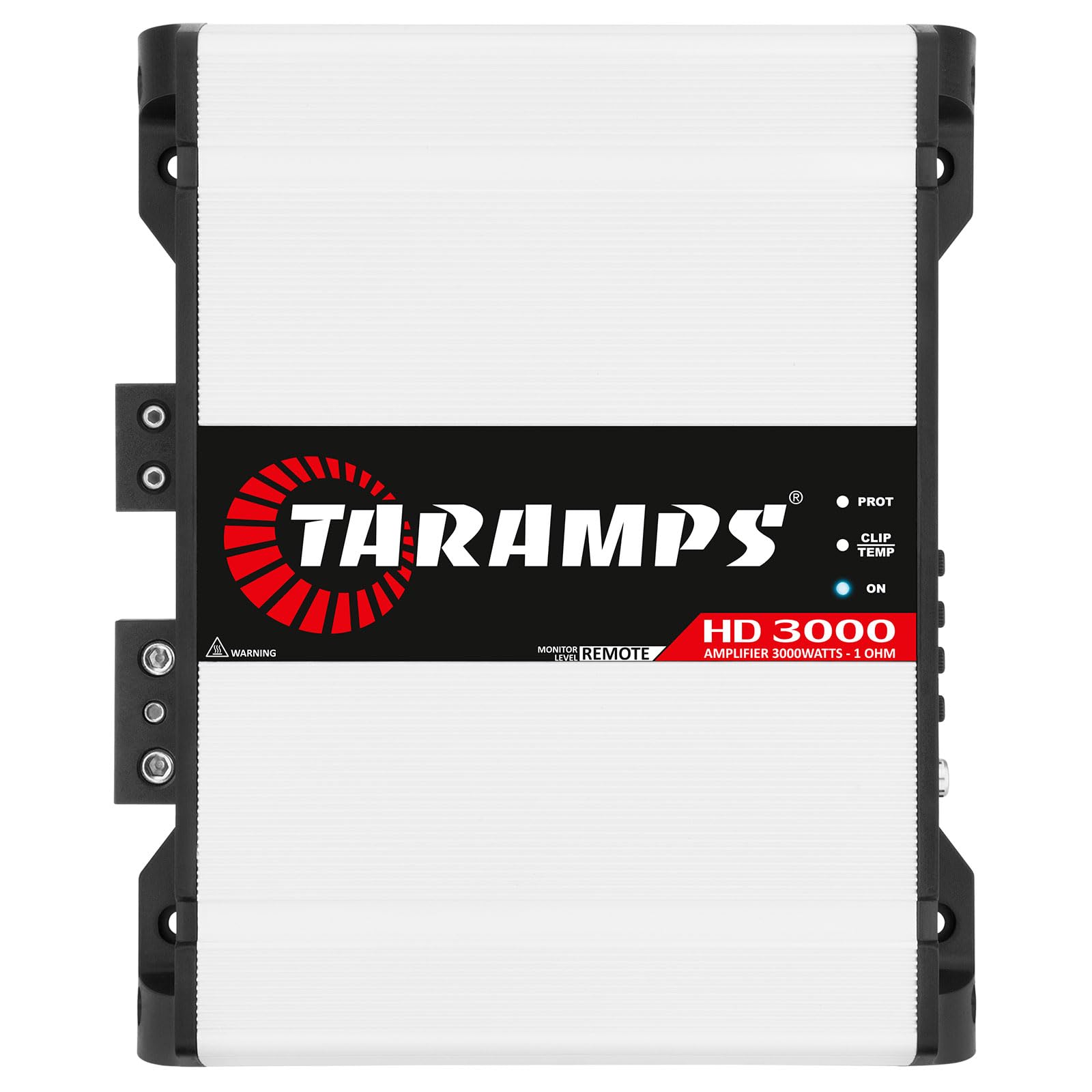
3. Taramps HD 3000 1 Ohm 3000W RMS Full Range Monoblock
One monoblock that can run your subs, your mids, or your tweeters
Most monoblocks only want to see subwoofers. This Taramps HD line is a Digital Full Range amp, which means it operates at 1, 2, or 4 ohms and will drive subwoofers, bass, mid-bass, mid-range, 6×9″ speakers, drivers, or tweeters. It’s still a mono amp with a single RCA input, so you’re feeding one channel — but the frequency range it handles is wide, from 10Hz to 20KHz. If you want one amp with real flexibility to build around, that window is the reason to pick it over a bass-only amp. At 7 x 9 x 3 inches and 5 pounds it’s noticeably lighter than the Rockville dB13’s 8-pound chassis. Rated at 3000 watts RMS with a 150A fuse.
Where it gets mixed is longevity under abuse. Quality and power are what people rave about — plenty drive it hard and love the tight bass response. But reliability splits, with some units failing after extended full-tilt use. The pattern from long-term owners is that treating it as a machine to respect, not a toy to redline constantly, is what keeps it alive. Run it flat-out at 75% of the time and a protection light may eventually come on. Use it within its intended envelope and it delivers.
Setup controls are complete: crossovers, input settings, and gain adjustment, plus the variable high-pass, low-pass, and bass boost tuning. The power and ground terminals take 4 AWG, the output is 9 AWG, the remote is 18 AWG, and the fuse is 150A. It runs between 9 and 16 volts DC and mounts to a flat surface. If you’ve been running a smaller mono amp, this is a meaningful step up in the bass you feel. It now also works with a Monitor Level Remote for on-the-fly level tweaks.
The full-range angle: one amp handling subs through tweeters means fewer boxes in your build and simpler wiring.
Treat it gently: run within its window rather than flat-out forever, and this amp holds up like the workhorse it’s meant to be.
Pick this if: you want a single monoblock that can drive subwoofers, mid-bass, or tweeters and value tuning flexibility over a bass-only design.
Pass if: you plan to run it at full tilt constantly — this one rewards restraint.
4. SounDigital EVO6 3000.1 Class D Monoblock
A tiny full-range amp that fits where bigger monoblocks won’t
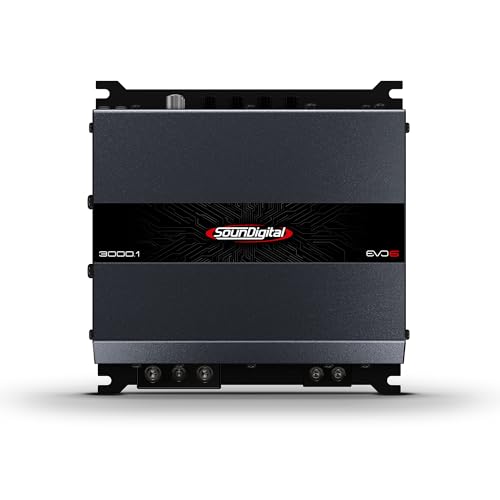
This one is a specialist, and knowing its specialty saves you a bad purchase. The SounDigital EVO6 3000.1 is a 3000W RMS Class D monoblock, 1-ohm stable, with built-in low-pass and high-pass filters, bass boost, and clip and power-on LED indicators. Its size is the headline: 5.93 x 5.81 x 2.39 inches and just 1.35 kg, making it one of the smallest amps on this list. Run two of them for mids and highs, as some builders do, and you’ve got serious output for very little dash space.
Fairly stated, it’s not the bass monster its wattage suggests. Some buyers felt it came up thin on a bass-first build with dual 12s, even after heavy EQ work — the low-end weight just isn’t there the way it is with a sub-focused amp like the Taramps Smart 3 Bass. It also shut down on deep bass notes for some users even with healthy voltage. Still, the price is strong for the power and footprint you get.
Think of it as a compact full-range power source rather than a subwoofer amp. It’s at its best driving mids and highs where clean, controllable output matters more than window-shaking depth. Built in aluminum and rated at 3000 watts output, it makes a smart second amp in a multi-amp system. If your sub stage is already handled and you need clean power in tight quarters, this fills the gap without eating your trunk. The full-range design and small footprint mean it can go places a bigger chassis simply cannot.
Best fit: a compact multi-amp build where this drives mids and highs and something else handles sub duty.
Not the one for: a single-amp bass build — the low-end output stops short of what sub-first buyers expect.
5. PRV Audio QS3000 1 Ohm 3000 Watt Amp

A workhorse built for loud, full-range pro-audio speaker systems
If you’re running pro-audio speakers rather than a single sub, this is the amp built with you in mind. The PRV QS3000 is rated 3000 Watts TRUE RMS, certified at full-range output, using Digital Class D Brazilian technology aimed at mids and highs. It’s a single-channel 3000-watt amp stable at 1 ohm, so you can wire multiple speakers and split the power across them. Rated 3000 watts continuous output, and owners describe it as far exceeding expectations, though it pushes more than 2k RMS in real setups. One driver runs mid-bass speakers on it rather than a dedicated sub.
The reliability picture is mixed, honestly. Some setups run it as a daily workhorse without complaint, while others report issues — that split shows up in the reviews. Sound quality draws both praise and criticism depending on the build and setup. Treat it as a capable amp that rewards a clean install and proper tuning rather than one to abuse.
Its Class D design draws less current from your electrical system, and its 7.30 x 8.66 x 3.00-inch chassis fits tight spaces. The 4-way protection circuitry covers high voltage, low voltage, shortages, and current, with power, protection, and clip LEDs on the top panel. It runs on a minimum supply voltage of 9 volts DC and mounts to a flat surface, and it meets CE, FCC, RoHS, and WEEE specs. Buttons here are built to run speakers, not a lone sub. If loud, full-range sound is the plan, the QS3000 is built for exactly that.
Why Pro Builders Like It
- 3000 Watts TRUE RMS certified at full-range output
- 1-ohm stable for wiring multiple speakers off one amp
- Engineered for efficiency off a vehicle’s electrical system
- 4-way protection with power, protection, and clip LEDs
The Realistic Expectations
- Reliability draws a mix of praise and issues depending on the build
- Sound quality verdicts vary by setup and tuning
- Best for pro-audio speakers, not a single-sub bass build
Right for you if: you’re powering multiple pro-audio speakers and want flexible 1-ohm wiring with true full-range output.
Not for you if: your goal is a conventional single-subwoofer bass system.
6. Stetsom Bravo Attack 3000 1 Ohm Mono Amplifier

The tuning-heavy amp for anyone who wants to dial in every frequency by hand
The Bravo Attack 3000 wins on control, not just power. It’s rated 3000 watts RMS at 12.6 volts and 3700 watts RMS peak at 14.4 volts at 1 ohm — a single-channel monoblock (one channel for your sub), Mosfet Class D (a chip design that runs cool and efficient), full-range stable at 1 ohm. what separates it is the tuning spread: a crossover with high-pass from 10Hz to 700Hz and low-pass from 90Hz to 20KHz, bass boost frequency control from 30Hz to 60Hz, and separate mid-bass boost adjustable from 0 to +12 dB at 270Hz and mid-high boost from 0 to +12 dB at 2KHz. There’s even a Flat mode that disables every onboard adjustment so you tune entirely from your source unit.
Build quality is what earns the most confidence here, with solid power delivery right behind it. Running a pair of subwoofers hard, the amp has the output to drive them the way they want. At its price, it delivers 3000W RMS at 1 ohm plus mid-bass and mid-high boost dials. The reliability record is more mixed — a small number report units that stopped working or shut down within weeks — so treat it as a capable amp that still deserves a clean, properly fused install. Setup is straightforward enough that buyers describe getting it dialed quickly.
Protection and cooling are serious: Smart Coolers keep ventilation up, and the protection system uses LED alerts that blink in different patterns to tell you what’s wrong. Connections are 4 AWG for power and ground, 18 AWG remote, 8 AWG speaker, with a 150A fuse. It runs between 9 and 16 volts DC and mounts flat. If tuning flexibility is what you’re after, the frequency dials here give you more hands-on control than nearly anything else in this price range.
Worth it if: you want deep hands-on tuning — mid-bass and mid-high boost plus a Flat mode — and true 1-ohm power.
Consider alternatives if: you’d rather not think about a mixed reliability picture or fine-tune five separate frequency controls.
7. Timpano TPT-BASS3000 1 Ohm Monoblock Car Amp
A bass-dedicated monoblock with quiet cooling and hands-off tuning built in
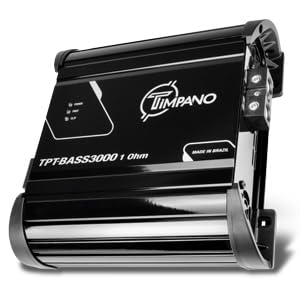
You get big power without a big box and a screaming fan. The Timpano TPT-BASS3000 is a 3000-watt RMS monoblock (one channel for your sub) designed purely for bass, and it wins on efficiency and quiet. Smart and Silent Coolers keep the amp running cool without adding fan noise to your listening. The digital full-bridge Class D design (a chip layout that runs cool and efficient) uses a high-speed mosfet power supply to pack that output into a smaller heat sink — the amp measures 9.36 inches deep, 9.03 inches wide, and 3.05 inches high, so it’s a footprint you can plan around. It runs from 9 to 17 volts DC and mounts freestanding.
You don’t need an external crossover or DSP (a digital sound processor) — the tuning is handled onboard. There’s a subsonic filter adjustable from 8 to 40Hz to strip the inaudible lows that rob your subs of punch and waste power, a low-pass filter from 30 to 250Hz to send only bass to your subwoofers, bass boost at your chosen frequency up to +10 dB, and a variable gain control. Heavy-duty power and speaker terminals take the wires a bass amp this size needs. The top panel carries power, clipping, and protection LEDs. Its 4-way protection circuitry covers high voltage, low voltage, shortages, and current.
With two American Bass subs on it, “simply great output” and an amp that ranks with the best owners have used — that’s the standard verdict it draws. It’s the newest amp here, so the confidence rests on its design and owner impressions rather than years of reviews. For a bass-focused build that wants clean cooling and dialed-in onboard controls without extra gear, this fits neatly.
Bass-only, but done right: the subsonic filter and 30–250Hz low-pass make it simple to tune for your box without adding a DSP.
Worth noting: it’s earlier on the market than the others here, so you’re leaning on design quality more than a decade of reviews.
Suits you if: you want a bass-dedicated monoblock with quiet cooling and subsonic and low-pass tuning you can set once onboard.
Maybe not if: you’d rather buy a model with a long, well-established track record behind it.
8. Hifonics Zeus ZXX 3200W Class D Monoblock
Strip the badge off and this is a big, cheap 1-ohm sub driver that just works
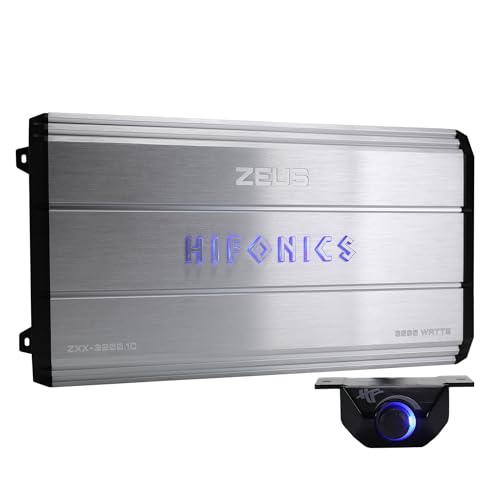
Hifonics built its name on giving you serious output without asking serious money, and the Zeus ZXX 3200W carries that flag. It’s a single-channel Class D mono amp rated at 3200 watts of max power at 1 ohm, 1600 watts at 2 ohms, and 800 watts at 4 ohms. Designed to drive subwoofers with the included remote, it runs a low-noise preamp circuit so the low-voltage signal from your head unit reaches the amp with minimal distortion. The nickel-plated inputs resist corrosion and pass a clean signal. At 13.3 pounds it’s the heaviest amp here, which you’d expect from a rugged, heat-sinked mono chassis. Customers note it hits hard for the money, with 3200W max at 1 ohm for well under the true-RMS amps here.
What makes it a favorite is how hard it hits for the money. Pushing two subs with the gain up around 90%, reviewers point out it simply never cuts out — never failed on them. That reliability under load is the whole point of a mono amp, and the design has proven it over years. The value story is real: plenty of drivers run stock electrical with upgraded wiring and still get strong, clean bass. There’s a rare report of a unit overheating in extreme use, so give it airflow and mount it where it sheds heat, and it’ll do its job. Good sound and cool running under normal use are the pattern.
Connection is simple. The Class D mono circuit with a bass knob remote and variable crossovers keeps the tuning straightforward — set your gain, set the crossover, park the remote, and drive. It’s 1-ohm stable for subwoofer systems, and it runs off up to 6 volts max supply from your source. If you want maximum watts per dollar from a proven name, this is the pick. It’s been on the market for years with a long record of verified owner reviews.
Why Drivers Trust It
- 3200W max at 1 ohm, 1600W at 2 ohms, 800W at 4 ohms
- Runs cool and won’t cut out even with gain near 90%
- Low-noise preamp and nickel-plated inputs keep the signal clean
- Remote bass knob and variable crossovers keep tuning simple
Worth Knowing
- The heaviest amp here at 13.3 pounds — plan mounting space
- Extreme full-throttle use has been linked to an isolated heat report
- Max-power rating, so weigh it against true-RMS amps before comparing watts
Grab it if: you want a proven, cool-running 1-ohm mono amp that hits hard without costing a fortune.
Skip if: you’re chasing the lowest total cost with the highest continuous output — compare the true-RMS amps above first.
9. Hifonics ZG-3200.1D Zeus Gamma Monoblock
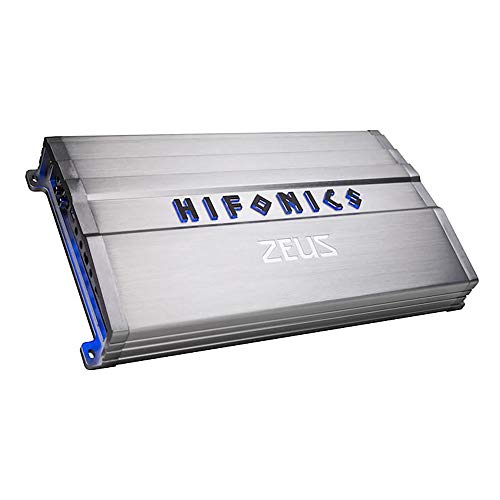
A cool-running Zeus with a full aluminum heat sink and dials you can read in the dark
The Zeus Gamma is the big brother in the Hifonics line here, and it’s the one to consider if you value output you can trust over years. This 3200-watt monoblock uses Simpatico Coil Design — that’s Hifonics’ term for the way its dual-coil PWM power supply maintains steady voltage — paired with a PWM MOSFET power supply for stable output. It’s a Class D single-channel amp rated 3200 watts, and the Class D topology means high efficiency and low heat generation. Power is quoted at 3200 watts max at 1 ohm, 1600 watts at 2 ohms, and 800 watts at 4 ohms.
The details that make it easy to live with are the connect-heavy ones. It takes both RCA and high-level inputs, so it slots into factory or aftermarket systems without headaches. The nickel-plated, heat-resistant RCA inputs use hex screw terminals for tight, corrosion-resistant connections, and the angled power, ground, and speaker terminals keep your wiring tidy and accessible. A wired bass remote lets you adjust bass from anywhere in the car, and RCA outputs let you daisy-chain additional amplifiers as your system grows. LED system protection circuitry watches overload and speaker shorts with indicators on the end panel.
Running a single 12 on it, it never gets hot — a common theme with this amp — and the aluminum heat sink holds up even when wall-mounted with rivnuts in a truck. The side dials light up so you can tweak them in a dark cabin. Buyers point to the aluminum heat sink and hex-screw terminals as the build quality that wins them over. One caveat to weigh: the lowest notes are where it’s least happy, so if you live in the 20–28Hz region of bass you’ll feel a ceiling there, and one owner felt the size and output fell short of their expectations. Backed by 4-way protection, this is the Hifonics pick for a serious, sustained build.
Choose this if: you’re building a long-term system with daisy-chained amps and want cool running plus easy factory-or-aftermarket connection.
Look elsewhere if: your build revolves around the very lowest sub-bass frequencies where this amp feels its limits.
Understanding the Specs
RMS vs Peak Wattage
RMS is the continuous power an amp can deliver steadily — think of it as the number that decides how loud your subs really play. Peak is a brief spike the amp can handle for an instant. A Rockville dB13 rated “3000W peak / 750W RMS” and a Taramps rated “3000W RMS” both say 3000, but the RMS figure is the one that tells you what you’ll actually hear. When you compare any two amps, compare RMS to RMS and ignore the peak number.
Impedance And Ohm Load
Impedance is the resistance your subwoofers present to the amp, in ohms. Wire subs to a lower impedance and the amp flows more power — that’s why a 1-ohm-stable amp makes more watts at 1 ohm than at 2 or 4 ohms. The Hifonics Zeus ZXX shows this clearly: 3200 watts at 1 ohm drops to 1600 watts at 2 ohms and 800 watts at 4 ohms. Lower impedance means more current draw, so your wiring and fuse have to match.
Crossover, Subsonic Filter, And Bass Boost
A crossover separates frequencies so only bass reaches your subs — the low-pass filter lets low notes through and blocks higher ones. A subsonic filter trims the ultra-low frequencies your speakers can’t reproduce, which saves power and protects the drivers. Bass boost adds emphasis at a chosen frequency. The Stetsom Bravo Attack 3000 gives you the most hands-on control here, with low-pass from 90Hz to 20KHz and dual boost dials.
Fuse And Wire Gauge
The fuse protects the amp and your car from a current spike, and the wire gauge (thickness) decides how much current reaches the amp without heating up. A thicker wire carries more current with less loss. The Taramps Smart 3 Bass takes 4 AWG minimum power wire and a 200A fuse, while the Taramps HD 3000 takes 4 AWG and a 150A fuse. Undersized wire is among the most common reasons a big amp shuts down on loud bass.
FAQ
What is the difference between RMS and peak watts on a monoblock amp?
Will a 3000 watt monoblock drain my car battery or alternator?
Do I need 0 gauge wire for a 3000 watt amp monoblock?
Is a 1 ohm amp better than a 2 ohm amp for subwoofers?
Can I run door speakers and a subwoofer off one monoblock amplifier?
What does a subsonic filter do on a car amplifier?
How do I know if my amp is going into protection mode?
Is a 3000 watt peak amp the same as a 3000 watt RMS amp?
How much power does a 3000 watt amp need from my alternator?
Should I buy a Brazilian technology amp or a Korean design amp?
Final Thoughts: The Verdict
For most people building real sub-bass output, the 3000 watt amp monoblock winner is the Taramps Smart 3 Bass because it delivers true 3000W RMS that owners say it meets or beats, runs cool at 1 ohm, and packs Multi-Impedance flexibility from 0.5 to 2 ohms so it grows with your build. If you want a full-range monoblock that can also drive your mids and highs, grab the Taramps HD 3000. And for a rugged, long-trusted budget sub amp that hits hard without cutting out, the Hifonics Zeus ZXX 3200W is the one to reach for. If your sub setup is already sorted and you need clean compact power in tight space, the SounDigital EVO6 3000.1 fills that gap neatly.
How We Picked
We do not accept paid placement. Every pick is matched to a real buyer and a real use-case; we do not hands-on test units.
Sources & Methodology
Specifications: manufacturer listings and product documentation. Review insights: verified customer reviews, as of September 2026. Pricing: not shown on this page (it changes often); check the current price via the retailer link.
As an Amazon Associate, Gadgets Feed earns from qualifying purchases. This does not affect which products we feature.