
Our readers keep the lights on and my morning glass full of iced black tea. As an Amazon Associate, I earn from qualifying purchases.
Specs are compiled from manufacturer listings and verified buyer reviews and can change over time — please confirm the key details on the product page before buying.
Most bags of bird seed fail for one boring reason: half the blend is filler grain your birds kick onto the lawn and never eat. The fix is simple — pick a sack with the right seed for the birds you actually want in your yard, and let their feeder traffic tell you if you chose well. This guide covers nine real options, from budget-friendly bulk bags to premium no-mess blends, so you can match seed to feeder and species without wasting a bag finding out.
I’m Min — the founder and writer behind Gadgets Feed. This guide is built by comparing the manufacturers’ published specifications and the patterns across verified customer reviews, so you get each pick’s real strengths and trade-offs instead of marketing spin.
Below you’ll find what separates a blend birds empty fast from one they pick through, plus how to choose the right bird seed for feeders that actually gets eaten instead of swept up.
Our Picks at a Glance

How To Choose The Best Bird Seed For Feeders
Bird seed is sold by weight, which makes bag size tempting to judge by. But the bag that gets eaten clean always beats the bigger, cheaper bag half your flock refuses. Three things decide whether a seed mix works: what’s actually in the blend, the size of each seed versus your feeder type, and whether hulls or filler grains are going to end up on your lawn.
Read the Blend, Not the Label
A mix built mainly on black oil sunflower, sunflower hearts, safflower, peanuts, and millet will get cleared out fast — those are the seeds cardinals, finches, chickadees, woodpeckers, and nuthatches actually want. Filler grains like milo, wheat, and canary seed get sorted through and dropped, leaving a mess. If a bag says “no fillers,” flip to the ingredient list and check that it holds up.
Match Seed Size To Your Feeder
Tube and mesh feeders prefer smaller seed — sunflower hearts, chips, nyjer, and millet move smoothly through the ports, while whole striped sunflower and unshelled peanuts can clog narrow openings. Hopper and platform feeders take anything, so the bulkier mixes work best there. If you run several feeder styles, a versatile blend with mixed seed sizes feeds every bird on the property.
Weigh No-Mess Against Cost
Shell-free sunflower hearts and peanut-based blends cost more per pound than mixes with hulls — but they leave nothing behind, don’t sprout weeds, and drop your refills instead of doubling them. If your feeder hangs over lawn, patio, or a deck, no-mess seed often balances out because nothing goes to waste. If you can tolerate hulls, standard mixes stretch further per bag.
Quick Comparison
| Model | Best For | Bag Weight | Seed Type | Shells / No-Mess | Amazon |
|---|---|---|---|---|---|
| Wagner’s 13008 Deluxe Wild Bird Food★ Best Overall | All-around backyard blend | 10 lb | Sunflower + general purpose seed | Shells on | Amazon |
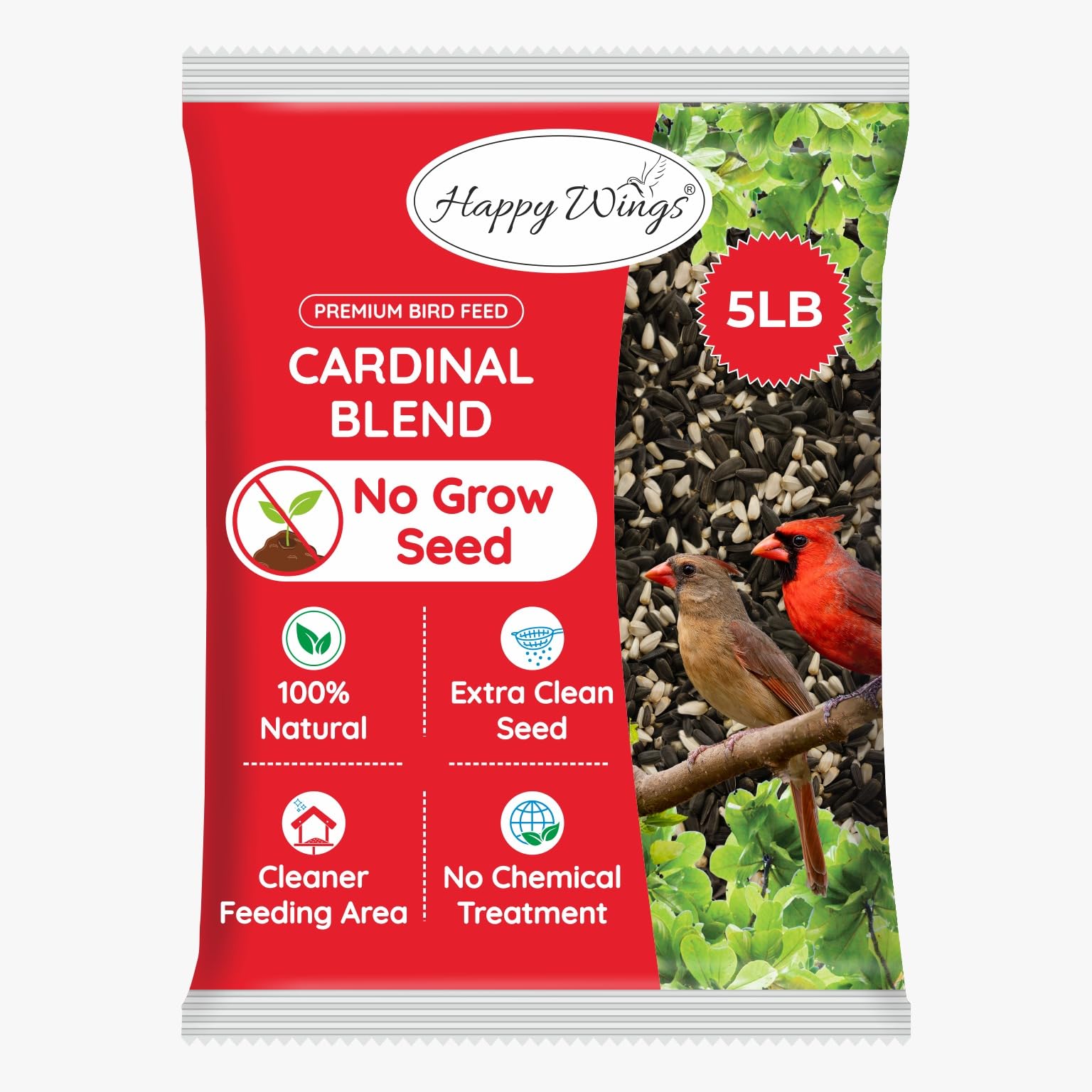
| Happy Wings 5LB Cardinal BlendCardinal Magnet | Cardinal-first feeding without sprouting | 5 lb | Sunflower + safflower | Shells on, no-grow | Amazon |
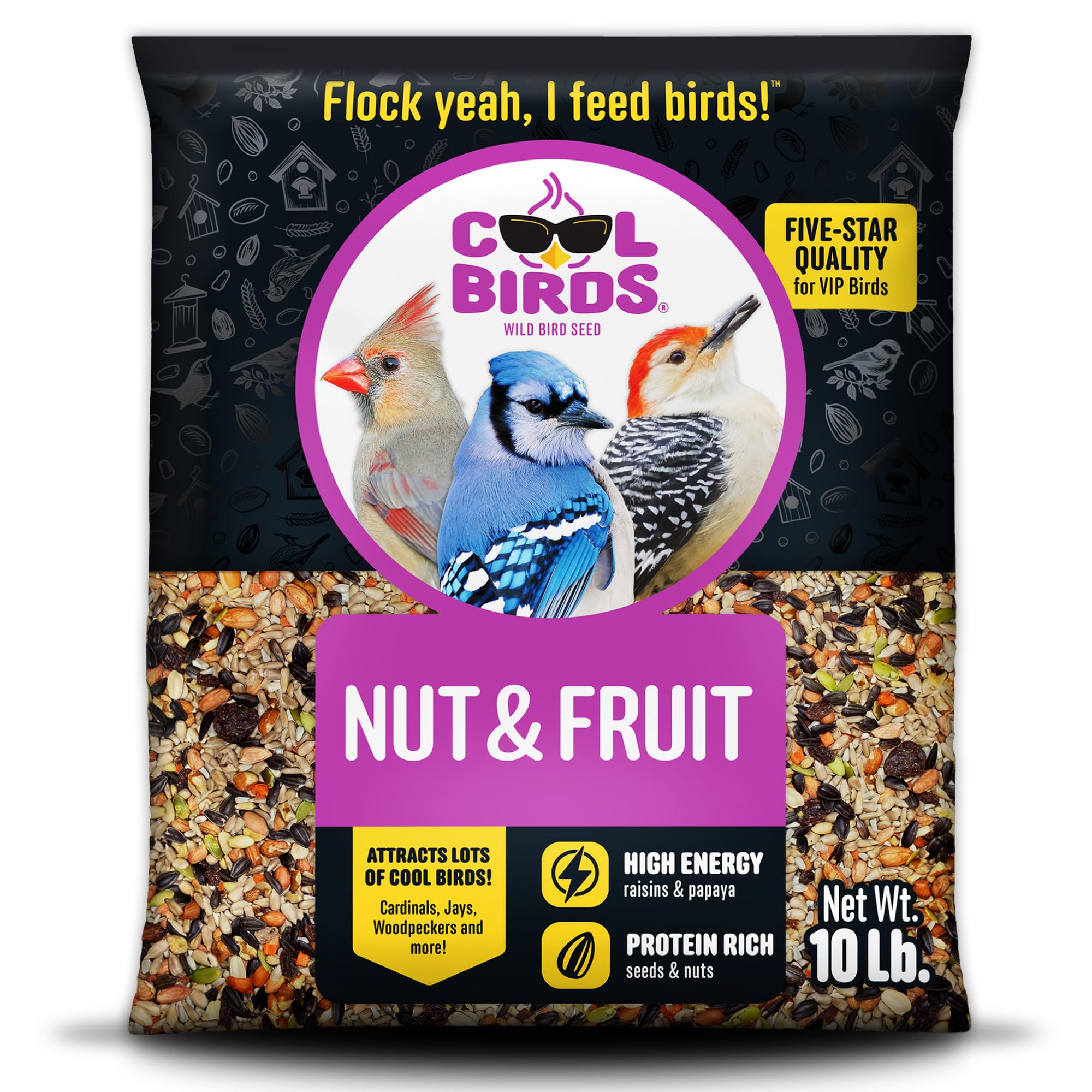
| Cool Birds Nut & Fruit Wild Bird SeedBest For Woodpeckers | Woodpecker and fruit-lover feeders | 10 lb | Sunflower hearts, peanuts, fruits | Shells on, no fillers | Amazon |
| Valley Farms Super Deluxe | Finch-heavy yards | 4 lb | Sunflower, peanuts, nyjer, millet | Shells on, 0% fillers | Amazon |
| Nature Anywhere Bird Banquet | Filler-free bulk feeding | 5 lb | No-filler songbird blend | Shells on, no fillers | Amazon |
| Freebird Premium Songbird Blend | Year-round variety across seasons | 5 lb | Sunflower, safflower, millet, peanut | Shells on, resealable | Amazon |
| Wagner’s 62059 Greatest Variety Blend | Maximum species in one feeder | 16 lb | 11-ingredient blend, 40% sunflower | Shells on | Amazon |
| Audubon Park Sunflower Hearts | Clean lawn, zero sprouting | 15 lb | 100% sunflower kernels | Shell-free | Amazon |
| Freebird Premium No Mess | Patio and deck feeding, zero cleanup | 7 lb | Shelled peanuts, sunflower hearts, chips | Shell-free | Amazon |
In‑Depth Reviews
1. Wagner’s 13008 Deluxe Wild Bird Food, 10 lb Bag
Our pick — over 4.5★ from 35,000+ verified ratings; the strongest balance of quality and price.
The birdseed every backyard feeder eventually tries — and most keep buying.
If you’re setting up a feeder for the first time and don’t yet know which birds live in your yard, this is the safest 10-pound bag to start with. It blends sunflower with general purpose seed, so perching birds like cardinals and finches and ground feeders like sparrows and doves both get something. Because it’s a shell-on mix, expect a certain amount of husk drift under the feeder — that’s the normal trade for a blend at this tier.
The real story here is how many species turn up. Warblers, woodpeckers, chickadees, sparrows, and jays all show up in reviews, and it works in tube, hopper, or platform feeders, so you don’t have to upgrade your setup to feed them. A 10-pound bag lasts reasonably between refills too — most yards get several good sessions out of one.
The honest catch: this is a shell-on blend with the sunflower ratio varied by batch, so a few bags run lighter on sunflower than others. If you want zero leftover hulls or need seed that absolutely won’t sprout, skip this and go straight to a shell-free sunflower heart option below. Otherwise, this is the bag to buy first.
What earns the fan mail
- Pulls perching and ground birds — cardinals, finches, sparrows, woodpeckers
- Works in tube, hopper, and platform feeders without modification
- 10-pound bag gives several refills between trips to the store
- Made in the USA; consistently available and shipped fast
What to expect honestly
- Shells left under the feeder; will grow in lawn if not swept
- Sunflower seed count varies batch to batch
- Bags occasionally arrive torn — check before storing
Best for: Anyone starting a feeder who wants one blend to test which species show up.
Look elsewhere if: You need a zero-hull, no-grow mix for a deck or patio — a shell-free sunflower heart bag suits you better.
2. Happy Wings 5LB Cardinal Blend Bird Food Mix, Sunflower & Safflower Seeds
Built for cardinals, but there’s a hole below your bird feeder to check before you buy.
This 5-pound blend runs on sunflower and safflower — safflower is a cardinal favorite and it’s a seed squirrels often ignore, which is why a lot of partial-hull-feeder owners reach for it. The brand heat-treats the seed so it won’t germinate, so no weeds sprout beneath the feeder even with the hulls left behind.
That no-grow promise is the feature buyers lean on most, and it holds up in practice — one reviewer describes it as “such great seed as it doesn’t create growth underneath the feeders.” That matters if your feeder hangs over lawn or gravel rather than a swept patio. It’s also vacuum-packed to keep the seed fresh and contaminant-free between refills.
The catch is volume: this is a 5-pound bag, and at this blend’s popularity a busy feeding yard can burn through it in days rather than weeks. It compares below the bigger 10- to 16-pound bags in this lineup on sheer refill count. It’s the pick if cardinals are your focus and you’d rather pay for cleanliness than bulk.
Where it delivers: Safflower-dominant mix that pulls cardinals, holds up in humidity, and won’t sprout — a good fit for a dedicated cardinal feeder on a lawn.
Where it costs you: Small bag; expect frequent refills during peak traffic, so plan for regular reordering.
Reach for this if: Cardinals are the priority and you’d trade bag size for a no-grow, no-weed result.
Think twice if: You want to feed a busy multi-feeder yard economically — a 10- to 16-pound bag stretches further.
3. Cool Birds Nut & Fruit Wild Bird Seed, 10 lb
A nut-and-fruit mix that brings the flashy species — woodpeckers, grosbeaks, blue jays — to one feeder.
If your feeder hangs near wooded cover and you see the occasional downy woodpecker on a suet cake, this is the seed that gets them coming back to your feeder instead. It skips corn, milo, and millet entirely, so nearly every ingredient is a bird favorite: sunflower hearts, peanuts, tree nuts, raisins, and papaya. On the weight comparison, this 10-pound bag is double the 5-pound bags that dominate this category, so refills stretch longer.
Birds of every size turn up here — hairy woodpeckers, nuthatches, Carolina wrens, cardinals, and sparrows, plus chipmunks and squirrels at ground level. That wide draw is the point of the blend. The one quirk: with peanuts and tree nuts in the mix, squirrels are just as enthusiastic as the birds, so pair it with a squirrel-resistant feeder if you have a persistent visitor.
The trade-off is cost per pound, and the shell-on format means hulls still fall below the feeder. It sits slightly above the simpler sunflower-and-millet blends on price and delivers a distinctly more diverse visitor list. Worth it if you’re chasing species variety over a bargain bag.
Why the flashier species show up: Sunflower hearts, peanuts, tree nuts, raisins, and papaya — no corn, milo, or millet crowding the blend.
The trade: Shells still drop from this mix; squirrels are as interested as the birds, so plan accordingly.
Pick this if: You want woodpeckers, grosbeaks, and jays on the feeder and don’t mind shells on the ground.
Pass if: Your priorities are zero cleanup — this is a shell-on mix, not a no-mess blend.
4. Valley Farms Super Deluxe Wild Bird Food for Outside Feeders, 4 LBS

A no-filler deluxe blend for finch-heavy yards that still want a bit of everything.
The one word worth circling here is fillers — this is a 0% filler blend. That means no cheap grain your birds sort through and drop; it’s black oil and striped sunflower heartened with shelled peanuts and peanut hearts, plus nyjer, finch millet, and canary seed for the finches. The result is a bag that empties clean rather than leaving a mountain of discarded grain.
It’s a small bag relative to the bulk sacks in this lineup — 4 pounds — so if you’re running multiple feeders you’ll reorder often. What you get in return is a dense blend where nearly every seed gets eaten, and repeat buyers keep coming back for the same reason: their birds pick this over the cheaper multi-purpose mixes in a side-by-side test.
The honest cost note: this runs at the upper edge of the mid-range tier for a smaller bag, and one review even flags the increase. If you want maximum pounds per purchase this isn’t it. If you want clean, no-filler seed that finches, cardinals, and woodpeckers all visit, this small-bag format delivers.
The pitch in one line: 0% fillers, black oil sunflower, peanuts, nyjer, millet — a blend built for birds that don’t sort through junk.
Worth knowing: 4-pound bag; small for a multi-feeder yard, so expect faster reorders than a 10-pound sack.
Suits you if: Finches and cardinals dominate your yard and you want a filler-free blend that empties clean.
skip it if: You run several feeders and want bulk — a 10- to 16-pound bag saves you trips.
5. Nature Anywhere Bird Seed Bird Banquet Blend, 5 lb
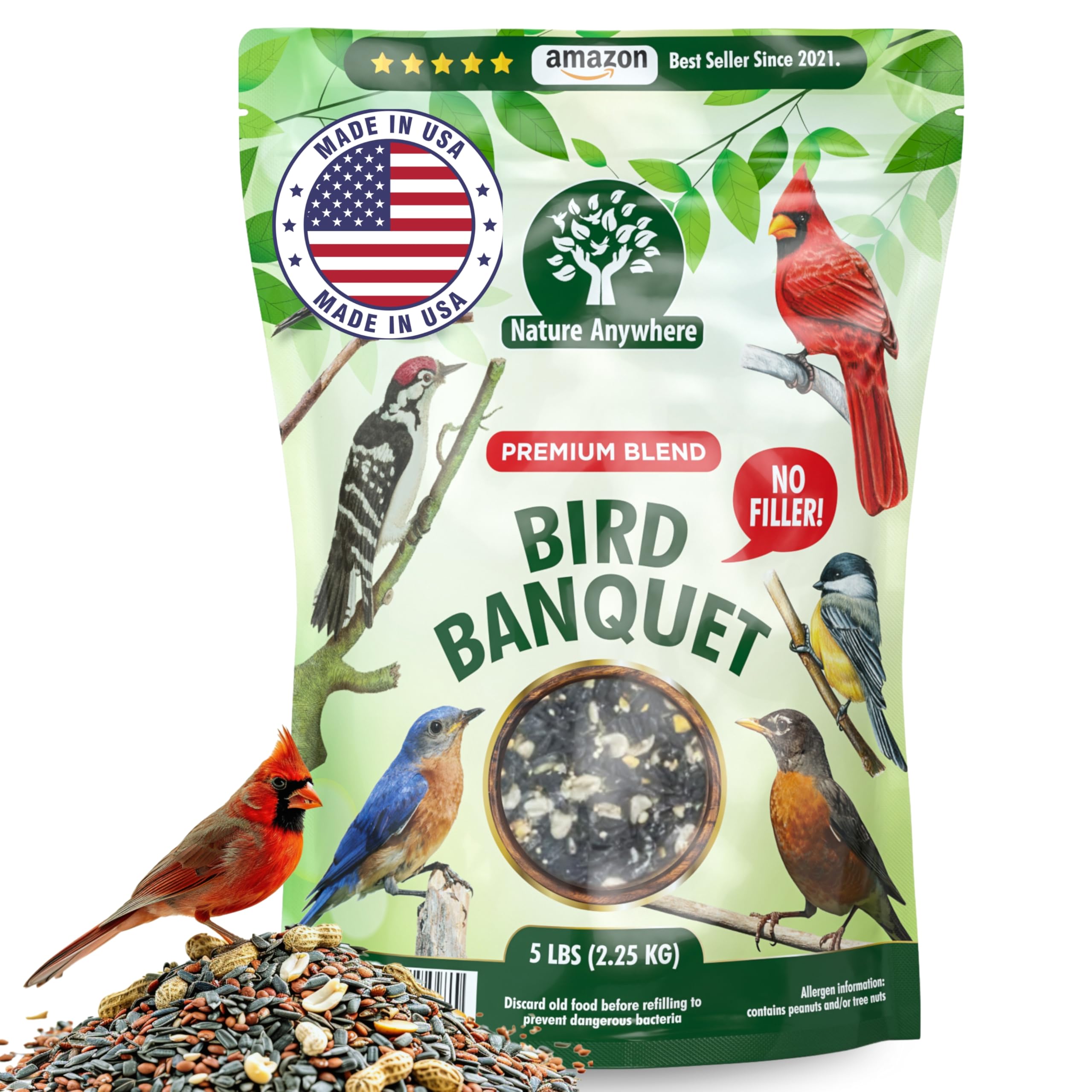
No milo, no wheat, no filler grain — a 5-pound bag that empties fast and leaves little behind.
This is the bag to reach for if you’ve grown tired of sweeping up filler grain your birds reject. It’s built as a no-filler mix with domestically grown ingredients, and it pulls cardinals, chickadees, and jays as its headline species. The seed arrives fresh and plump and resists mold and mildew before the birds finish it — the common complaint with bargain bins.
The other reason buyers keep this on repeat: no milo, wheat, or canary seed filler, so leftovers under the feeder are minimal. A 5-pound bag is on the smaller side of this lineup, but for many single-feeder setups that’s actually the right size — it stays fresh and the birds keep it moving.
The recurring honest note is price per pound — this is a mid-tier blend that behaves like a premium one, and some buyers find it steep for a 5-pound bag. It also won’t leave you much slack if you run a busy multi-feeder yard. But if you want a cleaner feed with minimal waste, the filler-free design is the whole point.
Why the refills stay on autopilot
- No milo, wheat, or canary seed filler — little to sweep up
- Fresh, plump seed that resists mold before birds finish it
- Pulls cardinals, chickadees, and jays to the feeder
- Backed by a refund guarantee if the feeder doesn’t fill up
What’s worth weighing
- Cost per pound runs higher than bulk filler blends
- 5-pound bag means more reorders in a busy yard
Good fit for: One-feeder yards that want a filler-free blend with minimal cleanup.
Not the one if: You need the cheapest pounds per bag — bulk sacks in this lineup beat it there.
6. Freebird Premium Songbird Blend, 5 lb
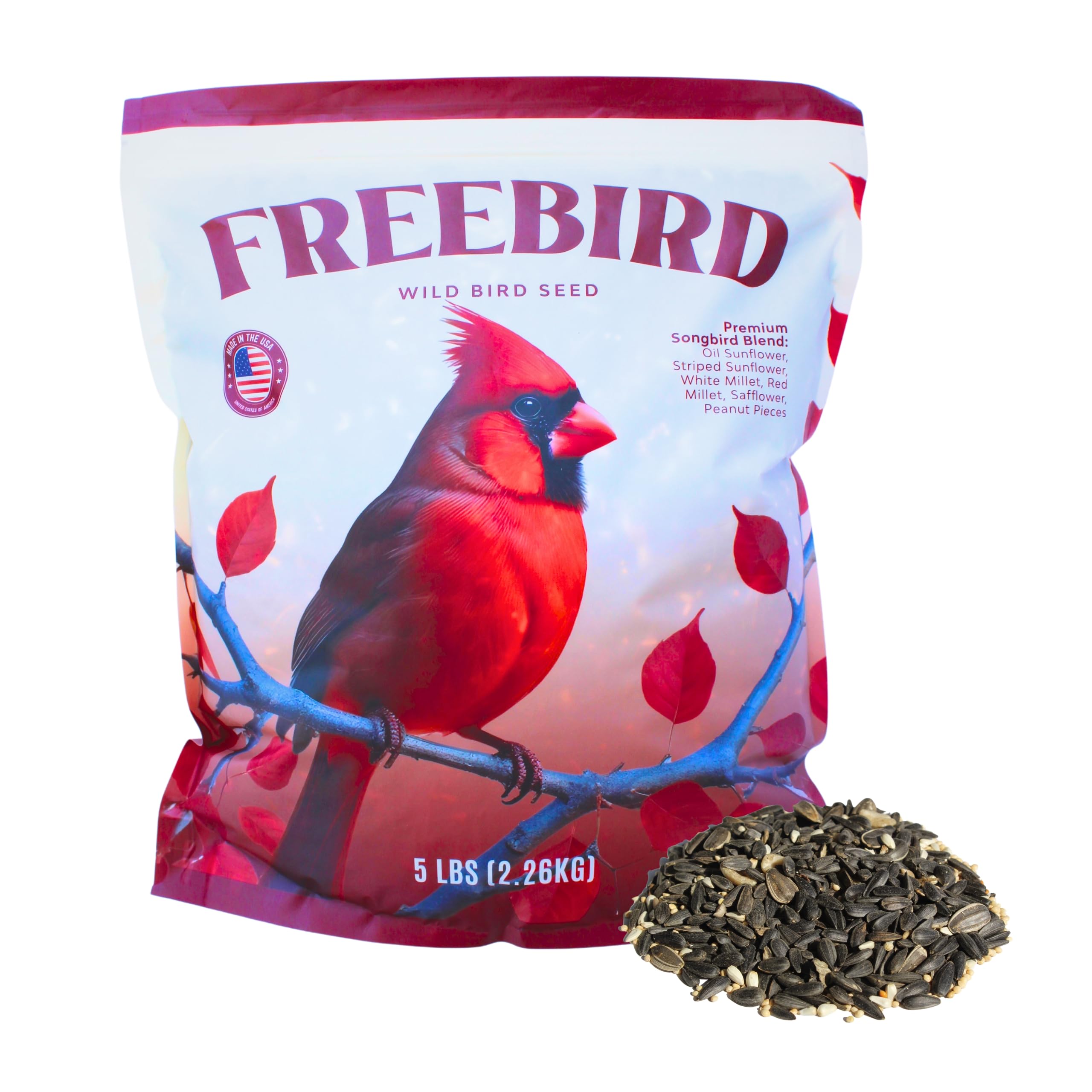
Built for year-round feeding, with a resealable bag that keeps the seed fresh between pours.
Finch to grosbeak, sparrow to tufted titmouse, this is a wide-draw songbird blend: black oil sunflower, striped sunflower, safflower, peanut pieces, white millet, and red millet. That mix of different seed sizes is deliberate — small songbirds and larger backyard birds all work the same feeder without one species monopolizing it. The heavy-duty resealable zipper is a small detail with a real payoff: seed stays fresher between refills, especially in humid climates.
Against the simpler cardinal or finch-specialist bags in this lineup, this one plays the generalist — same 5-pound size, broader species list. The safflower and heavier sunflower portion also hold up in heat, which is why it’s often billed as a winter-plus-summer bag rather than a single-season one. If your goal is variety without juggling multiple feeders, that matters.
The honest caveat is the 5-pound bag size, which isn’t a bulk purchase; it’s the right size for a two-feeder setup, but heavy traffic will burn through it. And a rare complaint from yards with unusual species shows the seed sometimes gets ignored — that’s more about local bird population than the blend itself. Otherwise, this is the most season-proof bag in the Freebird lineup.
The whole idea: One blend for all four seasons — six seed types sized to work for small and large birds at the same feeder.
The practical limit: 5-pound bag, no bulk option; high-traffic yards will reorder often.
Best suited to: Feeders that run all year and want species variety in one bag.
Better elsewhere if: You want the largest bags for the least money per pound — the 15- and 16-pound bags beat it on bulk.
7. Wagner’s 62059 Greatest Variety Blend, 16-Pound Bag

The 16-pound bag for a feeder that empties faster than you can refill it.
When one bag needs to cover a busy feeder through a full season, this is the standout. A gourmet blend with 11 different ingredients including 40% sunflower, it runs in tube, hopper, and platform feeders and keeps pulling a fresh crop of visitors. Buyers report cardinals, finches, chickadees, nuthatches, blue jays, and towhees stopping in — and a busy yard can clear a platform feeder in a couple of days.
Against the 5-pound bags in this lineup, the 16-pound format answers a different question: how much seed do I need in one purchase? It’s the largest bag on the list, and the 40% sunflower ratio plus nuts and raisins means birds don’t waste time sorting through filler. That’s the whole reason it earns its slot for high-traffic yards.
One practical heads-up: the bag itself isn’t waterproof. Store it in a sealed container immediately after opening, or a bag left out in the rain will rot the seed and leave a serious smell. The Velcro reseal strip helps between pours, but for a 16-pound sack, a dedicated bin is the smarter move.
Why it earns the largest bag slot
- 11-ingredient blend with 40% sunflower — variety without filler
- Works in tube, hopper, and platform feeders
- 16-pound format reduces trips to reorder
- Attracts cardinals, finches, chickadees, jays, nuthatches, towhees
What to plan for
- Bag isn’t waterproof — transfer to a sealed container right away
- Shells left below the feeder, same as any corn-and-millet mix
- Birds go through a full hopper fast in a busy yard
Pick this if: Your feeder empties fast and you want one large bag to cover a busy season.
Choose a smaller bag if: You run one feeder and prefer to keep the seed rotating fresher — 5-pound bags stay cleaner between refills.
8. Audubon Park Sunflower Hearts Wild Bird Seed, 15-lb

One ingredient, zero hulls — the simplest fix for the mess under your feeder.
If your feeder hangs over lawn, gravel, or a patio, this is the bag that solves cleanup and weed growth at the same time. It’s 100% sunflower kernels — shells already removed — so nothing falls below but the seed itself, and nothing sprouts because there are no hulls to grow. Its high fat content fuels finches, nuthatches, chickadees, and juncos through cold snaps.
This one holds up under a side-by-side test against any corn-milo-millet mix: owners mention dropping from two full feeders a day down to one refill every couple of days once they switched, because the birds actually eat every kernel instead of sorting. The uniform kernel size also flows through tube, hopper, and platform feeders without clogging.
But the 15-pound bag delivers on the back end, since there’s zero waste and no cleanup. This is the pick for anyone whose main complaint was the mess, not the seed.
Where it wins: 100% sunflower kernels — no hulls, no weeds, no sweeping, and the birds clean the feeder down to the last piece.
Where the cost sits: Shell-free seed runs higher per pound than mixes with hulls, though waste savings often close the gap.
Built for: Feeders over lawn or patio where mess and sprouting are the real problem.
Not the pick if: You want maximum pounds for the money and don’t mind sweeping hulls — a standard mixed blend costs less per bag.
9. Freebird Premium No Mess Bird Seed, 7 lb
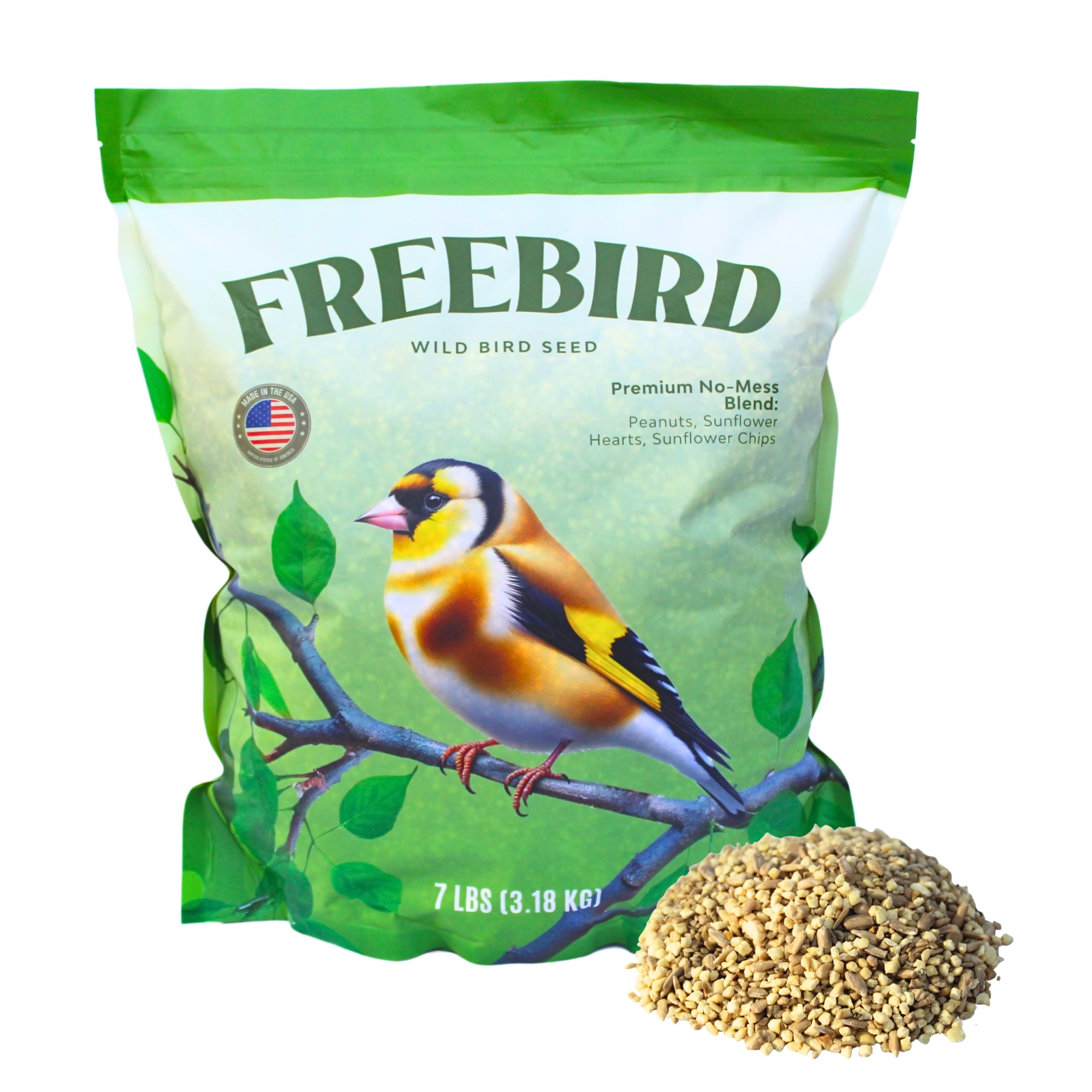
The top-tier bag for patios and decks — shell-free, waste-free, cleanup-free.
This is the no-mess pick for feeders hanging over patios, decks, or anywhere you’d rather not sweep. It’s a shell-free blend of shelled peanuts, sunflower hearts, and sunflower chips, with a guaranteed analysis of 21% crude protein and 48% crude fat — the densest energy blend in this lineup. Shell-free means nothing leaves the feeder, so there’s no hull cleanup and nothing to sprout in the lawn.
Against the no-mess bag above, this one leans peanut-heavy rather than sunflower-only, which pulls a somewhat different species list — woodpeckers, grosbeaks, and tufted titmice alongside cardinals, finches, chickadees, and juncos. The small, light pieces also flow easily through tube, hopper, and platform feeders. If your goal is zero cleanup plus high energy density, this is the blend.
The honest trade-off is cost — this is the top-tier price of the lineup, and you pay for the shell-free processing and peanut content. A few customers note the price and buy it anyway. That’s the shape of the pick: it’s the most convenience-heavy option, and the price reflects it.
The reason it’s the premium bag: Shell-free peanut, sunflower heart, and sunflower chip mix at 21% protein and 48% fat — the densest energy blend here.
The reason some hesitate: Highest price per pound on the list; the shell-free convenience is what you’re paying for.
Made for: Patio, deck, and balcony feeders where any hull is too much hull.
Skip if: You’re feeding a large yard on a bulk budget — shell-free seed costs more per pound, even though nothing is wasted.
Understanding the Specs
Shell-On vs Shell-Free
Shell-on seed — sunflower, safflower, millet — keeps for longer and costs less per pound, but the hulls fall below the feeder and can sprout weeds if the seed gets wet. Shell-free seed (sunflower hearts, chips, shelled peanuts) costs more per pound but leaves no hulls, sprouts nothing, and stretches further because birds eat every piece. Pick shell-on for a lawn you can rake; pick shell-free over patios, decks, and planters.
Blend Composition and Filler Grains
The three grains you want to watch for are milo, wheat, and canary seed. Cardinals, finches, chickadees, and woodpeckers ignore those and drop them — they want sunflower, safflower, peanut, and nyjer. A “no filler” bag is exactly what it says: blends built almost entirely on the seeds birds actually eat, so birds empty the feeder rather than the ground. Check the ingredient list before you buy — the label and the blend don’t always match.
FAQ
Will sunflower hearts work in my tube feeder?
Why are birds kicking half my seed onto the ground?
Is no-mess seed actually worth the higher cost per pound?
How long does one bag of bird seed last?
Does no-grow bird seed stop weeds under the feeder?
Should I store bird seed in a sealed container?
What seed attracts cardinals to a feeder?
Do all bird feeders work with all bird seed?
Will squirrels eat my bird seed no matter what I do?
Final Thoughts: The Verdict
For most yards, the bird seed for feeders winner is the Wagner’s 13008 Deluxe Wild Bird Food because it blends sunflower and general purpose seed that pulls perching and ground birds, works in tube, hopper, and platform feeders, and comes in a 10-pound bag that keeps refills reasonable. If your priority is a feeder over lawn or patio with no sweeping, grab the Audubon Park Sunflower Hearts. And for the cleanest possible feeding over a deck or balcony, the Freebird Premium No Mess blend is the one to reach for.
How We Picked
We do not accept paid placement. Every pick is matched to a real buyer and a real use-case; we do not hands-on test units.
Sources & Methodology
Specifications: manufacturer listings and product documentation. Review insights: verified customer reviews, as of September 2026. Pricing: not shown on this page (it changes often); check the current price via the retailer link.
As an Amazon Associate, Gadgets Feed earns from qualifying purchases. This does not affect which products we feature.