
Magnification is the currency of macro photography, and the 50mm macro lens is the most versatile, walkaround-ready denomination a photographer can carry. It balances a natural angle of view with the ability to render subjects at life-size or beyond, turning everyday textures—corroded metal, frost on a leaf, the eye of a jumping spider—into massive, frame-filling landscapes of detail.
I’m Min — the co-founder and writer behind Gadgets Feed. I spend hundreds of hours analyzing lens MTF charts, distortion profiles, and real-world focus behavior so you don’t have to sift through spec sheets and forum rabbit holes.
Whether you shoot on a full-frame Sony, a Nikon Z body, or a Fujifilm X-series mirrorless, finding the best 50mm macro lens means balancing true 1:1 reproduction ratio against sharpness, working distance, and autofocus reliability—three factors that define every image you bring home.
How To Choose The Best 50mm Macro Lens
A 50mm macro lens sits at the intersection of portrait, product, and close-up photography. Choosing the right one means understanding which optical compromises you can tolerate and which you cannot.
Reproduction Ratio: 1:1 vs 1:2
A 1:1 reproduction ratio means the subject is projected onto the sensor at life size—a coin fills the same number of pixels as its real diameter. Lenses with 1:2 or 0.5x magnification are technically close-up lenses, not true macros. Every lens on this list achieves at least 1:1, except where noted otherwise.
Working Distance vs. Focal Length
At 1:1 magnification, a 50mm macro places the front element roughly 4 to 6 inches from the subject. This short working distance can block light and spook skittish insects. A longer focal length like 90mm or 105mm gives you more breathing room, but a 50mm macro is far more practical for tabletop product shots, food photography, and handheld detail work where space is tight.
Autofocus Speed and Focus Breathing
Macro lenses often rely on internal focusing or rear-focusing designs that change the effective focal length at close distances, causing focus breathing. Stepping motors (STM) and rear-focusing systems tend to keep breathing low, which matters for focus stacking and video work. If you shoot moving insects, look for a lens with a focus-range limiter to avoid hunting across the entire throw.
Quick Comparison
On smaller screens, swipe sideways to see the full table.
| Model | Category | Best For | Key Spec | Amazon |
|---|---|---|---|---|
| Nikon Z MC 50mm f/2.8 | Premium Macro | Nikon Z full-frame macro | 1:1 magnification, f/2.8 | Amazon |
| Canon EF 50mm f/1.2L USM | Premium Standard | Low-light portraits & macro | f/1.2 aperture, USM motor | Amazon |
| Sony FE 50mm f/2.8 Macro | Full-Frame Macro | Sony E-mount 1:1 macro | 1:1 mag, 160mm MFD | Amazon |
| ZEISS Touit 2.8/50M | High-End Fuji X | Fujifilm X macro & detail | 75mm equiv., 1:1 mag | Amazon |
| Nikon NIKKOR Z 50mm f/1.4 | Fast Aperture Prime | Hybrid photo/video | f/1.4, 0.45m MFD | Amazon |
| VILTROX AF 50mm F1.4 Pro | Budget Fast Prime | Sony FE bokeh & macro | f/1.4, 0.45m MFD | Amazon |
| Sigma 18-50mm F2.8 DC DN | Zoom Macro | APS-C everyday + close-up | f/2.8, 1:2.8 mag | Amazon |
| Sony SEL30M35 30mm f/3.5 | Entry-Level E | Budget Sony APS-C macro | 1:1 mag, 30mm FL | Amazon |
| OM SYSTEM 30mm F3.5 Macro | MFT Macro | Micro Four Thirds close-up | 1.25x mag, 30mm FL | Amazon |
In‑Depth Reviews
1. Nikon NIKKOR Z MC 50mm f/2.8
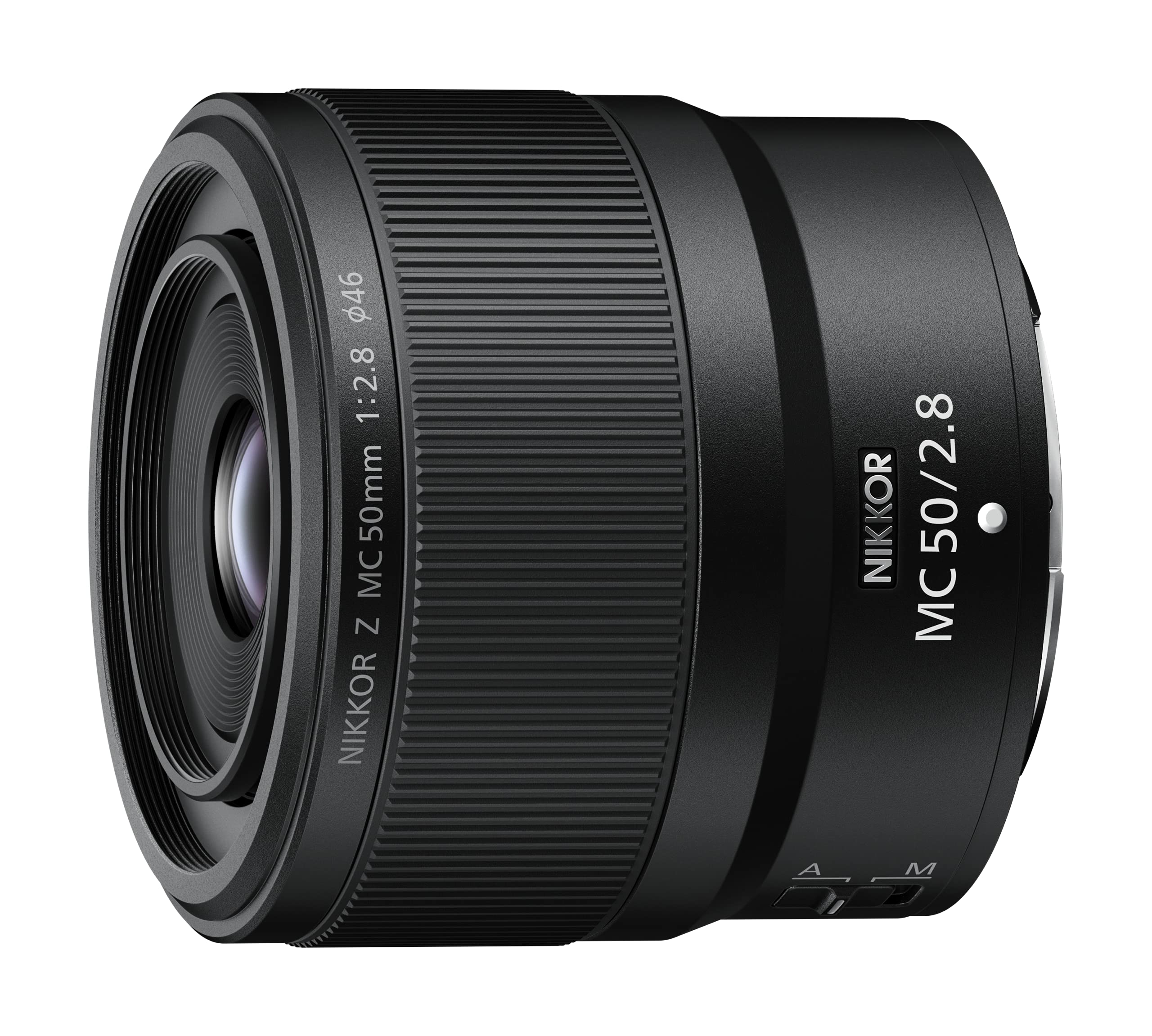
The Nikon Z MC 50mm f/2.8 is a dedicated macro lens purpose-built for the Z mount, delivering true 1:1 life-size magnification in a compact 9.2-ounce body. Its f/2.8 maximum aperture strikes a careful balance—wide enough for shallow depth-of-field portraits, yet stopped down to f/8 it delivers edge-to-edge sharpness that rivals Nikon’s S-Line primes.
The front-focusing design keeps the physical length constant, which reduces the chance of casting a shadow on your subject at minimum focus distance. The multi-focusing STM motor is quiet enough for video and suppresses focus breathing, making this lens equally competent for close-up product shots and gimbal-based food cinematography.
Fluorine coating on the front element repels dust and moisture, and the lens is dust- and drip-resistant when paired with a weather-sealed Z body. It doubles as an everyday walkaround prime with a natural 50mm field of view, eliminating the need to swap lenses when you spot a detail worth capturing.
Why it’s great
- True 1:1 macro with exceptional center sharpness
- Compact, weather-sealed, and fluorine-coated front element
- Minimal focus breathing for video and focus stacking
Good to know
- Working distance at 1:1 is only about 4.7 inches
- No focus-range limiter switch on the barrel
2. Canon EF 50mm f/1.2L USM

The Canon EF 50mm f/1.2L USM is an L-series legend that prioritizes light gathering over macro magnification. At f/1.2 it captures four times more light than an f/2.8 macro, making it the go-to lens for wedding photographers and low-light event specialists who also want close-focus capability down to 0.45 meters.
While it does not achieve 1:1 reproduction, its 0.15x maximum magnification still reveals fine detail with dreamy, swirly bokeh that no dedicated macro lens can replicate. The ring-type ultrasonic motor is near-silent and allows full-time manual focus override without switching modes.
Weather-sealed construction and a solid metal barrel give it the toughness of a workhorse lens. Paired with a Canon 5D Mark III or newer body, autofocus is snappy and accurate even in dim reception halls—a scenario where f/2.8 macros struggle.
Why it’s great
- Widest aperture available in a 50mm autofocus lens
- Creamy, distinctive bokeh character at f/1.2
- Weather-sealed L-series build quality
Good to know
- Not a true 1:1 macro lens
- Heavy at 1.8 pounds; noticeable on gimbals
3. Sony SEL50M28 FE 50mm F2.8 Macro

Sony’s FE 50mm f/2.8 Macro is a full-frame, 1:1 macro that weighs only 340 grams, making it one of the lightest ways to achieve life-size magnification on a Sony A7 or A9 body. The minimum focus distance of 6.3 inches from the sensor plane translates to a working distance of roughly 2.5 inches from the front element at 1:1.
ED glass elements suppress axial chromatic aberration effectively, and the 7-blade circular aperture produces smooth, non-distracting bokeh for a macro lens. The focus-range limiter switch is a practical addition that prevents the lens from hunting through the entire macro range when you are shooting at longer distances.
Autofocus speed is adequate for static subjects but can be sluggish on older bodies like the A7II. Manual focus override is smooth, and the focus-hold button on the barrel is programmable in compatible camera menus.
Why it’s great
- True 1:1 macro in a lightweight, dust-resistant shell
- Focus-range limiter and focus-hold button
- ED glass for minimal chromatic aberration
Good to know
- Autofocus can hunt in low light
- Plastic barrel finish feels less premium than G Master siblings
4. ZEISS Touit 2.8/50 Macro (Fujifilm X-Mount)

The ZEISS Touit 2.8/50 Macro brings the iconic ZEISS T* anti-reflective coating and floating element design to Fujifilm X-mount bodies. On an APS-C sensor, the 50mm focal length becomes a 75mm equivalent, giving you more working distance than a standard 50mm macro on full-frame while still maintaining 1:1 reproduction on the smaller sensor.
The floating elements technique minimizes optical aberrations throughout the entire focusing range, so sharpness remains consistent from infinity down to the minimum focus distance. Autofocus is driven by a stepping motor that supports Fujifilm’s face and eye detection reliably.
Color rendition is characteristically ZEISS—slightly cool with high micro-contrast that makes textures pop without artificial sharpening. It also performs well as a portrait lens given the 75mm equivalent field of view and pleasant bokeh from the 9-blade aperture.
Why it’s great
- ZEISS T* coating delivers superior contrast and flare resistance
- 75mm effective focal length ideal for portrait + macro
- Floating elements maintain sharpness at all distances
Good to know
- No weather sealing on the barrel
- Autofocus is slower than Fujifilm’s native XF lenses
5. Nikon NIKKOR Z 50mm f/1.4

The Nikon NIKKOR Z 50mm f/1.4 is designed for hybrid shooters who need speed and video-friendly handling. The multi-focus STM motor keeps autofocus silent and minimizes focus breathing, making it a strong choice for gimbal work and run-and-gun filming on Nikon Z bodies.
At f/1.4, you get strong subject separation and low-light capability that f/2.8 macros cannot match. The minimum focus distance of 14.5 inches lets you capture close-up details with enhanced background blur, though it does not achieve true 1:1 magnification.
Optical performance surpasses legacy F-mount 50mm lenses, with well-controlled spherical aberrations and good center-to-edge sharpness when stopped to f/2.8. The all-metal lens mount and compact 0.93-pound weight make it a natural everyday companion on a Z6II or Z8.
Why it’s great
- Fast f/1.4 aperture for low-light and bokeh
- Silent STM motor with suppressed focus breathing
- Lightweight and compact for Z mount
Good to know
- No 1:1 macro capability
- Autofocus slower than Nikon’s S-Line f/1.8 primes
6. VILTROX AF 50mm F1.4 Pro FE (Sony E-Mount)
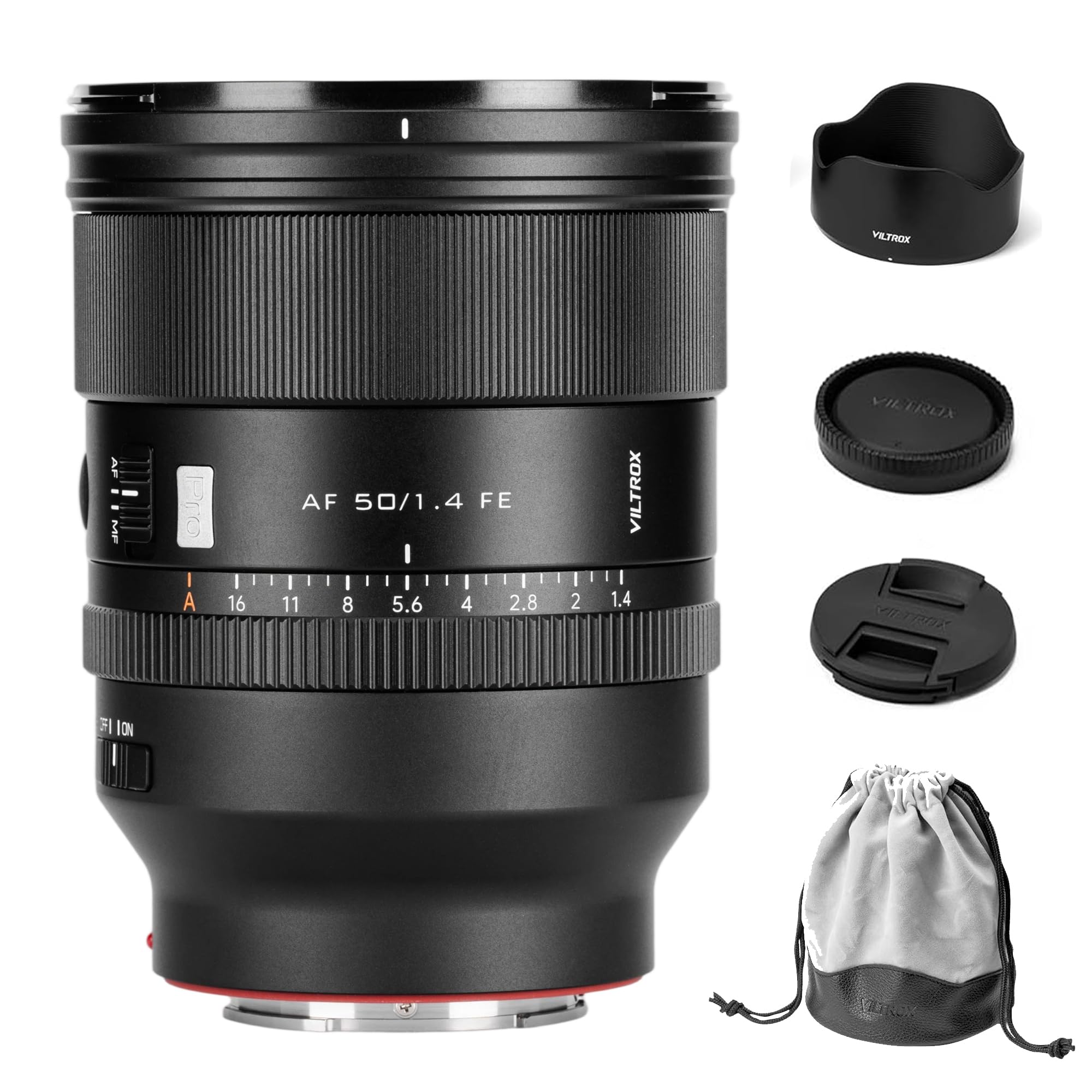
The VILTROX AF 50mm F1.4 Pro FE is a third-party prime that combines a fast f/1.4 aperture with a minimum focusing distance of 0.45 meters, offering macro-adjacent close-up capability on Sony full-frame E-mount cameras. The HyperVCM autofocus motor is designed for real-time subject tracking and performs reliably for portrait and street photography.
Optical quality is impressive at this price tier: the lens maintains exceptional sharpness from center to edges even wide open at f/1.4, and the breathing effect is negligible, making it viable for video. The 11-blade aperture contributes to smooth, circular bokeh balls.
Build quality feels premium with a metal barrel and a dedicated aperture ring that can be de-clicked for video. The included lens pouch and dual caps are a nice touch, though there is no optical image stabilization built into the lens.
Why it’s great
- Sharp at f/1.4 with consistent edge performance
- De-clickable aperture ring for video
- Effective autofocus for eye tracking
Good to know
- Autofocus can hunt in challenging lighting
- No weather sealing or lens stabilization
7. Sigma 18-50mm F2.8 DC DN Contemporary (Canon RF)

The Sigma 18-50mm F2.8 DC DN Contemporary brings a constant f/2.8 aperture and a 1:2.8 maximum magnification ratio to Canon RF-mount APS-C bodies. At the 50mm end, the minimum focusing distance of 12.1 cm lets you get extremely close to subjects, producing near-macro results ideal for food, product, and flower photography.
Weighing just 300 grams, it is the smallest and lightest constant-aperture zoom in its class—a major advantage for travel and all-day carry. Image quality is sharp with good contrast, and the f/2.8 aperture provides decent subject separation for a zoom lens.
The rubber-sealed mount adds a layer of environmental protection, though the lens itself lacks full weather sealing. Autofocus is fast and quiet, using a stepping motor that pairs well with Canon’s Dual Pixel CMOS AF system.
Why it’s great
- Constant f/2.8 in a 300-gram zoom
- 12.1 cm MFD for close-up detail shots
- Fast, quiet stepping motor AF
Good to know
- 1:2.8 magnification is not true 1:1 macro
- No optical image stabilization
8. Sony SEL30M35 30mm f/3.5 Macro (E-Mount)

The Sony SEL30M35 30mm f/3.5 is the entry point for Sony E-mount users who want true 1:1 macro without spending a premium. Its 30mm focal length on APS-C bodies gives a 45mm equivalent field of view, closely matching the natural perspective of a standard 50mm lens on full-frame.
The minimum working distance of 2.4 cm at 1:1 is extremely close, so lighting becomes a challenge—you will almost certainly need a ring light or off-camera flash. The aluminum alloy barrel construction feels durable despite the plastic components beneath, and the stepping motor provides smooth, quiet autofocus suitable for video.
Image quality is sharp in the center at macro distances, though the corners soften noticeably at f/3.5. Stopping down to f/8 improves overall uniformity and depth of field in macro shots.
Why it’s great
- True 1:1 macro at a budget-friendly price
- Lightweight and compact for everyday carry
- Quiet stepping motor for video
Good to know
- Very short working distance makes lighting difficult
- Corner sharpness drops at wider apertures
9. OM SYSTEM M.Zuiko Digital ED 30mm F3.5 Macro (Micro Four Thirds)

The OM SYSTEM M.Zuiko Digital ED 30mm F3.5 Macro is designed exclusively for Micro Four Thirds bodies, offering a remarkable 1.25x magnification (2.5x in 35mm equivalent terms) that exceeds the standard 1:1 macro threshold. On MFT, the 30mm focal length delivers a 60mm equivalent field of view, giving you a slightly tighter framing than a normal lens.
The closest focus distance of 0.095 meters means the front element nearly touches the subject at maximum magnification. This makes the lens excellent for capturing extreme detail on coins, stamps, and small electronics, but it also means shadows are cast easily without a dedicated light source.
Image quality is impressively sharp for a compact, budget-friendly macro, and the 40-degree angle of view offers a unique wide-macro perspective that longer lenses cannot replicate. The plastic build keeps weight minimal, but there is no weather sealing or focus limiter.
Why it’s great
- 1.25x magnification outpaces standard 1:1 macros
- Extremely compact and lightweight
- Unique wide-macro perspective for creative shots
Good to know
- Short working distance demands good lighting setup
- No weather sealing or focus limiter switch
FAQ
Why would I choose a 50mm macro over a 90mm or 105mm macro?
What does 1:1 magnification actually look like in practice?
Do I need image stabilization in a 50mm macro lens?
Final Thoughts: The Verdict
For most users, the best 50mm macro lens winner is the Nikon Z MC 50mm f/2.8 because it delivers true 1:1 macro with outstanding sharpness, weather sealing, and video-friendly STM focus in a compact Z-mount package. If you want a fast f/1.4 aperture for low-light portraits and close-ups, grab the Nikon NIKKOR Z 50mm f/1.4. And for Fujifilm shooters who want ZEISS glass with 1:1 macro and a 75mm equivalent portrait reach, nothing beats the ZEISS Touit 2.8/50M.