
Our readers keep the lights on and my morning glass full of iced black tea. As an Amazon Associate, I earn from qualifying purchases.
Specs are compiled from manufacturer listings and verified buyer reviews and can change over time — please confirm the key details on the product page before buying.
If your marine vinyl is lifting at the seams or bubbling after a season on the water, the fix is almost never the flooring — it is the glue underneath it. Marine vinyl flooring (the rubber- or felt-backed sheet you lay over plywood decks, pontoon platforms, and boat cockpits) needs an adhesive that stays bonded through moisture, heat, and the flex of a moving hull. The three picks below are the ones actually built for that job, and the short answer is this: the Value Carpets Marine Grade Boat Carpet Adhesive is the strongest all-rounder for most boat decks, while the RecPro Roll On is the easier one to apply over a large pontoon floor.
I’m Min — the founder and writer behind Gadgets Feed. This guide is built by comparing the manufacturers’ published specifications and the patterns across verified customer reviews, so you get each pick’s real strengths and trade-offs instead of marketing spin.
Below you’ll find the three marine-grade adhesives worth considering, what each one actually bonds to, and how to pick the right one for your deck. Here’s a plain-English breakdown of the adhesive for marine vinyl flooring options that actually hold.
Our Picks at a Glance
How To Choose The Best Adhesive For Marine Vinyl Flooring
The biggest mistake first-time installers make is treating marine vinyl like household carpet. Marine vinyl gets wet, gets hot, and sits on a deck that flexes underfoot — so a glue that works fine in a living room can lift at the edges the first time you get on plane. What matters most is the formula type, the cure time, and whether the glue is compatible with the specific backing on your flooring.
Check the backing before you buy the glue
Marine vinyl comes in felt-backed and rubber-backed versions, and they behave differently under glue. Some water-based adhesives are made to grab rubber-backed flooring without breaking the backing down, while felt-backed sheet needs a formula that penetrates the fabric and locks into the plywood beneath. Read your flooring’s spec sheet first — the glue should match it.
Water-based versus solvent-based
Water-based formulas are non-flammable and easier to work with indoors, and they won’t attack the rubber backing the way a harsh solvent glue can. These are typically made from a PVA (polyvinyl acetate) base — the same family of adhesive chemistry that gives you a strong, slightly flexible bond once it fully cures.
How much glue your deck actually needs
Coverage is set by your trowel, not by the glue. A one-gallon bucket usually covers around 100 square feet when spread with a notched trowel. Roller application changes how evenly it lays down, which is why a steel or floor roller is a standard part of a pro install — it presses the vinyl into the glue bed and pushes out trapped air. A two-gallon pail makes sense for a full pontoon floor where one gallon won’t finish the job.
Quick Comparison
| Model | Best For | Volume | Cure Time | Base Material | Amazon |
|---|---|---|---|---|---|
| Value Carpets Marine Grade Boat Carpet Adhesive★ Best Overall | Boat carpet and cockpit vinyl over wood | 1 Gallon (128 fl oz) | 24 hours | Polyvinyl Acetate (PVA) | Amazon |
| RecPro RV Roll On Floor Adhesive | Large pontoon and RV floors, roller-applied | 1 Gallon (approx. 100 sq ft) | 24 hours | Water-based | Amazon |
| BoatCarpetCentral Marine Adhesive | Full deck recarpets in one purchase | 2 Gallons | 24 hours | Polyvinyl Acetate (PVA) | Amazon |
In‑Depth Reviews
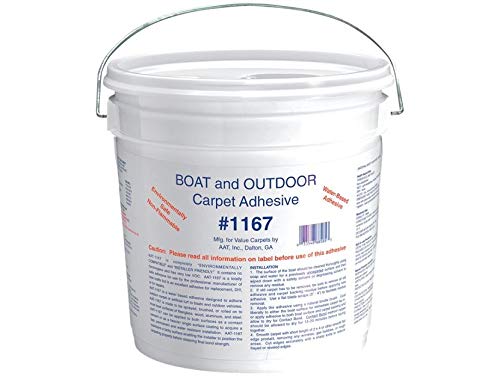
1. Value Carpets Marine Grade Boat Carpet Adhesive Glue- 1 Gallon
Our pick — over 4★ from 150+ verified ratings; the strongest balance of quality and price.
A non-flammable water-based gel that sets hard in a day without attacking your backing.
If your marine vinyl sits over plywood, fiberglass, or aluminum — the three deck materials this gel is listed for — this is the pick to start with. It’s a one-gallon can of water-based adhesive in a high-viscosity gel form, which is the practical bit: a gel stays where you spread it instead of running down a sloped deck before you can lay the vinyl. It carries a 24-hour full cure time, so a Saturday-morning install is walkable by Sunday.
What wins people over is how forgiving the actual spreading is. The glue goes down tacky enough to grab without a fight, and one repeat buyer put it plainly: “Great adhesion, easy to use.” A bass-boat owner backs that up: “Used to recarpet entire bass boat. Easy to apply and cures in 24 hours.” That is a full recarpet with one container.
Here’s the honest catch, and it matters if your deck is bare plywood. Owners repeatedly flag that it doesn’t dry well on plywood, and the dryness of the final bond is where experiences split most. Lasting floors come from gluing to a properly prepped, sealed, or fiberglass surface; a few owners who skipped that saw the carpet lift after it fully dried. Prep your substrate, don’t skip it, and this glue does its job.
What Earns Its Keep
- High-viscosity gel resists running on sloped decks, so it stays put while you lay vinyl
- Water-based and non-flammable, so you can work in an enclosed boat without fumes
- Bonds to wood, fiberglass, and aluminum — covers most marine deck builds
- Full 24-hour cure means next-day use on a weekend project
Where It Needs Care
- Bare plywood is the weak spot — seal or prep the deck first
- One gallon won’t span a large pontoon floor; you’ll need a second can
Reach for this if: you’re gluing carpet or vinyl to wood, fiberglass, or aluminum on a bass boat, jon boat, or cockpit deck and want a non-flammable glue you can spread by hand.
Look elsewhere if: you’re covering bare plywood without sealing it, or laying a full large pontoon floor in a single pass.
2. RecPro RV Roll On Floor Adhesive | Marine Grade | Water-Based | 1 Gallon
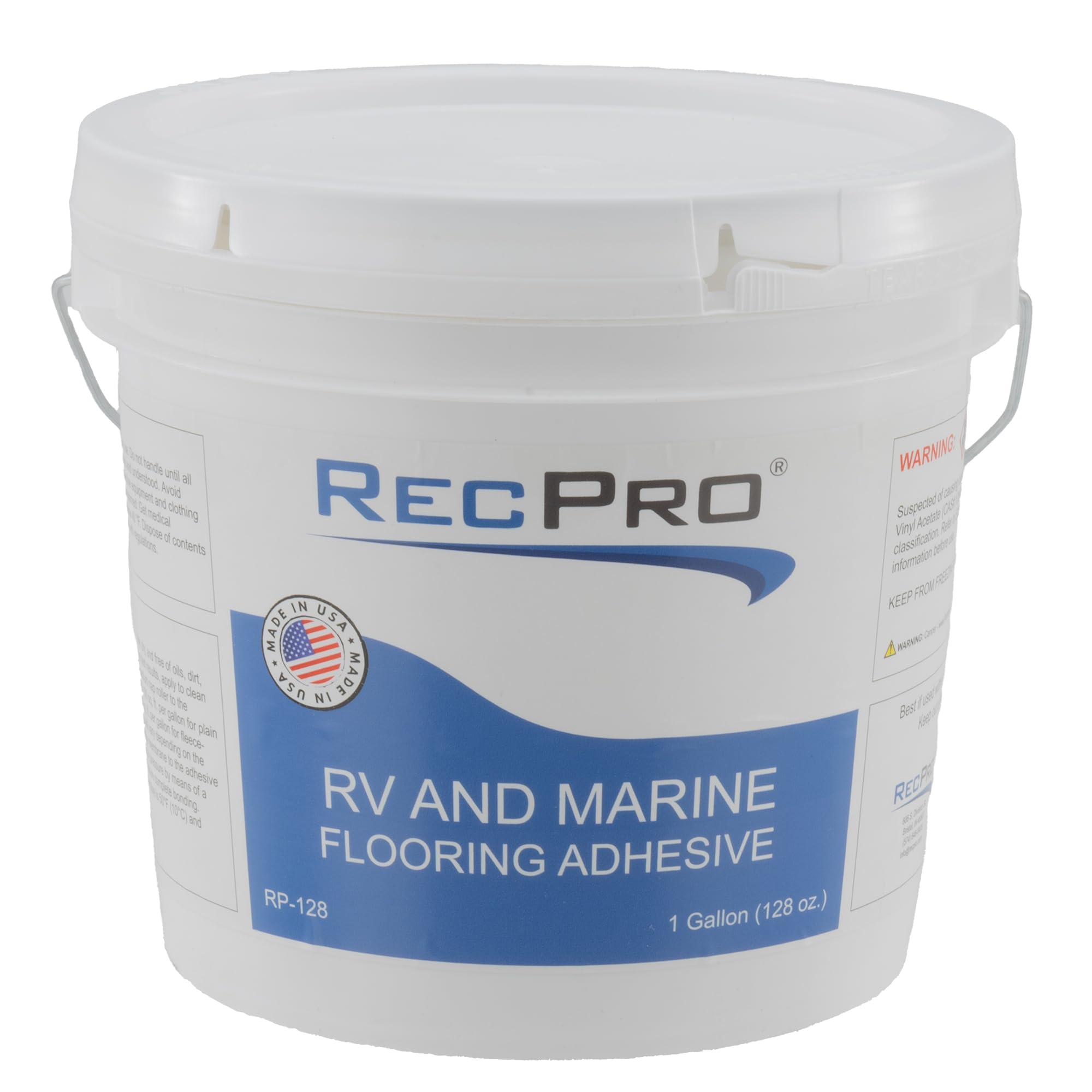
Built to be poured and rolled — the pick for anyone covering a big pontoon or RV floor fast.
This one is designed around a different install method than the gel above. It’s a water-based liquid that pours straight from a one-gallon pail and spreads with a roller, and RecPro lists coverage of approximately 100 square feet with a notched trowel. The name “Roll On” is the whole point: on a large pontoon platform, pouring and rolling beats troweling in tight, slow strips every time.
Two numbers shape how this glue behaves in your hands. First, the cure time is 24 hours, so you plan the same overnight wait as the other picks. Second — and this is the one buyers actually trip over — the best application window is 65-75°F. One user covering a 19’x8′ pontoon floor with felt-backed vinyl over wood applied it at 73°F with a medium nap roller and got a longer work time than most adhesives — a real advantage when laying a big sheet solo. Ease of application is what owners single out most — it pours clean and spreads smoothly, and a cargo-trailer installer who followed the instructions with a #100 floor roller was happy with the result.
The catch is that this is the fussiest of the three about conditions. Effectiveness is the most-talked-about topic in the reviews, and opinions split: some report a bond that holds strong, others note it dries too quickly before they can work it. The manufacturer is direct about pushing out air pockets with a steel roller, and skipping that step is where wrinkles and weak spots show up. Temperature control and roller discipline aren’t optional here — they’re the whole install.
Why it fits large decks: pour-and-roll spread with roughly 100 square feet of coverage per gallon means fewer refills and a faster pass over a pontoon or RV floor.
The condition you can’t ignore: it wants to be laid down between 65-75°F — outside that window, drying speed and bond quality start to wander.
Best for: pontoon, RV, and cargo-trailer floors where you’re spreading over a large area with a roller and can control the room temperature.
Not the one for: cold garages or hot midday decks outside the 65-75°F window, or anyone who plans to skip the roller step.
3. Marine Adhesive for Boat Carpet & Pontoon Vinyl Flooring – 2 Gallons

Two gallons in one buy — enough glue to finish a whole deck instead of stopping halfway.
This is the pick for a full recarpet where one gallon would leave you short. It arrives as two one-gallon pails, and each pail covers an 8′ x 10′ area, so you’ve got a full deck’s worth of glue in a single purchase. Like the Value Carpets gel, it’s a PVA (polyvinyl acetate) base in a gel form with a 24-hour full cure.
Where this glue earns its spot is rubber-backed flooring. The maker states it adheres to rubber-backed vinyl without deteriorating the backing over time the way alcohol-based glues can — a real concern, because a glue that eats into the rubber backing is exactly how a marine vinyl floor fails early. It’s also listed as compatible with marine plywood, particle board, concrete, aluminum, and fiberglass, which makes it the most surface-flexible of the three here.
What owners describe is a bond that sets up strong and stays slightly flexible rather than going brittle. One user who followed the maker’s instructions exactly, including the 5-minute wait before application, saw an alarming initial color change — but the carpet bonded well and the cured glue felt durable. The recurring gripe is inconsistency on the low end: a few buyers compared the look to craft glue and saw carpet come off, usually traceable to application conditions like humidity. Plan around humidity: one installer had to adjust tack time because of it, though the glue itself worked well.
The Strong Points
- Two gallons in one purchase — enough to finish a full-deck recarpet without reordering
- Water-based formula stated to protect rubber-backed vinyl instead of breaking it down
- Bonds across marine plywood, particle board, concrete, aluminum, and fiberglass
- Cured bond stays flexible, which suits a deck that flexes underfoot
Worth Knowing First
- The initial color change on application can look alarming before it settles
- Humidity stretches the tack time, so plan your install around the weather
The smart buy for: a full boat or pontoon recarpet over rubber-backed vinyl where one gallon won’t cover the deck, and you want the glue to leave the backing intact.
Think twice if: you’re working in high humidity and need a predictable, identical tack time every time.
Understanding the Specs
Formula Base (PVA vs Water-Based)
PVA stands for polyvinyl acetate — the adhesive chemistry that gives you a strong bond that stays slightly flexible once cured instead of going brittle. Both the Value Carpets gel and the BoatCarpetCentral two-gallon pail use a PVA base, which is why they bend with a deck rather than cracking. The RecPro lists its base simply as water-based. In plain terms: water-based means easier cleanup and no harsh fumes, and it’s the safer route for rubber-backed vinyl because it won’t attack the backing.
Cure Time and Application Temperature
All three of these adhesives list a 24-hour full cure time — that’s the point where the bond reaches its strength and the floor is ready for real use. The waiting is unavoidable, but how the glue behaves while you’re spreading it depends on heat. RecPro specifies its ideal window as 65-75°F. Plan your install for a mild day, keep the deck out of direct midday sun, and give the glue the full 24 hours before you walk on it or launch the boat.
Coverage and Trowel vs Roller
Coverage is set by how you spread the glue, not by the glue itself. A notched trowel leaves ridges of adhesive with air gaps that the vinyl presses down into — RecPro lists roughly 100 square feet per gallon with a notched trowel. A roller spreads the glue into a flatter, more even layer. Whichever method you use, follow it with a steel or floor roller over the vinyl to press out trapped air; trapped air is what becomes a bubble or a wrinkle once the glue sets.
Backing Compatibility and Substrate Prep
Marine vinyl comes with either a felt or a rubber backing, and the glue has to match. Rubber-backed flooring needs a water-based adhesive that won’t degrade the rubber — that’s the specific job the BoatCarpetCentral glue is stated for. Felt-backed and carpet over wood need a formula that penetrates into the substrate. And whichever you pick, the deck itself has to be clean and prepped: dirt, moisture, or an unsealed plywood surface will undermine the best glue on this list.
FAQ
Can I use these adhesives on rubber-backed marine vinyl?
How long before I can walk on or launch the boat after gluing?
How much glue do I need for a pontoon floor?
Will this glue hold marine vinyl on bare plywood?
What temperature should I apply marine vinyl adhesive at?
Do I need a roller or is a notched trowel enough?
Can I use these boat carpet glues indoors on an RV floor?
What materials besides wood do these marine adhesives bond to?
Is water-based adhesive strong enough for a moving boat deck?
Why did my marine vinyl floor come loose after gluing?
Final Thoughts: The Verdict
For most boat decks, the adhesive for marine vinyl flooring winner is the Value Carpets Marine Grade Boat Carpet Adhesive because its high-viscosity gel stays put on a sloped deck, it’s non-flammable for enclosed work, and it bonds to wood, fiberglass, and aluminum — just seal your plywood first. If you’re laying a large pontoon or RV floor and want to pour and roll, grab the RecPro RV Roll On Floor Adhesive and keep the room between 65-75°F. And for a full-deck recarpet over rubber-backed vinyl in one purchase, the BoatCarpetCentral Marine Adhesive 2-Gallon is the one to reach for. Whichever you pick, clean and prep the deck — that step decides whether the glue holds.
How We Picked
We do not accept paid placement. Every pick is matched to a real buyer and a real use-case; we do not hands-on test units.
Sources & Methodology
Specifications: manufacturer listings and product documentation. Review insights: verified customer reviews, as of September 2026. Pricing: not shown on this page (it changes often); check the current price via the retailer link.
As an Amazon Associate, Gadgets Feed earns from qualifying purchases. This does not affect which products we feature.