
Our readers keep the lights on and my morning glass full of iced black tea. As an Amazon Associate, I earn from qualifying purchases.
Specs are compiled from manufacturer listings and verified buyer reviews and can change over time — please confirm the key details on the product page before buying.
You want a picture that stays bright and colorful with the lights on and the blinds open — that is what a 7000 Lumen Projector is really about. Here is the honest part: almost nobody sells a projector rated at exactly 7,000 lumens. The real-world class you want sits between roughly 6,000 and 8,000 lumens, and that is the brightness range that keeps a picture looking good in a lit room. The three picks below all live in that same-class zone, and each one treats brightness differently, which is exactly why the choice matters.
I’m Min — the founder and writer behind Gadgets Feed. This guide is built by comparing the manufacturers’ published specifications and the patterns across verified customer reviews, so you get each pick’s real strengths and trade-offs instead of marketing spin.
A quick note before the picks: this list uses flexible, human-like matching for the 7000 Lumen Projector class, so not every model carries that exact number.
Our Picks at a Glance
How To Choose The Best 7000 Lumen Projector
Brightness is the number everyone fixates on, and it is the number most likely to mislead you. A projector billed at 6,000 ANSI lumens is measured in Peak Output Mode, which is a different test than ISO lumens. That single difference explains why two projectors that look similar on paper can feel very different in your living room.
Start with the brightness test, not the brightness number
How a projector handles ambient light (the light already in your room, from lamps or windows) is the one thing you cannot fake. Ask yourself whether you mostly watch at night with the lights off, or if you want a picture that survives a lamp in the corner and afternoon sun through a window. A triple-laser engine (a light source that uses three lasers instead of a bulb) in the 5,800 to 6,000 lumen range holds color better in a lit room than a bulb-based unit ever could — so a lamp in the corner will not wash out your colors. If your room is genuinely dark, you have far more headroom than you think.
Optical zoom and lens shift decide if it fits
Optical zoom lets you resize the image without physically moving the projector, and it keeps the original resolution intact. Digital zoom does not — it crops pixels away. Lens shift is the other half of the equation: it physically slides the lens so you can place the projector off-center and still get a square image. A model with a wide lens-shift range and a real optical zoom is dramatically easier to live with in a room that is not a dedicated theater.
Contrast and color coverage matter for movies
Contrast ratio is the spread between the brightest white and the deepest black your projector can produce. A higher number means dark scenes keep their detail instead of turning into a gray wash. Color coverage matters just as much — look for the BT.2020 or Rec. 2020 figure, which tells you how much of the modern color spectrum the projector can actually reproduce.
Quick Comparison
| Model | Best For | Brightness | Contrast | Resolution | Amazon |
|---|---|---|---|---|---|
| Nebula X1S 4K Triple Laser Projector★ Best Overall | All-around home cinema | 6000 lm | 56000:1 | 3840 x 2160 | Amazon |
| XGIMI HORIZON 20 Max 4K Projector | Gaming and bright rooms | 5700 lm | 20000:1 | 3840 x 2160 | Amazon |
| JMGO N3 Ultimate 4K Triple Laser Projector | Tricky room layouts | 5800 lm | 20000:1 | 3840 x 2160 | Amazon |
In‑Depth Reviews
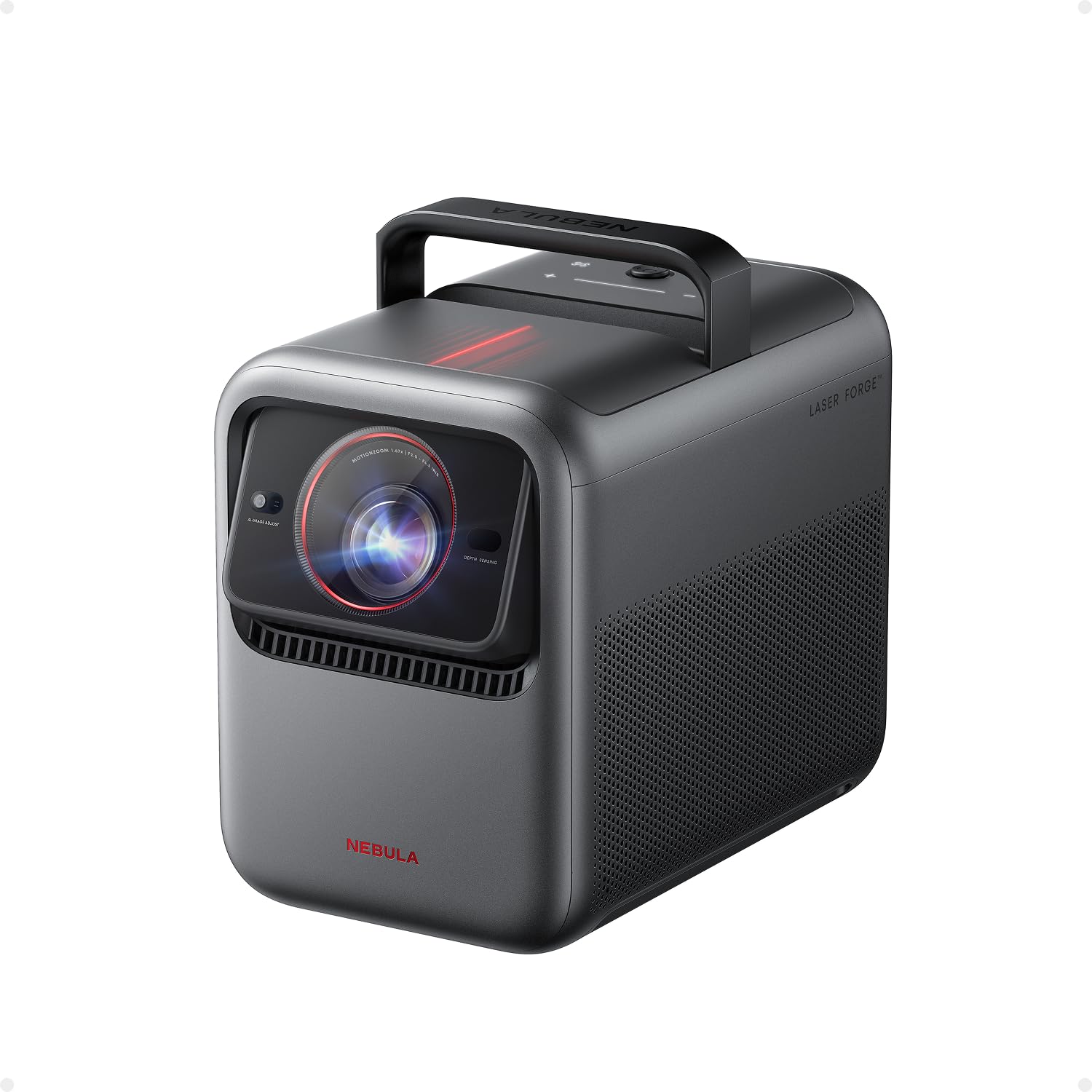
1. Nebula X1S 4K Triple Laser Projector, 6,000 ANSI Lumens, Google TV
Our pick — 4.5★ from 100+ verified ratings; the strongest balance of quality and price.
The living-room laser that stays vivid with the lamps on — and the picture quality buyers keep coming back to praise.
Picture quality is what wins people over here, and it is the most-praised quality in the feedback. The patented 4K triple-laser engine with LaserForge is rated at 6,000 ANSI lumens (ANSI lumens is a standard brightness measurement taken across a whole white screen) and 106% Rec. 2020 color coverage. In plain terms, the color range is wide enough that a forest scene does not collapse into a flat green smear. People describe bright, sharp images even with room lights up, which is the whole reason to buy in this brightness class in the first place.
Where it pulls ahead of the XGIMI HORIZON 20 Max is contrast. The Nebula lists a 56,000:1 dynamic contrast ratio against the XGIMI’s 20,000:1 — a real 2.8x gap on the published figures. That gap shows up in dark scenes, where the Nebula’s 6-blade dynamic iris keeps shadow detail from washing out. The 14-element all-glass lens is the other quiet advantage: glass holds focus far better than plastic, so the image stays sharp instead of drifting soft over time. A 1.67× optical zoom (the ability to resize the picture without physically moving the unit) means you can adjust the screen size without losing resolution to digital cropping.
Setup is genuinely one of its strengths. AI Spatial Adaptation scans the wall and lines up position, size, and clarity in a single tap, and Spatial Recall saves those preferences room by room. The built-in 40W speakers reach down to 55 Hz, so dialogue and effects land with real low-end weight without a soundbar. There are trade-offs, and buyers flag them clearly. The recurring gripe is color accuracy from the start — expect to spend time in the manual color-tuning menus to get the picture where you want it. A few owners also hit a laser sparkle effect when the unit is ceiling-mounted onto an ALR screen. Neither is a dealbreaker, but both are real.
Where it wins the room
- 6,000 ANSI lumens holds a bright picture with ambient light
- 56,000:1 dynamic contrast out of a 6-blade iris
- 1.67× optical zoom keeps 4K sharpness at any image size
- Google TV with the official Netflix app in 4K and Dolby Vision
Worth knowing before you buy
- Colors need manual tuning from the start rather than looking right immediately
- Laser sparkle can appear on ALR screens when the unit is ceiling-mounted
- 60Hz input limit matters if you plan heavy gaming on it
Reach for this if: you want the strongest all-around living-room projector on this list and you are willing to spend an evening dialing in the picture.
Think twice if: you mostly play competitive games — the 60Hz input limit means the XGIMI’s 240Hz motion is the better home for that.
2. XGIMI HORIZON 20 Max 4K Projector Triple Laser Home Theater 5700 ISO Lumens
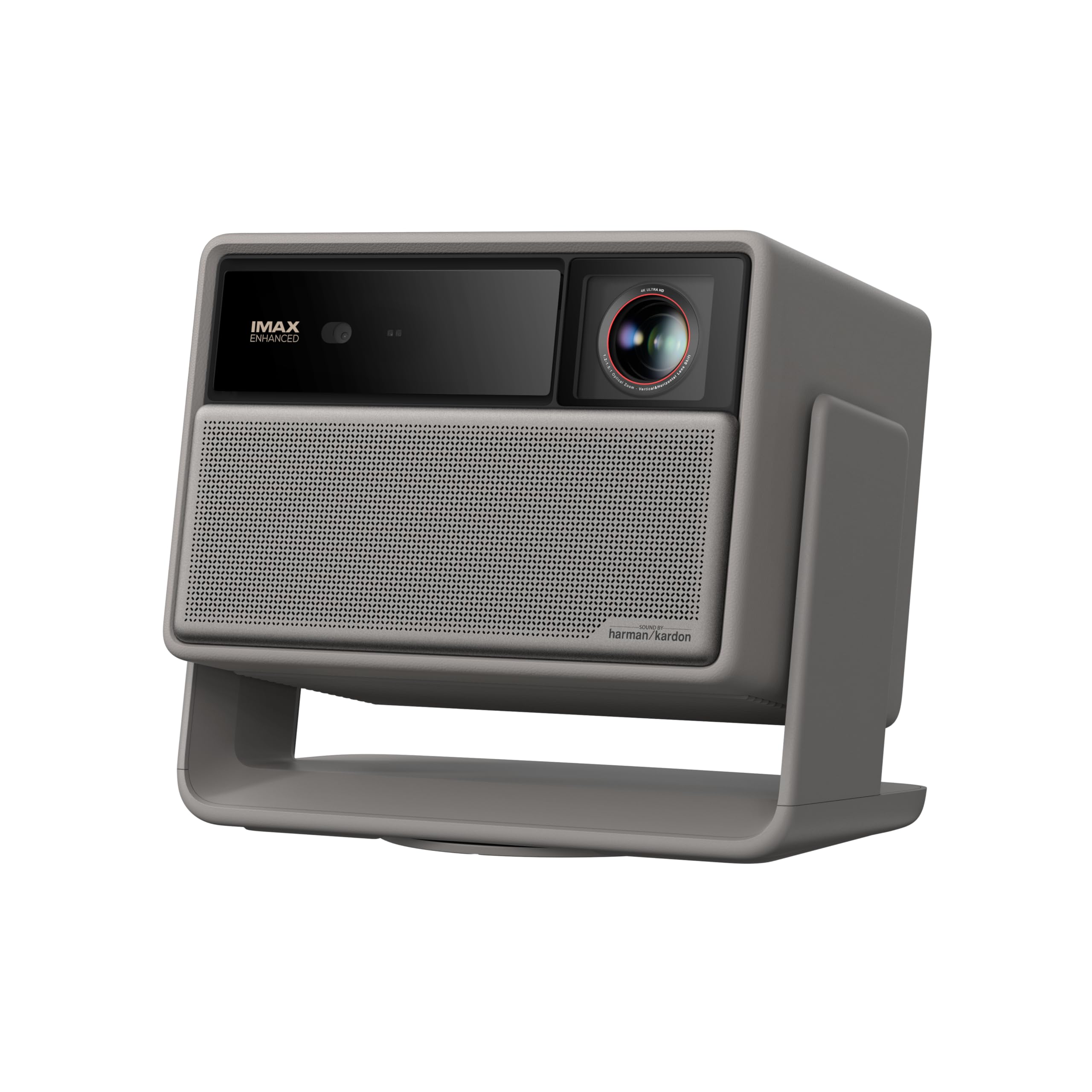
Built for the console crowd: 240Hz motion and 1ms input lag on a screen that can stretch past 120 inches.
If your priority is a big, fast, bright gaming display rather than a dedicated movie room, this is the pick. The X-Master RGB triple-laser engine is rated at 5,700 ISO lumens (ISO lumens is a brightness standard that holds a consistent color temperature during the measurement) with 110% BT.2020 color coverage and a 20,000:1 contrast ratio. On the gaming side it advertises 1ms input lag and up to 240Hz motion — those are the numbers that decide whether a fast-moving shooter feels responsive or smeared. The built-in Google TV with licensed Netflix and Google Home voice control means no dongles and no second remote in the drawer.
Here is the honest part that matters more than any spec sheet. Buyers report the real output lands somewhere around 3600-3900 lumens in normal 4K rather than the advertised peak. That is the single most important thing to understand before you buy: the headline brightness is a peak-mode figure, and sustained picture is lower. It is still bright enough that people use it in daylight with the blinds open on a 180-inch ALR screen, which is the outcome that actually counts. The Harman Kardon speakers draw consistent praise as clear and neutral, and the flexible lens shift plus optical zoom make positioning far easier than a fixed-lens projector. If room-filling night-time darkness is your goal, the Nebula above has the contrast edge at 56,000:1 versus this unit’s 20,000:1.
The recurring complaints cluster in two places. A handful of owners note rainbow-effect flicker in bright white content — a known behavior of some DLP-based triple-laser designs, not a defect. And support is email-only with slow turnaround, which several buyers found frustrating when an issue came up. Neither changes how the picture looks on day one, but if you want a phone number to call, factor that in. The solid Amazon rating and the absence of any live support line are the two facts worth weighing together.
The gaming case for it
- 1ms input lag and 240Hz motion built for consoles and PC
- Flexible lens shift plus optical zoom for off-center placement
- Harman Kardon speakers that owners call clear and neutral
- Google TV with licensed Netflix built in, no sideloading
Where it gives ground
- Sustained output sits below the advertised peak brightness figure
- Support runs email-only with slow response times
- Rainbow-effect flicker shows up in bright white scenes for some viewers
The right call when: a huge, low-lag gaming screen matters more to you than cinema-grade black levels.
The wrong call when: you need a support line you can call, or you are sensitive to rainbow flicker in bright content.
3. JMGO N3 Ultimate 4K Triple Laser Projector, 5800 ISO Lumens
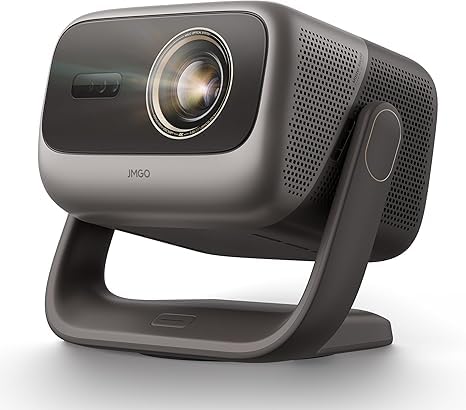
A million ways to place it — four-way lens shift, a 360° motorized gimbal, and a throw ratio built for small rooms.
Placement flexibility is the whole point of this projector, and it leads with the numbers to prove it. Four-way lens shift covers H ±53% and V ±130%, paired with a 0.88-1.7:1 optical zoom and a 360° pan / 150° tilt motorized AI gimbal. Translated into real life: you can sit it off to the side, tilt it up, and still land a square, sharp 4K image without digital cropping eating your pixels. The MALC 5.0 triple-laser engine is rated at 5,800 ISO lumens with 110% BT.2020 color coverage and pro-level color accuracy at ΔE≈0.7, a measurement of how close the projector’s colors land to the reference standard.
What the feedback keeps returning to is picture quality and build quality above everything else, with color and Dolby Vision both drawing consistent praise. The 3,000,000:1 dynamic contrast ratio and 20,000:1 AI Dynamic Black Level keep black bars and night skies from graying out. Audio is a surprise here — the custom 2×12.5W dual speakers reach down to 35Hz, deeper bass than most projectors manage without a soundbar. On the gaming side, the MT9679 SoC and DLPC8445 chip support HDMI VRR, refresh rates up to 240Hz, and 1ms low latency, shown as screen tearing control on a PS5 or Xbox.
The catch to plan around is brightness expectations. Amazon’s own summary flags brightness as mixed, with some owners finding it exceptional and others saying it is not as bright as advertised. That is the honest ceiling to set: it lights up a whole room and works in daytime on a wall, but do not expect headline brightness in every mode. There is also a real niche limitation on 3D — the glasses are brand-specific, and some third-party glasses fail with a left/right eye swap that makes the image unwatchable. If 3D glasses are a big part of your plan, that constraint matters. Google TV runs it with 4GB RAM and 64GB of storage.
The placement story: this is the projector for a room where nothing can go dead center — the four-way lens shift and motorized gimbal solve a problem the other two picks simply cannot.
Pick this one if: your room layout is awkward and you need a projector that adapts to wherever it can actually sit.
Look past it if: you rely on third-party 3D glasses or you want brightness to match the headline number exactly.
Understanding the Specs
ANSI Lumens vs ISO Lumens
These are two different ways of measuring how bright a projector is. ANSI lumens are read across a full white screen, while ISO lumens are read while holding the color temperature steady during the test. That is why a projector can advertise 6,000 ANSI lumens and another 5,700 ISO lumens without those two numbers meaning the same thing. When you compare brightness across brands, check which standard each figure uses — a peak-mode number and a sustained-mode number are not the same claim.
Contrast Ratio and Dark Scenes
Contrast ratio is the gap between the brightest white and the darkest black a projector can show. A higher number means shadow detail survives instead of turning gray. Dynamic contrast uses a moving iris or light control to push that spread further, which is why you will see both a native figure and a dynamic figure printed. For dark-room movie watching, contrast decides whether a night scene looks rich or murky more than raw brightness does.
FAQ
Is there actually a projector rated at exactly 7000 lumens?
Will a 7000 Lumen Projector work in a room with the lights on?
What is the difference between ANSI lumens and ISO lumens?
Do I need an ALR screen with a triple-laser projector?
Can a bright projector handle 4K gaming without lag?
How much room do I need for a projector with optical zoom?
Why do some people see a rainbow effect on laser projectors?
Is 3D still worth using on a 4K triple-laser projector?
Does Google TV built in mean I can skip a streaming stick?
Final Thoughts: The Verdict
For most rooms, the 7000 lumen projector that gets the balance right is the Nebula X1S. Its 6,000 ANSI lumens (a brightness measure taken with the projector set to a standard picture mode) and 56,000:1 dynamic contrast (how deep the blacks look next to bright scenes) give you a picture that holds up with the lights on, so a daytime movie still looks like a movie. The 1.67× optical zoom (a lens that adjusts the image size without moving the projector) keeps 4K sharpness at any screen size. If you want the screen your games deserve, grab the XGIMI HORIZON 20 Max for its 1ms input lag (the delay between your button press and the screen reacting) and 240Hz motion (the screen refreshes 240 times a second), so fast games stay smooth. And when your room refuses to cooperate, the JMGO N3 Ultimate with its H ±53% lens shift (it moves the picture sideways without moving the projector) and 360° gimbal (a stand that rotates all the way around) is the one that fits where nothing else will.
How We Picked
We do not accept paid placement. Every pick is matched to a real buyer and a real use-case; we do not hands-on test units.
Sources & Methodology
Specifications: manufacturer listings and product documentation. Review insights: verified customer reviews, as of September 2026. Pricing: not shown on this page (it changes often); check the current price via the retailer link.
As an Amazon Associate, Gadgets Feed earns from qualifying purchases. This does not affect which products we feature.